- 1. Understanding the ERW Steel Pipe Manufacturing Process
- 2. Comparing ERW Steel Pipes with Other Pipe Types
- 3. How to Choose the Right ERW Steel Pipe for Your Project?
- 4. Procurement Insights for ERW Steel Pipes
- 5. Ensuring Long-Term Performance of ERW Steel Pipes
- 6. Conclusion
- 7. FAQ
- 8. Partner with LONGMA for Your Next ERW Steel Pipe Order
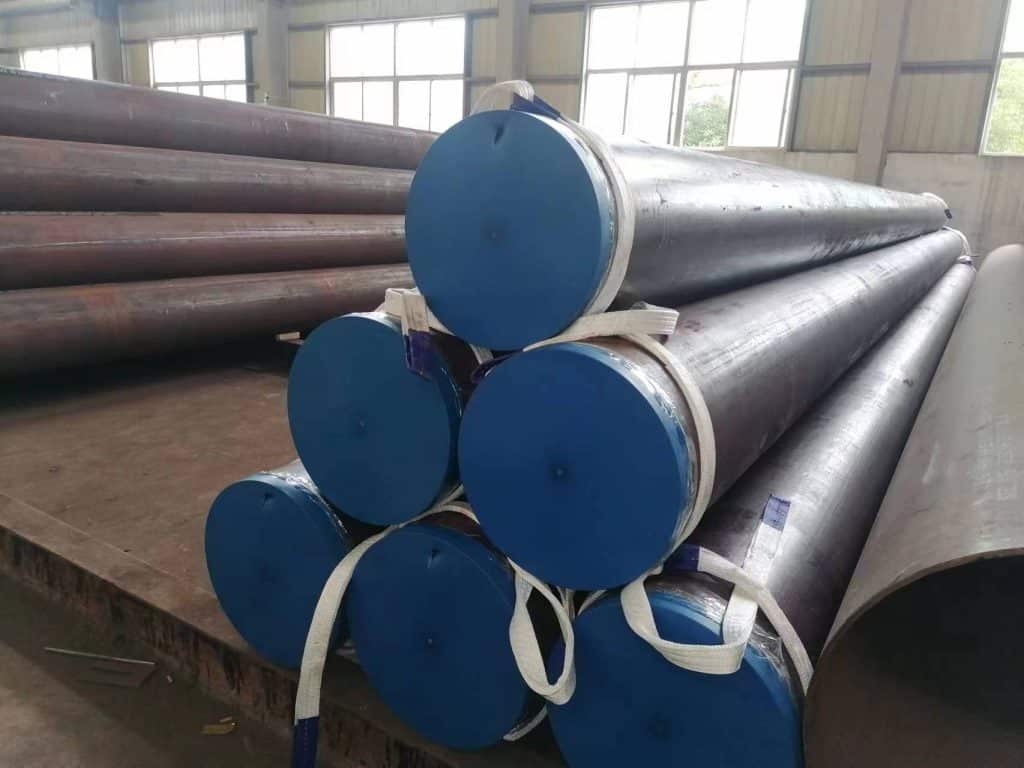
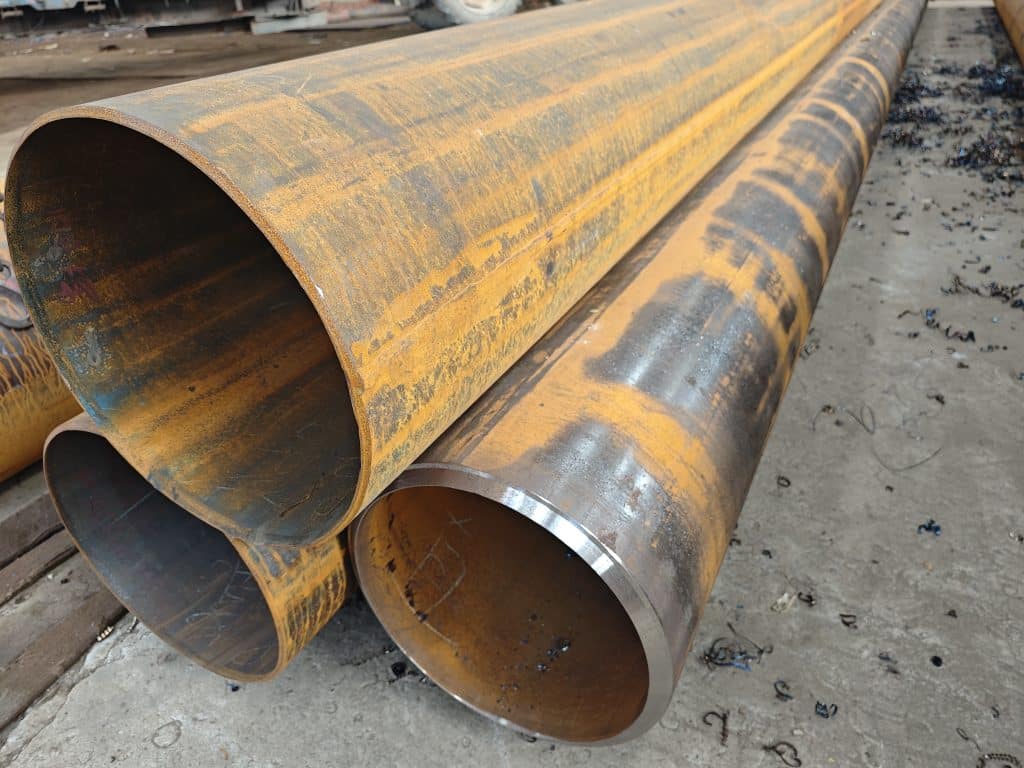
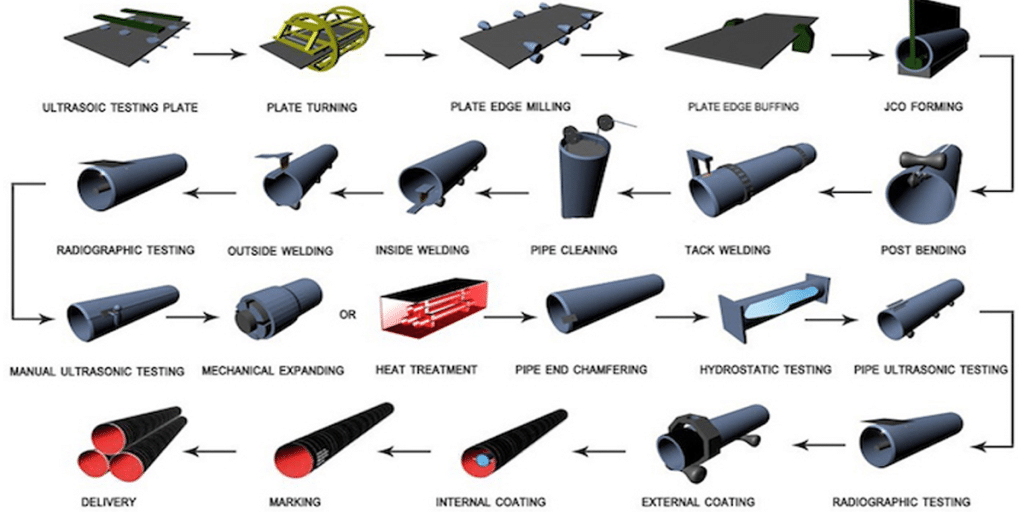
The ERW steel pipe manufacturing process transforms steel coil into welded round pipe through forming, electrical resistance heating and pressure welding. Modern high-frequency welding joins the strip edges without filler metal. Weld treatment, dimensional control and inspection then establish whether the product meets the ordered specification. ERW pipe can be manufactured to API 5L, ASTM A53 or other applicable standards for oil, gas, water and structural applications; compliance with each standard must be specified and verified separately.
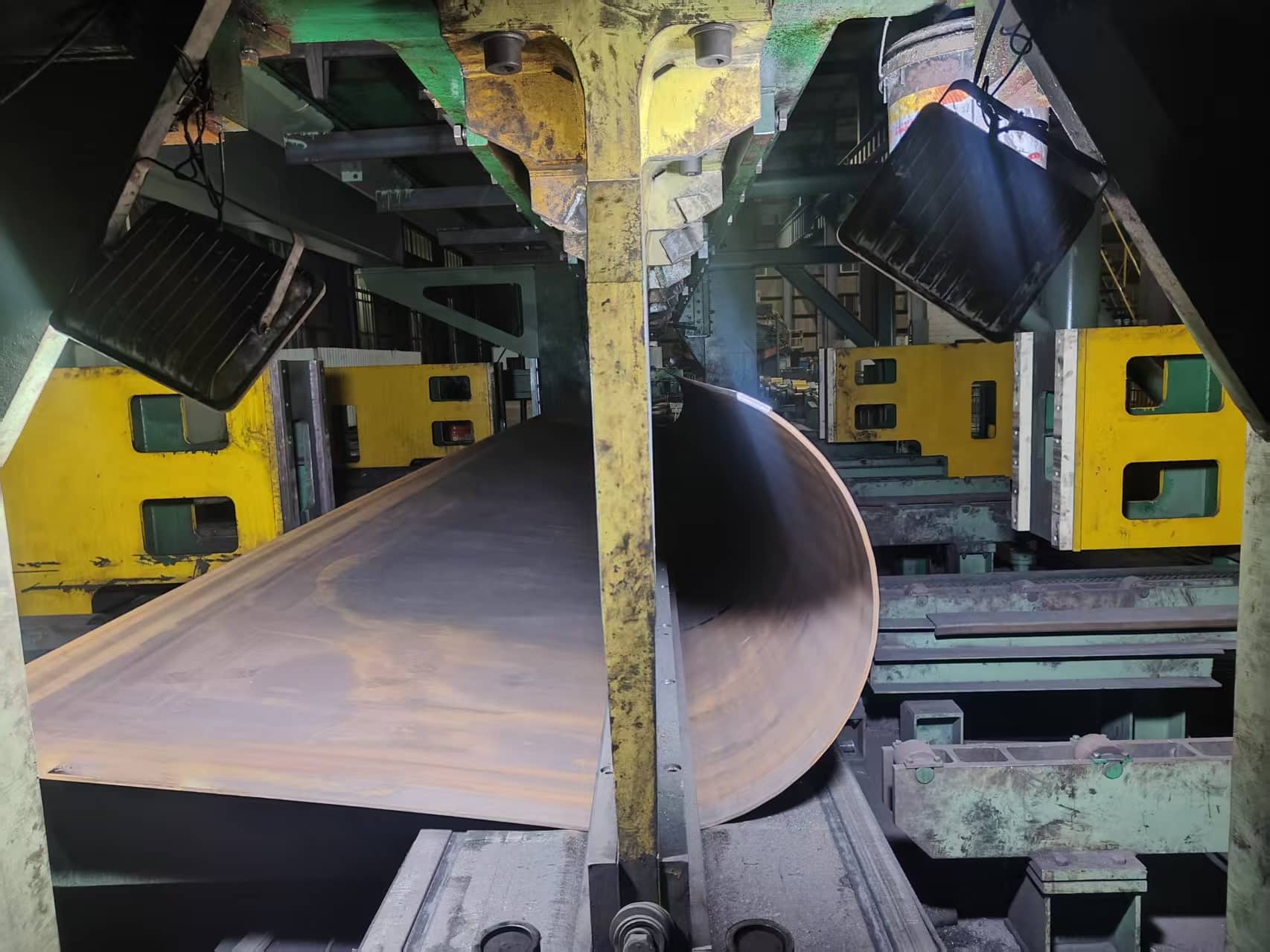
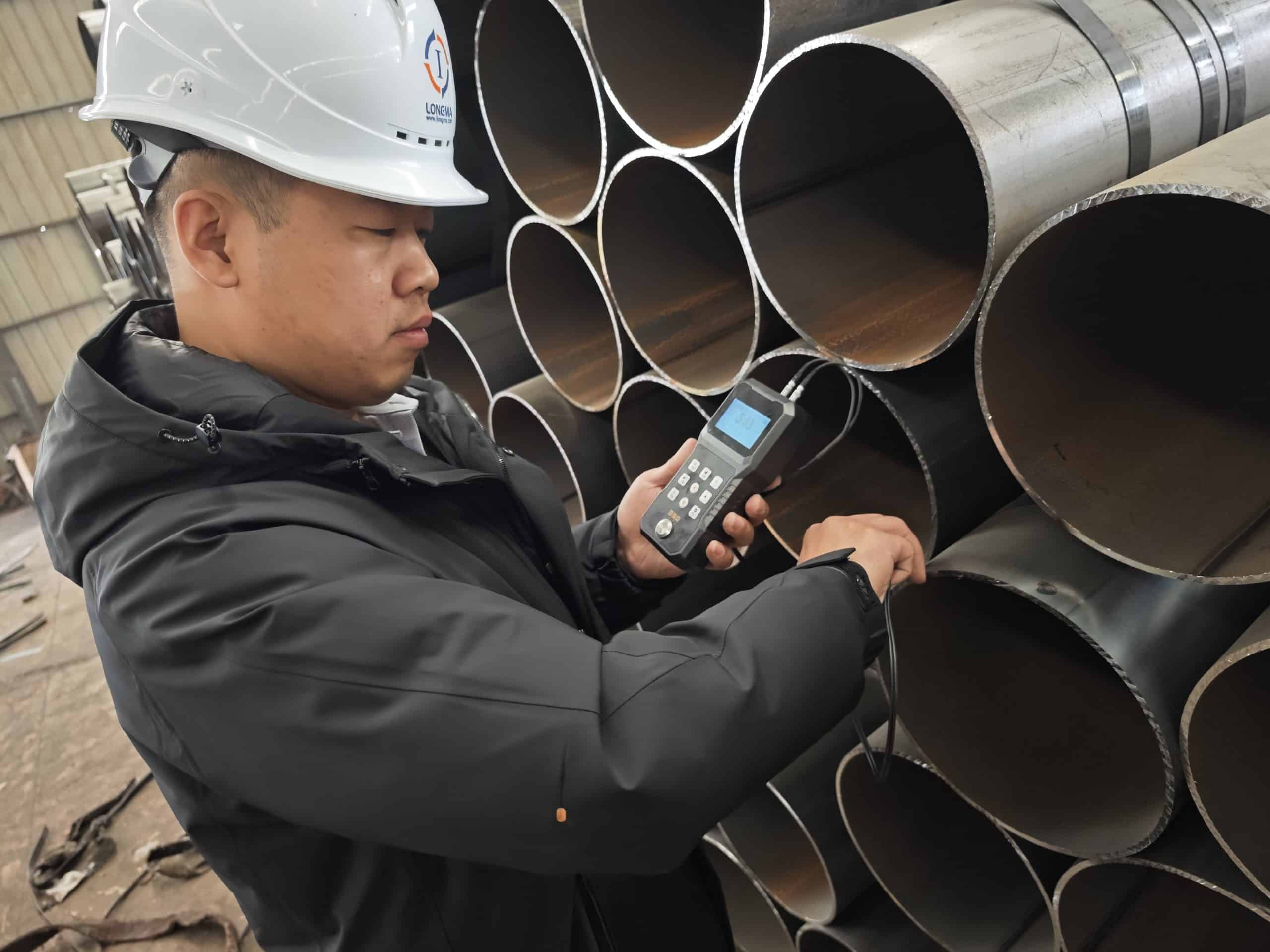
Understanding the ERW Steel Pipe Manufacturing Process
API 5L was updated to its 47th edition in June 2026. ISO 3183:2019 is the fourth edition and supplements API 5L, 46th edition (2018), with stated exceptions and additions. The purchase order should identify the applicable editions and any project supplements.
Step 1 — Steel Coil Preparation and Forming
The process begins with hot-rolled steel coil selected for the ordered grade, thickness and delivery requirements. Incoming checks establish material identity, chemistry and strip condition. The coil is uncoiled, levelled and, where necessary, edge-trimmed or slit to the required width. Forming rolls progressively shape the strip into a round section, bringing the edges into alignment at the welding station. Carbon-equivalent requirements depend on the product standard, PSL, grade and delivery condition; no single limit applies to every X52 product.
Step 2 — High-Frequency Resistance Welding and Seam Heat Treatment
At the welding station, high-frequency current heats the strip edges, and squeeze rolls apply pressure to form the joint without filler metal. Welding power, speed, edge condition and alignment must be controlled together. The resulting internal and external weld flash is removed as required by the specification and production arrangement. Weld-seam heat treatment is applied where required. For ASTM A53 Grade B ERW pipe, the requirement addresses elimination of untempered martensite; a minimum treatment temperature should not be described as equivalent to normalizing or as a guarantee that weld hardness equals parent-metal hardness.
Step 3 — Sizing, Straightening, and Quality Testing
The pipe passes through sizing rolls to control outside diameter and roundness and is cut to the ordered length. Straightening, where needed, is distinct from flattening tests used to assess product performance. Weld NDT, hydrostatic testing and required mechanical tests follow the applicable standard and inspection plan. Final checks cover wall thickness, length, straightness, pipe ends and surface condition. Bevels, end protection and markings are completed as ordered. The position of each inspection stage, including in-line and final examinations, depends on the production-line arrangement.
Comparing ERW Steel Pipes with Other Pipe Types
Knowing where ERW pipe fits in the family of products helps procurement engineers choose the right pipe for the job.
| Property | ERW | Seamless | LSAW | SSAW |
| Starting material | Steel strip | Solid billet | Steel plate | Steel strip |
| Seam | Longitudinal pressure weld | None | Longitudinal SAW | Helical SAW |
| Filler metal | Not used | Not applicable | Used | Used |
| Dimensions | Mill-specific | Mill-specific | Mill-specific | Mill-specific |
| Selection basis | Design and service | Design and service | Design and service | Design and service |
Where ERW Pipe Excels?
Coil-based forming can provide consistent wall thickness and efficient production within the mill’s qualified dimensional range. These characteristics can help field fit-up, but tolerances must be checked against the actual product specification. Welding-end preparation may be specified to ASME B16.25; threading requires its own applicable requirements. Weld joint factors are established by the design code and product conditions, not by qualification to ASME Section IX alone.
Where LSAW or Seamless May Be Preferred?
LSAW is a practical alternative when the required diameter or wall thickness exceeds the available ERW mill capability. Seamless pipe may be selected where the product specification or service design calls for it, including orders to ASTM A106 or ASME SA-106. There is no universal temperature threshold at which every ERW application must change to seamless. Compare technically compliant options using dimensions, material properties, inspection requirements and the applicable design code.
Surface Treatment Options That Affect Selection
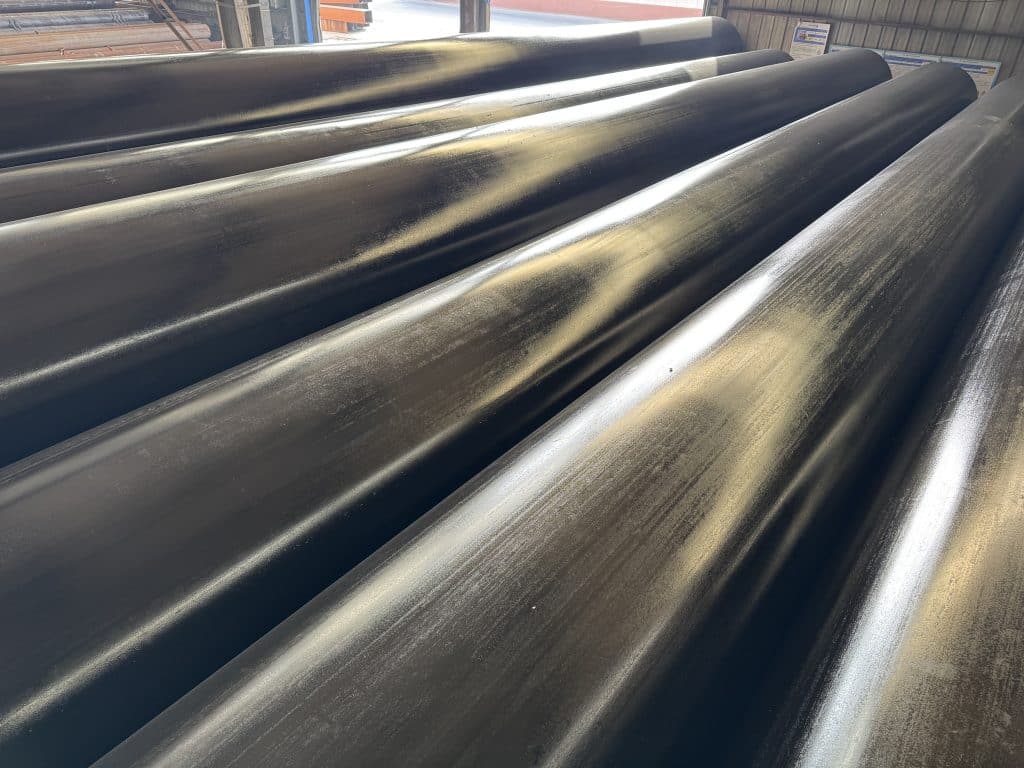
Surface protection should match storage, transport and operating conditions. Options include bare pipe, varnish, black paint, FBE and 3LPE, with each coating system specified separately. Polyethylene coating requirements may reference the applicable DIN 30670 provisions; standalone FBE requires its own suitable specification. An internal coating can reduce roughness or provide a corrosion barrier where qualified for the fluid and operating conditions. It does not automatically eliminate wet CO₂ corrosion, and field joints and repairs remain part of the coating scope.
How to Choose the Right ERW Steel Pipe for Your Project?
Match Grade to Operating Pressure and Environment
Select the grade together with outside diameter, wall thickness, design pressure, temperature and the applicable code. X52, X60, X70 and X80 identify material strength levels, not universal pressure classes. Higher strength may permit a thinner calculated wall, subject to other design limits. For H₂S-containing service, material qualification must consider the environment and applicable requirements. Where API 5L Annex H applies, specify the corresponding PSL2 sour-service grade and supplementary controls; grade suffixes alone do not establish suitability.
Specify PSL Level Based on Service Criticality
PSL1 and PSL2 define different product requirements rather than low- and high-pressure ratings. PSL2 includes additional controls on chemistry, mechanical properties, toughness and inspection. Applicable NDT is also required for welded PSL1 products. Offshore, sour-service and other demanding projects can require supplementary provisions beyond base PSL2. Follow the design basis and owner specification instead of assuming that every offshore or high-consequence application is governed by the same rule.
Evaluate Supplier Certifications Before Sending RFQ
Before an RFQ, establish the required manufacturing qualification, inspection certificate and source-inspection arrangements. If an API Monogram is required, check the manufacturer’s license status and scope in API’s public directory. Request the agreed EN 10204 type 3.1 or 3.2 certificate and review how it is validated. Management-system certificates and a third-party inspection plan support qualification, but do not replace product test results.
Procurement Insights for ERW Steel Pipes
Pricing Drivers and Lead Time Planning
ERW pipe pricing depends on hot-rolled coil cost, dimensions, grade, inspection and surface treatment. Coating may add 15–30% to the base pipe price, depending on the order, while site joint coating and repair costs still need to be considered. LONGMA maintains standard stock sizes from 4 to 16 inches in common Grade B to X65 specifications. Confirmed stock may ship within seven days, while custom grades or heavy-wall orders typically require around 30–45 days, subject to order confirmation.
Online Procurement Risk Management
Verify a claimed API Monogram license against the API Composite List rather than relying only on a scanned certificate. Match the legal manufacturer’s name, authorized product scope and current status to the quotation. Include inspection and documentation obligations in the purchase order so they remain enforceable throughout production and release.
Ensuring Long-Term Performance of ERW Steel Pipes
Corrosion Protection and Maintenance Strategy
Buried-pipeline corrosion protection normally combines a suitable coating with a designed cathodic-protection system and an inspection strategy. Soil conditions, coating damage, disbondment and field-joint quality affect performance. A coating standard does not guarantee corrosion-free service for a fixed number of years. Internal corrosion control must consider water, CO₂, H₂S and operating conditions; an internal coating may be one part of that strategy.
Weld Quality and Field Welding Performance
Carbon equivalent helps assess weldability but is not a complete measure of field-welding performance. Use the actual heat analysis and applicable CEV or Pcm rules together with wall thickness, hydrogen control, restraint and ambient temperature. Welding procedures should be qualified to the project’s governing requirements, which may invoke API 1104 or ASME Section IX. Preheat and heat input should follow the approved procedure.
Industry Track Record
LONGMA has supplied line pipe for projects involving SINOPEC, CNPC, PEMEX, PDVSA and PTTEP since 2003. The company has registered capital of RMB 176 million, a factory covering 230,000 m², annual output exceeding 500,000 tonnes and more than 60 senior technical personnel. Its round-pipe manufacturing focuses on ERW and LSAW products.
Conclusion
ERW manufacturing offers an efficient route to round welded steel pipe when material selection, welding controls and inspection are matched to the order. Buyers should define the applicable product standard, grade, PSL, dimensions and surface protection, then verify records against the inspection plan. LONGMA supplies ERW and LSAW products across different dimensional and grade ranges, with availability confirmed for the selected process and specification.
FAQ
What is the difference between ERW and LSAW steel pipe?
ERW joins formed strip edges by electrical resistance heating and pressure, without filler metal. LSAW forms plate and welds a longitudinal seam using submerged arc welding. Available dimensions depend on mill capability. Either route must satisfy the ordered product requirements; the process name alone does not establish a pressure rating.
Does ERW pipe meet sour service requirements?
ERW pipe can be manufactured for applicable sour-service orders, but suitability requires the specified material controls, inspection and qualification for the service environment. Where API 5L Annex H is invoked, follow its PSL2 requirements. Confirm the full grade designation and test documentation rather than relying solely on a suffix or license.
Partner with LONGMA for Your Next ERW Steel Pipe Order
Since 2003, LONGMA has manufactured and exported round steel line pipe. Our factory covers 230,000 m² and annual output exceeds 500,000 tonnes. We support in-house inspection, coating and traceability for agreed ERW and LSAW orders. Send your dimensions, grade, PSL and service requirements to info@ilongma.com or visit www.ilongma.com for a quotation.