- 1. What Is a High-Pressure Steel Pipe?
- 2. Core Process Standards for High-Pressure Steel Pipe Manufacturing
- 3. Mandatory Safety Inspection Requirements for High-Pressure Steel Pipes
- 4. How LONGMA’s In-House Laboratory Ensures Consistent Quality
- 5. Common Risks in High-Pressure Steel Pipe Procurement
- 6. Why Global Customers Choose LONGMA
- 7. Conclusion
In industries such as oil and gas transportation, power station boilers, petrochemical pressure piping, offshore engineering, and hydrogen transmission, high-pressure steel pipes play a critical role in conveying high-temperature, high-pressure, and corrosive media. Any quality issue in steel pipes can lead to costly downtime, leakage, rupture, or even major safety incidents.
For engineering contractors, EPC companies, and international buyers, the process standards and safety specifications involved in high-pressure steel pipe manufacturing are often far more important than price alone.
With over 20 years of steel pipe manufacturing experience, LONGMA adheres to international standards and delivers premium high-pressure steel pipe solutions through advanced production processes, strict quality control systems, and comprehensive in-house laboratory testing capabilities. This article explores the key manufacturing standards, safety requirements, and quality risks that buyers should pay close attention to when sourcing high-pressure steel pipes.
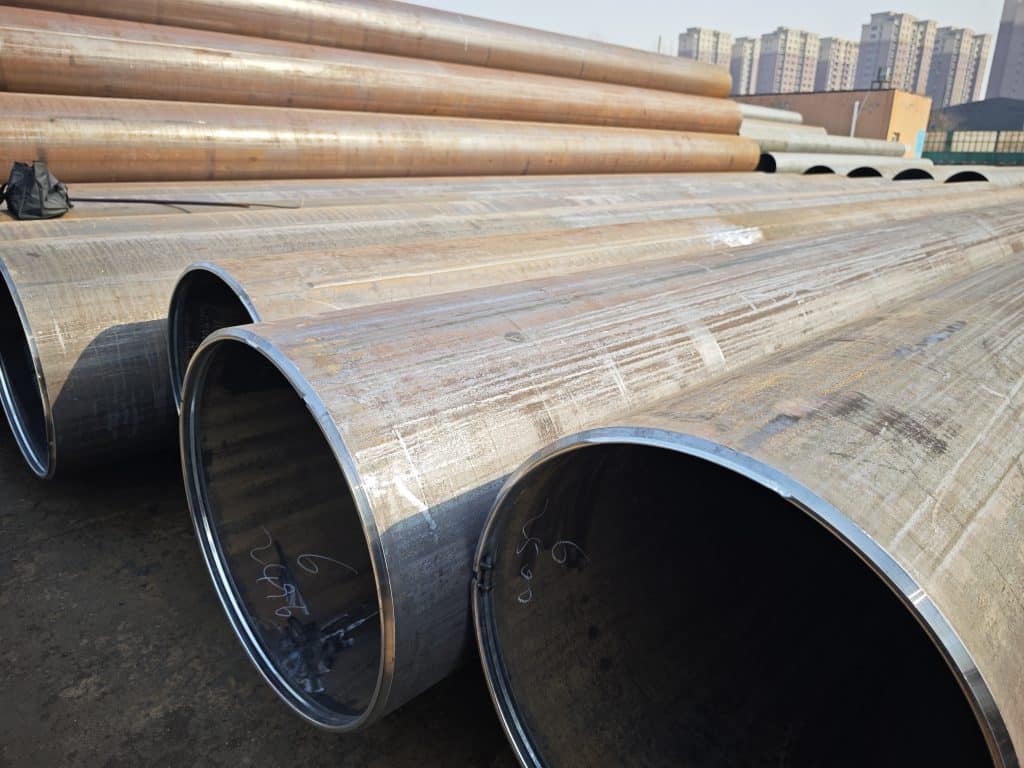
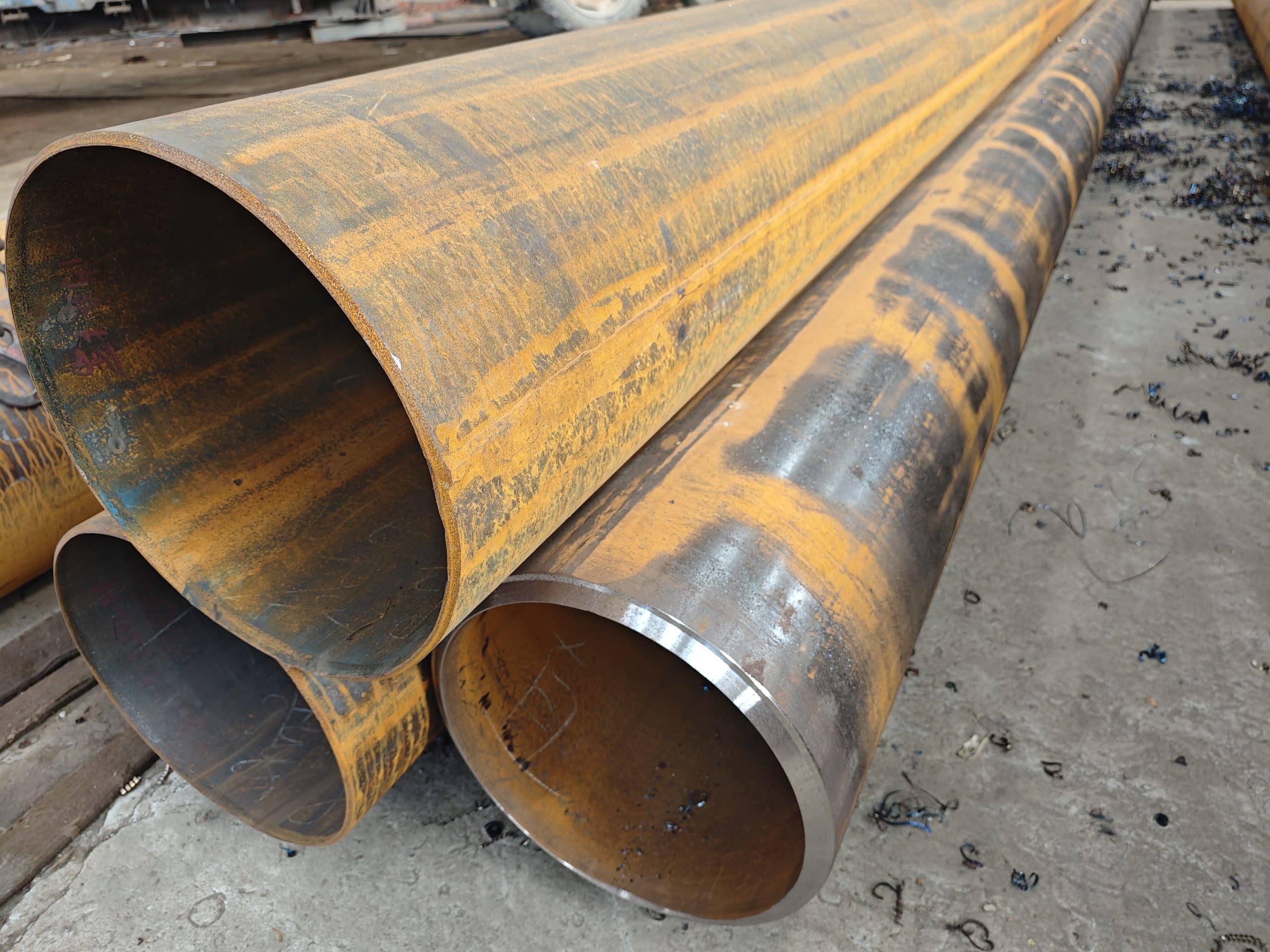
What Is a High-Pressure Steel Pipe?
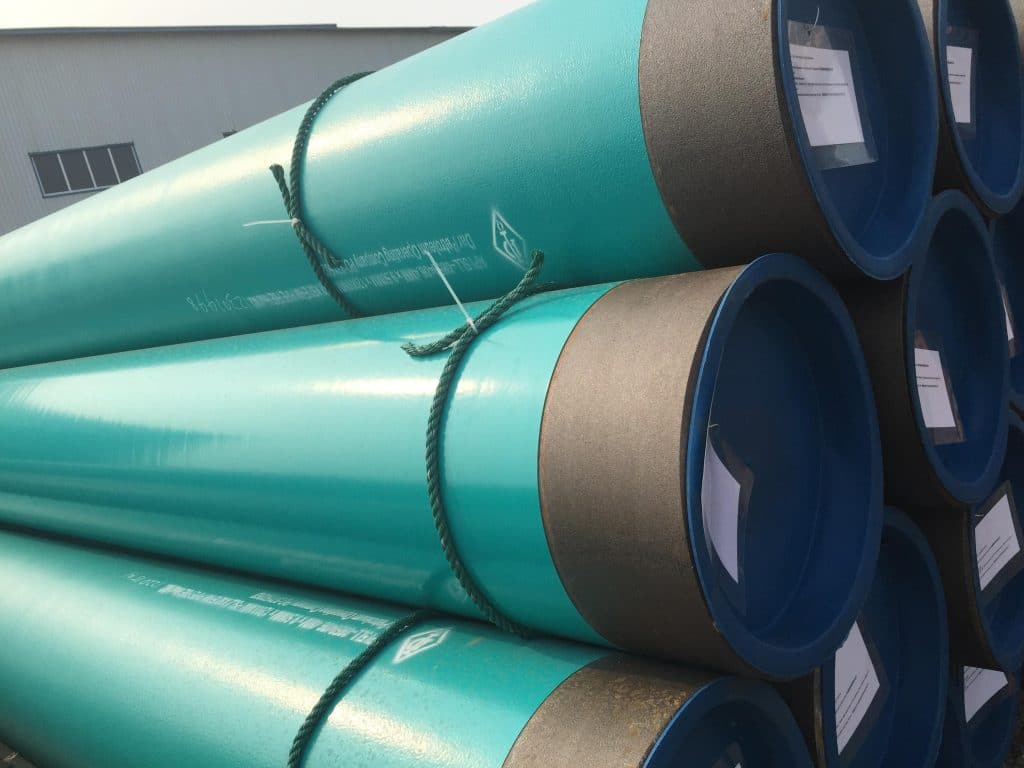
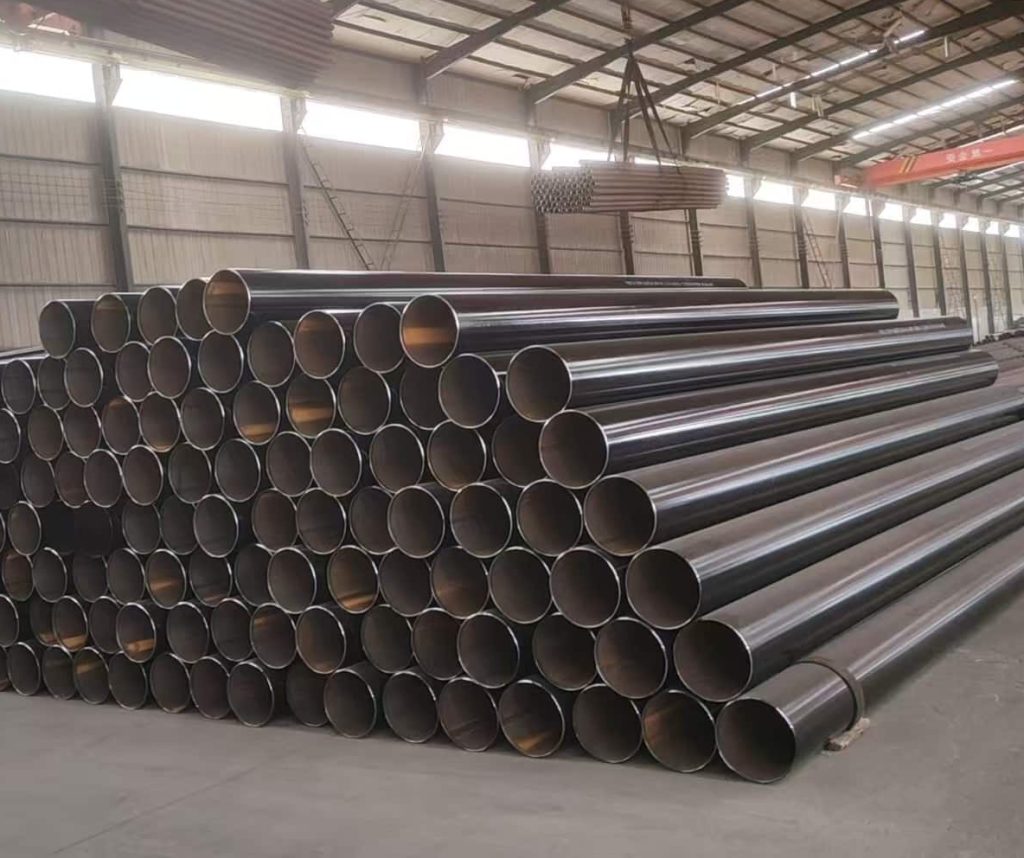
High-pressure steel pipes are designed to withstand elevated internal pressure, temperature fluctuations, and complex operating conditions. As a result, they require superior material properties, welding quality, and dimensional accuracy.
Common applications include:
- Oil and gas transmission pipelines
- Thermal power plant boiler systems
- Petrochemical pressure piping
- Offshore platform transportation systems
- LNG and hydrogen energy projects
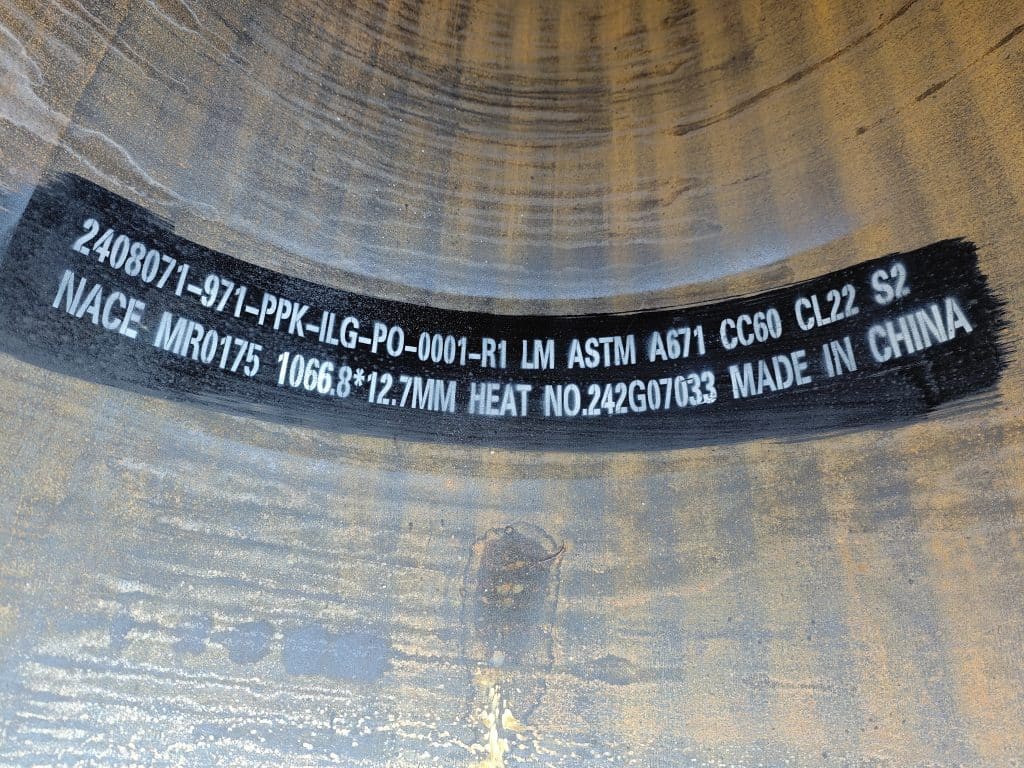
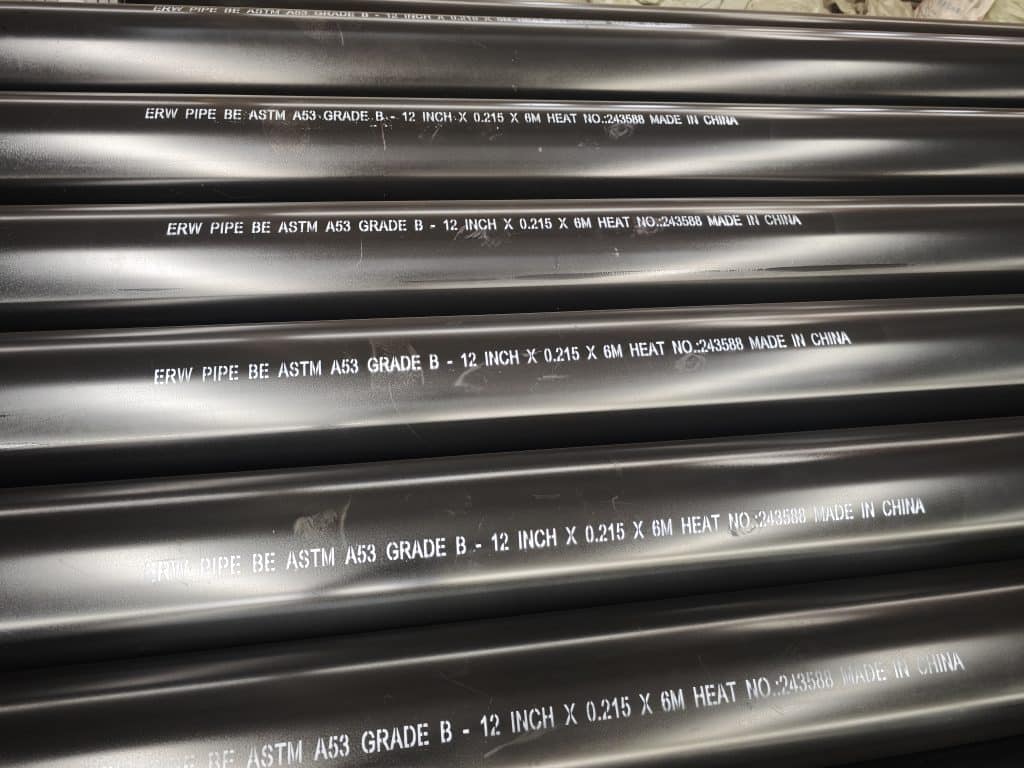
Commonly applied standards include:
| Standard | Application |
| API 5L | Oil and gas transmission pipelines |
| ASTM A106 | Seamless steel pipes for high-temperature and high-pressure service |
| ASTM A335 | Alloy steel pipes for elevated-temperature service |
| ASTM A672 | Pressure vessel and high-pressure piping applications |
| ISO 3183 | International pipeline steel pipe standard |
| ASME B31.3 | Process piping design code |
These standards not only define performance requirements but also establish strict manufacturing and inspection procedures.
Core Process Standards for High-Pressure Steel Pipe Manufacturing
- Raw Material Control Standards
The safety performance of high-pressure steel pipes begins with the quality of steel plates or billets.
LONGMA implements rigorous raw material inspection procedures, including:
- Chemical composition analysis
- Mechanical property testing
- Ultrasonic examination
- Surface defect inspection
Applicable standards:
- ASTM A370
- ISO 6892-1
- API 5L Section 9
For high-pressure applications, even minor inclusions can become crack initiation points. Therefore, raw material control serves as the first line of defense in quality management.
- Forming and Welding Process Control
For LSAW steel pipes and large-diameter transmission pipelines, welding quality directly affects pressure-bearing performance.
LONGMA utilizes:
- JCOE forming technology
- Automatic Submerged Arc Welding (SAW)
- Multi-pass welding processes
Key control parameters include:
| Control Item | Target Requirement |
| Weld penetration | Full penetration |
| Weld profile | Uniform and continuous |
| Heat input | Precisely controlled |
| Residual welding stress | Minimized |
Through digital welding parameter management, LONGMA ensures consistent performance across every production batch.
- Heat Treatment Standards
Heat treatment is a critical process for enhancing the overall performance of high-pressure steel pipes.
Common heat treatment methods include:
- Normalizing
- Quenching
- Tempering
Primary benefits include:
- Increased strength
- Improved toughness
- Residual stress relief
- Enhanced low-temperature performance
For high-grade API 5L pipes and pressure vessel steel pipes, heat treatment directly determines the final mechanical properties.
Mandatory Safety Inspection Requirements for High-Pressure Steel Pipes
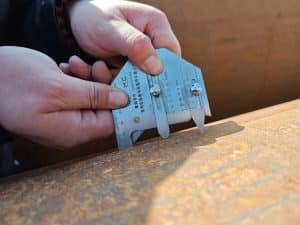
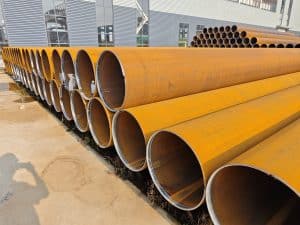
Meeting material specifications alone is not sufficient for international projects.
The true reliability of high-pressure steel pipes depends on comprehensive inspection procedures.
- Hydrostatic Testing
Purpose
To verify pressure-bearing capability and sealing integrity.
Testing Procedure
- Fill the pipe with water.
- Increase pressure to the specified test level.
- Maintain pressure for the required duration.
- Inspect for leakage and deformation.
Applicable Standards
- API 5L Section 10
- ISO 3183
- ASTM A530
High-pressure steel pipes are typically required to undergo 100% hydrostatic testing.
- Ultrasonic Testing (UT)
Purpose
To detect internal defects within the steel pipe.
Typical inspection targets include:
- Lamination
- Lack of fusion
- Cracks
- Non-metallic inclusions
Applicable Standards
- ISO 10893-10
- ASTM E213
- API 5L Annex E
LONGMA employs automated UT systems capable of full-length scanning for every pipe.
- Radiographic Testing (RT)
Purpose
To evaluate the internal quality of weld seams.
Applicable products include:
- LSAW steel pipes
- High-pressure welded pipes
- Thick-wall steel pipes
Applicable Standards
- ISO 10893-7
- ASTM E94
Radiographic analysis can identify:
- Porosity
- Incomplete penetration
- Slag inclusions
This ensures weld quality meets the requirements of high-pressure service conditions.
- Charpy Impact Testing
Purpose
To verify low-temperature toughness.
Typical applications include:
- LNG projects
- Arctic transmission pipelines
- Offshore engineering projects
Applicable Standards
- ASTM A370
- API 5L PSL2
Impact testing provides a reliable assessment of steel pipe safety under extreme environmental conditions.
How LONGMA’s In-House Laboratory Ensures Consistent Quality
For international buyers, the greatest risk is often not insufficient testing, but inconsistent quality over time.
As a result, more customers are evaluating the laboratory capabilities of steel pipe manufacturers during supplier qualification.
LONGMA has established a comprehensive testing center that includes:
1.Chemical Analysis Laboratory
Testing items include:
- Carbon (C)
- Manganese (Mn)
- Phosphorus (P)
- Sulfur (S)
- Alloying elements
This ensures compliance with material specifications.
2.Mechanical Testing Laboratory
Testing includes:
- Yield strength
- Tensile strength
- Elongation
These tests verify the load-bearing capability of high-pressure steel pipes.
3.Metallurgical Laboratory
Analysis includes:
- Grain structure
- Heat-affected zone (HAZ)
- Weld microstructure
This ensures the stability of heat treatment and welding processes.
4.Non-Destructive Testing Center
Capabilities include:
- UT
- RT
- MT
- PT
These inspections provide comprehensive quality monitoring throughout the manufacturing process.
Such an in-house laboratory system not only improves product reliability but also strengthens traceability throughout the project lifecycle.
Common Risks in High-Pressure Steel Pipe Procurement
Many buyers focus solely on price while overlooking critical quality risks.
Common issues include:
| Risk | Potential Consequence |
| Insufficient wall thickness | Pressure failure |
| Weld defects | Leakage or rupture |
| Inadequate heat treatment | Poor toughness |
| Chemical composition deviation | Corrosion failure |
| Incomplete inspection | Hidden defects entering service |
The financial losses resulting from these issues often far exceed any initial procurement savings.
Therefore, selecting a manufacturer with a mature quality management system is essential.
Why Global Customers Choose LONGMA
After more than 20 years of technical development, LONGMA has established a complete manufacturing and quality assurance system for high-pressure steel pipes:
- Strict compliance with API, ASTM, and ISO standards
- Automated production equipment
- Comprehensive in-house laboratory facilities
- Full-process quality traceability system
- Extensive international project supply experience
From raw material inspection to final product delivery, every high-pressure steel pipe undergoes rigorous testing to ensure reliable performance under high-pressure, high-temperature, and demanding operating conditions.
Conclusion
High-pressure steel pipes are not merely industrial products—they are fundamental components that ensure the safe operation of critical infrastructure projects.
From raw material selection and welding process control to heat treatment and non-destructive testing, every stage influences the final performance of the steel pipe.
As a professional steel pipe manufacturer with more than 20 years of experience, LONGMA remains committed to international standards, advanced manufacturing technologies, and stringent quality control systems. We provide reliable high-pressure steel pipe solutions to customers worldwide.
If you are looking for a trusted high-pressure steel pipe supplier, API 5L steel pipe manufacturer, or large-diameter LSAW steel pipe producer, LONGMA is ready to provide professional technical support, comprehensive inspection documentation, and dependable product quality to help ensure the safety and success of your projects.