Yes. Carbon steel pipe can provide the strength needed for a wide range of water, oil, gas and industrial applications. Its actual strength depends on the steel grade, manufacturing specification and pipe dimensions. A pipe’s safe working pressure also depends on temperature, corrosion allowance, design factors and the governing design code, so material strength alone is not a pressure rating.
API 5L line pipe offers a range of specified strengths. In the 46th edition’s SI tables, Grade B has a specified minimum yield strength of 245 MPa and a minimum tensile strength of 415 MPa. For X80 PSL2, the corresponding values are 555 MPa and 625 MPa. These are examples of material requirements, not a recommendation to select the highest grade for every application.
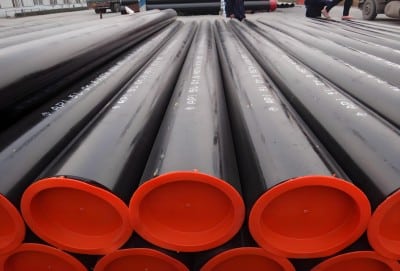
What Determines Carbon Steel Pipe Strength?
Yield strength is the stress at which a material begins to deform permanently under the specified test method. Tensile strength describes the maximum stress reached in a tensile test. Ductility, measured in part by elongation, describes the material’s ability to deform before fracture. Toughness concerns the ability to absorb energy and resist fracture; Charpy impact testing provides one way to evaluate it under specified conditions.
These properties work together. A higher yield strength can contribute to a pressure design with a different wall thickness, but a design must also consider toughness, fatigue, buckling, corrosion and installation loads. For example, a buried pipeline subject to ground movement may need deformation and strain assessments that cannot be answered by yield strength alone.
Composition affects strength and weldability, but carbon content is not the only variable. Manganese, other alloying additions, steelmaking, controlled rolling and heat treatment all influence the final properties. Higher carbon may increase hardenability and make welding more challenging, while low-carbon high-strength line pipe can obtain strength through controlled processing and microalloying. Limits depend on the product standard, grade, manufacturing route and delivery condition.
Carbon Steel Pipe Grades and Strength
| Pipe specification and grade | Minimum yield strength | Minimum tensile strength | Typical context |
| API 5L Grade B | 245 MPa | 415 MPa | Line pipe for suitable transmission and utility duties |
| API 5L X65 | 450 MPa | 535 MPa | Higher-strength line pipe for engineered pipeline service |
| API 5L X80 PSL2 | 555 MPa | 625 MPa | High-strength line pipe for specified transmission projects |
The table uses SI pipe-body values from API 5L, 46th edition. The ordered standard’s table notes, product level and supplementary provisions remain applicable. Actual test results are reported in the inspection documents. Other product standards have their own requirements and should not be treated as interchangeable solely because their grade names look similar.
API 5L has two product specification levels. PSL1 specifies basic product requirements; PSL2 adds requirements that include applicable upper strength limits, toughness, chemistry controls and traceability. The S in PSL is part of “product specification level”; it does not mean sour service. Where sour-service pipe is required, the purchaser must specify the applicable supplementary requirements and complete grade designation.
The API 5L grade represents specified material properties. It does not by itself determine whether a particular pipe is suitable for an operating pressure. The pressure design depends on diameter, nominal and minimum wall thickness, allowable stress or design factor, temperature, corrosion allowance and the relevant code. ASME B31.4 and B31.8 are examples of design codes used for liquid and gas pipeline systems, respectively, where applicable.
ERW, LSAW and Seamless Pipe
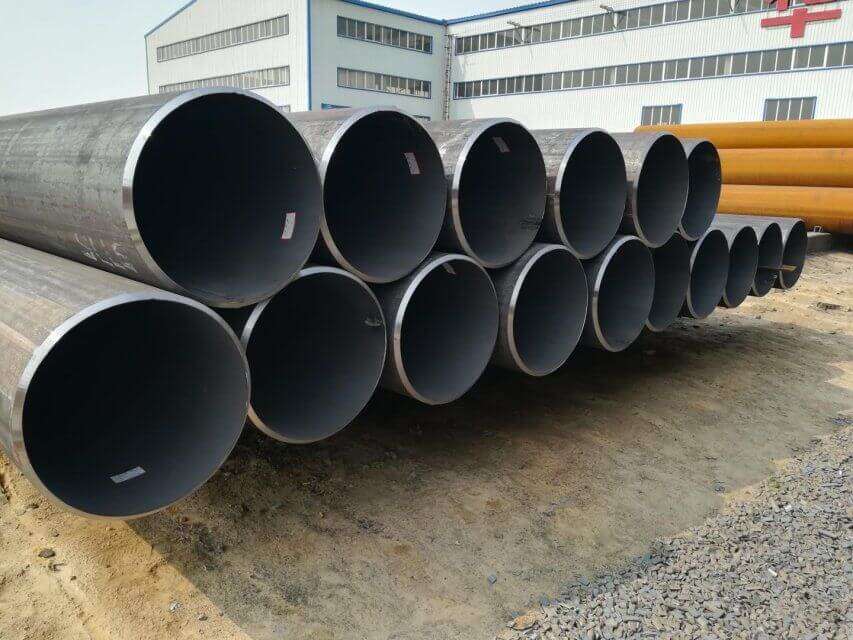
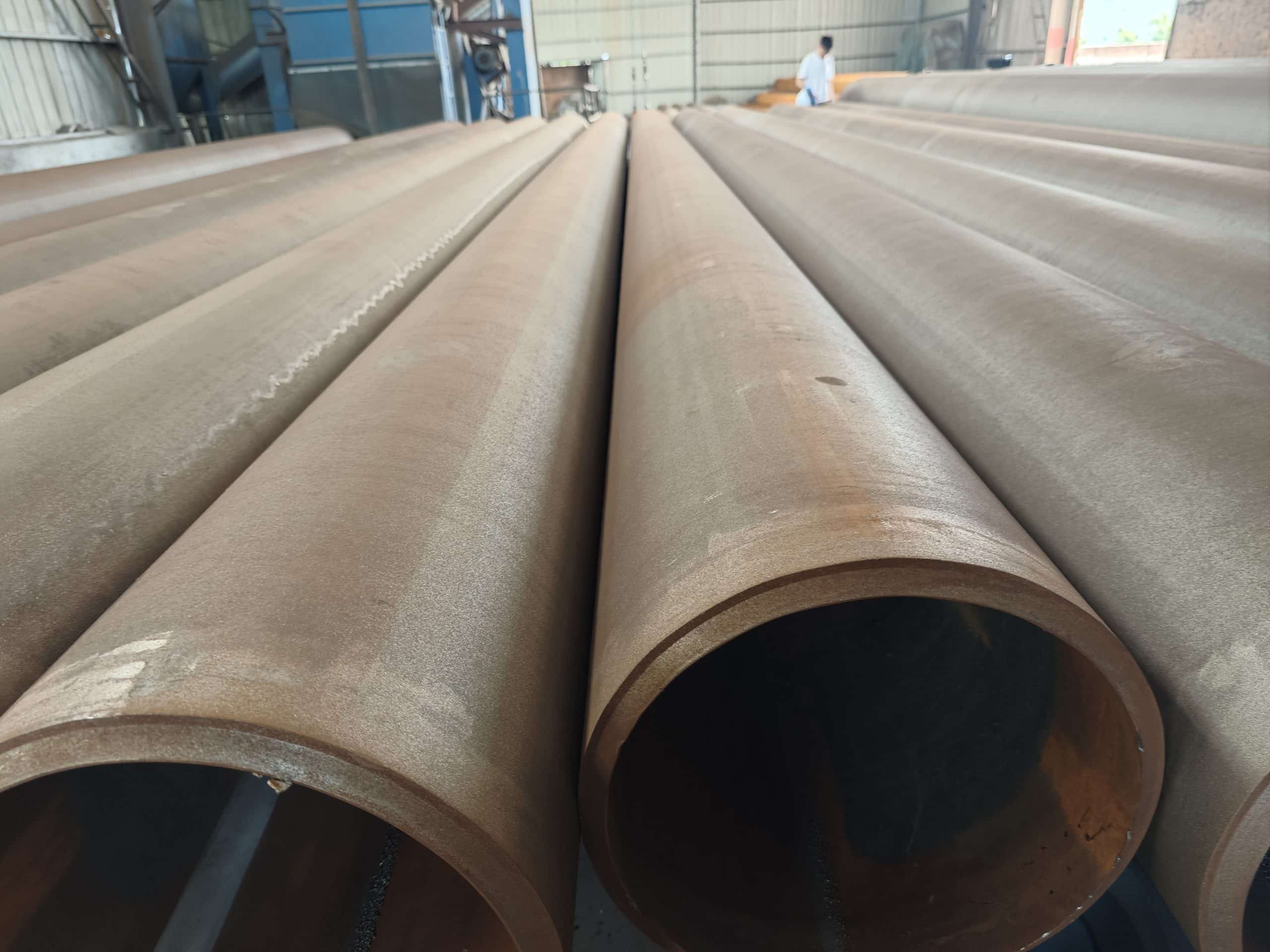
ERW pipe starts with steel strip or coil formed into a round shape. The longitudinal edges are joined using electrical resistance heating and pressure, normally without filler metal. LSAW pipe is formed from plate and welded along the longitudinal seam using submerged arc welding. Both routes can produce pipe meeting an applicable API 5L grade when the finished product satisfies the ordered requirements.
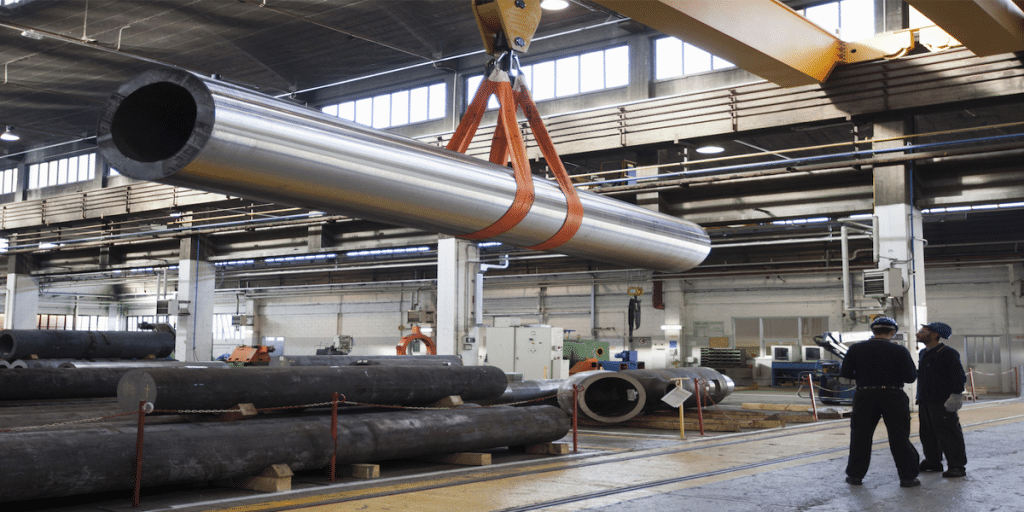
Seamless pipe is manufactured without a longitudinal weld seam. ASTM A106 is one specification for seamless carbon steel pipe intended for high-temperature service. Whether seamless or welded pipe is appropriate depends on the material specification, design code, service conditions, dimensions and inspection requirements. Neither manufacturing route is automatically stronger or safer for every project.
For two pipes of the same diameter, wall thickness and specified grade, the applicable material requirements and design rules provide the basis for comparison. LSAW is often considered for large-diameter or thick-wall projects because of available manufacturing ranges, while ERW is widely used in line pipe and other suitable applications. Neither process guarantees greater resistance to external loads at equivalent dimensions; pipe geometry, material properties and design govern the outcome.
LONGMA manufactures round ERW and LSAW pipe. Confirm the available grade, outside diameter, wall thickness and delivery condition for each process when requesting a quotation. Seamless pipe is relevant to a market comparison but requires a separate source where specified.
Welding, Testing and Corrosion Protection
Welding and forming can affect the weld and adjacent heat-affected zone. Heat treatment may be required by the product specification or qualified procedure, but normalizing and stress relief have different purposes. Stress relief reduces residual stress; it does not guarantee that every residual stress disappears or that the weld and parent metal have identical properties. The finished product must satisfy the specified acceptance tests.
For field welding, carbon equivalent is one input to the welding procedure. Wall thickness, hydrogen control, restraint, heat input, preheat and interpass temperature also matter. The required qualification standard depends on the project and governing code. For an H₂S-containing environment, assess the actual service conditions and specify the applicable material and supplementary testing requirements, including ISO 15156 where relevant.
Hydrostatic testing and nondestructive examination support product acceptance under the ordered standard. Depending on manufacturing route and specification, examinations may include ultrasonic, radiographic, magnetic-particle or other methods. A satisfactory result demonstrates compliance with the test’s specified conditions; it is not a guarantee that a pipeline will never leak during operation.
Carbon steel needs a corrosion-control plan appropriate to its environment. External FBE, 3LPE, 3LPP or liquid epoxy may be selected for compatible conditions, with cathodic protection where required. Coating standards must match the actual system: DIN 30670 concerns polyethylene coatings, while ISO 21809-2 covers applicable single-layer external FBE. Internal linings are selected separately for the fluid and intended function. Inspection, maintenance and repair remain important throughout the pipeline’s service life.
Choosing a Strong Pipe for the Application
For oil and gas transmission, select grade and PSL using the owner specification, design pressure, temperature and installation conditions. Higher grades such as X65 or X80 can be useful where the design and construction programme justify them. For water transmission or utility lines, the required product standard, diameter, coating and joining method may be more important than selecting a high-strength grade.
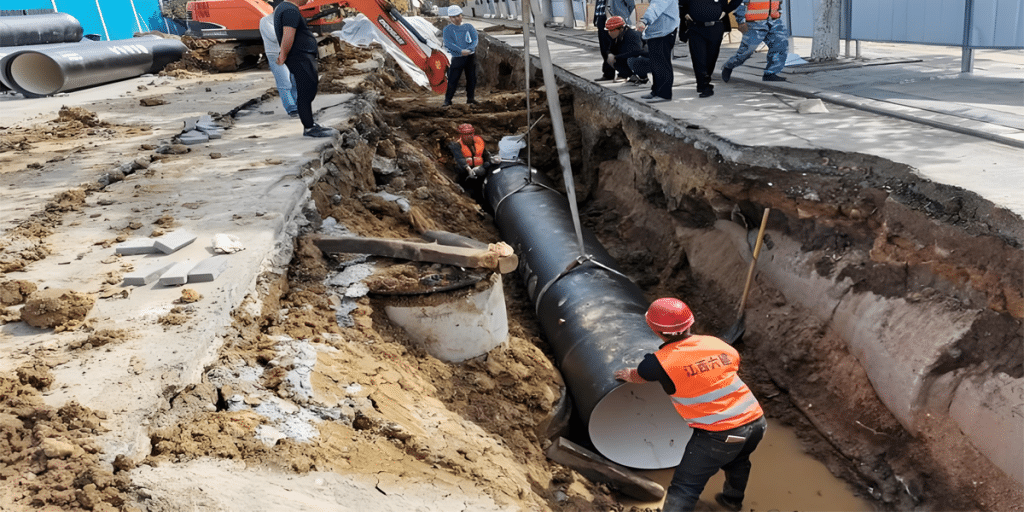
Slurry pipelines require attention to internal abrasion and the transport medium as well as pressure. Industrial process systems may require temperature-dependent allowable stresses and specific material standards. For buried or submerged lines, corrosion protection, field-joint treatment and external loading affect the long-term integrity of the pipe.
When comparing quotations, request the same grade, dimensions, standard edition, manufacturing route, inspection plan and coating scope. Confirm material identification, heat traceability, mechanical test results and the required inspection document, such as EN 10204 3.1 or 3.2. Where independent inspection is required, agree its scope and hold points in advance.
Frequently Asked Questions
Is welded carbon steel pipe as strong as seamless pipe?
Both can meet specified grade requirements when manufactured and tested to the applicable standard. Compare the actual grade, dimensions, weld requirements and design code rather than assuming one process is always stronger.
Does thicker pipe always mean higher pressure capacity?
For a given material, diameter and comparable design conditions, increased wall thickness generally increases pressure capacity. The allowable pressure must still be calculated using the governing code, temperature, tolerances and allowances.
Can carbon steel pipe be used in sour service?
Yes, if the material and welded areas meet the applicable requirements for the actual H₂S environment. State the required supplementary provisions and testing in the purchase order.
Discuss Your Carbon Steel Pipe Requirements
LONGMA has manufactured round ERW and LSAW steel pipes since 2003. The factory covers 230,000 m², with annual output exceeding 500,000 tonnes and more than 60 senior technical personnel. The team supports orders with agreed inspection documentation and third-party inspection arrangements. Contact info@ilongma.com or visit www.ilongma.com with the grade, dimensions, application and delivery requirements.