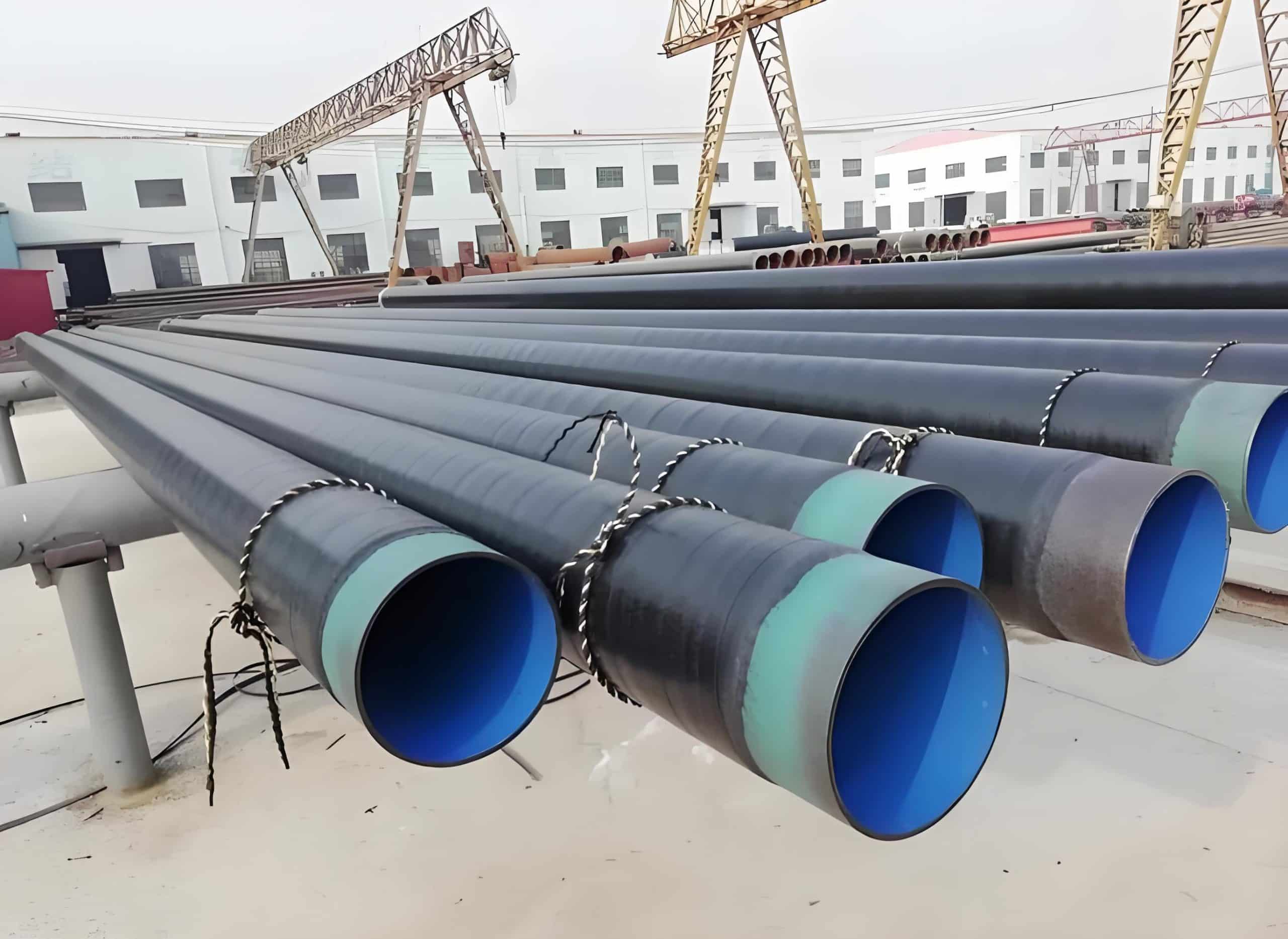
Fusion-bonded epoxy (FBE) coated steel pipe is used in water transmission projects where corrosion resistance, coating adhesion and controlled installation quality are essential. FBE is a thermosetting epoxy powder applied to a prepared, heated steel surface. It forms a protective coating after melting, flowing and curing. For water infrastructure, the key purchasing decision is whether the coating is intended for the pipe exterior, the water-contact interior, or both. Each surface has different service conditions and may require different approvals.
What Is FBE Coated Steel Pipe?
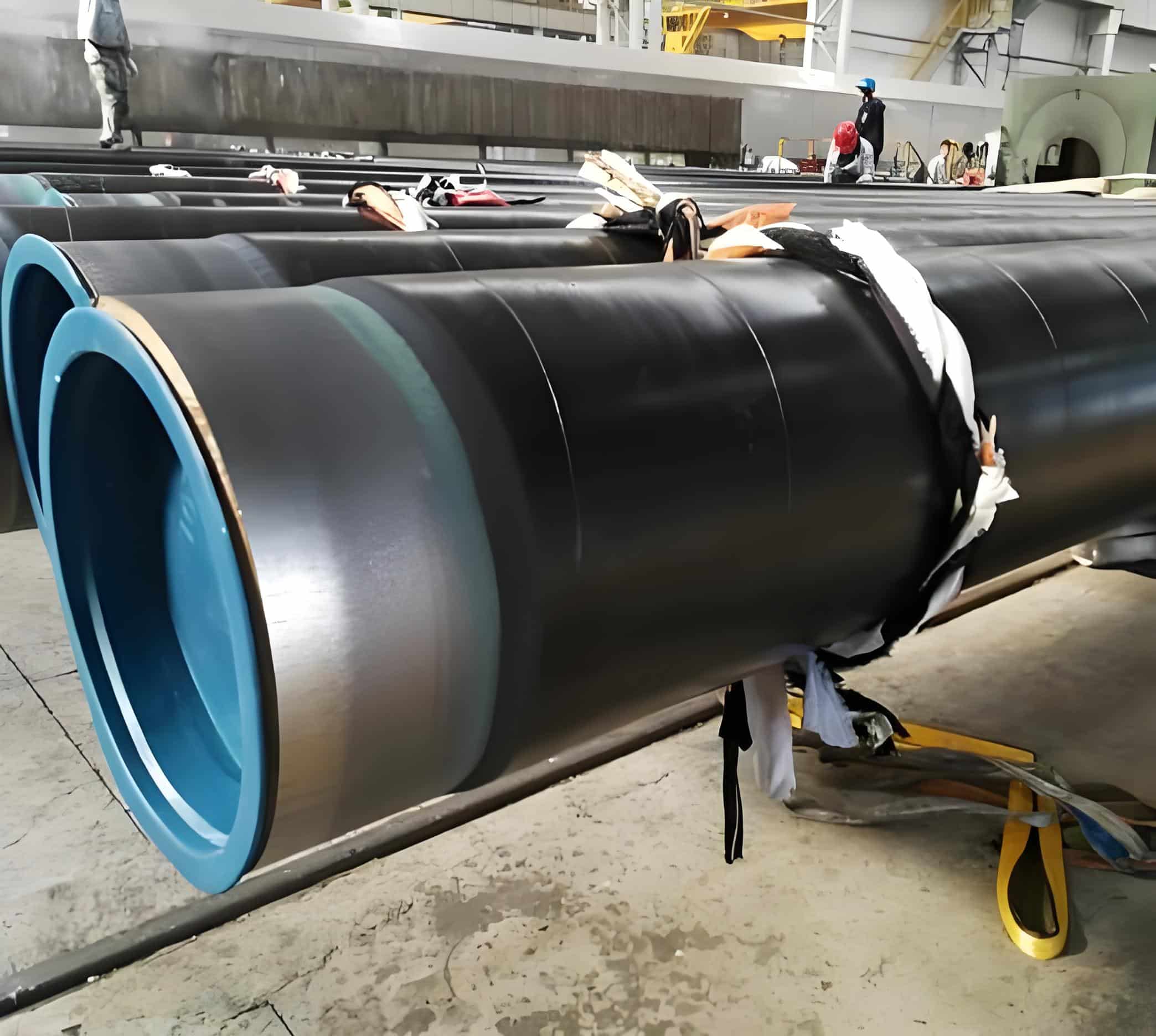
FBE is a factory-applied barrier coating that helps isolate steel from moisture and other corrosive conditions. A properly specified system can be used on buried water transmission mains, raw-water pipelines, industrial water lines and other engineered installations. However, no coating prevents corrosion under every condition. Holidays, mechanical damage, unsuitable water chemistry or poor field-joint protection can compromise the system.
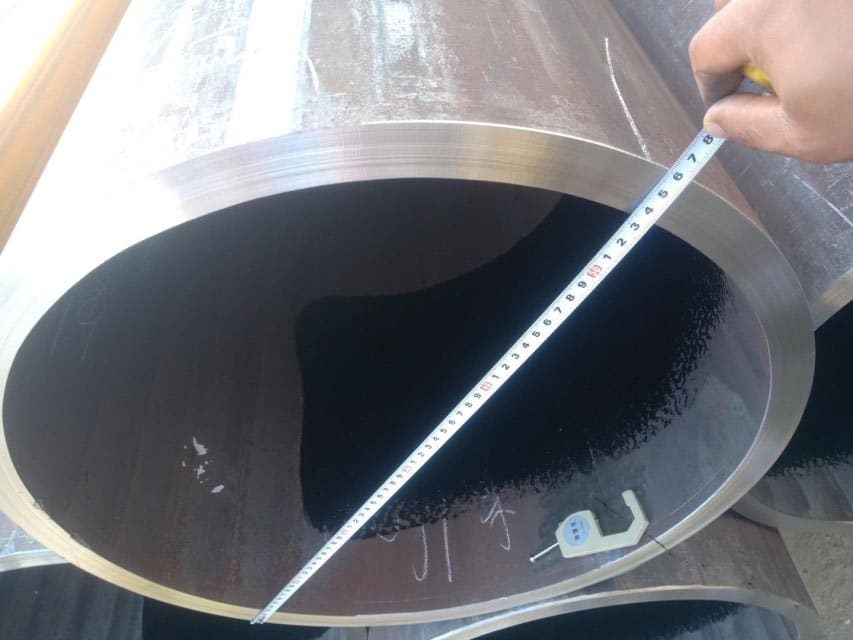
The underlying pipe may be manufactured to an appropriate steel-pipe standard, depending on design requirements. For large-diameter water transmission projects, welded round pipe is frequently selected. Pipe grade, diameter, wall thickness and joint design are engineering decisions; the FBE coating itself does not determine the allowable operating pressure.
How FBE Is Applied
Production begins with inspection and cleaning of the steel surface. Abrasive blasting removes contaminants and creates the specified anchor profile. The pipe is then heated within the qualified range for the selected powder. Electrostatic powder application is followed by fusion, flow and curing. After cooling, inspectors assess coating thickness, continuity, appearance and other properties required by the purchase specification. Defects are repaired using an approved procedure and re-inspected before release.
Single-layer FBE and dual-layer FBE serve different purposes. A dual-layer system may provide additional resistance to mechanical damage, but its use must be qualified against the project specification. Neither system should be selected solely because it has more layers.
Benefits and Limitations for Water Transmission
FBE can provide strong adhesion, a relatively smooth internal surface when used as an approved lining, and a continuous protective barrier when properly applied. Smooth internal lining may help control friction losses, although hydraulic performance depends on diameter, flow regime, surface condition and the overall pipeline design. Factory coating also allows surface preparation and inspection to take place under controlled conditions.
Its limitations deserve equal attention. Impact during transport, abrasion during installation, insufficient curing and damage at welded field joints can create weak points. Chemical resistance and continuous-service temperature depend on the specific formulation. A supplier should therefore provide the product data sheet and relevant qualification results, rather than relying on a generic statement that all FBE coatings have the same performance.
FBE Lining Versus Cement Mortar Lining
FBE and cement mortar can both be considered for internal protection of steel water mains, but they function differently. FBE is an organic barrier coating; cement mortar provides a mineral lining whose protective behavior depends on alkalinity and service conditions. Cement mortar is typically thicker, while FBE offers a thinner, smoother finish. The right choice depends on water chemistry, project standards, inspection requirements and expected maintenance.
| Selection factor | FBE lining | Cement mortar lining |
| Protection approach | Organic barrier | Cementitious alkaline lining |
| Typical surface | Smooth, relatively thin | Thicker mineral surface |
| Key risks | Holidays, impact, chemical incompatibility | Cracking, curing defects, water compatibility |
| Repairs | Approved compatible epoxy system | Approved cementitious repair |
| Potable-water use | Specific formulation approval required | Applicable water-contact approval required |
For exterior protection, 3LPE uses a different multilayer construction that includes a polyethylene outer layer. It may offer greater mechanical protection in some installation environments, but it is not automatically preferable for every water main. FBE, 3LPE and liquid-applied epoxy must be compared against the same operating and installation conditions.
Drinking-Water Approval and Applicable Standards
A coating intended to contact drinking water must be assessed for that use. Corrosion resistance alone does not establish potable-water suitability. In North America, NSF/ANSI/CAN 61 is an important reference for drinking-water system components, subject to the jurisdiction and product scope. Other markets may have their own national or regional water-contact requirements. Buyers should confirm that approval applies to the exact coating formulation, application conditions and intended contact surface.
AWWA C213 addresses fusion-bonded epoxy coating for steel water pipelines and fittings. ISO 21809-2 concerns external FBE coatings for pipeline transportation systems and should not be presented as a substitute for potable-water contact approval. DIN 30670 concerns polyethylene coatings rather than single-layer FBE. The order should identify the applicable standard and edition, any project supplements, and the required inspection records.
The documentation package should identify the coating manufacturer and batch, substrate pipe, application records, thickness checks, holiday inspection, repairs and any required third-party or drinking-water certificates. When the pipe is intended for potable water, verify both the approval scope and the actual supplied coating product.
Installation, Inspection and Common Failure Modes
Protect the coating during lifting and transport with suitable padded contact surfaces and controlled stacking. Before installation, inspect the full pipe length for damage. Welded field joints require a separately qualified coating or repair system compatible with the factory-applied coating. The field-joint procedure should define surface preparation, overlap, curing, thickness and inspection.
Holiday detection identifies discontinuities that may expose steel. Detector type and voltage must be selected according to coating thickness, material and the applicable procedure. Adhesion, cure and cathodic-disbondment tests may also be required as qualification or production checks. An inspection record is useful only if defects are repaired and the repaired areas are rechecked.
| Failure mode | Possible cause | Practical control |
| Holiday or pinhole | Contamination or insufficient coverage | Surface preparation and calibrated detection |
| Poor adhesion | Incorrect blast profile or surface condition | Preparation inspection and process control |
| Blistering | Moisture or chemical incompatibility | Formulation and service-condition review |
| Impact damage | Handling or rocky backfill | Padded equipment and suitable bedding |
| Disbondment | Application defects or cathodic effects | Qualification tests and protection-system review |
For buried metallic pipelines, cathodic protection may form part of the corrosion-control design. It complements, rather than replaces, the coating. Backfill selection and avoidance of sharp stones are also important because a high-quality factory coating can still be damaged during lowering-in.
Procurement Checklist and LONGMA Supply
A useful request for quotation identifies the water service, pipe diameter, wall thickness, steel grade, length, end preparation, internal and external coating requirements, thickness, referenced standards, inspection scope and documentation. For potable-water systems, the buyer should explicitly require applicable water-contact approval. Quotes should distinguish the steel pipe price, coating scope, inspection and field-joint materials so that suppliers are compared consistently.
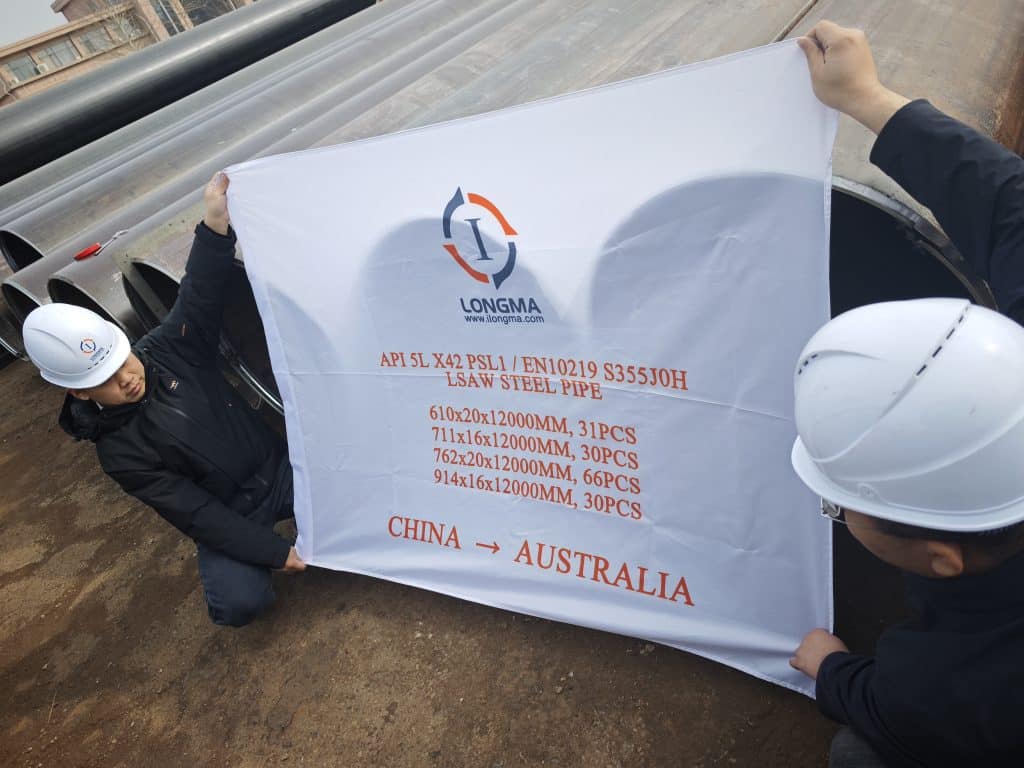
LONGMA focuses on round carbon steel welded pipe manufactured by ERW and LSAW processes. Its factory covers 230,000 m², with annual production exceeding 500,000 metric tons. For water transmission projects, customers can discuss pipe dimensions, coating specifications, inspection documentation and delivery arrangements with the technical and sales teams. The required coating configuration and approvals should be confirmed for each order rather than assumed from a general product description.
Frequently Asked Questions
Is FBE coated steel pipe suitable for drinking water?
It can be suitable when the specific lining formulation and its intended use meet the applicable drinking-water contact requirements. An external-only FBE coating certificate does not establish internal potable-water approval.
Is FBE better than 3LPE for buried water pipelines?
Neither is universally better. Compare operating temperature, installation damage risk, coating qualification, field-joint treatment and lifecycle requirements.
Does FBE coating increase the pipe pressure rating?
No. Pressure capacity depends on the steel pipe, dimensions, weld quality and applicable design code.
How is FBE coating quality checked?
Common controls include surface-preparation inspection, coating thickness, holiday detection and any specified adhesion or cure tests. Repairs should be documented and retested.
Can damaged FBE be repaired on site?
Yes, where the coating specification permits an approved compatible repair system. Surface preparation, curing and final inspection remain essential.
For project-specific FBE coated round steel pipe requirements, contact LONGMA through its official website at https://www.ilongma.com/.