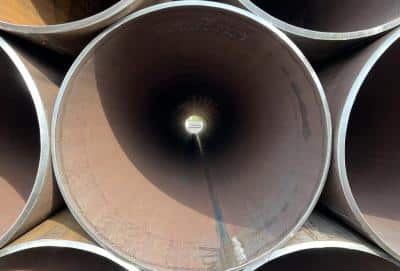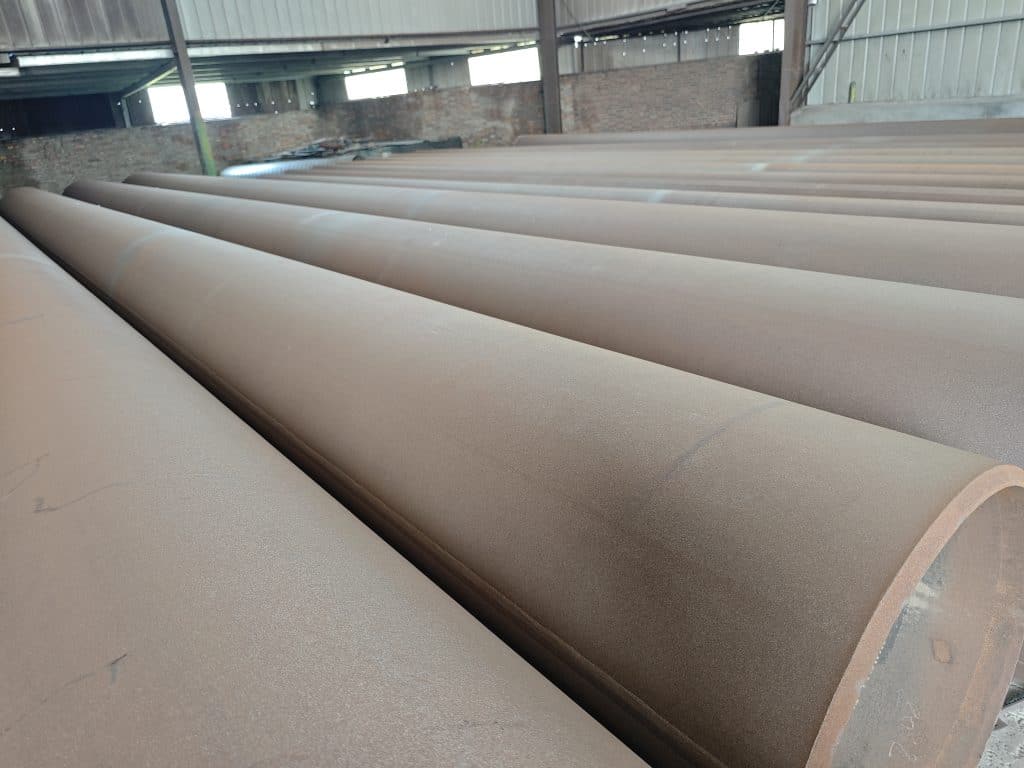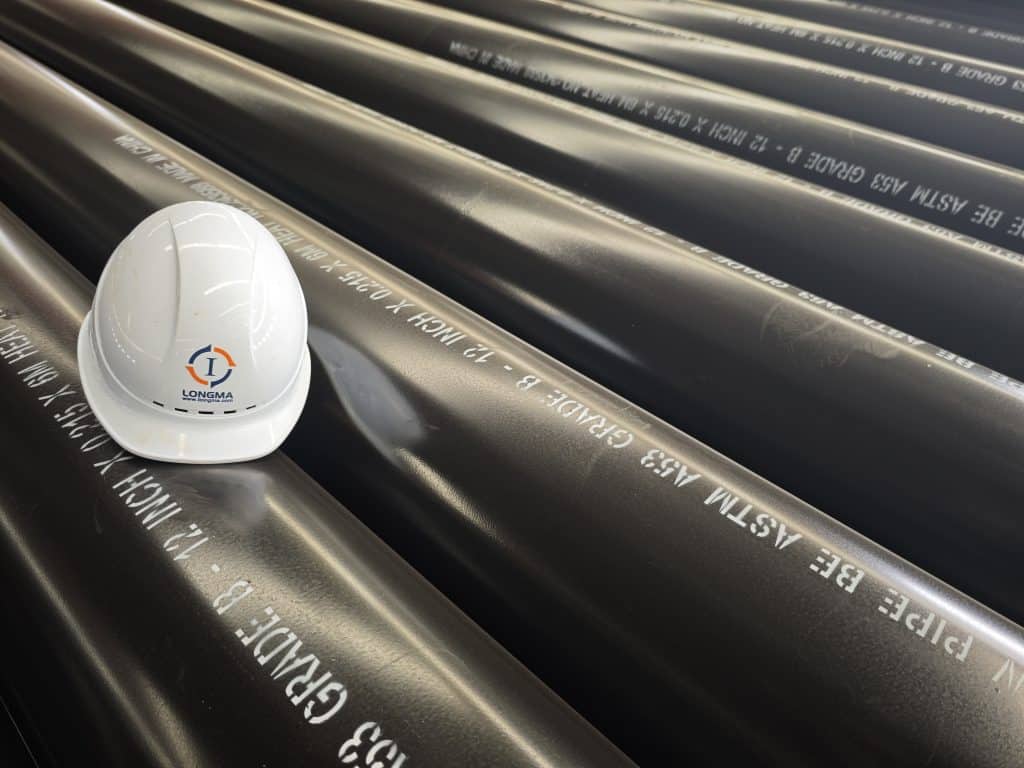
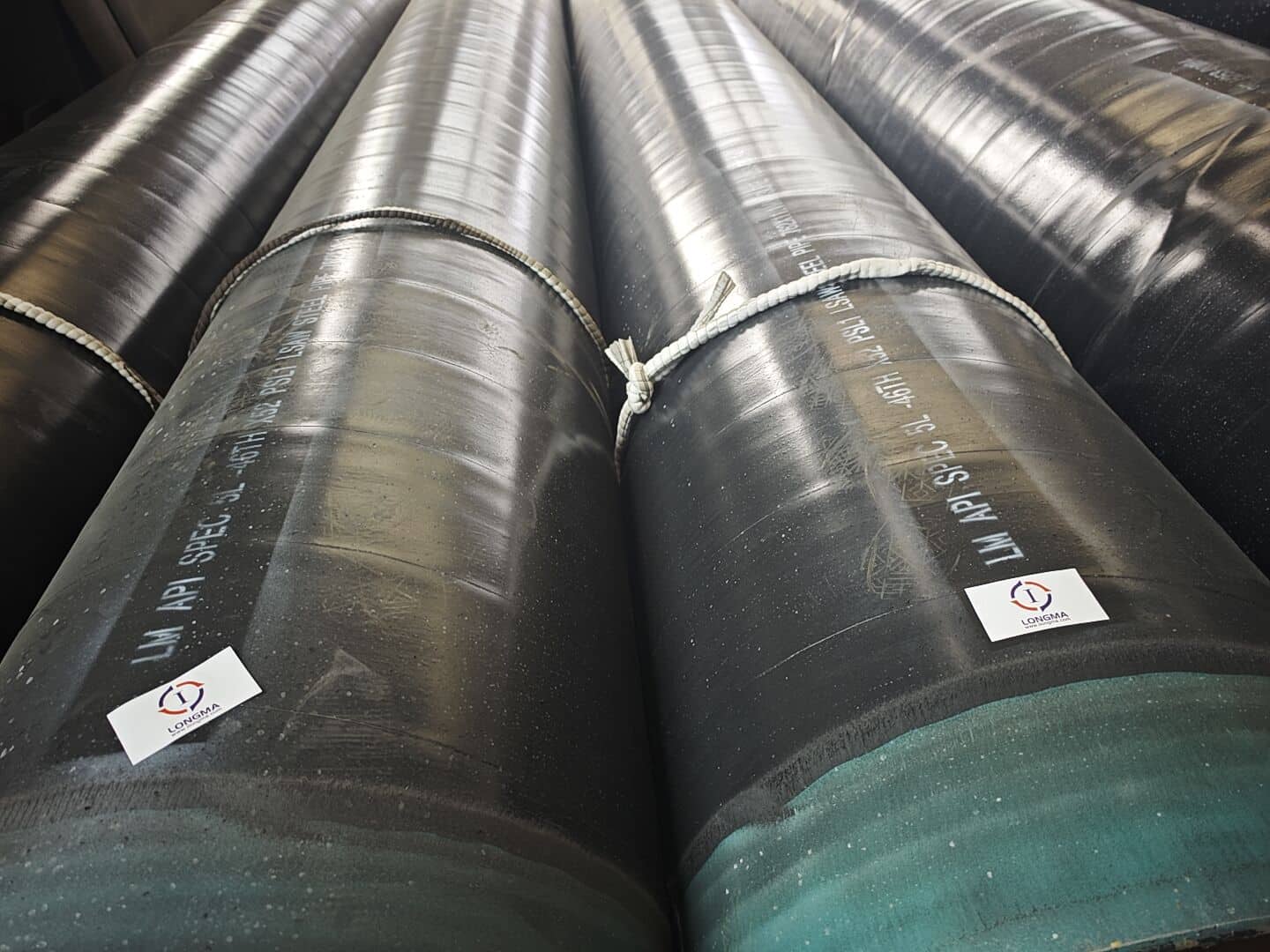
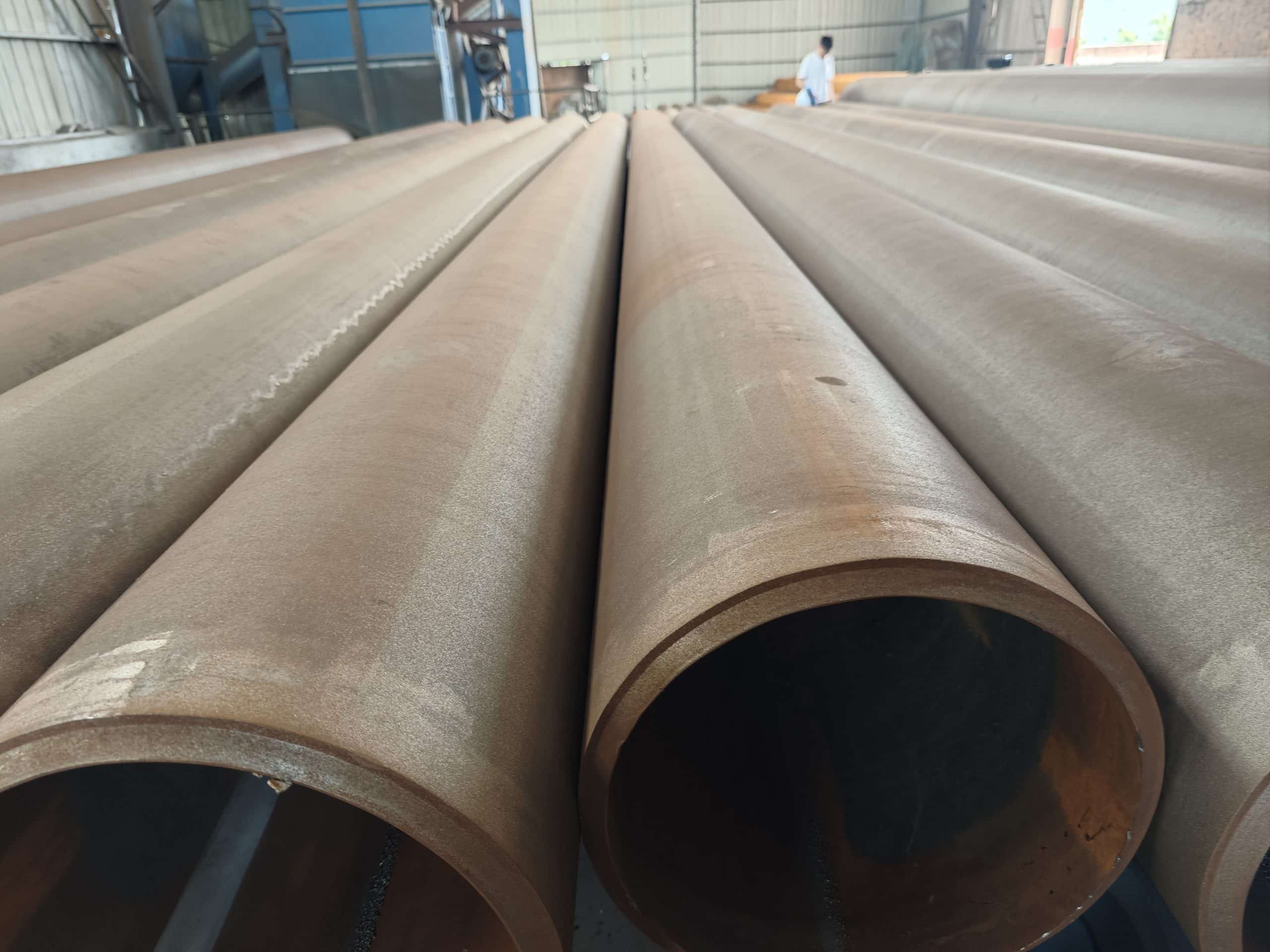
API 5L X80 (L555) is a high-strength line-pipe grade with a specified minimum yield strength of approximately 555 MPa (80 ksi). Its strength can be useful in high-pressure transmission design, but a strength designation does not establish resistance to hydrogen sulfide (H₂S)-related cracking.
X80 should not be described as routinely qualified for sour service under API 5L Annex H. API documentation identifies grades B through X70 in Annex H Table H.1; X80 is not among those listed grades. Consequently, specifying “API 5L X80 PSL2 Annex H” as a standard sour-service product is misleading. Any proposal to use X80 in an H₂S-containing environment needs a separately defined engineering assessment, applicable code review, and project-specific qualification and approval. This is not a blanket endorsement of X80 for sour service.
What Makes an Environment Sour?
A practical assessment starts by separating fluid composition from actual exposure at the steel surface. A gas stream may contain H₂S without continuously wetting the internal pipe wall, while water accumulation during shutdown or changes in operating conditions can create a different exposure scenario. Engineers should therefore review normal operation, startup, shutdown, depressurization and possible water condensation rather than rely only on a single steady-state composition. The assessment should identify where free water may appear, whether deposits or stagnant regions are possible, and how corrosion-control measures will be maintained over the intended operating life.
Sour-service risk depends on the presence of an aqueous phase and the combination of H₂S partial pressure, pH, temperature, chlorides, other chemical species, operating stress and exposure conditions. A single H₂S concentration threshold is not a universal approval criterion for any particular steel grade.
Wet H₂S environments can introduce hydrogen into steel. Hydrogen-induced cracking (HIC) can initiate at susceptible inclusions or segregated regions; sulfide stress cracking (SSC) involves tensile stress and material susceptibility; stress-oriented HIC (SOHIC) can develop through linked cracks influenced by stress. Passing one test does not demonstrate resistance to every damage mechanism.
Material and Weld Factors
For X80, an additional concern is whether material properties measured on the pipe body represent the areas most susceptible to damage. Plate or strip production, forming strain, seam welding and subsequent thermal cycles can produce local differences. A qualification program should identify the relevant sampling positions and examine the base metal, weld metal and heat-affected zone as applicable. Test results from one heat, wall thickness or welding procedure should not automatically be treated as representative of every production configuration. Changes to the steelmaking route, welding parameters or heat-treatment condition may require review of the original qualification basis.
For high-strength steel, chemistry, steel cleanliness, microstructure, strength, hardness and residual stress can materially affect cracking susceptibility. The base metal, longitudinal seam weld and heat-affected zone must all be considered where applicable. No single hardness number should be presented as a universal X80 acceptance limit without identifying the governing standard and qualification route.
Pipe forming, welding, heat input and any required heat treatment can alter local properties. Welding procedures, production inspection and field welding controls must be matched to the actual material and service conditions. Post-weld heat treatment is not automatically mandatory for every LSAW pipe simply because the intended environment contains H₂S.
Relevant Standards and Qualification Tests
A material qualification plan should state the intended question for each examination. HIC testing addresses cracking susceptibility in a prescribed environment, while SSC testing evaluates performance under specified stress and exposure conditions. Hardness surveys can identify locally hardened regions, but they do not replace environmental cracking tests. Chemical analysis, tensile testing, impact testing and metallographic examination may provide supporting evidence about material consistency and toughness. Acceptance limits, specimen orientation, sampling frequency, test solutions and reporting format should be agreed before testing. A report that merely states “passed” is less useful than one documenting the test method, conditions, measurements and applicable acceptance criteria.
API 5L specifies line-pipe product requirements. Its Annex H addresses sour-service pipe within the grades and conditions stated in that annex; it should not be extended to X80 by assumption. ISO 15156/NACE MR0175 provides material selection and qualification requirements within its defined oil-and-gas production scope, while other sectors and downstream installations may invoke different documents, including ISO 17945/NACE MR0103.
NACE TM0284 is used to evaluate susceptibility to HIC under specified test conditions. NACE TM0177 addresses resistance to SSC and related cracking under defined laboratory conditions. Neither test provides unrestricted approval for all sour environments. Specify the test solution, specimen orientation and location, applied stress where relevant, duration, acceptance criteria, sampling plan and reporting requirements before manufacturing.
The project engineer should confirm the applicable editions of all referenced standards and whether the proposed material falls within their prescriptive scope. Where it does not, an alternative qualification route requires explicit engineering justification and project acceptance.
Procurement and Verification Checklist
The technical inquiry should also explain which party is responsible for approving a nonstandard material qualification route. A manufacturer can supply production records and test specimens, but acceptance for the intended service belongs within the project’s engineering and materials approval process. If a specification references ISO 15156, confirm that the actual installation falls within its scope; other systems may be governed by different material-selection criteria. Any proposed departure from prescriptive requirements should be documented, reviewed and accepted by the responsible authority rather than introduced through an informal note on a quotation.
Before requesting a quotation, provide the H₂S partial pressure, water content, operating and design temperatures, pH, chloride and CO₂ conditions, design pressure, expected stresses, service life and any operating transients. Specify whether the intended duty is production, processing, transmission or another service, because the governing material-selection documents may differ.
Confirm the required grade, manufacturing route, outside diameter, minimum wall thickness, delivery condition and weld examination scope. Request a written qualification plan for HIC, SSC, hardness, mechanical properties and weld/heat-affected-zone testing as appropriate. Review heat traceability, material test certificates, nondestructive examination reports and any third-party inspection documents required by contract.
If the proposed X80 cannot be justified for the environment, the design team should consider another grade or material system rather than assume that additional inspection alone resolves the risk.
Conclusion
Traceability is particularly important where qualification is tied to a defined material condition. The purchase order should link the approved steel grade and manufacturing route to the supplied heats, dimensions, weld procedures and test records. During final review, the purchaser should check that the tested configuration and the delivered pipe remain within the qualified limits. A complete documentation package helps engineers distinguish evidence of general API 5L conformity from evidence addressing the specific sour environment. It also makes future maintenance, repair and replacement decisions more consistent with the original material-selection basis. For projects involving multiple pipe sizes or production batches, the qualification matrix should clearly identify which combinations are covered. This reduces the chance that a test result obtained on one configuration is mistakenly applied to a different wall thickness, heat or seam-welding procedure. Such controls are especially valuable when project specifications change during procurement.
X80 is a high-strength pipeline grade, not an automatically approved sour-service grade. In particular, X80 is not listed among the standard Annex H sour-service grades in the cited API documentation. Its use in an H₂S-containing system requires explicit engineering assessment, appropriate qualification, and approval under the applicable project framework. Buyers should not rely on the X80 grade designation, a generic HIC test certificate, or a supplier claim alone.
Frequently Asked Questions
Is X80 included in the standard API 5L Annex H sour-service grade list?
No. API documentation identifies Annex H grades through X70, not X80. Do not assume ordinary Annex H compliance for X80.
Does passing HIC testing make X80 suitable for sour service?
No. HIC results address defined test conditions and do not by themselves demonstrate SSC resistance, weld suitability or overall fitness for a specific environment.
Is there a universal maximum hardness for sour-service X80?
No universal value should be asserted for all X80 applications. Limits and test locations must be established by the governing qualification requirements.
Can ERW or LSAW X80 be considered?
The manufacturing route alone does not establish suitability. Product availability, welding qualification, seam performance and project acceptance must all be evaluated.
About LONGMA
LONGMA is a Hebei-based manufacturer of round welded steel pipes, with more than 20 years of industry experience. Its manufacturing facility covers 230,000 m², and annual production exceeds 500,000 tonnes. For project inquiries, specify the required product standard, grade, dimensions, inspection scope and applicable service conditions. Contact: info@ilongma.com.