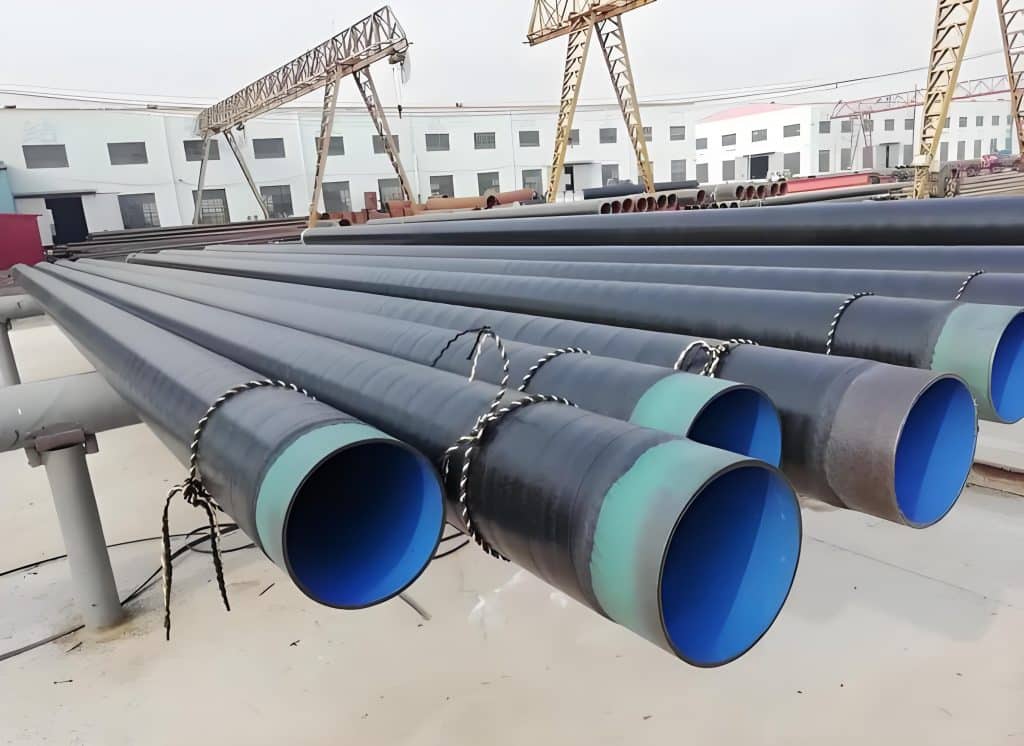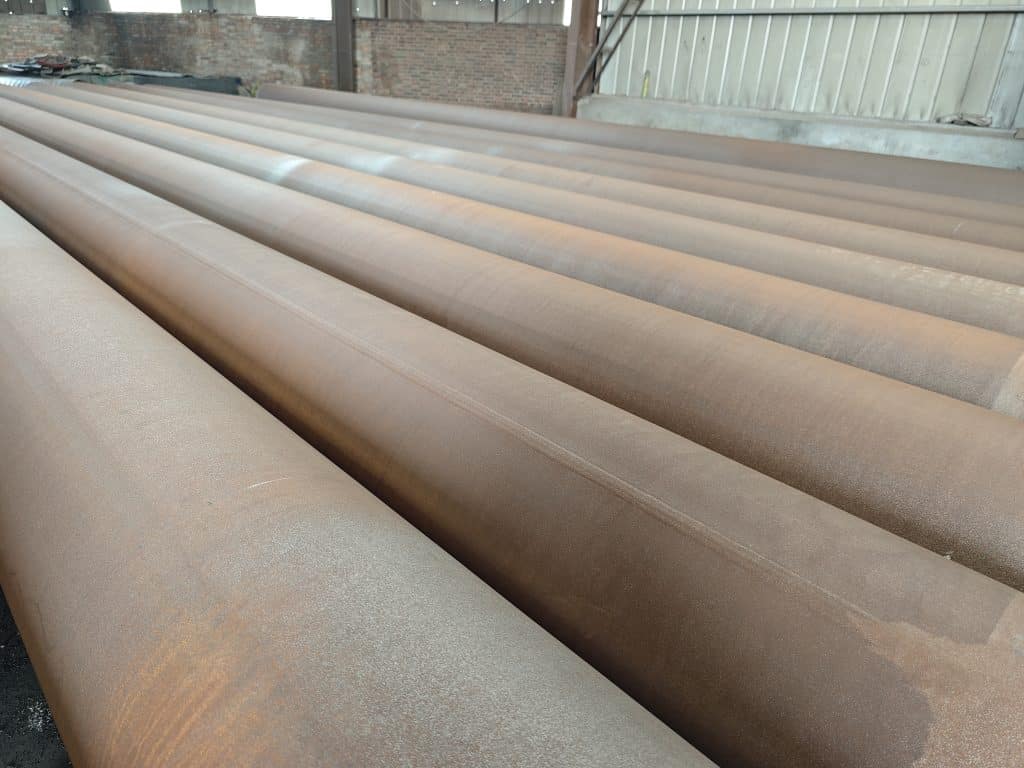
AS/NZS 1163 C350 is a grade of cold-formed structural steel hollow section used in construction and infrastructure. For buyers of circular hollow sections (CHS), the key questions concern minimum mechanical properties, product dimensions, impact requirements and documentary evidence of compliance. A grade name alone is not enough to approve material for a project. The purchase specification should identify the applicable edition of AS/NZS 1163, the section shape, dimensions, grade designation and any additional project requirements. This guide focuses on the circular products relevant to LONGMA while explaining the broader standard where necessary.
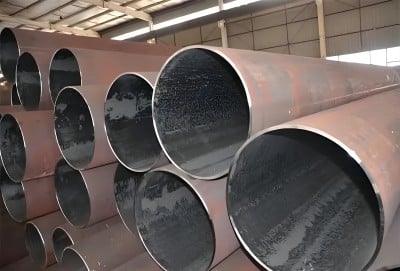
What AS/NZS 1163 C350 Means
AS/NZS 1163 covers cold-formed structural steel hollow sections, including circular, square and rectangular profiles. These are different shapes within the standard, not a statement that every manufacturer supplies every profile. LONGMA focuses on round ERW and LSAW steel pipes; enquiries about C350 products should therefore specify circular hollow sections rather than assume square or rectangular availability. The C designation identifies a cold-formed structural hollow-section grade, while 350 denotes its nominal minimum yield-strength class in megapascals. C350 and C350L0 should not be treated as interchangeable where the project requires a defined impact-toughness designation. The L0 suffix indicates a low-temperature impact requirement at 0°C under the applicable standard conditions. Exact test-piece and acceptance provisions must be checked in the contractually specified edition of the standard.
For an RFQ, identify the required profile explicitly as CHS and state whether the product is intended for a structural member or another application. A material grade describes specified properties of the steel, but it does not establish the load capacity of a finished column, brace or connection. Designers must consider the full section geometry, effective length, boundary conditions and relevant structural design rules before accepting a proposed size.
Yield Strength, Tensile Strength and Elongation
Yield strength is the stress level used to characterize the onset of permanent deformation. Tensile strength describes the maximum engineering stress reached in a tensile test, while elongation is an indication of ductility measured after fracture. For the C350 grade, 350 MPa is the commonly cited minimum yield-strength class and 430 MPa is a commonly cited minimum tensile-strength value. These figures should not be used as a complete acceptance table without confirming the edition, product range and test provisions. Elongation is particularly sensitive to the prescribed gauge length, specimen geometry and section characteristics. Rather than quoting a single percentage for every diameter and wall thickness, procurement documents should reference the applicable AS/NZS 1163 requirements and ask the mill to report actual test results. The certificate should clearly identify the heat, product size, test method and measured yield strength, tensile strength and elongation. An unusually high measured yield strength is not, by itself, evidence that every other property is acceptable. Structural performance also depends on section geometry, stability, connection design and material toughness.
When reviewing a tensile-test report, compare each recorded result with the acceptance criteria for the actual ordered grade and applicable product dimensions. Yield and tensile values should be read alongside the reported elongation and specimen information. A single favorable result cannot substitute for the required sampling, test method and traceability records. If a certificate quotes values without identifying the grade or heat, request clarification before accepting the shipment.
How Wall Thickness Affects Structural Performance
Wall thickness changes the steel area, mass per metre, local slenderness and resistance to certain loading modes. A thicker circular section of the same outside diameter generally contains more steel and has a larger cross-sectional area, but its capacity cannot be assessed by thickness alone. Buckling, bending and connection resistance require calculations under the governing structural design code. Thickness also affects forming, welding and inspection considerations. A wall-thickness range invented for convenience must not be presented as an official AS/NZS 1163 strength table. Buyers should confirm that the specified dimensions fall within the manufacturer’s qualified product range and the applicable standard. For an approximate circular-section theoretical mass, calculate the steel area from outside diameter and nominal thickness, then multiply by steel density. Actual delivered mass may vary within permitted dimensional tolerances. For example, for outside diameter D and wall thickness t in millimetres, nominal area is πt(D−t) square millimetres. Using a nominal density of 7,850 kg/m³ gives a theoretical mass of approximately 0.02466t(D−t) kg/m. This is an estimate for a circular section, not a certified weight or a substitute for project design.
For a circular tube, the theoretical cross-sectional steel area can be calculated from its outside and inside diameters, using the nominal wall thickness to determine the latter. Multiplying that area by the assumed steel density gives an approximate mass per unit length. This is useful for preliminary transport estimates, but the calculated figure is not a substitute for contractual mass tolerances or measured dimensions. Local wall loss and fabrication details also require attention.
C350 Versus C350L0, C250 and European S355
The C350L0 designation adds an impact-toughness requirement that must be verified using the prescribed test conditions. Do not assume that every ordinary C350 section has passed a Charpy test. Equally, the absence of an L0 suffix does not prove that a product will fail in a cold environment. The structural designer determines whether impact qualification is required from the design temperature, stress state, fracture consequences and relevant design rules. C250, C350 and C450 are different nominal strength classes; higher grade strength does not automatically permit thinner walls in every member because local buckling, deflection and connections can govern design. European S355 hollow sections may have a similar nominal yield-strength class to C350, but their chemistry, dimensional tolerances, test provisions and impact designations differ. A proposed substitution should be assessed against both the material specification and the project design code and approved by the responsible engineer.
The choice between C350 and C350L0 should be made during specification development rather than after production. Impact toughness addresses resistance to brittle fracture under defined test conditions; it is not interchangeable with tensile strength or elongation. For projects considering a European grade, compare chemical composition, test methods, toughness designation, dimensional tolerances and design-code assumptions. A similar grade number does not authorize an automatic material substitution.
Manufacturing, Inspection and Documentation
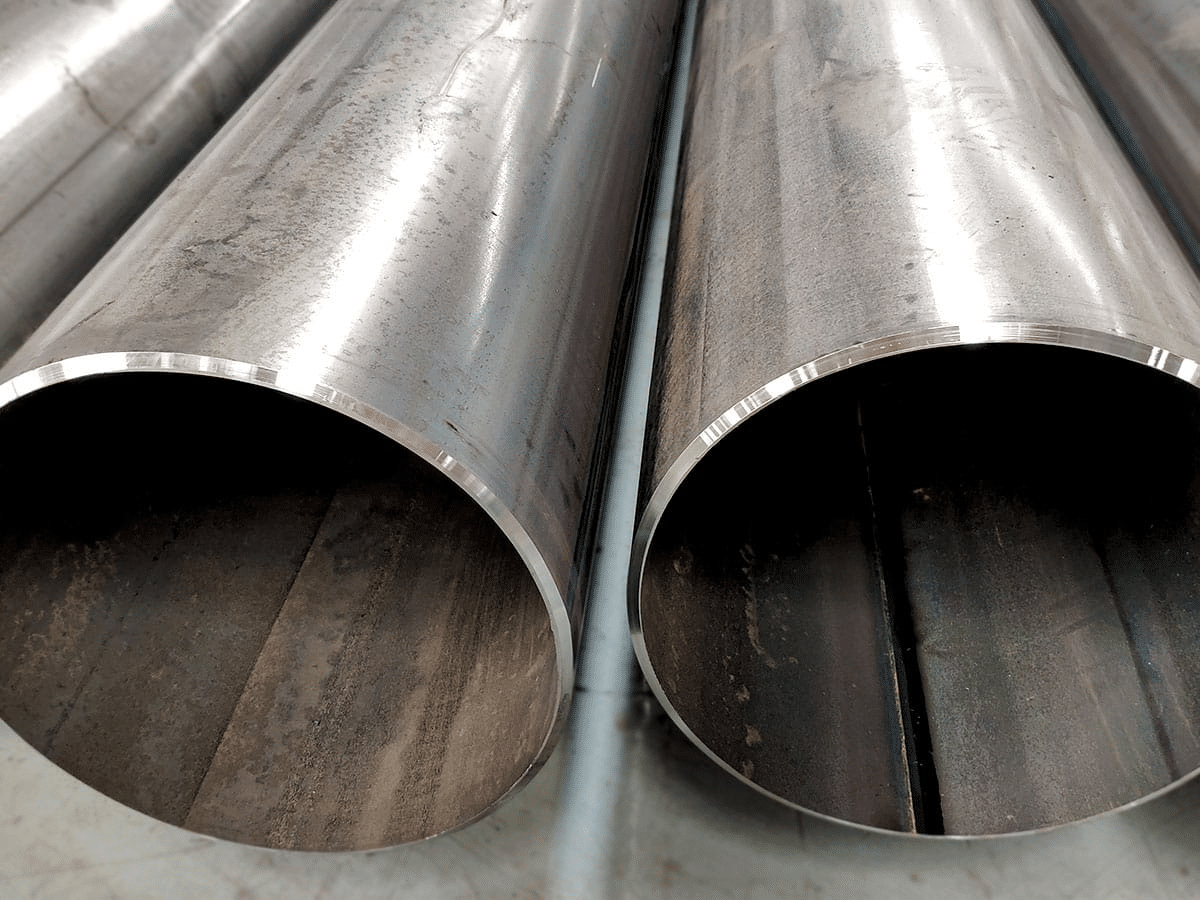
Cold-formed welded CHS is typically produced by forming steel strip into a round section, welding the longitudinal seam and sizing the finished product. The manufacturing route and applicable inspection requirements should be identified in the order. Buyers should review dimensional inspection results, chemical analysis, tensile testing and impact records where required. Traceability should connect the finished product to the relevant heat or batch and the associated test report. An EN 10204 type 3.1 inspection certificate may be requested contractually, but EN 10204 and ISO 9001 serve different purposes: one addresses inspection-document types and the other addresses quality management systems. Neither should be described as a substitute for compliance with AS/NZS 1163. When a project requires independent inspection or a different document type, that requirement should be stated before production. A supplier’s published size range is a commercial capability statement, not necessarily the complete dimensional scope of the standard.
A practical receiving inspection begins by matching pipe markings and bundle identification to the purchase order. Check the heat or batch reference, measured outside diameter, wall thickness, length and visible condition. Where the order requires impact tests or additional examination, confirm that the corresponding reports identify the tested material and acceptance criteria. Any discrepancy should be resolved through the agreed inspection procedure before fabrication begins.
Procurement Checklist and Practical Applications
Circular hollow sections are used for columns, trusses, braces, support structures and other engineered members where their geometry is advantageous. Their use in a specific bridge, building or mining structure requires appropriate structural design and connection detailing. A clear request for quotation should state the required standard edition, grade, outside diameter, nominal wall thickness, length, end finish, surface protection, quantity and inspection documents. State C350L0 explicitly if the project requires that impact designation. Coating requirements, such as hot-dip galvanizing, should be specified separately from the structural steel grade. Compare supplier offers on the same technical basis, including permitted tolerances and certificate requirements. Do not approve material merely because two products have similar nominal yield-strength numbers. LONGMA has more than 20 years of experience producing round ERW and LSAW steel pipes, operates a 230,000 m² facility and reports annual production exceeding 500,000 tonnes. Project-specific grade availability and documentation should be confirmed against the purchase specification.
FAQ
What is the minimum yield strength of C350? C350 denotes the 350 MPa nominal minimum yield-strength class; verify the exact applicable requirements in the specified AS/NZS 1163 edition.
Is tensile strength the same as yield strength? No. Tensile strength and yield strength describe different mechanical properties and are separately assessed.
Does C350 always require Charpy testing? Do not assume ordinary C350 includes the impact qualification associated with C350L0. Check the project designation and standard.
Can C350 replace S355? Not automatically. Engineering approval is needed because the governing product and design standards differ.
Does AS/NZS 1163 cover square and rectangular sections? Yes, but LONGMA’s product focus is round welded pipe and circular hollow sections.