- 1. What Is a Cold-Formed Hollow Section?
- 2. Raw Material Selection and Strip Preparation
- 3. Roll Forming, ERW Welding and Sizing
- 4. Cutting, Inspection and Product Identification
- 5. Mechanical Performance, Dimensions and Weight
- 6. Applications, Corrosion Protection and Procurement
- 7. Frequently Asked Questions
- 8. Does LONGMA manufacture square and rectangular hollow sections?
- 9. About LONGMA
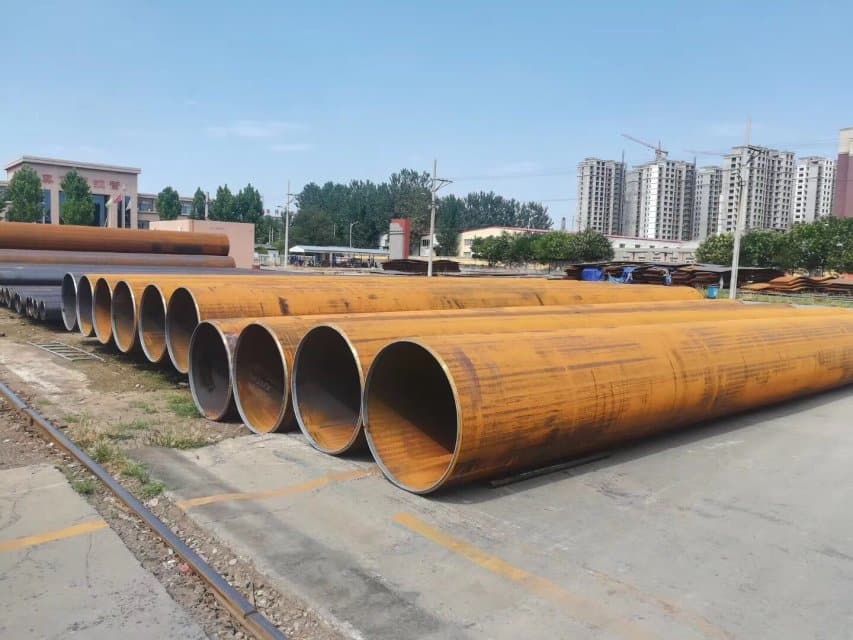
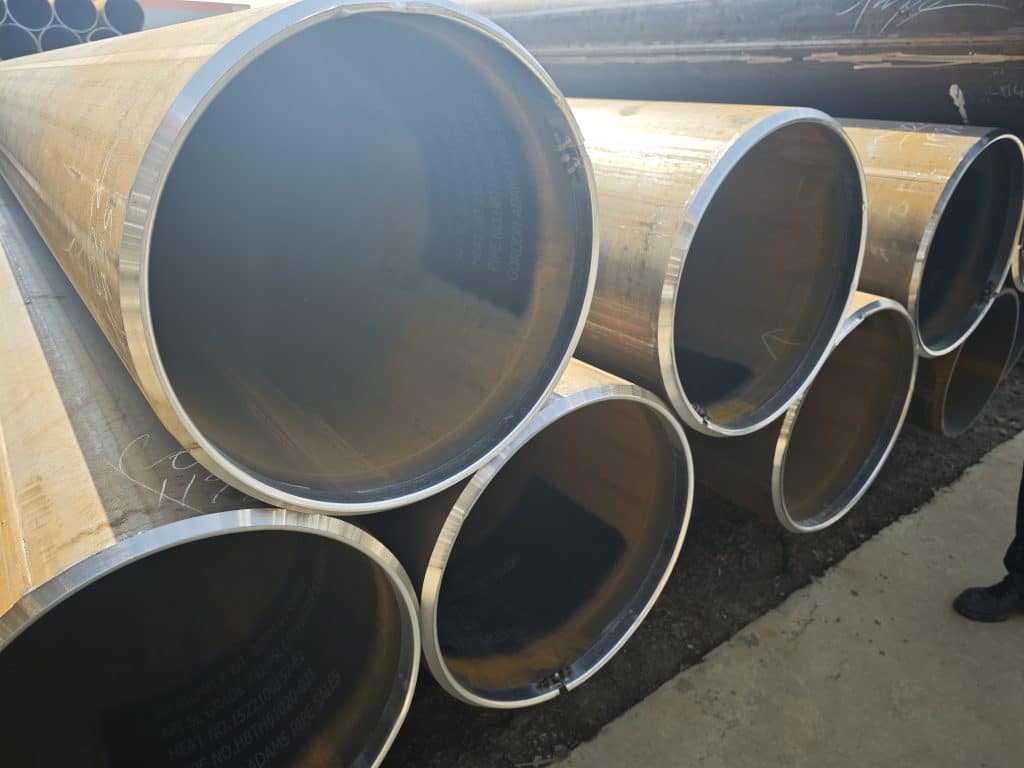
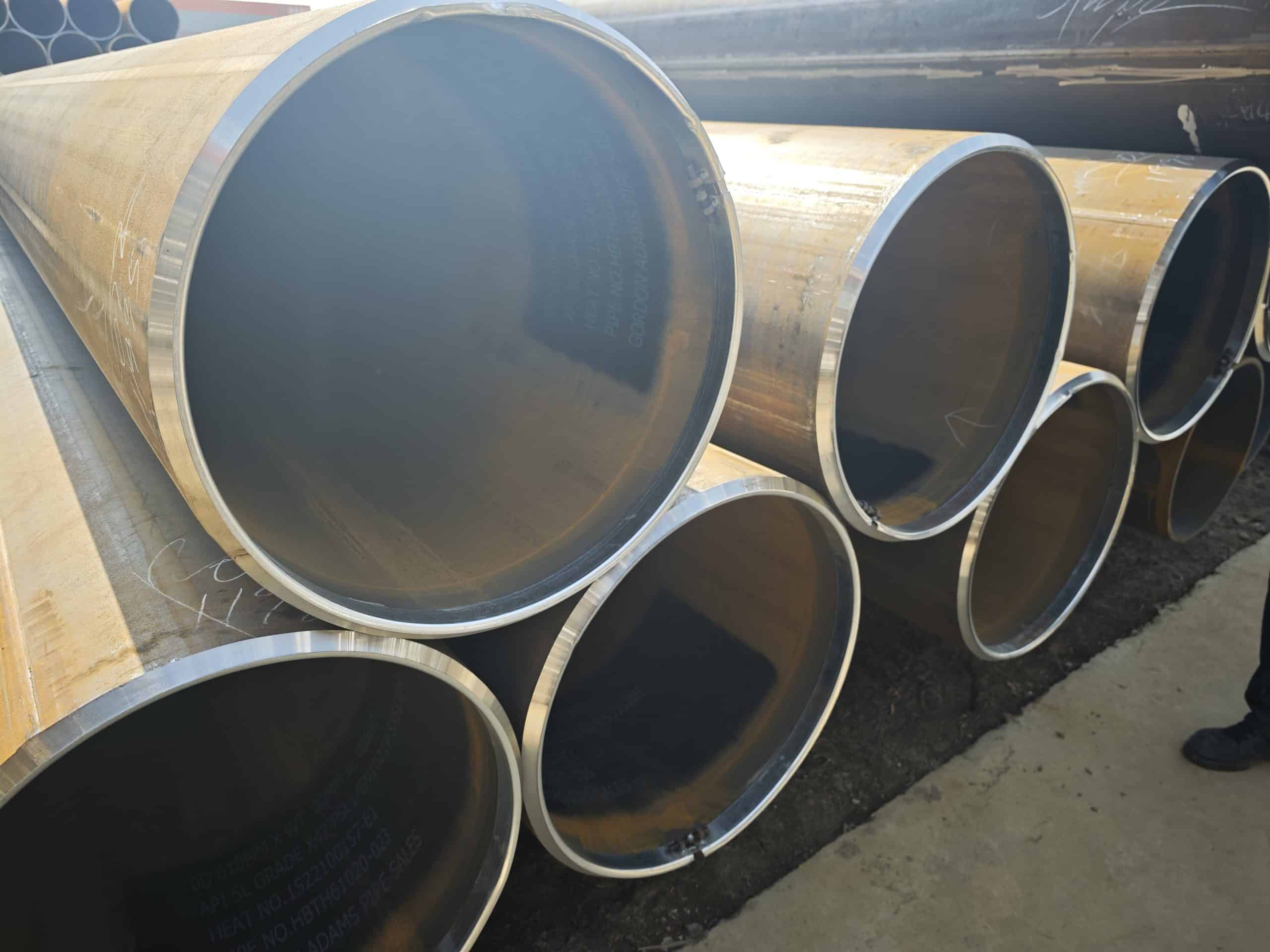
Cold-formed circular hollow sections (CHS) are used in structural frames, trusses, columns, equipment supports and other engineering applications. One common manufacturing route starts with steel strip, forms it into a circular shape at ambient temperature and joins the longitudinal edges using electric resistance welding (ERW). The finished tube is sized, cut, inspected and identified before delivery. This guide explains that ERW process and the technical checks buyers should make when specifying cold-formed structural steel pipe.

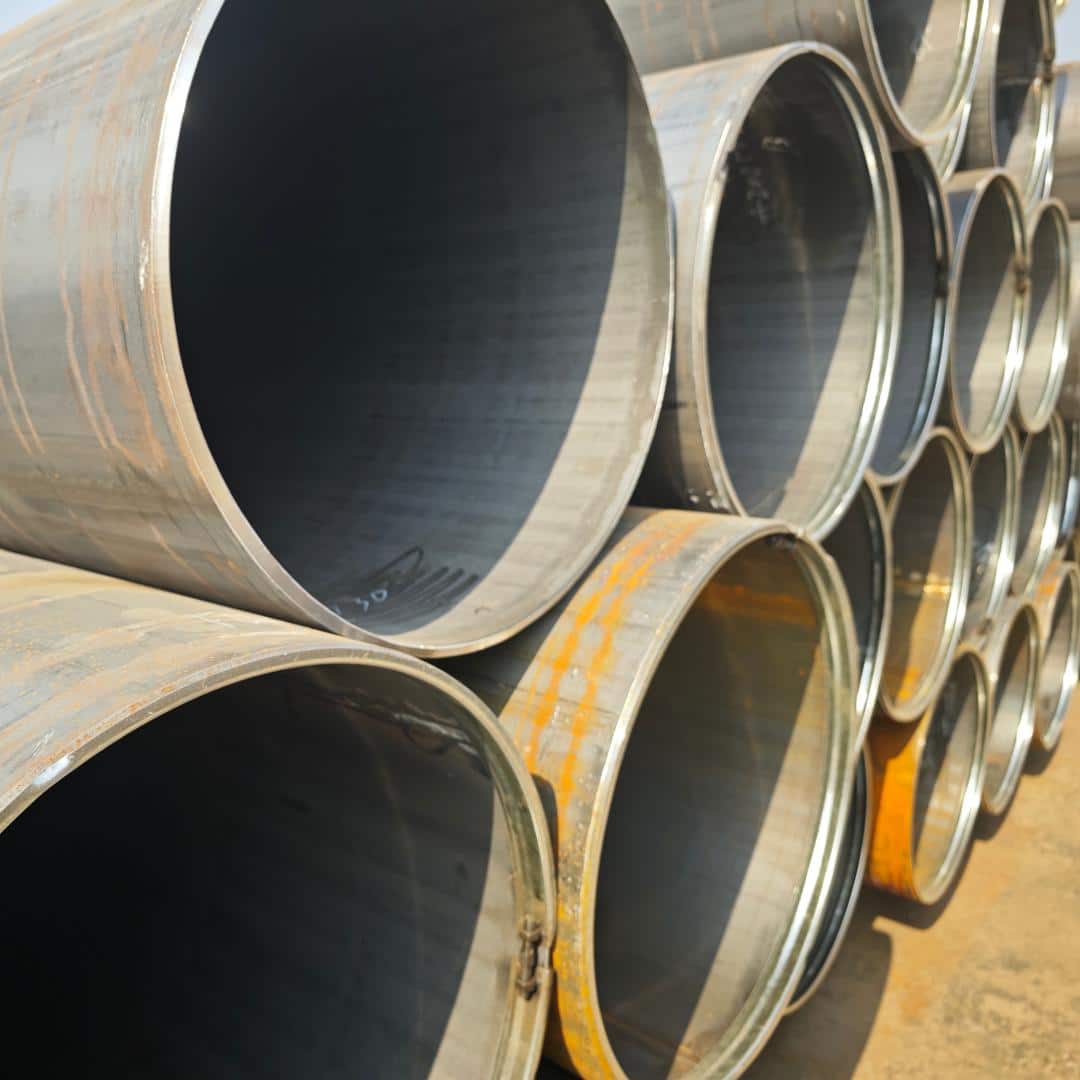
What Is a Cold-Formed Hollow Section?
A hollow section is a closed steel profile used for structural applications. Cold-formed structural hollow sections are manufactured without a hot-finishing step that would make them equivalent to hot-finished products. The relevant product standard defines the required grade, properties, tolerances and inspection conditions.
EN 10219 covers cold-formed welded structural hollow sections of non-alloy and fine-grain steels. Its scope includes circular, square and rectangular profiles. This article focuses on circular hollow sections, which are the relevant round-pipe product type for LONGMA. The broader scope of a standard should not be confused with the shapes available from an individual manufacturer.
EN 10210 addresses hot-finished structural hollow sections. The two product families may have different manufacturing histories, residual-stress characteristics and technical requirements. They should not be treated as automatically interchangeable merely because a nominal diameter or strength grade appears similar.
Cold forming is not restricted to one universal production route. The sequence described below is a typical high-frequency ERW route for round structural tube. Large-diameter structural welded pipe may involve different forming equipment and welding processes; the manufacturer should identify the actual route proposed for a particular order.
Raw Material Selection and Strip Preparation
Production begins with material selected to meet the specified structural steel grade. The manufacturer checks the incoming steel’s identity and available chemical and mechanical test records against the production requirements. Heat or batch identification provides the basis for tracing the finished product back to its source material.
For an ERW line, steel coil is uncoiled and leveled before entering the forming equipment. Strip width is selected according to the intended tube dimensions and forming setup. Edge preparation helps achieve stable alignment and suitable welding conditions. The mill monitors the strip condition because damage, contamination or poor edge geometry can affect forming and weld quality.
The material’s chemical composition matters for both weldability and mechanical performance. However, a grade designation alone does not establish whether a field weld can be made without preheating. Welding procedure requirements depend on the material, wall thickness, joint restraint, consumables and site conditions.
Roll Forming, ERW Welding and Sizing
A sequence of forming rolls gradually bends the strip into an open circular profile. The edges are brought into alignment at the welding station. In high-frequency ERW, electrical heating raises the temperature at the strip edges and squeeze rolls apply pressure to produce the longitudinal weld, typically without added filler metal.
Weld quality depends on the combined control of edge condition, heating, squeeze pressure, line speed and equipment alignment. The external weld bead may be removed as required by the product specification and process. The pipe then passes through sizing equipment to control outside diameter and roundness.
Cold forming can produce consistent dimensions when the equipment and process are properly controlled. It should not be described as inherently more accurate or cheaper than every hot-finished alternative. Actual tolerance performance depends on the manufacturing route, dimensions, tooling and the applicable product standard.
ERW is not the same as longitudinal submerged arc welding (LSAW). Both are welded-pipe manufacturing methods, but their forming and welding arrangements differ. For procurement purposes, identify the required product standard and acceptable manufacturing route instead of using the term “welded pipe” as the only manufacturing specification.
Cutting, Inspection and Product Identification
After sizing, the tube is cut to the ordered length and inspected. Checks may include outside diameter, wall thickness, length, straightness, surface condition and weld quality. The inspection scope and frequency must follow the specified product standard and contract requirements. Not every order requires the same nondestructive testing methods or independent inspection.
EN 10219-2 addresses tolerances, dimensions and sectional properties. Its numerical tolerance requirements should be read in their full context, including the relevant size range and measurement conditions. A simplified statement such as “±1% and less than ±0.5 mm” can misrepresent the actual tolerance rule. Buyers should refer to the governing edition and its tables when evaluating measured dimensions.
Mechanical testing may include tensile testing and, for grades where specified, impact testing. For example, grade designations such as S355J0H and S355J2H communicate different impact-toughness requirements. The appropriate acceptance criteria depend on the standard and product conditions; an impact-temperature label alone does not replace the complete technical specification.
Marking and documentation should connect the finished pipe with its production and test records. Where the contract requires an EN 10204 type 3.1 inspection certificate, the buyer should specify this document type explicitly. Inspection documentation should identify the applicable standard, grade, dimensions and test results needed for acceptance.
Mechanical Performance, Dimensions and Weight
The mechanical and structural behavior of CHS depends on steel properties, section geometry and member design. Yield strength is one factor, but resistance to bending, compression and buckling also depends on outside diameter, wall thickness, effective member length, support conditions and connections. Increasing wall thickness generally increases cross-sectional area, but the overall design must still be checked for the governing failure modes.
For nominal circular sections, theoretical mass per metre can be estimated from the steel cross-sectional area and density. Using outside diameter D and wall thickness t in millimetres, an approximate formula is:
Mass (kg/m) ≈ 0.02466 × t × (D − t).
This expression assumes a circular annulus and steel density of about 7,850 kg/m³. It is useful for preliminary quantity calculations, not a substitute for the agreed mass-tolerance or weighing provisions. Coating and actual dimensional variation may affect shipment mass.
Structural grades should be selected against the project’s design requirements. S235JRH, S275J0H and S355J2H are examples of designations encountered in EN 10219 specifications. The applicable product edition and relevant thickness or delivery conditions must be checked before quoting mechanical values. Different standards such as ASTM A500 and AS/NZS 1163 use their own grade and acceptance systems, so substitution requires engineering review.
Applications, Corrosion Protection and Procurement
Cold-formed CHS can be used for structural columns, trusses, bracing, frames and equipment supports when designed for the relevant loads and connections. Circular geometry provides useful torsional characteristics and similar bending properties about axes through the section center. Connection detailing, fabrication access and local buckling still need to be evaluated.
Unprotected carbon steel may corrode when exposed to moisture and aggressive environments. Depending on the application, the purchaser may specify painting, hot-dip galvanizing or another suitable protective system. For hot-dip galvanizing, fabrication details such as venting and drainage should be addressed with the galvanizer. The coating standard and inspection requirements should be specified separately from the structural steel product standard.
A complete request for quotation should state the standard and edition, grade, outside diameter, wall thickness, length, quantity, surface finish, inspection scope and delivery destination. Clarify whether theoretical or actual mass will be used for commercial settlement. Review certificates and markings against the order before accepting a shipment.
Supplier assessment should consider manufacturing capability, dimensional control, weld inspection, traceability and the ability to provide the agreed documentation. Quality-management certification is useful background information, but compliance of a specific batch must be demonstrated through the required production and test records.
Frequently Asked Questions
Is every cold-formed hollow section made by ERW?
No. ERW is a common route for circular welded structural tube, but the actual manufacturing method depends on product type and manufacturer. This guide describes a typical ERW CHS process.
What is the difference between EN 10219 and EN 10210?
EN 10219 covers cold-formed welded structural hollow sections, while EN 10210 covers hot-finished structural hollow sections. Their technical requirements must be reviewed before substitution.
Can cold-formed CHS be used for columns?
Yes, when the structural engineer verifies the member’s strength, stability, connections and other design requirements.
How is CHS weight estimated?
For nominal dimensions in millimetres, use approximately 0.02466 × wall thickness × (outside diameter − wall thickness) kg/m. Confirm the commercial mass basis in the order.
Does LONGMA manufacture square and rectangular hollow sections?
No. LONGMA’s manufacturing scope is round ERW and LSAW welded steel pipe.
About LONGMA
LONGMA has more than 20 years of experience manufacturing round welded steel pipe, with ERW and LSAW production capabilities, an in-house laboratory and a 230,000 m² manufacturing site. Annual production exceeds 500,000 tonnes. To discuss a cold-formed circular structural pipe inquiry, send the standard, grade, dimensions, quantity and inspection requirements to info@ilongma.com. Availability and technical compliance are subject to confirmation for the specific order.