- 1. What Are FBE and 3LPE Coatings?
- 2. Application Processes and Surface Preparation
- 3. Corrosion Resistance, Mechanical Damage and Soil Conditions
- 4. Temperature Limits and Coating Selection
- 5. Standards, Testing and Documentation
- 6. Cost, Field Joints and Practical Selection
- 7. Frequently Asked Questions
- 8. About LONGMA
Fusion-bonded epoxy (FBE) and three-layer polyethylene (3LPE) are established corrosion-protection systems for steel pipelines. They do not work in exactly the same way. Single-layer FBE provides a bonded epoxy barrier, while 3LPE combines an epoxy primer, an adhesive layer and a polyethylene outer layer. Selecting between them requires attention to operating temperature, handling conditions, soil environment, cathodic protection, field joints and the project’s coating specification.
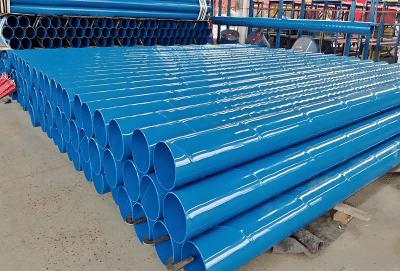
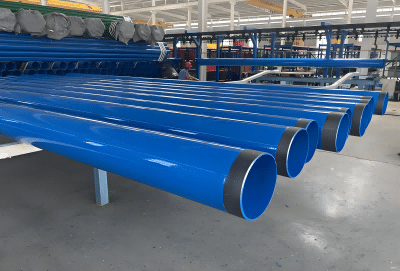
What Are FBE and 3LPE Coatings?
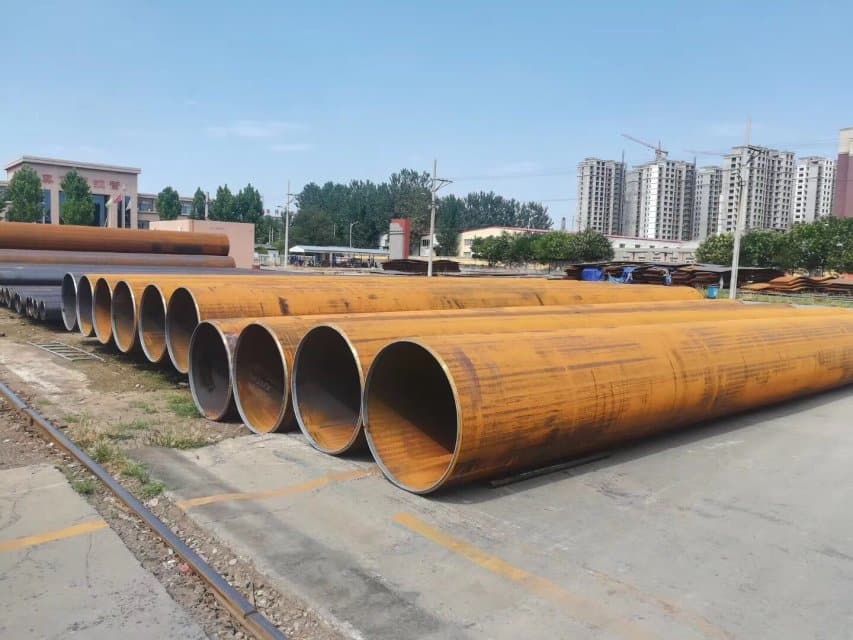
FBE is a thermosetting epoxy powder coating applied to properly prepared, heated steel. The powder melts, flows and cures to form an adherent protective film. It is used for external pipeline protection and, with appropriately qualified formulations, for certain internal applications. FBE is a corrosion barrier; it does not increase the pipe’s structural wall thickness or determine its pressure rating.
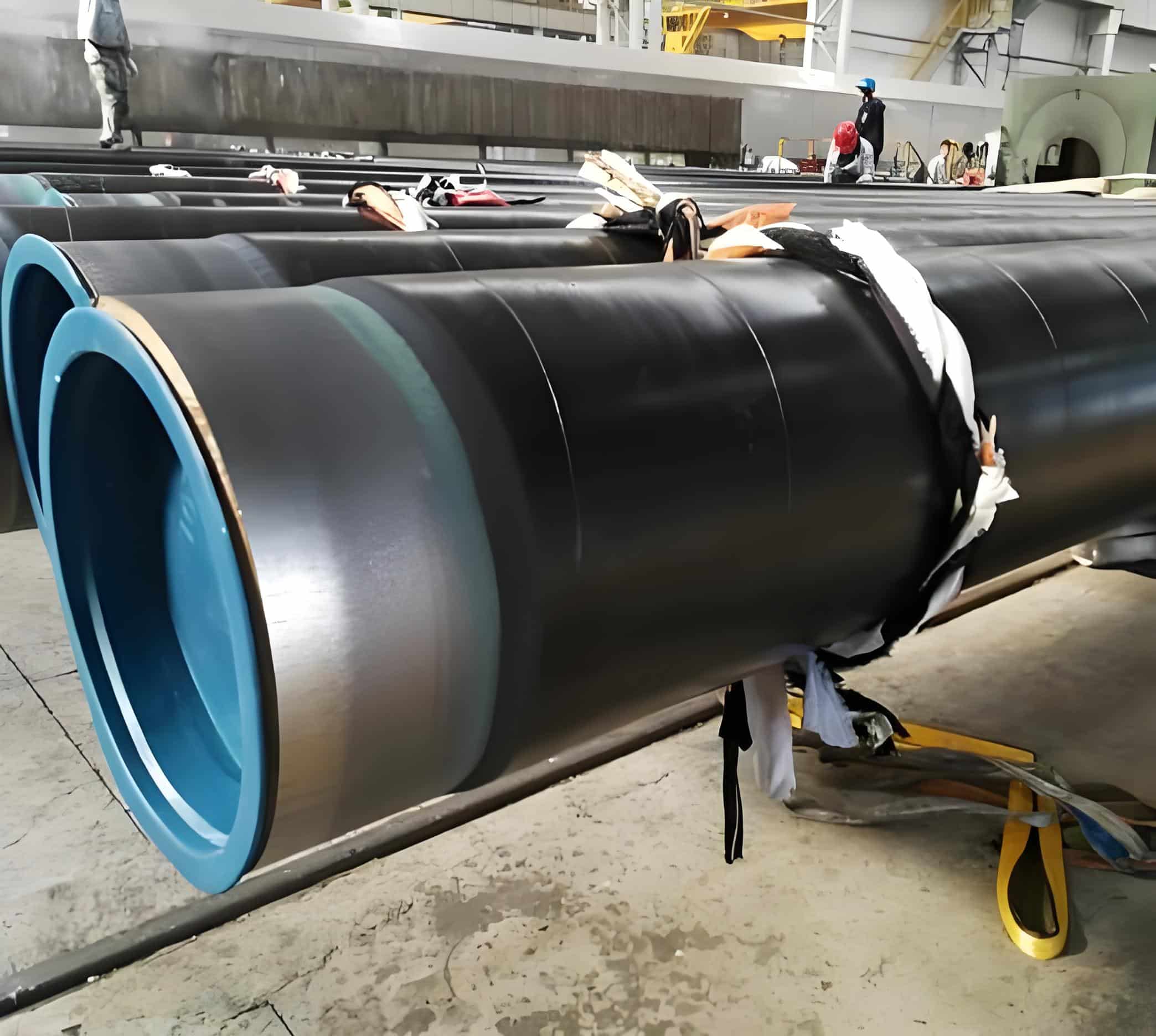
A 3LPE system consists of an FBE primer bonded to the steel, an adhesive layer and an outer polyethylene layer. The polyethylene contributes mechanical protection during transport, handling and burial, while the primer provides adhesion and corrosion protection. Three-layer polypropylene (3LPP) follows a similar multilayer principle but uses polypropylene as the outer layer, with service capabilities dependent on the qualified system.
The terms “FBE-coated pipe” and “epoxy-lined pipe” should not be used interchangeably without identifying the coating location and product type. An internal lining may have different qualification requirements from an external buried-pipeline coating. Liquid-applied epoxy is another distinct technology; it may also cure through chemical cross-linking, but its application and curing processes differ from those of FBE powder.
Application Processes and Surface Preparation
Both FBE and 3LPE depend on clean, suitably profiled steel. Coating plants inspect the pipe, remove contaminants, blast-clean the surface and check preparation quality before applying the coating. The specified cleanliness grade, surface profile and allowable contamination should come from the governing coating specification and approved procedure.
For FBE, the prepared steel is heated to a temperature suitable for the powder formulation. Electrostatic application deposits powder onto the surface; the particles melt, flow and cure. The process is controlled through temperature, coating thickness, cure conditions and inspection. A single universal preheat temperature should not be assumed for every FBE product.
For 3LPE, the FBE primer is followed by an adhesive and a polyethylene layer, applied under controlled conditions to form a bonded multilayer system. The process requires attention to interlayer bonding, overall thickness and the integrity of the finished coating. Quality control should address the whole system, not just the primer.
After coating, inspection commonly includes visual examination, thickness measurement and holiday detection. Other qualification or production tests may include adhesion, impact and cathodic disbondment, depending on the applicable standard. A holiday is a discontinuity or defect in a protective coating, not a reference to a calendar holiday. Defects should be repaired using an approved compatible procedure and re-inspected.
Corrosion Resistance, Mechanical Damage and Soil Conditions
Both coating systems are intended to reduce the contact between steel and corrosive environments. Neither makes the pipeline immune to corrosion. Performance depends on surface preparation, coating integrity, environmental exposure, installation practices and maintenance of any associated cathodic protection system.
Single-layer FBE can provide strong adhesion to properly prepared steel and is used in many buried-pipeline applications. However, exposed coating can be damaged by sharp aggregate, impacts or unsuitable lifting equipment. The appropriate bedding, padding, handling protection and inspection procedures are therefore important.
The thicker polyethylene outer layer of 3LPE often offers additional resistance to abrasion and handling damage. This can be useful for pipelines exposed to demanding transport or backfilling conditions. It does not mean 3LPE is always the better choice: multilayer coating quality depends on bonding between layers, and field-joint coating and repairs may be more complex.
The project should evaluate soil chemistry, moisture, mechanical stress, expected installation damage and the compatibility of coating and cathodic protection. Cathodic disbondment testing evaluates coating behavior under defined electrochemical conditions; results should be compared using relevant test conditions rather than isolated headline figures.
Temperature Limits and Coating Selection
No single operating-temperature limit applies to every FBE or polyethylene coating. FBE performance varies with resin formulation, cure, exposure duration and whether the service involves dry conditions, immersion or other environmental factors. Temperature ratings should be supported by the specific coating supplier’s technical data and project qualification requirements.
Polyethylene-based systems also have formulation-dependent temperature limitations. Elevated temperatures can affect polymer properties and the performance of the bonded coating system. A project requiring higher operating temperatures may consider a qualified 3LPP or other coating system, but the selection must be based on the complete service conditions, not simply the outer polymer’s name.
When comparing options, state the continuous and maximum operating temperatures, the surrounding environment, thermal cycling, installation method and expected operating life. The coating system should be selected against the most demanding credible conditions specified by the project. If the pipe is exposed to sunlight or above-ground weathering, verify whether the chosen product is suitable for that exposure.
Internal coatings for potable-water service require separate consideration. AWWA C213 addresses fusion-bonded epoxy coating for steel water pipe and fittings, while drinking-water contact safety may require compliance with NSF/ANSI/CAN 61 or other applicable local requirements. A coating’s compliance with a technical application standard does not automatically establish its drinking-water health-effects approval.
Standards, Testing and Documentation
The applicable standard should be identified before quotations are compared. ISO 21809-2 addresses external fusion-bonded epoxy coatings for buried or submerged pipelines, while ISO 21809-1 addresses polyolefin coatings, including multilayer systems. CSA Z245.20 is another specification used for external FBE coating on steel pipe. AWWA C213 is relevant to FBE coating for steel water pipes and fittings. DIN 30670 concerns polyethylene coating systems; it should not be presented as a single-layer FBE standard.
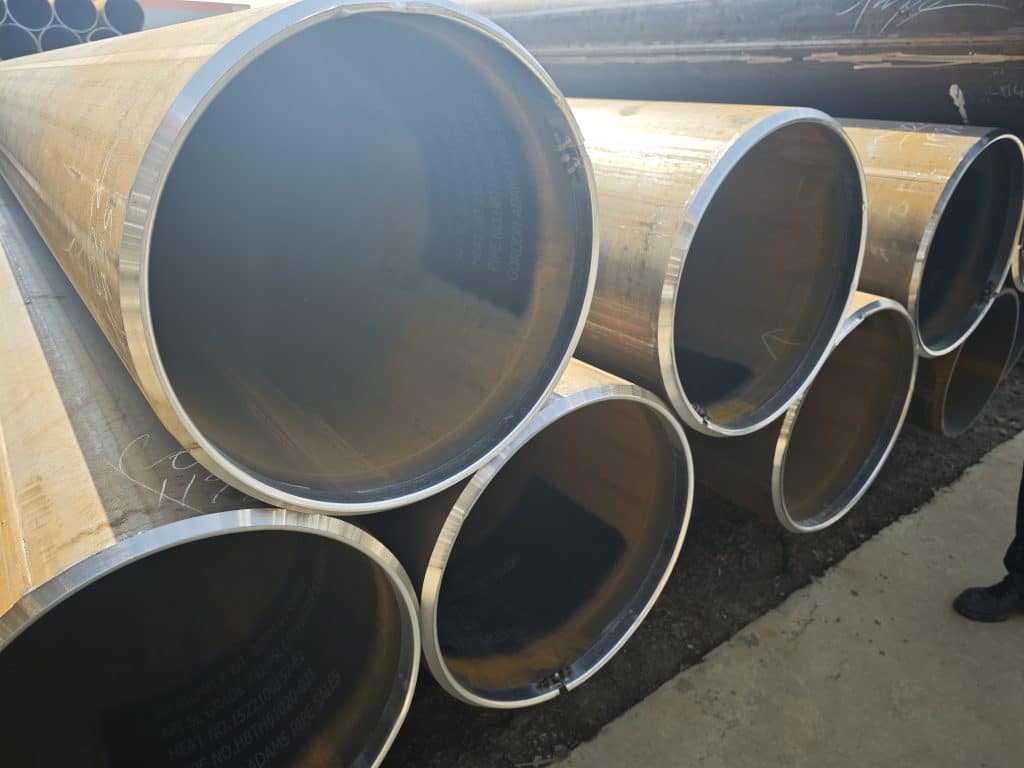
These coating standards are separate from the steel pipe’s product specification. For example, API 5L addresses line pipe requirements, while the coating specification defines the protective system and its testing. An API 5L pipe is not automatically compliant with ISO 21809 simply because both names appear on a quotation.
A useful coating inspection package identifies the coating system, specification and edition, powder or material batch, surface-preparation records, application conditions, thickness results, holiday testing, repairs and required qualification tests. The precise document list should be agreed before manufacturing. Third-party inspection may be added when specified by the owner or purchase contract.
Cost, Field Joints and Practical Selection
The price of coated pipe depends on pipe dimensions, coating type, thickness, application process, inspection, quantity and delivery terms. A fair comparison holds the base pipe specification and inspection scope constant. Comparing only the coating price per metre can obscure differences in field-joint work, installation protection, repair procedures and lifecycle requirements.
Single-layer FBE may simplify some coating-repair arrangements, but approved repair materials and methods are still necessary. 3LPE field joints require a qualified system compatible with the adjacent coating. Neither system should be assumed to tolerate uncontrolled site heating, contaminated surfaces or unqualified repair materials.
For buried oil and gas pipelines, both FBE and 3LPE may be considered where permitted by the project specification. For water transmission, the internal and external coating functions should be specified separately. For district-heating systems, the protective coating must be evaluated alongside the insulation system and its service temperature. The appropriate selection follows the application and qualification requirements, rather than a universal ranking.
Frequently Asked Questions
Is FBE better than 3LPE?
Neither is universally better. FBE offers a bonded epoxy barrier; 3LPE adds a polyethylene outer layer that can improve mechanical protection. The choice depends on service and installation conditions.
Can FBE-coated steel pipe be buried?
Yes, when the coating system is qualified for buried service and appropriate handling, bedding, inspection and corrosion-control measures are used.
Does a thicker coating increase the pipe’s pressure rating?
No. The pressure design is based on the steel pipe and applicable design rules, not the protective coating thickness.
What tests should be requested?
Request the tests required by the governing coating specification, potentially including thickness, holiday detection, adhesion, impact and cathodic disbondment testing.
Can FBE be used for drinking-water pipelines?
An appropriately qualified internal coating may be used, subject to the relevant technical specification and drinking-water contact requirements.
About LONGMA
LONGMA manufactures round ERW and LSAW welded steel pipe and has more than 20 years of industry experience. Its manufacturing site covers 230,000 m², with annual production exceeding 500,000 tonnes. For a coating inquiry, provide the pipe dimensions, service environment, coating specification, temperature and inspection requirements to info@ilongma.com so that the requested product and coating scope can be confirmed.