- 1. What Is ASTM A53 Steel Pipe?
- 2. Is ASTM A53 Pipe Galvanized by Default?
- 3. What Coatings Are Available for ASTM A53 Pipe?
- 4. How Does Hot-Dip Galvanizing Work on A53 Pipe?
- 5. Galvanized vs Black A53: Which Lasts Longer?
- 6. Does Galvanizing Affect Dimensions, Threads, or Pressure Rating?
- 7. Which Grade and Type Should You Choose?
- 8. How Do Fire, Water, and Distribution Buyers Apply This Pipe?
- 9. Conclusion
- 10. FAQ
- 11. Ready to Confirm Your ASTM A53 Specification?
ASTM A53/A53M covers both black and hot-dip zinc-coated carbon steel pipe. ASTM A53 pipe is therefore not necessarily galvanized: the required finish must be specified in the purchase order. This guide explains the available pipe types and grades, the role of zinc coating, and the checks buyers should make for threads, pressure design and documentation.
What Is ASTM A53 Steel Pipe?
ASTM A53 Steel Pipe Definition and Scope
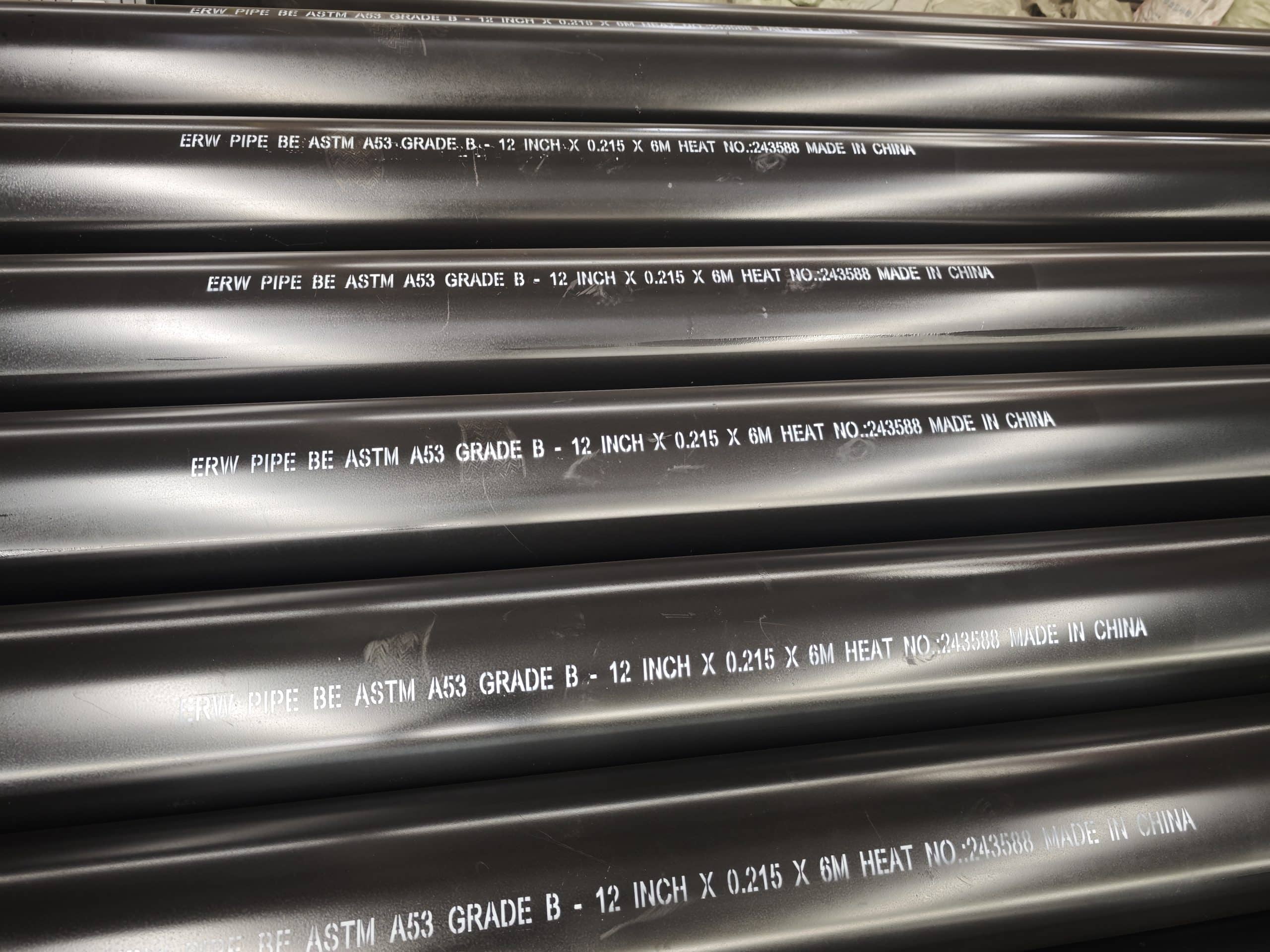
ASTM A53/A53M specifies black and hot-dip zinc-coated steel pipe in seamless and welded forms. The manufacturing classifications are Type F (furnace-butt welded), Type E (electric-resistance welded) and Type S (seamless), subject to the grade and size limitations of the applicable edition. Suitability for pressure, mechanical or other service depends on the relevant design code, operating conditions and project specification; galvanizing alone does not establish fitness for potable-water or fire-protection service.
ASTM A53 Pipe Types, Grades, and Manufacturing Methods
The different configurations of ASTM A53 steel pipe have an impact on price, lead time, and application fit.
| Category | Typical options |
| Manufacturing | Seamless, ERW (Type E), furnace-welded (Type F) |
| Grade | Grade A, Grade B |
| Surface | Black, hot-dip galvanized |
| End finish | Plain end, beveled end, threaded and coupled |
| Wall thickness | Schedule 10, 20, 40, 80, and custom thicknesses |
| Form | Standard 6-12 meter lengths, cut-to-length sections |
Grade B Type E (ERW) pipe is one option used in building services and industrial piping where permitted by the project specification. Required sizes, end finishes and approvals should be established from the actual design rather than assumed from the destination market.
ASTM A53 vs Related Pipe Standards
ASTM A53 should not be confused with other pipe specifications. ASTM A106 covers seamless carbon steel pipe for high-temperature service, API 5L covers line pipe, and ASTM A795 addresses steel pipe for fire-protection use. Selection depends on the governing code, operating conditions, end connections and any required approvals.
Is ASTM A53 Pipe Galvanized by Default?
Black vs Galvanized ASTM A53
ASTM A53 pipe may be ordered with a black finish or as hot-dip zinc-coated pipe. Black pipe is not hot-dip galvanized, but it still requires applicable product identification and marking. Hot-dip galvanized pipe receives a zinc coating to improve corrosion resistance in suitable environments. State the finish explicitly on the purchase order; do not infer galvanizing from the ASTM A53 designation alone.
How to Read an ASTM A53 Product Description
A clear product description can be written as follows:
2-inch nominal pipe size ASTM A53/A53M Grade B, Type E, Schedule 40, ERW, hot-dip galvanized, threaded and coupled pipe with dimensional inspection report and MTC.
The designation “ASTM A53” alone does not establish grade, type, dimensions, surface finish, end preparation, length or documentation. Include these details in the enquiry and purchase order.
Default-Status Checklist for Buyers
Make sure the supplier knows these six things before you agree to a quote.
| Question | Required confirmation |
| Is the pipe galvanized? | Yes or no, plus coating method |
| What grade is required? | Grade A or Grade B |
| What type is required? | Seamless, Type E, or Type F |
| What dimensions apply? | NPS, outside diameter, wall thickness, schedule |
| What end finish is required? | Plain, beveled, threaded, or coupled |
| Which documents are needed? | MTC, coating report, inspection report |
On any pipe order, an unconfirmed surface finish can lead to rework or delivery disputes. Confirm the coating requirement before the supplier begins production.
What Coatings Are Available for ASTM A53 Pipe?
Common Coating Options
ASTM A53 steel pipe can be coated in a variety of ways, depending on the service environment.
| Coating or finish | Typical purpose | Important limitation |
| Black steel | Interior or later-coated service | Limited atmospheric resistance |
| Hot-dip galvanizing | General atmospheric protection | Zinc has temperature limits |
| Internal lining | Fluid compatibility | Needs adhesion verification |
| External paint | Added environmental protection | Requires surface prep and upkeep |
| Fusion-bonded epoxy | Higher-performance protection | May need application qualification |
| 3LPE/FBE systems | Buried pipelines | Usually project-specific |
FBE and three-layer polyethylene systems are project-specific corrosion-protection options for suitable steel pipelines. They should not be treated as standard ASTM A53 finishes or as evidence that ASTM A53 is the preferred specification for large-diameter water transmission. Confirm the pipe specification, dimensions and coating system independently.
When Hot-Dip Galvanizing Is Appropriate
For certain fire protection branches, mechanical piping, light industrial installations, and indoor and outdoor water lines, hot-dip galvanized ASTM A53 steel pipe can be used when the system specification permits it. Following “moderate atmospheric exposure” can make hot-dip galvanized steel coatings last fifty years or more without any upkeep (American Galvanizers Association, 2023) but the exact length of time depends on the weather in the area. Users can make plans with that range, but it might not work for all sites.
How Does Hot-Dip Galvanizing Work on A53 Pipe?
The Galvanizing Process Step by Step
A typical hot-dip galvanizing sequence includes the following operations, with process details depending on the product and facility:
- Degreasing and surface cleaning
- Pickling to remove mill scale and oxide
- Fluxing to prepare the steel surface
- Immersion in a molten zinc bath
- Withdrawal and controlled cooling
- Visual inspection and dimensional check
- Thread cleaning or finishing, where needed
During hot-dip galvanizing, zinc reacts with the steel surface to form zinc-iron alloy layers, typically with an outer zinc-rich layer. Coating thickness and appearance depend on process conditions and steel chemistry. Inspection must follow the requirements specified for the product.
Galvanizing Standards and Quality Verification
For ASTM A53/A53M hot-dip zinc-coated pipe, begin with the coating requirements of ASTM A53/A53M itself. Other standards, including ASTM A123/A123M for applicable galvanized articles and ASTM A780/A780M for specified repairs, may be relevant only where their scopes and the contract permit. Do not substitute a general galvanizing standard for the product-specific acceptance requirements.
Galvanized vs Black A53: Which Lasts Longer?
Corrosion-Protection Differences
Black pipe that has not been coated typically performs worse than galvanized ASTM A53 steel pipe in the same environment. Some of the things that affect how long it lasts are humidity, salt exposure, soil chemistry, industrial pollutants, and damage from being handled. The coating on both pipes will weather differently depending on where they are put in. If they are in the Gulf, they will weather differently than if they are in a dry warehouse in the middle of the country.
| Factor | Galvanized ASTM A53 | Black ASTM A53 |
| Corrosion resistance | Improved in most atmospheric settings | Needs separate protection |
| Appearance | Silver-gray zinc surface | Dark mill scale or oxide |
| Maintenance | Often lower for exposed runs | Painting or lining required |
| Temperature limit | Zinc limits must be checked | Often preferred for high heat |
| Threading | Needs coating/thread-fit check | Standard threading process |
Risks and Mitigation
Galvanized pipe can still corrode under unsuitable conditions, including aggressive water or soil exposure and certain dissimilar-metal connections. Inspect coating damage during delivery and handling. Threading may expose steel and affect corrosion protection; any treatment or repair must be compatible with the connection and governing specification. Do not assume that every exposed thread must automatically be repaired under ASTM A780/A780M. For buried service, evaluate soil conditions and the required protection system.
Does Galvanizing Affect Dimensions, Threads, or Pressure Rating?
Dimensional and Thread Effects
Hot-dip zinc coating adds a small amount of material to coated surfaces and may affect thread or coupling fit. Pipe nominal size and schedule remain unchanged, but threads and connections must meet the applicable dimensional requirements. Confirm whether threading occurs before or after galvanizing and inspect finished connections. Avoid field re-threading unless the approved procedure includes suitable corrosion protection.
Pressure Rating Principle
Galvanizing does not increase the pressure rating of ASTM A53 pipe. Allowable operating pressure depends on the design code, pipe grade, dimensions, temperature, manufacturing type, corrosion allowance and the pressure limits of joints and fittings.
Which Grade and Type Should You Choose?
Grade A vs Grade B
| Characteristic | Grade A | Grade B |
| Minimum tensile strength | Lower than Grade B | Higher than Grade A |
| Minimum yield strength | Lower than Grade B | Higher than Grade A |
| Typical use | Less demanding mechanical service | Common industrial and fire/water service |
Grade B has higher specified minimum strength than Grade A. Grade selection should be based on the design pressure, temperature, joining method and governing code, rather than an assumption that a higher grade is always necessary for water flow. Verify the applicable standard edition and mill test results.
Seamless vs Welded (ERW) Considerations
Type E (ERW) ASTM A53 pipe is suitable for many applications where the project specification permits welded pipe. Type S seamless pipe may be specified for particular service conditions, but the decision should follow the applicable code and engineering requirements rather than a general rule that seamless pipe always has a higher pressure rating.
How Do Fire, Water, and Distribution Buyers Apply This Pipe?
Fire Sprinkler Contractors
ASTM A53 pipe may be considered for certain fire-protection systems where the design and authority having jurisdiction permit it. Applicable NFPA 13 provisions, listing or approval requirements, connection methods and inspection requirements must be checked for the actual installation.
Municipal Water and Utility Contractors
For water and utility projects, first establish the governing pipe standard, design pressure, water chemistry, dimensions and corrosion-protection system. ASTM A53 should not be assumed to be the default specification for large-diameter transmission pipelines. Inspection documents and coating requirements should be stated in the purchase order.
Steel Distributors and Stockholders
Regional distributors in hubs such as Dubai stock 2-inch to 8-inch black and galvanized ASTM A53 steel pipe to provide quick service to contractors in the future. This product is for buyers who need consistent mill test certificates, available sizes, and low minimum order quantities. This means they can sell with confidence to people who need pipe in days, not weeks.
Conclusion
ASTM A53 pipe is not galvanized by default. Both black and hot-dip zinc-coated forms are covered, and the appropriate finish depends on the service environment and purchase specification. Galvanizing improves corrosion resistance in suitable conditions but does not increase the pipe pressure rating or replace design-code and system-approval checks.
FAQ
Is ASTM A53 steel pipe galvanized?
The sale of ASTM A53 steel pipe includes both black and hot-dip galvanized versions. Before the goods are sent out, galvanizing must be written into the purchase order or confirmed by the paperwork from the supplier.
What is the difference between ASTM A53 galvanized and black pipe?
Galvanized ASTM A53 pipe has a zinc coating that can improve corrosion resistance in suitable environments. Black pipe has no hot-dip zinc coating and may require a separately specified protective system depending on its exposure.
Is ASTM A53 Grade B available as galvanized pipe?
Yes. ASTM A53 Grade B can be supplied in a hot-dip galvanized finish when the required type, dimensions, coating and inspection requirements are specified.
Is ASTM A53 suitable for water lines?
Prior to specifying ASTM A53 steel pipe, project engineers must verify the pressure rating, water chemistry, coating suitability, and local potable water approvals.
What is the difference between ASTM A53 and ASTM A106 pipe?
ASTM A53 says that general carbon steel pipe that is either seamless or welded can be used for mechanical and pressure-related tasks. ASTM A106 says that seamless pipes that are made to work in hot conditions should be used. The project code, the temperature, and the pressure will tell you what to do.
Is ASTM A53 pipe suitable for fire sprinkler systems?
ASTM A53 pipe may be accepted in certain fire sprinkler systems, subject to NFPA 13, the project design, listing or approval requirements and the authority having jurisdiction.
Does galvanizing increase ASTM A53 pressure rating?
No. Galvanizing provides corrosion protection; it does not increase the pressure capacity determined by pipe dimensions, material properties, temperature, connections and the design code.
What documents should accompany ASTM A53 steel pipe?
Many types of documents are used, such as a mill test certificate, chemical and mechanical test results, hydrostatic or NDT results, dimensional inspection, a coating report for galvanized orders, and heat-number traceability.
Ready to Confirm Your ASTM A53 Specification?
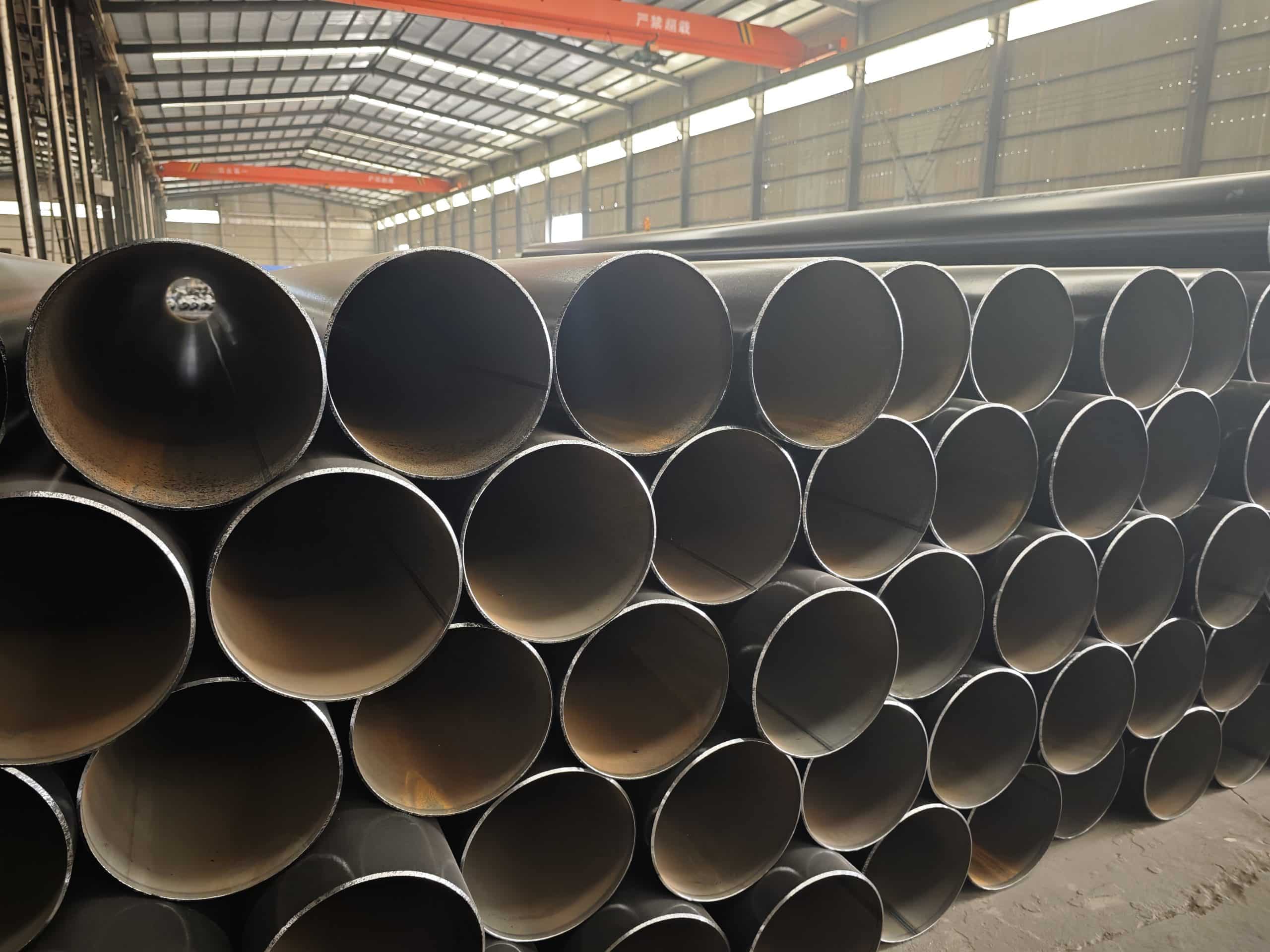
LONGMA manufactures circular ERW and LSAW steel pipes at a 230,000-square-meter facility with annual production capacity exceeding 500,000 tons and more than 60 senior technical staff. For ASTM A53 Type E black or hot-dip galvanized pipe enquiries, send the grade, size, schedule, end finish, quantity and required documents to info@ilongma.com. The team can confirm product availability and provide a technical quotation.