- 1. What Is an AS 1163 Hollow Section?
- 2. What Do C250, C350 and C450 Mean in an AS 1163 Hollow Section?
- 3. How Do C250 and C350 Hollow Sections Compare?
- 4. Is C450 Always the Better Choice for an AS 1163 Hollow Section?
- 5. Which AS 1163 Hollow Section Grade Fits Your Application?
- 6. How Does Grade Choice Affect Wall Thickness and Weight?
- 7. How Does an AS 1163 Hollow Section Compare to EN 10219 and ASTM A500?
- 8. What Should a Buyer Check Before Ordering an AS 1163 Hollow Section?
- 9. Conclusion
- 10. FAQ
- 11. Ready to Source Certified AS 1163 Hollow Section Pipe?
Selecting an appropriate AS/NZS 1163 structural hollow section grade is important for design compliance, fabrication and procurement. This guide compares C250, C350 and C450, explains impact-toughness designations and outlines the checks needed when choosing a circular hollow section for structural applications.
What Is an AS 1163 Hollow Section?
Definition and Scope
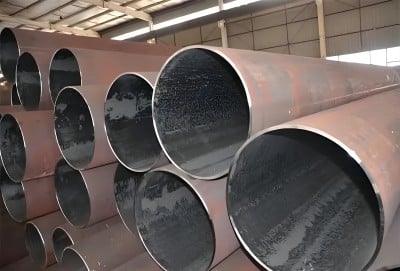
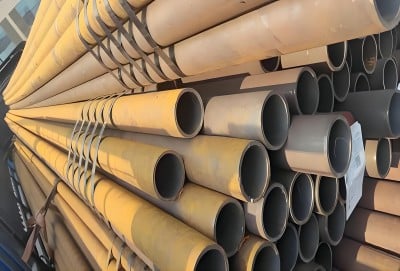
AS/NZS 1163 specifies requirements for cold-formed structural steel hollow sections. The standard covers circular (CHS), square (SHS) and rectangular (RHS) sections. Product conformity, chemical composition, mechanical properties, dimensions and tolerances should be assessed using the applicable edition and the ordered grade. The fact that the standard covers several shapes does not mean every manufacturer supplies all of them.
The standard doesn’t cover fire ratings, corrosion systems, or full rules for building structures on its own. Those rules come from companion codes like AS 4100 and AS/NZS 1170, which I’ll talk about more in the next part of this guide.
RHS, SHS and CHS: What’s the Difference?
Section shape influences bending resistance, buckling behavior, connection detailing and fabrication. The table provides a general comparison; final selection must follow structural design.
| Section | Shape | Engineering advantage | Common use |
| RHS | Rectangular | Strong directional bending | Beams, frames |
| SHS | Square | Balanced bending on both axes | Posts, columns |
| CHS | Circular | Even buckling resistance, less surface area | Trusses, handrails, piles |
LONGMA focuses on circular steel pipes and circular hollow sections (CHS), not square or rectangular hollow sections. Confirm the required AS/NZS 1163 grade, size and production availability with the supplier before ordering.
What Do C250, C350 and C450 Mean in an AS 1163 Hollow Section?
The Grade Numbers Explained
In the commonly used C250, C350 and C450 designations, the number indicates the nominal yield-strength class in megapascals. Specified minimum mechanical properties and any thickness-related requirements must be checked in the applicable edition of AS/NZS 1163 rather than inferred from the grade number alone.
| Grade | Minimum yield strength | Typical use |
| C250 | 250 MPa | Standard structural work |
| C350 | 350 MPa | Higher-load structures |
| C450 | 450 MPa | Weight-sensitive, high-capacity designs |
Use the current project-specified standard edition and the mill inspection certificate to confirm the actual grade, dimensions and test results.
What L0 and L15 Mean
An L0 suffix identifies an impact-toughness requirement at 0 °C for the applicable grade. Other suffixes and test temperatures should be used only where they are explicitly recognized by the governing edition of AS/NZS 1163 and the purchase specification. Confirm the specified absorbed energy, specimen requirements and test conditions rather than assuming that a suffix alone guarantees suitability for all cold-service applications.
Grade strength alone does not establish suitability for low-temperature service. The design temperature, required toughness, material thickness, fabrication details and applicable structural code must also be considered.
Where available under the applicable standard and project specification, buyers may consider impact-tested variants such as:
- C250L0 for general structures in cooler climates
- C350L0 for bridges and higher-load frames
- C450L0 for mining structures with dynamic loads
- For any requested designation outside the confirmed grade list, obtain written confirmation of its status and required impact test conditions before ordering.
How Do C250 and C350 Hollow Sections Compare?
Where C250 Works Best
C250 can be considered for general structural applications where its specified strength and other properties satisfy the design. Cost and weldability depend on product availability, actual composition and fabrication conditions; neither should be assumed from grade alone.
Where C350 Pays Off
C350 offers a higher nominal strength class than C250 and may allow a lighter design where strength governs. However, any proposed reduction in section size must also satisfy buckling, deflection, connection and fabrication requirements. Cost comparisons should use the completed design and actual supplier quotations.
| Decision factor | C250 | C350 |
| Material strength | Lower | Higher |
| Typical cost | Often lower | Often higher per tonne |
| Weight reduction potential | Limited | Greater |
| Weldability | Simpler | Needs project review |
| Best fit | Conventional structures | High-load, weight-sensitive jobs |
Do not just look at the price per ton; also compare the installed cost per unit of designed capacity. A thinner C350 AS 1163 hollow section can save more on the overall cost of the project than a heavier C250 piece, when you count the time it takes to transport and lift.
Is C450 Always the Better Choice for an AS 1163 Hollow Section?
What C450 Can Deliver
C450 has the highest nominal yield-strength class among the three grades compared in this guide. Higher strength may support weight reduction in suitable designs, but it does not automatically improve stiffness, buckling resistance or connection performance.
Where C450 Hits Limits
Higher material strength alone cannot resolve every structural design constraint. Engineers should check:
- Local plate slenderness and buckling behavior
- Connection and weld capacity, which may not scale with yield strength
- Fatigue performance under repeated loading
- Availability in the exact size and length needed
- Deflection control, where stiffness—not strength—governs the design
Welding C450 requires assessment of actual chemical composition, carbon equivalent, wall thickness, restraint, filler materials and the qualified welding procedure. Preheat and other controls should be established from the applicable welding requirements rather than assuming a procedure qualified for C250 is automatically suitable for C450.
Which AS 1163 Hollow Section Grade Fits Your Application?
Structural Applications
C250 and C350 are commonly used grades for structures designed to AS 4100 and AS/NZS 1170. Typical applications include industrial platforms, bridges, roof trusses and building columns.
C250 is intended for general structural applications where moderate strength is required, while C350 provides higher yield strength for more demanding structural designs and heavier loads. The grade should be chosen taking into account the connection requirements, buckling resistance and load capacity.
Mechanical and Transport Applications
Depending on the strength and weight requirements, C250, C350, and C450 may be considered for machinery frames, truck chassis, trailers, and OEM assemblies.
Engineers should consider fatigue resistance, impact loads, vibration, weldability and dimensional tolerances as well as material strength. AS/NZS 1163 includes material and product requirements, but does not cover all mechanical and fatigue design considerations.
The correct grade is determined by the relevant engineering standards, fabrication requirements and operating conditions.
Illustrative Grade-Selection Considerations
For a warehouse frame, a designer may compare C250 and C350 CHS options to determine whether a smaller C350 section satisfies strength, buckling, deflection and connection requirements. Any weight saving must be calculated from the actual section sizes.
For a conveyor structure exposed to variable loading, C450 may be considered where higher strength is beneficial. Fatigue, vibration, connection details and any required impact toughness must be checked independently.
For an export infrastructure project, the buyer should confirm the required AS/NZS 1163 grade, local design-code acceptance, inspection documents and delivery conditions. Neither transit time nor a claimed weight saving should be assumed without project-specific information.
How Does Grade Choice Affect Wall Thickness and Weight?
Grade Versus Thickness
A higher grade might let the wall be thinner, but only after the axial compression, bending, shear, deflection, and connection design have all been checked. Strength by itself is never a reason to thin a section.
A Simple Weight Example
Approximate mass per metre can be estimated from cross-sectional area multiplied by steel density. To compare two grades fairly, use verified section properties and the same design load cases:
- Start with a C250 baseline section meeting the load case.
- Confirm resistance and deflection limits.
- Test a smaller C350 alternative at the same load.
- Recheck buckling, welds, and connections on the smaller section.
- Compare material, fabrication, and transport cost across both options.
Even though the standard allows some variation in size, the actual mass can still change. For this reason, verified section tables should always be used to back up this kind of calculation instead of just guesses.
How Does an AS 1163 Hollow Section Compare to EN 10219 and ASTM A500?
| Standard | Region | Focus | Procurement note |
| AS/NZS 1163 | Australia/New Zealand | Cold-formed structural hollow sections | Confirm grade, L rating, local code acceptance |
| EN 10219 | Europe | Cold-formed welded hollow sections | EN grade is not automatically equal to AS/NZS grade (CEN, 2006) |
| ASTM A500 | United States | Cold-formed welded/seamless tubing | Confirm Grade B/C/D plus AISC design code (ASTM International, 2023) |
In Australia, AS 1074 only talks about general-use tubes, not structural hollow sections. You should never use general-service pipe instead of an AS 1163 hollow section without first getting approval from an engineer.
What Should a Buyer Check Before Ordering an AS 1163 Hollow Section?
Supplier Evaluation Checklist
Before placing an order, confirm the following:
- Verified product conformity to AS/NZS 1163, not a general claim
- Grade and size range, including C250 through C450L0
- Mill test certificate quality and heat-number traceability
- Third-party inspection availability for larger orders
- Galvanizing capability meeting AS/NZS 4680
Since 2003, LONGMA has been making ERW and LSAW structural steel pipe. They have a 230,000-square-meter plant that makes more than 500,000 tons of steel pipe annually and has more than 60 senior technical staff. The company has shipped to SINOPEC, CNPC, PEMEX, PDVSA, and PTTEP, among other oilfield and infrastructure clients. Each shipment can be fully tracked by its heat number, batch number, and product number.
Need a Reliable AS 1163 Hollow Section Supplier?
Choosing an AS/NZS 1163 hollow section involves both grade selection and supplier verification. LONGMA focuses on circular ERW and LSAW steel pipes. Confirm the required CHS grade, dimensions, inspection documentation and availability with the technical team before purchase.
Conclusion
C250, C350 and C450 offer different nominal strength classes for structural hollow sections. The most suitable grade depends on design loads, stiffness, stability, weldability, toughness, connections and procurement conditions. Higher strength can provide design flexibility, but any reduction in section size requires complete engineering verification. For LONGMA enquiries, specify circular hollow sections (CHS) and confirm the applicable AS/NZS 1163 requirements.
FAQ
What is an AS 1163 hollow section?
The AS/NZS 1163 standard covers grades, chemistry, sizes, and testing needs for this cold-formed structural steel tube. It can be made as RHS, SHS, or CHS.
What do C250, C350, and C450 mean?
C250, C350 and C450 identify nominal yield-strength classes. Verify the applicable minimum values and product conditions in the project-specified edition of AS/NZS 1163.
What’s the difference between C350 and C350L0?
C350L0 specifies an impact-toughness requirement at 0 °C in addition to the applicable grade requirements. This does not guarantee suitability for every low-temperature application; the design specification must be checked.
Is C450 always better than C350?
No. C450 can make things lighter, but the benefit may be limited by its stiffness, local buckling, welding control, and connection capacity. The right grade is decided by a full review of the structural design.
Can AS 1163 hollow section pipe be used outside Australia and New Zealand?
Yes, it is often sent to Southeast Asia, the Middle East, and other places, but local building codes and owner requirements must still make sure it’s okay.
What documents should a supplier provide with an AS 1163 hollow section order?
If needed, you can get an EN 10204 3.1 certificate along with a mill test certificate, chemical analysis, mechanical and impact results, heat traceability, and a packing list.
Ready to Source Certified AS 1163 Hollow Section Pipe?
For AS/NZS 1163 circular hollow section enquiries, LONGMA can review the specified grade, outside diameter, wall thickness, length, quantity and inspection-document requirements. LONGMA manufactures circular ERW and LSAW steel pipes at a 230,000-square-meter facility with annual production capacity exceeding 500,000 tons. Email info@ilongma.com for confirmation of availability and a technical quotation.