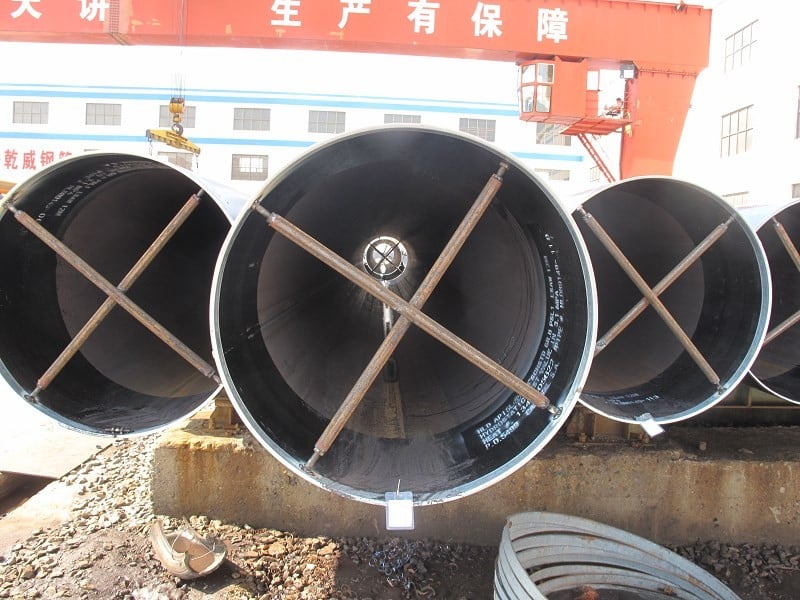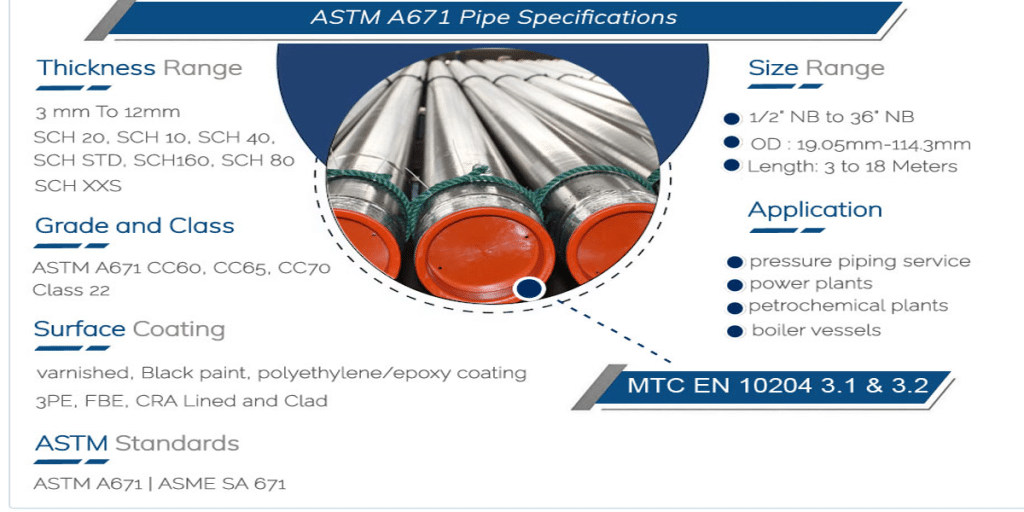
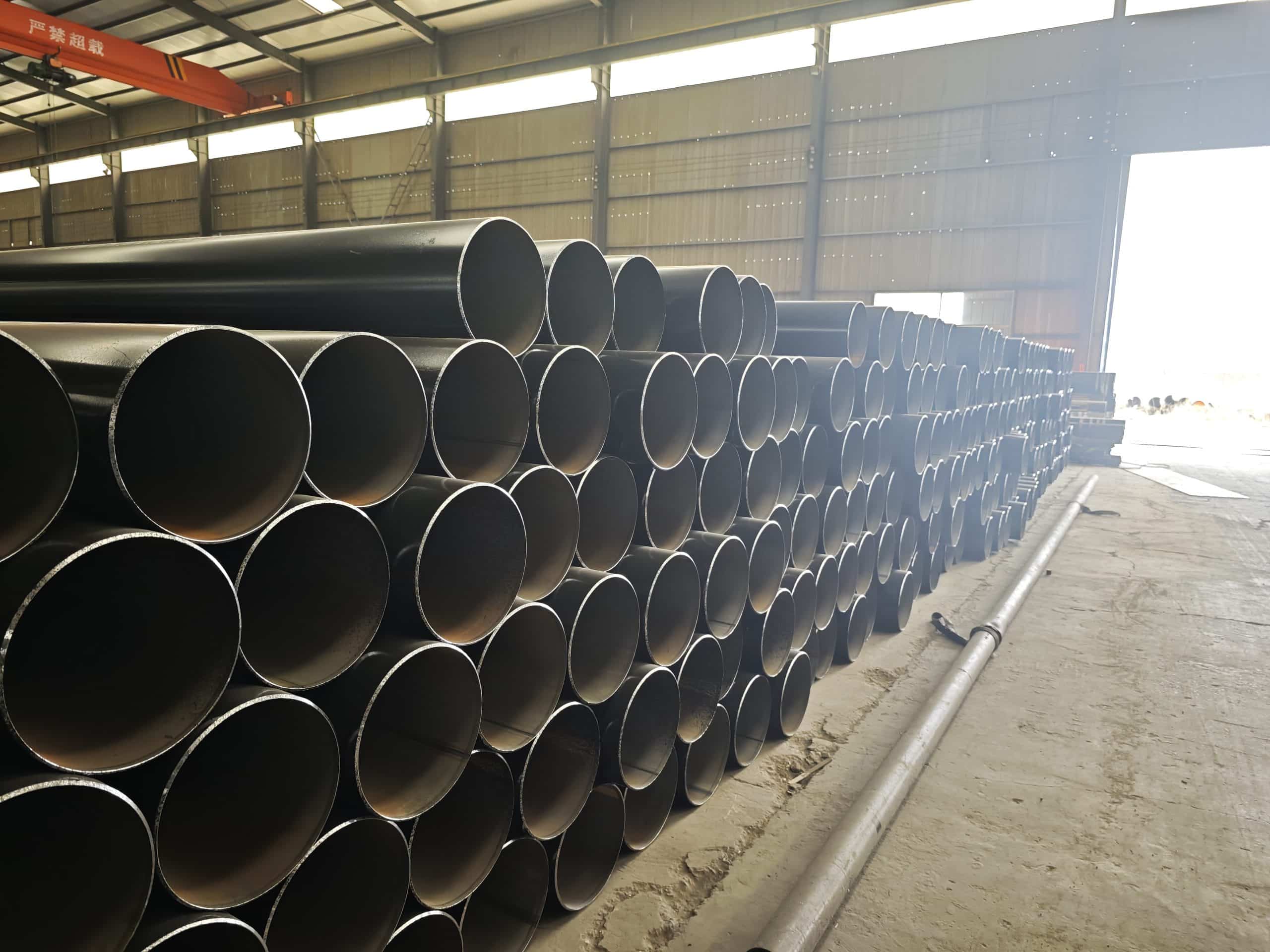
ASTM A53/A53M covers black and hot-dip galvanized carbon steel pipe in two grades, Grade A and Grade B, and three manufacturing types: Type E (electric-resistance welded), Type S (seamless), and Type F (furnace-butt welded). Understanding the distinction between grade, manufacturing type, dimensions, and testing requirements helps buyers specify pipe for construction, mechanical, water, and fire-protection applications where the relevant design code permits its use.
ASTM A53 Grades and Types
ASTM A53/A53M is a product specification for black and hot-dip zinc-coated steel pipe, supplied as seamless, electric-resistance welded, or furnace-butt welded pipe. Grade A and Grade B define different chemical and mechanical requirements; the grade does not determine pipe size, schedule, or a universal allowable pressure.
The term “grade” in this standard only refers to the limits of chemical and mechanical properties, not pipe size or schedule. There are two grades in ASTM A53: Grade A and Grade B. The minimum yield and tensile strengths for Grade B are higher than those for Grade A.
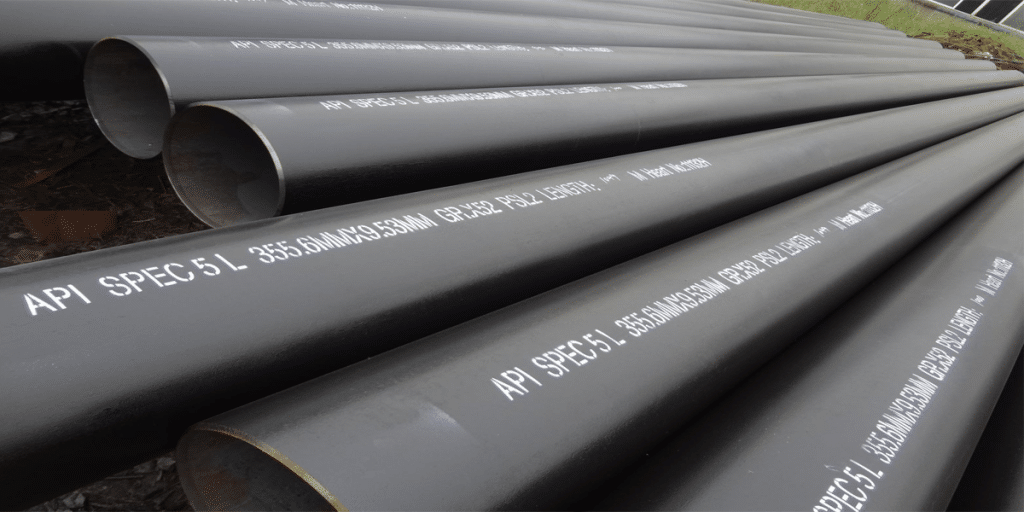
ASTM A53 covers general-purpose steel pipe for specified mechanical and pressure applications. ASTM A106/A106M specifically addresses seamless carbon steel pipe for high-temperature service, while API 5L covers line pipe. Substitution between specifications requires verification of all applicable product and design requirements.
ASTM A53 vs Other Pipe Specifications
Grade designations identify chemical composition limits and mechanical property requirements, including minimum yield and tensile strengths. Elements such as carbon, phosphorus, and sulfur are subject to maximum limits rather than minimum contents. Verify the applicable ASTM A53/A53M edition, manufacturing type, and grade on the mill test report.
Grade A and Grade B Naming Explained
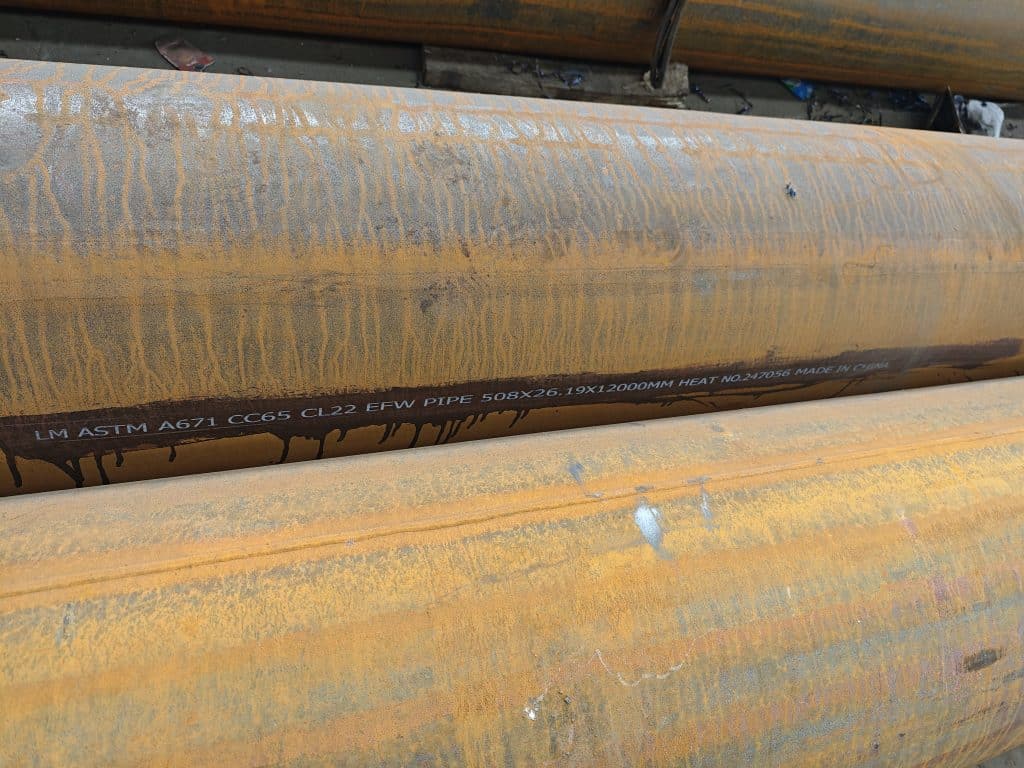
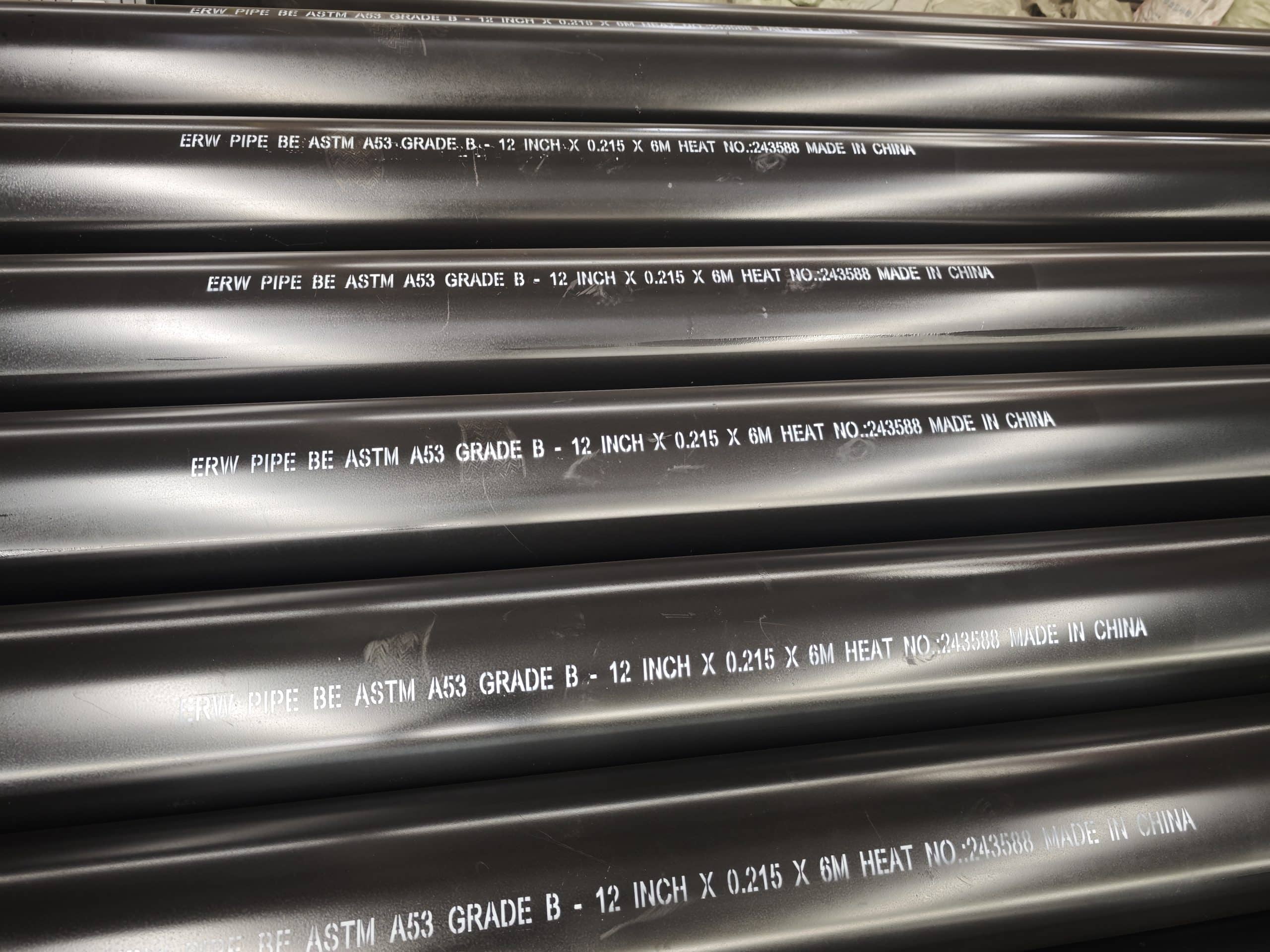
Grade names do not say how big the pipe is or how thick the walls are. They list the applicable limits for carbon, manganese, phosphorus, and sulfur, as well as the specified minimum mechanical properties that can be proven by heat analysis and tensile testing. Every lot of ASTM A53 steel pipe delivered to your site should have a mill test certificate stating the grade, type, and heat number.
ASTM A53 defines Grade A and Grade B. The permitted grade depends on manufacturing type: Type F is Grade A; Types E and S may be supplied in Grades A and B.
For business use, ASTM A53 only lists two grades: Grade A and Grade B. Each grade goes with a certain type of manufacturing.
| Designation | Meaning | Typical construction |
| Grade A | Lower minimum strength grade | Seamless, ERW, or furnace-welded |
| Grade B | Higher minimum strength grade | Seamless or ERW |
| Type S | Pipe with no longitudinal weld | Hot- or cold-finished |
| Type E | Electric-resistance welded | ERW process |
| Type F | Furnace-welded pipe | Typically Grade A only |
The majority of ASTM A53 steel pipe that is ordered today is Grade B, Type E, ERW, which has higher specified minimum strength. This combination covers most of the general industrial and construction purchases made in places like Saudi Arabia, the UAE, and Southeast Asia, based on how steel mills in those areas usually make steel.
Grade A vs Grade B: Properties
Chemical Composition Comparison
| Property | Grade A (max) | Grade B (max) | Verification source |
| Carbon | 0.25% | 0.30% | Heat analysis |
| Manganese | 0.95% | 1.20% | Mill test certificate |
| Phosphorus | 0.05% | 0.05% | Chemical analysis |
| Sulfur | 0.045% | 0.045% | Chemical analysis |
| Copper | 0.40% | 0.40% | MTC and inspection report |
Before you place an order, you should always check the current limits against the most recent version of ASTM A53/A53M, since these values can change over time due to standard revisions (ASTM International, 2020).
For Grade A and Grade B, the chemical limits shown in the table are a simplified comparison. Verify the applicable requirements, including any manufacturing-type distinctions and permitted composition adjustments, against the edition named in the purchase order.
| Mechanical property | Grade A | Grade B |
| Minimum yield strength | 30,000 psi (205 MPa) | 35,000 psi (240 MPa) |
| Minimum tensile strength | 48,000 psi (330 MPa) | 60,000 psi (415 MPa) |
| Typical use | Lower mechanical demand | Higher-strength piping systems |
The minimum yield strength and minimum tensile strength of Grade B ASTM A53 steel pipe are approximately 17% and 25% higher, respectively, than those of Grade A. That gap is important for fire sprinkler mains, structural columns, and pressure pipes that need to be able to bend without breaking.
When Grade B Is the Better Choice
For most fire safety, water transmission, and general industrial piping projects, I suggest Grade B. Mills keep a lot of it in stock, and it can be used for both standard ERW and seamless production runs. Even though the grade is B, that doesn’t mean the allowable pressure is automatically higher. The final pressure rating for your system is still based on the wall thickness, temperature, joint method, and corrosion allowance.
Grade B has higher specified minimum yield and tensile strengths than Grade A. However, the allowable system pressure must be calculated under the applicable design code using wall thickness, temperature, joint efficiency, corrosion allowance, and other relevant factors.
When it comes to weldability and bending behavior, the construction type of the ASTM A53 steel pipe is just as important as the grade.
Type E — Electric Resistance Welded Pipe
Grade B is commonly specified for general industrial and fire-protection applications where the applicable design and installation standards permit it. The appropriate grade must be selected from the project specification rather than from strength alone.
Type S — Pipe With No Longitudinal Weld
A solid billet is pierced and rolled to size to make this pipe. There is no weld seam left over. Some buyers like this design better than a longitudinal weld for pressure-sensitive systems because it doesn’t have a longitudinal weld. It usually costs more and may only come in a few sizes within a certain lead time compared to ERW.
Type F — Furnace-Welded Pipe
Type F pipe is made by furnace welding and goes with Grade A almost exclusively. In some mechanical applications, it is preferred for coiling, bending, and flanging. However, it is used much less often in international procurement these days than ERW pipe. Check the current size range and the project’s approval before choosing Type F.
Choosing Grade A or Grade B
Type E pipe is produced by electric-resistance welding along a longitudinal seam. The available diameter range, weld examination, dimensional tolerances, and acceptance requirements depend on the applicable ASTM A53 edition and the supplier’s manufacturing capabilities.
Grade A Availability and Use Cases
Grade A is still part of the active ASTM A53 standard, but mills may not be able to supply it in all sizes or regions. It can be used for general mechanical piping, structural supports, and water or air systems that aren’t very important as long as the project requirements allow for a lower strength rating. Before you send your supplier a formal purchase order, make sure that Grade A is currently being made in the size you need.
Why Fire and Water Projects Often Specify Grade B
Grade B is commonly specified for certain fire protection and water projects, subject to the applicable project requirements. Grade B ERW pipe is often used in NFPA-based fire sprinkler designs because it has a higher yield strength and a wide mill stock (NFPA, 2022). It’s important to note that galvanized A53 pipe used to be used for potable water lines, but many current codes prefer plastic or copper for drinking water. However, galvanized A53 pipe is still standard for non-potable industrial water service.
Welding and Fabrication
Welding Considerations by Grade
Because Grade B has a little more carbon and manganese than Grade A, the carbon equivalent may differ between heats. This can mean that thicker sections need more preheating. To make sure that the welding procedures are correct, you should use the project code instead of just the grade name (ASME, 2022). The design code says that service-temperature suitability depends on the applicable design code and operating conditions.
Grade A remains an option where its specified properties meet the project’s design and service requirements. Availability should be confirmed for the required manufacturing type, size, and finish.
When you bend something cold, the wall gets thinner around the outside radius, and tight-radius bends can get oval or wrinkled. To keep the seam from cracking, ERW pipe needs to be weld-seam orientation planned before it can be bent. Type F pipe, on the other hand, is easier to coil and flange. Before committing to production bending on a critical run, I think you should try it out on a sample length.
Fire-protection and water systems may specify ASTM A53 Grade B, but suitability depends on the applicable installation standard, system design, approvals, coating requirements, and local regulations. Galvanized steel should not be assumed suitable for every potable-water application.
- Confirm grade, type, and ASTM edition on the mill certificate before cutting or welding any ASTM A53 steel pipeon site.
- Verify outside diameter and wall thickness against the project drawing, not just the nominal size marked on the pipe body.
- Grade alone does not establish the carbon equivalent or the need for preheat. Weldability depends on the actual chemical composition, thickness, restraint, hydrogen control, and qualified welding procedure. Service temperature limits and allowable stresses must be established from the applicable design code, not a single temperature quoted for all ASTM A53 piping.
- Inspect finished bends for cracking, thinning, and ovality before the installation sign-off.
- Cold bending can cause thinning at the outside radius and ovality or wrinkling at tight bends. For ERW pipe, consider weld-seam orientation and the qualified fabrication procedure. Trial bending and inspection may be appropriate for critical applications.
Applications and Standard Comparisons
In addition to general engineering projects, ASTM A53 steel pipe is used in construction, fire protection, water transmission, HVAC, and oil and gas auxiliary systems.
Three Real-World Application Scenarios
A Riyadh-based fire safety company needs Grade B hot-dip galvanized pipe with threaded ends for a sprinkler riser system. The project also needs hydrostatic test reports and NFPA-compliant paperwork before the fire marshal will sign off on the installation. Any delay in the paperwork will directly cause the occupancy approval to be delayed.
A Vietnamese company that works with cities on water needs large-diameter Grade B pipe coated with 3LPE for a transmission main. In order to meet the deadline, each delivered heat lot must have EN 10204 3.1 certificates and beveled ends for field welding. This is because the project owner checks for traceability before releasing the final payment.
A regional distributor in Dubai always has black and galvanized stock from 2 inches to 8 inches on hand so that it can be sold quickly. The distributor wants common sizes to be delivered in 7 days and there should be a low minimum order quantity so that cash doesn’t get stuck in inventory that doesn’t move between projects.
ASTM A53 vs API 5L vs ASTM A106
| Requirement | ASTM A53 | ASTM A106 | API 5L |
| General service | Common | Common | Line pipe focus |
| High-temperature service | Verify suitability | Purpose-built | Depends on grade |
| Line-pipe qualification | Not automatic | Not primary purpose | Primary purpose |
| Construction | Seamless, ERW, furnace-welded | Only pipe with no weld | Seamless or welded |
Some pipe may be ordered to both ASTM A53 Grade B and API 5L Grade B, but dual certification is valid only when the finished product meets every applicable requirement of both specifications, including manufacturing, inspection, testing, marking, and documentation.
Quality Checks and Supplier Selection
Request the applicable mill test report, dimensional inspection records, and hydrostatic or permitted nondestructive examination records as required by the product specification and purchase order. For galvanized ASTM A53 pipe, verify coating compliance against the galvanizing provisions of ASTM A53/A53M; additional coating standards apply only when specified and technically appropriate.
Conclusion
ASTM A53/A53M identifies three manufacturing types—Type S (seamless), Type E (ERW), and Type F (furnace-butt welded)—and two grades, A and B. Grade B provides higher specified minimum strength, while Grade A remains suitable for applications that permit its properties. Product type, size, coating, testing, and design requirements must all be checked before ordering.
Not just comparing prices per ton is important when selecting ASTM A53 steel pipe; you also need to make sure that the grade, type, dimensions, coating, and test documentation match the project code. If buyers don’t do that step, they could have to redo the work, wait longer for acceptance, or have shipments rejected once the pipe gets to the job site.
FAQ
What are the grades of ASTM A53 pipe?
ASTM A53 specifies Grade A and Grade B. Grade B has higher specified minimum yield and tensile strengths, but neither grade is automatically suitable for every application.
Is ASTM A53 Grade B stronger than Grade A?
Yes. It takes 35,000 psi to yield Grade B, but only 30,000 psi to yield Grade A. System pressure still depends on the thickness of the walls, the temperature, and the design code.
What is the difference between ASTM A53 Type E and Type S?
Type E pipe has an electric-resistance weld and a longitudinal seam. Type S doesn’t have any longitudinal welds. Both of them have to meet the grade’s chemistry and strength requirements.
Is ASTM A53 suitable for fire sprinkler systems?
ASTM A53 pipe may be used in fire sprinkler systems when permitted by the applicable design and installation requirements. Grade, coating, pipe dimensions, fittings, and approvals must be checked for the particular system.
Is ASTM A53 the same as API 5L?
Not at all. ASTM A53 is a standard for carbon steel pipes in general, while API 5L is made for oil and gas line pipes and has its own PSL1/PSL2 qualification system and testing requirements.
Does ASTM A53 pipe have one universal pressure rating?
No, ASTM A53 specifies the size and type of materials that must be used. The design code says that the allowable pressure has to be found by taking into account the temperature, wall thickness, and joint method.
What documents should come with every ASTM A53 pipe shipment?
You should get a mill test certificate with the heat number and chemistry, mechanical test results, records of hydrostatic or nondestructive tests, data on dimensional inspection, and an EN 10204 3.1 certificate if the contract calls for one.
Source ASTM A53 Pipe from LONGMA
A correct ASTM A53 purchase order identifies the grade, manufacturing type, outside diameter or NPS, wall thickness or schedule, finish, applicable standard edition, inspection requirements, and documentation. LONGMA supplies ERW round steel pipe for suitable project requirements. Send your specification sheet to info@ilongma.com for a quotation.