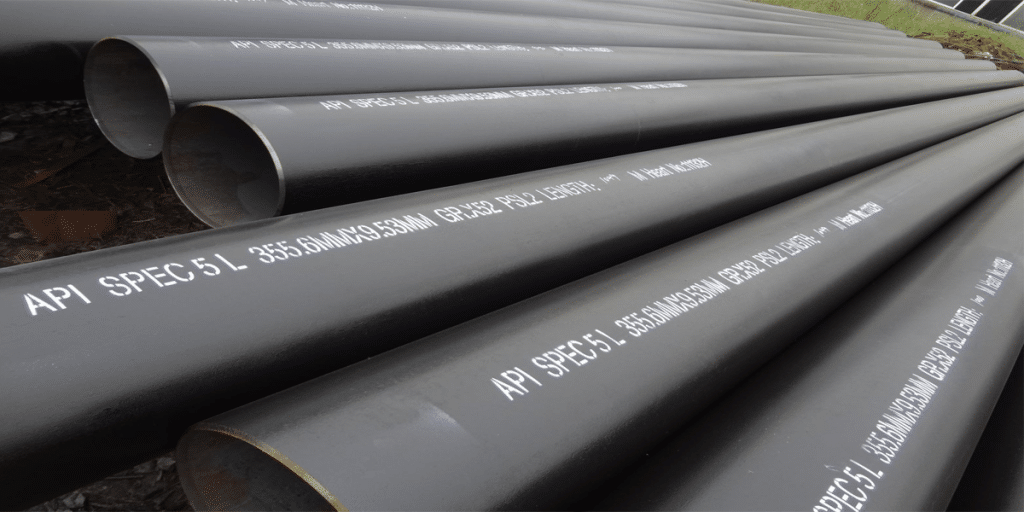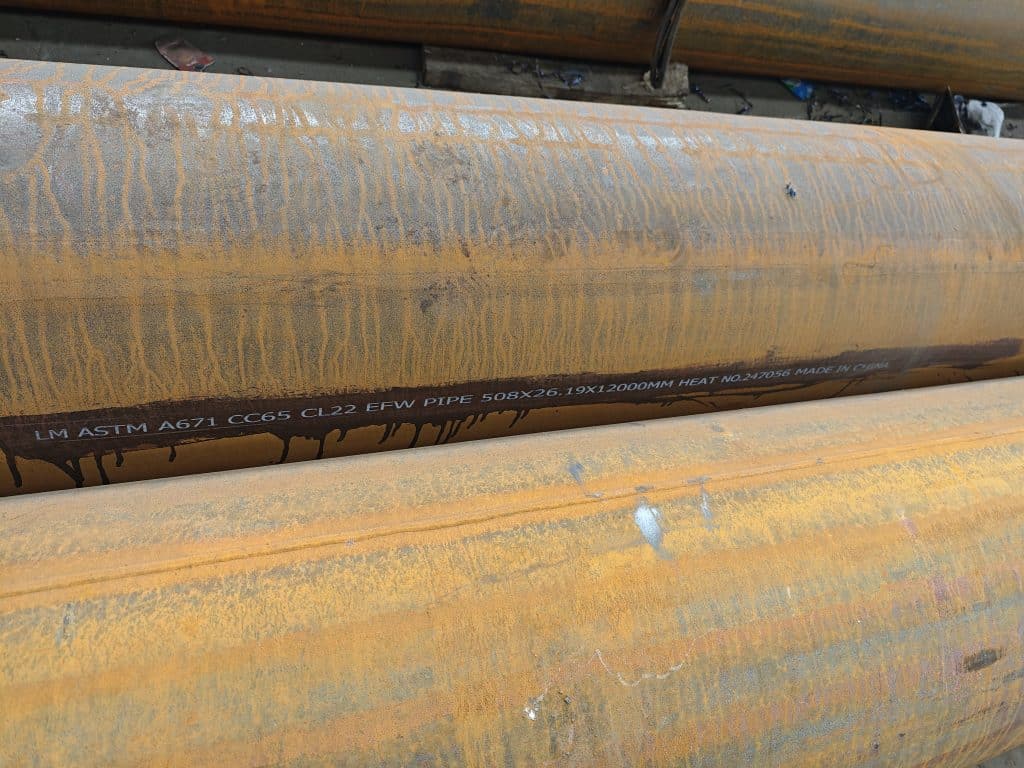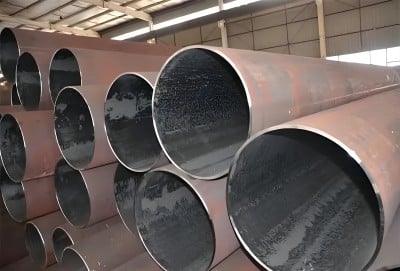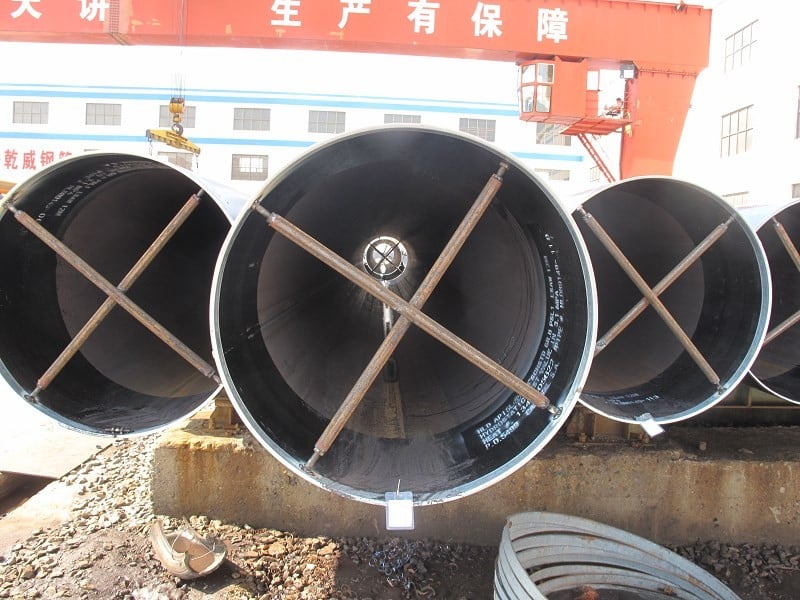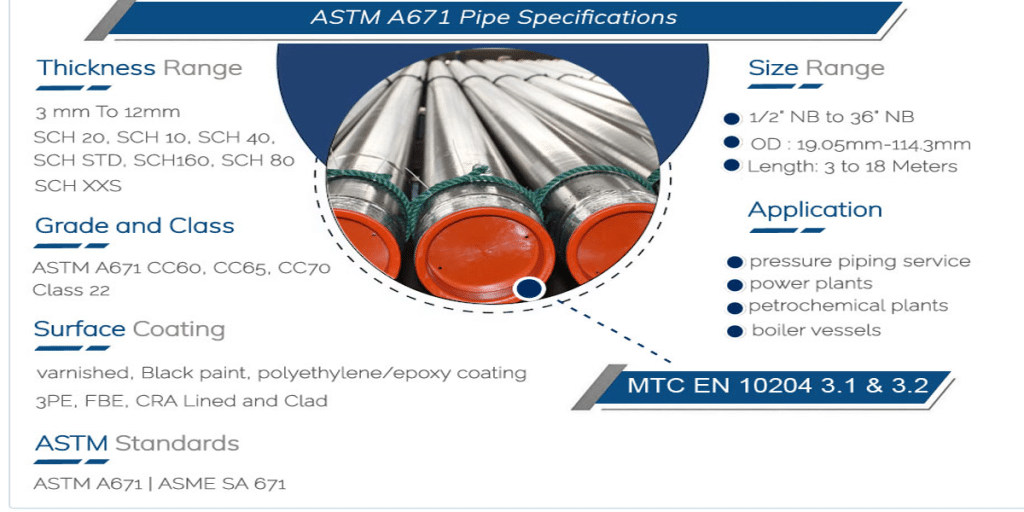
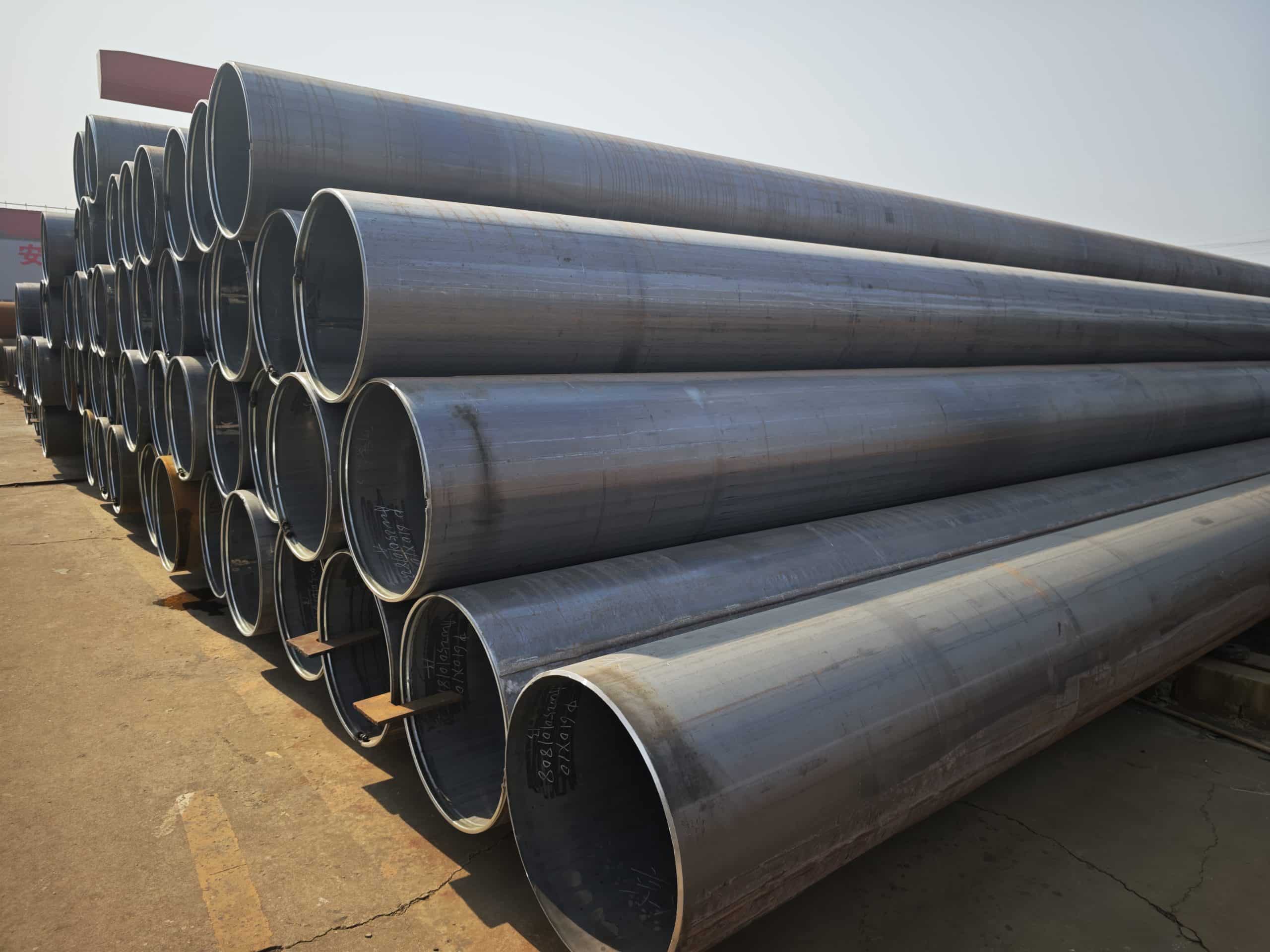
Circular hollow sections (CHS) are specified by outside diameter (OD) and wall thickness (t), usually in millimetres. There is no single worldwide CHS size chart: available dimensions depend on the applicable product standard and manufacturer. The sizes in this article are illustrative combinations, not the complete dimensional range permitted by EN 10219. LONGMA supplies ERW and LSAW round steel pipe; confirm the required grade, manufacturing route, tolerances, and availability before ordering.
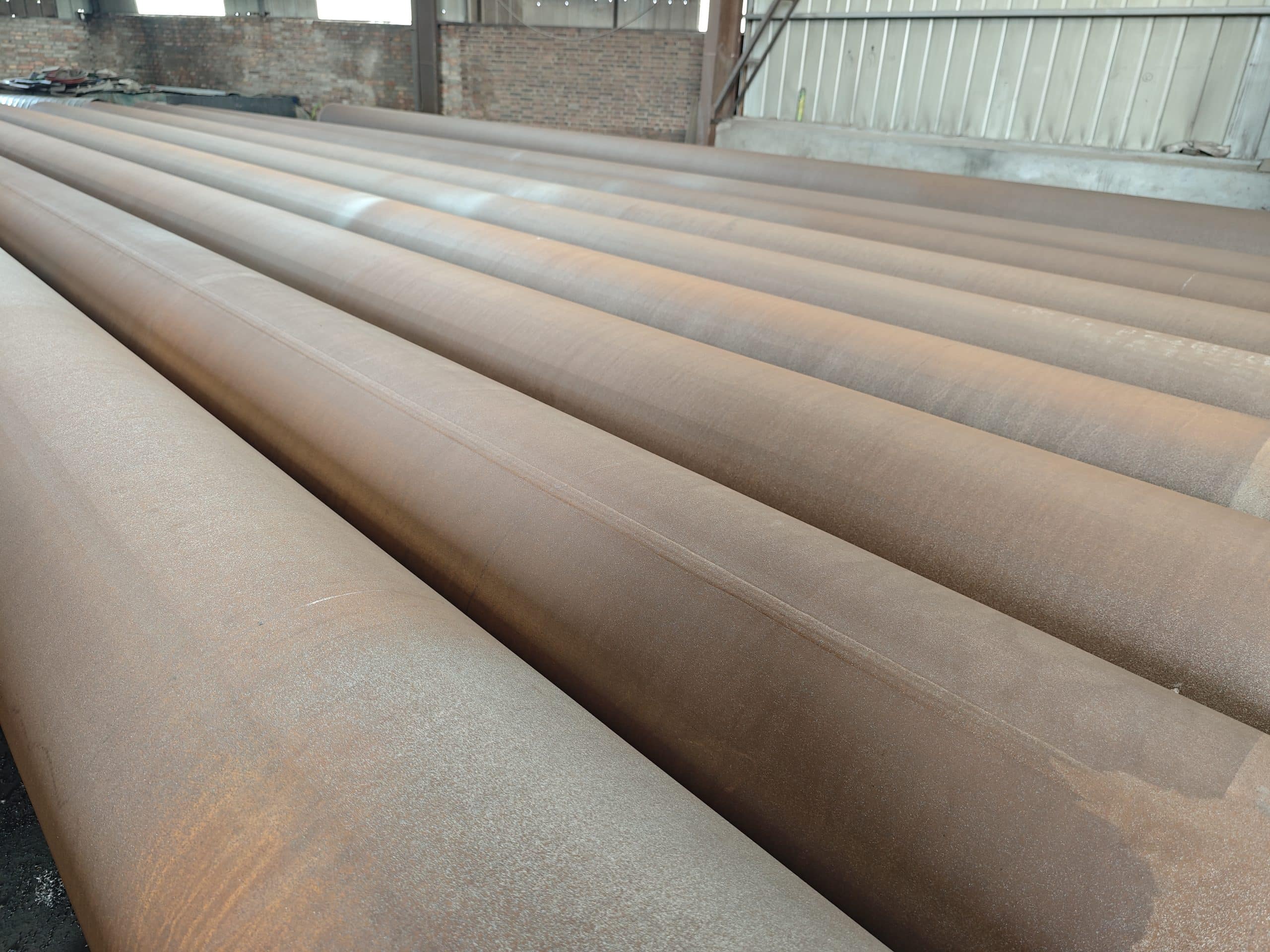
Circular Hollow Sections Explained
Definition and Common Uses
A circular hollow section (CHS) is a round structural steel section with a hollow centre. Typical uses include columns, trusses, bracing, towers, handrails, and equipment frames. EN 10219 covers cold-formed welded structural hollow sections; the applicable grade and delivery requirements must be specified for each order.
CHS, Round HSS, and Pipe Are Not Automatic Matches
CHS and round HSS describe similar structural forms in different standards systems, but they are not automatically interchangeable. Pipe designated by NPS and schedule is specified differently. For example, an NPS 2 pipe has a nominal outside diameter of 60.3 mm, but the applicable product standard, wall thickness, tolerances, and test requirements must still be compared.
Why No Single Global Size Chart Exists
Regional standards specify different grades, tolerances, inspection requirements, and dimensional conventions. EN 10219 covers cold-formed welded structural hollow sections, while AS/NZS 1163 covers cold-formed structural hollow sections under its own requirements. A complete inquiry should state outside diameter, wall thickness, length, grade, manufacturing process, and required tolerances.
Standard CHS Sizes
How CHS Sizes Are Written
CHS dimensions are commonly written as OD × t, for example 168.3 × 6.3 mm. A single outside diameter can be supplied with different wall thicknesses. EN 10219-2 provides dimensional and sectional-property provisions for products within its scope; confirm whether a proposed combination is covered by the applicable edition and available from the mill.
An Indicative CHS Size Chart
The following examples illustrate how CHS sizes are expressed. The cross-sectional areas and unit masses are calculated for an ideal circular annulus using a steel density of 7,850 kg/m³. They are theoretical estimates, not certified dimensions or a complete list of EN 10219 sizes.
| OD × t (mm) | Area (cm²) | Mass (kg/m) |
| 60.3 × 3.2 | 5.74 | 4.51 |
| 88.9 × 4.0 | 10.67 | 8.38 |
| 114.3 × 5.0 | 17.17 | 13.48 |
| 168.3 × 6.3 | 32.06 | 25.17 |
| 219.1 × 8.0 | 53.06 | 41.65 |
| 323.9 × 12.5 | 122.29 | 95.99 |
Smaller diameters, including 48.3 × 3.2 mm, may be relevant to light structural work even when they are outside a particular supplier’s offered range. Confirm product availability, applicable tolerances, and certified properties before ordering.
Small, Medium, and Large Sizes by Application
As a general rule, tubes that are less than 100 mm in diameter can be used for bars and light frames. Sizes between 100 and 330 mm are used for most trusses, braces, and equipment walls. Bigger sections are used for things like columns, towers, bridges, and big industrial projects that need walls and diameters that are bigger. Truss members and large-diameter columns can both be bought from the same company because our range goes up to 1422 mm.
CHS Standards Compared
EN 10210, EN 10219, and ASTM A500
EN 10210 addresses hot-finished structural hollow sections; EN 10219 addresses cold-formed welded structural hollow sections. EN 10219-1 covers technical delivery conditions, while EN 10219-2 addresses tolerances, dimensions, and sectional properties. ASTM A500/A500M covers cold-formed structural tubing, including round sections, under different requirements. Products should not be treated as equivalent solely because their nominal dimensions match.
Side-by-Side Comparison
In this table, you can compare the two systems based on the most important features that buyers look for.
| Item | EN 10219 CHS | ASTM A500 round HSS |
| Process | Cold formed, welded | Cold-formed, welded or non-welded |
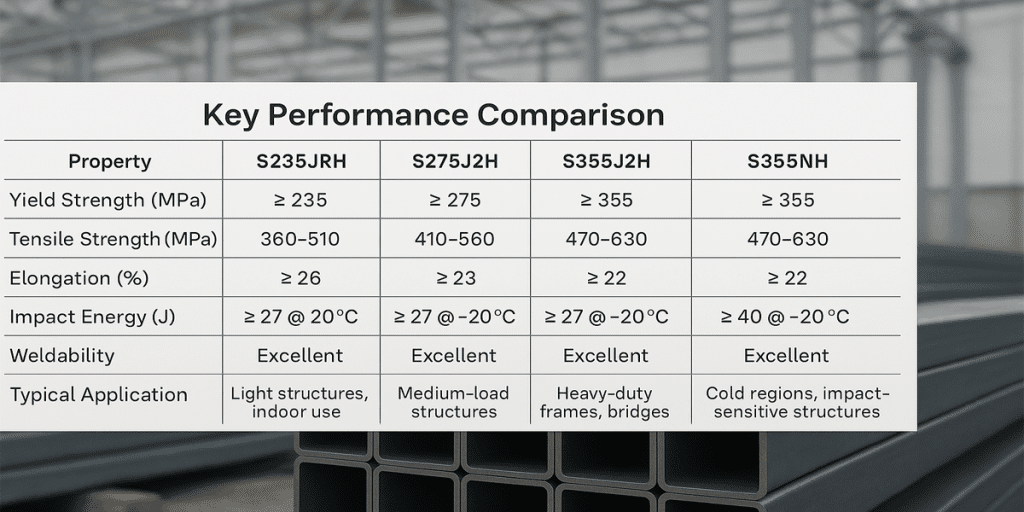
| Typical grades | S235JRH, S275J0H, S355J0H, S355J2H, S420MH | Grades B and C for rounds |
| Minimum yield | S355J2H: see applicable EN 10219-1 grade/thickness requirements | Verify by ASTM A500 grade and edition |
| Impact testing | J0: 27 J at 0 °C; J2: 27 J at −20 °C | Added only if the buyer requests it |
| Diameter tolerance | ±1 %, minimum ±0.5 mm (EN 10219-2) | Set by A500’s own tables |
Why Nominal Dimensions Do Not Convert HSS to Pipe
For example, NPS 6 pipe has an outside diameter of approximately 168.3 mm, but structural CHS and pressure pipe may have different wall thicknesses, tolerances, testing requirements, and material properties. ASTM A53 is also used for certain structural and mechanical applications where permitted; verify suitability against the design specification.
Key CHS Dimensions
Diameter and Wall Thickness
Outside diameter and wall thickness affect section area, stiffness, slenderness, buckling resistance, connection design, and weight. Local buckling checks use the diameter-to-thickness ratio (D/t) together with material properties and the applicable structural design rules. Do not assume a single D/t limit applies to all grades, design codes, or section classes.
Area, Unit Weight, and Cost
For an ideal circular section, A = π/4 × [D² − (D − 2t)²], with D and t in consistent units. Approximate mass per metre is A × 0.00785 when A is in mm² and steel density is 7,850 kg/m³. For 168.3 × 6.3 mm, the theoretical area is about 32.06 cm² and mass is about 25.17 kg/m. Use certified or contractually specified values for final procurement.
Length, Straightness, and End Condition
In addition to OD and wall thickness, specify cut length, straightness, end preparation, and relevant tolerances. End squareness and bevel geometry should match the connection and welding requirements. Do not assume all hollow sections have identical wall-thickness tolerances or weld preparation.
CHS Selection and Ordering
A Four-Step Selection Process
A practical selection sequence is to define the structural application, confirm the governing design and product standards, select suitable dimensions and material grade, and then verify availability and documentation.
Step 1 :Please write down the service life, the load, the length that can’t be supported, the connection method, and the environment.
Step 2: Check that the design code and the standard match. It could be British Standards, Eurocodes, AISC, AS/NZS, JIS, or the project specification.
Step 3: Pick out the right size. You should look at the diameter, wall thickness, performance, cost, weight, and ability to weld all at the same time.
Step 4: Check the status of the supply.
Find out if the size is a standard mill item, something that is kept in stock, or a size that is only made for that order. The lead time and minimum order will be set by this. We can get some of our stock pipes to you in as little as seven days. A lot of the time, standard sizes ship in thirty days and custom items ship in forty-five days.
What Belongs in a CHS Procurement Specification
A complete CHS inquiry should include three groups of information:
- Dimensions and material: Give outside diameter, wall thickness, length, quantity, tolerances, straightness, and end preparation. Then name the product standard, grade, delivery condition, impact requirement (J0 or J2), and manufacturing route, such as welded, hot-finished, or cold formed. Each line closes a gap that would otherwise become a quote difference.
- Surface: Choose black steel, oiling, pickling, galvanizing, painting, or powder coating. Our EN10219 pipe suits galvanizing and accepts optional painting and coating, so state the environment and the coating standard or thickness you need at the start. Early detail keeps the coating plan aligned with service life.
- Inspection and documents: Request EN 10204 3.1 certificates, dimensional reports, traceability records, test requirements, marking, packing, and shipping instructions. Written document rules prevent delays at project approval and site receiving. Name the inspection agency, if you need one, in the same request.
These lines let a supplier quote the right item the first time when put together.
Common Mistakes When Ordering Circular Hollow Sections
A lot of mistakes happen when people think that things that are about the same size are the same. Before a project can go ahead, it has to meet certain requirements for structural CHS, mechanical tubing, pressure pipe, line pipe, and scaffolding tube. You need to say both the wall’s outside diameter and its thickness, since one diameter can fit a lot of walls. Compare the tolerances to how the connection was designed, and look at how the wall of a large diameter bends when it is thin. You should always get written permission before making changes to an EN, ASTM, JIS, or other standard. This is because certification, toughness, strength, and the ability to weld can all change.
CHS Supply and Quality Assurance
Standard Matching and Drawing Review
A reliable supplier reviews the specified round-section dimensions, grade, standard, drawings, and required documentation before quoting. LONGMA manufactures ERW and LSAW round steel pipes. Its stated factory area is 230,000 m² and annual output exceeds 500,000 tonnes; confirm the specific structural grade and dimensions for each order.
Surface Treatment, Processing, and Export Packing
Adding more work costs more, so we plan it early. Our hollow section items can be galvanized, and if the project needs it, we can paint and coat them too. Tell us what your shop needs, like lengths that have already been cut or ends that are ready to go, and we’ll see what we can do. We also handle shipping, export packing, and bundling to make sure tubes get there safely and can be found.
Traceability, Documents, and the Final Checklist
LONGMA can provide product traceability and inspection documentation according to the order requirements. EN 10204 Type 3.1 is a type of inspection document, not a product certification. ISO 9001 concerns quality management; CE marking and product-standard conformity must be assessed under their own applicable rules. Buyers should confirm standards, dimensions, grade, tolerances, testing, marking, and documents before placing an order.
Conclusion
CHS dimensions are defined by outside diameter and wall thickness, but there is no universal global size list. EN 10219, EN 10210, ASTM A500, and other standards have different technical requirements. Section area, theoretical mass, D/t ratio, connection design, and material properties should be checked together. A complete order should identify the applicable standard, grade, dimensions, finish, and inspection documentation.
FAQ
Is one CHS size the most common worldwide?
There isn’t a single size that stands out because demand changes based on market, use, and standard. Some light frames like big tubes and some like small ones.
Are CHS and round HSS the same product?
The structural tubes they talk about sound the same, but their grades, standards, and tolerances are different. Check each one before you treat them all the same.
How do I choose wall thickness and check local buckling?
Select wall thickness from the design loads, stiffness, connection details, corrosion allowance where relevant, and the applicable structural design code. Check the D/t ratio and local buckling provisions rather than relying on diameter alone.
Can I replace EN CHS with ASTM A500 round HSS?
Only when the responsible designer approves the substitution in writing after checking grade, mechanical properties, toughness, dimensions, tolerances, connections, and required certification.
What information do you need for a quote?
Provide outside diameter, wall thickness, length, quantity, product standard, grade, finish, tolerances, inspection documents, delivery requirements, and any drawings.
Request a CHS Quote
For an inquiry about ERW or LSAW round structural steel pipe, send LONGMA your CHS size list or project drawings, including the required standard, grade, wall thickness, length, coating, and delivery destination. Product compliance must be confirmed against the specified standard and supporting inspection records. Contact info@ilongma.com or visit ilongma.com.