- 1. Cold-Formed vs Hot-Formed Pipe
- 2. Manufacturing Processes
- 3. Dimensional Tolerances
- 4. Strength and Toughness
- 5. Surface Finish and Coatings
- 6. Applicable Standards and Documents
- 7. Key Selection Considerations
- 8. Conclusion
- 9. FAQ
- 10. Does cold formed pipe need extra surface preparation before galvanizing?
- 11. Contact LONGMA
Cold forming and hot forming describe how steel is shaped at different temperatures. The distinction can influence dimensional control, residual stress, microstructure, fabrication, and the applicable product standard. Neither process is automatically stronger or more suitable for every project. This guide compares typical production routes, engineering considerations, and the documents buyers should review.
Cold-Formed vs Hot-Formed Pipe
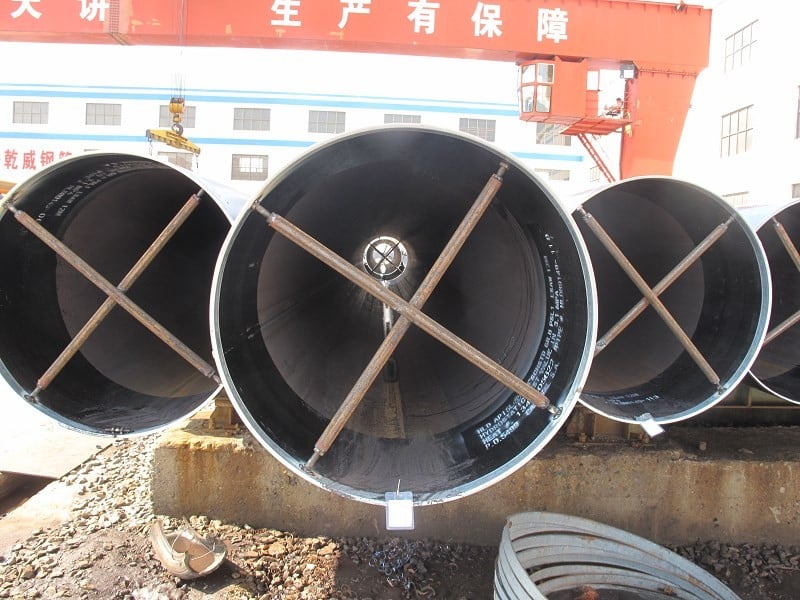
Cold forming shapes steel at temperatures below its recrystallization range, often near ambient temperature. For welded round hollow sections, steel strip or plate may be formed into a cylinder and joined along a longitudinal seam. ERW is one common welding route, but cold forming is not synonymous with ERW, and the manufacturing process must be identified separately.
Hot forming involves shaping steel at elevated temperatures; hot finishing may also involve thermal processing of a previously formed hollow section. The relevant temperature and production sequence depend on the material and process. A single temperature such as 900°C does not define every hot-formed or hot-finished pipe.
Why the Forming Temperature Matters
There are three things that structural engineers check first when the forming temperature changes:
- Dimensional tolerance: Cold forming tends to hold tighter outside diameter and wall thickness control.
- Surface condition: cold-formed pipe usually leaves the mill with a cleaner surface, free of heavy mill scale.
- Cold working can change mechanical properties and introduce residual stresses through plastic deformation. Subsequent thermal processing may modify microstructure and residual stresses. The actual effects depend on the steel grade, manufacturing route, and processing conditions.
Still, neither method is always better than the other. What kind of steel is used, how it is heated, and how well it is welded are all things that affect how strong something is.
Cold Formed Pipe vs. Hot Formed Pipe: Scope Boundaries
The product standard matters as much as the forming method. AS/NZS 1163 addresses cold-formed structural hollow sections; EN 10219 addresses cold-formed welded structural hollow sections; EN 10210 addresses hot-finished structural hollow sections. AS/NZS 1594 is a hot-rolled steel flat-products standard, not a direct hot-formed hollow-section counterpart to EN 10210.
Manufacturing Processes
When buyers know about the production line, they can figure out why prices and lead times are different for each method.
Cold Formed Pipe Production Steps
- Coil inspection for chemistry and surface defects
- Slitting to the required strip width
- Cold roll forming into a round profile
- Longitudinal ERW welding
- Weld bead trimming and sizing
- Straightening and cutting to length
- End facing, marking, and bundling
- Dimensional and mechanical testing before dispatch
The following sequence illustrates a typical cold-formed ERW round-pipe production route; it does not describe every cold-formed pipe manufacturing process. Production time and lead time depend on the mill, size, grade, and inspection requirements.
Hot Formed Pipe Production Steps
- Heating billet or plate to hot-working temperature
- Piercing, extrusion, or expansion into a hollow shape
- Hot sizing to the target diameter
- Controlled cooling, and heat treatment where the standard requires it
- Straightening, cutting, and surface conditioning
Process Comparison Table
| Factor | Cold formed pipe | Hot formed pipe |
| Forming temperature | Ambient | Elevated temperature; process-dependent |
| Typical feedstock | Steel strip or coil | Billet, plate, or formed section |
| Dimensional control | Tight, process-stable | Per product standard |
| Surface condition | Clean, low scale | Mill scale present |
| Heavy-wall capability | Limited by mill tooling | Depends on grade and process |
| Weld type | Common for welded round sections | Depends on product route |
Dimensional Tolerances
Dimensional tolerances must be checked against the specified product standard rather than inferred from forming temperature alone. AS/NZS 1163 projects require compliance with the applicable dimensional and acceptance requirements.
Cold Formed Pipe Tolerance Points
- Outside diameter: verify the tolerance in the applicable edition of AS/NZS 1163 for the specified size
- Wall thickness: verify the permitted variation and any minimum design thickness under the product and design requirements
- Straightness: checked across the full pipe length
- Length: cut tolerance confirmed before bundling
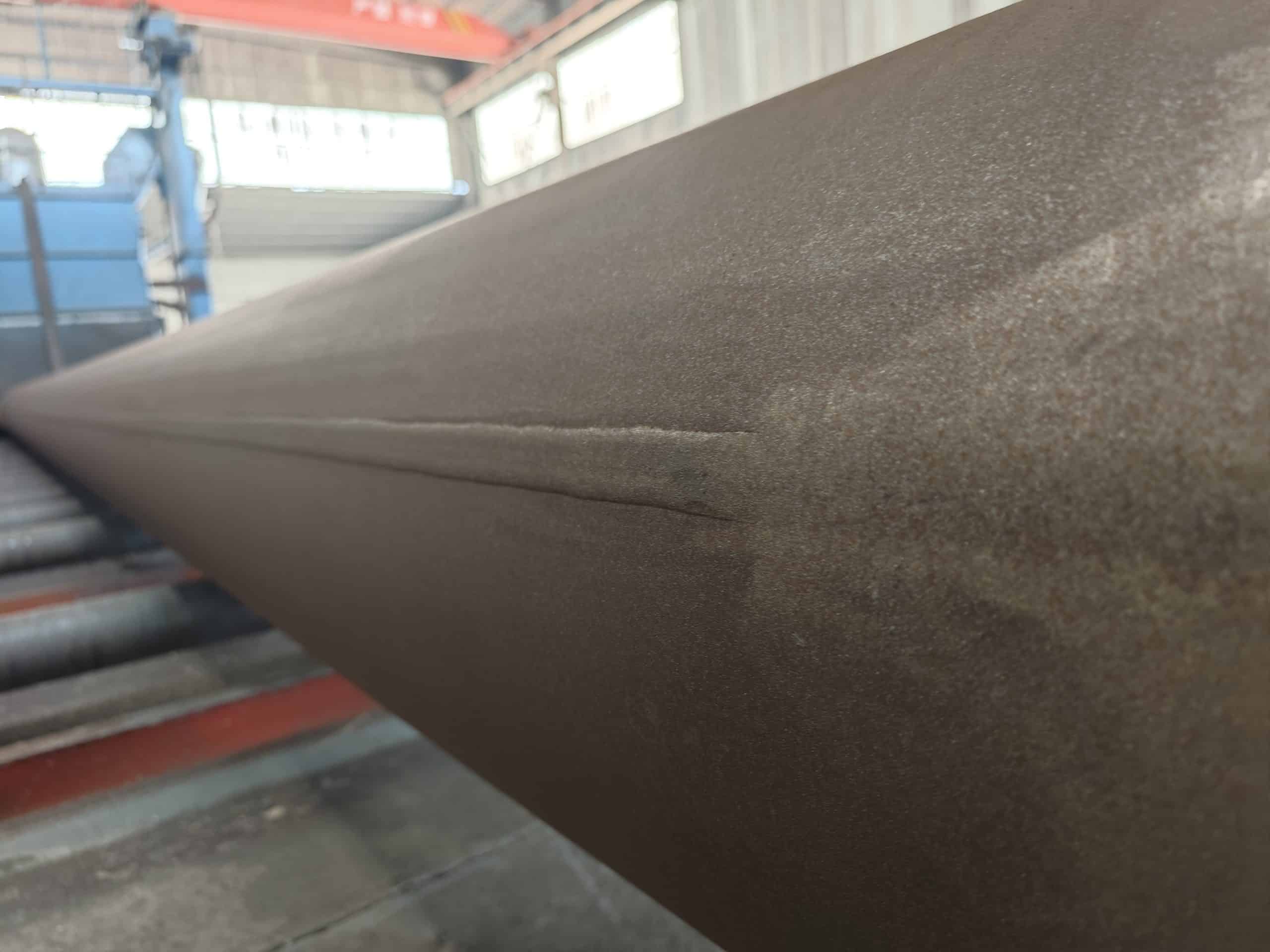
- Weld bead profile: inspected for excess reinforcement or undercut
Hot Formed Pipe Tolerance Points
Thermal processing and cooling may influence dimensions, straightness, and ovality. However, hot-finished sections are subject to their own dimensional tolerances, and no universal ranking of accuracy applies across all standards and mills.
Recommended Verification Method
Buyers should request dimensional inspection records covering outside diameter, wall thickness, straightness, length, and any specified end requirements. Acceptance criteria should cite the applicable product standard and purchase-order requirements.
Strength and Toughness
It’s not just how the metal was formed that makes it strong and tough. If you put weight on a pipe, its behavior depends on the type of steel it is made of, how thick its walls are, and how well the welds are done.
Strength and Ductility Comparison
AS/NZS 1163 includes grades identified as C250, C350, and C450, but the applicable mechanical property requirements must be checked by grade, product form, and thickness in the referenced edition. Strength is determined by composition and processing as well as cold working; it should not be attributed entirely to strain hardening.
Impact Toughness and L0 Grade Requirements
L0 designations identify specified impact-toughness requirements, including Charpy testing conditions under AS/NZS 1163. The suitability of a grade for low-temperature service must be assessed against the project’s design temperature, required toughness, thickness, and relevant structural code.
Testing Methods Used to Verify Performance
- Tensile testing for yield and ultimate strength
- Charpy impact testing for L0 grade confirmation
- Flattening and bend testing for weld ductility
- Hardness testing across the weld heat-affected zone
- Chemical analysis to confirm carbon equivalent for weldability
Surface Finish and Coatings
How a pipe is surfaced affects how well it paints or galvanizes. This can make big infrastructure projects very expensive.
Cold Formed Pipe Surface Finish
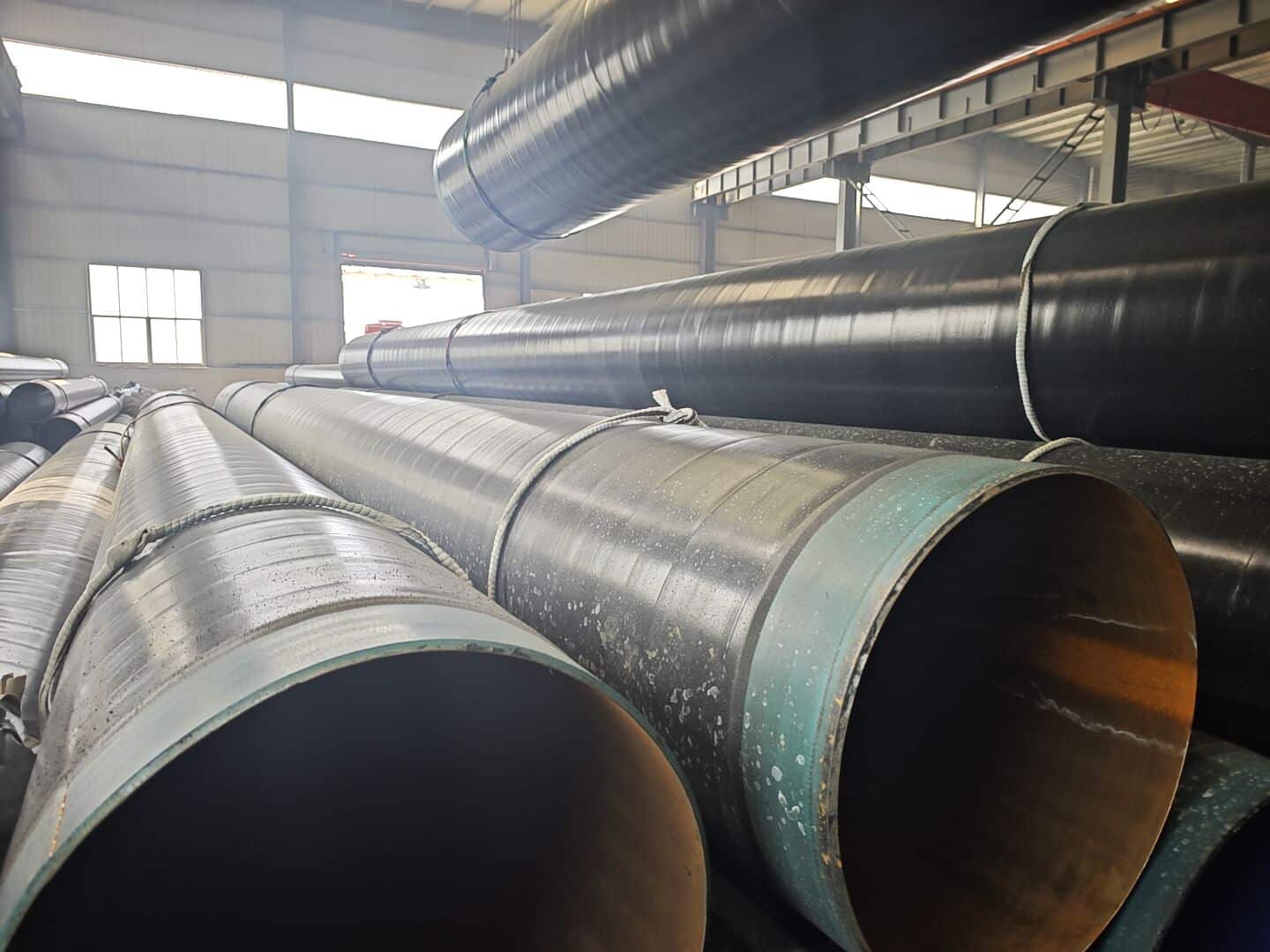
Cold-formed sections may have relatively smooth surfaces depending on the starting material and production route. However, galvanizing and coating still require appropriate surface preparation, including removal of contaminants and oxides as required by the coating process and standard.
Hot Formed Pipe Surface Finish
Hot processing can produce mill scale or other surface oxides. The required cleaning or blasting depends on the surface condition and coating specification, rather than forming method alone.
Coating Readiness Comparison
| Requirement | Cold formed pipe | Hot formed pipe |
| Pre-coating cleaning | Surface preparation as required | Surface preparation as required |
| Galvanizing readiness | Depends on surface and process | Depends on surface and process |
| Paint adhesion testing | Standard checks | Surface roughness check first |
Applications and Selection
These days, the choice between cold formed and hot formed pipe is made more quickly by the needs of the application than by theoretical comparisons.
Structural Building and Bridge Applications
Cold formed pipe under AS/NZS 1163 is a popular choice for columns, trusses and bridge railings for steel structure builders in Sydney, Melbourne and Auckland, as it makes it easier to weld and bolt connections during the building process.
Infrastructure Projects in Southeast Asia
In Indonesia, Malaysia and Vietnam, builders often receive cold formed pipe when the project owner specifies AS/NZS 1163 as the design standard. Chinese mills ship by sea, which only takes 7 to 14 days. Cold-formed sections enable staged deliveries and project changes.
Mining and Heavy Structural Applications
Mining and heavy structural projects may require higher-strength grades, impact toughness, or larger dimensions. The suitability of cold-formed or hot-finished sections depends on the structural design, weldability, fatigue requirements, and the actual mill capabilities.
Three Practical Use Cases
- Steel fabricator building a warehouse frame: Needs C350 cold formed pipe with EN 10204 3.1 certificates for council approval and fast turnaround to meet a fixed completion date.
- Southeast Asian contractor on an owner-specified project: Needs AS/NZS 1163 compliant pipe at a competitive price with flexible order quantities for site variations.
- Mining supplier in Perth: Needs C450L0 cold formed pipe in custom lengths up to 12.5 meters to cut field weld count on conveyor support structures.
Applicable Standards and Documents
In Australia and New Zealand, buyers check to see if the goods meet standards before they look at the technical side of things.
Key Standards to Request
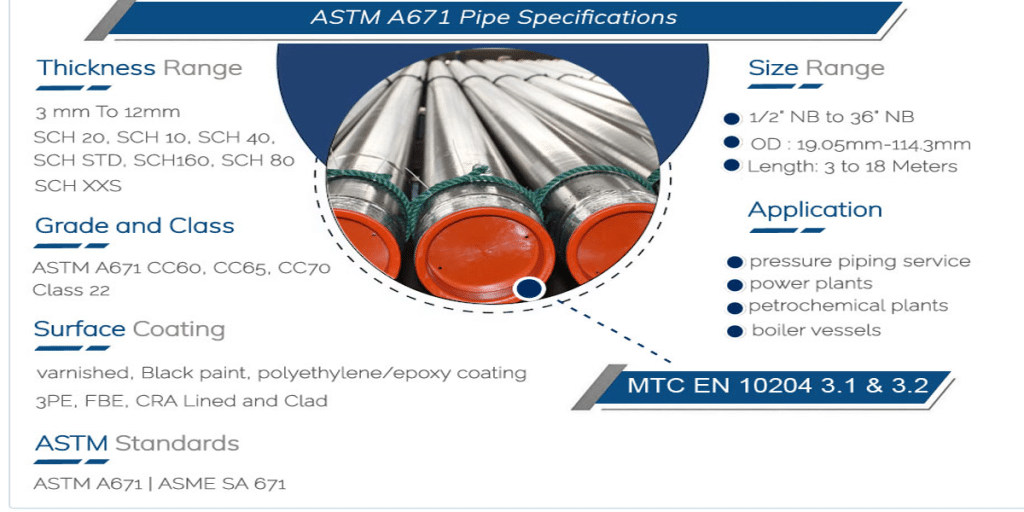
- AS/NZS 1163:2016—governs cold-formed structural steel hollow sections, grades C250, C250L0, C350, C350L0, C450, C450L0, and C550L0 (Standards Australia, 2016).
- AS/NZS 4680—sets hot-dip galvanized coating thickness requirements for outdoor steel structures.
- EN 10204 Type 3.1—specifies an inspection document type when requested by contract; it is not automatically mandatory for every Australian building project.
- ISO 9001—confirms the supplier runs a documented quality management system, though it does not certify product performance on its own (ISO, 2015).
- ASTM A500—the comparable US standard for cold-formed welded structural tubing, useful for buyers comparing specifications across markets (ASTM International, 2023).
Documents to Request Before Shipment
- Mill test certificate matched to heat number
- Dimensional inspection report
- Impact test results for L0 grades
- Galvanizing report where coating is specified
- Certificate of conformity and packing list
For Australian and New Zealand projects, verify any supplier listing, certification, and product compliance claims against the project’s actual requirements. A supplier directory does not itself certify a particular shipment.
Supplier Evaluation
Select the required grade and product standard before evaluating the supplier. Documentation supports compliance review but does not replace product inspection and applicable testing.
Supplier Evaluation Checklist
- Production range covering your required outside diameter and wall thickness
- Documented experience manufacturing to AS/NZS 1163, not just a general claim of compliance
- In-house testing equipment for tensile, impact, and dimensional checks
- Full batch traceability from raw coil to finished pipe
- Galvanizing or coating capability matched to AS/NZS 4680
- Export documentation experience for Australia, New Zealand, and Southeast Asian ports
Common Supplier Risks and How to Reduce Them
| Risk | Mitigation |
| Vague compliance claims | Request the specific standard clause and test report |
| Inconsistent wall thickness between batches | Define inspection frequency in the purchase order |
| Missing impact test data for L0 grade | Require Charpy results before shipment |
| Coating thickness below AS/NZS 4680 | Specify minimum microns and request a coating report |
| Delays affecting project milestones | Confirm production and shipping schedule in writing |
When a project engineer looks over a quote, not having all the paperwork they need should be seen as a big problem that needs to be fixed right away.
Key Selection Considerations
Cold-formed and hot-finished structural hollow sections are governed by different product specifications and can differ in manufacturing route, properties, and tolerances. The best choice depends on structural design, welding, coating, service environment, availability, and documented compliance—not on forming temperature alone.
Conclusion
Cold forming and hot forming can affect dimensional accuracy, residual stresses, microstructure, and mechanical properties. Neither process is inherently superior for all applications. Buyers should compare the governing standard, steel grade, dimensions, design requirements, and test documents before selecting a pipe.
FAQ
What is cold formed pipe?
Cold-formed pipe is shaped at relatively low temperature, often near ambient temperature. Welded cold-formed round sections may be made by forming strip or plate and welding the seam; ERW is one possible manufacturing method.
Is cold formed pipe stronger than hot formed pipe?
Not all the time. Strength isn’t just based on the forming temperature; it’s also based on the grade of steel, the quality of the weld, the wall thickness, and the heat treatment.
What is the main difference between cold formed and hot formed steel pipe?
The main distinction is the temperature and production route used to shape or finish the steel. Resulting tolerances, surface conditions, and properties must be evaluated against the actual product standard and manufacturing process.
Can cold formed pipe be used in low-temperature environments?
Potentially, provided the selected grade, verified impact properties, thickness, and relevant design-code requirements are appropriate for the minimum service temperature. An L0 designation alone does not establish suitability for every low-temperature application.
What standard governs cold formed pipe in Australia and New Zealand?
The relevant product standard is AS/NZS 1163:2016 – Cold-formed structural steel hollow sections including Amendment No. 1 (2017).
What documents should accompany a cold formed pipe shipment?
Supply the inspection documents required by the purchase order and product standard, including mill test reports, dimensional inspection results, and impact-test records where applicable. EN 10204 Type 3.1 documents should be requested when specified.
Does cold formed pipe need extra surface preparation before galvanizing?
Yes. Both cold-formed and hot-finished steel may require degreasing, pickling, blasting, or other preparation depending on surface condition and the selected galvanizing or coating process. The coating standard governs acceptance requirements.
Contact LONGMA
For projects specifying AS/NZS 1163 cold-formed round structural steel pipe, LONGMA can review the requested grade, dimensions, manufacturing route, inspection records, and documentation requirements. LONGMA manufactures ERW and LSAW round steel pipe. Send your inquiry to info@ilongma.com with the grade, outside diameter, wall thickness, length, and applicable product standard.