- 1. Which Petrochemical Systems May Use API 5L Pipe
- 2. API 5L and ASTM A106: Key Differences
- 3. Selecting API 5L Grade and PSL
- 4. High-Temperature Service and Welding Considerations
- 5. Coatings and Linings for Petrochemical Pipe
- 6. API 5L Pipe Manufacturing Routes: ERW, LSAW, and Seamless
- 7. Dimensions, Weight, and Purchase Specifications
- 8. Compliance, Testing, and Quality Verification
- 9. Supplier Evaluation and Procurement
- 10. Conclusion
- 11. Frequently Asked Questions
- 12. Discuss Your Project Requirements with LONGMA
Petrochemical facilities use piping systems to transfer feedstock, intermediate products, finished products, fuel gas, water, and other process or utility fluids. The pipe specification must be selected according to the service conditions and the design requirements that govern each line.
API Specification 5L covers steel line pipe for pipeline transportation systems. API 5L pipe may be considered for suitable transfer and interconnecting lines within or around a petrochemical facility when the applicable piping or pipeline code, project specification, and engineering design permit its use. It is not a universal specification for every process-piping application in a plant.
This guide explains where API 5L pipe may be considered, how it differs from ASTM A106 pipe, and which material, manufacturing, corrosion-protection, inspection, and procurement factors should be reviewed before an order is placed.
Which Petrochemical Systems May Use API 5L Pipe
API 5L Pipe: Scope and Application
API 5L specifies requirements for seamless and welded steel line pipe in the grades and product specification levels covered by the applicable edition. The standard addresses matters such as chemical composition, mechanical properties, dimensions, manufacturing, inspection, and testing. The exact requirements depend on the specified grade, PSL, manufacturing route, and ordered product.
ISO 3183 is an international standard for steel pipe used in pipeline transportation systems and is closely related in scope to API 5L. The standards should not be treated as automatically identical in every requirement. The purchase order should identify the governing standard, edition, grade, PSL, and any supplementary project requirements.
Within a petrochemical complex, API 5L pipe may be specified for appropriate pipeline-type services, such as transfer lines between facilities, tank-farm interconnections, or utility and product-transfer lines. Its use in a particular line must be accepted by the responsible design authority.
Typical Plant Applications
Potential applications include crude-oil and refined-product transfer, natural-gas and fuel-gas transfer, water and utility networks, and feedstock or product lines between storage and processing areas. These examples describe possible services, not blanket approval for all lines in those systems.
Before specifying the pipe, engineers should establish the fluid composition, design pressure and temperature, flow conditions, corrosion mechanisms, external environment, and applicable design code. Lines exposed to unusual temperatures, aggressive chemicals, cyclic loading, or special fracture-control requirements need a service-specific material review.
Line Pipe and Process Piping Are Not Interchangeable Terms
Pipeline transportation systems and plant process-piping systems can be governed by different design codes. Depending on the service and jurisdiction, relevant codes may include ASME B31.3 for process piping, ASME B31.4 for liquid transportation pipelines, or ASME B31.8 for gas transmission and distribution. The governing code must be identified for each line; the product standard alone does not establish the complete design basis.
API 5L pipe should therefore be selected only where the governing code and project documents permit the product. A pipe manufactured to API 5L is not automatically suitable for every process line simply because its dimensions or material strength appear appropriate.
API 5L and ASTM A106: Key Differences
Different Product Specifications
API 5L covers line pipe intended for pipeline transportation systems and includes specified seamless and welded manufacturing routes. ASTM A106/A106M covers seamless carbon-steel pipe for high-temperature service. The two specifications have different scopes and acceptance requirements, and products should not be treated as interchangeable without engineering review and explicit approval.
API 5L grades commonly include Grade B and designated X grades. ASTM A106 covers Grades A, B, and C. The grade designation systems are different and should not be compared by name alone.
ASTM A106 is a seamless-pipe specification. API 5L includes both seamless and welded pipe within its specified product scope. Selection should consider the design code, temperature, pressure, dimensions, manufacturing route, inspection requirements, and project specification.
Carbon Steel Is a Material Description, Not a Complete Purchase Specification
“Carbon steel pipe” describes a broad material category. It does not identify a complete product requirement. A purchase specification should state the applicable product standard and edition, grade, PSL where applicable, manufacturing process, outside diameter, wall thickness, length, end preparation, testing, marking, and documentation requirements.
A quotation should not be considered technically equivalent merely because two products are both described as carbon steel pipe. The purchaser should compare the full technical scope and verify the material test documentation.
Selecting API 5L Grade and PSL
Grade Selection
API 5L grade designations identify specified strength levels and associated material requirements. The X-number is associated with the specified minimum yield strength expressed in thousands of psi; it is not a direct measure of corrosion resistance, high-temperature suitability, or resistance to a particular cracking mechanism.
A higher-strength grade may affect the pressure-design calculation, but it does not by itself determine the required wall thickness. Design pressure, outside diameter, design factor, temperature, wall-thickness tolerance, corrosion allowance where applicable, external loads, and the governing code all need to be considered.
Grade B and the X grades should be evaluated against the actual design basis rather than assigned to generic “low-pressure” or “high-pressure” categories. Material selection should also consider toughness, weldability, sour-service conditions where relevant, and the requirements of the project.
PSL1 and PSL2
PSL1 and PSL2 are product specification levels defined by API 5L. PSL2 generally includes additional or more restrictive requirements in specified areas, but the precise differences depend on the grade, manufacturing route, and applicable edition. It is not accurate to assume that every test or traceability requirement is simply more extensive in all circumstances.
Impact testing, non-destructive testing, chemical limits, tensile testing, and documentation should be checked against the applicable API 5L clauses and the purchase specification. PSL2 alone does not establish suitability for sour service or any other special environment.
When Corrosion-Resistant Materials or Linings Are Needed
API 5L carbon-steel pipe does not become corrosion-resistant simply by using a higher strength grade. Material selection should be based on the fluid chemistry, operating temperature, pressure, contaminants, and credible corrosion mechanisms.
Depending on the service, stainless steel, duplex stainless steel, lined pipe, or another corrosion-resistant material may be considered. Internal lining and external coating serve different purposes: an internal lining is selected for contact with the conveyed fluid, while an external coating protects the pipe from its surrounding environment. Compatibility, temperature limits, surface preparation, application quality, inspection, and repair procedures should be specified.
High-Temperature Service and Welding Considerations
Temperature and Design Properties
API 5L grade strength values are specified through standardized material requirements and testing. They should not be used directly as design allowable stresses. For elevated-temperature service, the responsible engineer must use the material properties and allowable stresses recognized by the governing design code at the design temperature.
Maximum and minimum design temperatures, pressure, thermal cycling, creep considerations where relevant, and the risk of brittle fracture should be reviewed. There is no single temperature threshold that automatically determines whether API 5L pipe is acceptable; suitability depends on the material, code, and service conditions.
Weldability and Thermal Cycling
Weldability depends on factors including chemical composition, carbon equivalent, wall thickness, material condition, joint design, welding process, and restraint. Preheat, interpass temperature limits, and post-weld heat treatment should be established by the qualified welding procedure and applicable code, not inferred from the grade designation alone.
Where a line experiences repeated start-up and shutdown cycles, the design should account for thermal expansion, support loads, vibration where relevant, and fatigue considerations. Welding procedure qualification and inspection requirements should reflect the actual service and project specification.
Engineering Review Before Approval
Before approving pipe for elevated-temperature or cyclic service, confirm the governing design code, design temperature and pressure, material grade and condition, wall-thickness calculation, welding procedure requirements, inspection scope, supports, expansion provisions, and applicable testing. Mill test certificates should be reviewed for conformity with the ordered specification; they do not replace the engineering design review.
Coatings and Linings for Petrochemical Pipe
Choosing a Protection System
Coating and lining selection depends on whether the pipe is above ground, buried, or submerged, and on the external environment and conveyed fluid. No coating system is suitable for every exposure. The specification should identify the required performance, surface preparation, application process, inspection, repair method, and acceptance criteria.
Common external systems include fusion-bonded epoxy (FBE) and three-layer polyethylene or polypropylene (3LPE/3LPP) for appropriate pipeline environments. Other epoxy coating systems may be specified for atmospheric or immersion service when their chemical and temperature resistance is suitable. Internal epoxy or polymer linings may be considered for selected fluids, subject to compatibility and operating limits.
External coatings do not replace internal corrosion control, and internal linings do not protect the pipe exterior. The project should specify each protection system separately where both are required.
API 5L Pipe Manufacturing Routes: ERW, LSAW, and Seamless
Manufacturing Methods
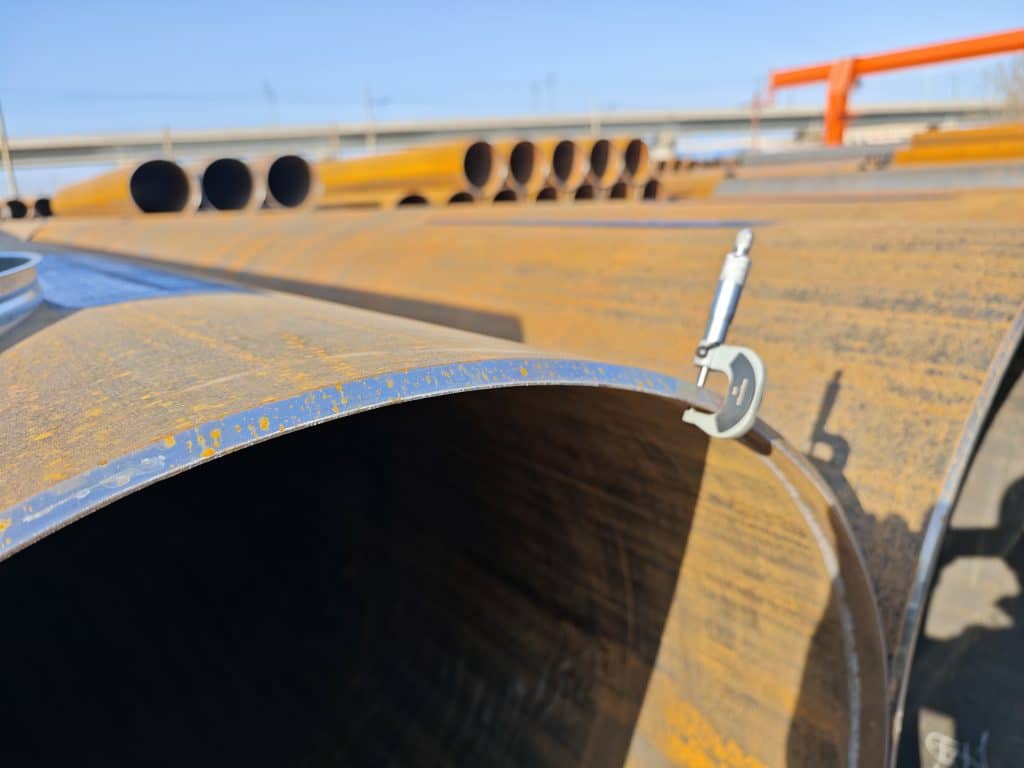
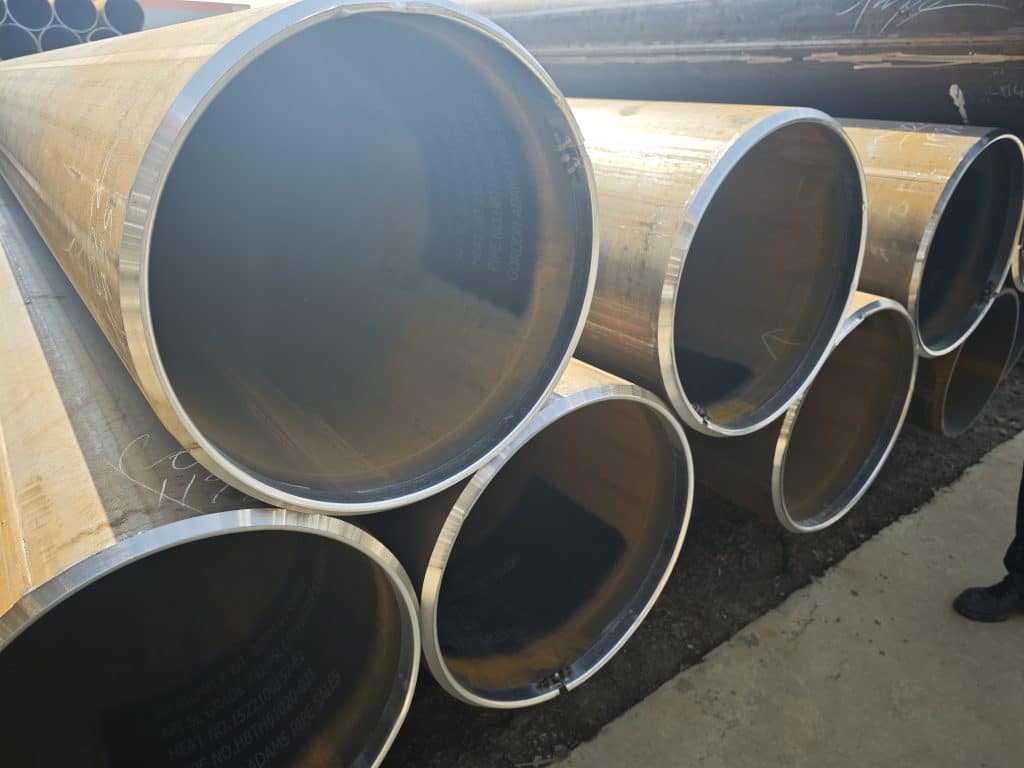
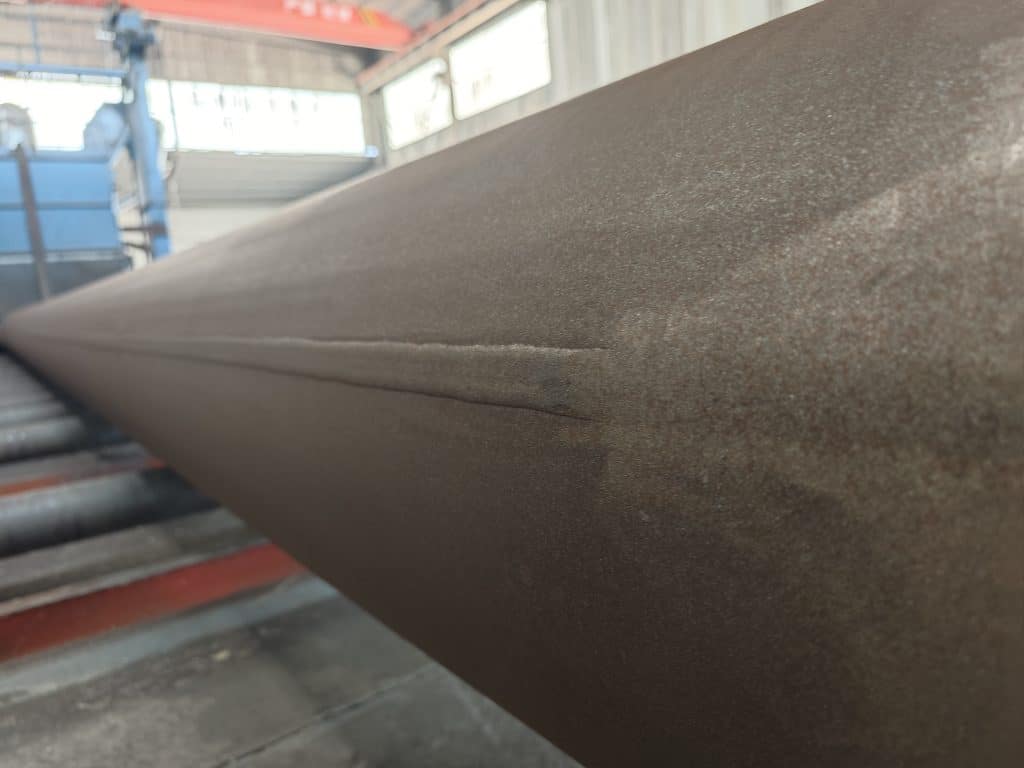
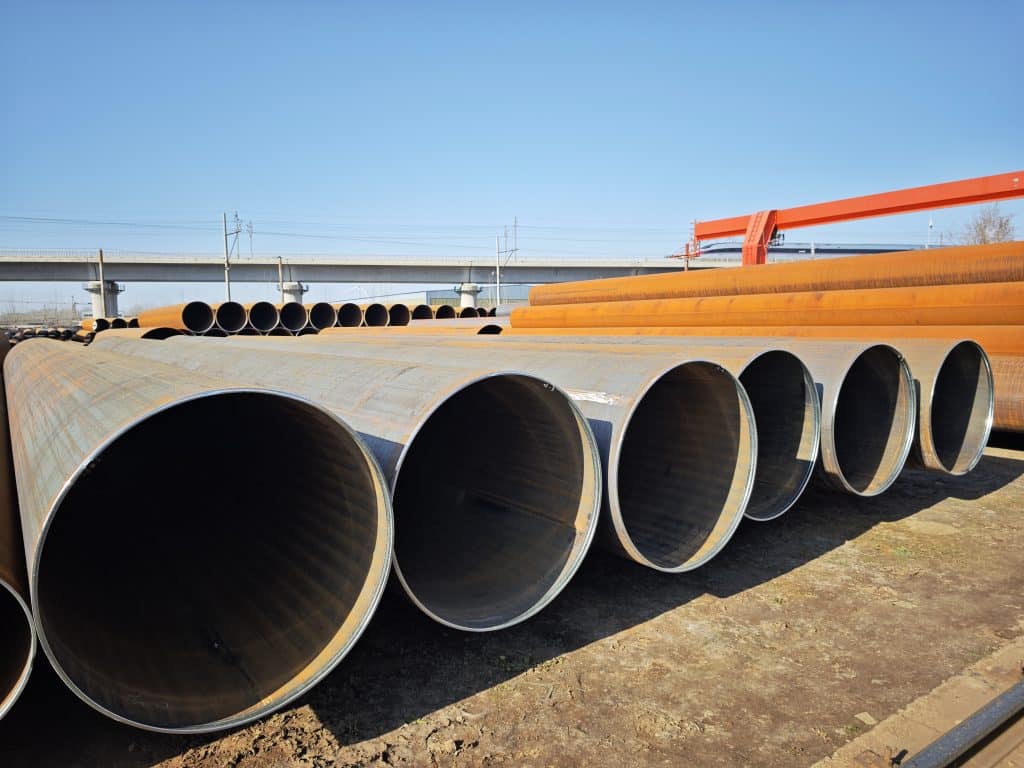
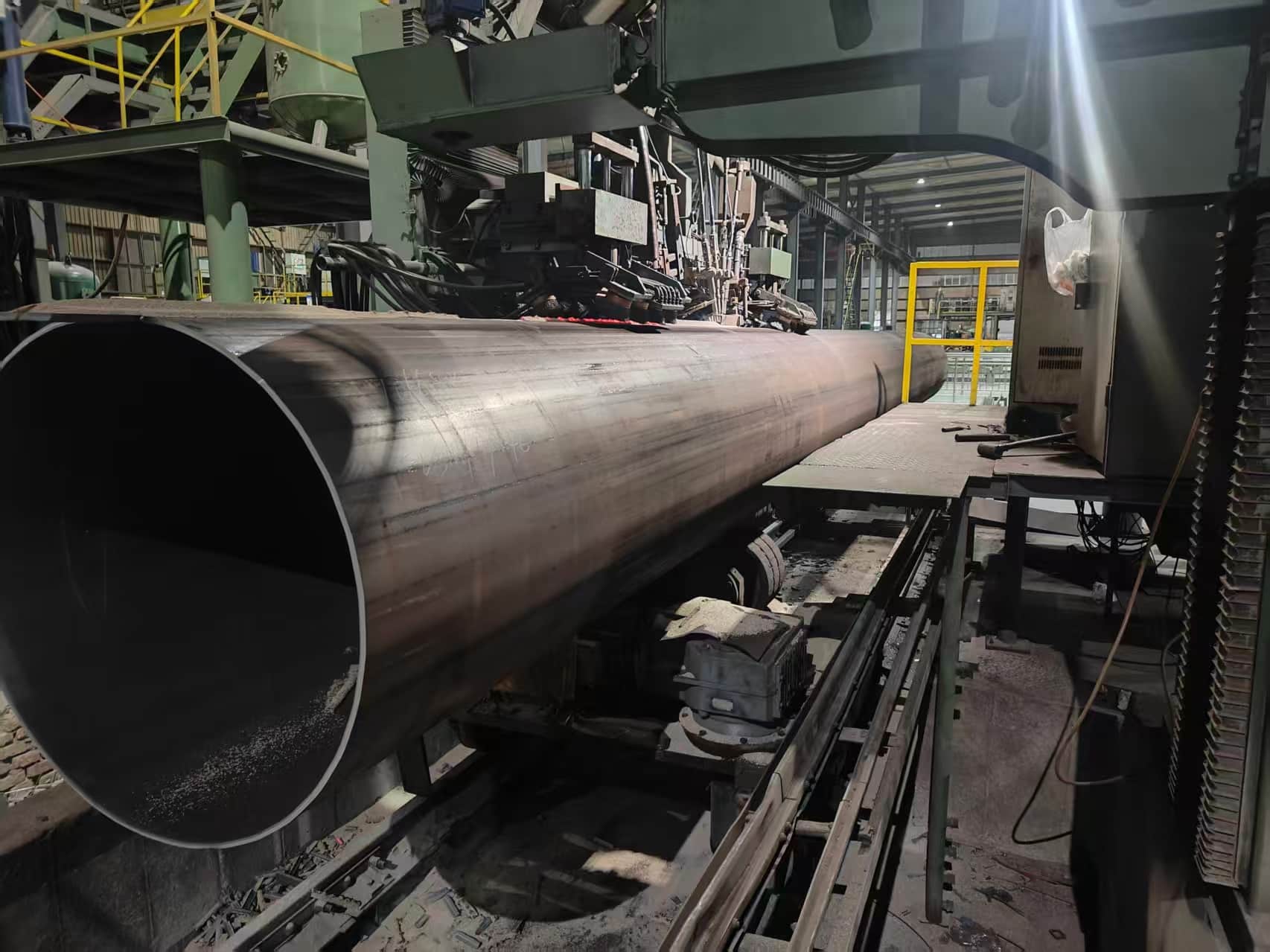
API 5L includes different manufacturing routes, subject to the requirements of the applicable edition and ordered product. Electric-resistance-welded (ERW) pipe is formed from steel strip or coil and joined by a longitudinal resistance weld. Longitudinal-submerged-arc-welded (LSAW) pipe is formed from plate and joined by a longitudinal submerged-arc weld. Seamless pipe is produced without a longitudinal weld seam.
ERW, LSAW, and seamless pipe should be compared by the actual ordered dimensions, wall thickness, grade, manufacturing requirements, inspection scope, availability, and project acceptance criteria. No route is automatically superior for every diameter, pressure, or service.
Selection Factors
ERW may be suitable for product dimensions and service conditions within the manufacturer’s qualified production range. LSAW may be considered for specified large-diameter or heavier-wall applications. Seamless pipe may be selected where required by the design or purchase specification. The final choice must be supported by the design basis and verified manufacturing capability.
Purchasers should review the pipe specification, manufacturing process, weld-seam inspection requirements where applicable, dimensional tolerances, hydrostatic testing requirements, traceability, and coating scope rather than relying on a process label alone.
Dimensions, Weight, and Purchase Specifications
Information to Include in an RFQ
A request for quotation should identify the product standard and edition, grade, PSL, manufacturing method, outside diameter, wall thickness, length, quantity, end preparation, dimensional tolerances, coating or lining, inspection and testing requirements, documentation, marking, packing, delivery destination, and required delivery schedule.
Pipe weight is principally determined by outside diameter, wall thickness, material density, and length. A schedule designation may identify a nominal wall-thickness series for a given nominal pipe size, but the actual outside diameter and specified wall thickness should be stated in the purchase documents. Design wall thickness must be established by engineering calculation under the governing code.
Compliance, Testing, and Quality Verification
Standards and Documentation
API Specification 5L is the product standard when specified for line pipe. ISO 3183 may be specified for pipeline transportation pipe. ASME B31.3, B31.4, or B31.8 may govern different piping or pipeline systems, depending on the service and project. ASTM A106/A106M may be specified for seamless carbon-steel pipe for high-temperature service. NACE MR0175/ISO 15156 may apply to material selection in defined H2S-containing environments within its scope.
These documents serve different purposes and should not be presented as interchangeable product standards. The contract should identify the applicable editions and any supplementary requirements. Regulatory requirements, including pressure-equipment conformity requirements in the European Economic Area where applicable, must be assessed for the specific product and supply route. API 5L certification does not automatically confer CE marking.
Inspection and Test Requirements
Inspection and testing should follow the applicable product standard, manufacturing route, PSL, and purchase specification. Depending on those requirements, the scope may include chemical analysis, tensile testing, impact testing, dimensional inspection, hydrostatic testing, and non-destructive examination. It is not correct to assume that every pipe order requires every available NDT method.
Review the mill test certificate and relevant inspection records for traceability to the ordered pipe. Any additional third-party inspection, witness point, or supplementary test should be agreed in the purchase documents.
Supplier Evaluation and Procurement
Supplier Capability
Evaluate whether the supplier can manufacture or source the specified grade, PSL, dimensions, and manufacturing route. Verify applicable certifications and licenses where required by the contract, production and inspection controls, heat-number traceability, testing arrangements, coating capability or qualified subcontractors, and the ability to provide the required documentation.
Production capability should be assessed against the actual order. A supplier does not need to offer every manufacturing route if the project requires only one qualified product type.
RFQ Checklist and Commercial Factors
An effective RFQ should include the technical requirements listed above together with quantity, delivery destination, Incoterm, packaging and marking instructions, inspection hold points, document requirements, and payment terms. Clear specifications reduce the risk of quotations being based on different technical scopes.
Price and lead time depend on grade, dimensions, wall thickness, manufacturing route, order quantity, testing, coating, availability, and logistics. Compare quotations on an equivalent technical and commercial basis. For distributor stock, verify the original mill documentation and traceability before acceptance.
Conclusion
API 5L steel pipe may be suitable for selected pipeline-type services in and around petrochemical facilities, including appropriate transfer and interconnecting lines. It should not be treated as a universal specification for plant process piping. The correct selection depends on the governing design code, fluid composition, design pressure and temperature, grade, PSL, manufacturing route, corrosion protection, inspection scope, and project requirements. Confirming these details before ordering helps ensure that the supplied pipe matches the intended service.
Frequently Asked Questions
Where can API 5L steel pipes be used in petrochemical plants?
They may be specified for suitable pipeline-type services such as transfer lines, tank-farm interconnections, and selected utility or product-transfer lines. Their use must be permitted by the governing design code and approved by the project design authority.
What is the difference between API 5L and ASTM A106?
API 5L covers line pipe for pipeline transportation systems and includes specified welded and seamless products. ASTM A106/A106M covers seamless carbon-steel pipe for high-temperature service. They have different scopes and are not automatically interchangeable.
Are API 5L PSL1 and PSL2 pipes interchangeable?
No. The selected PSL must match the purchase specification and design requirements. PSL2 includes additional or more restrictive requirements in specified areas, but the exact differences should be checked against the applicable edition and product.
Is API 5L pipe suitable for high-temperature service?
Suitability cannot be determined from the grade designation alone. The engineer must check the governing design code, design temperature, allowable stress, material condition, welding requirements, and service conditions.
Which is better, ERW or LSAW pipe?
Neither process is universally better. Selection depends on the required dimensions, wall thickness, grade, design conditions, manufacturing qualification, inspection requirements, and project specification.
Discuss Your Project Requirements with LONGMA
For a project-specific quotation, provide the required standard and edition, grade, PSL, manufacturing route, outside diameter, wall thickness, length, coating or lining, inspection requirements, quantity, and delivery destination. Contact LONGMA at info@ilongma.com to discuss the technical requirements and product availability.