- 1. What Counts as a Chemical Plant Utility Pipeline?
- 2. When Is API 5L Appropriate?
- 3. API 5L Grade Selection
- 4. A Practical Grade-Selection Sequence
- 5. PSL 1 and PSL 2: What Buyers Should Understand
- 6. Manufacturing Routes: Seamless, ERW, and LSAW
- 7. Corrosion Risks and Protection
- 8. API 5L Compared With ASTM A106
- 9. Codes and Standards to Coordinate
- 10. Supplier Evaluation and Quality Verification
- 11. What to Include in the RFQ
- 12. Conclusion
- 13. FAQ
Chemical plants depend on utility piping to distribute water, fuel gas, air, nitrogen, steam, condensate, and other services. API Specification 5L covers seamless and welded steel line pipe for pipeline transportation systems in the petroleum and natural gas industries. API 5L pipe may be considered for selected plant utility lines when the applicable design code, project specification, and service conditions permit it; the standard does not automatically qualify pipe for every utility service. This guide outlines the checks engineers and procurement teams should complete before selecting API 5L carbon steel pipe.
What Counts as a Chemical Plant Utility Pipeline?
Utility systems support plant operation but are generally separate from the main process piping that carries process fluids between equipment. Typical services can include raw and treated water, cooling water, firewater, plant air, instrument air, nitrogen, fuel gas, condensate, and steam. Their pressure, temperature, fluid composition, and safety functions vary substantially.
The service name alone does not determine the pipe standard. For example, a fuel-gas transfer line may be designed under a pipeline or gas-piping code, while steam and many process utility lines fall under a piping code such as ASME B31.3 or another governing code. The project design basis must identify the applicable code and material requirements.
When Is API 5L Appropriate?
API 5L is a line-pipe product specification. It defines requirements for the manufacture, inspection, testing, marking, and traceability of seamless and welded steel pipe at two product specification levels (PSL 1 and PSL 2). It is not a complete piping design code and does not establish the allowable pressure of a finished plant piping system by itself.
Before specifying API 5L for a utility line, confirm that the governing design code and owner specification accept the product standard and the selected pipe type. Also confirm that the fluid, design temperature, design pressure, corrosion conditions, and fabrication requirements are compatible with the selected material.
API 5L Grade Selection
API 5L grades identify specified strength levels and other material requirements. Higher-strength grades can provide higher specified minimum yield strength, but grade selection must also account for toughness, weldability, wall thickness, design factors, product form, and the governing code.
| Common grade designation | Specified minimum yield strength (typical designation value) | Selection note |
| Grade B / L245 | 245 MPa | Common line-pipe grade; suitability still depends on code and service. |
| X42 / L290 | 290 MPa | Higher specified minimum yield strength than Grade B. |
| X52 / L360 | 360 MPa | Used where the design basis calls for this strength level and the full specification is met. |
| X60 / L415 | 415 MPa | Requires review of toughness, weldability, fabrication, and availability. |
| X65 / L450 | 450 MPa | Higher-strength option; not automatically preferable for plant utility piping. |
The table is a grade-designation aid, not a pressure-rating table. Do not select a grade from yield strength alone or infer a permissible operating pressure without completing the applicable piping design calculations.
A Practical Grade-Selection Sequence
- Identify the governing piping or pipeline code and the owner’s material specification.
- Define fluid composition, contaminants, phase, design pressure, design temperature, and operating envelope.
- Determine the required outside diameter, wall thickness, corrosion allowance, and any mechanical allowances through the applicable design calculation.
- Review strength, toughness, weldability, carbon-equivalent requirements, and any specified impact or hardness testing.
- Select the product form and manufacturing route permitted by the design basis.
- Specify PSL, supplementary tests, inspection, marking, traceability, and documentation in the purchase requisition.
PSL 1 and PSL 2: What Buyers Should Understand
PSL 1 and PSL 2 are the two product specification levels defined by API 5L. PSL 2 generally includes additional or more stringent controls than PSL 1, but the exact differences depend on the applicable edition, grade, product form, dimensions, and ordered requirements. Chemical composition, mechanical properties, testing, inspection, and traceability provisions must be checked in the standard itself.
It is not accurate to describe every PSL 2 pipe as having one identical set of impact, non-destructive testing, or acceptance requirements. These requirements are conditional in places and can be affected by the product and purchase specification. The RFQ should state the required edition and PSL, then list any supplementary requirements explicitly.
Manufacturing Routes: Seamless, ERW, and LSAW
| Pipe type | Manufacturing overview | Selection considerations |
| Seamless | Produced from a solid billet that is pierced and processed into a pipe without a longitudinal weld seam. | Check the permitted size range, grade, heat treatment, dimensional requirements, and code acceptance. |
| ERW / HFW | Formed from steel strip or coil and joined by an electric-resistance or high-frequency welding process. | Review weld-seam quality controls, applicable NDE, dimensions, and product-standard requirements. |
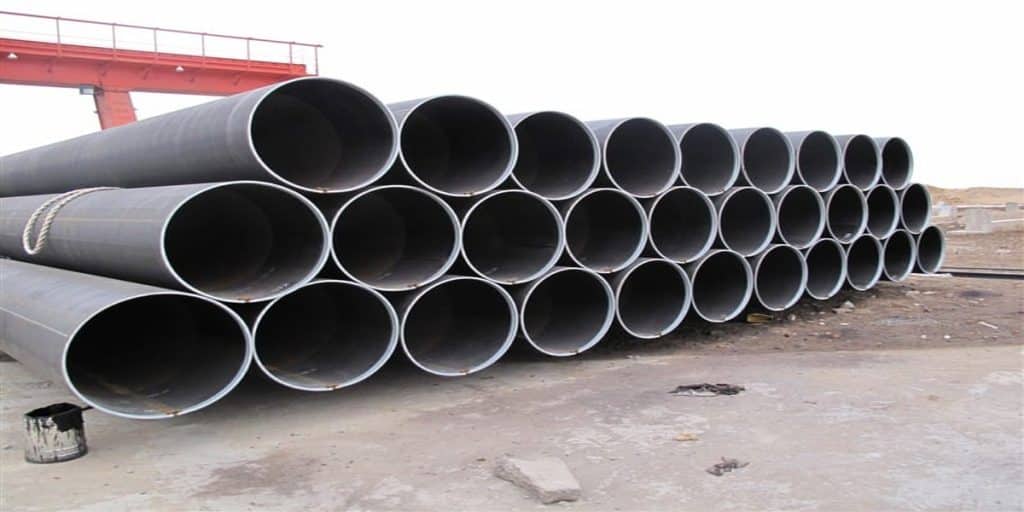
| LSAW | Formed from steel plate, typically using a UOE or JCOE forming route, with a longitudinal submerged-arc weld. | Often considered for larger diameters and heavier walls; review plate, forming, weld, and inspection requirements. |
No manufacturing route is universally best. The selected route must be permitted by the applicable API 5L edition and project specification, and must meet the required diameter, wall thickness, grade, inspection, and delivery conditions.
Corrosion Risks and Protection
Carbon steel utility lines can be affected by internal corrosion, external atmospheric or soil corrosion, erosion-corrosion, under-insulation corrosion, galvanic effects, and microbiologically influenced corrosion in some water systems. Wet carbon dioxide, hydrogen sulfide, chlorides, oxygen, pH, temperature, flow velocity, and water treatment can influence corrosion mechanisms.
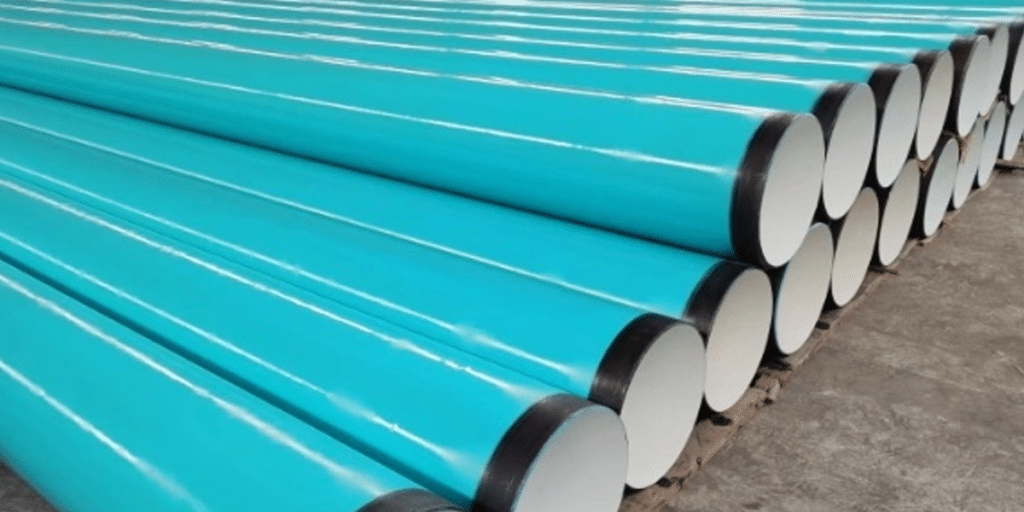
There is no universal corrosion allowance for all API 5L utility lines. The materials or corrosion engineer should establish the allowance from the service conditions, design life, corrosion assessment, inspection strategy, and mitigation plan. Coatings, internal linings, inhibitors, water treatment, insulation design, and cathodic protection may be considered where appropriate. Their compatibility and performance must be confirmed for the actual service.
API 5L Compared With ASTM A106
| Factor | API 5L | ASTM A106/A106M |
| Primary scope | Line pipe for pipeline transportation systems in the petroleum and natural gas industries. | Seamless carbon steel pipe for high-temperature service. |
| Product forms | Seamless and welded pipe within the specification’s scope. | Seamless pipe. |
| Typical engineering context | Pipeline applications and selected services where the governing code accepts API 5L. | High-temperature process and piping services where the design code specifies this material. |
| Selection basis | API 5L edition, grade, PSL, product type, design code, and project requirements. | ASTM A106 grade, design temperature, allowable stress, governing piping code, and project requirements. |
Neither standard is automatically a substitute for the other. For steam or high-temperature services, engineers should check the design code’s permitted materials and the specified temperature-dependent properties. For any utility line, use the material standard named or accepted by the project design documents.
Codes and Standards to Coordinate
API 5L is a product specification, not a replacement for the code governing piping design and construction. Depending on the project, the engineering review may involve ASME B31.3 for process piping, ASME B31.1 for power piping, ASME B36.10M for dimensions of welded and seamless wrought steel pipe, ISO 3183 where specified, or applicable national and regional requirements. NACE MR0175/ISO 15156 applies to material selection for H₂S-containing environments in oil and gas production within its scope; it is not triggered merely by high pressure or by the presence of any acidic fluid.
For international projects, establish the hierarchy among the product standard, design code, owner specification, statutory requirements, and purchase order. Check the current editions and any project-adopted amendments before procurement.
Supplier Evaluation and Quality Verification
Supplier review should focus on whether the manufacturer can produce the ordered product to the specified standard and document the required inspections. Request and review:
- The applicable API 5L edition, grade, PSL, pipe type, dimensions, and end finish.
- A valid scope of manufacturing or quality-system certification where required by the contract.
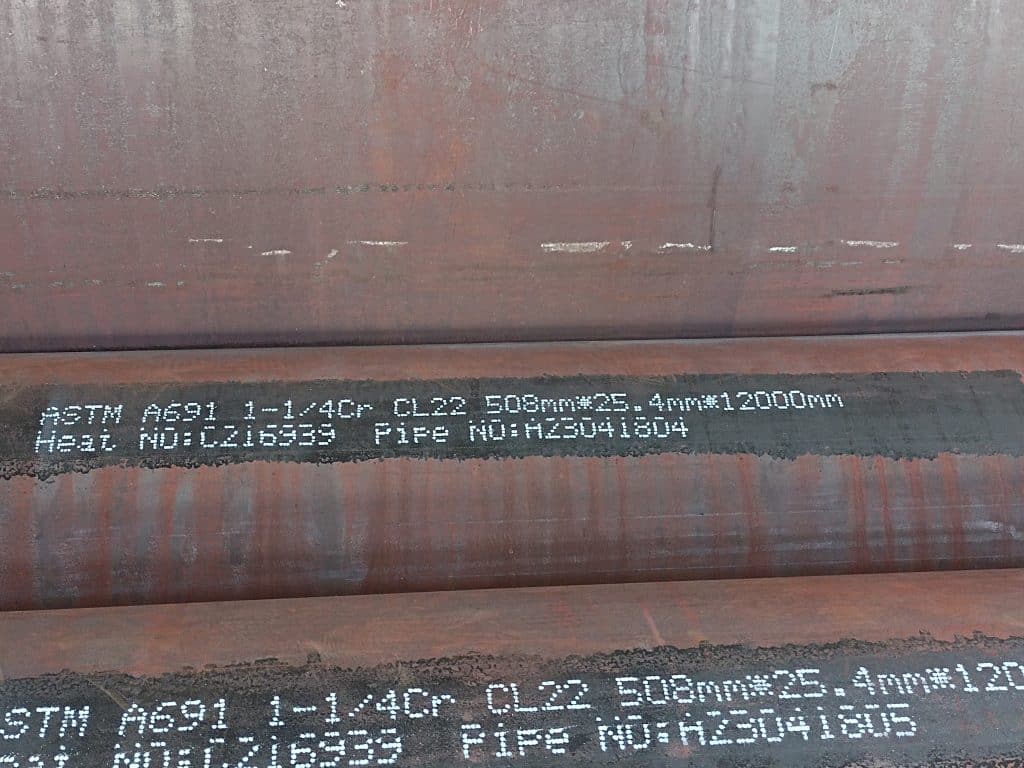
- Mill test certificates and heat-number traceability linked to the delivered pipe.
- Manufacturing route, welding procedure controls, NDE, hydrostatic testing, and any supplementary tests required by the order.
- Dimensional inspection, marking, coating or lining records, repair procedures, and nonconformance records.
- Inspection and test plan, hold/witness points, third-party inspection scope, packaging, and delivery schedule.
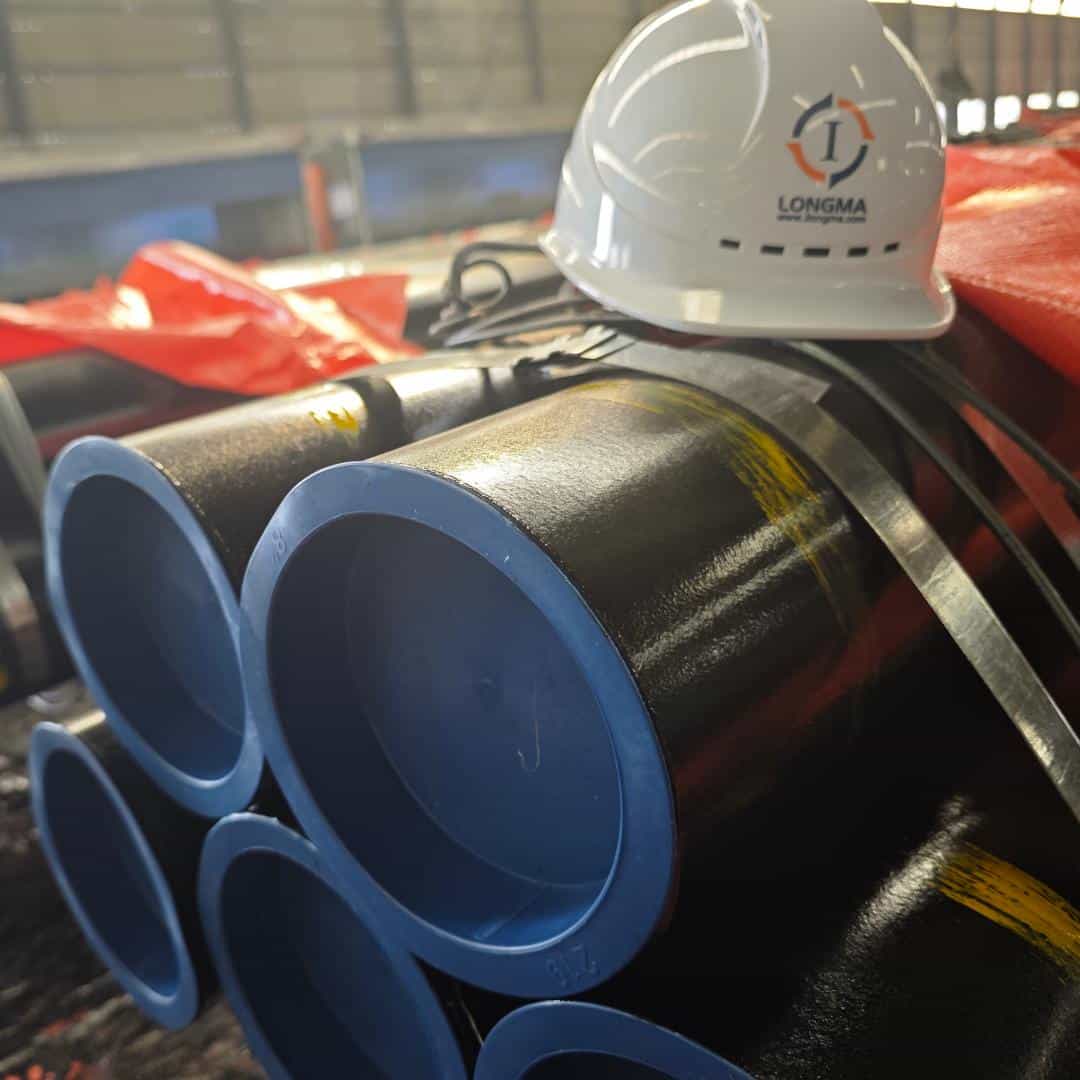
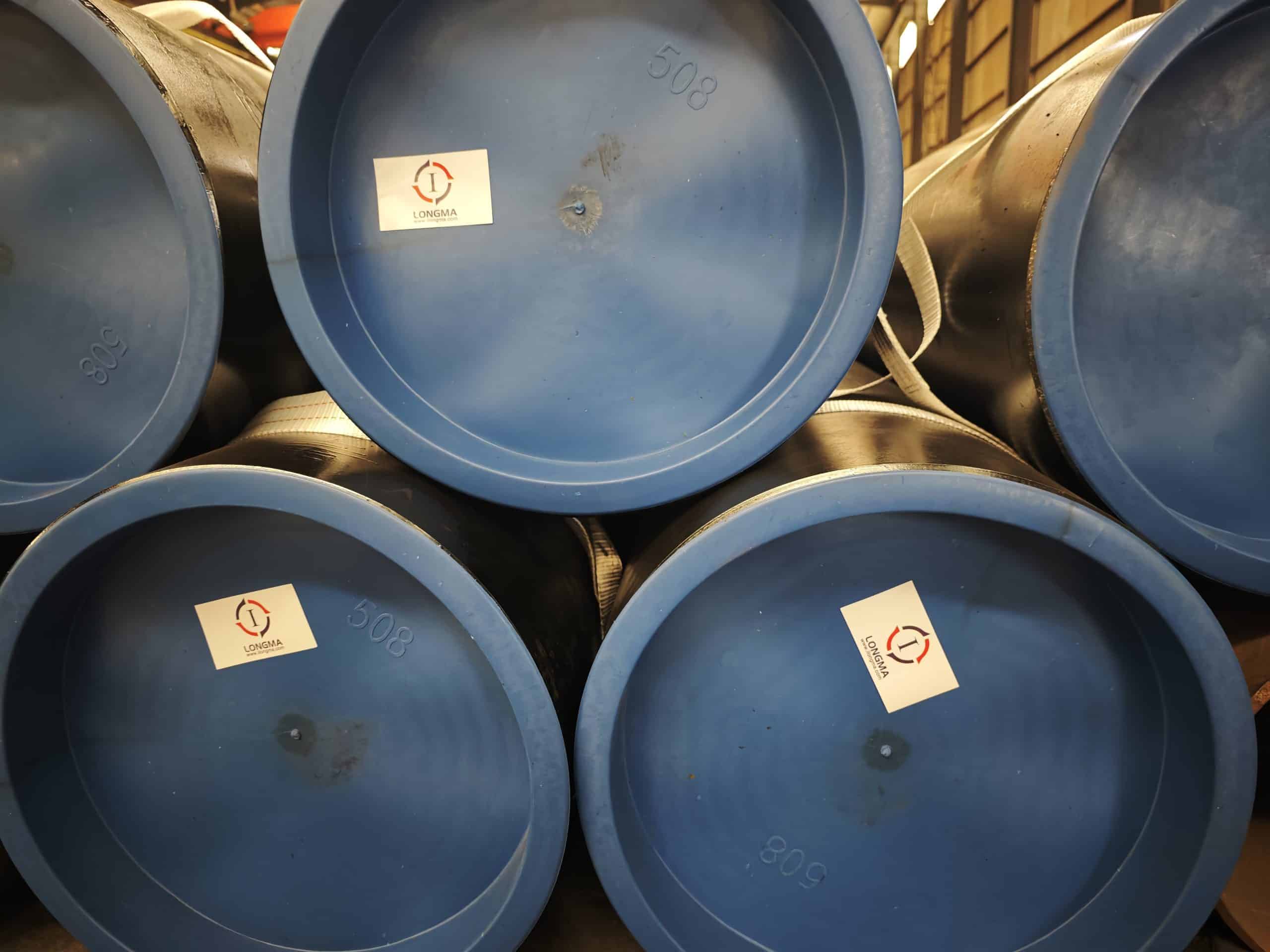
LONGMA manufactures ERW and LSAW round steel pipes. Its facility covers 230,000 square metres and its annual output exceeds 500,000 tonnes. Buyers should submit the required API 5L edition, grade, PSL, dimensions, service conditions, inspection requirements, and destination details for a product-scope and quotation review.
What to Include in the RFQ
A complete RFQ should identify the product standard and edition, grade, PSL, manufacturing route, outside diameter, wall thickness, length, quantity, end preparation, design conditions, fluid composition, corrosion allowance, coating or lining, test requirements, inspection scope, marking, traceability, documentation, packaging, Incoterms, and delivery destination. Avoid using a general phrase such as “API 5L pipe for utility service” without the technical details needed to define the order.
Conclusion
API 5L carbon steel pipe can be considered for selected chemical plant utility pipelines when the governing design code and project specification permit it. The correct choice depends on the service, design conditions, material properties, product form, corrosion-control strategy, and inspection requirements. PSL 1 or PSL 2 should be selected from the applicable edition and purchase requirements, not from a blanket assumption that one level suits every utility. A complete technical requisition and documented supplier review help reduce material nonconformance and procurement risk.
FAQ
Can API 5L pipe be used for chemical plant utility pipelines?
It may be used for selected services if the governing design code, owner specification, and service conditions accept API 5L. The standard alone does not establish suitability for every steam, air, water, or gas system.
What is the difference between API 5L PSL 1 and PSL 2?
PSL 2 generally has additional or more stringent requirements than PSL 1. The exact differences in chemistry, mechanical properties, testing, and inspection depend on the applicable edition, grade, product form, and order.
Is API 5L better than ASTM A106 for steam?
There is no universal preference. ASTM A106/A106M is a seamless carbon steel pipe specification for high-temperature service. The governing piping code and design conditions determine which material is acceptable.
Does a higher API 5L grade always allow a higher operating pressure?
No. Pressure design also depends on outside diameter, wall thickness, design factor, temperature, material properties, joint factors where applicable, corrosion allowance, and the governing code.