- 1. Where Are API 5L Carbon Steel Pipes Used Inside an Oil Refinery?
- 2. Why Refineries Choose API 5L Carbon Steel Pipes Over Other Pipe Grades
- 3. Which Refinery Services Need High-Grade API 5L Carbon Steel Pipes?
- 4. How Refinery Process Lines Differ From Transmission Lines
- 5. What Wall Thickness Do Hydrocarbon Lines Require?
- 6. How Hydrogen Service Changes Refinery Pipe Selection
- 7. What Are the API 5L Seamless, ERW, and LSAW Options?
- 8. Supplier Capability and Evaluation: What LONGMA’s Export Data Shows
- 9. How Can Buyers Verify API 5L Pipe Quality Before Delivery?
- 10. Conclusion
- 11. FAQ
- 12. Ready to Confirm the Right Grade for Your Refinery Project?
LONGMA’s refinery supply experience shows that API 5L carbon steel pipes carry crude oil, finished goods, process water, and fuel across most refinery areas, connecting tank farms, transfer lines, off-site pipelines, and some utilities. The guide covers where API 5L fits, where it does not, and how grade, PSL level, wall thickness, and manufacturing method affect selection. API 5L suits hydrocarbon transfer, tank connections, feedstock handling, and inter-unit pipelines, but not every in-plant circuit; the choice versus ASTM A106 depends on pressure, temperature, sour service, and design code. LONGMA sells API 5L pipe direct in PSL1 and PSL2, grades B to X80.
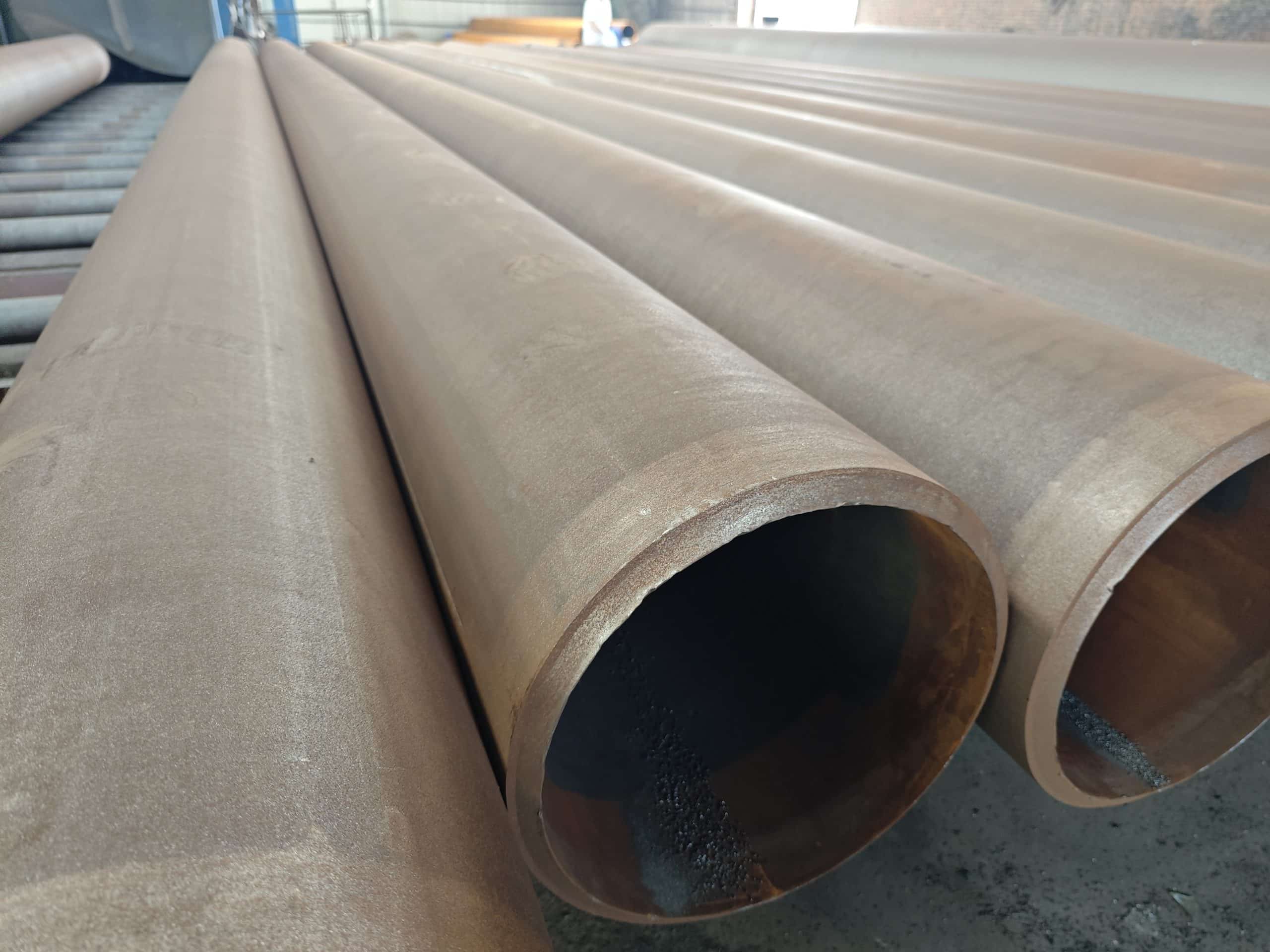
Where Are API 5L Carbon Steel Pipes Used Inside an Oil Refinery?
What API 5L carbon steel pipe actually covers
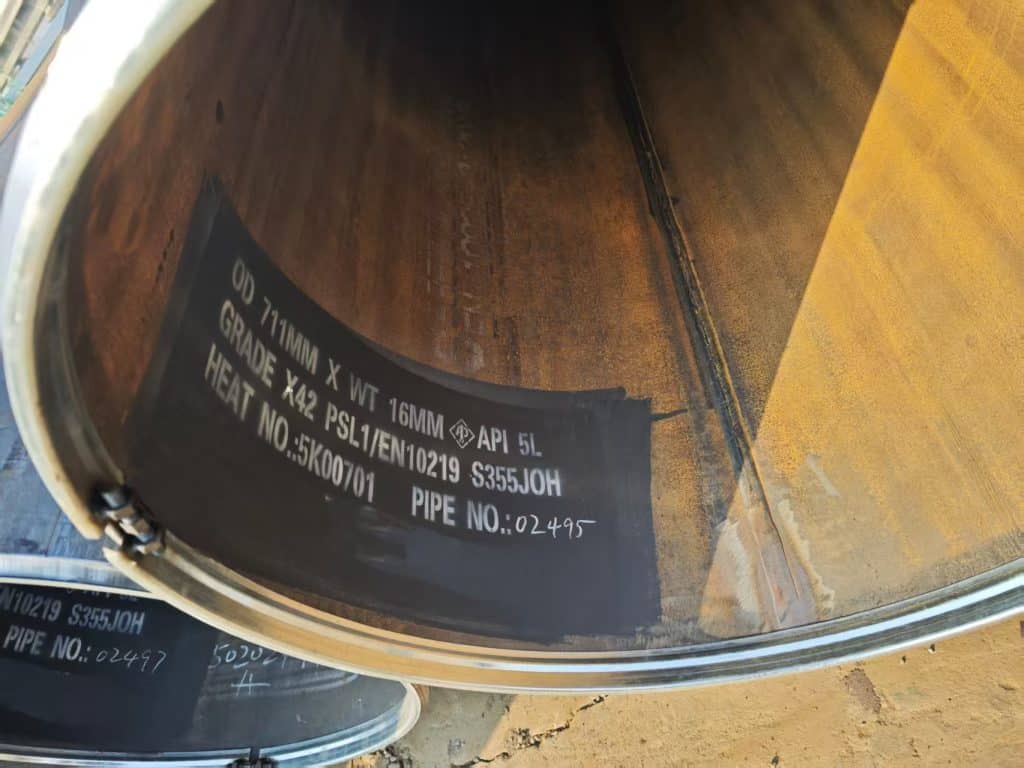
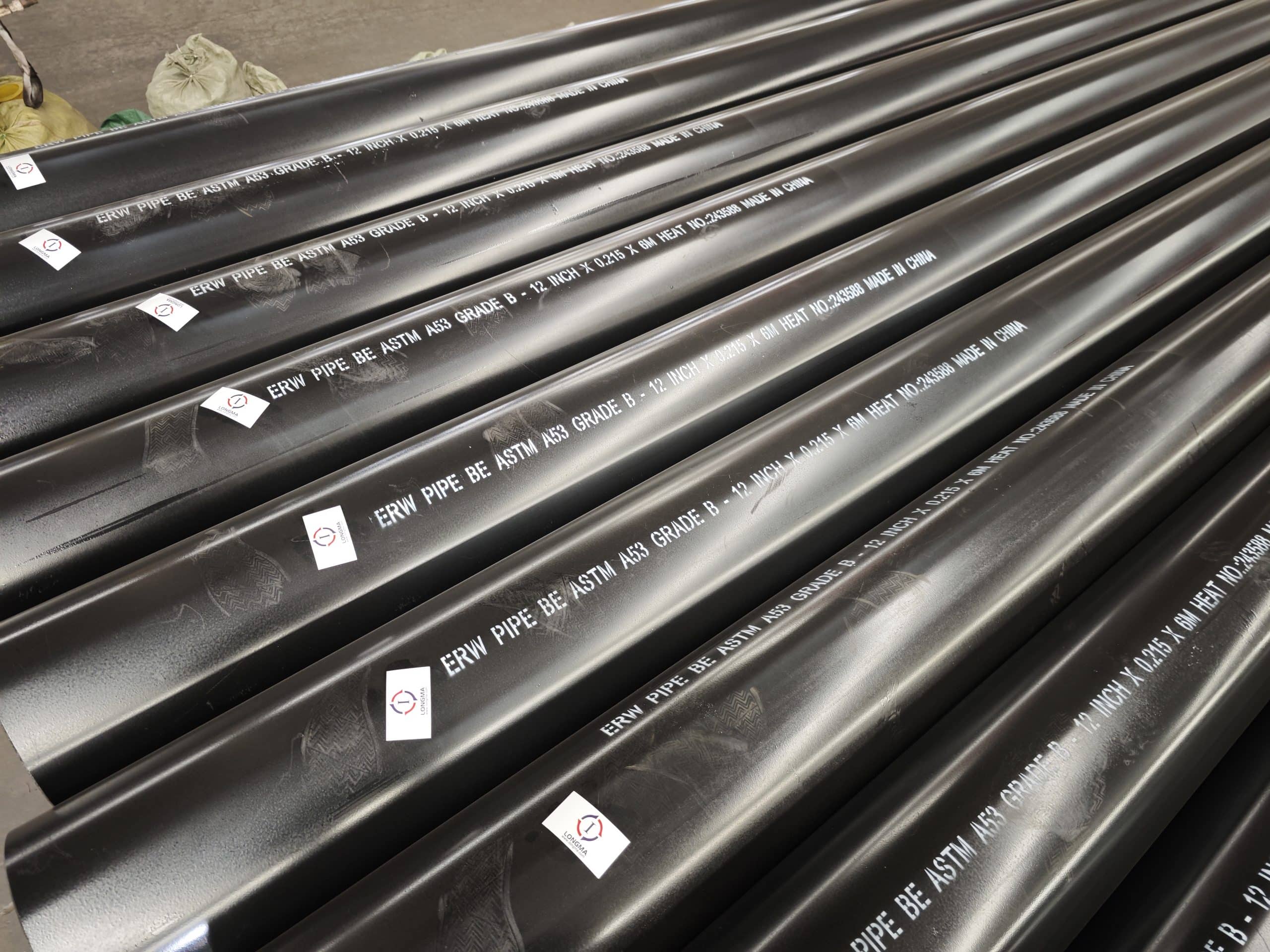
American Petroleum Institute (API) 5L is a standard for line pipe that is used in systems that move oil, gas, and water. It is very similar to ISO 3183, which is the international standard for the same things (ISO, 2019). With grades from Grade B to X80, the specification covers both seamless and welded pipes, such as ERW and LSAW styles. The minimum yield strength, the range of tensile strengths, and the chemistry limits are set by each grade.
What API 5L does not cover
It’s not always possible to use API 5L instead of other types of pipe in a refinery. For high-temperature circuits, it can’t be used instead of ASTM A106 seamless process pipe. Without extra testing, it is not automatically ready for sour service or hydrogen exposure. It also doesn’t take the place of a project’s piping code, like ASME B31.3. One specification mistake LONGMA sees often among new EPC buyers is treating API 5L as a one-size-fits-all material.
Typical refinery locations and services
In different areas of the refinery, you need to choose different pipes. Where to find API 5L carbon steel pipes and what to look for before confirming the specification are shown in the table below.
| Refinery location | Typical service | Selection considerations |
| Crude oil receiving | Crude transfer and feedstock lines | Diameter, flow rate, corrosion allowance |
| Tank farms | Tank inlet and outlet lines | External corrosion, coating, fire protection |
| Pipe racks | Inter-unit hydrocarbon transfer | Supports, thermal expansion, welding |
| Product dispatch | Gasoline, diesel, and fuel transfer | Fluid compatibility and pressure |
| Utility areas | Water, air, steam-related services | Confirm whether API 5L or another grade applies |
| Off-site pipelines | Crude, refined products, or natural gas | Grade, PSL, coating, cathodic protection |
Why Refineries Choose API 5L Carbon Steel Pipes Over Other Pipe Grades
API 5L versus ASTM A106, ASTM A53, and API 5CT
Buyers get these standards mixed up sometimes because they all talk about carbon steel pipe. They are all aimed at different jobs.
| Standard | Primary application | Key distinction |
| API 5L / ISO 3183 | Oil, gas, and related line pipe | Pipeline-oriented grades, PSL levels, full traceability |
| ASTM A106 | Seamless carbon steel process piping | Built for high-temperature pressure service |
| ASTM A53 | General mechanical and pressure use | Common for utility and structural piping |
| API 5CT | Oil-country tubular goods | Casing and tubing for wells, not transfer lines |
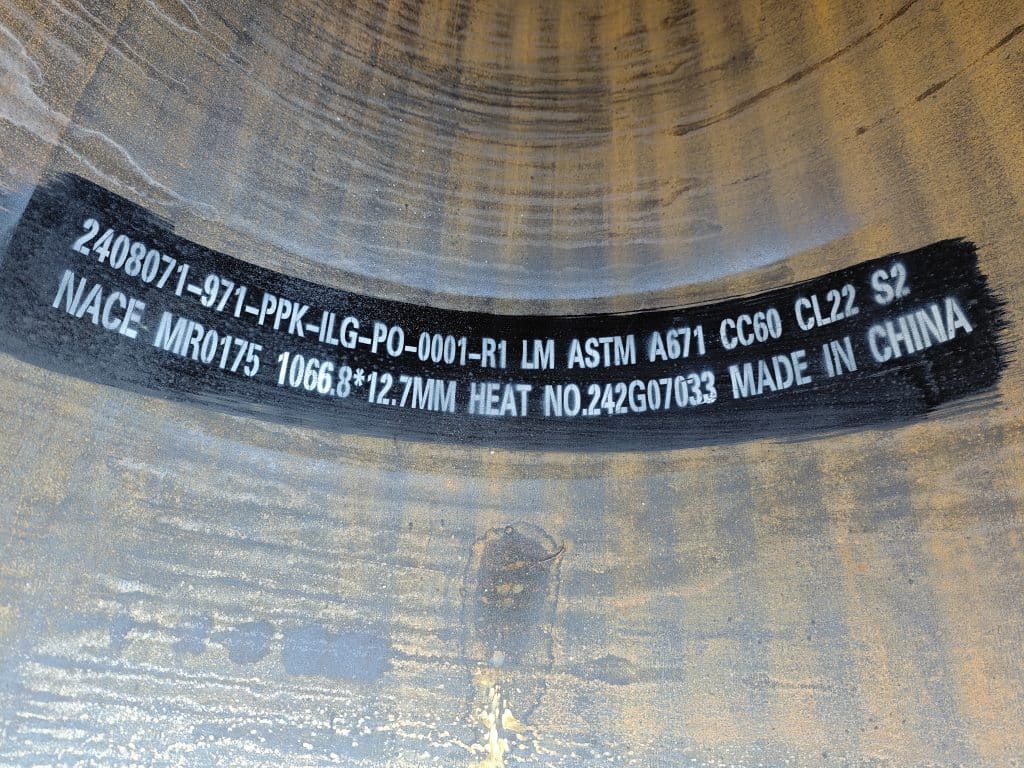
| ASTM A671/A672 | Electric-fusion-welded pressure pipe | Project-specific pressure and temperature duty |
Limitations and specification boundaries
By itself, API 5L carbon steel pipes don’t set the full design basis for a refinery. Process changes in temperature, loading that happens over and over, erosion, and exposure to toxic fluids can all call for a completely different material. Before signing off on the final grade, buyers should compare it to ASME B31.3 for process piping, ASME B31.4 for liquid pipeline transport (ASME, 2022), ASM
Which Refinery Services Need High-Grade API 5L Carbon Steel Pipes?
Grade B, X42, X52, X60, and X65 selection
Not personal taste, but design pressure, diameter, and the project’s fracture-control needs determine which API 5L carbon steel pipe grade to use. The table below is just a starting point; it’s not the final answer for any given line.
| Grade | Typical selection rationale | Verification focus |
| API 5L Grade B | Moderate-strength utility, transfer, and pipeline services | Yield and tensile strength, chemistry |
| X42 | Higher strength than Grade B for selected systems | Weldability and design pressure |
| X52 | Common balance of strength, availability, and cost | Mill test certificate, toughness, weld procedure |
| X60 | Higher-pressure or weight-sensitive designs | Toughness, HIC testing if specified |
| X65 | Large-diameter transmission and high-strength duty | Welding control, toughness, sour-service limits |
API 5L PSL1 versus PSL2 requirements
Product Specification Level is what PSL stands for. PSL2 has extra controls that PSL1 doesn’t always need.
| Requirement | PSL1 | PSL2 |
| Chemical limits | Basic specified limits | Tighter, more controlled limits |
| Mechanical testing | Standard requirements | Added and stricter requirements |
| Toughness testing | Often project-dependent | Commonly specified with set acceptance criteria |
| Non-destructive testing | According to product and spec | More extensive and tightly controlled |
| Traceability | Required to specification level | Higher documentation and control expectations |
| Use case | Less demanding applications | Critical, high-pressure, or higher-risk systems |
LONGMA’s export desk looked at 54 RFQs for API 5L carbon steel pipes from January to November 2024. Sixty-one percent of EPC buyers wanted PSL2 X60 or higher for sour-service circuits, while most regional trading companies wanted Grade B or X42 PSL1 in common stock sizes. That gap tells you a lot about how the risk of the project affects the specification.
How Refinery Process Lines Differ From Transmission Lines
Refinery process piping versus pipeline transportation
Different loads act on process pipes inside the battery limits and long-distance transmission lines, even if they are made of the same material.
| Factor | Refinery process lines | Transmission or gathering lines |
| Main code | Often ASME B31.3 | Often ASME B31.4 or B31.8 |
| Operating environment | Dense equipment and pipe racks | Long-distance buried or aboveground routes |
| Design loads | Thermal cycling, vibration, equipment loads | Soil movement, settlement, fracture control |
| Materials | API 5L, ASTM A106, stainless and alloy grades | Mostly API 5L line pipe |
| Inspection | Weld mapping, PMI, NDE, pressure testing | Weld inspection, coating inspection, hydrotest |
| Corrosion control | Insulation, coatings, inhibitors, material upgrades | Coatings, cathodic protection, monitoring |
When another pipe standard may be more suitable
Most of the time, ASTM A106 or an alloy steel grade is needed for high-temperature steam or process service when API 5L carbon steel pipes are being considered. For circuits with a lot of corrosion, you might need stainless steel, clad pipe, or an alloy that doesn’t rust. Most of the time, small-bore instrumentation lines follow a completely different tubing standard. Before the specification is locked in, it should be the project engineer, not the buyer’s price sheet, who makes sure that the materials will work together.
What Wall Thickness Do Hydrocarbon Lines Require?
API 5L pipe dimensions and wall thickness
The wall thickness of API 5L carbon steel pipes varies from 4 mm to 100 mm, covering everything from small utility branches to large transmission headers. This thickness is determined by design, not by refinery rule. People sometimes talk about schedule numbers like SCH 20, SCH 40, and SCH 80 in a casual way, but the final order should be based on API 5L dimensional tables and project-specific tolerances.
API 5L pipe schedule comparison
| Selection factor | Lower wall thickness | Higher wall thickness |
| Weight | Lower | Higher |
| Material cost | Usually lower | Usually higher |
| Pressure resistance | Lower | Higher |
| Welding effort | Generally lower | Generally higher |
| Corrosion allowance | More limited | More available |
| Handling and transport | Easier | More demanding |
Schedule numbers should never be used instead of a real wall-thickness check for API 5L carbon steel pipes against the code requirements for outside diameter. LONGMA has seen procurement teams order based only on schedule, only to find out later that the delivered pipe did not match the required pressure rating.
How Hydrogen Service Changes Refinery Pipe Selection
Hydrogen-related damage mechanisms
Hydrogen embrittlement reduces carbon steel’s ductility and cracking resistance under load; hydrogen-induced cracking forms hidden internal flaws, high-temperature hydrogen attack reacts with carbon to weaken the microstructure, and wet hydrogen sulfide causes visible stress cracks at welds or hard spots. Each mechanism needs a different test or material response, so a blanket API 5L order is not always safest.
Material and manufacturing controls
Buyers facing hydrogen exposure with API 5L carbon steel pipes should request carbon equivalent and weldability data, heat treatment and hardness records, Charpy toughness at minimum service temperature, clean-steel practices, and HIC/SSC test reports—not rely on grade name alone.
Hydrogen-service decision checklist
Before approving API 5L pipe for hydrogen service, check with process safety on hydrogen level, operating pressure, temperature, and expected pressure cycling, since cyclic loading greatly changes fatigue risk. Confirm whether service is dry hydrogen or wet sour, as material controls differ. Review the owner’s material selection rules and any NACE/AMPP references in the specification, and get written confirmation that API 5L suits the circuit or whether alloy or stainless steel is better.
What Are the API 5L Seamless, ERW, and LSAW Options?
Comparing manufacturing methods
LONGMA makes both ERW and LSAW line pipe. The diameter, pressure, and project standard determine which one to use, not just price.
| Feature | Seamless | ERW/HFW | LSAW |
| Manufacturing method | Pierced and rolled billet | Formed strip with longitudinal weld | Formed plate with longitudinal submerged-arc weld |
| Typical size range | Small-to-medium diameters | Small-to-medium diameters | Medium-to-large diameters |
| Dimensional consistency | Good, subject to process | High in controlled production | Suitable for large diameters |
| Cost tendency | Often higher | Often competitive | Competitive for large sizes |
| Main verification | Heat treatment, chemistry, NDE | Weld quality, NDE, dimensional control | Weld procedure, seam NDE, plate traceability |
| Common use | Higher-pressure or smaller-bore services | Utility and pipeline services | Large-diameter transmission and refinery transfer lines |
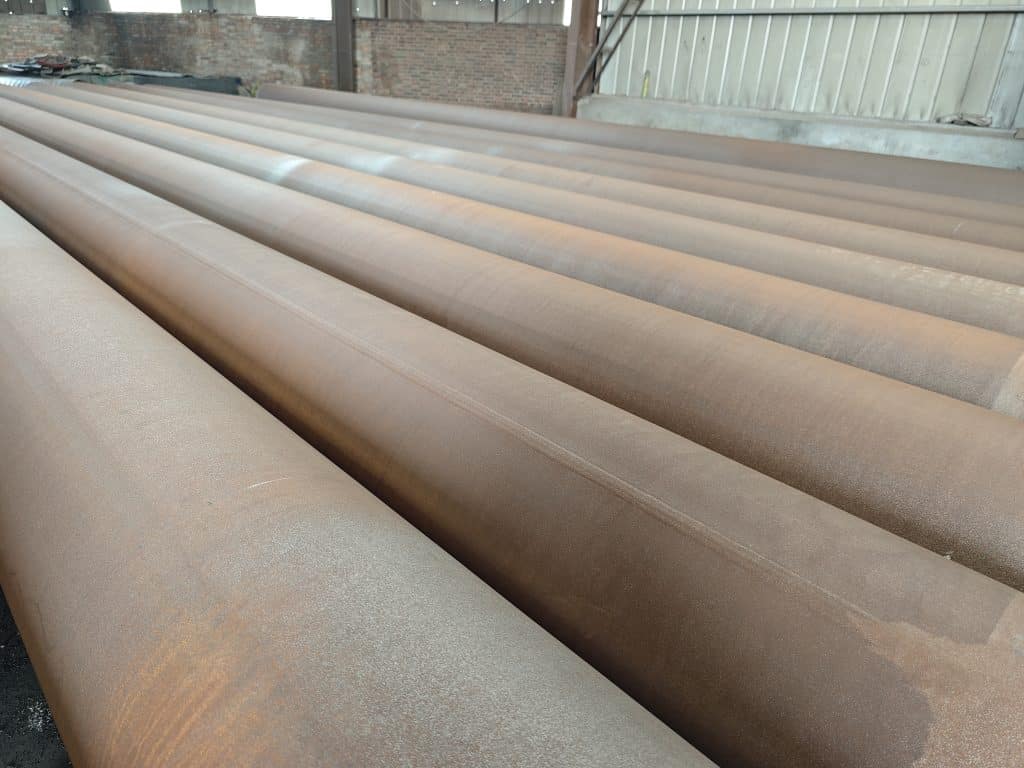
API 5L ERW pipe is made from hot-rolled steel coil, which makes it very accurate in size and quick to make for systems with small to medium diameters. Heavy steel plate is used to make LSAW pipe. This gives it the strength and resistance to pressure that large-diameter, long-distance pipeline and refinery projects need.
Supplier Capability and Evaluation: What LONGMA’s Export Data Shows
How to evaluate an API 5L pipe manufacturer
Not every supplier claiming API 5L carbon steel pipes capability can prove it with records. Look for valid API certification or written permission, an active ISO 9001 certificate, and a proven production route matching your diameter, wall thickness, grade, and PSL. Request traceable heat numbers linked to each mill test certificate; without that link, a supplier can’t back up claims if a field defect appears. Also check whether the supplier has served refineries, pipelines, or OEMs on orders similar in size to yours.
Inside a 2024 refinery interconnection supply case
In mid-2024, LONGMA supplied about 12,000 tons of X60 PSL2 LSAW line pipe to a Middle East refinery expansion EPC contractor, meeting NACE MR0175 sour-service rules, EN 10204 3.2 certification, and SGS hold-point inspection within a 38-day critical-path window. The contractor’s QA/QC manager cited heat traceability and weld NDE records as the reason LONGMA won over an offer priced about 4% lower.
Evidence to request from the supplier
Request the latest API certificate or applicable quality documentation, an ISO 9001 certificate, and a sample mill test certificate matching your grade and PSL. Ask the mill for its test procedure, inspection plan, and NDE and hydrostatic test records from a recent similar order. Past projects or shipments with similar diameter and grade combinations reveal how well the supplier performs under pressure.
How Can Buyers Verify API 5L Pipe Quality Before Delivery?
Pre-production and in-process verification
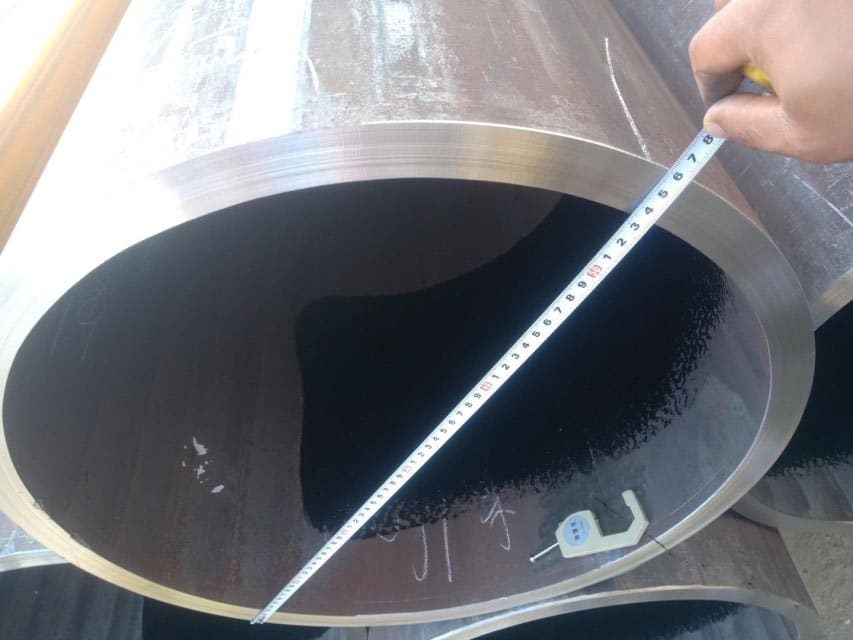
Start quality testing for API 5L carbon steel pipes before the first pipe is made: compare the mill’s production plan against the approved datasheet and purchasing specification to catch concerns early, verify raw material heat and plate/bill tracking, and confirm chemical composition through heat and product analysis. Compare tensile, yield, elongation, and impact results to grade minimums, and check ovality, length, wall thickness, bevel, and end condition before delivery.
Standards and regional compliance
API 5L and ISO 3183 govern line pipe chemistry, mechanical properties, and testing, while ASME B31.3 covers refinery piping design and B31.4/B31.8 cover liquid and gas pipelines. NACE/AMPP standards address sour service and corrosion. Third-party certification may use EN 10204 3.1 or 3.2 certificates; ask your compliance team whether the EU Pressure Equipment Directive 2014/68/EU applies rather than guessing.
Risks, pitfalls, and mitigation
| Risk | Potential consequence | Mitigation |
| Wrong PSL or grade | Insufficient performance or rejection | Approve datasheet and MTC before production |
| Missing heat traceability | Difficult certification and claims | Require heat-number marking and records |
| Inadequate wall thickness | Reduced design margin | Verify dimensions and mill tolerance |
| Unverified sour-service suitability | Cracking or early failure | Specify NACE requirements and hardness limits |
| Coating damage | External corrosion | Inspect coating, holiday test, repair records |
| Incomplete export documents | Customs or site delays | Use a document checklist before shipment |
| Uncontrolled weld repairs | Reduced seam reliability | Require weld-repair procedure and NDE records |
Conclusion
Most refinery projects LONGMA supplies use API 5L carbon steel pipes for transfer lines between refineries, tank farm connections, off-site pipelines, and hydrocarbon services between units. No single factor determines the right choice; grade, PSL level, manufacturing method, wall thickness, fluid chemistry, temperature, pressure, governing piping code, and inspection requirements all matter. To confirm API 5L fits every circuit, compare it with ASTM A106 and other project-approved materials. Before confirming orders for sour, hydrogen, or high-pressure service, require proof of material choice, testing, traceability, and a full compliance review.
FAQ
What is an API 5L carbon steel pipe?
Line pipe made to API Specification 5L is called API 5L carbon steel pipe. It is used to move oil, gas, water, and other fluids. You can get it either seamless or welded, and the grades are Grade B, X42, X52, and X65.
What is the difference between API 5L PSL1 and PSL2?
PSL2 usually needs stricter rules for chemicals, more mechanical tests, stricter acceptance standards, and more detailed tracking than PSL1. PSL2 is often chosen for pipeline applications with higher risk, higher pressure, or more demanding needs.
Is API 5L suitable for refinery process piping?
Some refinery transfer and interconnecting lines can fit API 5L, but it isn’t always a good fit for every process circuit. The choice that is made must meet the requirements for temperature, pressure, corrosion, and process fluids.
Can API 5L pipe be used for sour service?
It can only be used for sour service if the grade, chemistry, hardness, toughness, manufacturing controls, and test results meet the needs of sour service. The final choice should be based on NACE/AMPP standards and the buyer’s engineering requirements.
Ready to Confirm the Right Grade for Your Refinery Project?
Please send LONGMA’s engineering team your diameter, wall thickness, grade, PSL level, and sour-service status. LONGMA engineers will then send you a quote that is specifically tailored to your needs instead of a generic price list. LONGMA sells API 5L carbon steel pipes in grades B through X80, with PSL1 and PSL2 options that are compatible with seamless construction and are available with 3LPE or FBE coating. Send your project details to info@ilongma.com by email or ask for samples of mill test certificates before the end of your next RFQ deadline.