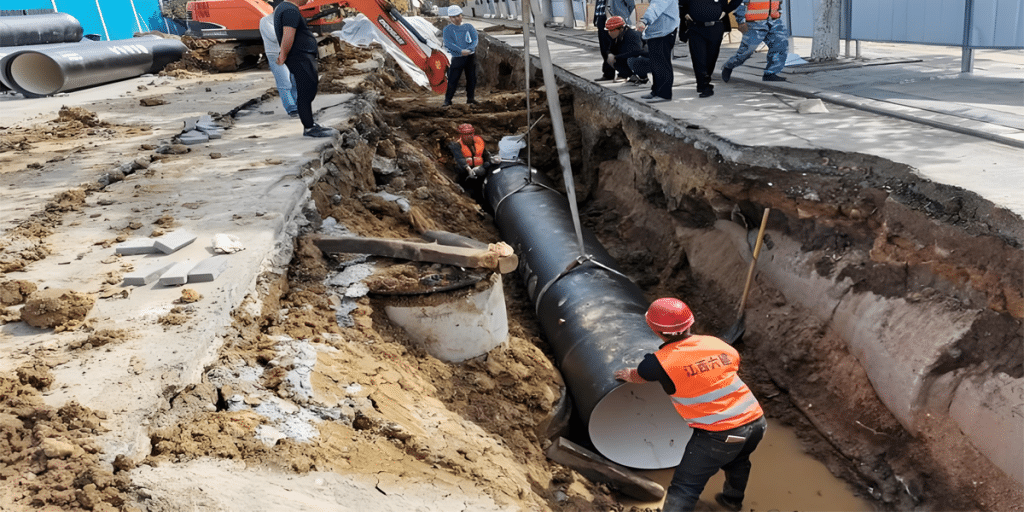
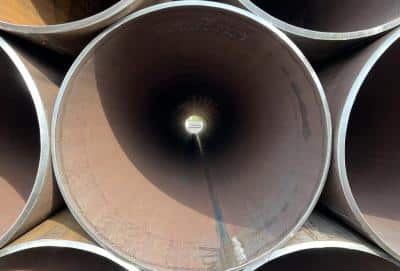
Carbon steel line pipe is widely specified for oil, gas, water and slurry transmission because it combines mechanical strength, established manufacturing routes and broad availability. Its suitability, however, depends on the transported medium, operating conditions, corrosion-control strategy and applicable design code. Comparing it with stainless steel, ductile iron, polymers and alloy steel helps project teams select materials on engineering merit rather than initial price alone.
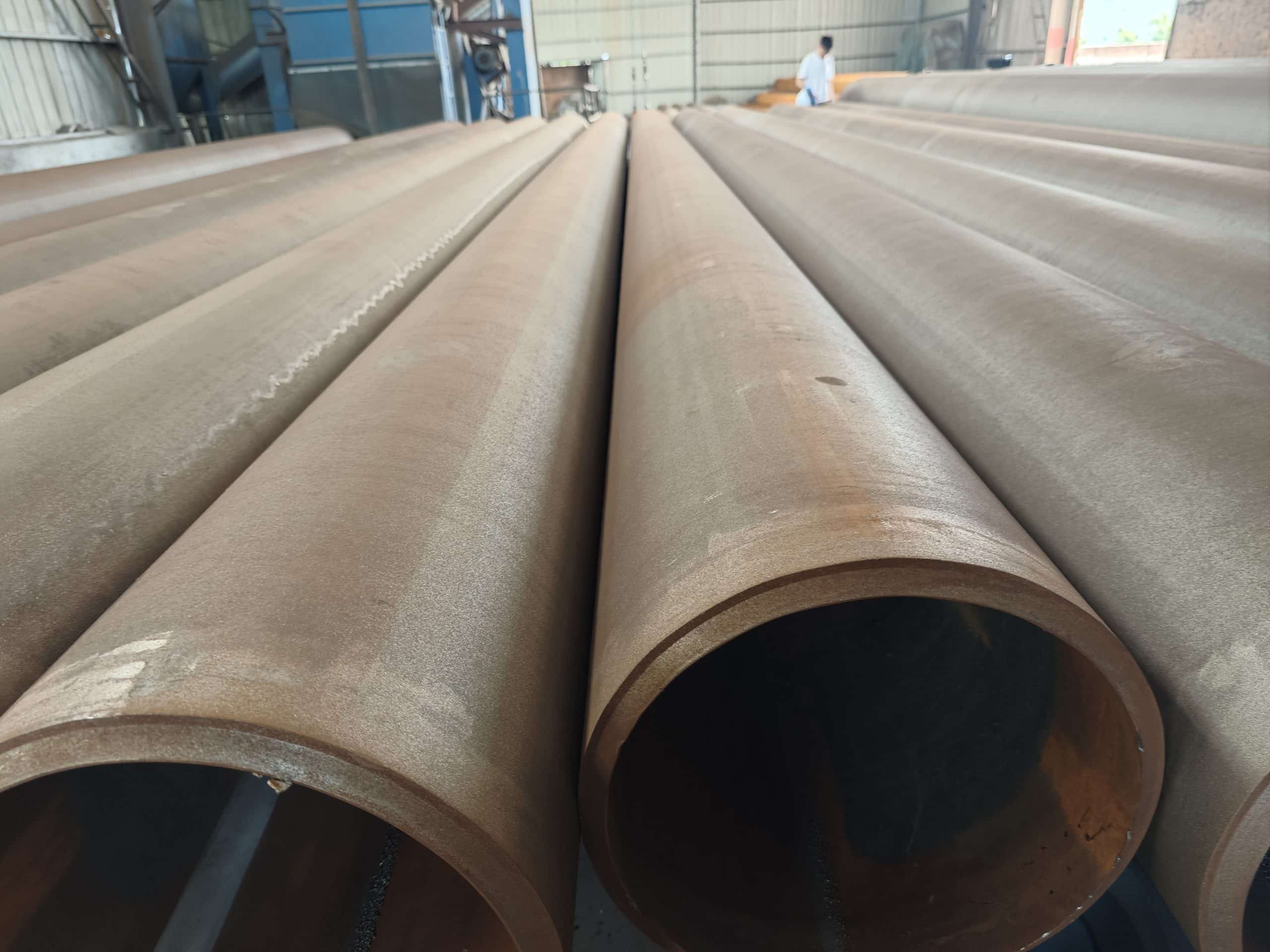
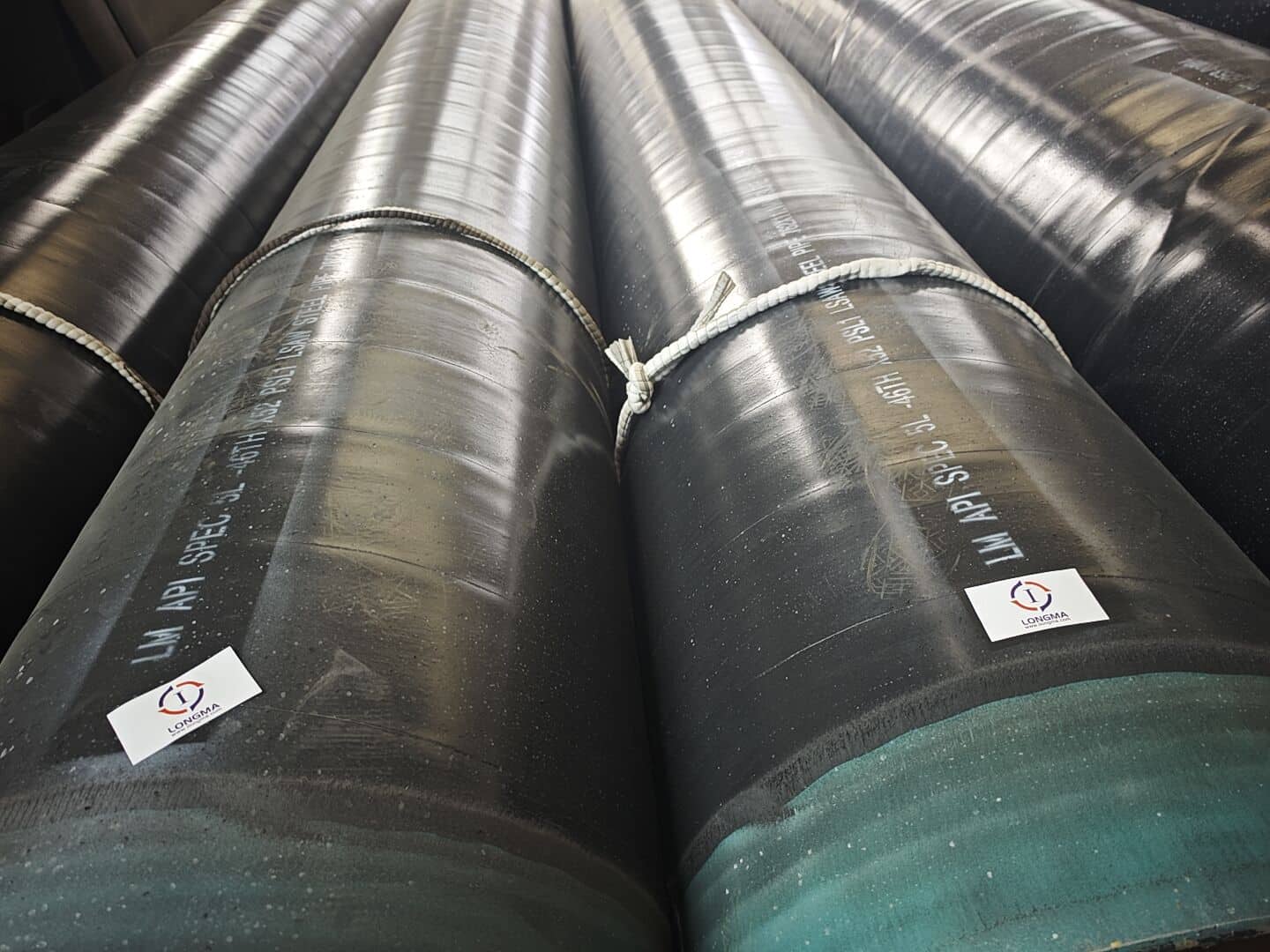
Why Carbon Steel Line Pipe Is Widely Used
Strength and API 5L grade selection
API 5L provides requirements for line pipe used in pipeline transportation systems. Grades such as B, X42, X52, X60, X65, X70 and X80 offer different specified minimum yield and tensile strengths. For example, X65 has a specified minimum yield strength of approximately 448 MPa and a specified minimum tensile strength of approximately 531 MPa, subject to the applicable product specification. A higher grade does not automatically mean a better pipe: design pressure, diameter, wall thickness, toughness, weldability and installation conditions must be considered together.
ERW and LSAW manufacturing options
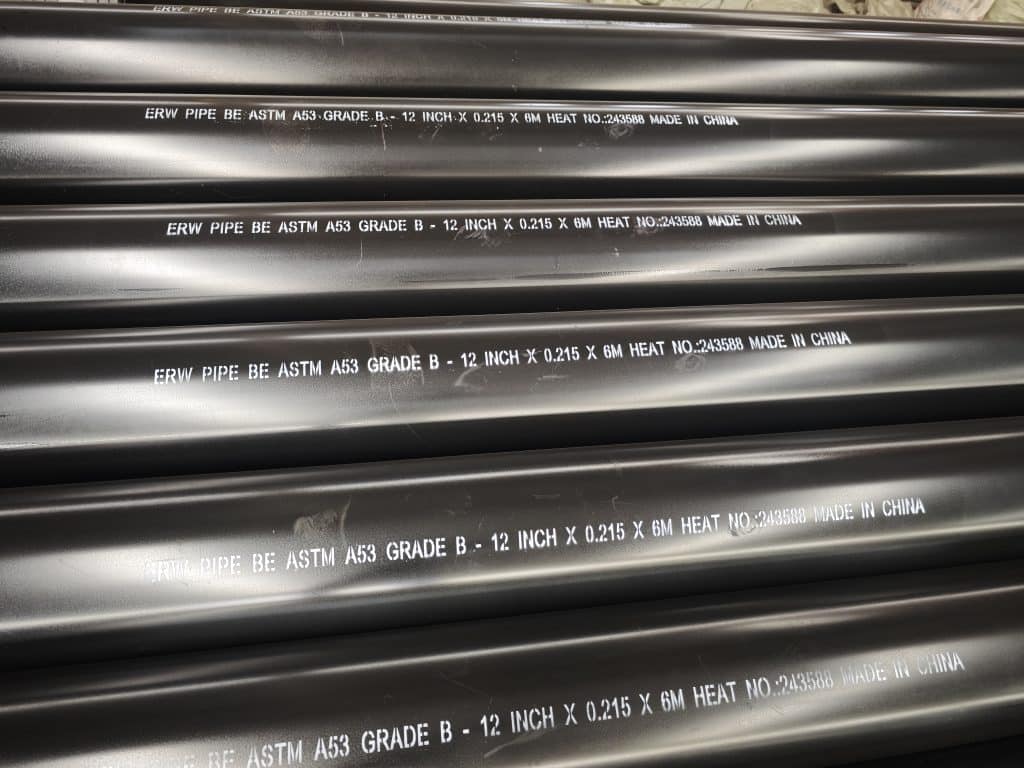
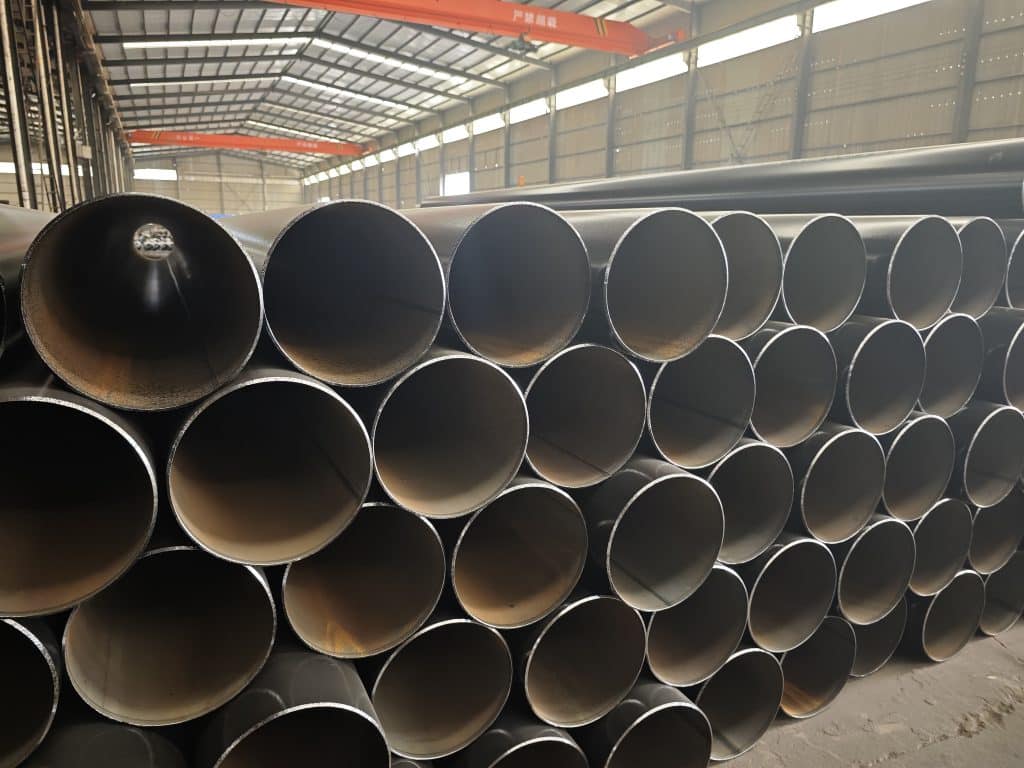
Electric resistance welded (ERW) pipe is typically formed from steel strip or coil and joined along a longitudinal seam using resistance heating and pressure, without added filler metal. Longitudinal submerged arc welded (LSAW) pipe is formed from plate and welded using submerged arc welding. ERW often offers efficient production for commonly ordered sizes, while LSAW can be advantageous for larger diameters and heavier wall sections. Both can be specified for demanding service when their manufacturing route, grade and inspection requirements are accepted by the governing specification.
Carbon Steel Compared with Alternative Pipe Materials
| Material | Principal advantage | Important selection consideration |
| Carbon steel line pipe | Strength, established supply and coating options | Requires suitable corrosion protection |
| Stainless steel | Corrosion resistance in selected environments | Grade selection and higher material cost |
| Ductile iron | Established use in water networks | Pressure class, joints and service limitations |
| PVC and other polymers | Low weight and corrosion resistance | Temperature, pressure and chemical compatibility |
| Alloy steel | Properties tailored for elevated-temperature duty | Often unnecessary for ambient-temperature transmission |
Carbon steel versus stainless steel
Stainless steel gains corrosion resistance from its chromium-rich passive surface and may be preferred when process chemistry makes ordinary carbon steel difficult to protect. Carbon steel is often more economical for long-distance transmission where compatible coatings, cathodic protection and monitoring can provide adequate corrosion control. Neither material is universally superior: internal corrosion, external exposure, temperature and maintenance requirements determine the practical choice.
Carbon steel versus ductile iron and polymer pipe
Ductile iron and polymer systems are well established in water distribution and other appropriate services. Their pressure and temperature limits, joint systems and installation requirements differ from those of steel. For high-pressure hydrocarbon transmission, carbon steel is commonly selected because of its strength and established line-pipe specifications; this does not mean other materials are unsuitable for every pressurized pipeline.
Carbon steel versus alloy steel
Chromium-molybdenum alloy steels such as those supplied under applicable ASTM A335 grades are designed for particular elevated-temperature conditions. Their benefits may not justify their additional cost in ambient-temperature transmission. Conversely, high-temperature or otherwise demanding process service can make alloy steel the appropriate engineering choice.
Corrosion Protection and Service Performance
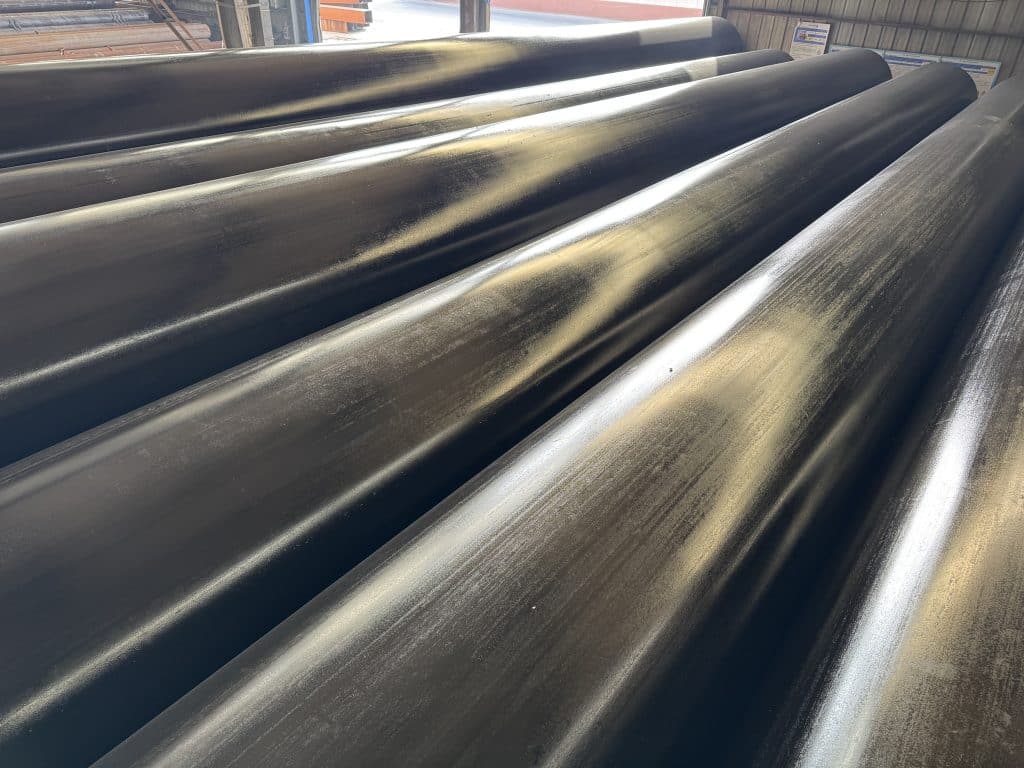
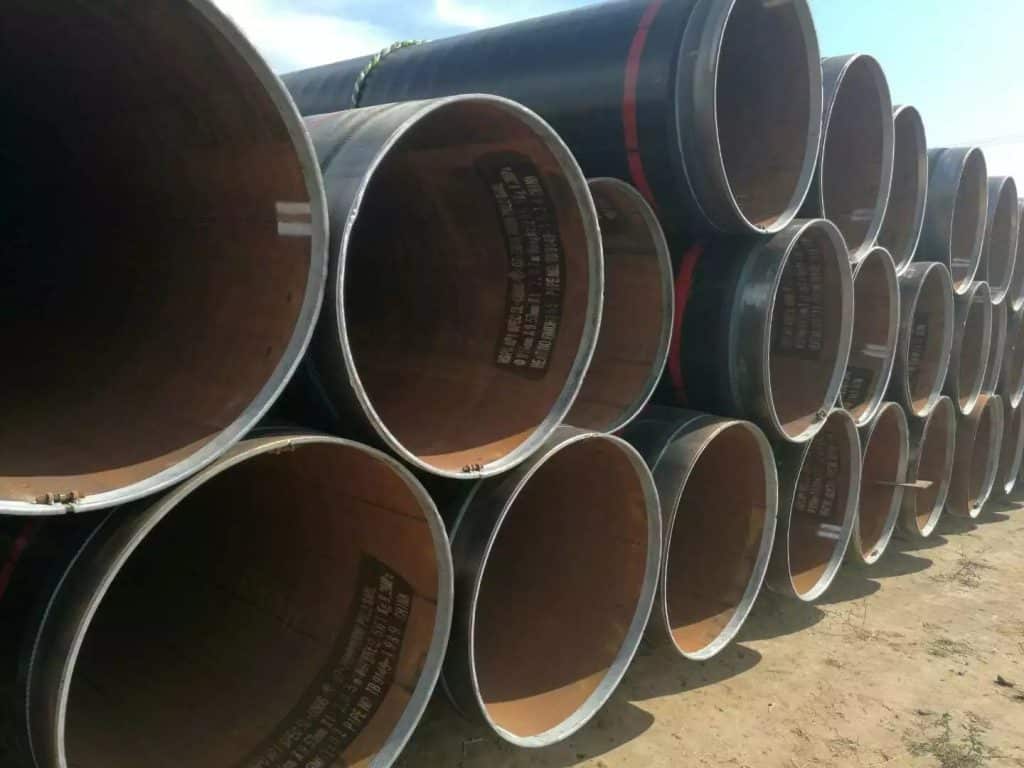
Carbon steel must be assessed for both internal and external corrosion. External options include three-layer polyethylene (3LPE), fusion-bonded epoxy (FBE), three-layer polypropylene (3LPP) and other qualified systems. Each coating has its own applicable specifications; DIN 30670 relates to polyethylene coating systems and should not be cited as a universal standard for every coating type. Buried or submerged pipelines may also require cathodic protection, depending on design conditions.
Internal coatings, corrosion inhibitors, dehydration, material allowance and operating controls can address different internal-corrosion mechanisms. For hydrogen-sulfide-containing service, the purchaser must separately establish the applicable sour-service material requirements and testing. API 5L PSL2 alone does not automatically establish suitability for every sour environment.
PSL1, PSL2 and Procurement Requirements
API 5L distinguishes Product Specification Level 1 (PSL1) from PSL2. PSL2 includes additional or tighter requirements in areas such as chemistry, mechanical properties, toughness and inspection, depending on grade and manufacturing method. Additional requirements for sour service, fracture control or offshore projects must be specified where applicable; they should not be assumed to apply to every PSL2 order.
- Specify the applicable API 5L edition, PSL, grade, outside diameter, wall thickness, length and end finish.
- State the governing design code, service temperature, corrosion allowance and any project-specific supplementary requirements.
- Confirm manufacturing route, coating specification, inspection scope and hydrostatic testing requirements.
- Request traceable material inspection documents, such as EN 10204 type 3.1 or 3.2 when required by contract.
Supplier qualification should include verification of applicable certifications and manufacturing capability. API Monogram licensing, where required, should be checked against the current licensed scope rather than inferred from marketing materials. Delivery dates and available sizes should be confirmed for the specific order.
Frequently Asked Questions
Which API 5L grades are used for transmission pipelines?
Grade B and X-series grades are specified according to pipeline design and project requirements. X52, X60, X65 and X70 are common options, but no single grade is best for every project.
Can carbon steel line pipe be used offshore?
Yes, where the selected grade, manufacturing route, toughness, corrosion protection, inspection and project requirements are appropriate. Offshore suitability is determined by the complete design and qualification package.
Does a coating eliminate the need for corrosion assessment?
No. Coatings are one element of corrosion control. Internal conditions, external exposure, coating integrity, cathodic protection and inspection planning still need evaluation.
Work with LONGMA
LONGMA manufactures round carbon steel ERW and LSAW pipe for industrial and pipeline applications. With more than 20 years of manufacturing experience, a production site covering 230,000 m² and annual output exceeding 500,000 tons, LONGMA supports customers with material selection, inspection documentation and project-specific supply coordination. For quotations, send the required standard, grade, size, quantity and delivery destination to info@ilongma.com or visit www.ilongma.com.