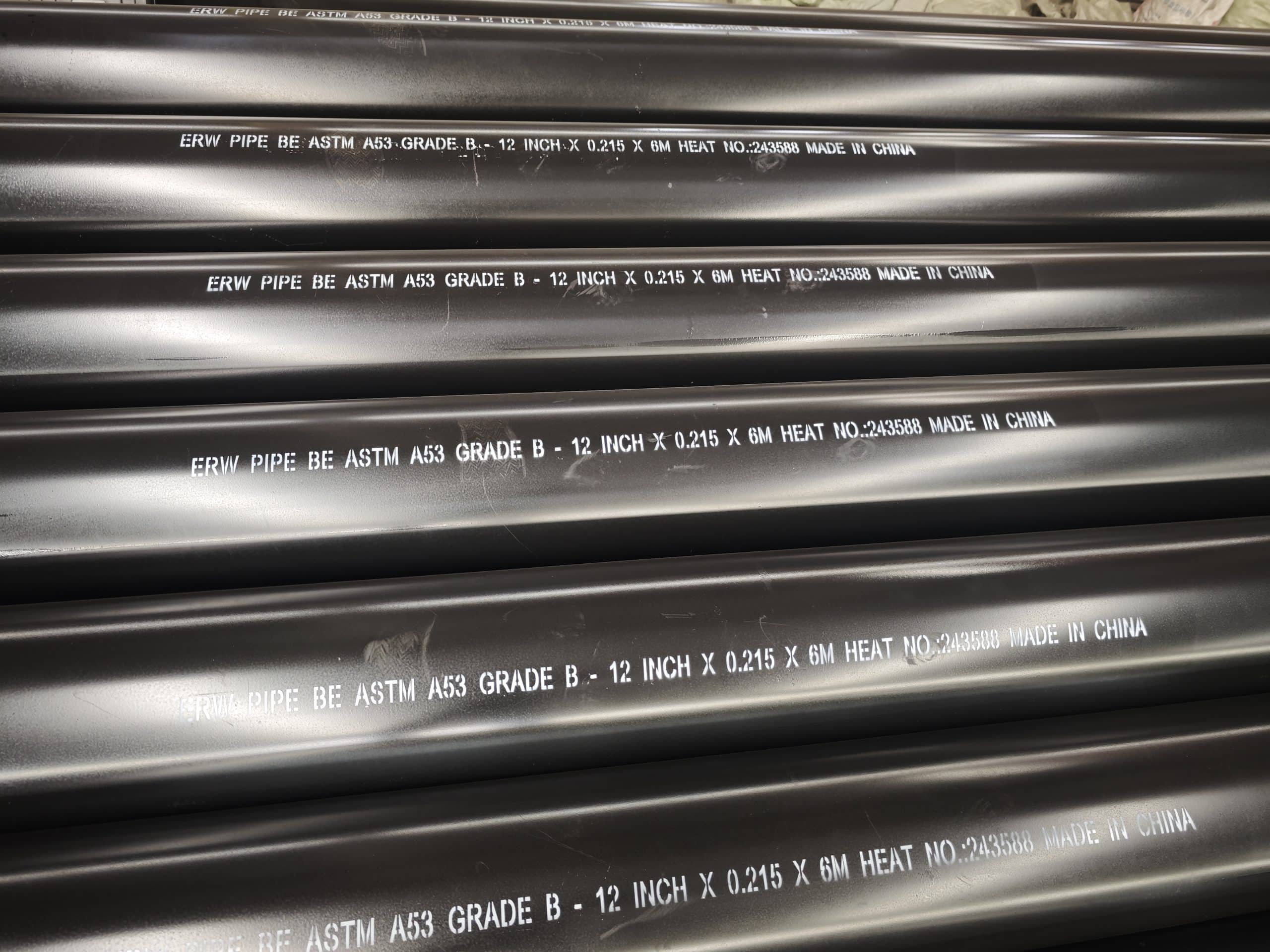
- 1. What Is ASTM A53/A53M?
- 2. Main Classifications of ASTM A53/A53M
- 3. Key Technical Requirements for ASTM A53 Welded Steel Pipes
- 4. Quality Inspection Requirements for ASTM A53 Welded Steel Pipes
- 5. ASTM A53 vs. API 5L: How to Choose?
- 6. How Does LONGMA Ensure Compliance with ASTM A53?
- 7. Common Risks When Purchasing ASTM A53 Steel Pipes
- 8. Why Do Global Customers Choose LONGMA?
- 9. Conclusion
In the fields of building structures, fluid transportation, fire protection systems, industrial piping, and mechanical manufacturing, ASTM A53/A53M is one of the most widely used steel pipe standards worldwide. For international buyers, understanding ASTM A53/A53M not only helps ensure proper product selection but also reduces procurement risks and prevents project quality issues caused by misunderstandings of specifications.
However, many purchasers find it difficult to fully understand technical terms such as ASTM A53 Grade A, Grade B, ERW pipes, and LSAW pipes, as well as their practical application differences. As a professional steel pipe manufacturer with more than 20 years of industry experience, LONGMA has been supplying high-quality welded steel pipes that comply with ASTM A53/A53M, API 5L, and other international standards to customers worldwide. This article provides a comprehensive interpretation of the ASTM A53/A53M standard from the perspectives of standard structure, material properties, testing requirements, procurement risks, and quality control systems.
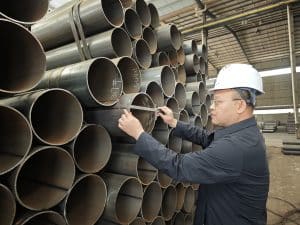
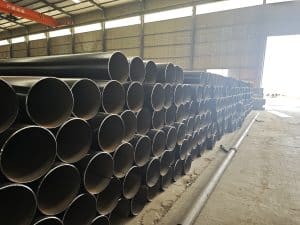
What Is ASTM A53/A53M?
ASTM A53/A53M is a standard developed by the American Society for Testing and Materials (ASTM International). Its full title is:
“Standard Specification for Pipe, Steel, Black and Hot-Dipped, Zinc-Coated, Welded and Seamless.”
This standard covers:
- Black steel pipe
- Hot-dip galvanized steel pipe
- Welded steel pipe
- Seamless steel pipe
ASTM A53 pipes are widely used in:
- Structural engineering
- Fire sprinkler systems
- Low-pressure fluid transportation
- Industrial equipment piping
- Water treatment systems
Due to their cost-effectiveness and reliability, ASTM A53 steel pipes have become a preferred choice for engineering projects around the world.
Main Classifications of ASTM A53/A53M
ASTM A53 classifies steel pipes according to manufacturing method and steel grade.
Classification by Manufacturing Process
| Type | Manufacturing Method | Typical Application |
| Type F | Furnace-Welded Pipe | Limited applications |
| Type E | ERW (Electric Resistance Welded) Pipe | Most widely used |
| Type S | Seamless Pipe | High-pressure service |
In modern engineering projects, ERW pipes and LSAW pipes are among the most commonly used welded steel pipe products.
Classification by Steel Grade
| Grade | Minimum Yield Strength | Minimum Tensile Strength |
| Grade A | 30 ksi (205 MPa) | 48 ksi (330 MPa) |
| Grade B | 35 ksi (240 MPa) | 60 ksi (415 MPa) |
Among these options, ASTM A53 Grade B is the most popular specification due to its higher strength and broader application range.
Key Technical Requirements for ASTM A53 Welded Steel Pipes
When purchasing ASTM A53 pipes, customers are primarily concerned with whether the products genuinely comply with the standard.
- Chemical Composition Requirements
The standard specifies strict limits on chemical composition.
Main controlled elements include:
- Carbon (C)
- Manganese (Mn)
- Phosphorus (P)
- Sulfur (S)
The objectives of chemical composition control are:
- Ensuring weldability
- Achieving required strength levels
- Improving durability
At LONGMA, all raw materials undergo spectrometric analysis before entering production to ensure compliance with standard requirements.
- Mechanical Property Requirements
ASTM A53 establishes clear mechanical property requirements.
Key testing items include:
- Yield Strength
- Tensile Strength
- Elongation
Relevant testing standards:
- ASTM A370
- ASTM A53/A53M Section 9
Typical testing procedure:
- Prepare standard test specimens.
- Apply load using a tensile testing machine.
- Measure fracture data.
- Verify compliance with standard requirements.
Mechanical properties directly determine the load-bearing capacity and safety performance of steel pipes.
Quality Inspection Requirements for ASTM A53 Welded Steel Pipes
High-quality welded steel pipes depend not only on manufacturing processes but also on rigorous inspection procedures.
Hydrostatic Test
Purpose
To verify the pressure-bearing capability of the pipe.
Testing Procedure
- Seal both ends of the pipe.
- Fill the pipe with pressurized medium.
- Maintain the specified test pressure.
- Check for leakage.
Standard Reference
- ASTM A53 Section 10
Hydrostatic testing effectively verifies the integrity of both the weld seam and the base material.
Non-Destructive Testing (NDT)
ASTM A53 allows certain non-destructive testing methods to replace portions of hydrostatic testing under specific conditions.
Ultrasonic Testing (UT)
Purpose:
Detection of:
- Cracks
- Laminations
- Lack of fusion
Standards:
- ASTM E213
- Applicable ASTM A53 requirements
Inspection Process:
- Automatic pipe scanning
- Signal reception and analysis
- Defect evaluation
- Data recording and archiving
Electromagnetic Inspection (EMI)
Purpose:
Detection of surface and near-surface defects.
Standard Reference:
- ASTM E570
EMI is widely used in ERW steel pipe production due to its efficiency and reliability.
ASTM A53 vs. API 5L: How to Choose?
Many buyers often confuse ASTM A53 pipes with API 5L line pipes.
Comparison Overview
| Item | ASTM A53 | API 5L |
| Main Application | Construction & Fluid Transport | Oil & Gas Transmission |
| Technical Requirements | Basic | More Stringent |
| Impact Testing | Usually Not Required | Required for PSL2 |
| NDT Requirements | Basic | More Comprehensive |
| Industries | Construction, Fire Protection, Water Treatment | Oil & Gas |
For high-pressure oil and gas transmission projects, API 5L pipes are generally the better option. For construction, fire protection, and general industrial piping systems, ASTM A53 pipes often offer superior cost performance.
How Does LONGMA Ensure Compliance with ASTM A53?
For most buyers, the greatest concern is not price, but whether the product truly meets the required standard.
To address this, LONGMA has established a comprehensive in-house laboratory system to verify product quality throughout the entire manufacturing process.
Core Laboratory Equipment
- Spectrometer
- Tensile Testing Machine
- Metallurgical Microscope
- Ultrasonic Testing Equipment
- Hydrostatic Testing System
- X-Ray Inspection Equipment
Key Inspection Items
| Inspection Item | Purpose | Standard Reference |
| Chemical Analysis | Material Verification | ASTM A53 |
| Tensile Test | Strength Verification | ASTM A370 |
| Hydrostatic Test | Pressure Verification | ASTM A53 Section 10 |
| Ultrasonic Testing | Internal Quality Inspection | ASTM E213 |
| Electromagnetic Inspection | Surface Defect Detection | ASTM E570 |
| Dimensional Inspection | Geometrical Accuracy Verification | ASTM A53 |
All inspection data are digitally archived and fully traceable throughout the product lifecycle.
Common Risks When Purchasing ASTM A53 Steel Pipes
- Non-Compliant Materials
Some suppliers cannot provide complete material traceability records.
- Inconsistent Weld Quality
Poor welding process control may lead to leakage risks during service.
- Incomplete Testing Documentation
Lack of third-party verification or laboratory testing records can create quality uncertainties.
- Excessive Dimensional Tolerances
Out-of-spec dimensions can reduce installation efficiency and increase project costs.
Through its strict quality management system and comprehensive inspection capabilities, LONGMA helps customers effectively avoid these risks.
Why Do Global Customers Choose LONGMA?
As a professional welded steel pipe manufacturer, LONGMA offers:
✔ More than 20 years of steel pipe manufacturing experience
✔ Specialized ASTM A53 pipe production capabilities
✔ Extensive ERW and LSAW pipe manufacturing expertise
✔ Advanced online inspection systems
✔ Full-process quality traceability
✔ Professional in-house laboratory verification
✔ Rich experience serving international projects
By strictly implementing ASTM A53/A53M requirements, LONGMA continuously delivers high-quality and highly reliable welded steel pipe products to customers worldwide.
Conclusion
ASTM A53/A53M is one of the most important technical standards in the global welded steel pipe market. A thorough understanding of its material requirements, mechanical property specifications, and inspection standards can significantly reduce project risks and improve engineering quality.
Selecting a supplier that not only strictly complies with ASTM A53 requirements but also possesses advanced manufacturing equipment, comprehensive testing capabilities, and extensive project experience is essential to project success. With more than two decades of industry expertise, advanced manufacturing technology, and rigorous quality control systems, LONGMA continues to provide dependable ASTM A53 welded steel pipe solutions for global construction, industrial, and infrastructure projects.