- 1. Why Does the Steel Pipe Manufacturing Process Affect Engineering Safety?
- 2. Core Differences Between Seamless and Welded Steel Pipes
- 3. Advantages and Limitations of Seamless Steel Pipes
- 4. Why Are Welded Steel Pipes Gaining Popularity?
- 5. Key Processes for Modern Welded Steel Pipes
- 6. How Does LONGMA Ensure the Quality of Welded Steel Pipes?
- 7. Ultrasonic Testing (UT)
- 8. Radiographic Testing (RT)
- 9. How Should International Buyers Make the Selection?
- 10. Why Do More Clients Choose LONGMA?
- 11. Conclusion
In oil and gas transportation, offshore engineering, power station boilers, and large-scale infrastructure construction, the manufacturing process of steel pipes directly impacts project safety, service life, and procurement costs. For international buyers, the choice between seamless steel pipes and welded steel pipes is not merely a technical issue but also concerns engineering risks and long-term operational costs. Common challenges encountered by overseas EPC projects during the procurement phase include:
- Inability to determine the most suitable process for the project
- Concerns about weld integrity affecting long-term safety
- Whether seamless steel pipes are mandatory for high-pressure systems
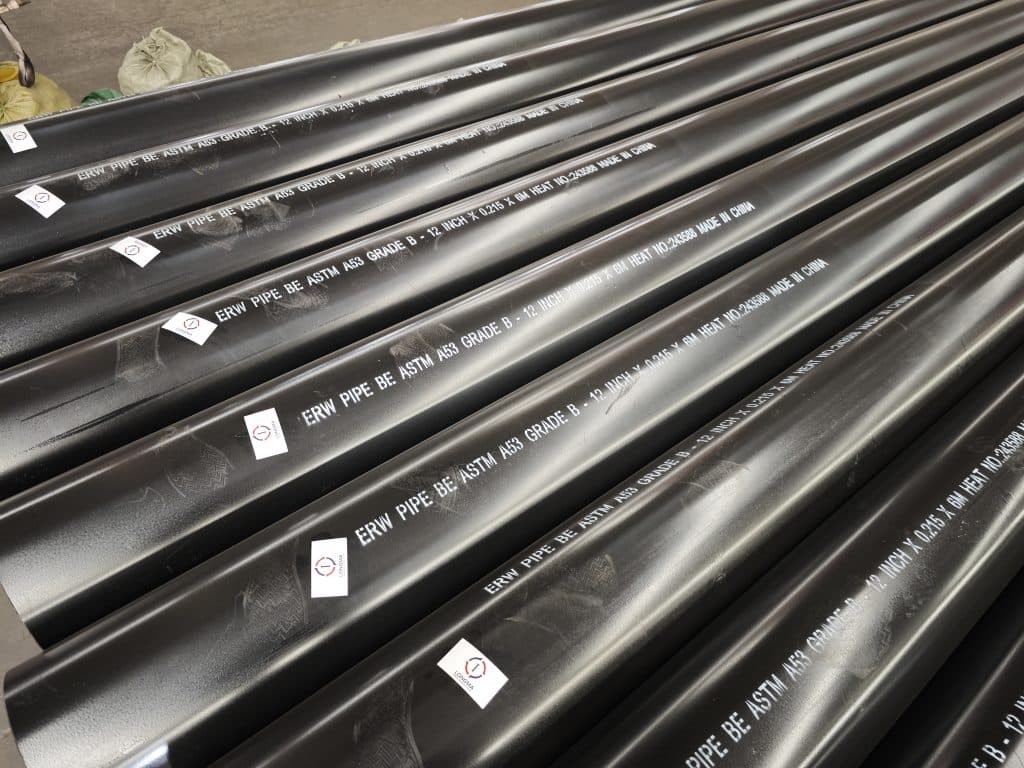
- Whether welded steel pipes can meet API 5L standards
- Balancing cost and performance
As a professional steel pipe manufacturer with over 20 years of experience, LONGMA has long served oil and gas pipelines, structural engineering, and high-pressure transportation projects. We deliver tailored and cost-effective solutions for welded and seamless steel pipes based on varying working conditions.
Why Does the Steel Pipe Manufacturing Process Affect Engineering Safety?
Steel pipes function not only as media carriers but also as the pressure-bearing core of the entire pipeline system.
Different manufacturing processes directly influence:
- Pressure-bearing capacity
- Weldability
- Dimensional stability
- Corrosion resistance
- Subsequent maintenance costs
Especially in API 5L steel pipe and high-pressure steel pipe projects, an inappropriate process selection may lead to:
- Pipeline fatigue cracking
- Weld failure
- Failed pressure testing
- On-site installation difficulties
Thus, international buyers are increasingly focusing on the manufacturing processes and quality control systems behind steel pipes, rather than solely on price.
Core Differences Between Seamless and Welded Steel Pipes
The fundamental difference between seamless and welded steel pipes lies in the presence or absence of a weld seam.
Comparison of the Two Processes
| Comparison Item | Seamless Steel Pipe | Welded Steel Pipe |
| Manufacturing Method | Piercing and hot rolling | Steel plate rolling and welding |
| Weld Seam | No | Yes |
| Pressure-Bearing Performance | Excellent | Good |
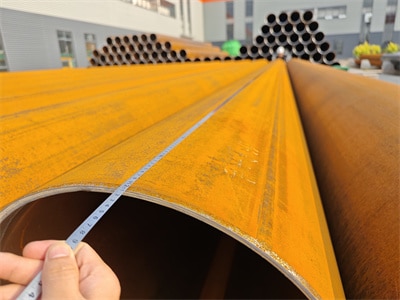
| Large-Diameter Production | High cost | Highly advantageous |
| Dimensional Consistency | Average | More stable |
| Production Efficiency | Low | High |
| Cost Control | High | More economical |
| Common Applications | High-pressure boilers, petrochemicals | Transportation pipelines, structural engineering |
For many pipeline steel pipe projects, modern welded steel pipes can already meet the requirements of high-grade transportation applications.
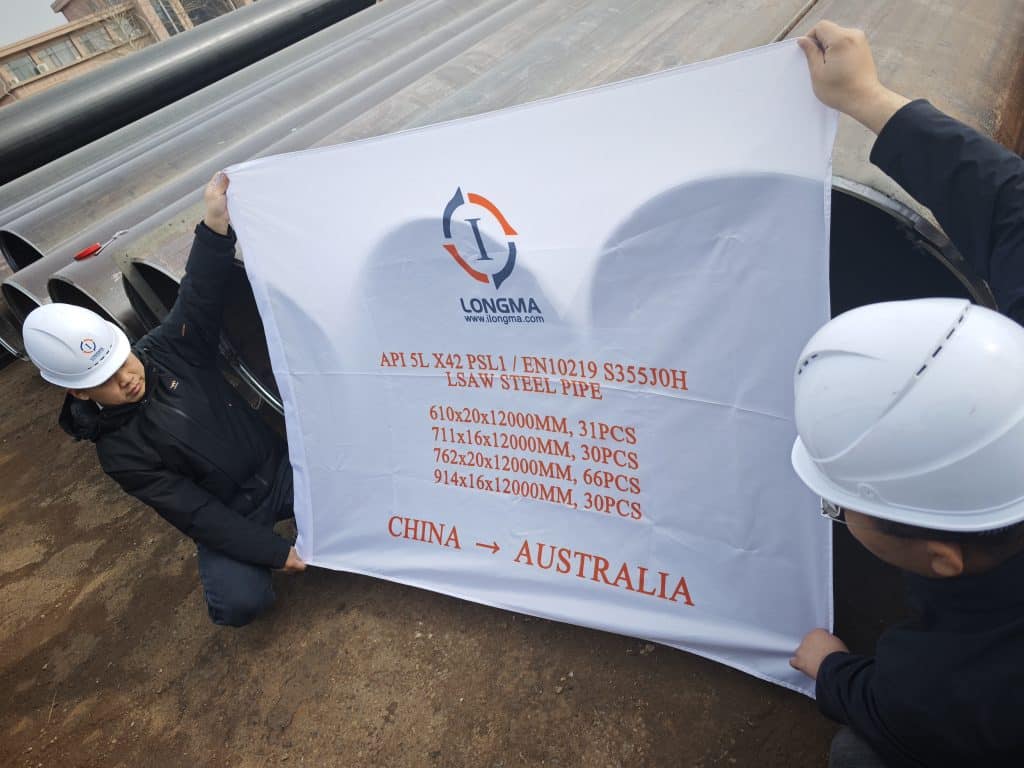
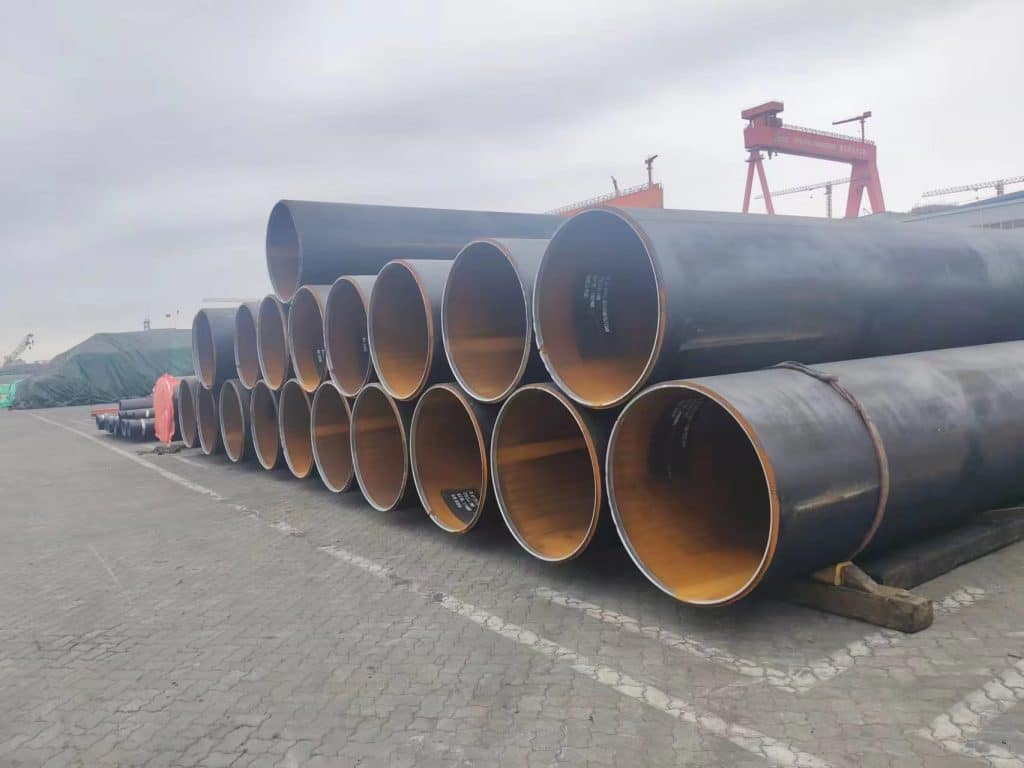
In particular, under the API 5L PSL2 standard, LSAW (Longitudinal Submerged Arc Welded) steel pipes and submerged arc welded pipes are widely used in large-scale oil and gas transportation projects.
Advantages and Limitations of Seamless Steel Pipes
Seamless steel pipes are characterized by the absence of weld seams, giving them inherent advantages in high-temperature and high-pressure environments.
Main Advantages of Seamless Steel Pipes
- Superior Pressure-Bearing Capacity
With a continuous metallic structure, seamless steel pipes perform better under pressure in:
- High-pressure boilers
- Chemical equipment
- Heat exchange systems
This is why seamless steel pipes have long been the preferred choice for high-pressure steel pipe projects.
- Suitability for High-Temperature Environments
Under high-temperature cyclic operating conditions, seamless steel pipes eliminate risks associated with weld heat-affected zones.
Typical applications include:
- Power station boilers
- Petrochemical cracking units
- High-temperature steam systems
These projects generally prioritize seamless steel pipes.
Limitations of Seamless Steel Pipes
However, many buyers overlook that seamless steel pipes do not outperform welded pipes in all aspects.
Their limitations include:
- High costs for large-diameter specifications
- Long lead times
- Relatively poor outer diameter consistency
- Difficulty in producing large sizes
As a result, seamless steel pipes are not always the most economical solution for large-scale oil and gas pipeline projects.
Why Are Welded Steel Pipes Gaining Popularity?
Advancements in automatic welding and inspection technologies have significantly improved the quality stability of modern welded steel pipes.
Especially in API 5L steel pipe and LSAW steel pipe projects, welded steel pipes stand out due to:
- Higher production efficiency
- Precise dimensional control
- Lower procurement costs
- Consistent batch quality
They have become the mainstream choice for large-scale transportation projects.
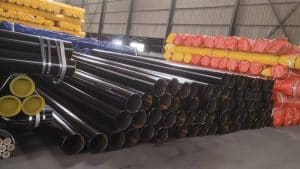
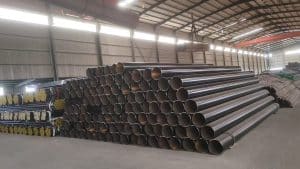
Key Processes for Modern Welded Steel Pipes
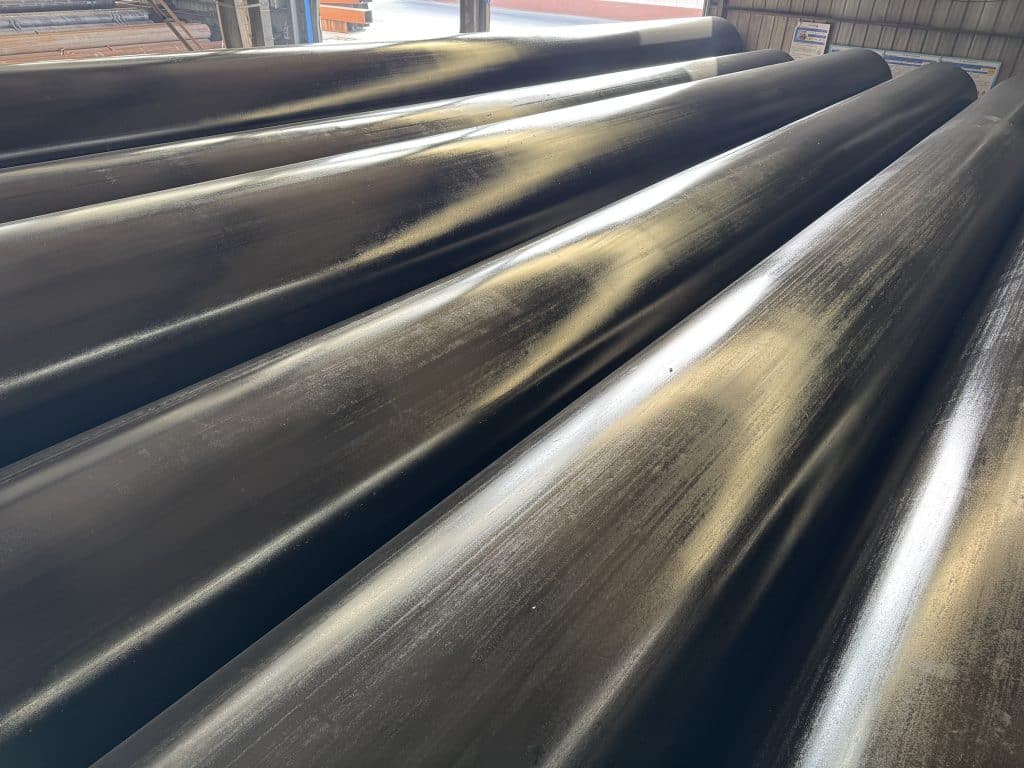
In steel pipe production, LONGMA manufactures large-diameter welded steel pipes using Submerged Arc Welding (SAW) technology.
Compared to traditional manual welding, automatic welding enables precise control of:
- Heat input
- Weld penetration
- Welding speed
- Weld consistency
In compliance with ASME BPVC Section IX standards, welding procedures undergo rigorous qualification to ensure welds meet long-term operational requirements.
How Does LONGMA Ensure the Quality of Welded Steel Pipes?
The primary concern for most international buyers is not the presence of a weld seam, but:
- Weld stability
- Authenticity of inspections
- Passing third-party inspections
- Long-term operational safety
To address these concerns, LONGMA has established a comprehensive in-house laboratory and automated inspection workflow.
Ultrasonic Testing (UT)
UT inspections are designed to detect:
- Delaminations
- Incomplete penetration
- Cracks
- Internal inclusions
In compliance with API 5L PSL2 and ISO 3183 requirements, welds typically undergo 100% ultrasonic testing.
LONGMA’s automated UT system enables continuous scanning, enhancing inspection stability for welded steel pipes.
Radiographic Testing (RT)
RT inspections are critical for high-pressure steel pipe and ASTM A671 projects.
They primarily identify:
- Porosity
- Incomplete fusion
- Weld cracks
LONGMA adopts digital RT systems to improve defect detection efficiency and inspection traceability.
How Hydrostatic Testing Reduces Engineering Risks
Even with visually sound welds, hydrostatic testing is mandatory to verify pipe sealing performance.
In accordance with API 5L and ASTM A53 standards:
Export pipeline steel pipes typically undergo hydrostatic testing.
LONGMA’s automated hydrostatic system records real-time data on:
- Test pressure
- Hold time
- Leakage data
Helping clients mitigate project operational risks.
How Should International Buyers Make the Selection?
There is no absolute superiority between seamless and welded steel pipes. The key lies in aligning the choice with project needs, performance requirements, and budget constraints.
Recommended Applications for Seamless Steel Pipes
Ideal for:
- High-temperature and high-pressure systems
- Boilers and heat exchangers
- Petrochemical plants
- Extreme operating condition equipment
Recommended Applications for Welded Steel Pipes
Ideal for:
- Long-distance transportation pipelines
- Large-diameter projects
- Offshore engineering
- Urban water supply systems
For large-scale API 5L steel pipe projects, LSAW steel pipes often deliver the best overall cost-effectiveness.
Why Do More Clients Choose LONGMA?
As a steel pipe manufacturer with over 20 years of experience, LONGMA not only boasts mature welded steel pipe manufacturing capabilities but also offers:
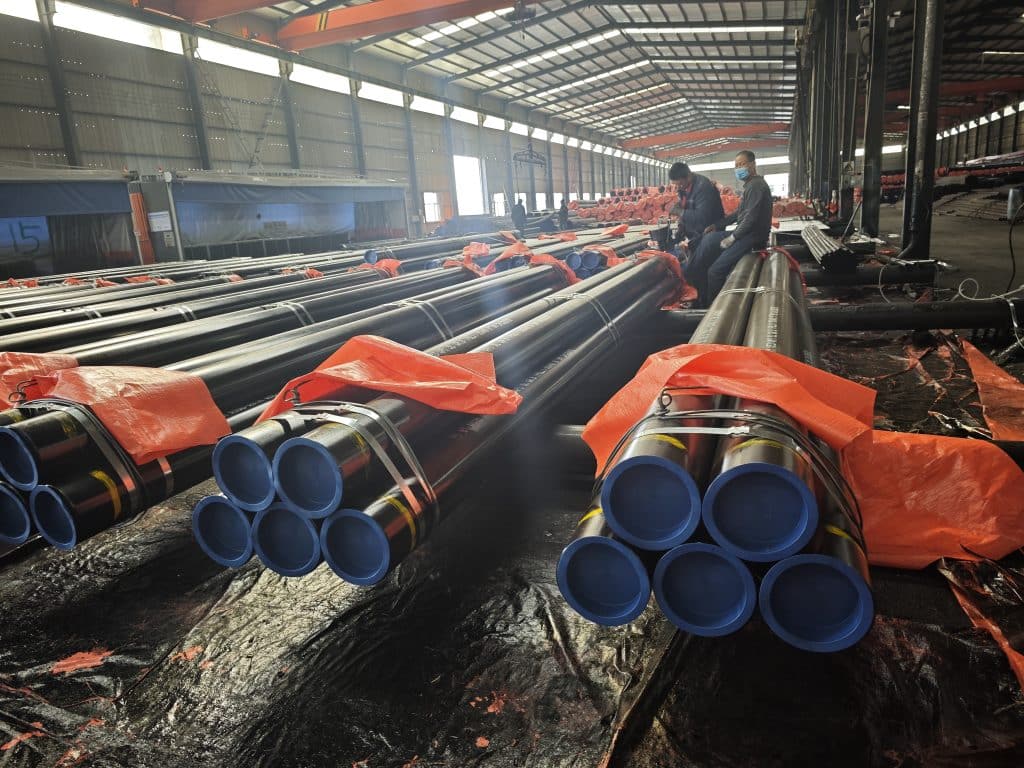
- Automated production lines
- A comprehensive in-house laboratory
- A full-process quality traceability system
- API 5L certified production capabilities
- Third-party inspection support (SGS/BV/TUV)
For international EPC clients, this translates to:
- Consistent product quality
- Reduced rework risks
- Reliable delivery capacity
- Safe long-term operational performance
Conclusion
The choice between seamless and welded steel pipes ultimately balances performance, cost, and project requirements.
With advancements in automatic welding and intelligent inspection systems, modern welded steel pipes can now meet the demands of an increasing number of high-grade transportation projects.
LONGMA leverages over 20 years of steel pipe manufacturing expertise, advanced automated production equipment, and a robust in-house laboratory system to consistently supply global clients with high-quality seamless steel pipes, LSAW steel pipes, and API 5L steel pipe solutions. Our goal is to help clients reduce procurement risks and enhance the safety of their engineering projects.