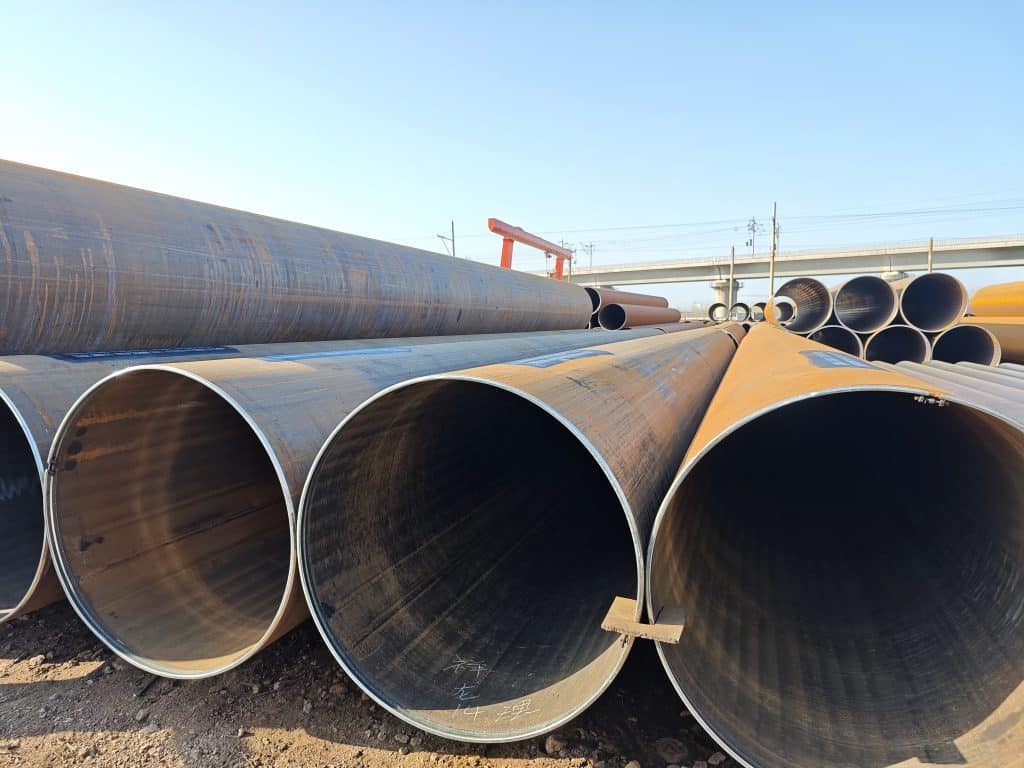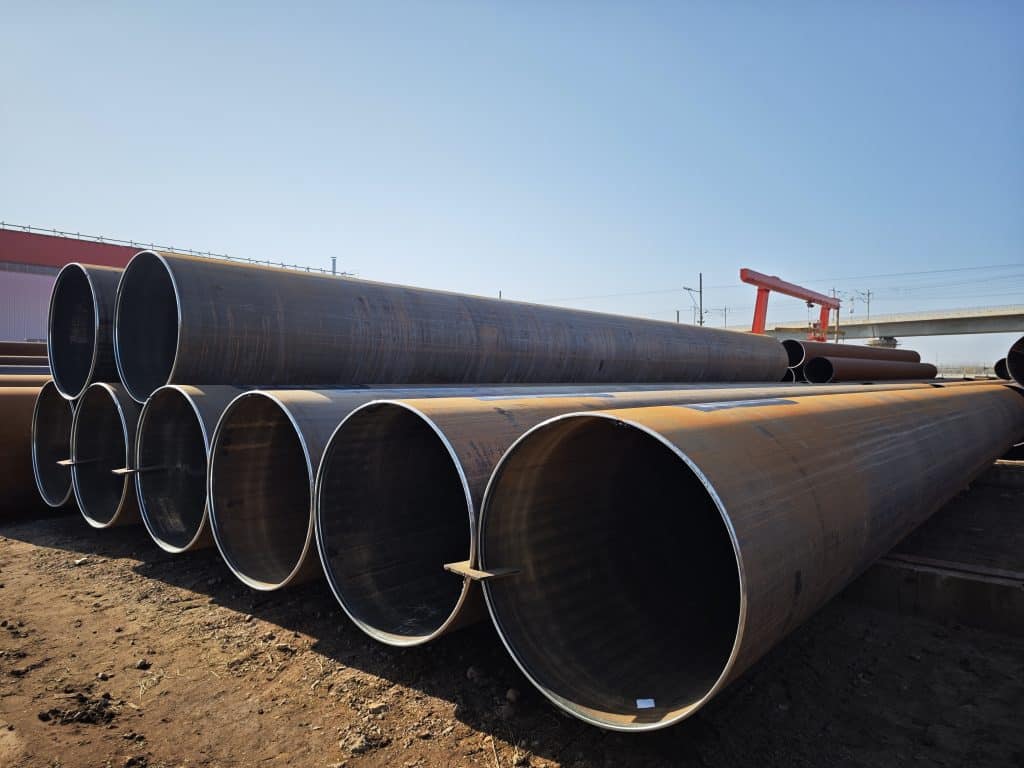
- 1. What Is API 5L Line Pipe?
- 2. Which API 5L Grades Are Used for Oil Transmission?
- 3. PSL1 vs PSL2 for Oil Pipelines
- 4. ERW vs LSAW for Oil Transmission
- 5. Wall Thickness and Pressure Design
- 6. Corrosion Protection for Oil Transmission Pipe
- 7. Inspection and Quality Documentation
- 8. How to Select API 5L Pipe for an Oil Transmission Project
- 9. LONGMA API 5L ERW and LSAW Line Pipe
- 10. FAQ
API 5L line pipe is widely used for crude oil, natural gas and other energy-transportation pipelines because it provides a common manufacturing specification for seamless and welded steel line pipe. For an oil transmission project, however, selecting “API 5L” is only the starting point. Grade, PSL, wall thickness, manufacturing route, toughness, corrosion protection, inspection and documentation must all be matched to the design basis.
API published the 47th Edition of API Specification 5L in June 2026. The edition includes updates in more than 15 technical areas, including HFW quality, impact toughness, sour-service requirements, lamination control, nondestructive evaluation and CO2 transportation. New projects should identify the applicable edition in the material requisition.
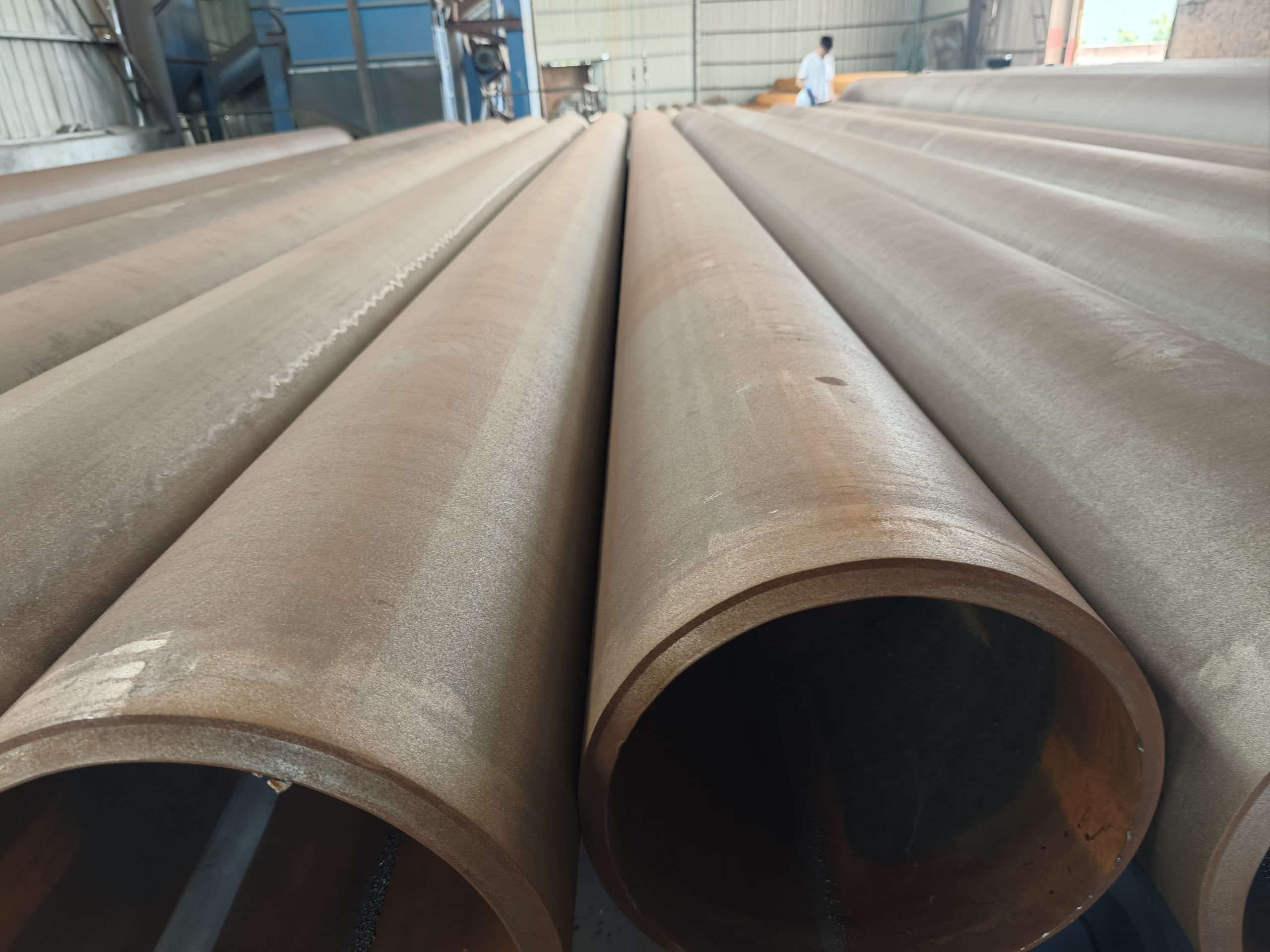
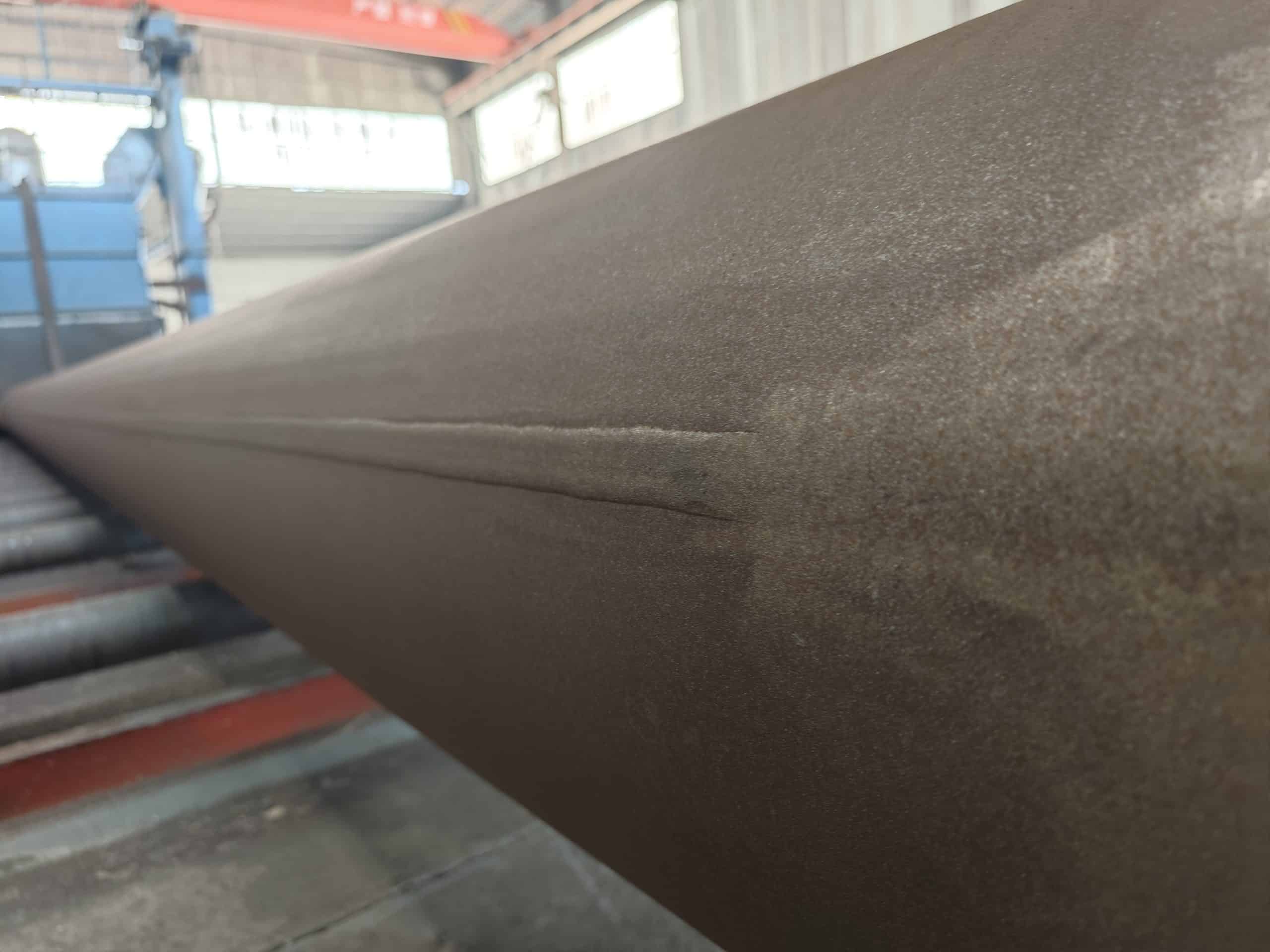
What Is API 5L Line Pipe?
API Specification 5L establishes manufacturing requirements for steel line pipe used in pipeline transportation systems. It addresses material properties, manufacturing processes, inspection, testing, marking and traceability. This allows mills, EPC contractors, inspectors and operators to work from the same product specification while the pipeline design code determines the system-level design requirements.
API 5L should not be treated as a complete pipeline design code. It defines the pipe product; it does not by itself determine allowable operating pressure, route design, corrosion allowance, fracture-control strategy or offshore installation requirements.
Which API 5L Grades Are Used for Oil Transmission?
Grade selection is driven by pressure, outside diameter, wall thickness, route conditions, construction method, toughness requirements and economics. Higher specified yield strength can reduce the pressure-design wall thickness in some cases, but the final ordered thickness may be controlled by corrosion allowance, external loads, mill tolerance, handling, bending or minimum construction requirements.
| Grade | Specified Minimum Yield Strength | Specified Minimum Tensile Strength | Typical Selection Context |
| Grade B / L245 | 245 MPa | 415 MPa | Where baseline strength is sufficient for the design |
| X42 / L290 | 290 MPa | 415 MPa | Moderate increase in specified yield strength |
| X52 / L360 | 360 MPa | 460 MPa | Frequently evaluated for transmission projects with higher strength demand |
| X60 / L415 | 415 MPa | 520 MPa | Higher-strength transmission applications |
| X65 / L450 | 450 MPa | 535 MPa | Large transmission projects where higher yield strength supports the design |
| X70 / L485 | 485 MPa | 570 MPa | High-strength transmission applications subject to project qualification |
These strength values are useful for preliminary comparison, but no grade should be assigned a universal “low-pressure,” “high-pressure” or “offshore” label. The governing design code and project calculations determine whether a grade is suitable.
PSL1 vs PSL2 for Oil Pipelines
PSL1 and PSL2 define different levels of product requirements. PSL2 applies tighter controls in areas such as chemistry, toughness, traceability and inspection. It is commonly considered when the project requires more demanding material controls, but it should not be described as automatically mandatory for every offshore, sour, seismic or cold-region pipeline.
| Selection Point | PSL1 | PSL2 |
| Material controls | API 5L PSL1 requirements | More restrictive controls |
| Toughness | According to applicable PSL1 requirements | More stringent toughness requirements |
| Carbon equivalent | Not controlled in the same manner as PSL2 | Controlled according to applicable requirements |
| Traceability | To the applicable PSL1 level | More stringent traceability |
| Use in severe service | Requires project evaluation | Often forms part of a more demanding project specification, with supplementary requirements as needed |
For H2S-containing service, PSL2 alone is not proof of sour-service suitability. ISO 15156-2:2020 addresses the selection and qualification of carbon and low-alloy steels for H2S-containing oil and gas production environments and supplements the applicable design code. Projects may additionally require hardness control, HIC or SSC testing, weld restrictions and supplementary NDT.
ERW vs LSAW for Oil Transmission
ERW/HFW Pipe
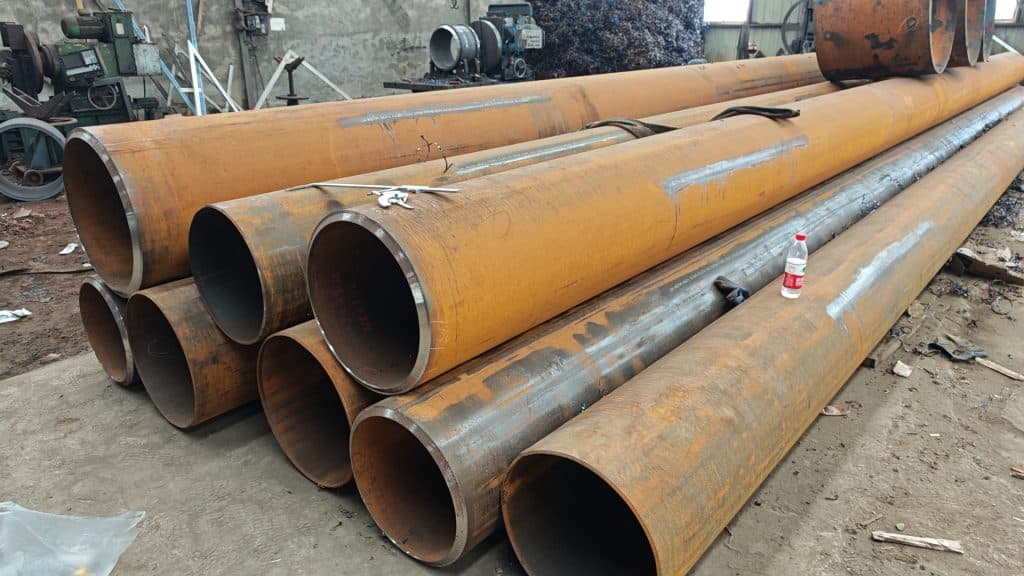
ERW/HFW pipe is produced by continuously forming steel strip or coil and joining the longitudinal edges using resistance/high-frequency welding. It is widely used where its available diameter, wall thickness, grade and inspection requirements fit the project. The process is efficient for repeat production and offers consistent dimensional control when properly manufactured and inspected.
LSAW Pipe
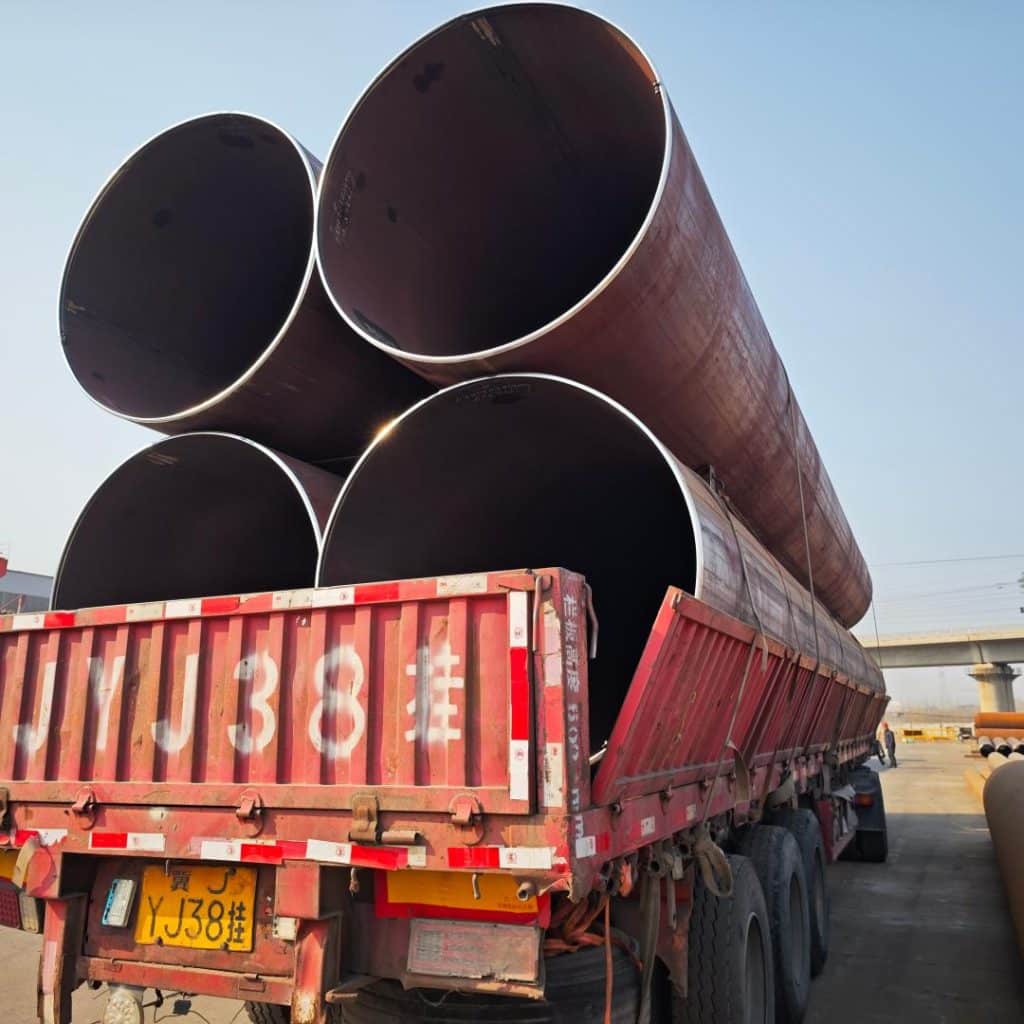
LSAW pipe is formed from plate and welded along a longitudinal seam using submerged-arc welding, commonly from both the inside and outside as required by the manufacturing procedure. It is frequently selected for large-diameter and/or heavy-wall transmission pipe, but there is no universal diameter at which LSAW automatically becomes mandatory.
LONGMA manufactures round ERW and LSAW steel pipe. The two processes are maintained as separate manufacturing routes: ERW/HFW should not be described as double-sided submerged-arc welding, while double-sided submerged-arc welding is associated with the LSAW production route.
Wall Thickness and Pressure Design
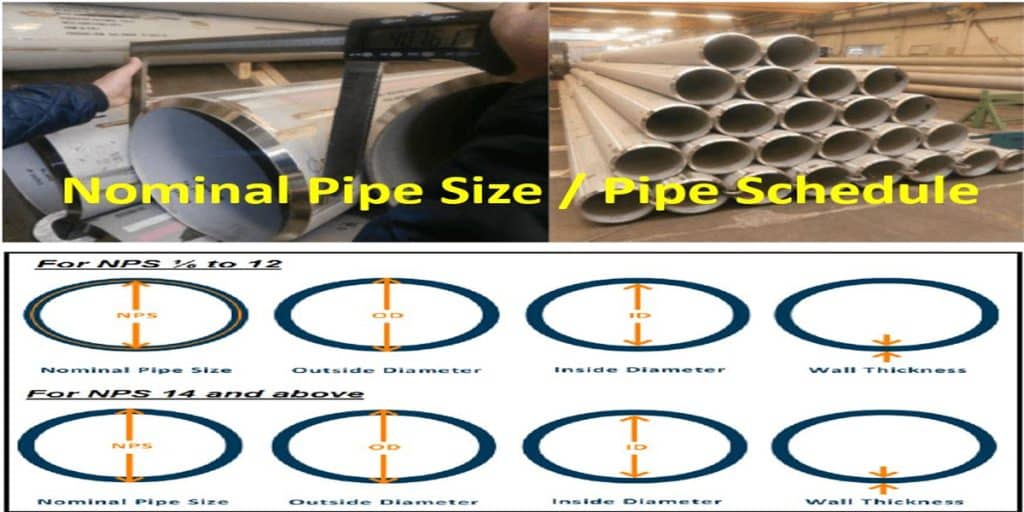
Wall thickness must be calculated under the governing pipeline design code. It depends on design pressure, outside diameter, specified strength, design factor, temperature and other code factors. The final ordered thickness can also be affected by corrosion allowance, negative wall-thickness tolerance, external loads, construction damage, bending and installation requirements.
For this reason, a fixed statement such as “X65 reduces wall thickness by 15% compared with X52” should not be used as a general procurement rule. A higher-strength grade can reduce the pressure-controlled thickness, but the actual saving must be calculated for the specific pipeline.
Corrosion Protection for Oil Transmission Pipe
API 5L pipe is carbon steel line pipe and does not become corrosion-resistant simply because it meets a higher grade or PSL. External protection may include FBE, 3LPE, 3LPP or another qualified coating system together with cathodic protection. Internal corrosion management can include dehydration, chemical inhibition, corrosion allowance, internal coating or lining, and monitoring, depending on the transported fluid and operating conditions.
Corrosion allowance should be established from the project corrosion assessment and design life rather than a universal millimeter value. Sour-service cracking controls and general corrosion controls should also be treated separately because they address different degradation mechanisms.
Inspection and Quality Documentation
Inspection requirements should be defined before production. Depending on the manufacturing route, PSL and project specification, the order can include dimensional inspection, visual examination, chemical and mechanical testing, hydrostatic testing, weld-seam NDT, pipe-body inspection and supplementary toughness or sour-service testing.
The required documentation should be stated in the purchase order. Buyers may request EN 10204 Type 3.1 or Type 3.2 inspection documents, ITP records, NDT reports, coating reports and third-party witness points. API Monogram product should be requested only when contractually required, and the manufacturer’s current API license should then be verified.
How to Select API 5L Pipe for an Oil Transmission Project
| Decision | What to Verify |
| Grade | Design pressure, OD, wall thickness, route and required strength |
| PSL | Chemistry, toughness, traceability and inspection requirements |
| Manufacturing route | ERW/HFW or LSAW based on dimensions and project specification |
| Service environment | Temperature, H2S/CO2, water content and external environment |
| Corrosion protection | External coating, cathodic protection and internal corrosion strategy |
| Testing | Hydrotest, NDT, impact, hardness, HIC/SSC or other supplementary tests where required |
| Documentation | MTC, ITP, inspection reports, traceability and third-party requirements |
LONGMA API 5L ERW and LSAW Line Pipe
LONGMA has manufactured round ERW and LSAW steel pipes since 2003. Its production site covers approximately 230,000 square meters, with annual output exceeding 500,000 tons. The published API 5L product range includes Grade B and X42 through X80 in PSL1 and PSL2.
LONGMA can coordinate project-specific inspection and documentation requirements, including material traceability, hydrostatic testing, NDT records, dimensional inspection, MTC documentation and specified coating systems. The exact supply scope should be confirmed against the customer’s material requisition before production.
For an oil transmission project, send the API 5L edition, grade, PSL, OD, wall thickness, length, quantity, ERW or LSAW process, service conditions, coating, testing and third-party inspection requirements to info@longma-group.com for technical review and quotation.
FAQ
- What does the X number mean in API 5L grades?
The X designation relates to the specified minimum yield strength. For example, X65 corresponds to a minimum yield strength of approximately 65 ksi. The exact SI designation and required properties should be taken from the applicable API 5L edition.
- Is X65 or X70 always better than Grade B or X52?
No. Higher yield strength can be useful in some pressure-controlled designs, but grade selection must consider wall thickness, toughness, weldability, construction, availability and total installed cost.
- Does every oil transmission pipeline require PSL2?
No. The required PSL is determined by the governing project specification and service conditions. More demanding projects often specify PSL2 together with supplementary requirements, but the decision should not be made from a generic application label.
- Is LSAW always required above a certain diameter?
No. Manufacturing ranges overlap and vary by mill. LSAW is commonly selected for large-diameter and heavy-wall pipe, but the required route should be confirmed from the project specification and manufacturer capability.
- Does API 5L provide corrosion resistance?
API 5L controls the line-pipe product. Corrosion protection requires a separate strategy that may include coating, cathodic protection, corrosion allowance, inhibition, dehydration, lining and monitoring.
- What API 5L manufacturing routes does LONGMA supply?
LONGMA focuses on round ERW and LSAW steel pipe for pipeline and related applications.