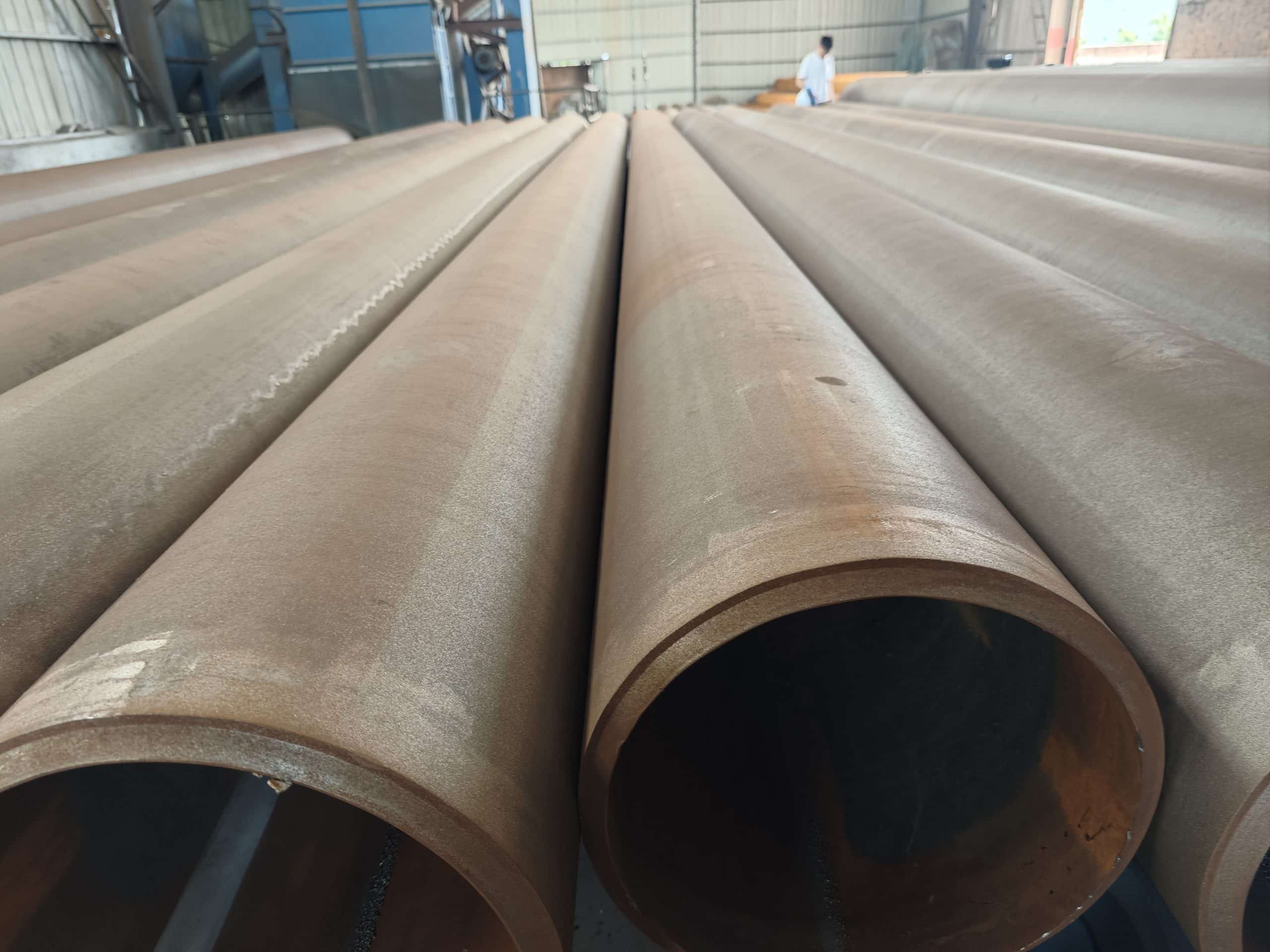
- 1. What Do API 5L Pipe Grades Mean?
- 2. API 5L Grade Comparison: B, X42, X52, X60, X65, and X70
- 3. Which API 5L Grades Suit Gas Feeds to LNG Plants?
- 4. Why X60 to X70 Dominate Long-Distance Gas Lines
- 5. How LNG Feed Gas Pressure Sets the Pipe Grade
- 6. What Wall Thickness Do High-Pressure Gas Lines Need?
- 7. Which Impact Toughness Values Do Cold Climates Require?
- 8. API 5L PSL1 vs PSL2 and Seamless vs Welded Pipe
- 9. Supplier Capability and Evaluation for API 5L Procurement
- 10. Conclusion
- 11. FAQ
- 12. Request a Grade-Specific API 5L Quotation from LONGMA
To explain API 5L pipe grades selection to an owner’s engineer or auditor, this guide covers grade comparison tables, wall thickness advice, cold-climate toughness notes, and a supplier checklist from real LNG feed-gas queries. X52/X60 suit general transmission, X65/X70 high-pressure lines, and Grade B/X42 low-stress gathering. PSL2 exceeds PSL1 in chemical and hardness control. Design code, diameter, wall thickness, and temperature all affect grade and pressure rating. A common RFQ error is assuming LNG feed-gas pipe is cryogenic liquid-rated.
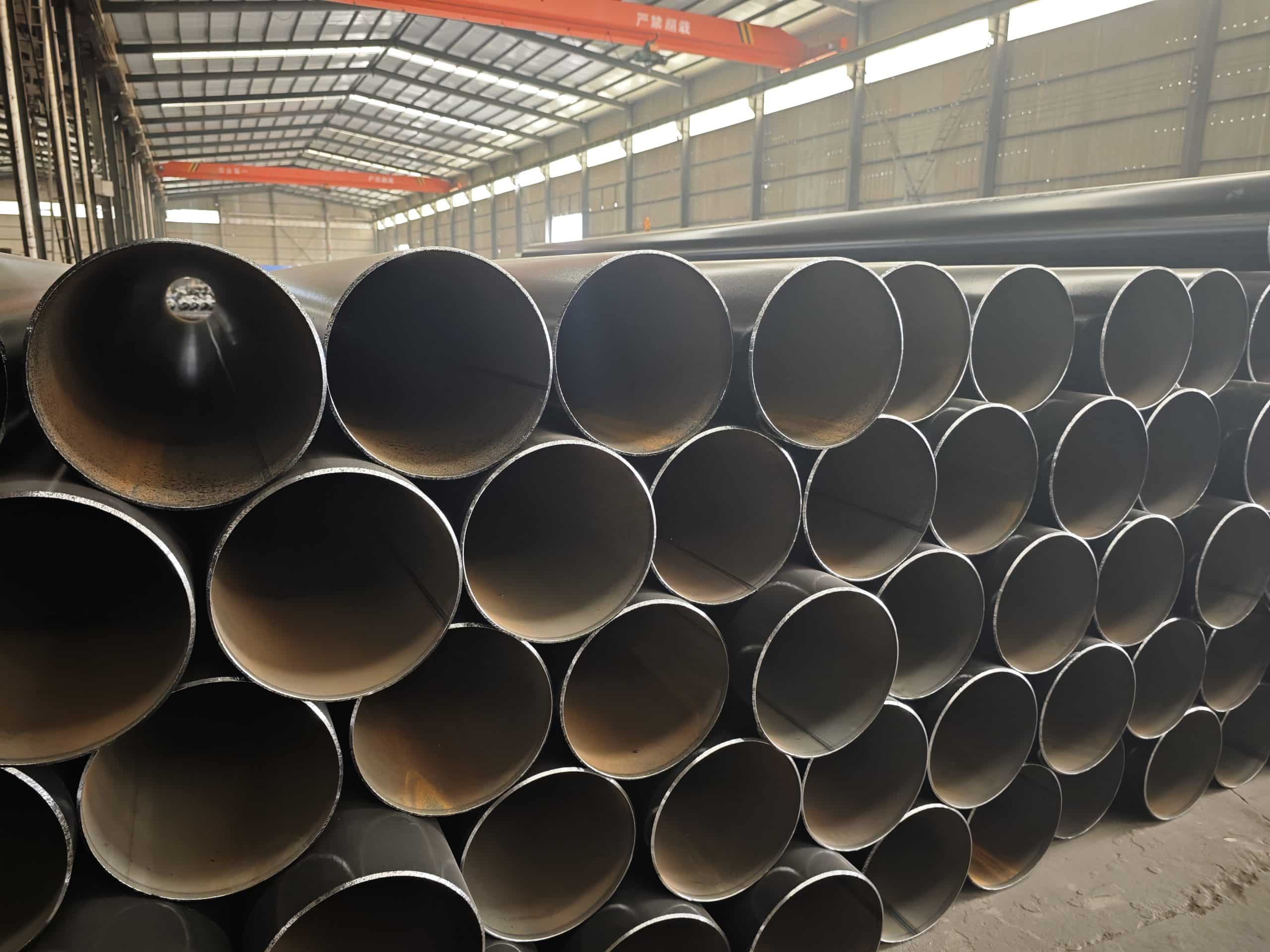
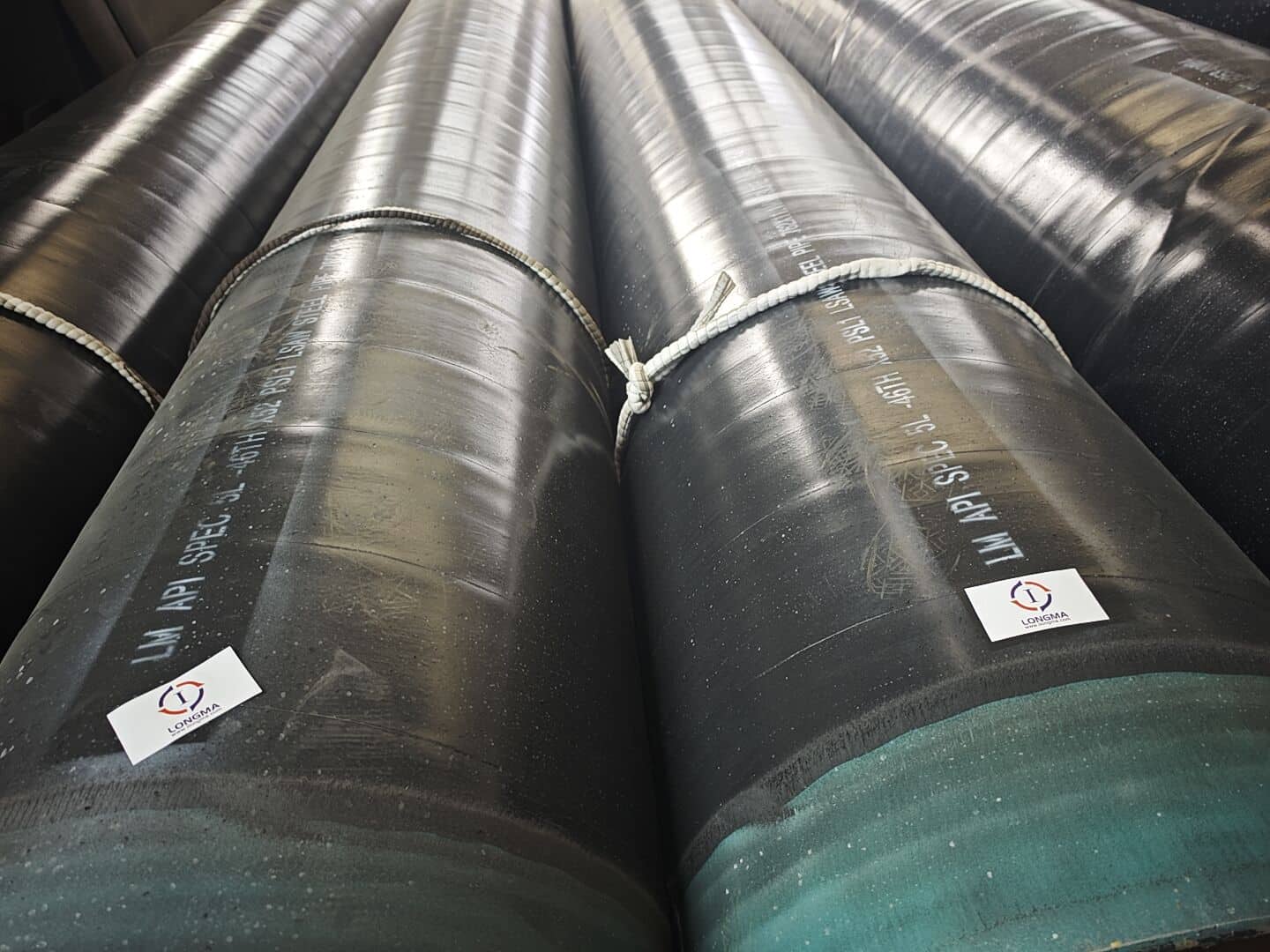
What Do API 5L Pipe Grades Mean?
API 5L grades for line pipe steel define chemical and mechanical limits and minimum yield strength. X42, X52, X56, X60, X65, X70, and X80 follow Grade A and B, with each step improving steel chemistry control.
API 5L, ISO 3183, and Line Pipe Terminology
American Petroleum Institute (2024) specifies API 5L for seamless and welded steel oil, gas, and water pipelines. API 5L and ISO 3183 are aligned in scope, with ISO 3183 being the worldwide standard. Project requirements often specify document editions. Edition and changes should be checked before purchase.
What the Grade Designation Indicates
The number after the “X” in an API 5L pipe grade designation generally denotes the minimum yield strength in kilopounds per square inch (ksi), which is converted to metric units in project documents. Grade B gives 245 MPa, X42 290, X52 360, X60 415, X65 448, and X70 483.
What API 5L Does Not Determine by Itself
Pipeline design goes beyond mill grade.
- API 5L provides material parameters, whereas pipeline design standards like ASME B31.8 or CSA Z662 calculate wall thickness, design factor, and fracture-arrest behaviour for operating pressure and diameter.
- Different criteria apply to valve, fitting, flange, and exterior coating systems like 3LPE or FBE than line pipe.
- API 5L, design code, and owner project parameters determine pipe grades. Grade selection delays technical approval for many feed-gas pipeline packages since it is the final engineering phase.
API 5L Grade Comparison: B, X42, X52, X60, X65, and X70
Before project-specific computations, comparisons of API 5L pipe grades reveal strength, applicability, and trade-off patterns.
Grade and Typical Application Comparison Table
| API 5L grade | Approximate minimum yield strength | Typical selection context | Key consideration |
| Grade B | 245 MPa | Lower-stress gathering or utility sections | Lower strength; may need greater wall thickness |
| X42 | 290 MPa | Moderate-pressure transmission or gathering lines | Wide availability; straightforward field welding |
| X52 | 360 MPa | General gas transmission, including feed-gas lines | Common balance of strength, cost, and weldability |
| X60 | 415 MPa | Higher-pressure, longer-distance pipelines | Needs controlled welding procedure qualification |
| X65 | 448 MPa | High-pressure transmission to processing or LNG plants | More strength with tighter manufacturing controls |
| X70 | 483 MPa | High-pressure, large-diameter transmission | Requires fracture-control and toughness qualification |
This data is for reference only and should not replace API 5L standard tables or compute project wall thickness. Diameter, pressure, and code compliance determine grade.
API 5L Grade B vs X42 Pipe
Grade B and X42 are both strong, but X42 allows higher design stress at the same diameter and pressure, reducing calculated wall thickness. Asian mills supply both, easily welded. X42 suits applications needing a slightly higher pressure rating without X60-level welding or toughness demands.
X42 vs X52, X52 vs X60, and X60 vs X65/X70
Higher grades trade more than strength. Design pressure and diameter drive the first cut: a 24-inch feed-gas line at 70 bar differs from a 42-inch trunk line at 100 bar. Higher grades raise wall thickness needs, steel types, welding consumables, and NACE MR0175 hardness limits under sour service. Total installed cost — steel, welding, inspection, scheduling risk — often decides.
Which API 5L Grades Suit Gas Feeds to LNG Plants?
Initial project planning sometimes confuses feed-gas transmission with cryogenic LNG piping. Bid document material requirements may be wrong.
LNG Feed-Gas Transmission Versus Cryogenic LNG Piping
Feed gas reaches LNG plants at near-ambient temperature, while LNG piping carries cryogenic liquid near -162°C, requiring low-temperature steel or alloys outside API 5L pipe grades. In-plant process piping follows facility specifications. Unless certified, API 5L transmission grades are unsuitable for cryogenic LNG service.
Three Use-Case Scenarios
Three different types of buyers, each with a different way of judging projects, send feed-gas and transmission projects to LONGMA.
| Buyer or user | Typical requirement | Main evaluation criteria |
| EPC contractor | Integrated gas-transmission package for an LNG project | Design code match, welding qualification, MTCs, NDT coverage, delivery schedule, coating |
| Distributor or stockist | Multi-grade inventory for regional pipeline customers | Standard dimensions, basic certification, stock position, batch traceability |
| LNG plant operator | Replacement or expansion feed-gas line | Compatibility with existing pipe, operating history, corrosion allowance, inspection records |
LONGMA’s technical sales department analysed 68 LNG feed-gas pipeline enquiries in 2024 and found that 57% were X60 and X65 line pipe, 24% were X52, 14% were X70, and the rest were Grade B or X42 for low-pressure tie-ins. The majority of feed-gas sections land in the middle of the grade range, according to LONGMA engineers.
Why X60 to X70 Dominate Long-Distance Gas Lines
For a reason that is directly related to the amount of steel used and the cost of installation, higher-strength API 5L pipe grades frequently appear in bids for long-distance transmissions.
Strength-to-Weight Benefits
Increased yield strength permits design stress. This permits thinner pipe walls at similar diameter and pressure. Slimmer walls reduce large-diameter line steel bulk, shipping weight, and junction welding time. It’s not automated. Before writing wall thickness, check pressure design, buckling resistance, corrosion allowance, and installation loads.
When a Lower Grade May Be More Economical
Installation is not always cheaper with X70. The higher grade may not save enough wall thickness to counterbalance stricter welding and inspection restrictions for a short pipeline. Local fabrication crews may have more X52 or X60 experience, lowering work. Due to minimum order quantities and lead times, the mill may choose a lower grade than a custom X70 heat that takes weeks to make.
How LNG Feed Gas Pressure Sets the Pipe Grade
Any pipe specification that can be defended should start with pressure, not grade. Skipping this step is the main reason why grade disputes happen during technical review.
Pressure, Diameter, and Allowable Stress
Wall-thickness formulas in the design code consider design pressure, outside diameter, wall thickness, grade yield strength, design factor, operating temperature, corrosion allowance, and site class when selecting API 5L pipe grades. All cooperate. ASME B31.8, CSA Z662, and EN 1594 characterise this link differently. Before locking in any grade, check the code (ASME, 2023; CSA Group, 2023).
API 5L Grade Selection for High-Pressure Pipelines
Select the maximum operating and design pressure, confirm the outside diameter and routing conditions, select the governing design code, calculate the wall thickness, compare the material’s strength to its temperature derating, examine its fracture-control and decompression behaviour, check the welding and construction capabilities, and verify the grade. Skipping steps usually alters sequencing.
Design-Pressure Pitfalls and Mitigation
| Risk | Potential consequence | Mitigation |
| Selecting grade before finishing design calculations | Overspecified or mismatched pipe order | Finalize pressure, diameter, code, and temperature first |
| Treating yield strength as allowable stress | Unsafe pressure rating | Apply the governing code’s design factor correctly |
| Ignoring transient or surge pressure | Fatigue or integrity problems over time | Include surge, shutdown, and compressor trip scenarios |
| Using transmission pipe for cryogenic LNG duty | Brittle failure risk at low temperature | Specify cryogenic-rated materials and codes separately |
What Wall Thickness Do High-Pressure Gas Lines Need?
In a feed-gas line, wall thickness, not grade alone, does most of the work of keeping pressure in check. That’s why the two must always be specified together.
Factors Used in Wall-Thickness Calculation
Key factors when comparing API 5L pipe grades are design pressure, outside diameter, grade-based allowable stress, design factor, and longitudinal joint factor. Due to temperature, corrosion or erosion tolerance, negative wall thickness, and external loads like bending, dirt, or installation equipment, the final result exceeds the bare pressure calculation.
Grade B, X52, X60, and X70 Wall-Thickness Comparison
Higher grades reduce pressure-based wall thickness, but actual minimums often differ. Mill limits, shipping and handling, installation buckling, river or road crossings, and corrosion management can push thickness above calculated minimums, especially for large-diameter LSAW pipe.
Dimensions, Weight, and Tolerance Verification
The purchase order should include outer diameter, nominal wall thickness, length range, end finish, and threaded, bevelled, or plain ends. Unit weight, total order weight, dimensional tolerances, and project-specific wall designations should be in one document. High-tonnage orders often arrive mismatched due to missing data.
Which Impact Toughness Values Do Cold Climates Require?
Because there isn’t a single number for impact energy that works everywhere, the acceptance criteria and test temperature should be written in the purchase order.
How to Specify the Test Temperature
A detailed specification for API 5L pipe grades lists minimum design, operating, installation, and mill impact test temperatures. Base metal and weld metal acceptance energy, specimen count, retesting, and test report type are also specified.
Mitigation Checklist
Risk is reduced by high-consequence and cold-climate feed-gas percentage best practices. The procurement specification should provide these details.
- When project risk and code warrant it, specify PSL2 and confirm the impact-testing temperature in the purchase order instead of using a mill default that may not satisfy site circumstances.
- Mill test certificates rapidly relate quality questions to heat numbers, batches, and inspections.
- Since warm test lab methods may be simpler in cold areas, verify weld technique qualification and coating systems for actual environment.
Toughness issues remain possible. A Southeast Asian feed-gas engineer noted: “Grade means little if wall thickness and impact-test temperature don’t match the pipeline profile.” Paperwork causes more rejections than metal.
API 5L PSL1 vs PSL2 and Seamless vs Welded Pipe
Early technical reviews of API 5L pipe grades frequently result in confusion between the product specification level and the manufacturing route.
PSL1 Versus PSL2 Pipe Grades
| Feature | PSL1 | PSL2 |
| Quality-control level | Standard requirements | Additional, more controlled requirements |
| Chemical limits | Less restrictive in several areas | More restrictive, depending on grade |
| Mechanical testing | Basic specified requirements | More detailed and controlled testing |
| Impact testing | Not generally required for all products | Typically specified for applicable products |
| NDT and traceability | Project-dependent | More extensive requirements commonly apply |
| Typical use | Lower-risk service where approved | Higher-risk, higher-integrity transmission |
There is more to PSL2 than just a stronger grade with a different letter on it. To meet the higher product specification level, tests and checks must be done on top of the chemistry and strength requirements for the base grade.
Selection Checklist for Manufacturing Route
Consider diameter, wall thickness, longest pipe, and weld seam requirements while choosing a production technique. Also consider NDT coverage and dimensional tolerance. Field welding compliance with the contractor’s processes, mill capacity and production schedule, cost per ton, and logistics determine a feed-gas project’s best strategy.
Supplier Capability and Evaluation for API 5L Procurement
On paper, grade and PSL are only half of the procurement decision. How well the supplier can actually make, test, and document the goods will determine whether that paper holds up during commissioning.
How to Evaluate an API 5L Supplier
Valid API 5L or ISO 3183 compliance, heat-numbered mill certificates, and PSL1 or PSL2 production capacity that matches the order are good API 5L pipe grade evaluation criteria. Seamless, ERW/HFW, and SAW production require matching diameter and wall range. Support this with third-party inspection, hydrostatic, NDT, impact-test, chemical-analysis, and port-specific export packaging documents.
Procurement Factors for International Buyers
Anyone from an EPC contractor to a national oil company to a regional trading house that wants to buy API 5L pipe grades from another country usually asks the same basic questions before placing an order.
| Factor | Questions to document |
| MOQ | Is the minimum order based on tonnes, pieces, diameter, or heat? |
| Lead time | Does it include production, inspection, coating, and shipment? |
| Price basis | Is the quotation EXW, FOB, CFR, CIF, or DAP under Incoterms 2020? |
| Payment | Are terms suitable for project risk and inspection requirements? |
| Documentation | Are MTCs, NDT, hydrotest, packing lists, and certificates included? |
| Inspection | Can the buyer appoint SGS, BV, TÜV, or another independent inspector? |
| Traceability | Can each pipe be linked to a heat, batch, test, and inspection record? |
Stock sizes ship in 7 days from LONGMA. Most sizes ship in 30 days, custom in 45. These delays affect EPC buyers seeking to meet project milestones. Raw material control, heat, batch, and product numbers identify every pipe. That traceability lets any quality issue raised months later be traced back to the original test records.
Compliance, Quality Verification, and Supplier Risks
First review the purchase specification and standard edition. Once the manufacturer and process are approved, confirm chemical and mechanical requirements, check hydrostatic and NDT results, verify MTCs and pipe markings against third-party reports and heat/batch data, then recheck dimensions, bevels, coating, packing, and loading before archiving the dossier.
Conclusion
X52 and X60 are appropriate for many natural gas transmission lines that transport gas to LNG facilities, whereas API 5L Grade B and X42 are good for low-stress usage. X65 and X70 may strengthen high-pressure, long-distance lines for less weight with tighter welding, crack control, and quality inspections. Before choosing API 5L pipe grades, consider pressure, diameter, wall thickness, temperature, design code, fracture-control needs, production route, inspection plan, and supplier capacity.
FAQ
Is seamless API 5L pipe better than welded pipe?
It’s not clear which type is better overall. You should pick seamless, ERW/HFW, or SAW pipe based on its diameter, wall thickness, pressure service, weld requirements, availability, and the needs of the project.
What documents should be requested when purchasing API 5L pipe?
The things you should ask for are mill test certificates, chemical analysis results, mechanical test reports, hydrostatic test records, NDT reports, dimensional inspection results, impact test results (if needed), heat traceability, and third-party inspection paperwork.
Does API 5L pipe comply with EU CE requirements?
As a product standard, API 5L does not automatically make a product CE compliant. Whether the pipe needs CE or another type of conformity documentation depends on what kind of EU equipment it is and what part it plays in the final assembly.
Request a Grade-Specific API 5L Quotation from LONGMA
Choosing the incorrect grade on paper might take weeks to fix on site, and reordering pipe mid-project seldom stays under budget. In the Middle East, South-east Asia, and the Americas, LONGMA produces API 5L pipe grades from Grade B to X80 in ERW, LSAW, PSL1, and PSL2 formats with mill test certification and third-party inspection support for EPC contractors, national oil companies, and regional distributors. Send your diameter, wall thickness, design pressure, and destination to info@ilongma.com, and LONGMA’s engineering desk will get back to you with a grade-matched quote as a line pipe supplier for transmission and feed-gas projects.