- 1. Overview of ASTM A671 and ASTM A672 Standards
- 2. Comparison of Material Sources and Manufacturing Processes
- 3. Performance Comparison of Common Grades
- 4. Non-Destructive Testing (NDT) and Quality Control Requirements
- 5. Analysis of Application Scenario Differences
- 6. Key Risks to Consider When Procuring ASTM A671 Steel Pipes
- 7. LONGMA’s Quality Control and Production Advantages
- 8. Conclusion
In petrochemical, power, natural gas transmission and refinery projects, engineers often encounter two welded steel pipe standards—ASTM A671 and ASTM A672—when selecting pressure pipe materials. The two share certain similarities in manufacturing methods, but there are distinct differences in base material sources, performance requirements and application fields.
For procurement engineers, understanding the core differences between ASTM A671 and A672 not only helps select pipe materials correctly but also effectively reduces project operation risks. This article provides a detailed analysis from multiple perspectives including material sources, manufacturing processes, performance indicators, testing standards and application scenarios, and offers professional material selection suggestions combined with LONGMA’s more than 20 years of production experience.
Overview of ASTM A671 and ASTM A672 Standards
Both ASTM A671 and ASTM A672 are standards for Electric Fusion Welded (EFW) steel pipes, mainly used in industrial piping systems under high pressure or high temperature working conditions. The biggest difference between the two lies in the base material type and applicable pressure rating.
- ASTM A671: Manufactured from pressure vessel steel plates (e.g., ASTM A516), it is mainly used for medium and low temperature pressure pipelines.
- ASTM A672: Manufactured from line pipe steel or structural steel plates, it is typically used in higher pressure and temperature environments.
In industrial projects, engineers usually judge which type of steel pipe is more suitable for specific working conditions based on the technical differences between ASTM A671 and A672.
Comparison of Material Sources and Manufacturing Processes
Both standards adopt the Electric Fusion Welding (EFW) process in terms of manufacturing technology, but the base materials are different, which is also the main source of performance differences.
| Comparison Item | ASTM A671 | ASTM A672 |
| Base Material Source | Pressure vessel steel plates (e.g., ASTM A516) | Line pipe steel or structural steel plates |
| Manufacturing Process | EFW electric fusion welded steel pipe | EFW electric fusion welded steel pipe |
| Common Grades | CC60, CC65 | C60, C65, C70 |
| Heat Treatment Requirement | Post-weld heat treatment is mandatory | Heat treatment is required for most grades |
| Main Applications | Pressure vessels and medium-temperature pipelines | High-pressure transmission and high-temperature pipelines |
In engineering procurement, ASTM A671 pipes are usually used for pressure vessel connecting pipelines, while A672 is more commonly applied in large-scale transmission pipeline systems.
Performance Comparison of Common Grades
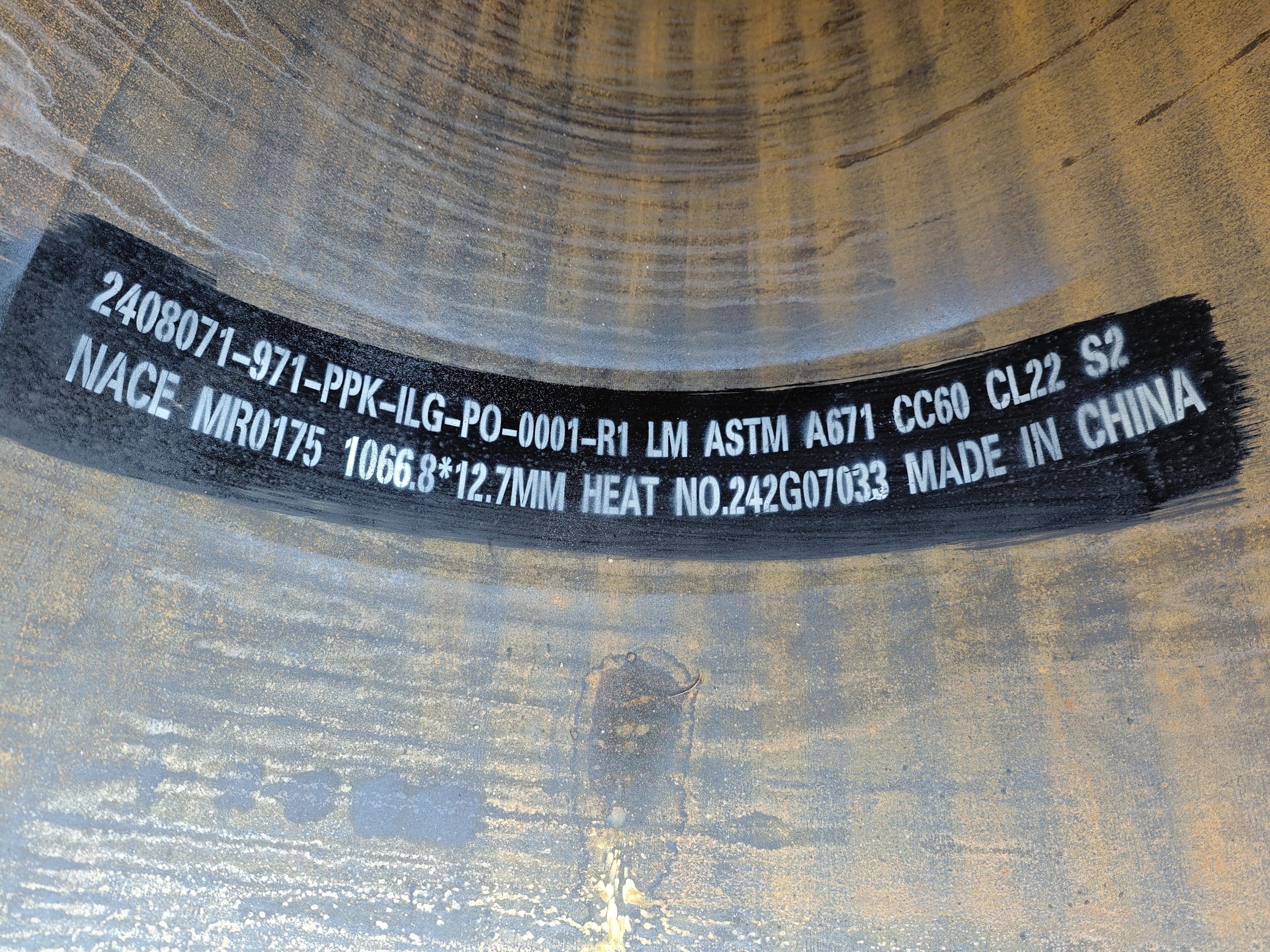
Taking ASTM A671 CC60 Class 22, a common grade in engineering, as an example, this grade is typically used in medium and high pressure pipeline systems. Compared with the equivalent grade of A672, its base material performance is closer to that of pressure vessel steel.
| Performance Indicator | ASTM A671 CC60 Class 22 | ASTM A672 C60 |
| Minimum Yield Strength | ≈240 MPa | ≈240 MPa |
| Minimum Tensile Strength | ≈415–550 MPa | ≈415–550 MPa |
| Post-weld Heat Treatment | Mandatory | Generally required |
| Impact Test | In accordance with Class requirements | In accordance with grade requirements |
Due to its stable weldability and good toughness, ASTM A671 CC60 Class 22 is widely used in pressure pipeline systems of refineries and chemical plants.
Non-Destructive Testing (NDT) and Quality Control Requirements
In industrial pipeline projects, Non-Destructive Testing (NDT) is a crucial step to ensure pipeline safety, and ASTM standards have strict regulations on the testing process.
| Testing Method | Purpose | Relevant Standard |
| RT (Radiographic Testing) | Detect internal weld defects | ASTM A671 Section 8 |
| UT (Ultrasonic Testing) | Detect internal cracks and inclusions | ASTM E213 |
| MT (Magnetic Particle Testing) | Detect surface cracks | ASTM E709 |
| Hydrostatic Test | Verify pressure-bearing capacity | ASTM A671 Section 11 |
In LONGMA’s production system, every batch of ASTM A671 pipes must pass a complete NDT process before delivery to ensure the products meet the requirements of international engineering projects.
Analysis of Application Scenario Differences
Understanding the application differences between ASTM A671 and A672 can help engineers select materials more accurately.
| Application Industry | Recommended Standard |
| Refinery pressure pipelines | ASTM A671 |
| LNG receiving terminal pipelines | ASTM A672 |
| Power plant steam systems | ASTM A672 |
| Pressure vessel connecting pipelines | ASTM A671 |
In actual projects, if pressure vessel-grade materials with stable performance are required, ASTM A671 CC60 Class 22 is often a more reliable choice.
Key Risks to Consider When Procuring ASTM A671 Steel Pipes
Many international engineering projects focus on the following issues when procuring ASTM A671 pipes:
- Whether the base material source complies with the standard
- Whether post-weld heat treatment is performed in accordance with ASTM requirements
- Whether complete NDT test reports are provided
- Whether the manufacturer has supply experience for large-scale projects
These issues are directly related to the long-term safe operation of the pipeline system.
LONGMA’s Quality Control and Production Advantages
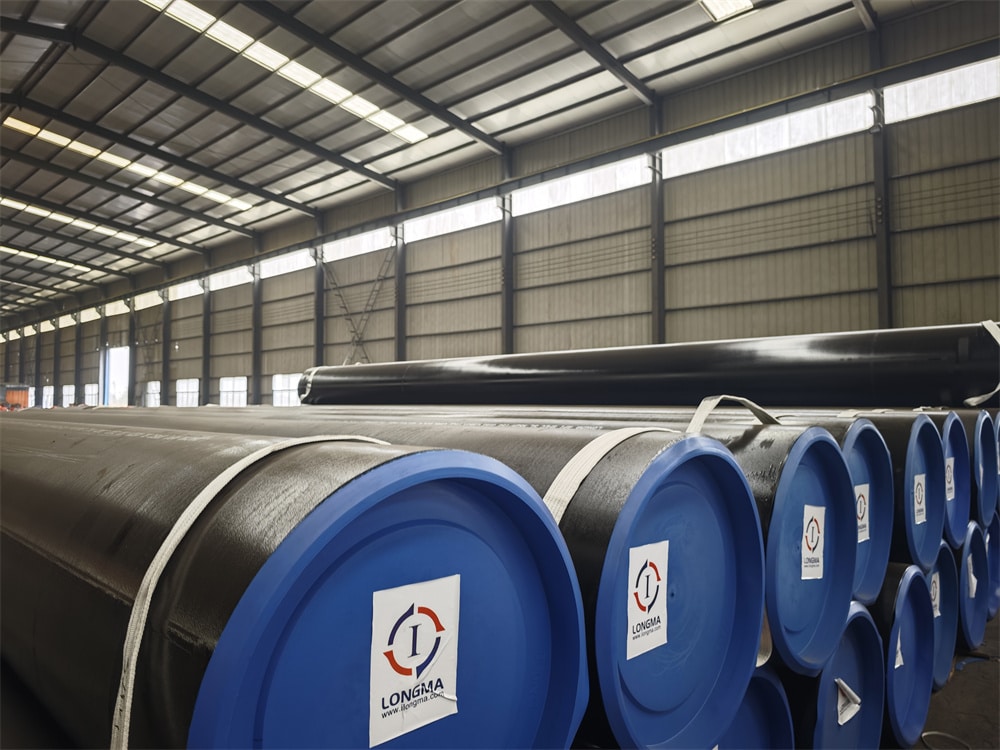
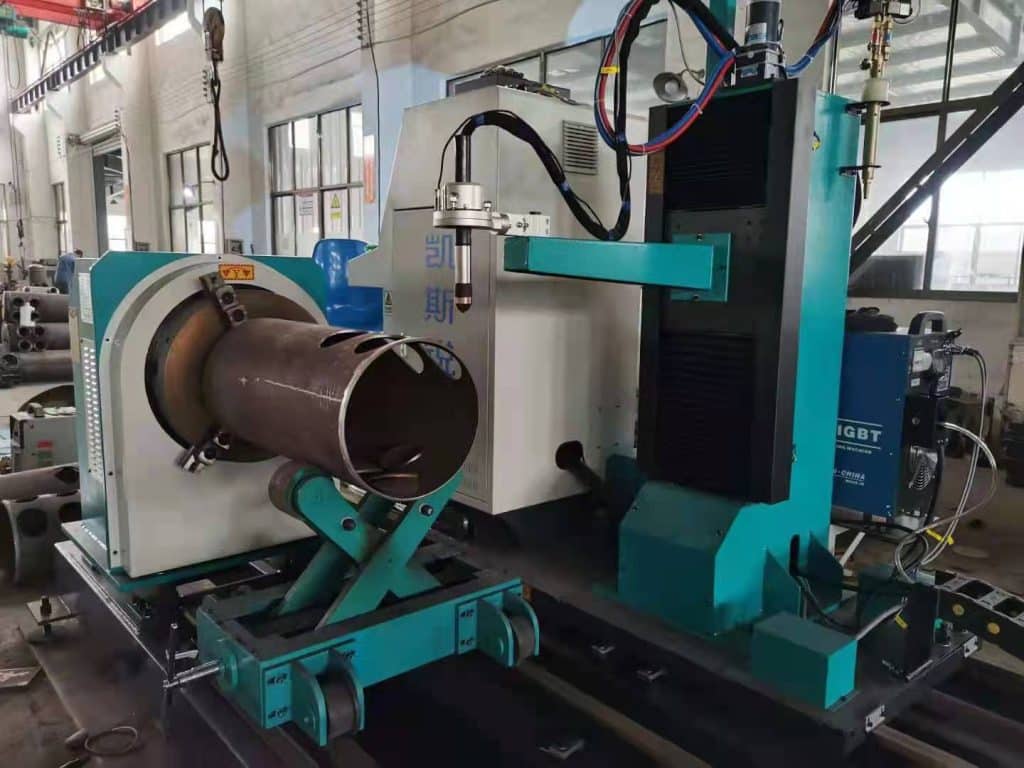
As a steel pipe manufacturer with more than 20 years of experience, LONGMA has established a comprehensive quality control system for the production of ASTM A671 pipes:
- Complete EFW welding production lines
- Automated weld inspection equipment
- Independent internal laboratory
- Material testing capabilities in compliance with international standards
All ASTM A671 CC60 Class 22 products undergo strict mechanical property tests, non-destructive testing and dimensional inspection to ensure each steel pipe meets the requirements of ASTM standards.
Conclusion
From the above analysis, it can be seen that understanding the core differences between ASTM A671 and A672 is of great significance for engineering design and material procurement.
If a project requires pressure vessel-grade materials and stable weldability, ASTM A671 pipes (especially ASTM A671 CC60 Class 22) are often a more suitable choice; while for higher temperature and pressure transmission pipelines, ASTM A672 may be more appropriate.
If you are looking for a reliable supplier of ASTM A671 steel pipes, please contact LONGMA. Relying on more than 20 years of manufacturing experience, advanced production equipment and a strict quality control system, we can provide stable and high-quality steel pipe solutions for engineering projects worldwide.