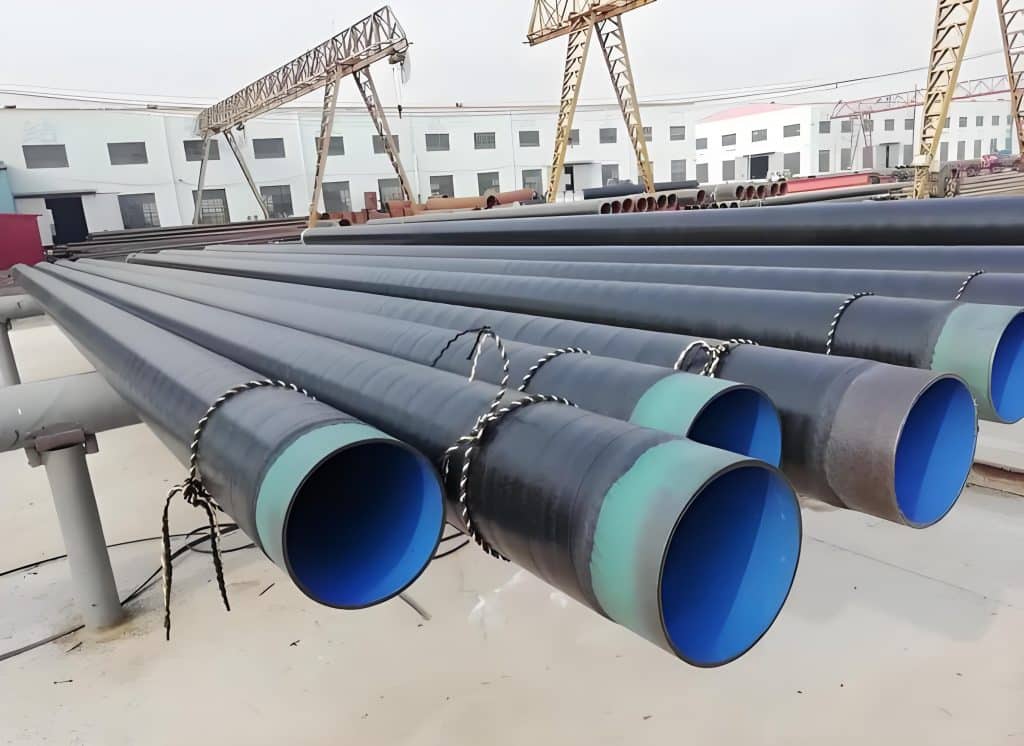
Yes. Fusion-bonded epoxy (FBE) is widely used to protect steel pipes against corrosion in oil and gas transportation, water infrastructure and selected industrial applications. Its suitability depends on the steel substrate, operating temperature, transported medium, installation environment and coating specification. FBE is a coating system rather than a pipe material grade, and it does not increase the steel pipe’s structural strength. This guide explains how it is applied, how to select the relevant standard and what buyers should inspect before accepting coated pipe.
What Is FBE Coated Steel Pipe?
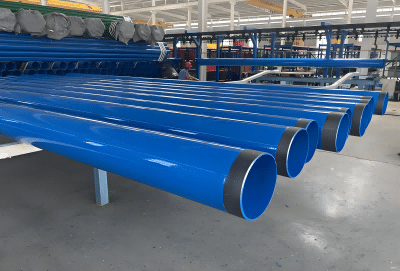
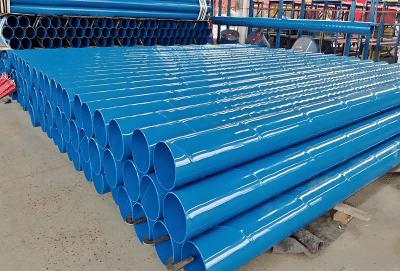
Fusion-bonded epoxy is a thermosetting powder coating applied to a properly prepared and heated steel surface. The powder melts, flows and chemically cures to form an adherent protective film. The correct term is fusion-bonded epoxy, not fiber-bonded epoxy. FBE may be used as an external corrosion-protection coating and, where the formulation and applicable standard permit, as an internal lining. These applications must be evaluated separately because external soil exposure and internal fluid contact impose different demands. FBE does not provide thermal insulation; district heating systems may use additional insulation materials. Although FBE can reduce exposure of steel to corrosive surroundings, coating damage, installation defects and unsuitable service conditions can still permit corrosion. Long-term pipeline protection therefore depends on the full corrosion-control design, not on coating selection alone.
The coating’s barrier function is especially important where steel is exposed to moisture and electrolytes. Nevertheless, an intact film is not proof that a pipeline is fully protected in every environment. The design may also require cathodic protection, suitable field-joint systems and measures against damage during handling. Internal linings need separate consideration because immersion conditions, cleaning methods and transported fluids can differ substantially from external soil exposure.
How the FBE Coating Process Works
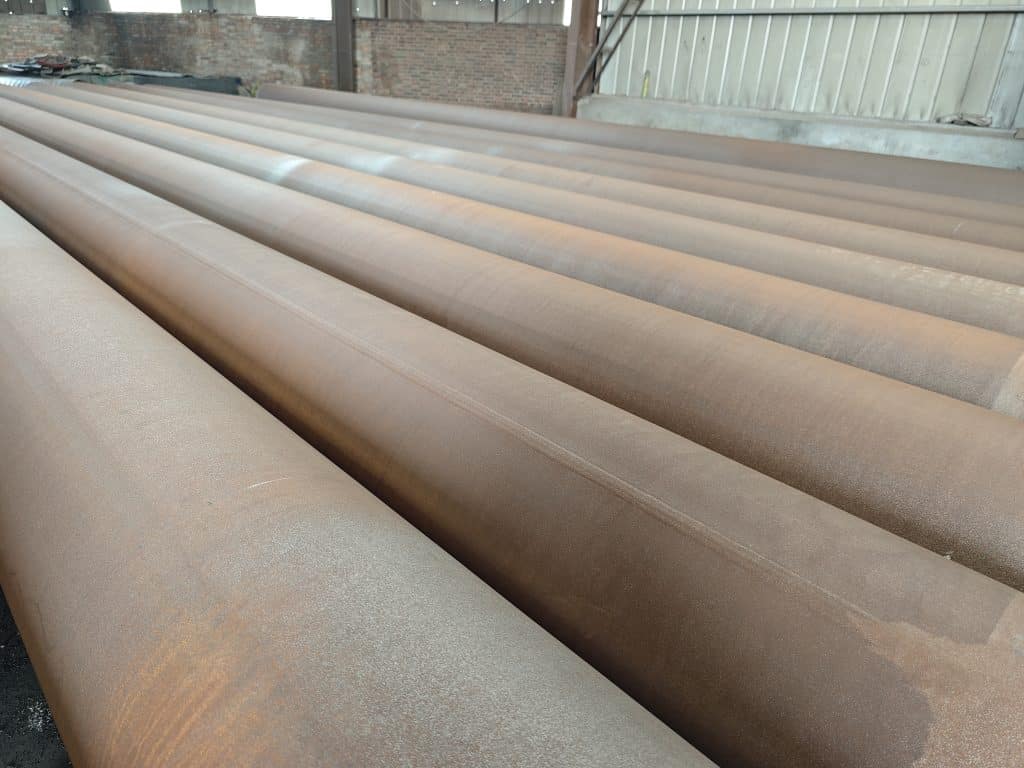
A typical factory coating process begins with inspection and cleaning of the steel pipe. Abrasive blasting removes rust and contaminants and produces the surface cleanliness and anchor profile required by the coating specification. Dust, salts and other surface contamination must be controlled before application. The pipe is then heated within the powder manufacturer’s specified application window. FBE powder is commonly electrostatically applied to the rotating pipe, where it melts and cures. After cooling, the coating is checked for appearance, thickness, discontinuities and other properties required by the order. Handling and transport procedures should protect the finished coating from impact and abrasion. The exact preheat temperature, cure time and film thickness are formulation-specific; a single temperature should not be presented as a universal requirement for all FBE products. Factory coating offers controlled process conditions, while field joints and damaged areas generally require a compatible, qualified repair or field-joint system.
Surface preparation deserves particular attention because the coating relies on a sound interface with the steel. A specified blast-cleaning grade does not by itself confirm that soluble salts, residual dust or the surface profile are acceptable. Inspectors should follow the project procedure for these characteristics. Likewise, heating must be controlled over the entire pipe surface: inadequate temperature can affect fusion, while excessive heating may compromise the coating or the substrate.
Standards for FBE and Other Pipe Coatings
Coating standards should be selected according to the coating type and application. ISO 21809-2 addresses external fusion-bonded epoxy coatings for relevant pipeline applications. CSA Z245.20 also addresses external FBE coatings on steel pipe. AWWA C213 is used for fusion-bonded epoxy coatings and linings for steel water pipe and fittings within its scope. In contrast, ISO 21809-1 addresses three-layer polyolefin coating systems, while DIN 30670 concerns polyethylene coating systems; neither should be cited as the direct specification for a stand-alone FBE coating. API 5L describes line-pipe product requirements, not the complete requirements for a selected external coating. For potable-water service, compliance with a coating performance specification must not be confused with health-effects certification for drinking-water contact. Where applicable, NSF/ANSI/CAN 61 approval should be confirmed for the actual coating system and its intended use. Contract documents should specify the governing edition, coating thickness, application and testing requirements rather than list several unrelated standards as interchangeable.
The distinction between a product standard and a coating standard is essential. API 5L, for example, addresses line-pipe material requirements, whereas the selected coating specification governs application and acceptance of the protective layer. A purchase order may therefore cite both, with separate inspection documentation. Before referencing any standard, verify its edition, intended coating location and whether it applies to a single-layer FBE system, a multilayer system or a water-pipe lining.
Where FBE Coated Pipe Is Used
For buried oil and gas pipelines, FBE is one option for external corrosion protection when supported by the project corrosion-control strategy. It can be used on round ERW or LSAW line pipe after appropriate surface preparation. Water transmission projects may specify FBE external coatings or internal linings, but the selected product must be compatible with the water chemistry and any potable-water requirements. Industrial piping can also benefit from FBE where temperature and chemical exposure fall within the approved formulation limits. For district heating, any external FBE layer must be evaluated alongside insulation and thermal cycling conditions. Existing galvanized, stainless or previously coated surfaces require separate preparation and compatibility assessment; a process designed for bare blast-cleaned carbon steel should not simply be assumed suitable. Coating decisions should consider transport, storage, pipe laying, field welding, backfill conditions and future maintenance.
Application conditions also affect the choice between an external coating and an internal lining. For a buried line, designers consider soil corrosivity, installation method, operating temperature and the overall corrosion-control strategy. For an internal lining, the transported fluid, pressure cycling, cleaning operations and compatibility with the coating formulation matter. Where drinking-water contact is intended, the required health-effects approval should be confirmed separately from general coating-performance requirements.
FBE Versus 3LPE, Liquid Epoxy and Galvanizing
Single-layer FBE provides a relatively thin, adherent protective film but can be vulnerable to mechanical damage during rough handling or installation. Dual-layer FBE systems add a protective functional layer, subject to the selected product’s qualification. Three-layer polyethylene (3LPE) combines an FBE primer, adhesive and outer polyethylene layer; the outer layer can improve mechanical protection, but its temperature limitations and field-joint compatibility must be considered. Liquid epoxy systems use different application and curing methods. It is incorrect to say liquid epoxy cannot cross-link: many liquid epoxy products also cure through chemical reactions. Hot-dip galvanizing protects steel through a zinc coating and is commonly selected for atmospheric exposure, but it is not a direct replacement for every buried-pipeline FBE system. The preferred solution depends on soil conditions, service temperature, handling risks, repair strategy, cost and specified testing. No single coating is universally superior.
Mechanical protection and corrosion protection should not be treated as identical. A thicker outer polyolefin layer can help resist certain handling and backfill loads, but coating performance also depends on adhesion, temperature and field-joint continuity. Liquid epoxy may be practical for qualified repair work or selected linings, provided the formulation and curing conditions are appropriate. Galvanizing is a different metallic protection system and should not be treated as a direct equivalent to FBE for every pipeline.
Quality Control and Procurement Guidance
Before ordering, identify the base-pipe specification, diameter, wall thickness, length, coating standard, nominal and minimum dry-film thickness, coating location and service temperature. Ask for the coating powder technical data sheet, surface preparation records and inspection plan. Inspection may include visual examination, thickness measurement, holiday detection, adhesion and cathodic disbondment testing, as required by the applicable standard and project specification. Test acceptance limits should come from those documents, not from a generic online checklist. Verify that coating repairs and field-joint materials are compatible with the original system. The manufacturer’s traceability system should link the pipe identification and coating batch to the corresponding records. LONGMA produces round ERW and LSAW welded steel pipes and can discuss project-specific coating requirements. Its facility covers 230,000 m², and its annual steel-pipe production exceeds 500,000 tonnes. Confirm coating availability, qualified size range and inspection documentation in the quotation before making a purchase decision.
The inspection and test plan should identify who performs each check, the required frequency, acceptance criteria and the format of the final records. Coating thickness measurements and holiday testing address different possible defects, so one cannot replace the other. Repairs should use an approved compatible system and be reinspected according to the project specification. Packaging, lifting methods and storage arrangements should also protect the finished coating before the pipe reaches the installation site.
FAQ
Can FBE be applied to steel pipe? Yes, provided the substrate, preparation, coating formulation and service conditions are suitable.
Is FBE the same as 3LPE? No. FBE can be used as a single-layer coating or as the primer within a three-layer polyethylene system.
Which standard applies to external FBE? ISO 21809-2 and CSA Z245.20 are examples, subject to project scope and edition.
Can FBE be used for drinking water? A suitable coating system may be used where applicable water-industry requirements and drinking-water contact approvals are met.
What determines coating life? Surface preparation, application quality, coating damage, operating environment and the broader corrosion-control system all matter.