- 1. Why Does FBE Coating Thickness Matter?
- 2. What Is the Typical FBE Coating Thickness for Steel Pipe?
- 3. FBE Coating Thickness Standards: What Engineers Need to Know
- 4. What Factors Determine FBE Coating Thickness?
- 5. How Is FBE Coating Thickness Inspected?
- 6. How Should Engineers Specify FBE Coating Thickness?
- 7. FAQ
- 8. Partner with LONGMA for Superior FBE Coated Pipe Solutions
How well steel pipe will resist rust over time depends a lot on how thick the Fusion Bonded Epoxy (FBE) layer is. FBE coating pipe is used in many places where steel surfaces are exposed to water, dirt, chemicals, or marine conditions. These include underground and underwater pipelines, water utility systems, oil and gas transportation systems, and more. But there isn’t just one type of FBE covering pipe that works for all projects. The thickness needed depends on the coating system, the relevant standard, the use of the pipe, the working conditions, the method of fitting, the temperature, and the project requirements.
This guide talks about the normal FBE coating thickness ranges, the main international standards, the things that affect choosing the thickness, and the checking methods engineers and specifiers should think about when writing a pipeline coating specification.
Why Does FBE Coating Thickness Matter?
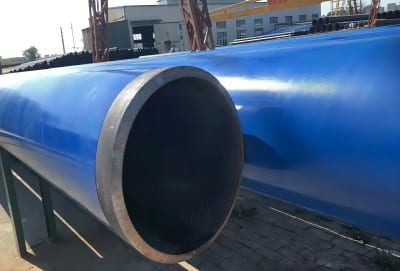
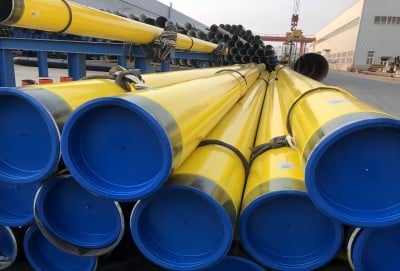
Fusion Bonded Epoxy (FBE) is a thermosetting powder coating applied to properly prepared and heated steel pipe. During application, the epoxy powder melts, moves, and dries to make a continuous protected layer that is tightly attached to the steel base. Coating thickness is an important factor in the effectiveness of this protective barrier. A properly specified and applied FBE coating pipe helps isolate the steel from water, oxygen, salts, and other corrosive agents. Adequate coating thickness can also enhance resistance to mechanical damage during transportation, handling, installation, and backfilling.
However, bigger does not usually mean better. FBE coating success rests on a mix of factors, including coating thickness, surface preparation, bonding, fix, coating continuity, and resistance to cathodic disbondment. Applying a coating beyond the approved application thickness range may increase material costs without offering a corresponding improvement in performance and may, in some cases, negatively affect coating quality.
Therefore, the engineering objective should not be to specify the thickest coating possible but rather to select an appropriate coating thickness based on the applicable standards, the coating manufacturer’s qualified system, the service environment, and the specific requirements of the project.
What Is the Typical FBE Coating Thickness for Steel Pipe?
The suitable FBE coating pipe thickness relies on the coating method and its intended purpose. Single-layer external FBE, dual-layer FBE, internal FBE lining, and FBE used as a primer in 3LPE systems should not be considered interchangeable coating configurations. Each system has different performance needs and should be developed and defined properly.
For many exterior single-layer FBE uses, project requirements usually require a covering thickness in the range of several hundred micrometers. Values of approximately 300–500 μm (12–20 mils) are widely found in engineering practice. However, the stated baseline thickness and minimum allowed thickness may change based on the applicable standard, approved coating system, service conditions, and project needs.
These values should therefore be considered practical reference ranges rather than universal requirements. The final dry film thickness (DFT) should always be established in accordance with the applicable standard, the coating manufacturer’s qualified product system, and the project specification.
Single-Layer FBE
Single-layer FBE is widely used for the external rust protection of underground and underwater steel lines. It is especially famous in oil and gas pipeline uses, where the covering works in combination with cathodic protection as part of the total corrosion-control system.
ISO 21809-2:2026 specifically addresses plant-applied single-layer FBE external coatings for steel pipe used in pipeline transportation systems for the petroleum and natural gas industries. The standard covers requirements related to qualification, coating application, inspection, testing, handling, and storage, rather than prescribing a single universal coating thickness for all applications.
In reality, the project specification generally sets the goal or nominal DFT, together with the minimum allowed thickness and the associated inspection and acceptance standards. The stated thickness should be consistent with the approved coating manufacturer’s application range and the working conditions of the pipeline.
Dual-Layer FBE
Dual-layer FBE systems are used when enhanced resistance to abrasion, impact, or demanding installation conditions is required. The method usually consists of a main FBE layer that offers rust protection and a second FBE layer meant to improve mechanical and wear resistance.
Typical applications may include:
- HDD and other trenchless crossings
- Rocky or highly abrasive soil conditions
- Challenging pipeline installation environments
- Applications involving increased handling or impact risks
- Selected offshore and subsea applications
The total thickness of a dual-layer FBE system should not be found simply by adding a set extra thickness to a single-layer FBE standard. The suitable layer structure, individual layer widths, application parameters, and total DFT should be set based on the approved coating system, manufacturer’s suggestions, relevant standards, and unique project requirements.
Internal FBE Coating
FBE can also be added to the internal surface of steel pipe to provide rust protection and, based on the application, a smooth inner surface for water or process fluids.Internal FBE linings have different design considerations from external pipeline coatings because they are exposed directly to the transported medium rather than to the surrounding soil, groundwater, or seawater. The coating system must therefore be selected with consideration of the chemical characteristics of the fluid, operating temperature, flow conditions, and other service requirements. For uses containing drinkable water, relevant standards for drinking-water touch materials must also be considered.
For steel water pipe and fittings, the AWWA standards list currently names AWWA C213-22, Fusion-Bonded Epoxy coats and Linings for Steel Water Pipe and Fittings, as the appropriate standard for fusion-bonded epoxy coats and linings.
FBE Coating Thickness Standards: What Engineers Need to Know
FBE coating requirements vary between oil and gas pipelines, water infrastructure, Canadian pipeline projects, and multilayer polyethylene coating systems. More importantly, these guidelines should not be understood as simple width charts.
A coating standard may address material qualification, surface preparation, application, inspection, testing, handling, and acceptance criteria in addition to coating thickness.
| Standard | Main Application | Key Consideration |
| ISO 21809-2:2026 | Oil and gas pipeline systems | Plant-applied external single-layer FBE coating for buried or submerged steel pipe |
| CSA Z245.20 | Pipeline systems | Plant-applied external FBE coating for steel pipe |
| AWWA C213-22 | Steel water pipe and fittings | Fusion-bonded epoxy coatings and linings |
| Project specification | Specific pipeline or infrastructure project | May establish detailed thickness, inspection, testing, and acceptance requirements |
| 3LPE/3LPP specifications | Multilayer pipeline coating systems | FBE functions as the corrosion-protective primer rather than the total coating |
What Factors Determine FBE Coating Thickness?
Selecting an appropriate FBE coating pipe thickness requires more than considering pipe diameter alone. Engineers should evaluate the full working and construction surroundings, together with the features of the approved coating system, before finishing the coating specification. In many cases, coating thickness is only one part of the overall coating-system design.
Pipeline Environment
The surrounding surroundings is one of the most important factors in choosing an FBE finishing method. Buried pipelines may be exposed to varying levels of soil corrosivity, groundwater, moisture, chemicals, and temperature. Submerged and offshore pipes may face extra exposure to ocean, marine settings, and other difficult working conditions.
A more harsh climate does not necessarily mean that the answer is simply to increase the FBE cover pipe thickness. Instead, engineers should evaluate the overall corrosion-control system, including coating performance, cathodic protection, operating temperature, environmental exposure, and, where appropriate, the use of additional coating layers or supplementary protection systems.
Installation Method
Installation conditions can have a significant influence on the mechanical requirements of the coating system. Conventional open-cut installation usually subjects the covering to possible damage during shipping, lifting, handling, field joint activities, lowering-in, and backfilling. HDD and other trenchless installation methods can cause greatly higher wear and mechanical loads, especially during return through dirt or other touch surfaces.
For demanding HDD crossings, the project may therefore require an enhanced FBE system, dual-layer FBE, an abrasion-resistant overcoat, or another qualified coating system specifically designed to withstand the anticipated installation conditions. The decision should be based on the real fitting method and the performance displayed by the approved paint system.
Operating Temperature
Operating temperature is an important consideration when selecting both the FBE formulation and the overall coating system. Engineers should not assume that all FBE covering lines have the same temperature capability. The highest service temperature and relevant qualification limits should be checked against the paint manufacturer’s technical data and the project design conditions.
Where the predicted working temperature approaches the upper service limit of the chosen coating system, a specialized FBE mixture, extra quality tests, or an alternative coating system may be needed. Temperature limits should also be considered in combination with other service factors that may affect long-term covering performance.
Cathodic Protection
For many buried and submerged pipelines, FBE coating works in conjunction with cathodic protection as part of the overall corrosion-control strategy.
The coating reduces the area of exposed steel and therefore helps minimize the current demand of the cathodic protection system. At the same time, the coating must maintain adequate adhesion and stability under the electrochemical conditions associated with cathodic protection.
Accordingly, engineers should evaluate cathodic disbondment resistance, coating adhesion, coating continuity, operating environment, and cathodic protection design as an integrated system rather than treating them as independent considerations. A well-designed coating system should provide effective corrosion protection while remaining compatible with the cathodic protection system throughout the intended service life.
How Is FBE Coating Thickness Inspected?
A specified coating thickness is meaningful only when the finished coating is properly inspected and verified. Thickness alone does not demonstrate that an FBE coating will provide reliable long-term corrosion protection; the coating must also be continuous, well bonded, and free from significant defects.
Key FBE Coating Inspection Methods
A typical FBE coating inspection program may include the following methods:
- Dry Film Thickness (DFT): Verifies that the cured coating complies with the specified nominal, minimum, and, where applicable, maximum thickness requirements.
- Holiday Detection: Detects pinholes, voids, and other discontinuities that may expose the steel substrate.
- Adhesion Testing: Evaluates the bond strength between the cured FBE coating and the prepared steel substrate.
- Cathodic Disbondment Testing: Assesses the resistance of the coating to disbondment under conditions associated with cathodic protection.
- Visual Inspection: Identifies surface defects, mechanical damage, contamination, coating irregularities, and other visible imperfections.
The specific test methods, inspection frequency, sampling requirements, and acceptance criteria should be established in accordance with the applicable coating standard, the qualified coating manufacturer’s requirements, and the project specification. Together, these inspections provide a more complete assessment of whether the applied FBE system is capable of delivering the required level of protection in service.
How Should Engineers Specify FBE Coating Thickness?
A well-developed FBE coating specification should define the complete coating system and its performance requirements rather than simply specifying a single coating thickness value.
At a minimum, the project specification should clearly identify the following:
- Applicable standard and edition
- Qualified coating system and FBE product
- Nominal or target dry film thickness (DFT)
- Minimum allowable DFT
- Surface preparation requirements
- Surface profile requirements
- Application and curing requirements
- DFT measurement method and inspection frequency
- Holiday detection requirements
- Adhesion requirements
- Cathodic disbondment requirements, where applicable
- Approved repair materials and repair procedures
- Final inspection and acceptance criteria
For example, a specification that states only:
“FBE coating thickness: 400 μm.”
provides insufficient information for consistent procurement, application, and inspection. A more effective specification would define the target and minimum DFT, applicable standard, qualified coating system, surface preparation and application requirements, inspection and testing procedures, repair requirements, and final acceptance criteria.
This approach provides a clear and consistent basis for procurement, manufacturing, application, and quality control of FBE coating pipe. It also reduces ambiguity during inspection and acceptance, allowing engineers, coating applicators, inspectors, and suppliers to work to the same technical requirements.
Ultimately, the objective is not simply to specify a particular thickness, but to establish a qualified FBE coating system that can provide the required corrosion protection and mechanical performance throughout the intended service life of the pipeline.
FAQ
1. What is the typical FBE coating thickness for steel pipe?
For many external single-layer FBE applications, coating thickness is commonly specified in the several-hundred-micrometer range, with approximately 300–500 μm often encountered in engineering practice. However, the actual requirement should be determined by the applicable standard, coating system, and project specification.
2. Is thicker FBE coating always better?
No. Increasing coating thickness beyond the qualified application range does not automatically improve corrosion protection. Surface preparation, adhesion, curing, coating continuity, and resistance to cathodic disbondment are equally important.
3. What is the latest ISO standard for FBE pipe coating?
The current edition is ISO 21809-2:2026, published in February 2026. It covers plant-applied external single-layer FBE coatings for steel pipe used in oil and gas pipeline transportation systems.
4. What standard covers FBE coating for steel water pipe?
AWWA’s current standards list identifies AWWA C213-22, Fusion-Bonded Epoxy Coatings and Linings for Steel Water Pipe and Fittings, as the relevant standard for this application.
5. What is the difference between FBE thickness and 3LPE coating thickness?
FBE thickness refers only to the epoxy layer. Total 3LPE coating thickness includes the FBE primer, adhesive layer, and polyethylene outer layer.
6. How is FBE coating thickness measured?
The finished dry film thickness is measured using a suitable calibrated coating thickness gauge. Measurement locations, frequency, and acceptance criteria should follow the applicable coating standard and project specification.
Partner with LONGMA for Superior FBE Coated Pipe Solutions
LONGMA brings two decades of specialized manufacturing experience in anti-corrosion steel pipe systems, serving major oil and gas operators including SINOPEC, CNPC, and PTTEP. Our ISO 9001-certified production facilities apply FBE coated pipe with customizable thickness ranging from 300–600 micrometers, in accordance with ISO 21809-2, AWWA C213, and CSA Z245.20 (with 3-layer PE/PP systems built on an FBE primer available to DIN 30670). Every pipe undergoes automated thickness verification at 500mm intervals, with EN 10204 3.1 certification and complete batch traceability ensuring project specifications are consistently achieved.
As a leading FBE coated pipe manufacturer, we maintain extensive stock inventories enabling 7-day delivery for standard configurations and 30–45-day lead times for custom thickness requirements. Our technical team collaborates with procurement managers and corrosion engineers to optimize coating specifications based on soil analysis, operating conditions, and lifecycle cost objectives. Contact info@ilongma.com to discuss your project requirements and request detailed technical documentation supporting informed sourcing decisions.