- 1. What Are API 5L X65 and X70 Pipes?
- 2. How Do X65 and X70 Pipes Meet Long-Distance Transmission Demands?
- 3. What Makes X70 More Efficient Than X65 on Long Routes?
- 4. How Does Higher Grade Cut Pipe Wall and Steel Weight?
- 5. Which Yield and Toughness Tests Prove Line Performance?
- 6. How Does Weldability Change Between X65 and X70?
- 7. How Do Manufacturing Routes Affect API 5L X65 and X70 Performance?
- 8. When Should a Project Choose X65 Over X70?
- 9. How Should Buyers Evaluate an API 5L X65 or X70 Supplier?
- 10. Conclusion
- 11. FAQ
- 12. Ready to Specify API 5L X65 or X70 Pipe for Your Project?
Pipeline buyers from Jeddah to Houston ask the same question: should this line run on API 5L X65 pipe, or step up to X70? Both grades move oil, gas, and water over long distances, but they behave differently on a 220-kilometer gas line or a 1,422 mm trunk line. This guide compares yield strength, wall thickness, weldability, and total installed cost, using mill data and a recent LSAW field case.
What Are API 5L X65 and X70 Pipes?
API 5L Line Pipe Specification and Product Scope
API 5L is one set of rules for steel pipe that moves oil, gas, and other pipeline fluids between production areas, processing plants, and distribution points. The American Petroleum Institute issued it in 2024. When ordering API 5L pipe, you can choose the grade (B through X80), product specification level (PSL1 or PSL2), manufacturing method (seamless, ERW, LSAW, or SSAW), and end finish. If the pipe will be used in sour, remote, or high-temperature situations, it must meet more standards than API 5L alone.
API 5L X65 and X70 at a Glance
It’s easy to see where each grade fits in the table below.
| Criterion | API 5L X65 | API 5L X70 |
| Strength level | High-strength line pipe | Higher-strength line pipe |
| Typical project value | Balanced cost and fabrication ease | Weight and throughput optimization |
| Welding consideration | Familiar to most fabrication crews | Needs tighter procedure control |
| Common use | Gas, oil, gathering, water lines | Long-distance, high-volume transmission |
| Selection basis | Qualification speed, supply reliability | Lifecycle steel savings |
This comparison of API 5L X65 pipe is only a starting point. It’s not meant to take the place of a technical review of your project.
How Do X65 and X70 Pipes Meet Long-Distance Transmission Demands?
Pressure, Flow, and Transmission Distance Requirements
Size, grade, and wall thickness together indicate how much pressure a pipe segment can handle. At constant pressure, a higher grade can allow a thinner wall or maintain the same wall as pressure rises. Allowable stress comes from dividing minimum yield strength by a certain factor, then adjusting for location class, temperature, and joint factor. Each standard has its own design rules, so design teams in Saudi Arabia, Thailand, or Argentina should check whether ASME B31.4, ASME B31.8, or CSA Z662 applies (ASME, 2023; CSA Group, 2023).
Three Long-Distance Pipeline Use Cases
Across the regions LONGMA supplies, pipeline teams use X65 and X70 in various ways based on the type of fluid, the pressure, and the length of the route:
- Natural gas transmission lines in Qatar and Oman that carry natural gas are under a lot of pressure for long stretches of time. It is very important to control cracks and make sure the welds are good in high-pressure gas lines because breaks move quickly and far before they vent down. Checking the girth weld and making sure it is tough are must-haves.
- Crude oil trunk lines in Kazakhstan and Iraq have had to deal with water loss, CO₂, and sometimes H₂S in the stream. A wall’s thickness is determined by things like its grade, how well it will protect against corrosion, the number of pump stations, and how far apart they are.
- Offshore and remote onshore routes in Southeast Asia add to the variety of ways to move things and set them up. It has to be strong at low temperatures on the seabed, hard to check after it’s been laid, and rely on third-party verification during construction. These are all higher standards than a normal gathering line on land.
What Makes X70 More Efficient Than X65 on Long Routes?
Strength and Design Efficiency Compared
Scientists can make walls thinner with API 5L X65 pipe compared with X70 because of its higher specified yield strength, keeping design pressure the same within code limits. But before corrosion begins, wall thickness can only be reduced so far, limited by diameter, temperature, crack-growth resistance, and corrosion allowance. Raising the grade without a full design review may simply swap one risk for another: what works well for pressure ratings may not work as well for buckling or dent resistance under rough conditions.
Total Installed Cost Comparison
It’s not all about the price per ton. The table below shows how each grade usually does on a full project budget.
| Cost Factor | X65 Consideration | X70 Consideration |
| Pipe purchase price | Broader mill availability | May carry a grade premium |
| Steel quantity | Often higher wall and weight | Often lower wall and weight |
| Welding | Simpler qualification path | Tighter procedure qualification |
| Inspection | Based on PSL and project specs | Might need more checks |
| Logistics | More tonnes can raise freight cost | Lower mass can cut transport cost |
| Lifecycle value | Great for regular projects | Even better for long, busy routes |
How Does Higher Grade Cut Pipe Wall and Steel Weight?
Wall Thickness Calculation Inputs
Wall thickness for API 5L X65 pipe or X70 pipe is not a lookup table but a formula. Inputs include design pressure, maximum operating pressure, outside diameter, design factor, location class, temperature derating, seam factor, corrosion or erosion allowance, and external loads from bending, buckling, or installation stress. Change just one input and the required wall thickness changes too. That is why two projects with the same diameter and grade may need different wall thicknesses.
API 5L X65 Pipe Wall Thickness and Weight Chart
The next picture shows how the outside width and wall thickness work together to figure out how much weight can be expected. The numbers given are just examples. To get the real production numbers, you should always look at the most recent data sheet from the mill.
| Outside Diameter | Nominal Wall Thickness | Theoretical Weight (kg/m) | Grade | Manufacturing Route |
| 24″ (610 mm) | 12.7 mm | 187 | X65 | LSAW |
| 36″ (914 mm) | 15.9 mm | 350 | X65 | LSAW |
| 42″ (1067mm) | 17.5 mm | 450 | X65 | LSAW |
| 42″ (1067mm) | 15.1 mm | 390 | X70 | LSAW |
| 8″ (219 mm) | 8.2 mm | 42 | X65 | ERW |
Steel has a density of about 7,850 kg/m³ and an outside diameter of about the same size. These are used to figure out the theoretical weight, which is then changed to account for mill tolerance and any coating weight that is added later.
Which Yield and Toughness Tests Prove Line Performance?
Mechanical and Toughness Testing
Each batch of API 5L X65 pipe that is made should have tensile test results for yield strength, tensile strength, and elongation, as well as Charpy V-notch impact results at the right test temperature. Welded pipe also needs to be bent to check the seam, and PSL2 orders usually need to be hardness tested and, for extra service, metallographically examined.
Mill Test Certificate and Traceability Checklist
A complete MTC package should have no holes and allow you to trace a completed pipe’s steel heat. Check the certificate package for these before accepting a shipment:
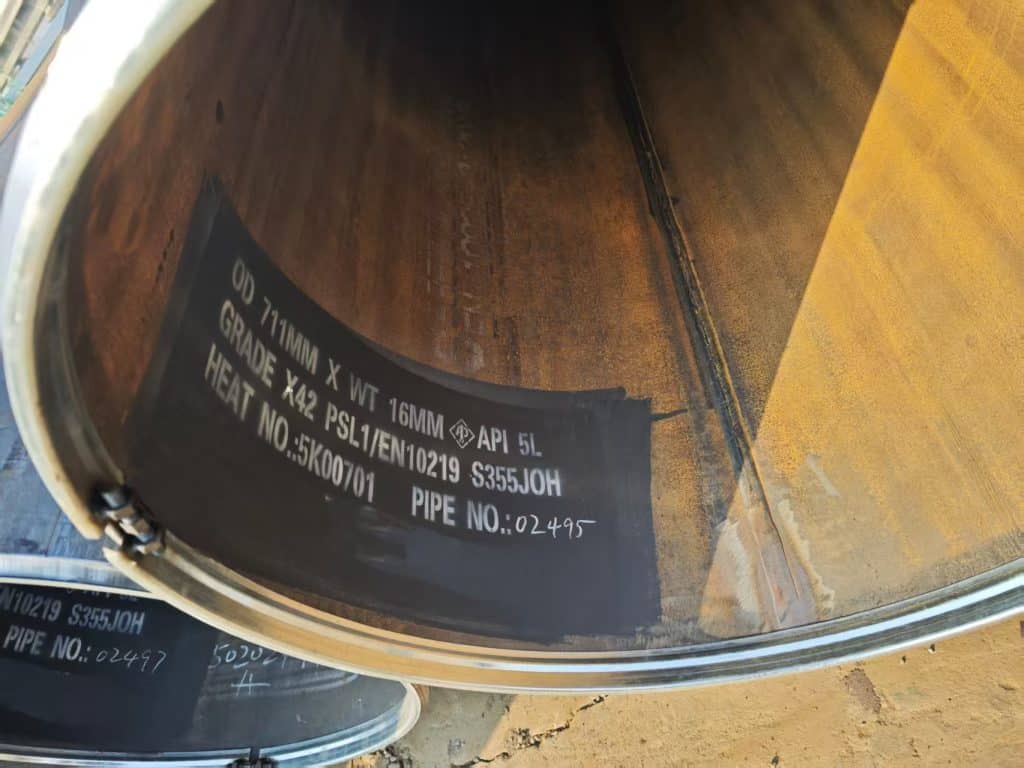
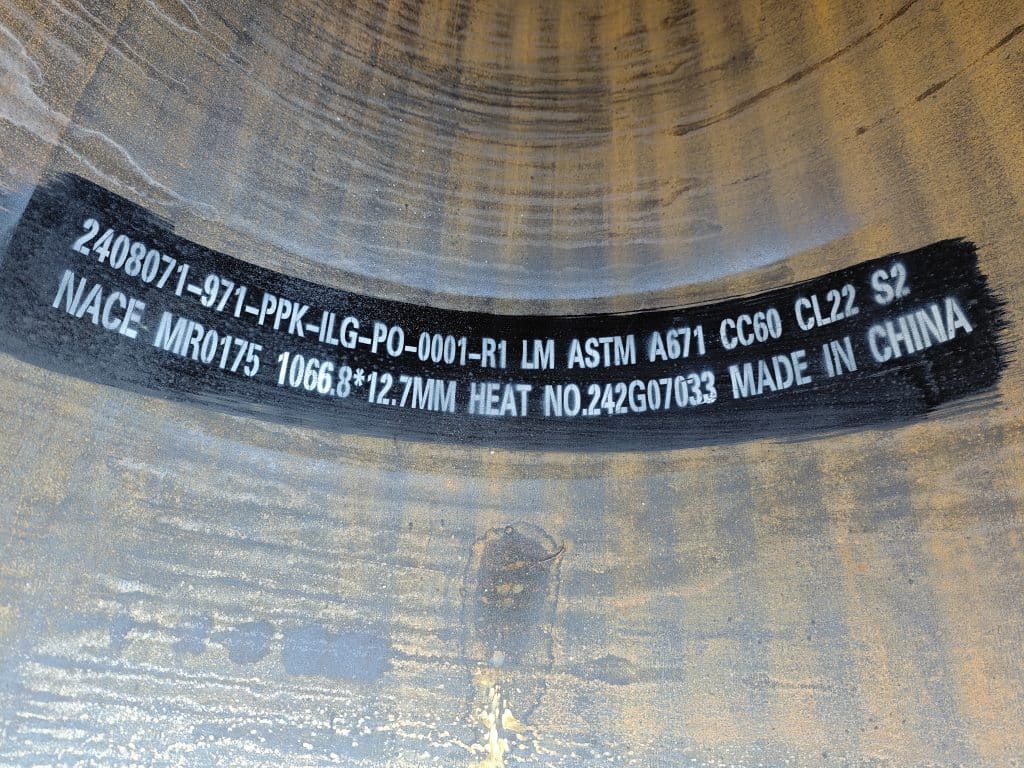
- Match the purchase order grade, PSL, heat number, manufacturing batch, chemical make-up, and comprehensive mechanical test findings to ensure that what was bought and tested matches.
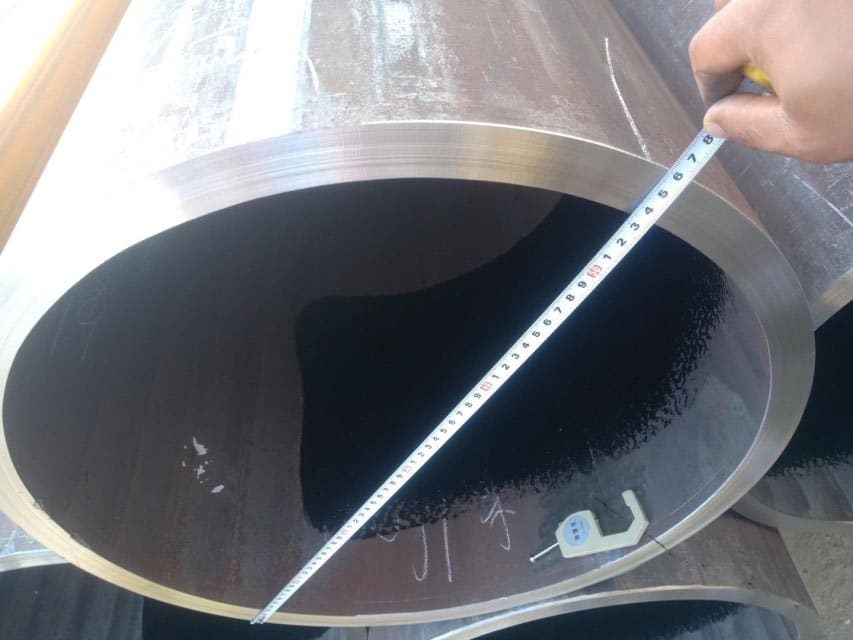
- Please verify the hydrostatic and nondestructive tests for the pipe body and weld seam. Please record the lot’s outer diameter, wall thickness, length, and weight.
- The API 5L grade and PSL title, inspection release note, nonconformance records, and SGS, BV, or Intertek inspection certificate, if required by the contract.
All three requirements must be satisfied for a shipment to be detained at the destination port for review.
How Does Weldability Change Between X65 and X70?
Chemical Composition and Carbon Equivalent
The carbon equivalent of API 5L X65 pipe, which is made up of carbon, manganese, and other alloying elements, determines how it will weld. A lower carbon equivalent usually means easier welding with less preheat and a lower risk of cracking. For example, X70’s strength comes from controlled thermomechanical rolling and small additions of niobium, vanadium, or titanium, not from its raw carbon content. This means that its carbon equivalent stays in a workable range even though it has a higher strength class (API, 2024).
Welding Risk Mitigation for X65 and X70
Crews may reduce welds on both grades by following a few rules. Crews that don’t follow them repeat a lot of labour.
- Ensure the welder is qualified for the grade, wall thickness, and process combination. These credentials should go beyond a certificate.
- Every joint needs measured preheating and interpass temperature tracking. To avoid hydrogen pickup, which cracks high-strength girth welds over time, store your supplies in regulated dry storage.
- Use phased-array ultrasonic testing or radiography to ensure project-specific welding. Set explicit repair boundaries and find the reason of any recurring defect pattern before it expands along the path.
How Do Manufacturing Routes Affect API 5L X65 and X70 Performance?
Seamless vs ERW API 5L X65 Pipe
When you order ERW API 5L X65 pipe, you should be very careful about the seam inspection and heat-treatment control. Seamless pipe doesn’t have a longitudinal weld seam, but it comes in smaller sizes and has tighter tolerances at larger diameters. ERW pipe is made from hot-rolled steel coil and has strong dimensional accuracy, consistent weld quality, and high production efficiency. This makes it cost-effective for small to medium-diameter pipeline systems.
LSAW vs SSAW for X65 and X70 Pipe
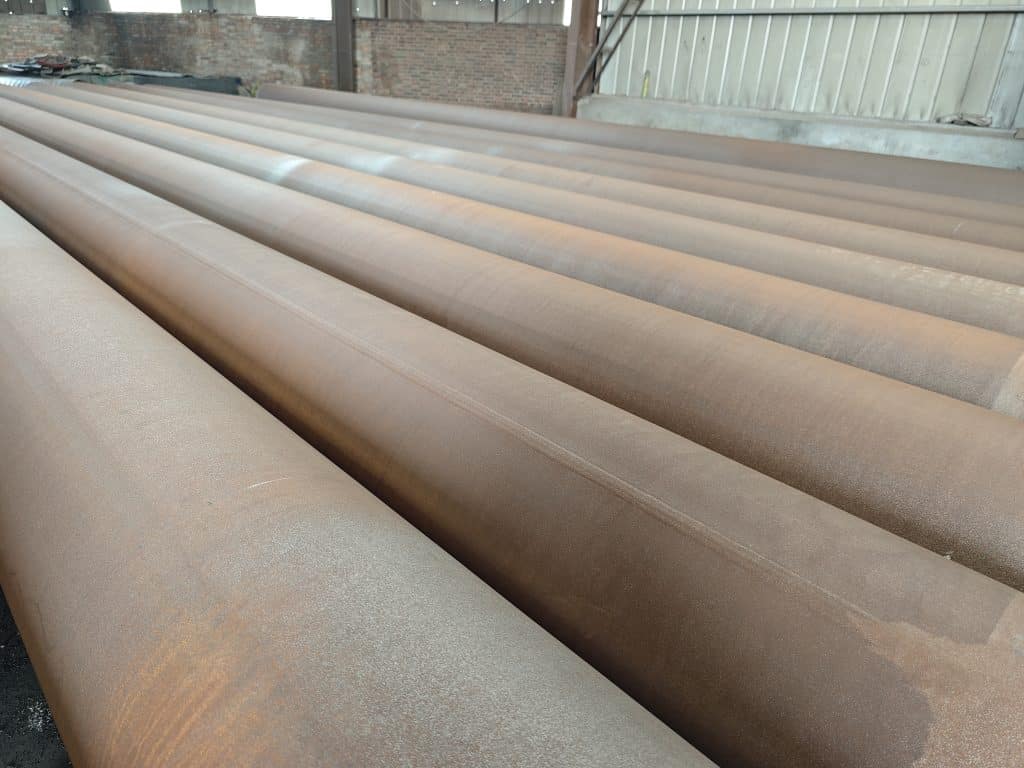
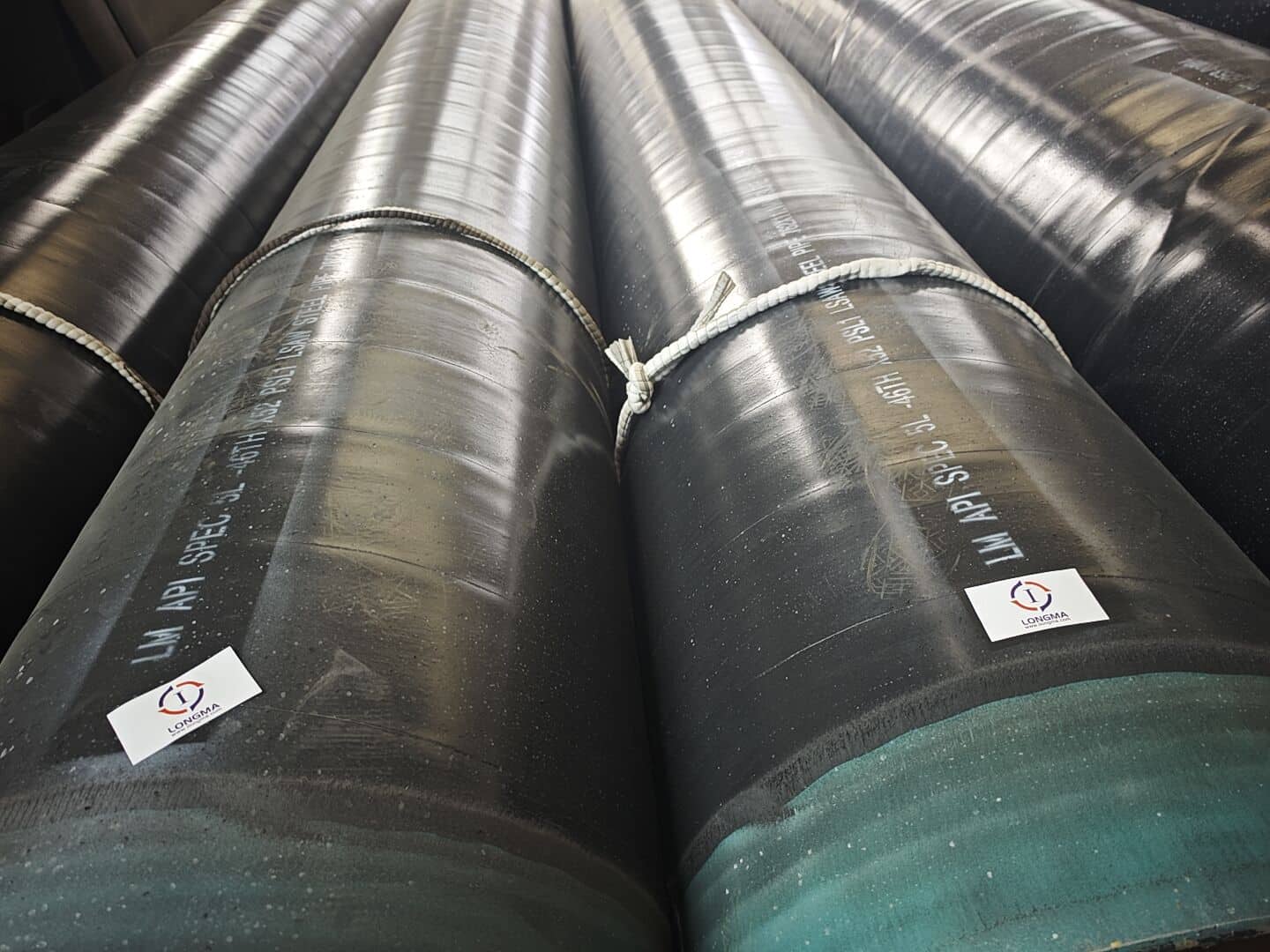
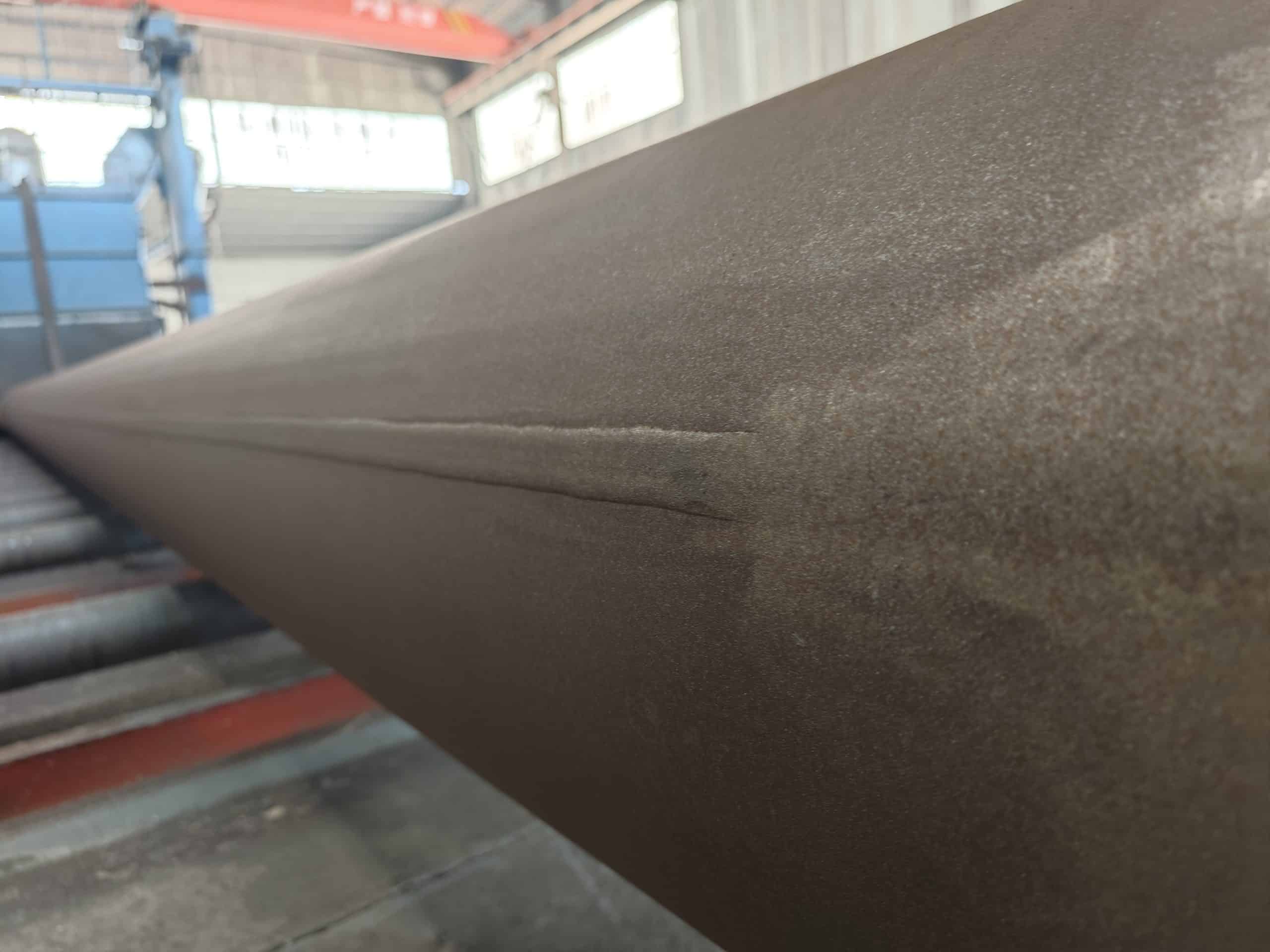
LSAW pipe is formed from heavy steel plate using JCOE or UOE processes, giving it strength and pressure resistance suited to large-diameter, long-distance applications. SSAW (spiral seam) pipe offers flexible production at large diameters but faces more variable acceptance across different purchaser specifications.
| Manufacturing Route | Typical Advantage | Key Verification Point |
| Seamless | No longitudinal weld seam | Dimensional and process capability |
| ERW | Efficient production, tight tolerance | Seam quality, heat-treatment control |
| LSAW | Large diameter, heavy wall capability | Longitudinal weld inspection |
| SSAW | Large diameter, flexible production | Helical weld quality, project acceptance |
Matching Pipe Form to the Project
If you want to use SSAW on main transmission lines, for example, some project owners won’t let you, even though tests show that it works. Before you lock in a route, you should make sure that the mill can handle the pipe length, prepare the ends, and make sure that the coating will work. If you change routes in the middle of a project, you usually have to start over with welding and inspection.
When Should a Project Choose X65 Over X70?
Choose X65 When Fabrication and Supply Certainty Lead
When the design doesn’t need the extra strength of X70, when existing welding procedures and crews are qualified for API 5L X65 pipe, and when project supply chains show that X65 is easier to get, it’s usually better to get the material quickly and know for sure that it is qualified than to add the last few millimeters of wall thickness.
Decision Checklist for Engineers and Procurement Teams
Review this short list with your technical and buying teams before sending the final purchase order. Fixing a gap here is cheaper than making one.
- Know the API 5L grade, PSL, edition, product type, diameter, wall thickness, length, end preparation, and tolerance. These should reflect the owner’s technical specs, not a retailer description.
- Consider the design pressure, temperature, corrosion limit, and design code. Write down any unique demands such sour service, offshore, fracture control, or low temperature that require testing and chemistry beyond API 5L.
- Compare the overall installed cost, not simply the price per ton, of different kinds and methods. Every package should include mill test certificates, traceability records, NDT reports, and hydrostatic findings before being compared to the purchasing order.
How Should Buyers Evaluate an API 5L X65 or X70 Supplier?
Supplier Qualification Criteria
Before you look at prices for API 5L X65 pipe, find out more about the mill. Make sure it has current API certification or licensed API Monogram status, depending on what the project needs. It should also have API Q1 quality management evidence or an equivalent approved system. You should also look at the mill’s production history on the exact grade, wall thickness, and manufacturing route you need, as well as references from projects that are similar.
Procurement, Logistics, and Commercial Checklist
Ask for more than just a unit price to get a useful quote. You should also ask about the minimum order quantity, whether the product is in stock or made to order, and the payment terms, such as FOB, CFR, or CIF. It is also helpful to ask about the warranty and claims process, since this information usually comes up after the fact and not before the order is placed.
Inside LONGMA’s X65/X70 Production Capability
Since 2003, LONGMA has made ERW and LSAW steel pipe in a 230,000-square-meter, 176 million RMB plant producing 500,000 tons yearly, with 60-plus senior staff supporting API 5L X65 and X70 pipe in PSL1 and PSL2, diameters 4 to 72 inches and wall thickness 4mm to 100mm. EN 10204 3.1/3.2 certification and SGS, BV, or Intertek inspection support ensure full traceability from heat number to finished product. Stock sizes ship in 7 days, common sizes in 30, and special orders in 45. LONGMA supports source inspection and has delivered to SINOPEC, CNPC, PEMEX, PDVSA, and PTTEP.
Conclusion
API 5L X65 pipe and X70 pipe can both support long pipelines if they are designed, manufactured, welded, inspected, and kept from rusting properly. Choose X70 when a verified design review shows real wall-thickness and steel-weight savings that justify tighter welding and qualification controls. Choose X65 when supply certainty, fabrication simplicity, and crew familiarity carry more value for your schedule and budget. Either way, the specification package — grade, PSL, dimensions, design code, and test requirements — needs to be locked down before a single tonne of steel gets ordered.
FAQ
What is API 5L X65 pipe?
The specific chemical, mechanical, structural, and testing needs of API 5L X65 pipe depend on the API 5L edition, PSL, product type, and project criteria. API 5L X65 pipe is a high-strength line pipe that is mostly used for moving oil, gas, and fluids.
What is the difference between API 5L X65 and X70?
Because X70 has a higher specified minimum yield strength than X65, it is safe to use lighter steel or walls that are thinner. However, there often needs to be tighter welding, fracture-control, and procedure qualification controls in place to make those savings.
Is API 5L X65 suitable for sour service?
Only because API 5L X65 meets base API 5L doesn’t mean it’s good for service right away. The buyer needs to set and check the NACE MR0175/ISO 15156 standards, hardness limits, HIC or SSC tests, and the real weather conditions that will be used.
Ready to Specify API 5L X65 or X70 Pipe for Your Project?
If you’re preparing an RFQ and need a direct quote on API 5L X65 pipe or X70 pipe in ERW, LSAW, PSL1, or PSL2, LONGMA’s engineering team can turn around technical and commercial terms within one business day. LONGMA ships as a factory-direct API 5L X65 pipe supplier, backed by full mill traceability and third-party inspection support for EPC contractors, national oil companies, and distributors alike. Email your specification sheet to info@ilongma.com, and confirm grade, dimensions, and lead time together before your next project milestone arrives.