- 1. What Is ISO 3183?
- 2. ISO 3183 Line Pipe Manufacturing Process
- 3. Why Is the Difference Between PSL1 and PSL2 So Important?
- 4. Key Testing Requirements for ISO 3183 Line Pipe
- 5. LONGMA’s In-House Laboratory: Quality Control Beyond Certification
- 6. How to Select a Reliable ISO 3183 Line Pipe Manufacturer
- 7. Frequently Asked Questions (FAQ)
- 8. Why Do Global Buyers Choose LONGMA?
As global investment in oil & gas transmission, hydrogen transportation, LNG terminals, and long-distance water pipeline projects continues to grow, ISO 3183 line pipe has become one of the most widely adopted international standards for pipeline steel. Today, EPC contractors, pipeline operators, and global distributors are no longer focused solely on steel grades or pricing—they pay closer attention to manufacturing quality, testing capability, traceability, and long-term operational reliability.
ISO 3183:2019, Petroleum and Natural Gas Industries — Steel Pipe for Pipeline Transportation Systems, specifies technical requirements for seamless and welded steel pipes, including ERW, HFW, and LSAW pipes. The standard classifies products into PSL1 (Product Specification Level 1) and PSL2 (Product Specification Level 2), with PSL2 imposing stricter requirements on chemical composition, impact toughness, nondestructive testing, and quality traceability. The standard is also technically harmonized with API Spec 5L, making it the preferred specification for many international pipeline projects.
With more than 20 years of manufacturing experience, LONGMA specializes in ERW and LSAW steel pipes for energy infrastructure projects worldwide. This article explains the critical manufacturing processes, inspection methods, and procurement considerations required by ISO 3183, helping buyers select reliable suppliers and reduce project risks.
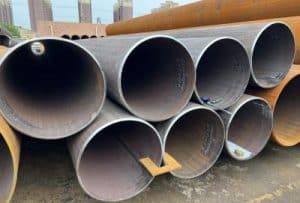
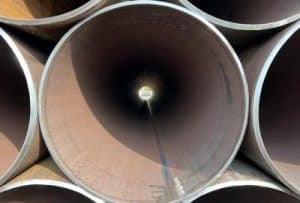
What Is ISO 3183?
ISO 3183 is an international product standard specifically developed for steel pipes used in petroleum and natural gas pipeline transportation systems.
It is widely applied in:
- Oil transmission pipelines
- Natural gas pipeline systems
- LNG receiving terminals
- Offshore pipelines
- Long-distance water transmission projects
- Hydrogen transportation systems (subject to project specifications)
Unlike a simple material specification, ISO 3183 establishes comprehensive requirements covering:
- Raw material qualification
- Manufacturing processes
- Chemical composition
- Mechanical properties
- Product Specification Levels (PSL1 & PSL2)
- Nondestructive testing (NDT)
- Hydrostatic testing
- Dimensional tolerances
- Pipe marking and traceability
For international pipeline projects, ISO 3183 represents a complete quality assurance framework rather than merely a steel grade specification.
ISO 3183 Line Pipe Manufacturing Process
High-quality pipeline steel depends on strict process control throughout production.
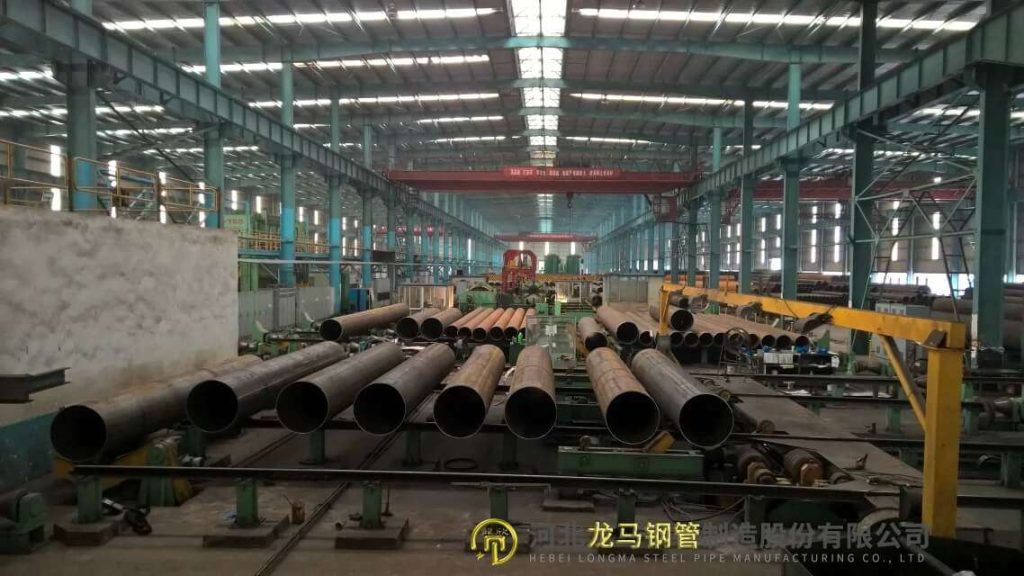
LONGMA’s manufacturing process includes:
| Manufacturing Stage | Quality Control Focus | Impact on Product Quality |
| Raw Material Inspection | Heat number, chemical composition, MTC verification | Ensures correct steel grade |
| Plate Edge Milling | Bevel dimensions and edge quality | Improves weld consistency |
| JCOE/UOE Forming | Roundness and outside diameter control | Ensures dimensional accuracy |
| LSAW Welding | Heat input and weld bead profile | Determines weld strength |
| Weld Heat Treatment (ERW) | Stress relief | Improves weld toughness |
| Pipe Expansion (LSAW) | Roundness and residual stress control | Improves installation accuracy |
| Online UT Inspection | Continuous weld monitoring | Detects manufacturing defects early |
| Hydrostatic Testing | Pressure integrity verification | Ensures leak-tight performance |
| Final Inspection | Dimensions, appearance, marking | Confirms compliance with specifications |
Every manufacturing stage is documented to provide complete traceability from steel plate to finished pipe.
Why Is the Difference Between PSL1 and PSL2 So Important?
One of the most frequently searched topics related to ISO 3183 is the difference between PSL1 and PSL2.
| Comparison | PSL1 | PSL2 |
| Chemical Composition | Standard requirements | Stricter carbon equivalent control |
| Mechanical Properties | Basic requirements | Tighter consistency requirements |
| Charpy Impact Test | Usually optional | Required for most grades |
| NDT Requirements | Contract dependent | More comprehensive inspection |
| Traceability | Basic documentation | Full production traceability |
| Typical Applications | Water transmission | Natural gas, high-pressure pipelines |
For natural gas transmission and critical energy infrastructure, ISO 3183 PSL2 Steel Pipe has become the industry standard because of its higher quality assurance requirements.
Key Testing Requirements for ISO 3183 Line Pipe
Inspection is one of the most critical aspects of ISO 3183 compliance.
LONGMA’s in-house laboratory performs the following tests:
| Inspection Method | Purpose | Applicable Standard |
| Chemical Analysis | Verify steel grade | ISO 3183 |
| Tensile Test | Verify yield, tensile strength, and elongation | ASTM A370 |
| Charpy Impact Test | Verify low-temperature toughness | ISO 148-1 / Project Specification |
| Hardness Test | Monitor weld and HAZ properties | Project requirements |
| Ultrasonic Testing (UT) | Detect internal defects | ISO 10893 Series |
| Radiographic Testing (RT) | Inspect weld quality | ISO 17636 / ASME Section V |
| Hydrostatic Test | Verify pressure integrity | ISO 3183 |
| Dimensional Inspection | Verify OD, WT, and length | ISO 3183 Tolerances |
Among these inspections:
- Ultrasonic Testing (UT) detects internal defects such as cracks, lack of fusion, and inclusions.
- Radiographic Testing (RT) evaluates internal weld integrity.
- Hydrostatic Testing confirms the pressure-tightness of every finished pipe.
These inspection procedures form the foundation of ISO 3183 quality assurance.
LONGMA’s In-House Laboratory: Quality Control Beyond Certification
Today, international buyers increasingly evaluate manufacturers based on their testing capabilities rather than certifications alone.
LONGMA’s laboratory is equipped to perform:
- Optical emission spectrometer chemical analysis
- Tensile testing
- Charpy impact testing
- Metallographic examination
- Ultrasonic Testing (UT)
- Radiographic Testing (RT)
- Magnetic Particle Testing (MT)
- Hydrostatic pressure testing
- Automatic dimensional inspection
- Weld visual inspection
Every inspection result is linked to the corresponding heat number, production batch, welding record, and final inspection report.
Upon request, LONGMA can also provide:
- EN 10204 3.1 Material Test Certificates (MTC)
- NDT Reports
- Hydrostatic Test Reports
- Third-party inspection by SGS, BV, TÜV, or DNV
This complete quality documentation significantly reduces project approval risks and facilitates international acceptance.
How to Select a Reliable ISO 3183 Line Pipe Manufacturer
Choosing the right supplier involves much more than comparing prices.
International buyers should evaluate:
| Evaluation Item | Recommended Verification |
| Applicable Standard | ISO 3183:2019 / API Spec 5L |
| Product Level | PSL1 or PSL2 |
| Manufacturing Method | ERW or LSAW |
| Testing Capability | In-house laboratory available? |
| Third-Party Inspection | SGS, BV, TÜV, DNV support |
| Quality Documentation | MTC, NDT, Hydro Test Reports |
| Project Experience | Previous international pipeline projects |
A qualified manufacturer should provide not only steel pipes but also comprehensive engineering support and quality assurance throughout the project.
Frequently Asked Questions (FAQ)
- What is the difference between ISO 3183 and API 5L?
ISO 3183 and API Spec 5L are technically harmonized and both apply to steel pipes used for petroleum and natural gas transportation. ISO 3183 is an international standard published by ISO, while API 5L is issued by the American Petroleum Institute. Many international pipeline projects require compliance with both standards.
- Should I choose PSL1 or PSL2?
PSL1 is generally suitable for standard water transmission and non-critical pipeline applications. For natural gas transmission, high-pressure systems, low-temperature service, and cross-country pipelines, PSL2 is strongly recommended due to its stricter testing and quality control requirements.
- Is hydrostatic testing mandatory for ISO 3183 line pipe?
In most cases, Hydrostatic Testing is required to verify the pressure integrity of the finished pipe. Under certain project specifications, alternative nondestructive testing methods may be accepted, provided they fully comply with ISO 3183 requirements.
- What are the most common ISO 3183 steel grades?
Frequently specified grades include:
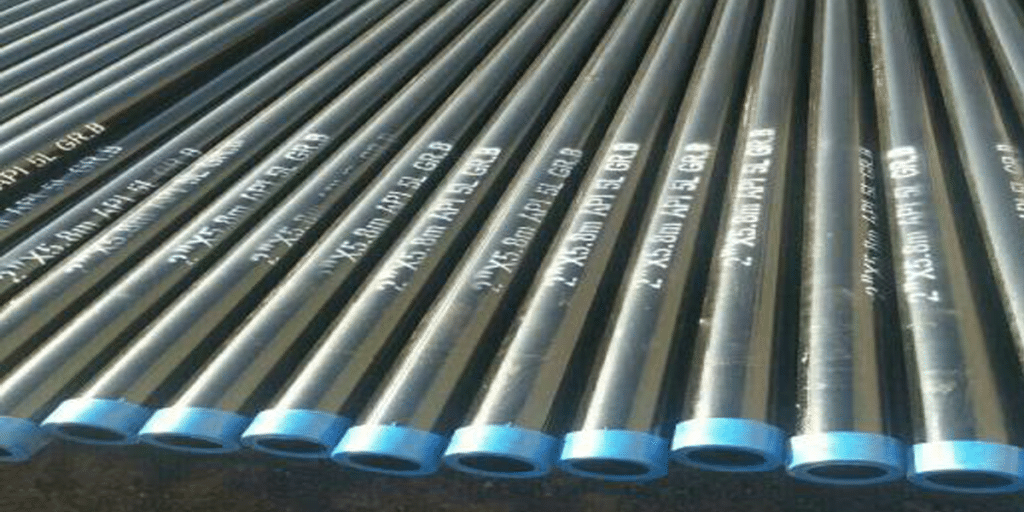
- L245 (API 5L Grade B)
- L290 (X42)
- L360 (X52)
- L390 (X56)
- L415 (X60)
- L450 (X65)
- L485 (X70)
The appropriate grade should always be selected based on design pressure, operating temperature, transported medium, and project specifications.
- What is the most commonly overlooked issue when purchasing ISO 3183 line pipe?
Many buyers focus only on price and steel grade while overlooking quality documentation and inspection capability. In addition to confirming dimensions, PSL level, and steel grade, buyers should request Material Test Certificates (MTC), NDT reports, hydrostatic test records, and third-party inspection certificates to ensure full project compliance.
Why Do Global Buyers Choose LONGMA?
With over two decades of manufacturing experience, LONGMA has become a trusted supplier for international energy and infrastructure projects.
Our advantages include:
- Specialized in ERW and LSAW round steel pipe manufacturing
- Strict compliance with ISO 3183, API Spec 5L, ASTM, and EN standards
- Modern in-house laboratory with comprehensive testing capability
- Complete production traceability from raw material to finished pipe
- Customized PSL1 and PSL2 manufacturing
- Third-party inspection support (SGS, BV, TÜV, DNV)
- Extensive experience serving global EPC contractors
Conclusion
The quality of ISO 3183 line pipe depends not only on the steel itself but also on a controlled manufacturing process, comprehensive testing program, and complete quality traceability. From raw material inspection to welding procedures, from nondestructive testing to hydrostatic testing, every stage plays a critical role in ensuring long-term pipeline reliability.
If you are looking for a reliable manufacturer of ISO 3183 Line Pipe, ISO 3183 PSL2 Steel Pipe, or large-diameter ERW/LSAW pipeline steel pipes, LONGMA is ready to provide professional material selection, comprehensive inspection reports, third-party inspection support, and competitive project quotations to help ensure the success of your next pipeline project.