- 1. Why Is Process Parameter Optimization Important?
- 2. Key Process Parameters in Steel Pipe Production
- 3. How Heating Temperature Affects Steel Pipe Quality
- 4. How Forming Parameters Influence Dimensional Accuracy
- 5. Why Welding Heat Input Optimization Matters
- 6. How Heat Treatment Parameters Improve Mechanical Properties
- 7. How Inspection Verifies Process Optimization
- 8. How LONGMA’s In-House Laboratory Supports Process Optimization
- 9. Why More Customers Choose LONGMA
- 10. Conclusion
In industries such as oil and gas transportation, energy infrastructure, offshore platforms, municipal pipeline networks, and large-scale construction projects, steel pipe quality directly impacts operational safety and service life. For international buyers, meeting specification requirements is only the starting point; maintaining consistent product quality across every batch is equally important.
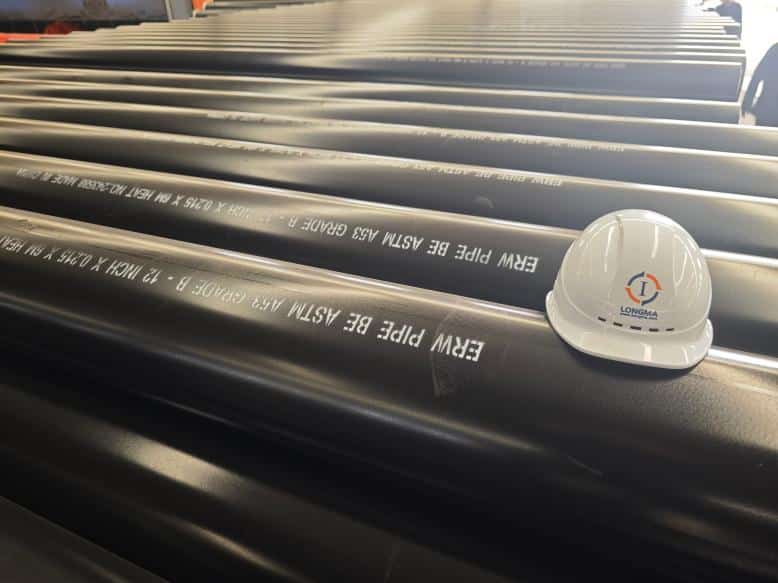
In reality, product quality is not determined by equipment alone. It is the result of precise control over critical process parameters throughout the entire steel pipe manufacturing process. From raw material heating temperatures to forming pressure, welding heat input, and heat treatment cycles, every parameter influences dimensional accuracy, mechanical properties, and long-term performance.
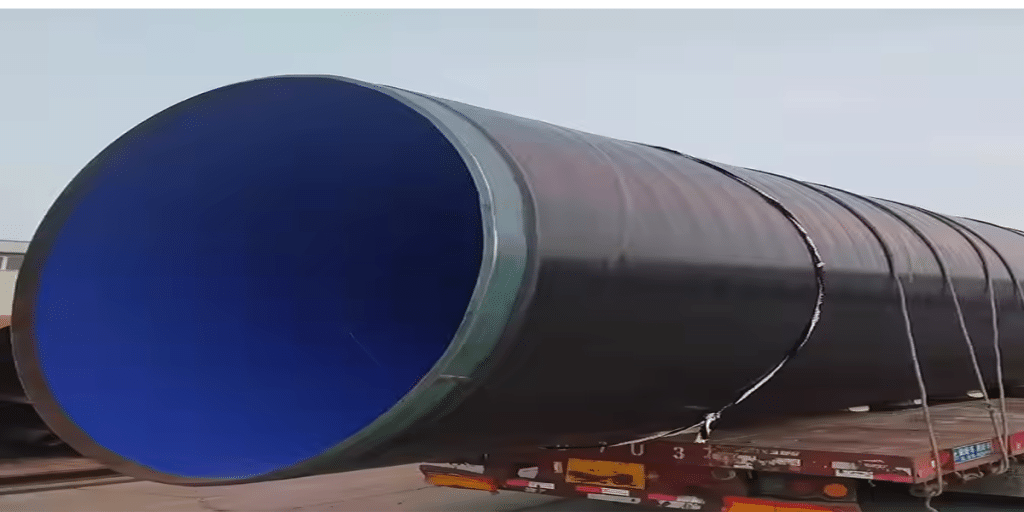
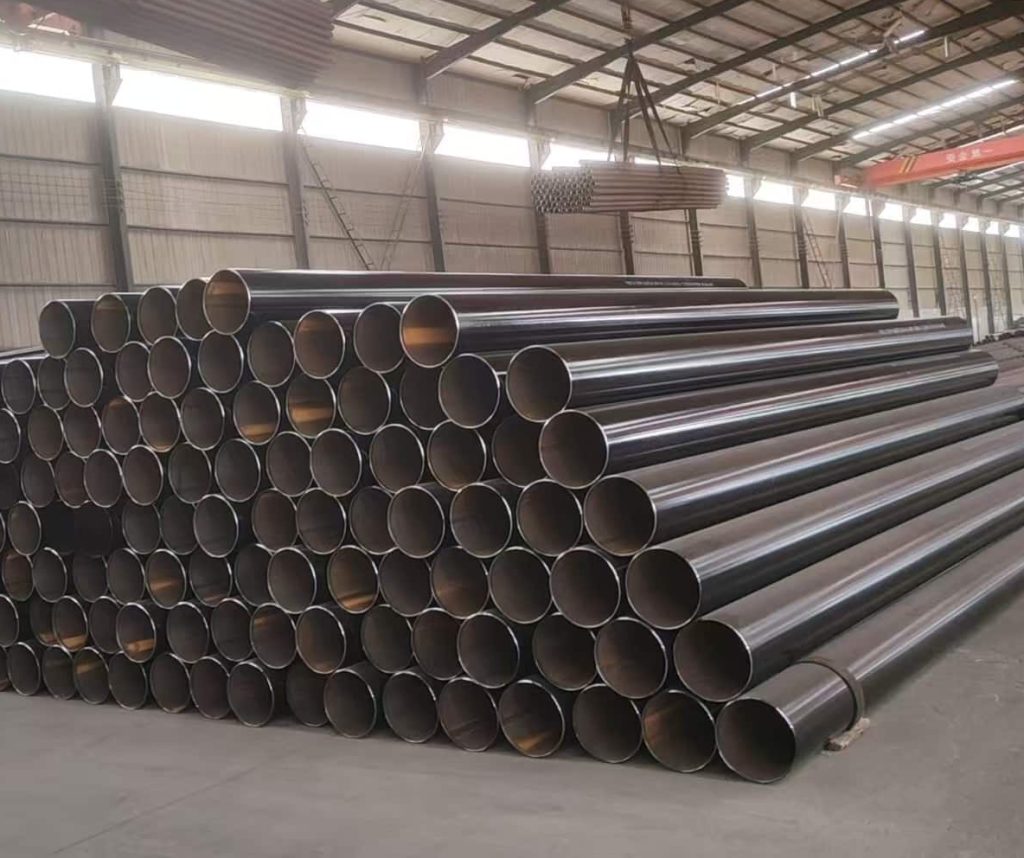
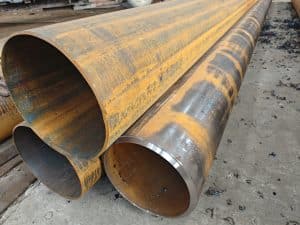
With more than 20 years of manufacturing experience, LONGMA continuously optimizes key production parameters through automated production lines, intelligent process control systems, and a comprehensive in-house laboratory. This enables the company to deliver high-quality API 5L steel pipe, LSAW steel pipe, and pipeline steel pipe products to customers worldwide.
Why Is Process Parameter Optimization Important?
When evaluating steel pipes, buyers often focus on chemical composition, yield strength, and tensile strength.
However, even when raw materials fully comply with standards, poor control of critical manufacturing parameters can result in:
- Uneven wall thickness
- Weld defects
- Dimensional deviations
- Coarse grain structures
- Reduced pressure-bearing capacity
These issues often remain hidden until installation or operation, creating costly maintenance problems and project risks.
For high-grade pipeline steel pipe applications, optimizing manufacturing parameters is essential for achieving consistent product quality.
Key Process Parameters in Steel Pipe Production
While manufacturing methods vary among different steel pipe types, several critical parameters affect quality across nearly all production processes.
| Production Stage | Key Parameters | Impact on Product Quality |
| Raw Material Heating | Temperature, soaking time | Microstructure uniformity |
| Forming Process | Forming pressure, speed | Roundness and dimensional accuracy |
| Welding Process | Current, voltage, heat input | Weld quality |
| Heat Treatment | Temperature profile, cooling rate | Mechanical properties |
| Sizing & Straightening | Correction force | Diameter tolerance |
| Inspection | Detection sensitivity | Defect identification rate |
Optimizing these parameters significantly improves the consistency of steel pipe production.
How Heating Temperature Affects Steel Pipe Quality
Heating is one of the most critical starting points in steel pipe manufacturing.
For products such as LSAW steel pipe and other high-grade line pipes, heating temperature directly influences material plasticity and microstructure.
Risks of Low Heating Temperature
- Increased forming resistance
- Higher risk of cracking
- Reduced weldability
Risks of Excessive Heating Temperature
- Grain coarsening
- Reduced mechanical strength
- Increased surface oxidation
LONGMA utilizes automated temperature-control systems and infrared monitoring equipment to ensure that materials remain within optimal processing temperatures throughout production.
How Forming Parameters Influence Dimensional Accuracy
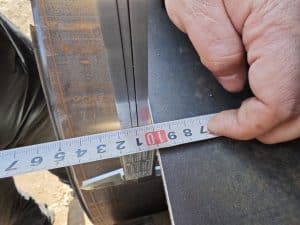
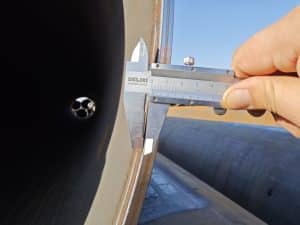
Dimensional deviation is one of the most common concerns among buyers.
Improper forming pressure or forming speed may lead to:
- Excessive ovality
- Wall thickness variation
- Pipe-end misalignment
- Installation difficulties
LONGMA’s automated forming equipment continuously adjusts process parameters according to steel plate specifications, achieving:
- Stable outside diameter control
- Uniform wall thickness distribution
- Superior dimensional consistency
These advantages are particularly important for large-scale pipeline steel pipe projects.
Why Welding Heat Input Optimization Matters
For welded steel pipe, weld quality is directly linked to product reliability.
Critical welding parameters include:
- Welding current
- Welding voltage
- Welding speed
- Heat input
Insufficient Heat Input May Cause:
- Lack of fusion
- Incomplete penetration
Excessive Heat Input May Cause:
- Grain coarsening
- Reduced heat-affected zone performance
In accordance with ASME BPVC Section IX and API 5L requirements, LONGMA conducts comprehensive Welding Procedure Specifications (WPS) and Procedure Qualification Records (PQR) to ensure consistent weld quality.
How Heat Treatment Parameters Improve Mechanical Properties
Heat treatment plays a vital role in enhancing the overall performance of steel pipes.
Properly controlled heat treatment improves:
- Yield strength
- Tensile strength
- Toughness
- Fatigue resistance
LONGMA employs automated heat treatment furnaces with digital control systems to precisely manage:
- Heating temperature
- Holding time
- Cooling rate
This ensures compliance with international standards such as API 5L and ISO 3183.
How Inspection Verifies Process Optimization
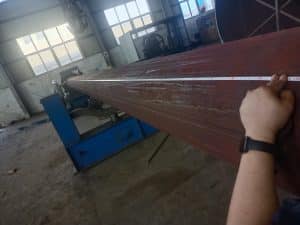
The effectiveness of process optimization must ultimately be validated through inspection results.
To ensure product reliability, LONGMA has established a comprehensive pipe inspection system.
1.Ultrasonic Testing (UT)
Inspection Purpose
UT is used to detect:
- Laminations
- Cracks
- Incomplete weld penetration
- Internal inclusions
Applicable Standards
Testing is performed according to:
- API 5L PSL2
- ISO 10893-10
- ASTM A578
LONGMA’s automated UT systems provide 100% online inspection coverage.
2.Radiographic Testing (RT)
For high-grade welded steel pipe applications, RT inspection is used to identify:
- Porosity
- Lack of fusion
- Weld cracks
Testing is conducted in accordance with:
- ISO 10893-7
- ASME Section V
Digital RT systems improve inspection efficiency while maintaining complete traceability of inspection records.
3.Hydrostatic Testing
Even after passing non-destructive testing, steel pipes must undergo hydrostatic testing to verify pressure integrity.
Testing Procedure
- Fill the pipe with water.
- Increase pressure to the specified value.
- Maintain pressure for the required duration.
- Check for leakage or failure.
Testing is conducted according to API 5L and ASTM A53 requirements.
Hydrostatic testing remains one of the most important methods for validating the safety performance of pipeline steel pipe products.
How LONGMA’s In-House Laboratory Supports Process Optimization
Many buyers are concerned not only about product specifications but also whether the reported test data is accurate and reliable.
To address this concern, LONGMA has established a comprehensive in-house laboratory equipped with:
- Ultrasonic Testing Equipment (UT)
- Digital Radiographic Testing Systems (RT)
- Optical Emission Spectrometers
- Metallographic Microscopes
- Tensile Testing Machines
- Impact Testing Equipment
Through continuous data analysis and process feedback, the laboratory helps production teams optimize manufacturing parameters and achieve ongoing quality improvement.
Compared with simply promoting production capacity, a well-equipped laboratory demonstrates a manufacturer’s true technical strength and quality management capability.
Why More Customers Choose LONGMA
For international buyers, a trustworthy supplier is not merely a manufacturer but a long-term partner capable of ensuring product consistency through scientific process control.
LONGMA stands out through:
- More than 20 years of steel pipe manufacturing experience
- Automated production equipment
- Intelligent process control systems
- Comprehensive inspection capabilities
- Strong compliance with international standards
These strengths enable LONGMA to consistently provide premium-quality API 5L steel pipe, LSAW steel pipe, and pipeline steel pipe solutions to customers worldwide.
Conclusion
In modern steel pipe manufacturing, product consistency is achieved through precise control of every critical process parameter. From heating, forming, welding, and heat treatment to final inspection, each stage directly affects product performance and project safety.
Through advanced equipment, strict process management, and a comprehensive in-house laboratory system, LONGMA continuously optimizes key parameters throughout the steel pipe manufacturing process, providing safer, more reliable steel pipe solutions for global customers.
For buyers seeking long-term partnerships and a stable supply chain, choosing a manufacturer with proven process optimization capabilities and a complete quality control system can deliver greater value while significantly reducing project risk.