- 1. What Is API 5L Steel Pipe?
- 2. Understanding API 5L Grade Designations
- 3. PSL 1 and PSL 2
- 4. Where API 5L May Be Used in Power Plants
- 5. Fuel Gas and Water Lines Have Different Design Priorities
- 6. Coatings and Corrosion Protection
- 7. Selecting a Grade for Power Plant Service
- 8. API 5L Versus ASTM A106 for Steam and Boiler-Related Service
- 9. Procurement and Quality Verification
- 10. Supplier Evaluation
- 11. Common Specification Risks
- 12. Conclusion
- 13. FAQ
Power plants use piping systems to deliver fuel gas, raw water, cooling water, and firewater. API Specification 5L may be specified for certain line-pipe applications, but the correct grade, product specification level, manufacturing route, coating, and inspection requirements must be selected for the actual service. API 5L is not a blanket approval for every plant piping system, particularly boiler, steam, or high-temperature services. This guide explains where API 5L may fit, how to compare it with ASTM A106, and what engineering and procurement teams should verify.
What Is API 5L Steel Pipe?
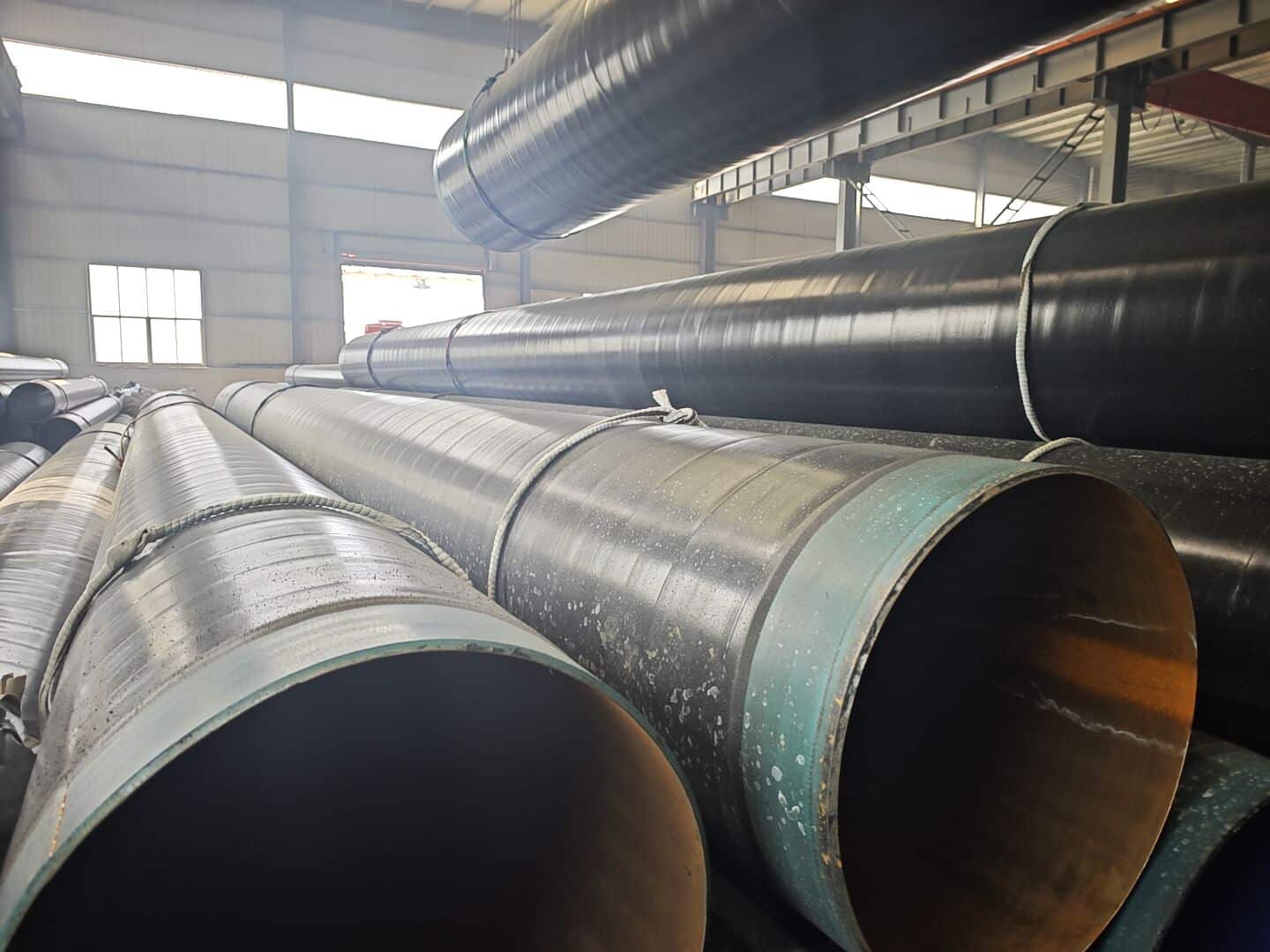
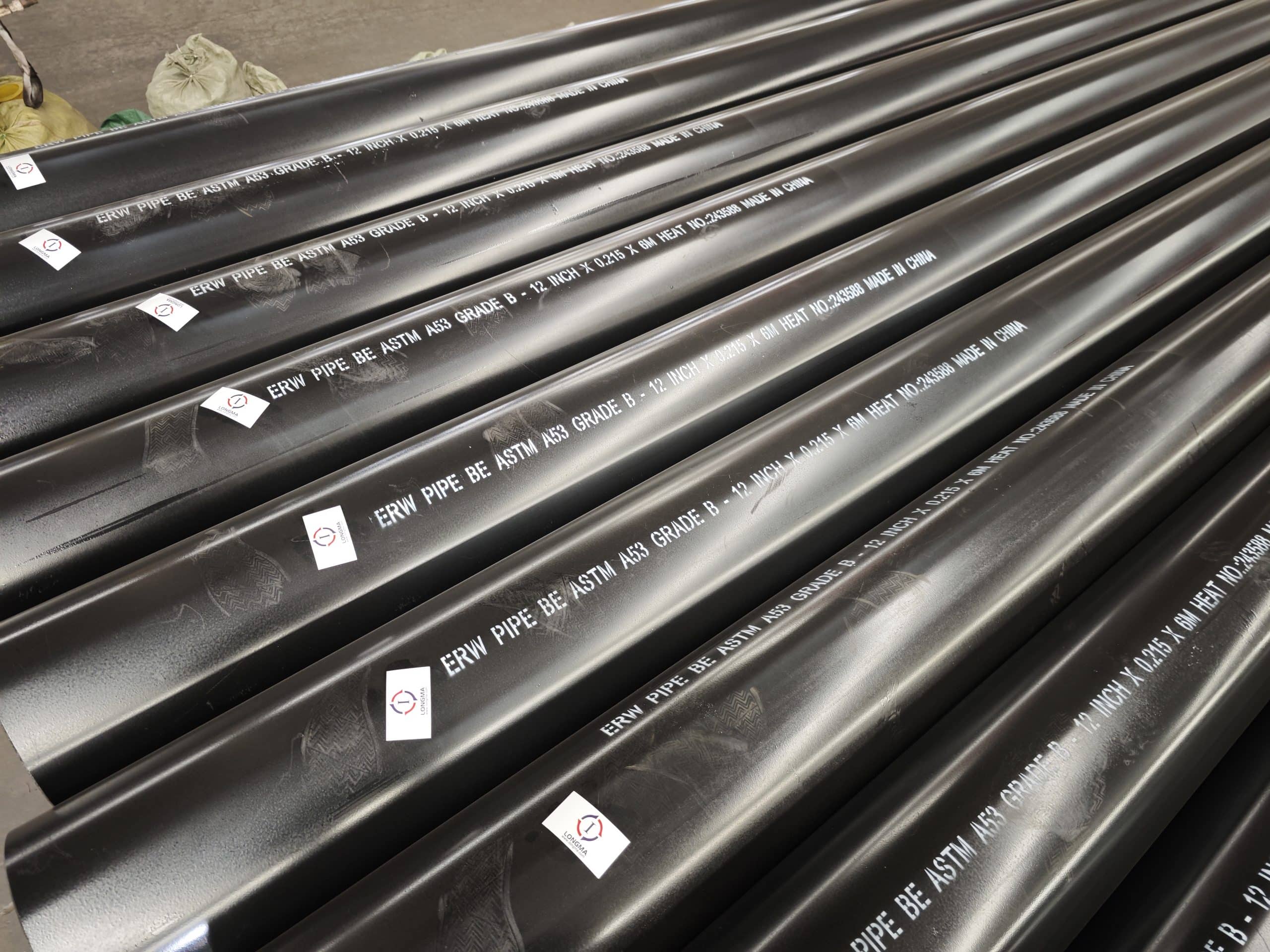
API 5L is a product specification for seamless and welded steel line pipe used in pipeline transportation systems in the petroleum and natural gas industries. It defines requirements for material, manufacture, inspection, testing, marking, and traceability at two product specification levels: PSL 1 and PSL 2. The standard is not itself a design code for a complete power plant piping system.
Understanding API 5L Grade Designations
API 5L uses grade designations such as Grade B, X42, X52, and X65. The metric and US customary designation forms correspond to specified minimum yield-strength levels; the letter X is part of the grade designation, not a unit-selection instruction. Common designation pairs include Grade B/L245, X42/L290, X52/L360, and X65/L450.
| API 5L grade | Metric designation | Specified minimum yield strength (designation value) |
| Grade B | L245 | 245 MPa |
| X42 | L290 | 290 MPa |
| X52 | L360 | 360 MPa |
| X65 | L450 | 450 MPa |
The grade table is not a pressure-rating chart. A higher specified minimum yield strength does not, by itself, prove that a grade is suitable for a particular line. Design pressure, diameter, wall thickness, temperature, toughness, weldability, design factors, and the governing code must all be considered.
PSL 1 and PSL 2
PSL 1 and PSL 2 define different levels of product requirements under API 5L. PSL 2 generally includes tighter controls and additional requirements compared with PSL 1, but the detailed requirements are dependent on the standard edition, grade, product type, dimensions, and ordered options. Buyers should not assume that every PSL 2 order has an identical impact-test or NDE package.
Sour-service requirements should be specified only where the service environment and applicable standard scope require them. NACE MR0175/ISO 15156 addresses material selection for H₂S-containing environments in oil and gas production. High design pressure alone does not establish a sour-service requirement, and a grade suffix should not be used as a substitute for reviewing the applicable standard and purchase specification.
Where API 5L May Be Used in Power Plants
Fuel Gas Transmission
API 5L line pipe may be considered for fuel-gas transmission lines connecting a supply pipeline, metering or pressure-control station, and plant fuel-gas distribution system when the governing pipeline or piping code and project specification permit it. The design review should address pressure containment, gas composition, fracture toughness, weld quality, valve and fitting compatibility, isolation, leak testing, and applicable safety requirements.
Raw Water, Cooling Water, and Firewater
API 5L pipe may be considered for selected raw-water, cooling-water, or firewater transmission lines where the project design documents accept the product standard. Water chemistry, dissolved oxygen, chlorides, microbiological activity, temperature, flow velocity, and treatment chemicals can influence internal corrosion. The project may require an internal lining, external coating, corrosion allowance, cathodic protection, or a combination of controls.
For potable or treated water systems, verify any applicable approval requirements for materials in contact with drinking water. For firewater systems, confirm the governing fire-protection and piping requirements rather than assuming that API 5L alone defines the complete system.
Fuel Gas and Water Lines Have Different Design Priorities
| Design consideration | Fuel-gas line | Water line |
| Primary service concern | Containment of flammable gas, leak prevention, pressure control, and safe isolation. | Water quality, internal corrosion, flow conditions, and reliable supply. |
| Material review | Strength, toughness, weld integrity, gas composition, and design code. | Strength, corrosion allowance, water chemistry, lining compatibility, and design code. |
| Protection measures | External coating and cathodic protection where required by the corrosion-control design. | Internal lining or water treatment where required; external protection based on exposure. |
| Inspection focus | Weld inspection, pressure testing, traceability, and leak-control requirements. | Pressure testing, corrosion protection, lining inspection, and water-service compatibility. |
The same grade or pipe dimensions should not be transferred automatically from one service to another. Each system requires its own design inputs, material review, and inspection plan.
Coatings and Corrosion Protection
External coatings such as FBE, 3LPE, or 3LPP can be specified for buried or exposed piping depending on the environment and project requirements. These systems reduce corrosion risk but do not make steel immune to corrosion. Coating damage, disbondment, field-joint quality, installation damage, and the condition of the cathodic-protection system remain relevant.
Internal protection for water systems depends on the water chemistry and operating conditions. A lining selected for one water composition may not be suitable for another. The coating or lining standard, surface preparation, thickness, curing, holiday testing, repair procedure, and potable-water approvals, where applicable, should be included in the purchase specification.
Selecting a Grade for Power Plant Service
The engineering team should determine the grade from the design basis rather than starting with the highest available strength. Review:
- Design pressure, design temperature, operating envelope, and transient conditions.
- Outside diameter, wall thickness, corrosion allowance, and the applicable design calculation.
- Material toughness and any impact-test temperature or acceptance criteria.
- Weldability, carbon-equivalent limits where specified, and site welding procedure requirements.
- Water or gas composition, H₂S exposure where relevant, and internal or external corrosion mechanisms.
- Product form, manufacturing route, inspection, testing, and traceability requirements.
API 5L Versus ASTM A106 for Steam and Boiler-Related Service
API 5L and ASTM A106/A106M have different scopes. API 5L covers line pipe for pipeline transportation systems in the petroleum and natural gas industries. ASTM A106/A106M covers seamless carbon steel pipe for high-temperature service. For steam and high-temperature piping, the governing power or process piping code determines the permitted material specifications and design properties.
Do not describe all boiler feedwater or steam lines as requiring one material standard. Feedwater temperature, pressure, system classification, design code, and owner specification determine the appropriate material. Engineers must verify the applicable material listing and allowable stresses before approving a substitution.
| Factor | API 5L | ASTM A106/A106M |
| Product scope | Seamless and welded line pipe for pipeline transportation systems within API 5L scope. | Seamless carbon steel pipe for high-temperature service. |
| Typical context | Fuel-gas or other pipeline services where the governing code accepts API 5L. | High-temperature process and piping services where the governing code specifies ASTM A106. |
| Product form | Seamless and welded. | Seamless. |
| Approval basis | API 5L edition, grade, PSL, pipe type, design code, and project specification. | ASTM A106 grade, design temperature, code allowable stress, and project specification. |
Procurement and Quality Verification
A clear purchase specification reduces the risk of receiving pipe that meets a product description but not the plant’s engineering requirements. The RFQ should state:
- API 5L edition, grade, PSL, product form, manufacturing route, dimensions, length, and end preparation.
- Design pressure and temperature, service medium, and relevant chemical composition.
- Required mechanical tests, impact requirements, hardness limits, NDE, hydrostatic testing, and acceptance criteria.
- Coating or lining type, applicable standard, thickness, inspection, repair, and field-joint requirements.
- Marking, heat-number traceability, mill test certificates, inspection and test plan, and third-party inspection scope.
- Packaging, lifting protection, shipping conditions, Incoterms, and delivery schedule.
Supplier Evaluation
Evaluate whether the manufacturer can produce the ordered grade, dimensions, and pipe type and provide the records required by the purchase order. Review the manufacturing scope, quality-management system, production route, NDE and hydrostatic testing arrangements, dimensional inspection, traceability, nonconformance control, and inspection records. Any claimed API license or certification should be checked for its actual scope and validity.
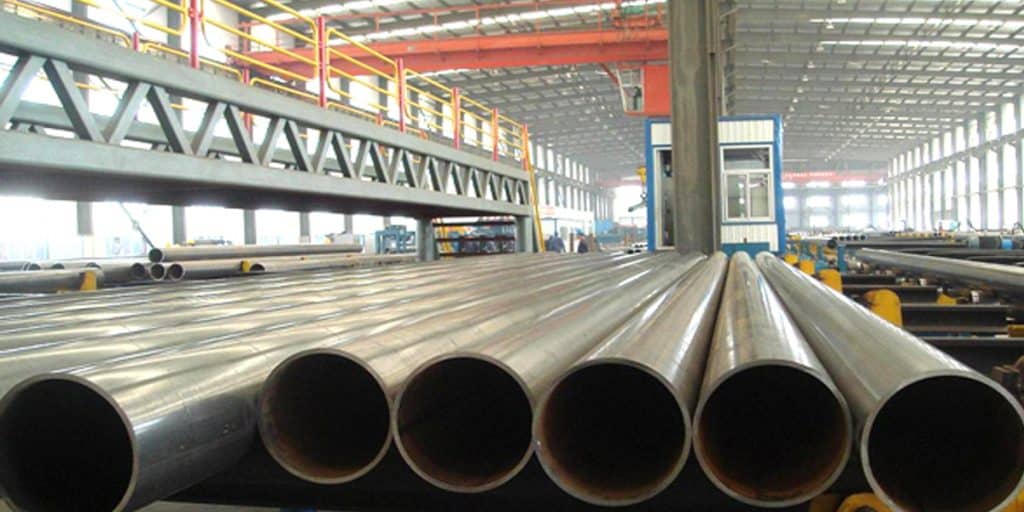
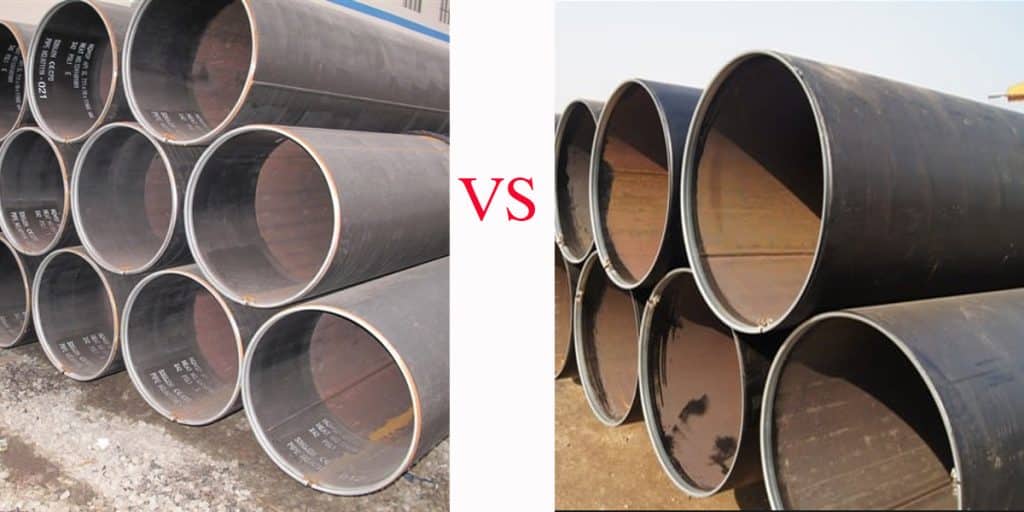
LONGMA manufactures ERW and LSAW round steel pipes. The company operates a 230,000-square-metre facility with annual output exceeding 500,000 tonnes. For a project review, buyers should provide the applicable standard and edition, grade, PSL, pipe dimensions, service conditions, coating requirements, and inspection documentation requirements.
Common Specification Risks
- Treating API 5L as a complete design code rather than a pipe product specification.
- Using an incorrect grade equivalence, such as identifying L245 as X42 instead of Grade B.
- Assuming PSL 2 automatically means one fixed test package for every pipe.
- Specifying sour-service requirements solely because a line has high design pressure.
- Assuming external coating prevents all corrosion or that an internal lining is compatible with every water chemistry.
- Substituting API 5L and ASTM A106 without checking the governing code and design conditions.
Conclusion
API 5L steel pipe can be suitable for selected power plant fuel-gas and water transmission services when the governing design code and project specification permit its use. Grade, PSL, product form, coating, and testing must be matched to the actual service. API 5L should not be treated as an automatic material choice for steam or boiler piping, and higher strength alone does not establish suitability. A complete design review, clearly written RFQ, and traceable quality documentation are essential to a defensible procurement decision.
FAQ
What is API 5L pipe used for in a power plant?
It may be specified for fuel-gas and selected water transmission lines where the governing code and project specification accept API 5L. Suitability must be assessed for each service.
What is the correct grade equivalence for L245 and X42?
L245 corresponds to API 5L Grade B. X42 corresponds to L290. X52 corresponds to L360, and X65 corresponds to L450.
Does PSL 2 always require the same impact and NDE tests?
No. Requirements depend on the applicable API 5L edition, grade, product type, dimensions, and ordered options. The purchase specification should define any additional requirements.
Can API 5L be used for boiler feedwater or steam?
Not automatically. The governing piping code, design conditions, and permitted material specifications must be reviewed. ASTM A106/A106M is a seamless carbon steel pipe specification for high-temperature service, but the project code determines whether it is appropriate.