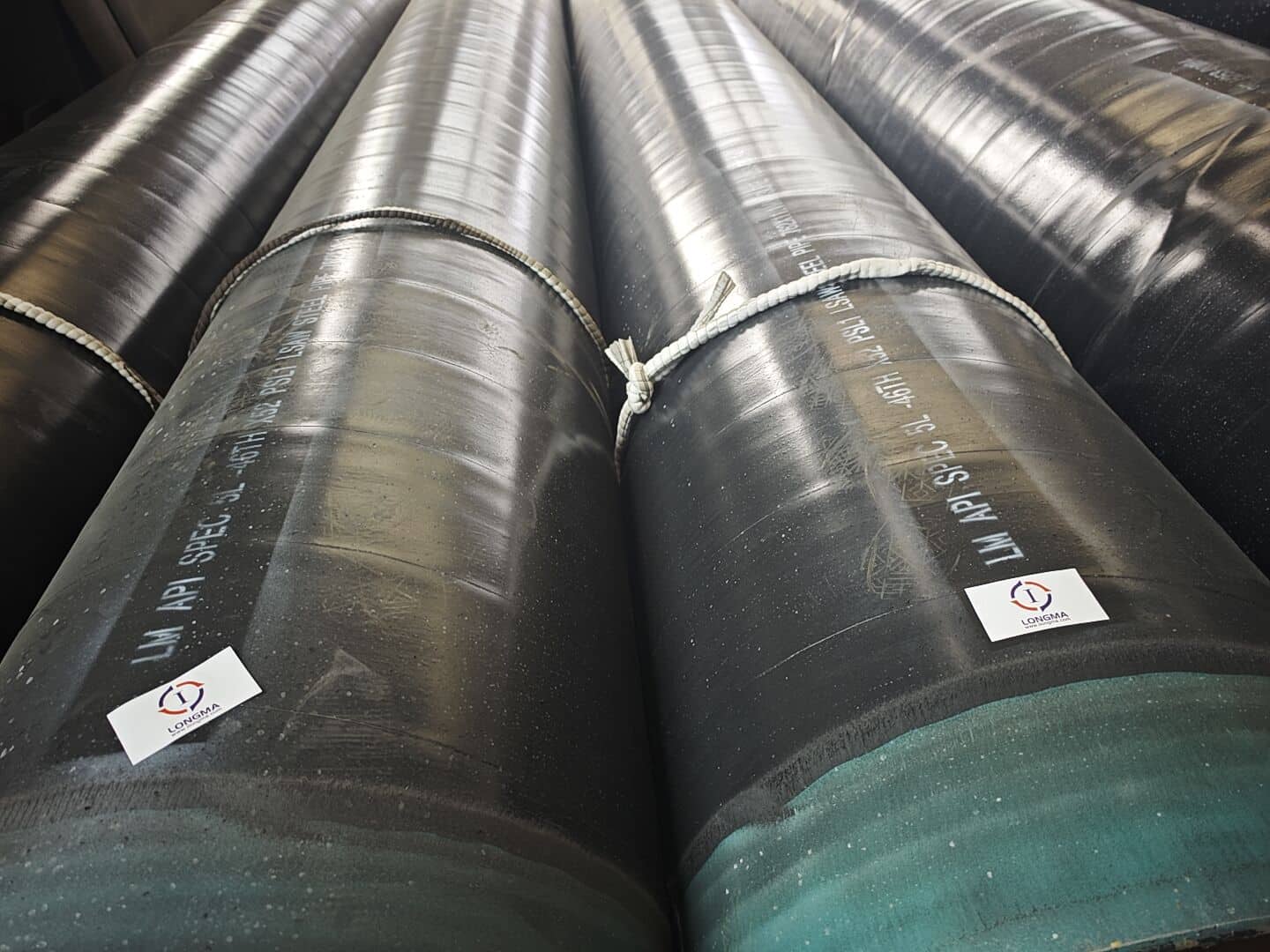
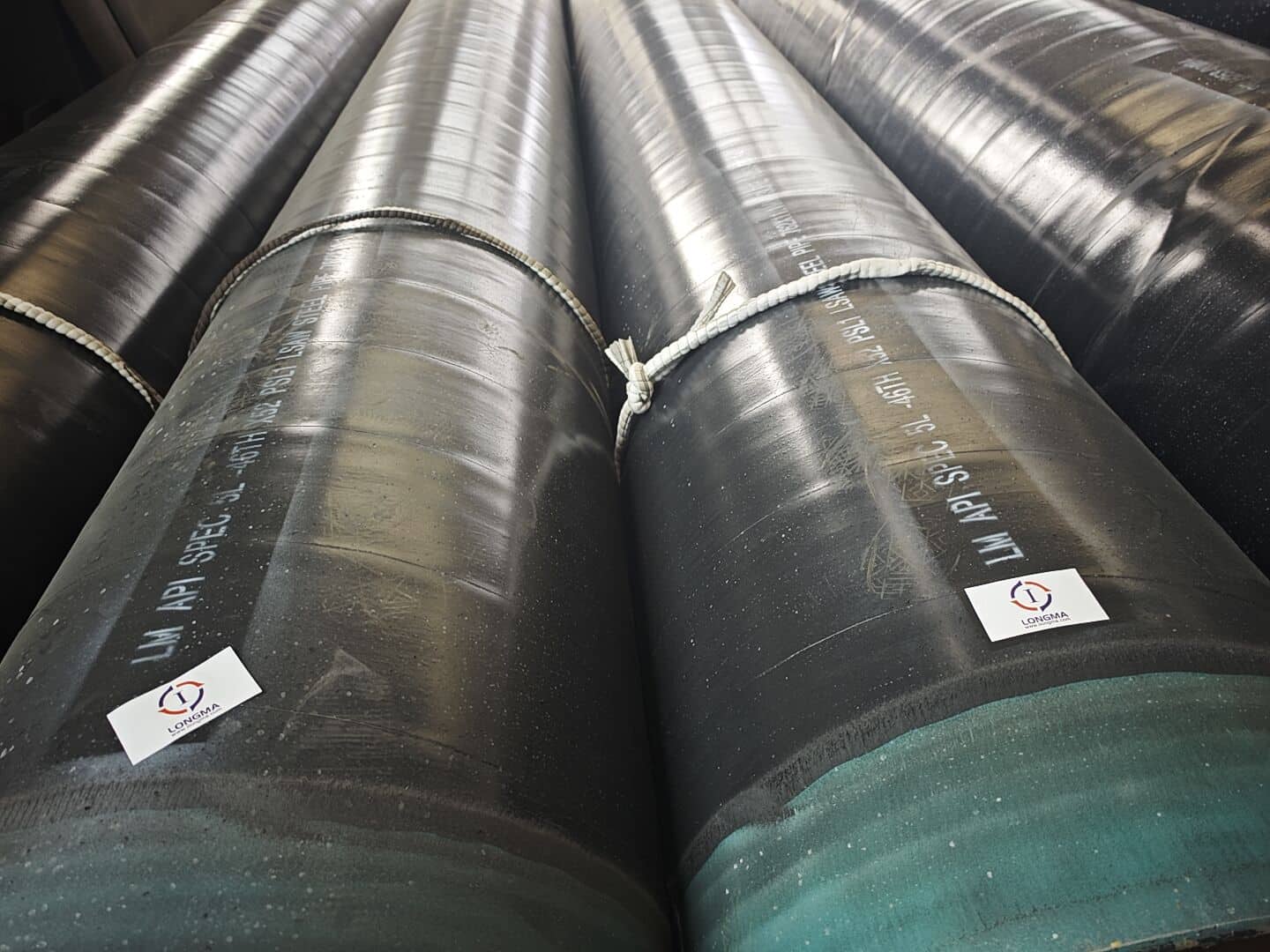
Line pipe is pipe manufactured for transporting fluids through pipeline systems. In the oil and gas industry, it carries crude oil, natural gas and other specified fluids between production, processing, storage and delivery facilities. Steel line pipe is commonly supplied to API Specification 5L or another project-approved standard. Choosing the correct line pipe requires more than selecting a diameter: material grade, product specification level, manufacturing route, toughness, welding, corrosion control and inspection must suit the actual design conditions.
What Line Pipe Does
A pipeline comprises individual pipe lengths joined to form a continuous pressure-containing system. The pipe must withstand internal pressure and the external loads encountered during construction and operation. Those loads may include bending, soil movement, handling, temperature changes and, for offshore installations, additional environmental forces. The line pipe is only one part of the system; girth welds, fittings, valves, supports, corrosion protection and operating procedures also affect integrity.
Line pipe should not be confused with every steel tube used at an oil and gas facility. Process piping, casing, tubing and structural pipe can be governed by different standards and design requirements. API 5L addresses specified seamless and welded steel pipe intended for pipeline transportation systems. Its requirements must be read together with the relevant pipeline design code and the project’s purchasing specification.
API 5L Grades and PSL1 Versus PSL2
API 5L identifies grades including Grade B and grades designated X42, X52, X60, X65, X70 and X80. In an X-grade designation, the number broadly reflects the specified minimum yield strength in thousands of pounds per square inch. A higher grade does not automatically provide better corrosion resistance or guarantee suitability for a particular environment. Strength, toughness, weldability and fracture-control requirements must be considered together.
API 5L defines product specification levels PSL1 and PSL2. PSL2 generally imposes more restrictive requirements for chemical composition, mechanical properties, toughness and inspection than PSL1, subject to the grade, pipe type and applicable provisions. It should not be described as an automatic certification for every demanding service. Project specifications may impose additional conditions beyond either level.
API 5L’s 46th edition was issued in 2018. Purchasers should identify the edition and any amendments or supplementary requirements specified by the contract rather than assume that a single edition applies to every current project. Material test reports should be reviewed against the edition actually ordered.
Seamless, ERW and LSAW Line Pipe
Seamless line pipe is produced without a longitudinal weld, commonly by piercing and rolling a heated solid billet. It is used where the selected size, grade and design requirements favour that manufacturing route. Seamless construction does not remove the need for dimensional, mechanical and other required inspections.
Electric resistance welded (ERW) line pipe is formed from steel strip or coil and welded longitudinally by resistance heating and pressure. Modern manufacturing includes weld-seam control and inspection appropriate to the specification. ERW can offer efficient production and consistent dimensions in available size ranges, but acceptance depends on the actual manufacturing qualification and test results.
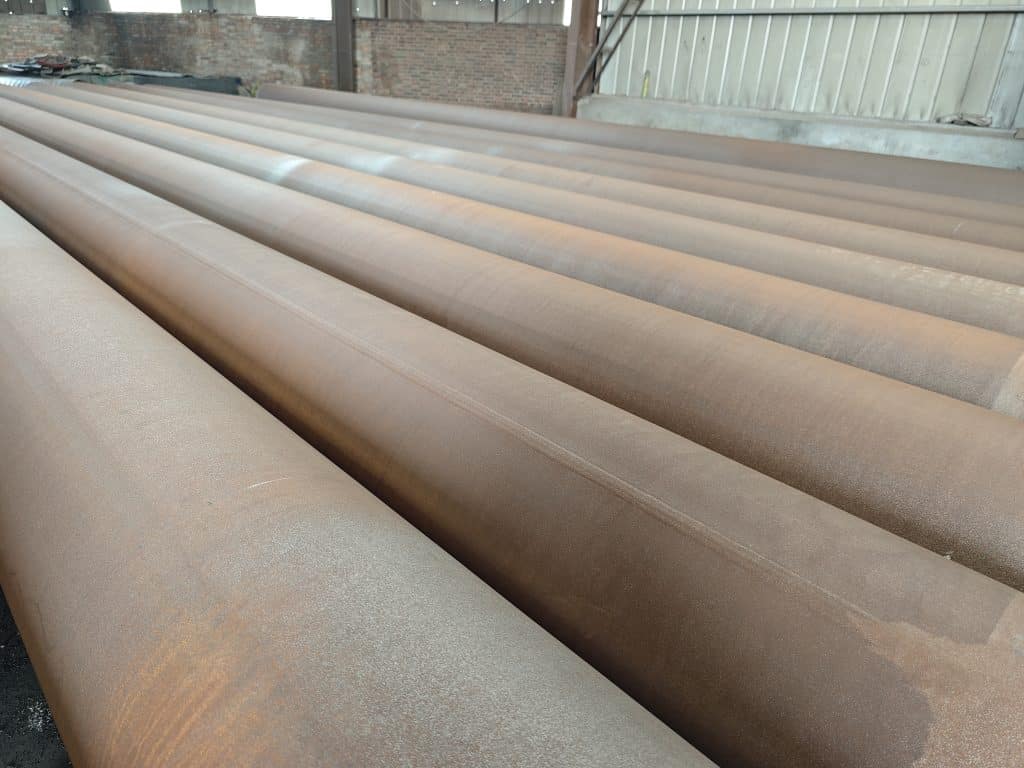
Longitudinal submerged arc welded (LSAW) pipe is typically formed from plate and joined along a longitudinal seam by submerged arc welding. Forming routes include JCOE and UOE. LSAW is often considered for large diameters and heavier walls, although actual available dimensions vary by manufacturer. Neither ERW nor LSAW is universally superior: selection depends on size, wall thickness, grade, service conditions, quality requirements, availability and project economics.
The applicable specification and inspection records matter more than a broad claim that one process is always safer or stronger.
Strength, Weldability and Sour Service
Design engineers determine pipe wall thickness using the governing pipeline code, design pressure, diameter, material properties, design factors, allowances and other applicable loads. ASME B31.8 is commonly used for gas transmission and distribution in relevant jurisdictions; other systems may use different codes. A grade name or schedule alone does not establish a safe operating pressure.
Field weldability depends on chemical composition, carbon equivalent or crack-susceptibility measures, wall thickness, hydrogen control, welding procedure, preheat and cooling conditions. Welding procedure qualification and production inspection should follow the applicable construction code and project requirements.
Hydrogen sulfide can introduce sulfide stress cracking and hydrogen-induced cracking concerns under certain wet sour conditions. The applicability of ISO 15156/NACE MR0175 depends on its defined scope and the service environment; it is not a universal rule for every pipeline containing trace H₂S. Materials may require project-specific sour-service qualification, including relevant hardness controls and tests. No single hardness value or H₂S partial-pressure threshold should be treated as sufficient proof that all line pipe is suitable for sour service.
Coatings, Testing and Traceability
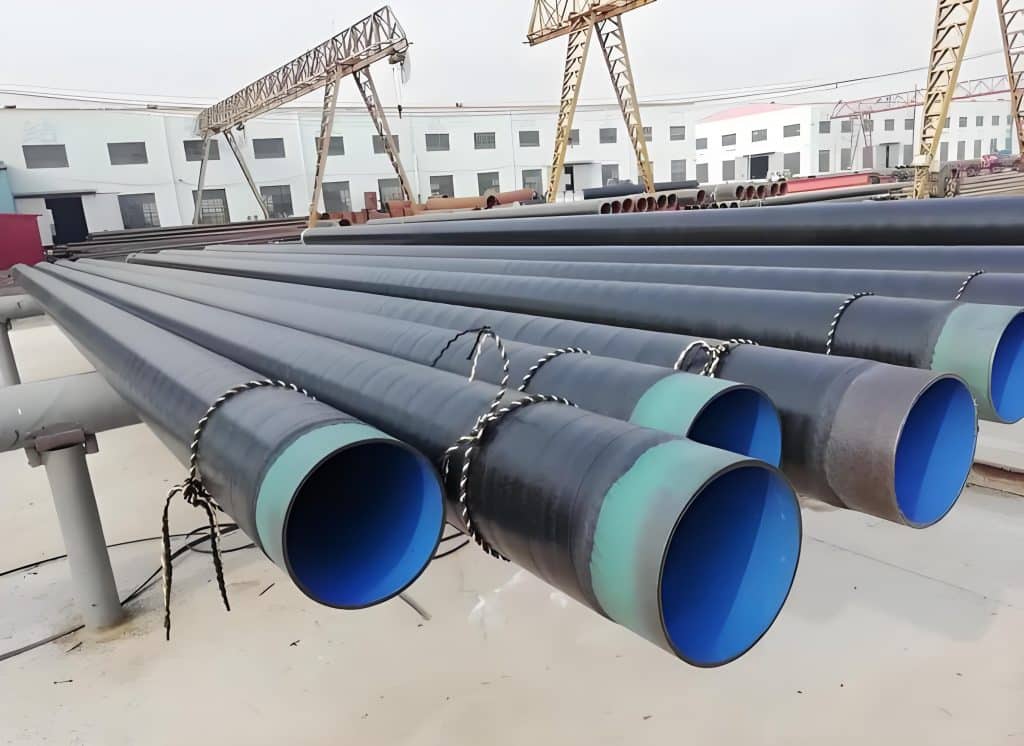
Buried carbon steel pipelines generally require a corrosion-control strategy. External coating systems may include fusion-bonded epoxy (FBE), three-layer polyethylene (3LPE) or other qualified coatings. Cathodic protection is commonly part of the overall approach where applicable. Coating selection must consider soil, temperature, handling damage, installation method and compatibility with cathodic protection. An external coating does not resolve internal corrosion caused by the conveyed fluid.
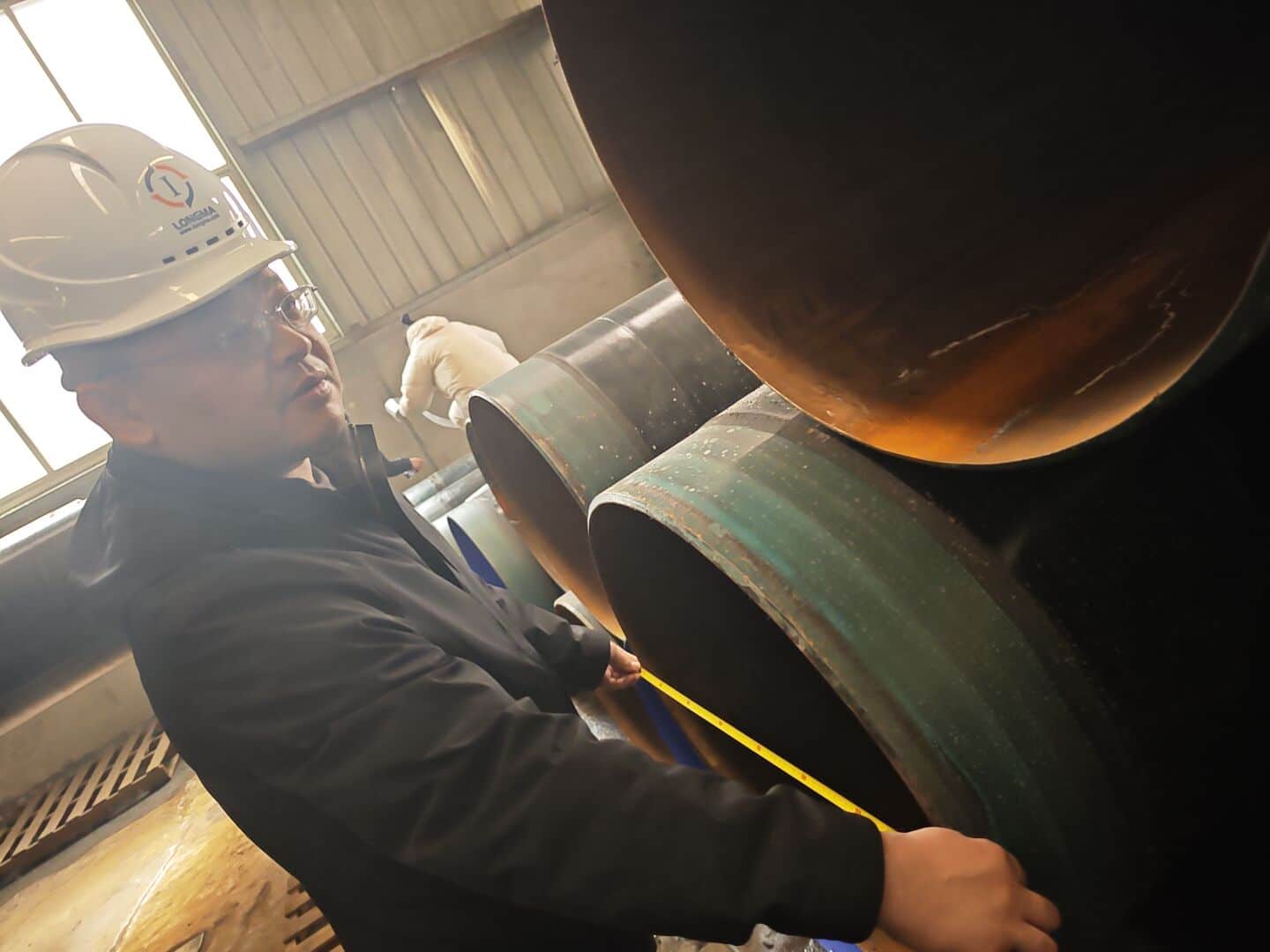
Quality records may include steel heat identification, chemical analysis, tensile testing, impact testing where required, dimensional inspection, weld-seam nondestructive examination, hydrostatic testing and coating records. Exact tests and acceptance criteria depend on the ordered standard, pipe type, PSL, grade and supplementary requirements. It is inaccurate to claim that every inspection method is mandatory for every pipe.
An EN 10204 type 3.1 inspection certificate may be specified by the buyer; type 3.2 involves additional validation arrangements defined by that standard. Such certificates are not interchangeable with an API Monogram licence or an ISO quality-management certificate. Procurement teams should request the documents explicitly required by their project.
How to Specify and Buy Line Pipe
A complete request for quotation should state the applicable standard and edition, grade, PSL, outside diameter, wall thickness, length, end preparation, quantity, service conditions and delivery location. Include the design temperature, toughness requirements, coating system, required testing, inspection hold points and documentation. For offshore, low-temperature or sour applications, supplementary technical requirements may be essential.
Evaluate a manufacturer on its demonstrated manufacturing scope, quality controls, traceability, production capability and responsiveness to technical questions. Where an API Monogram licence is required, verify its current status and relevant scope directly rather than relying only on a supplier’s brochure. An ISO 9001 certificate, where requested, addresses quality management but does not itself prove that a particular pipe complies with API 5L.
Review transport, packing, marking and the availability of complete records before shipment. A technically acceptable pipe supplied with incomplete traceability may still fail the purchaser’s acceptance process.
Frequently Asked Questions
What is the difference between line pipe and process pipe? Line pipe is intended for pipeline transportation systems, while process piping within facilities may be subject to different product standards and design codes.
What does X65 mean? It denotes a line-pipe strength grade with a specified minimum yield strength of approximately 65 ksi, subject to the applicable API 5L requirements.
Is PSL2 always required for gas pipelines? Not universally. The design code, owner specification, operating conditions and regulatory requirements determine the required product level.
Is welded line pipe suitable for high-pressure transmission? Yes, when the selected pipe type, grade, dimensions, manufacture, testing and system design meet applicable requirements.
Does a 3LPE coating prevent all corrosion? No. It is one element of a corrosion-control system and must be selected, applied, inspected and maintained appropriately.
Does an API Monogram licence replace pipe inspection? No. Product conformity and project-specific acceptance still require the relevant inspection and documentation.
About LONGMA
LONGMA manufactures round ERW and LSAW welded steel pipes and has more than 20 years of industry experience. Its facility covers 230,000 m² and annual production exceeds 500,000 tonnes. Buyers can contact LONGMA to discuss API 5L line-pipe requirements, available manufacturing ranges, inspection documentation and coating options for a specific project. Email: info@ilongma.com.