- 1. ASTM A252 Grade 3 Mechanical Properties
- 2. What Yield Strength Means
- 3. Why Grade 3 Is Not a Complete Capacity Specification
- 4. ASTM A252 Grade 1 vs. Grade 2 vs. Grade 3
- 5. Elongation and Ductility: Avoid a Fixed 20% Assumption
- 6. Applications and Engineering Considerations
- 7. How to Verify ASTM A252 Grade 3 Compliance
- 8. Conclusion
- 9. FAQ
- 10. Looking for a Reliable ASTM A252 Pipe Pile Supplier
ASTM A252 Grade 3 steel pipe piling has a specified minimum yield strength of 45,000 psi (310 MPa) and a minimum tensile strength of 66,000 psi (455 MPa). These are minimum material properties, not the allowable load or design capacity of an installed pile. Final pile capacity depends on section geometry, stability, connections, corrosion allowance, installation stresses, soil conditions, and the applicable structural and geotechnical design rules.
ASTM A252 Grade 3 Mechanical Properties
| Property | Grade 3 requirement | What it means |
| Minimum yield strength | 45,000 psi / 310 MPa | Specified minimum stress associated with the onset of permanent deformation in the tensile test |
| Minimum tensile strength | 66,000 psi / 455 MPa | Specified minimum ultimate tensile strength |
| Elongation | Calculated under the standard | Depends on specimen cross-sectional area and specified tensile strength; it should not be presented as one universal 20% value |
The purchase order should identify the required edition of ASTM A252/A252M. Compliance must be assessed against that edition and any supplementary project requirements.
What Yield Strength Means
Yield strength describes the stress level at which steel begins to undergo permanent plastic deformation under the prescribed tensile-test method. Below the relevant yield criterion, deformation is predominantly elastic; after yielding, some deformation remains when the load is removed.
For a pipe pile, yield strength helps the structural designer evaluate axial and bending stresses in the steel section. During installation, it is also relevant to driving-stress checks. However, a 310 MPa minimum yield strength does not mean that an installed pile may be designed to carry a stress of 310 MPa without applying the governing code’s resistance factors, stability checks, and project-specific limits.
Why Grade 3 Is Not a Complete Capacity Specification
- Cross-section: outside diameter and wall thickness determine area, stiffness, section modulus, and local slenderness.
- Buckling: unsupported length, end restraint, and soil support influence overall stability.
- Geotechnical resistance: shaft resistance, toe resistance, settlement, and lateral response depend on the subsurface profile and installation method.
- Driving stresses: hammer energy, cushion condition, pile length, splices, toe details, and soil resistance influence stress during installation.
- Durability: corrosion exposure and the specified corrosion allowance affect the effective section over the design life.
- Connections: field splices, welds, attachments, and pile caps require separate design and qualified fabrication procedures.
ASTM A252 Grade 1 vs. Grade 2 vs. Grade 3
| Grade | Minimum yield strength | Minimum tensile strength | Selection note |
| Grade 1 | 30,000 psi / 205 MPa | 50,000 psi / 345 MPa | Lowest specified strength level in A252 |
| Grade 2 | 35,000 psi / 240 MPa | 60,000 psi / 415 MPa | Intermediate specified strength level |
| Grade 3 | 45,000 psi / 310 MPa | 66,000 psi / 455 MPa | Highest specified strength level among the three grades |
Grade 3 provides a higher specified strength floor, but it does not automatically permit a thinner wall, fewer piles, a smaller corrosion allowance, or a higher allowable foundation load. Any such change requires a complete structural and geotechnical redesign.
Elongation and Ductility: Avoid a Fixed 20% Assumption
ASTM A252 does not support treating 20% as a universal elongation minimum for every Grade 3 pipe. The minimum elongation is determined by the formula in the applicable edition of the standard and depends on the tensile specimen’s cross-sectional area and the specified tensile strength. The test report should identify the specimen type or dimensions, gauge length, result, and acceptance requirement used.
Yield strength, tensile strength, and elongation should be reviewed together, but ASTM A252 does not establish a general maximum yield-to-tensile ratio for Grade 3. A project may add its own toughness, chemistry, weldability, or ratio limits; those additional requirements must be stated in the purchase specification.
Applications and Engineering Considerations
Bridge and Heavy Foundation Work
Grade 3 may be selected when higher specified steel strength is beneficial to the structural design or installation-stress assessment. The pile count and layout still depend on the governing load combinations, pile section, connection details, group effects, and geotechnical resistance.
Marine and Waterfront Structures
Wharves, dolphins, jetties, and similar structures may experience axial, lateral, cyclic, impact, and corrosion demands. Grade selection is only one part of the design; corrosion allowance or protection, fatigue-sensitive details, splash-zone exposure, and inspection requirements must also be addressed.
Hard Driving Conditions
Higher material yield strength can increase the available margin in a driving-stress analysis, but it does not prevent local damage by itself. A wave-equation analysis, suitable hammer and cushion selection, driving criteria, and field monitoring may be required by the project engineer.
How to Verify ASTM A252 Grade 3 Compliance
| Document or check | What to verify |
| Purchase order | ASTM A252/A252M edition, Grade 3, manufacturing route, dimensions, end finish, length, and project-specific supplementary requirements |
| Material test report | Heat identity, Grade 3 designation, yield strength, tensile strength, elongation basis and result, and chemical analysis required by the ordered edition |
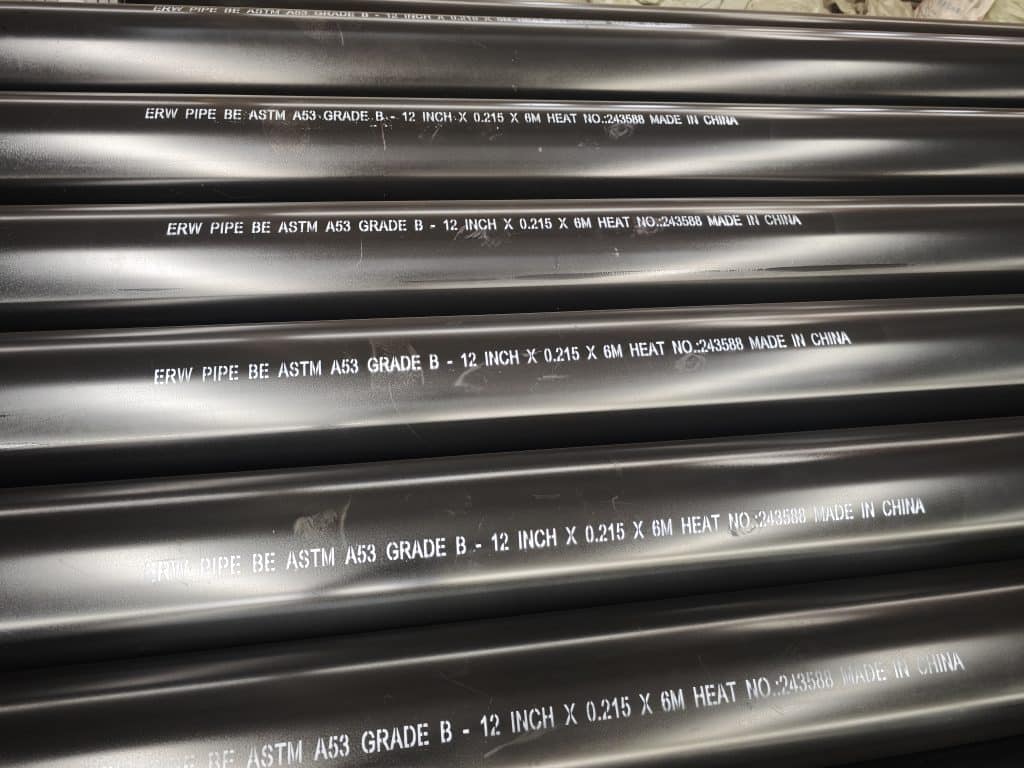
| Traceability | Consistent heat or product identification between pipe marking, inspection records, and material documentation |
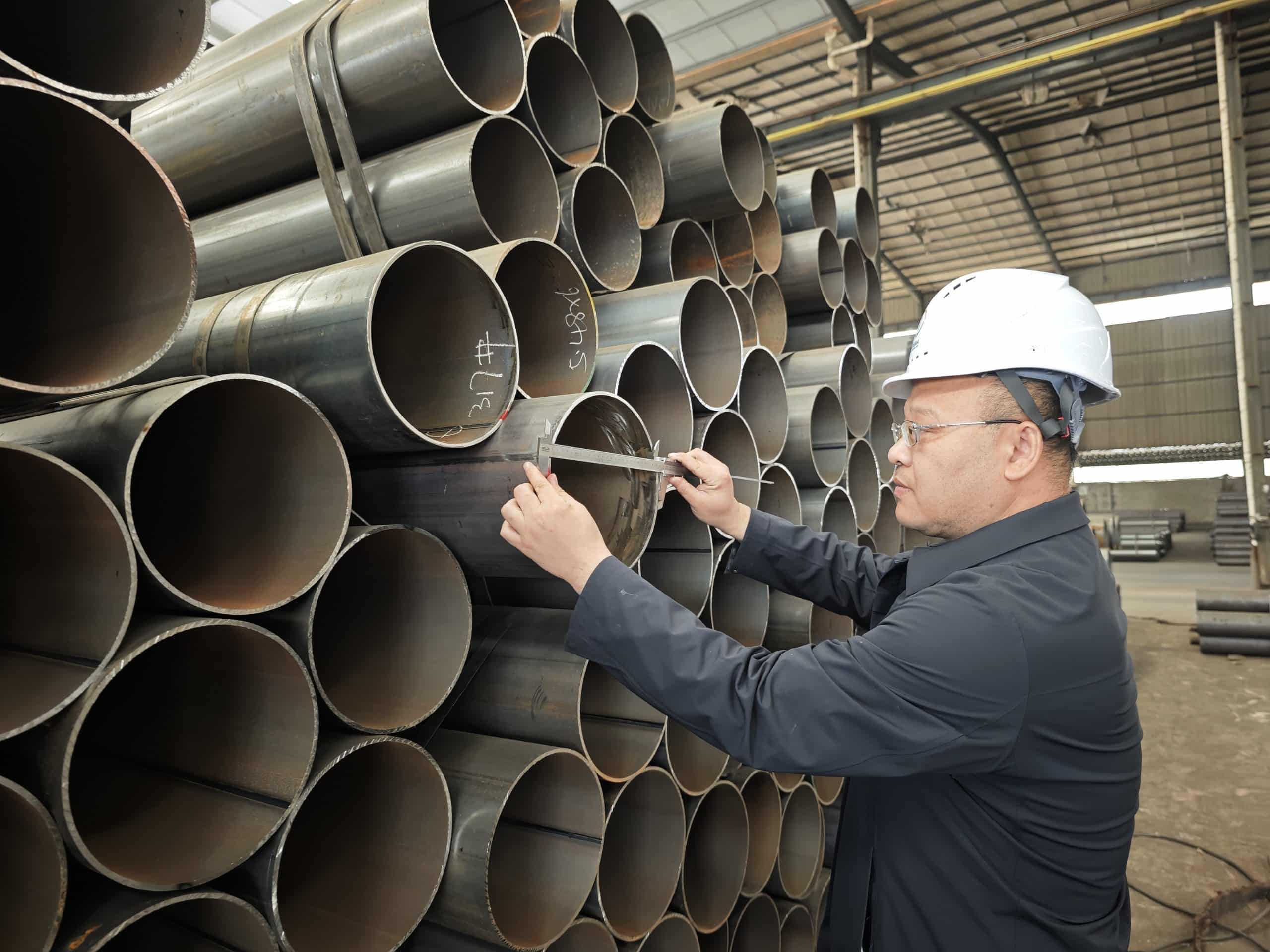
| Dimensional inspection | Outside diameter or circumference, wall thickness, length, straightness, mass where applicable, and end condition against the order and governing tolerances |
| Weld and surface examination | Workmanship and acceptance against ASTM A252 plus any additional project inspection plan |
| NDT | Do not assume UT or RT is a universal ASTM A252 requirement; define method, coverage, acceptance criteria, and reporting when the project requires NDT |
| Hydrostatic test | A252 pipe piles are not pressure-service pipe; hydrostatic testing is not a standard product requirement unless separately specified |
| Third-party inspection | Witness points, hold points, document review, and release note only when required by the contract or inspection plan |
Conclusion
ASTM A252 Grade 3 pipe piling has a minimum yield strength of 45,000 psi (310 MPa) and a minimum tensile strength of 66,000 psi (455 MPa). Those figures establish material strength requirements, not the design capacity of the completed foundation. Buyers should verify the ordered ASTM edition, mechanical test results, elongation calculation, traceability, dimensions, workmanship, and all project-specific inspection requirements before release.
FAQ
1. What is the minimum yield strength of ASTM A252 Grade 3?
45,000 psi (310 MPa).
2. What is the minimum tensile strength?
66,000 psi (455 MPa).
3. Is the pile’s allowable design stress 310 MPa?
No. The minimum material yield strength is only one design input. The governing design code, resistance factors, section geometry, stability, connections, corrosion, and geotechnical conditions determine the allowable or design resistance.
4. Does ASTM A252 Grade 3 have a universal 20% elongation minimum?
No. Minimum elongation is calculated using the formula and specimen information in the applicable edition of ASTM A252/A252M.
5. Does ASTM A252 require hydrostatic testing?
Not as a standard piling requirement. Any hydrostatic test would need to be added by the purchase specification.
6. Is NDT of every weld mandatory under ASTM A252?
Do not assume so. The project specification should state the required method, coverage, acceptance criteria, and reporting if UT, RT, or other NDT is needed.
Looking for a Reliable ASTM A252 Pipe Pile Supplier
LONGMA has been engaged in producing ERW and LSAW steel pipes since 2003, with registered capital of RMB 176 million and production area of 230,000 square meters. By the end of 2022, the firm will have an annual production capacity of more than 500,000 tonnes, specialising in the manufacturing of large-diameter, thick-walled double-sided submerged arc welded steel pipes, LSAW longitudinal submerged arc welded steel pipes and ERW steel pipes.
LONGMA has decades of expertise in oil and gas business and has successfully delivered projects and contracts for key clients as SINOPEC, CNPC, PEMEX, PDVSA, PTTEP, AMOTIC, ITECO and others. Also, the firm has a complete inspection and traceability system on the control of raw material, heat number, batch number and product number, so that the clients can check the quality and the history of each pipe throughout the manufacturing process.
ASTM A252 Pipe Piling Project? Need a certain diameter, wall thickness and length? Please contact LONGMA at info@ilongma.com to discuss your specs, inspection needs, delivery timetable and to seek an estimate for your project.