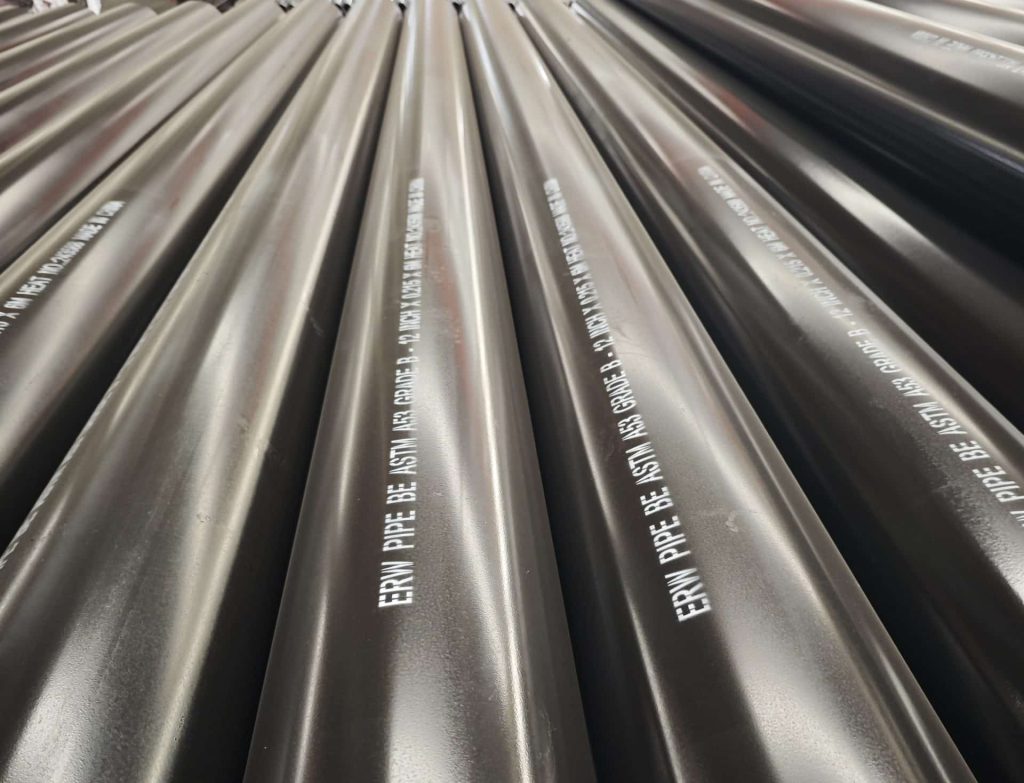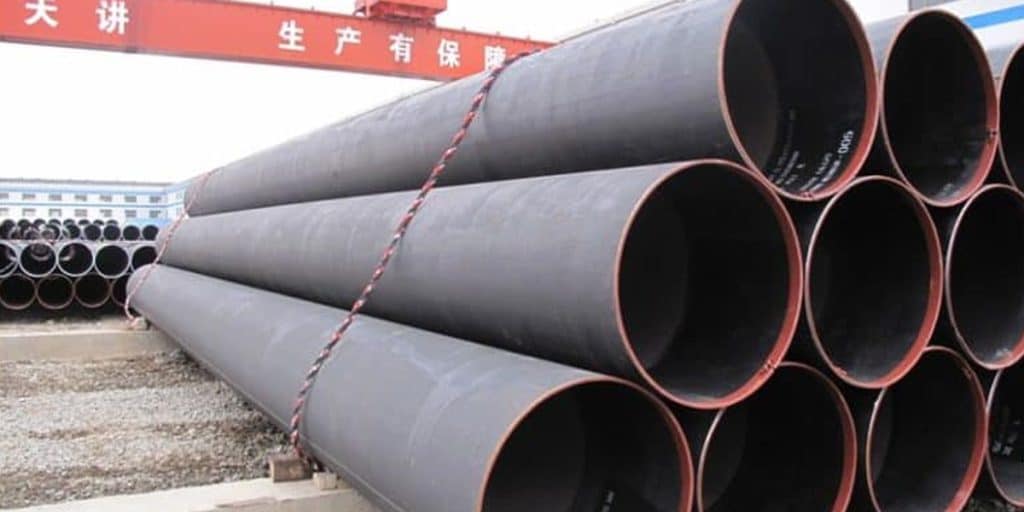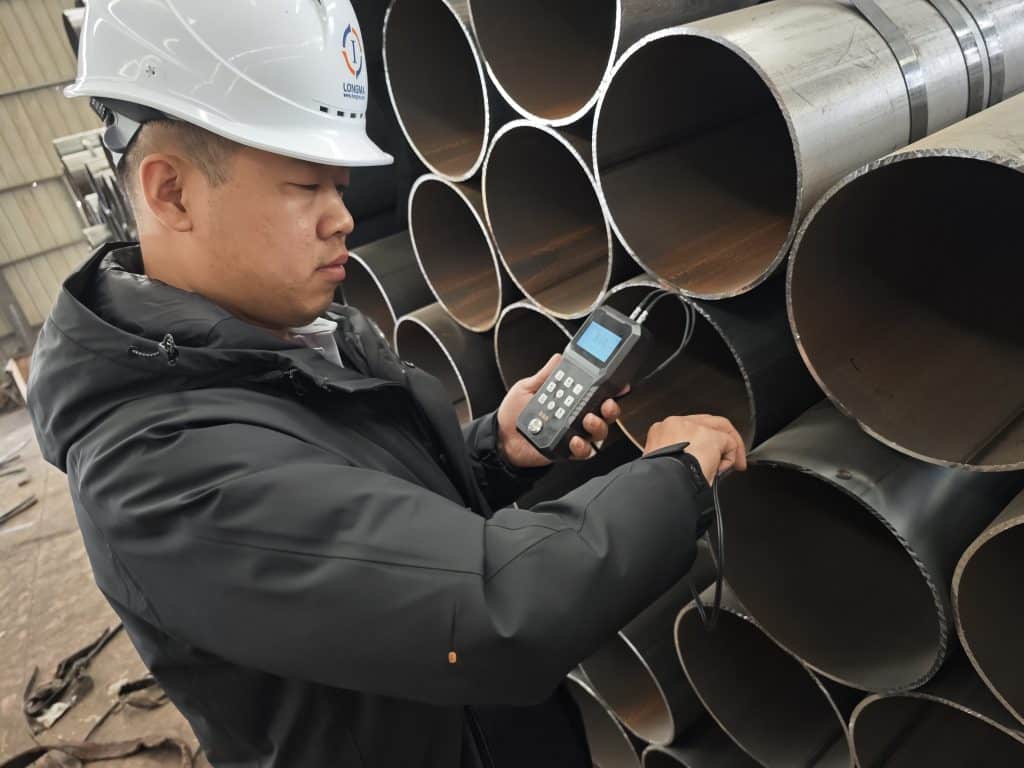
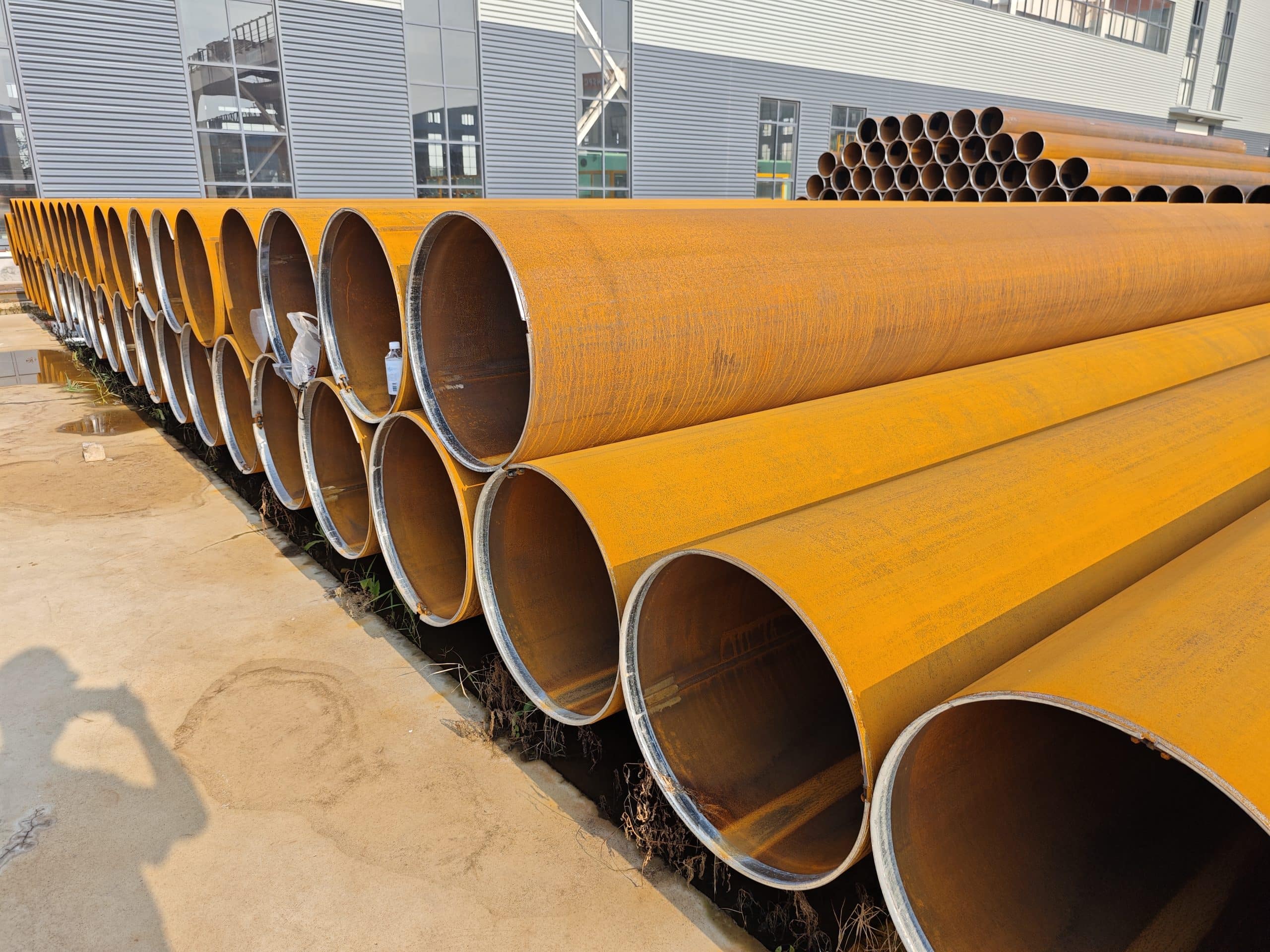
Large-diameter steel pipe can be cut by mechanical sawing, oxy-fuel, plasma, laser, abrasive waterjet, or purpose-built pipe cutting and beveling equipment. No single method is best for every project. The correct choice depends on pipe material, outside diameter, wall thickness, coating, weld-seam position, required edge quality, production volume, and whether work is performed in a factory or in the field.
This guide focuses on round steel pipe. Equipment capacity, cutting parameters, tolerances, and safety controls must be established from the machine manufacturer’s instructions, the qualified fabrication procedure, the project specification, and applicable workplace rules.
Choose the Cutting Method by Project Requirement
| Method | Best suited to | Main considerations |
| Band or cold sawing | Square cuts with low heat input; shop cutting where equipment capacity permits | Slower cycle; blade selection, support, and coolant control |
| Oxy-fuel | Carbon and low-alloy steel, especially thicker sections and field work | Heat-affected edge, slag, fumes, fire controls; generally unsuitable for stainless steel |
| Plasma | Fast cutting of conductive metals and automated profiling | Heat input, dross, taper, consumables, extraction, and edge treatment |
| Laser | High-precision automated cutting where diameter and thickness fit the equipment | Equipment range, reflectivity, assist gas, heat-affected edge, and cost |
| Abrasive waterjet | Low-heat cutting of a range of materials | Speed, taper, abrasive handling, water management, and equipment access |
| Pipe cutting/beveling machine | Repeatable field or shop cuts and weld preparations | Machine clamping range, drive system, tooling, and procedure qualification |
Key Risks to Control
Heat-Affected Edges
Oxy-fuel, plasma, and laser cutting introduce heat. Depending on steel composition, thickness, restraint, and cooling rate, the cut edge may harden, distort, oxidize, or lose the condition required for subsequent welding. Preheat, cutting speed, heat input, edge removal, or hardness verification may be required by the fabrication procedure. “Interpass temperature” is a welding term and should not be used as a general substitute for cutting-temperature control.
Loss of Squareness, Bevel Accuracy, and Length
Poor alignment, pipe ovality, inadequate support, machine runout, or unstable rotation can produce an angled cut or inconsistent bevel. Cutting allowance and kerf depend on the selected process and equipment; generic kerf figures should not be used for purchasing or fabrication calculations.
Handling and Coating Damage
Large and thick-wall pipe imposes substantial handling loads. Incorrect lifting points, unstable rollers, or uncontrolled rotation can injure personnel and damage pipe ends, welds, or coatings. Pipe weight should be calculated from the actual dimensions and material density, and all lifting and support equipment should be selected under an approved lift plan.
Step-by-Step Cutting Procedure
- Confirm the material: check the pipe standard, grade, dimensions, heat number, coating, and any low-temperature or hardness requirements.
- Review the drawing and specification: identify final length, cut orientation, bevel geometry, tolerances, weld-seam restrictions, and inspection hold points.
- Select and qualify the method: confirm that the machine can accommodate the outside diameter, wall thickness, material, and required profile.
- Support and align the pipe: use suitable rollers, V-blocks, or clamps; prevent uncontrolled movement and verify the cutting plane.
- Mark and verify: establish a circumferential reference, measure from the approved datum, and independently confirm the cut location.
- Cut using controlled parameters: follow the equipment instructions and qualified procedure for speed, gases, current, tooling, cooling, and extraction.
- Dress the edge: remove slag, dross, burrs, sharp projections, and the amount of heat-affected material required by the procedure.
- Inspect and document: check length, squareness, bevel angle, root face, surface condition, coating damage, and any required NDT or hardness test.
- Protect and identify: repair coating where applicable, apply approved temporary corrosion protection, and preserve traceability markings.
Special Considerations for Welded Pipe
For longitudinally welded pipe, the seam location should be identified before cutting or beveling. The project may restrict notches, attachments, or temporary arc strikes near the seam. Cutting does not automatically require different technology from seamless pipe, but the procedure must avoid damaging the seam and must preserve traceability.
ASTM A671 is an electric-fusion-welded pipe specification for atmospheric and lower-temperature service. Its grade designation and Class are not interchangeable: the grade relates to plate material and strength level, while the ordered Class defines manufacturing details such as heat treatment and examination requirements. It is therefore incorrect to state that every ASTM A671 pipe receives both 100% RT and UT or that every grade is suitable for the same minimum temperature.
Cut-Edge Acceptance
| Check | Why it matters | Acceptance basis |
| Final length and squareness | Controls fit-up and spool geometry | Drawing and purchase specification |
| Bevel angle and root face | Affects welding access and root geometry | Approved weld-detail or fabrication standard |
| Dross, slag, burrs and gouges | Can interfere with fit-up or act as stress raisers | Qualified cutting and edge-preparation procedure |
| Heat-affected layer or hardness | May affect weldability or service performance | Material-specific procedure and project requirement |
| Laminations or surface defects | May become visible at the cut edge | Product standard and project acceptance criteria |
| Coating condition | Exposed steel can corrode and damaged coating may spread | Coating repair procedure |
| Identification and records | Maintains material traceability after subdivision | Quality plan and marking procedure |
Safety Requirements
Safety requirements must be based on a task-specific risk assessment. Typical controls include stable pipe support, guarded rotating equipment, verified lifting capacity, hot-work authorization, fire prevention, ventilation or fume extraction, process-appropriate eye and face protection, hearing protection, respiratory protection where required, and control of coatings that may release hazardous fumes.
Fixed values for respirator type, lens shade, lifting safety factor, fire-watch duration, or refresher-training interval should not be presented as universal rules. The employer must select controls under the applicable jurisdiction, equipment instructions, exposure assessment, and site permit system.
What Buyers Should Specify
- Pipe standard, grade, outside diameter, wall thickness, quantity, and original length
- Required finished length and dimensional tolerances
- Square cut, bevel, compound bevel, or special end profile
- Permitted cutting method and any heat-input or hardness limitations
- Weld-seam orientation or exclusion zones
- Coating removal and repair requirements
- Required visual, dimensional, NDT, or hardness inspection
- Marking, traceability, material certificates, packing, and third-party inspection
Understanding EN 10204 Documentation
EN 10204 defines types of inspection documents for metallic products. A 3.1 or 3.2 inspection certificate does not authorize cutting and does not by itself qualify a cutting procedure. If cutting changes identification or divides a pipe into shorter pieces, the fabricator should maintain a documented link between each new piece and the original material certificate.
Working with LONGMA
LONGMA manufactures round ERW and LSAW steel pipe and can review custom length, pipe-end preparation, coating, inspection, and documentation requirements during quotation. The available cutting range and inspection scope should be confirmed for the actual pipe dimensions, material, and project specification. No square or rectangular tube production is implied.
FAQ
Which method minimizes thermal distortion?
Mechanical sawing and abrasive waterjet introduce little or no cutting heat. Whether they are practical depends on pipe size, wall thickness, equipment access, productivity, and required edge condition.
Can welded and seamless pipe use the same cutting method?
Often yes, provided the selected procedure suits the material and dimensions. Welded pipe additionally requires seam identification and protection against seam damage or prohibited cut locations.
Should a thermally cut edge be stress relieved?
Not automatically. Heat treatment, hardness control, or removal of the affected edge is required only when specified by the material-specific fabrication procedure, design code, or project requirement.
Request Cutting and Pipe Supply Review
Send the pipe standard, grade, outside diameter, wall thickness, required length, end profile, tolerance, inspection requirements, quantity, and destination to info@ilongma.com for technical and commercial review.