Buckling is a stability failure that can occur when a member under compression deflects laterally. The cross-section affects a member’s resistance to buckling, but geometry alone does not determine the capacity. Effective length, end restraint, material properties, initial imperfections, residual stresses, and the applicable design method also influence the result.
A circular hollow section (CHS) can be attractive for compression members because its second moment of area is the same about every centroidal axis in the cross-sectional plane. This means that its ideal elastic flexural stiffness does not vary with the orientation of the bending axis. Whether a particular CHS is more efficient than another section must still be assessed using comparable dimensions, steel area, and design conditions.
Understanding Column Buckling
For an ideal, straight, prismatic column that remains elastic and has idealized end conditions, Euler’s critical load is Pcr = π²EI/Le². Here, E is Young’s modulus, I is the second moment of area about the relevant buckling axis, and Le is the effective length. The equation shows that the ideal elastic critical load increases with flexural stiffness and decreases with the square of effective length.
Real steel members do not perfectly match the assumptions of Euler theory. Initial crookedness, residual stress, material yielding, connection restraint, and local slenderness can reduce the resistance. Design standards therefore use their prescribed stability methods rather than relying on the Euler equation alone for every column.
Why Cross-Section Geometry Matters
The radius of gyration is r = √(I/A), where A is the cross-sectional area. The ratio Le/r is commonly used to describe member slenderness. For a CHS, the centroidal second moment of area is the same in every direction, so its radius of gyration is also the same for all centroidal axes. A square or rectangular hollow section may have different values about its principal axes, depending on its dimensions.
This geometric symmetry can be useful where the direction of lateral deflection is uncertain. It does not mean that a CHS cannot buckle, nor does it mean that it always has a higher critical load than a square or rectangular section. The comparison depends on the actual sections and member conditions.
Local Buckling, Wall Thickness, and Material Grade
A compression member may be affected by both overall buckling and local buckling of its walls. The outside diameter-to-thickness ratio and the applicable section classification or slenderness provisions are relevant to local behaviour. Increasing wall thickness generally increases area and section stiffness for a fixed outside diameter, but it also increases member weight. The final choice should balance capacity, weight, fabrication, and connection requirements.
Steel grade is another input, but higher yield strength does not automatically provide a proportional increase in elastic buckling load. In a slender member, stiffness and effective length can be as important as yield strength. Grade selection and wall thickness should be verified using the applicable design standard and the actual load combinations.
Design and Procurement Checks
Before selecting a CHS column, the structural design should establish the design compression force, effective length, end restraint, relevant bending moments, and any torsional or eccentric effects. The designer should check overall member stability, local section slenderness, connections, and any applicable serviceability requirements. No single slenderness ratio should be treated as a universal acceptance limit for all members without checking the governing standard and member category.
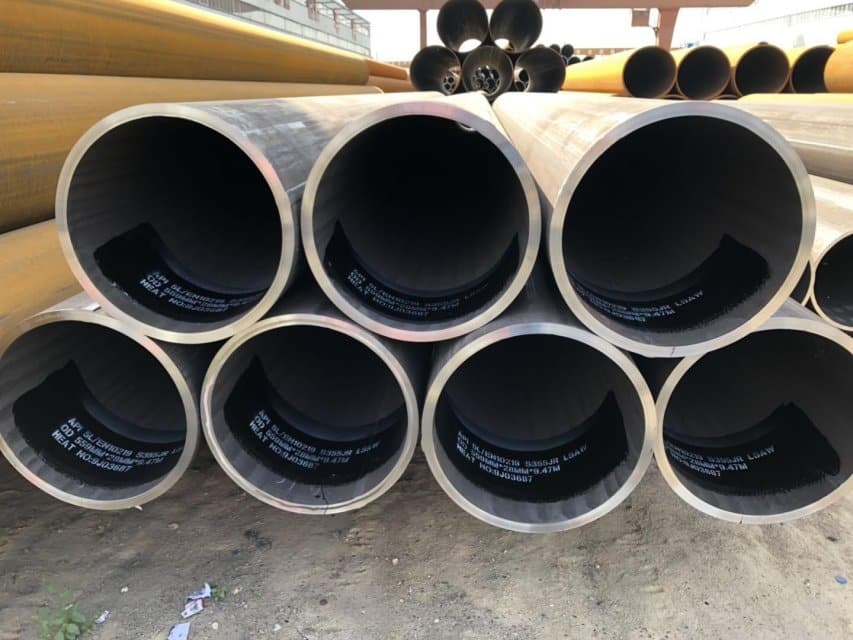
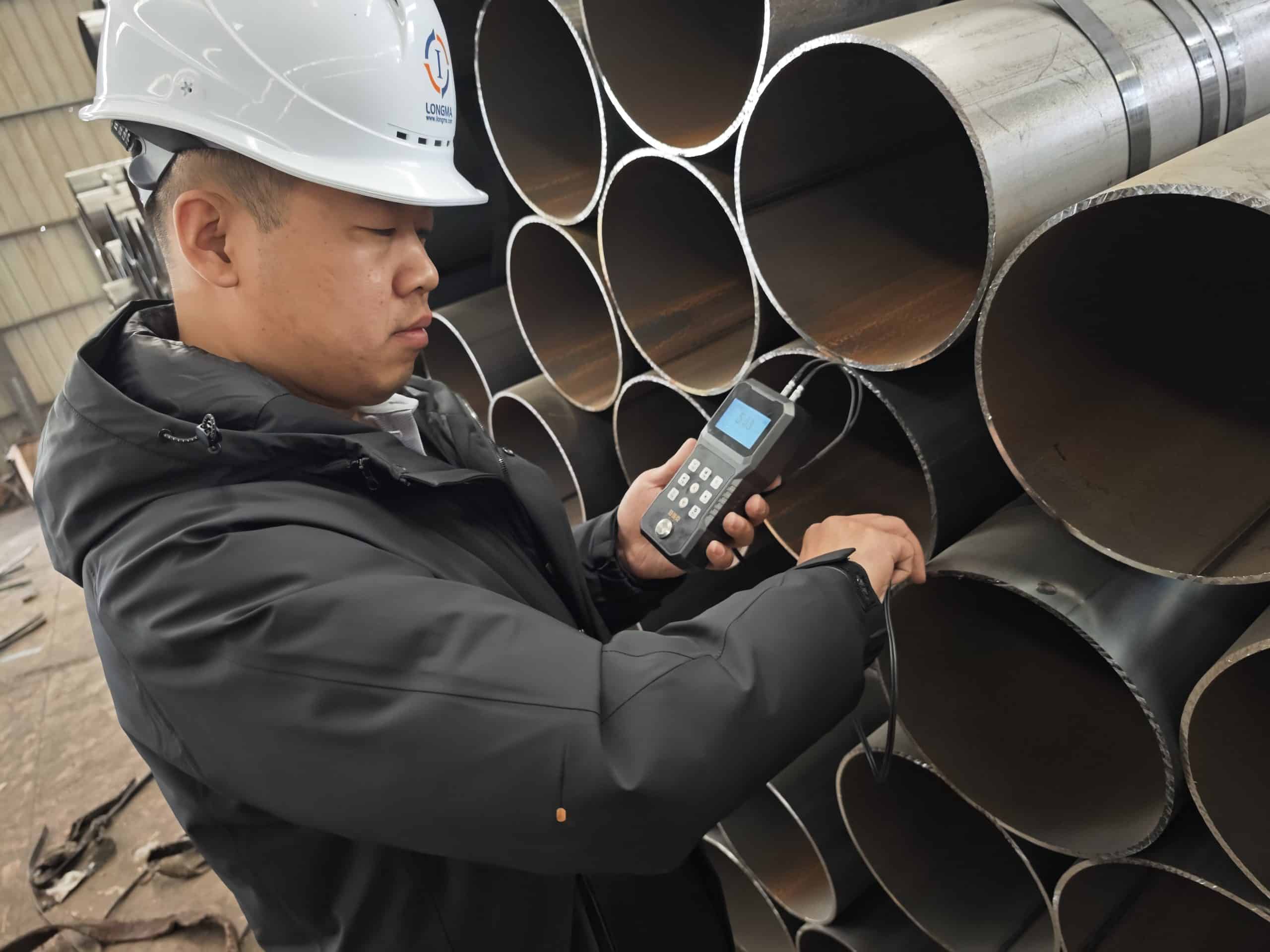
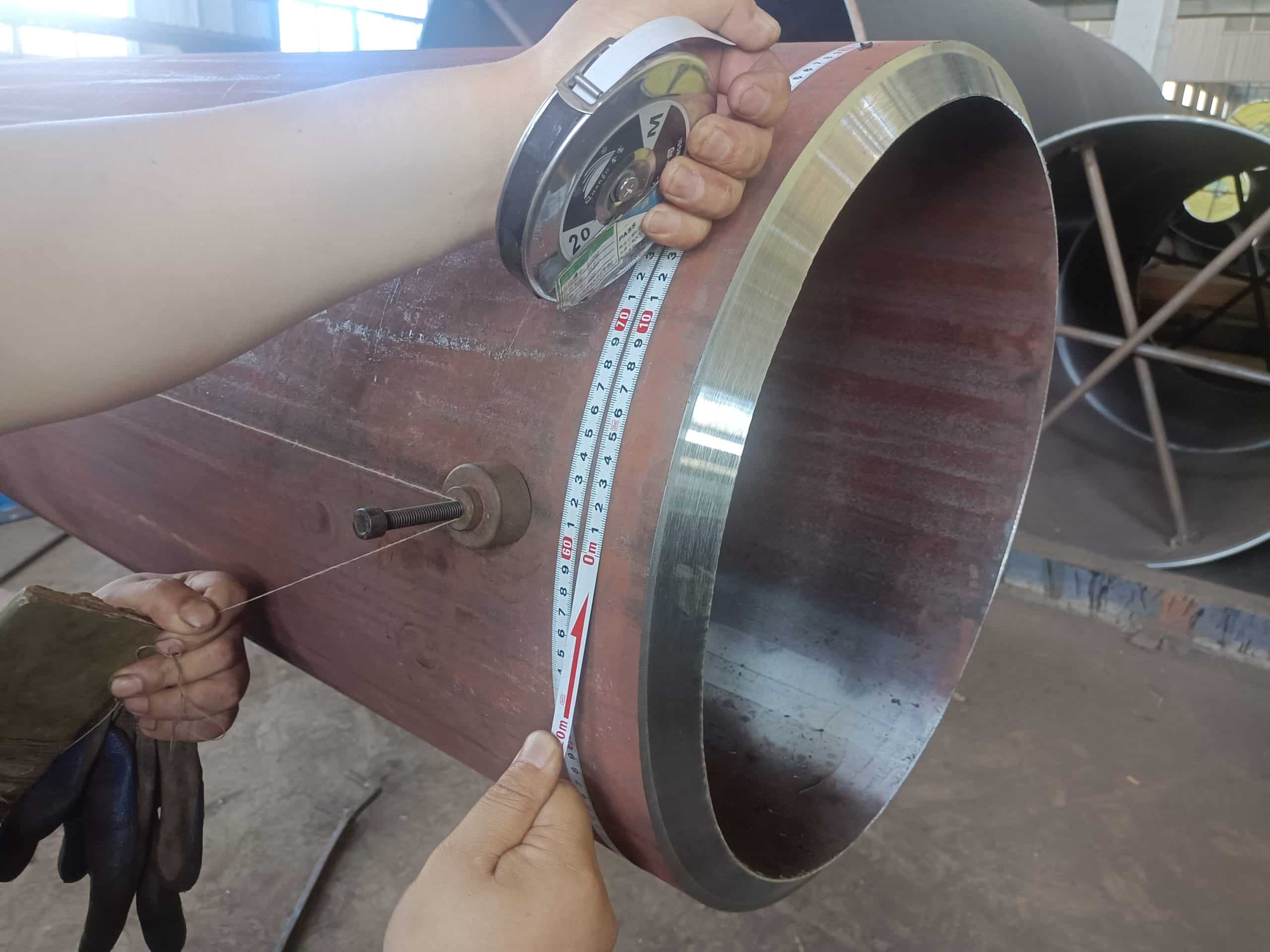
Procurement documents should identify the product standard and edition, steel grade, outside diameter, wall thickness, length, dimensional tolerances, inspection and test requirements, traceability, and required material documentation. Manufacturing tolerances define permitted variation; they do not mean that every produced section has exactly identical dimensions around its circumference. Actual conformity should be established through the specified inspection process.
Applications
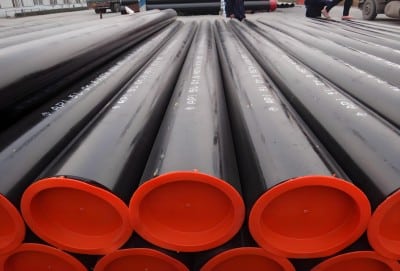
CHS is used in columns, bracing, trusses, towers, and other structures where axial compression may act together with bending. Its rotational symmetry can be helpful when loads or lateral restraint conditions vary by direction. The suitability of CHS for a bridge, mining structure, industrial building, or other project must be demonstrated by the design checks and project specifications; the section shape alone is not proof of adequacy.
Where project-specific performance claims or case studies are used in technical marketing, they should be supported by verifiable project information or documented calculations. Without that evidence, it is more accurate to describe general applications rather than claim a particular percentage reduction in steel weight or a guaranteed construction-cost saving.
Conclusion
A circular hollow section offers uniform centroidal second moment of area about all axes in its cross-sectional plane, which can be advantageous in compression members where buckling direction is uncertain. Its actual resistance depends on the section dimensions, effective length, end restraint, steel grade, local slenderness, imperfections, and design requirements.
The correct selection process combines structural calculations with product-standard compliance and verified inspection documents. Engineers should use the governing design standard to determine member capacity, while procurement teams should ensure that the delivered CHS matches the specified dimensions, grade, and documentation requirements.
Frequently Asked Questions
Does a CHS eliminate column buckling?
No. CHS can have favourable geometric properties, but any sufficiently slender compression member may buckle. Member length, end restraint, load eccentricity, imperfections, and design conditions remain important.
What is the Euler critical buckling load?
For an ideal elastic column, Pcr = π²EI/Le². This is a theoretical reference equation; actual design resistance must be determined using the applicable structural design standard.
Does a higher steel grade always improve buckling resistance?
Not by the same proportion in every case. Higher yield strength can improve strength-governed resistance, but elastic buckling also depends on stiffness, cross-section geometry, and effective length.
How should CHS dimensions be selected?
The required outside diameter and wall thickness should be determined by structural calculations and checked for overall stability, local slenderness, and connection requirements. The applicable product standard and project specification should then be used for procurement.
LONGMA Steel Pipe
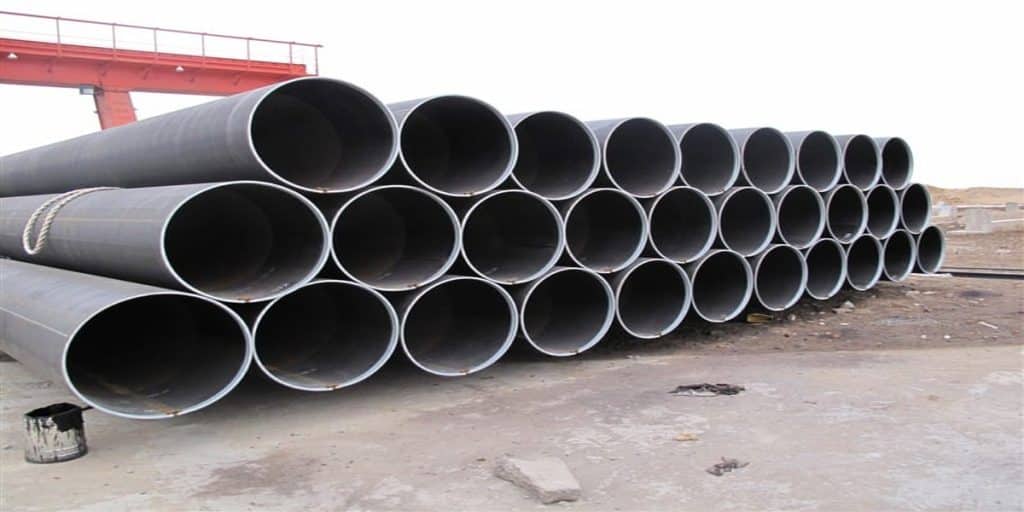
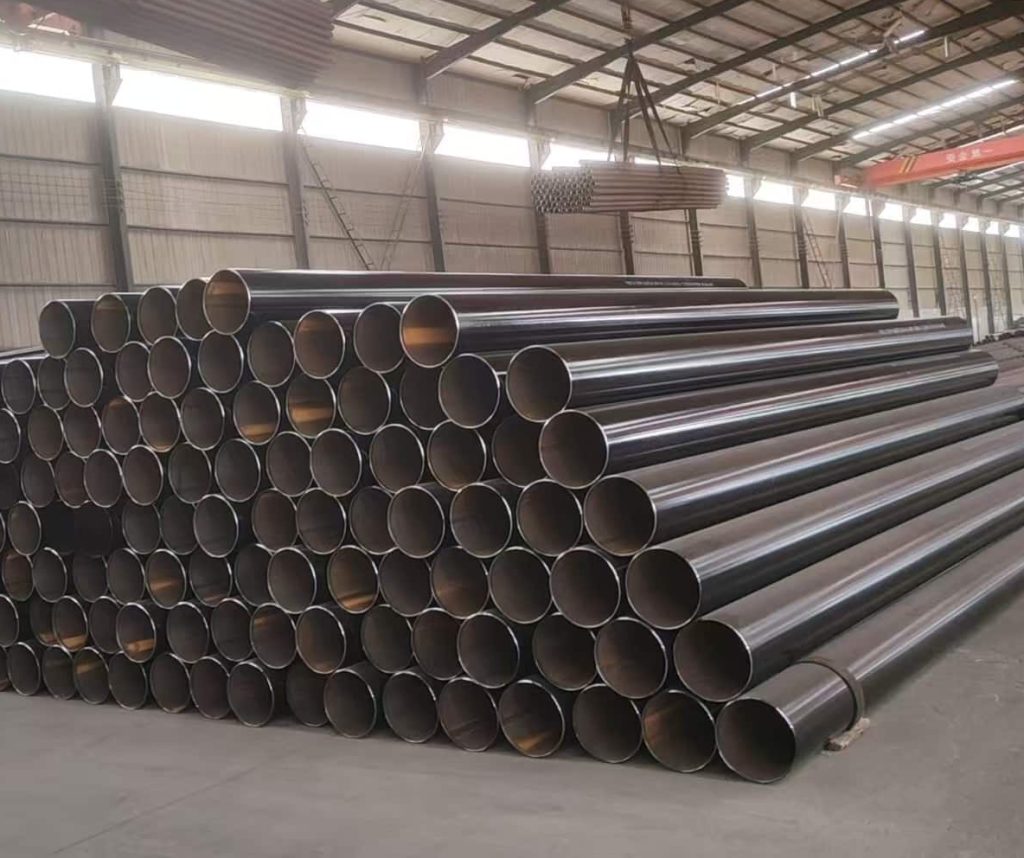
LONGMA manufactures round steel pipe products using ERW and LSAW processes. For project enquiries, confirm the required dimensions, grade, applicable product standard, inspection scope, and any project-specific requirements with the LONGMA team. LONGMA’s factory area is 230,000 m² and its annual output exceeds 500,000 tonnes. Product availability and compliance should be confirmed against the current product range and the requirements of each order.
For technical and commercial enquiries, contact info@ilongma.com.