- 1. What Is FBE-Coated Steel Pipe?
- 2. How FBE Protects Steel Against Corrosion
- 3. FBE Compared With Other Coating Systems
- 4. Standards: Confirm the Scope Before Specifying
- 5. Factors That Affect FBE Coating Performance
- 6. Temperature and Chemical Compatibility
- 7. Where FBE-Coated Pipe Is Used
- 8. What Buyers Should Include in an FBE-Coated Pipe RFQ
- 9. Quality Documents to Review
- 10. Conclusion
- 11. FAQ
Fusion-bonded epoxy (FBE) is a thermosetting powder coating used to protect steel pipe from corrosion. It is applied to prepared steel under controlled conditions and forms a continuous coating after melting and curing. FBE is widely specified for buried and submerged pipeline applications, but its suitability depends on the coating standard, service environment, installation method, and quality-control requirements. This guide explains how FBE works, how it compares with other coating systems, and what buyers should confirm before placing an order.
What Is FBE-Coated Steel Pipe?
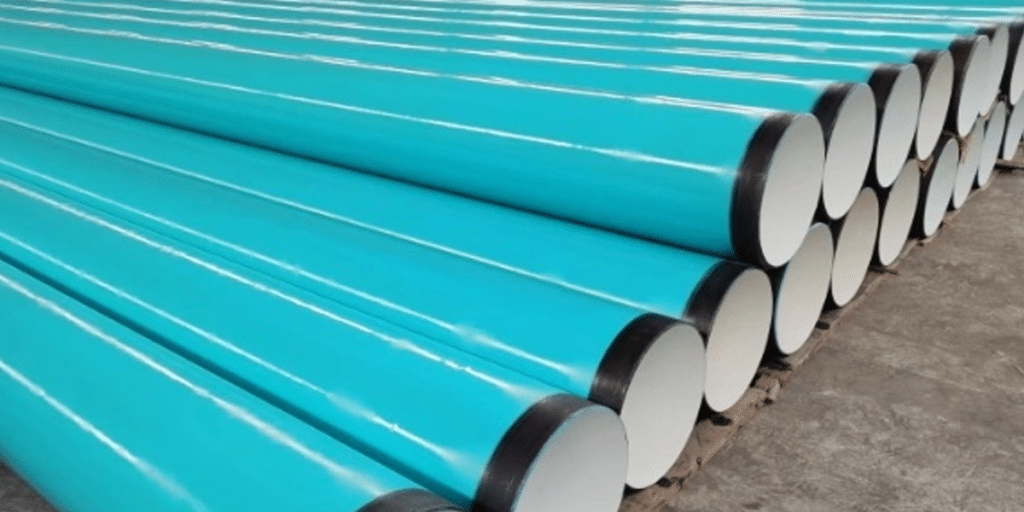
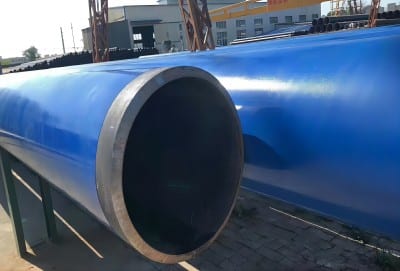
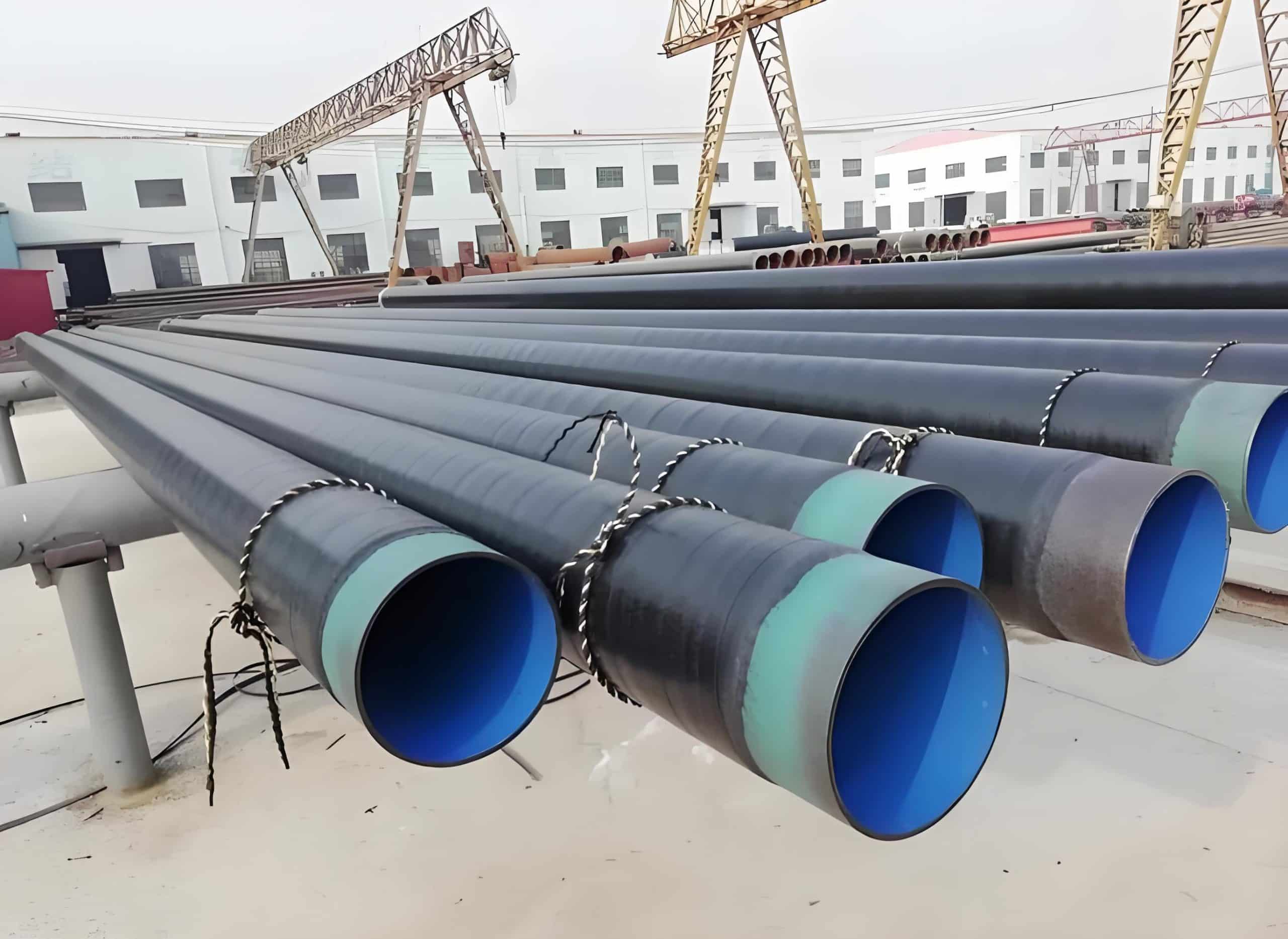
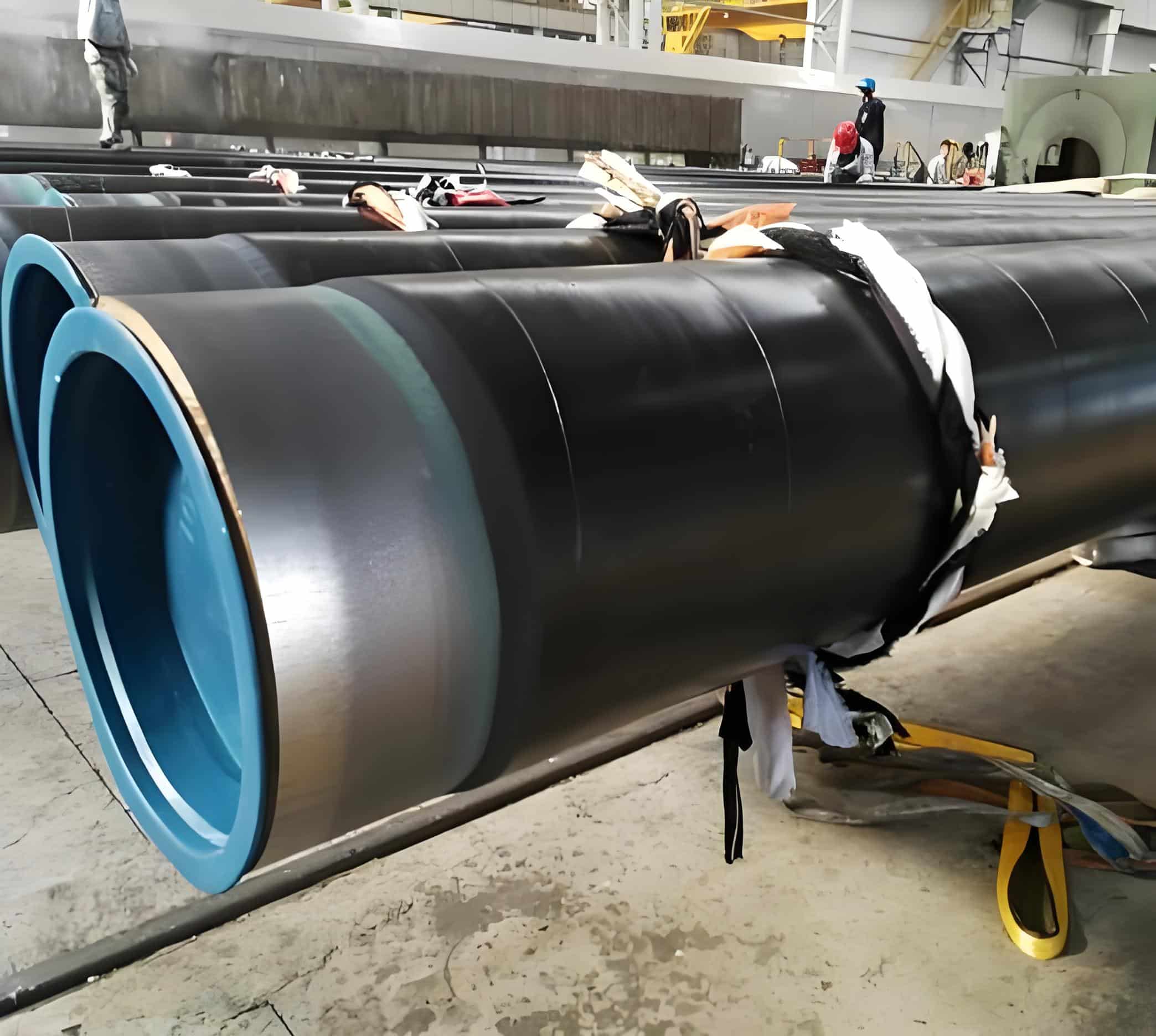
FBE-coated steel pipe is pipe with a fusion-bonded epoxy layer applied to its surface. Before application, the steel is cleaned, commonly by abrasive blasting, and heated to the temperature specified for the selected powder and coating process. The epoxy powder is then applied, melts on contact with the hot steel, and cures to form a solid film. Application temperature and cure conditions are product- and process-specific; 450°F (232°C) should not be treated as a universal requirement.
In pipeline specifications, FBE commonly refers to a plant-applied external coating. Buyers should state clearly whether external coating, internal lining, or both are required. The applicable standard and qualification requirements can differ by coating location and service.
How FBE Protects Steel Against Corrosion
A properly applied FBE layer acts as a barrier that limits contact between the steel and corrosive soil, water, or other external environments. Its adhesion to prepared steel and its electrical insulating properties are important performance characteristics. For buried or submerged pipelines, FBE is commonly used together with cathodic protection where required by the pipeline corrosion-control design.
A coating holiday or damaged area exposes the underlying steel. Cathodic protection may protect exposed steel if the system is correctly designed and operating, but coating disbondment and shielding conditions can affect current distribution. FBE should therefore not be described as immune to shielding or as a substitute for a properly designed cathodic-protection system.
FBE Compared With Other Coating Systems
The coating system should be selected according to corrosion exposure, mechanical damage risk, installation method, operating temperature, and project specifications. The systems below are not interchangeable.
| Coating system | Main characteristics | Typical selection considerations |
| Single-layer FBE | A single epoxy layer with strong adhesion to properly prepared steel. | Suitable where the specified FBE system meets corrosion and handling requirements. |
| Dual-layer FBE | FBE with an additional abrasion-resistant overlay. | Consider where additional abrasion or impact resistance is required by the project. |
| 3LPE / 3LPP | A multilayer system generally combining an epoxy primer, adhesive, and polyethylene or polypropylene outer layer. | Often selected where greater mechanical protection is required; confirm the governing PE/PP coating standard. |
| Liquid epoxy | A liquid-applied coating or lining that cures chemically. | May be specified for steel water pipe, field joints, repairs, or applications covered by the relevant product standard. |
| Galvanizing | A zinc coating that provides barrier and sacrificial protection. | Selection depends on exposure, temperature, geometry, and applicable galvanizing requirements. |
FBE is not the same as a 3LPE or 3LPP system. In a multilayer polyolefin system, FBE may serve as the primer layer, but the complete system includes additional layers and is qualified to its own requirements.
Standards: Confirm the Scope Before Specifying
The standard named in a purchase specification must match the coating type and application. The following distinctions are important:
- ISO 21809-2:2026 covers plant-applied, single-layer external FBE coatings for buried or submerged steel pipe used in pipeline transportation systems within its stated scope.
- ISO 21809-1 addresses external three-layer polyethylene and polypropylene coating systems; it is not the standalone FBE coating standard.
- DIN 30670 relates to polyethylene coatings on steel pipes and fittings, while DIN 30678 relates to polypropylene coatings. Neither should be cited as a general standalone FBE specification.
- AWWA C210 covers liquid-epoxy coatings and linings for steel water pipe and fittings. AWWA C213 covers fusion-bonded epoxy coatings and linings for steel water pipe and fittings.
- CSA Z245.20 is a plant-applied external FBE coating standard. Confirm the edition and project-specific requirements in the contract.
The latest edition, amendments, scope, and acceptance criteria should be checked directly against the project specification and the standards publisher’s current catalogue. Do not combine standards simply because they all relate to corrosion protection.
Factors That Affect FBE Coating Performance
Surface Preparation and Application Control
Surface preparation is fundamental to coating adhesion. The specification should identify the required cleanliness grade and surface profile separately. For example, Sa 2½ under ISO 8501-1 is a visual cleanliness grade; it does not define the required surface roughness. The required profile, dust level, soluble-salt limits, and other preparation criteria should be set by the coating specification and powder manufacturer’s qualified procedure.
Other process controls include powder storage and handling, steel preheating, application conditions, cure time, coating thickness, and controlled cooling. The actual limits must come from the approved coating procedure and applicable standard rather than a generic temperature range.
Handling, Field Joints, and Repairs
Lifting, stacking, transport, lowering-in, and backfilling can damage a coating even when the factory application is satisfactory. The project should specify suitable handling materials, inspection methods, holiday testing, repair procedures, and acceptance criteria. Field-joint coating must also be compatible with the pipeline coating system and installation procedure.
Adhesion and Cathodic Disbondment
Adhesion and cathodic-disbondment performance are evaluated using the test methods and acceptance limits required by the governing standard and purchase specification. ASTM G8 is one recognized method for evaluating cathodic disbondment of pipeline coatings; it should not be treated as a universal substitute for the test regime specified by ISO, CSA, AWWA, or the project. Test duration, temperature, electrolyte, and acceptance limits must be stated or taken from the applicable standard.
Temperature and Chemical Compatibility
There is no single service-temperature range or chemical-resistance rating that applies to every FBE formulation. The permitted operating temperature depends on the powder formulation, coating thickness, exposure conditions, and qualification data. Buyers should obtain the manufacturer’s documented limits for continuous and intermittent service, including start-up or upset conditions.
Chemical compatibility must be assessed against the actual medium, concentration, temperature, and exposure duration. Water, chlorides, hydrocarbons, acids, alkalis, and wastewater constituents can affect different formulations in different ways. A general statement that FBE is unaffected by these substances is not a reliable basis for material selection. Where the service is unusual or aggressive, request relevant test data or written technical confirmation for the specified coating system.
Where FBE-Coated Pipe Is Used
FBE is used in external corrosion-protection specifications for buried or submerged steel pipelines, including some oil and gas transmission, water transmission, and industrial pipeline projects. The applicable standard and coating qualification must match the service and the owner’s requirements.
For steel water pipelines, distinguish between external corrosion protection and internal lining. Potable-water contact requires compliance with the applicable health-effects and regulatory requirements in the destination market. For industrial water, cooling water, or process service, internal coating compatibility should be evaluated against the actual water chemistry and operating conditions.
For firewater and other utility lines, the coating system should be selected from the design basis rather than assumed from the service name. Soil exposure, immersion, temperature, flow conditions, and maintenance requirements all matter.
What Buyers Should Include in an FBE-Coated Pipe RFQ
- Pipe standard, grade, outside diameter, wall thickness, length, quantity, and end preparation.
- Whether the requirement is for external coating, internal lining, or both.
- The governing coating standard and edition, including any project-specific deviations.
- Service medium, operating and design temperatures, immersion or burial conditions, and relevant soil or water chemistry.
- Required coating thickness, surface-preparation criteria, inspection and test plan, holiday-test requirements, and acceptance limits.
- Cathodic-disbondment and adhesion test requirements, including test method and frequency where specified.
- Repair procedure, field-joint coating requirements, packaging, lifting, and transport protection.
- Required material certificates, coating inspection reports, traceability records, and third-party inspection scope.
Quality Documents to Review
Before shipment, review the approved coating procedure, surface-preparation records, application and cure records, thickness measurements, visual-inspection results, holiday-test reports, repair records, and any specified adhesion or cathodic-disbondment test reports. The documents should be traceable to the pipe identification and coating batch. The inspection and test plan should define which records are required for each order.
Conclusion
FBE can provide effective corrosion protection when the coating system is correctly selected, applied, inspected, handled, and maintained as part of the pipeline corrosion-control design. It is not a universal solution for every temperature, chemical, or installation condition. Buyers should identify the exact coating scope, select the correct standard, confirm service compatibility, and define inspection and repair requirements before ordering. LONGMA manufactures ERW and LSAW round steel pipes. For a project enquiry, provide the pipe specification, dimensions, service conditions, and coating requirements so the applicable product scope can be reviewed.
FAQ
What is FBE coating on steel pipe?
FBE is a thermosetting epoxy powder coating applied to prepared steel under controlled heating and curing conditions. It is commonly used as an external corrosion-protection coating for buried or submerged pipelines.
Is FBE the same as 3LPE?
No. FBE is an epoxy coating. 3LPE is a multilayer system that includes an epoxy primer, an adhesive layer, and a polyethylene outer layer. The two systems have different structures and qualification requirements.
Which standard covers external FBE coating?
ISO 21809-2:2026 covers single-layer, plant-applied external FBE coatings within its scope. Other project standards, such as CSA Z245.20, may also apply. The specified standard and edition must be confirmed for each project.
Does FBE eliminate the need for cathodic protection?
No. Whether cathodic protection is required depends on the pipeline corrosion-control design and applicable requirements. FBE is commonly used as a coating in combination with cathodic protection for buried or submerged pipelines.