- 1. Why Is Steel Pipe Forming a Critical Stage for Energy Savings?
- 2. How Does LONGMA Optimize Steel Pipe Forming Processes?
- 3. How Does Energy-Efficient Production Improve Steel Pipe Quality?
- 4. How Does LONGMA Reduce Resource Waste Through Quality Inspection?
- 5. How Does LONGMA’s Internal Laboratory Support Green Manufacturing?
- 6. What Value Does Energy-Efficient Manufacturing Bring to Buyers?
- 7. Why Do Global Customers Trust LONGMA?
- 8. Conclusion
As sustainability requirements continue to grow across the global energy industry, oil and gas transmission projects, and infrastructure construction, steel pipe manufacturers are expected not only to ensure product quality but also to achieve energy efficiency, reduced resource consumption, and environmentally responsible production.
For international buyers, selecting a steel pipe supplier with advanced energy-saving technologies means greater product consistency, a lower project carbon footprint, and a more sustainable supply chain.
With more than 20 years of industry experience, LONGMA continuously optimizes its steel pipe forming processes through intelligent manufacturing equipment, lean production practices, and comprehensive quality management systems. By doing so, the company achieves the dual objectives of higher production efficiency and lower energy consumption. This article explores LONGMA’s energy-saving and consumption-reduction strategies from multiple perspectives, including production processes, energy-efficient technologies, quality control systems, and customer value.
Why Is Steel Pipe Forming a Critical Stage for Energy Savings?
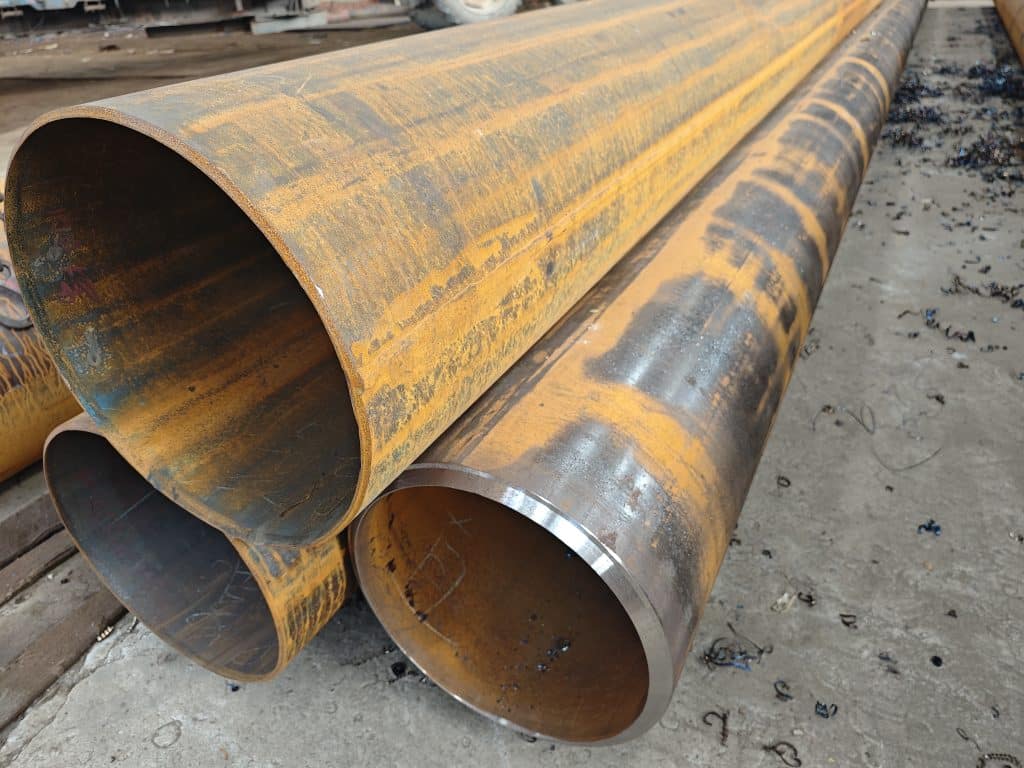
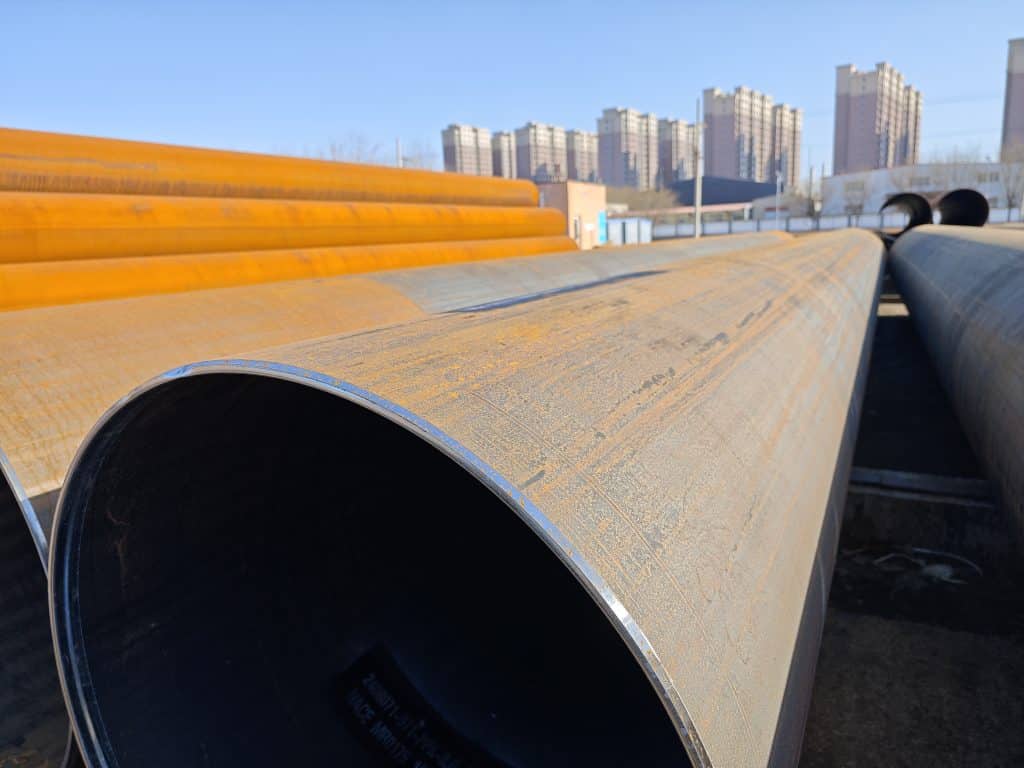
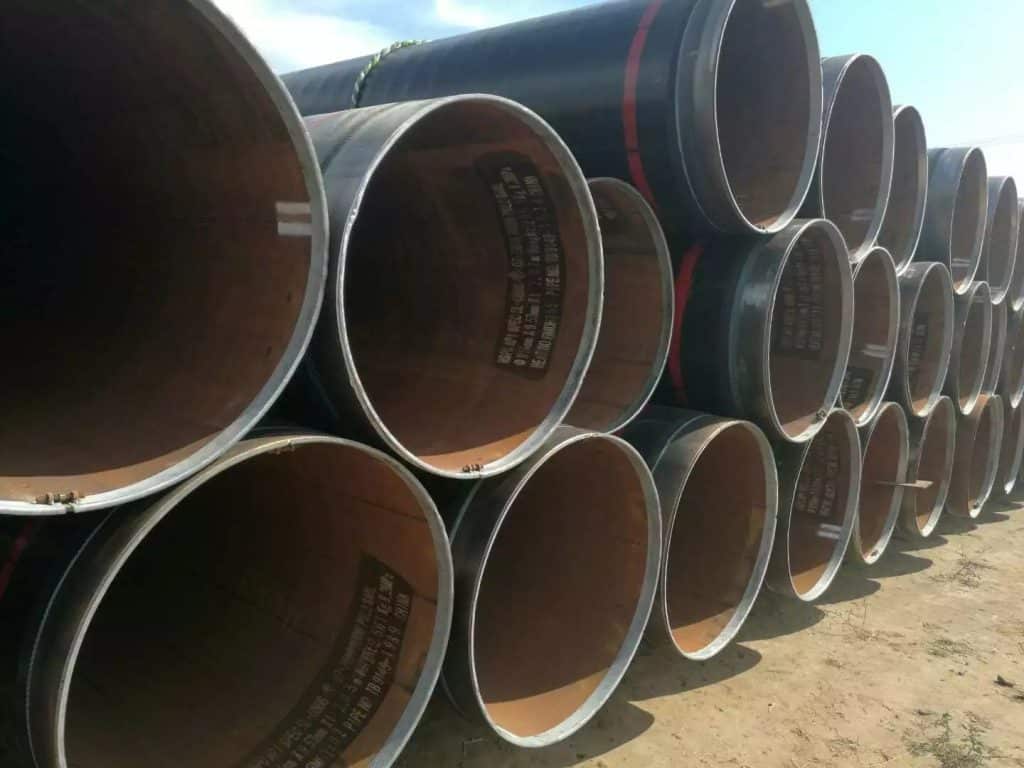
In the production of LSAW steel pipes, API 5L line pipes, and large-diameter transmission pipes, the forming process is typically one of the most energy-intensive stages.
Major sources of energy consumption include:
- Forming equipment drive systems
- Hydraulic system operations
- Welding equipment
- Heat treatment processes
- Auxiliary inspection equipment
According to industry experience, forming and welding operations often account for more than 40% of the total energy consumption throughout the manufacturing process.
Therefore, optimizing steel pipe forming technology not only reduces production costs but also improves product consistency and market competitiveness.
How Does LONGMA Optimize Steel Pipe Forming Processes?
- Advanced JCOE Forming Technology
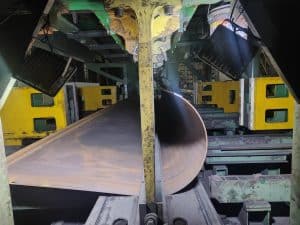
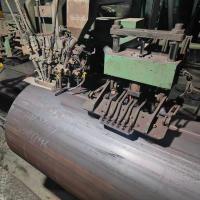
LONGMA utilizes the internationally recognized JCOE forming process for manufacturing LSAW steel pipes.
The JCOE process includes:
- J-form pre-bending
- C-form shaping
- O-form closing
- Pipe expansion and calibration
Compared with traditional roll-forming technology, JCOE offers the following advantages:
| Comparison Item | Traditional Forming | LONGMA JCOE Process |
| Forming Accuracy | Standard | High Precision |
| Energy Consumption | Higher | Lower |
| Stress Distribution | Uneven | More Uniform |
| Material Utilization | Average | Higher |
| Product Consistency | Variable | Stable |
By optimizing forming paths and equipment parameters, LONGMA significantly reduces repeated corrections and rework, minimizing energy waste at its source.
- Intelligent Hydraulic Control System
Hydraulic equipment is a major source of energy consumption during steel pipe manufacturing.
Traditional hydraulic systems often suffer from:
- High idle energy consumption
- Pressure fluctuations
- Slow response speeds
To address these issues, LONGMA has implemented intelligent servo-hydraulic control technology featuring:
- On-demand energy supply
- Automatic pressure adjustment
- Dynamic load management
Benefits include:
- Reduced electricity consumption
- Improved equipment stability
- Lower hydraulic oil losses
These improvements not only reduce manufacturing costs but also enhance dimensional accuracy.
- Energy-Efficient Welding Optimization
In API 5L steel pipe production, welding directly affects both product quality and energy utilization.
LONGMA adopts Double Submerged Arc Welding (DSAW) technology and utilizes digital welding control systems to optimize:
- Welding current
- Welding voltage
- Welding speed
- Heat input management
The process is designed in accordance with:
- API 5L
- ISO 17635
- AWS D1.1
The optimized welding process achieves:
| Optimization Goal | Result |
| Lower Energy Consumption | Reduced unnecessary heat input |
| Improved Weld Quality | Lower repair rates |
| Higher Efficiency | Shorter production cycles |
| Reduced Material Waste | Better welding consumable utilization |
For buyers, this translates into more reliable product quality and more dependable delivery schedules.
How Does Energy-Efficient Production Improve Steel Pipe Quality?
Many customers assume that energy savings are only about cost reduction. In reality, advanced energy-saving technologies often improve product quality simultaneously.
Automated Forming Control Reduces:
- Roundness deviations
- Excessive ovality
- Weld misalignment
Intelligent Temperature Management Prevents:
- Overheating
- Microstructural instability
- Increased welding defects
As a result, energy-efficient manufacturing is not simply a cost-cutting measure—it is also an important pathway to achieving superior product quality.
How Does LONGMA Reduce Resource Waste Through Quality Inspection?
High-quality steel pipe manufacturing depends not only on production equipment but also on a comprehensive inspection system.
Every instance of rework, scrap, or quality failure results in additional energy consumption and material waste. Therefore, LONGMA has established a full-process quality control system.
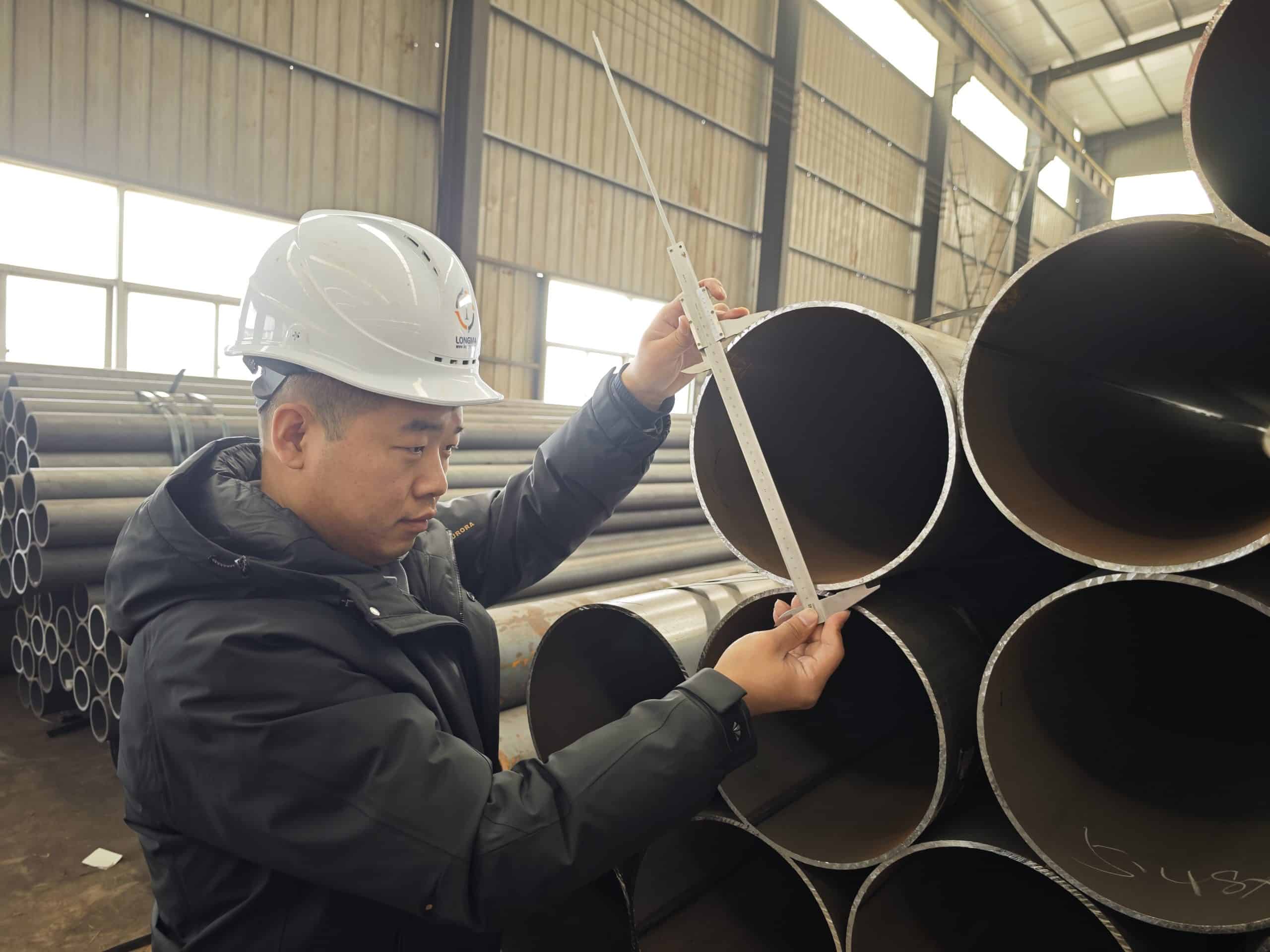
- Dimensional Inspection System
Inspection items include:
- Outside Diameter (OD)
- Wall Thickness (WT)
- Length
- Roundness
- Straightness
Inspection equipment includes:
- Laser diameter measuring instruments
- Automatic dimensional scanning systems
- Ultrasonic thickness gauges
Applicable standards:
- API 5L Section 9
- ASTM A530
Real-time inspection enables immediate detection of deviations, preventing large-scale rework.
- Non-Destructive Testing (NDT)
Ultrasonic Testing (UT)
Standards:
- ASTM E213
- ISO 10893-10
Detects:
- Lamination
- Cracks
- Lack of fusion
Radiographic Testing (RT)
Standards:
- ASTM E94
- ISO 10893-7
Detects:
- Porosity
- Slag inclusions
- Incomplete penetration
Through 100% weld seam inspection, LONGMA significantly reduces quality losses and resource waste.
How Does LONGMA’s Internal Laboratory Support Green Manufacturing?
For international buyers, manufacturing strength is reflected not only in production equipment but also in verification capabilities.
LONGMA has established a comprehensive in-house laboratory system.
- Chemical Analysis Laboratory
Tests:
- Carbon (C)
- Manganese (Mn)
- Phosphorus (P)
- Sulfur (S)
- Alloying elements
This ensures compliance with API 5L and ISO 3183 requirements.
- Mechanical Testing Laboratory
Tests include:
- Yield Strength
- Tensile Strength
- Elongation
- Impact Toughness
These evaluations ensure products meet project requirements and help avoid waste caused by quality-related failures.
- Metallurgical Laboratory
Analyzes:
- Grain structure
- Heat-affected zones (HAZ)
- Weld microstructure
The results help optimize heat treatment processes and improve energy efficiency.
What Value Does Energy-Efficient Manufacturing Bring to Buyers?
An increasing number of international projects now include sustainability performance as part of supplier evaluations.
LONGMA’s energy-efficient manufacturing system helps customers achieve:
| Customer Benefit | Practical Value |
| Stable Quality | Reduced project risk |
| Higher Consistency | Improved installation efficiency |
| Lower Rework Rate | Reduced project costs |
| Green Supply Chain | Supports ESG requirements |
| Reliable Delivery | Better project schedule control |
Energy conservation and consumption reduction are no longer only a manufacturer’s development objective; they have become a key criterion for buyers when selecting high-quality suppliers.
Why Do Global Customers Trust LONGMA?
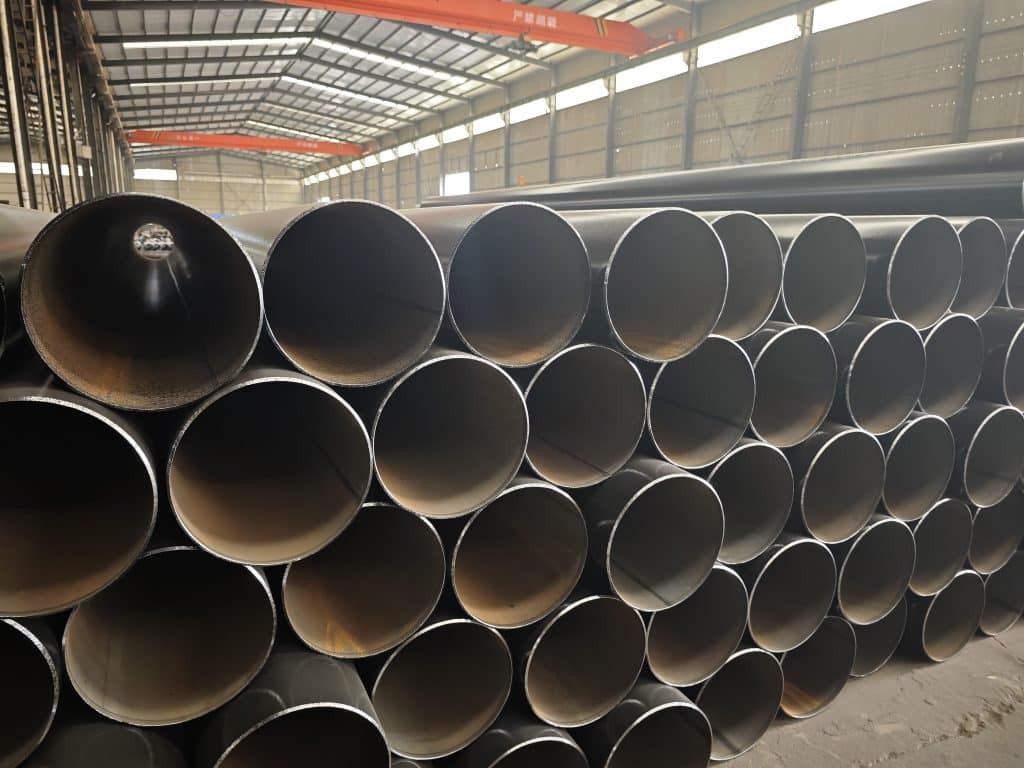
After more than two decades of development, LONGMA has established a mature and highly efficient steel pipe manufacturing system featuring:
- Automated JCOE production lines
- API 5L-compliant manufacturing systems
- Intelligent welding management systems
- Comprehensive in-house laboratories
- Full-process quality traceability systems
From steel plate procurement to finished product delivery, every production stage is designed around efficiency, quality stability, and sustainable manufacturing.
Conclusion
As the global manufacturing industry continues its transition toward low-carbon and environmentally responsible production, energy-saving and consumption-reduction measures in steel pipe forming processes have become critical indicators of competitiveness.
Through advanced JCOE forming technology, intelligent hydraulic systems, digital welding control, and comprehensive quality inspection systems, LONGMA continuously improves energy efficiency and product quality. The company provides high-quality API 5L steel pipes, LSAW pipes, and customized steel pipe solutions to customers worldwide.
If you are looking for a steel pipe supplier that combines technical expertise, stringent quality assurance, and sustainable manufacturing capabilities, LONGMA is a reliable long-term partner. Contact us today for product catalogs, project references, third-party inspection reports, and the latest quotations.