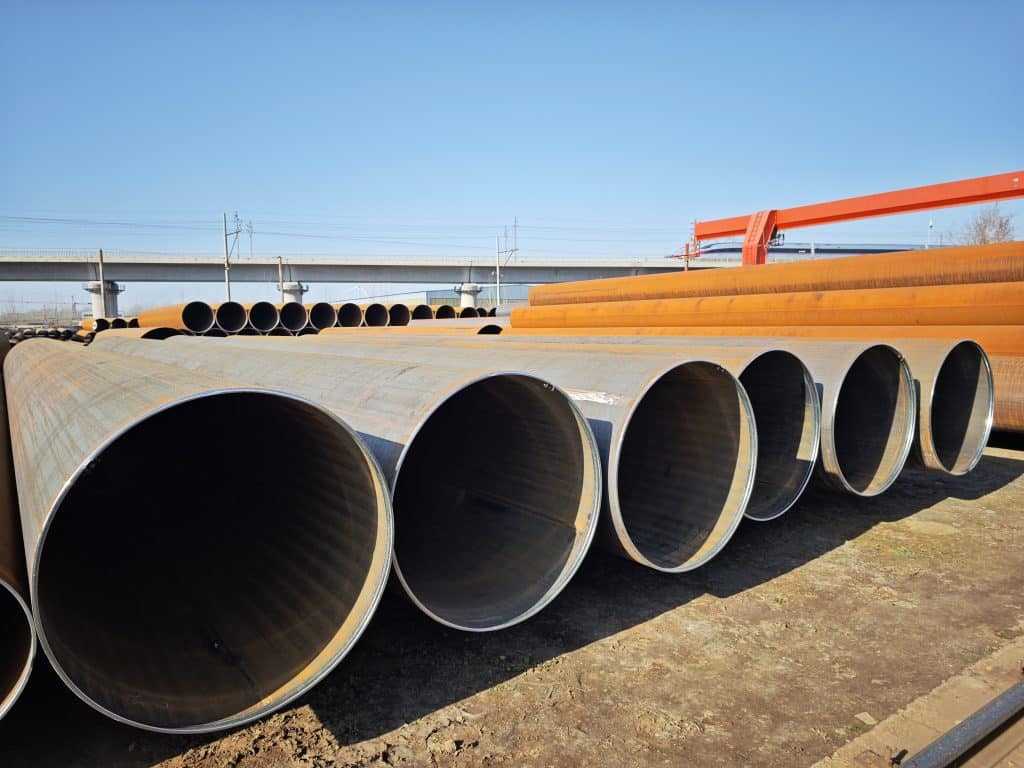
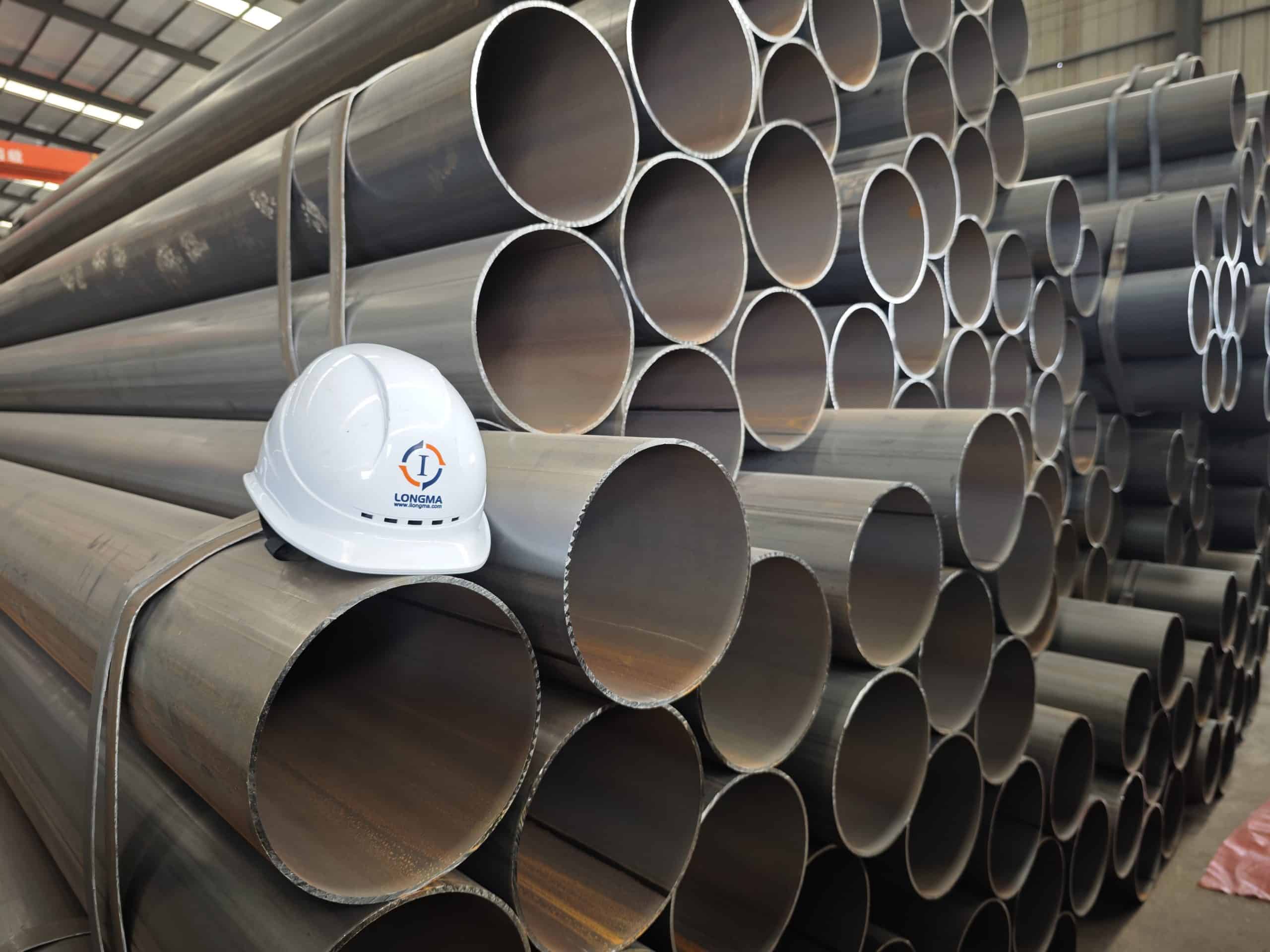
- 1. Overview of Seamless and Welded Steel Pipe Manufacturing Processes
- 2. Environmental Performance Comparison: Energy Consumption
- 3. Carbon Emissions Comparison
- 4. Material Utilization and Resource Efficiency Comparison
- 5. The Importance of an Environmental Quality Control System
- 6. How Online Inspection Technologies Reduce Resource Waste
- 7. How LONGMA’s Internal Laboratory Supports Sustainable Manufacturing
- 8. Value of Sustainable Manufacturing for Buyers
- 9. Why Global Customers Choose LONGMA
- 10. Conclusion
As global carbon neutrality initiatives and green supply chain requirements continue to gain momentum, environmental performance has become one of the most important factors international buyers consider when evaluating steel pipe suppliers. In industries such as oil and gas transmission, energy infrastructure, offshore engineering, and municipal pipeline construction, customers are no longer focused solely on product quality and price. Increasingly, they are also evaluating energy consumption, carbon emissions, and resource utilization throughout the steel pipe manufacturing process.
For project procurement professionals, Seamless Steel Pipe and Welded Steel Pipe are the two most commonly used pipe products. While they often serve similar applications, their manufacturing processes, energy consumption levels, environmental impacts, and lifecycle carbon footprints differ significantly. As a professional steel pipe manufacturer with more than 20 years of industry experience, LONGMA remains committed to sustainable manufacturing practices. Through advanced LSAW steel pipe production technology and a rigorous quality control system, LONGMA delivers high-quality, environmentally responsible steel pipe solutions to customers worldwide.
This article provides a comprehensive comparison of the environmental performance of seamless and welded steel pipe manufacturing from the perspectives of production processes, energy utilization, emissions control, inspection technologies, and procurement value.
Overview of Seamless and Welded Steel Pipe Manufacturing Processes
Although both products may serve similar applications, their manufacturing methods are fundamentally different.
Seamless Steel Pipe Manufacturing Process
Seamless steel pipes are typically produced from round steel billets through a series of hot-working operations.
Main production steps include:
- Billet heating
- Piercing
- Rolling
- Sizing
- Heat treatment
- Inspection and packaging
Welded Steel Pipe Manufacturing Process
Taking LSAW steel pipe as an example, the manufacturing process generally includes:
- Steel plate preparation
- Forming
- Submerged arc welding
- Expansion
- Non-destructive testing
- Hydrostatic testing
- Final inspection
Because welded steel pipes are manufactured by forming and welding steel plates, the production route is generally shorter and more efficient than that of seamless steel pipes.
Environmental Performance Comparison: Energy Consumption
Energy consumption is one of the most important indicators when evaluating the environmental impact of steel pipe manufacturing.
Comparison of Energy Requirements
| Item | Seamless Steel Pipe | Welded Steel Pipe (LSAW) |
| Raw Material Utilization | Lower | Higher |
| Heating Cycles | Multiple | Fewer |
| Hot Working Processes | More | Less |
| Electricity Consumption | Higher | Lower |
| Overall Energy Consumption | Higher | Lower |
Seamless steel pipe production requires prolonged high-temperature heating and multiple hot-rolling processes, resulting in significantly higher energy consumption.
In contrast, LSAW steel pipe manufacturing primarily relies on cold forming and welding processes, resulting in higher energy efficiency under comparable specifications.
Carbon Emissions Comparison
According to reports from the International Energy Agency (IEA) and the World Steel Association, reducing carbon emissions has become a key development objective for the global steel industry.
Key Sources of Carbon Emissions
Seamless Steel Pipe Production
Major carbon emission sources include:
- Billet reheating furnaces
- Piercing equipment
- Hot rolling mills
- Heat treatment operations
Welded Steel Pipe Production
Major carbon emission sources include:
- Welding electricity consumption
- Pipe expansion equipment
- Heat treatment processes (where applicable)
Since welded steel pipe production eliminates several high-temperature processing stages, carbon emissions per unit of product are generally lower.
For international projects emphasizing ESG performance and green procurement, low-carbon welded steel pipes are becoming increasingly attractive.
Material Utilization and Resource Efficiency Comparison
Resource efficiency directly affects both environmental performance and manufacturing costs.
Material Utilization Comparison
| Indicator | Seamless Steel Pipe | Welded Steel Pipe |
| Raw Material Loss | Higher | Lower |
| Metal Utilization Rate | Moderate | Higher |
| Scrap Generation | More | Less |
| Recycling Complexity | Higher | Lower |
Welded steel pipes are manufactured directly from steel plates, resulting in higher material utilization rates.
This not only reduces resource waste but also helps lower manufacturing costs for customers.
The Importance of an Environmental Quality Control System
Environmentally responsible production does not mean compromising product quality.
In fact, high-quality products contribute to sustainability because longer service life reduces resource consumption and maintenance requirements.
LONGMA consistently adheres to the principle of balancing green manufacturing with quality excellence.
How Online Inspection Technologies Reduce Resource Waste
Advanced online inspection technologies allow manufacturers to identify defects during production, preventing large-scale scrap and rework.
1.Laser Dimensional Inspection
Purpose
To verify:
- Outside Diameter (OD)
- Ovality
- Roundness
- Wall Thickness
Reference Standards
- API 5L Section 10
- ISO 3183 Clause 9
Real-time dimensional monitoring reduces rework and scrap caused by dimensional deviations.
2.Online Ultrasonic Testing (UT)
Purpose
To detect:
- Laminations
- Cracks
- Inclusions
- Lack of fusion
Inspection Procedure
- Automated scanning of the pipe
- Collection of reflected ultrasonic signals
- Automatic defect identification
- Data storage and traceability
Reference Standards
- API 5L Annex E
- ISO 10893-10
Early defect detection minimizes resource waste and improves production efficiency.
3.Online Radiographic Testing (RT)
Purpose
To verify internal weld quality.
Defects Detected
- Porosity
- Incomplete penetration
- Slag inclusions
Reference Standards
- ISO 10893-7
- API 5L PSL2
RT inspection provides additional assurance of welded steel pipe reliability.
How LONGMA’s Internal Laboratory Supports Sustainable Manufacturing
Many buyers are concerned that environmentally friendly production may compromise product performance.
LONGMA addresses these concerns through its comprehensive in-house laboratory system.
Key Laboratory Equipment
- Optical Emission Spectrometers
- Metallographic Microscopes
- Tensile Testing Machines
- Impact Testing Machines
- Ultrasonic Testing Equipment
- X-ray Inspection Systems
Laboratory Verification Programs
| Inspection Item | Purpose | Standard |
| Chemical Composition Analysis | Material Verification | API 5L / ISO 3183 |
| Tensile Testing | Strength Verification | ASTM A370 |
| Impact Testing | Low-Temperature Toughness Verification | API 5L PSL2 |
| Metallographic Analysis | Microstructure Evaluation | ASTM E112 |
| UT Re-inspection | Internal Quality Verification | ISO 10893 |
| Dimensional Inspection | Geometric Accuracy Verification | API 5L Section 10 |
All inspection data is digitally stored and fully traceable throughout the manufacturing process.
Value of Sustainable Manufacturing for Buyers
For international procurement projects, environmental performance has become an increasingly important supplier evaluation criterion.
1.Reduced ESG Risks
More projects now require:
- Green procurement policies
- Carbon emissions management
- Sustainable supply chain compliance
Low-carbon steel pipes help customers meet these requirements.
2.Improved Long-Term Economic Benefits
High-quality welded steel pipes offer:
- Higher material utilization
- Lower production energy consumption
- More stable quality performance
From a lifecycle perspective, these advantages contribute to lower total project costs.
3.Enhanced Supply Reliability
Steel pipe manufacturers with mature environmental management systems typically possess:
- Stronger production management capabilities
- Lower regulatory and policy risks
- More reliable delivery performance
These factors are especially important for large international infrastructure projects.
Why Global Customers Choose LONGMA
As a professional steel pipe manufacturer, LONGMA continues to invest in green manufacturing and intelligent production technologies.
Our Advantages
✔ More than 20 years of steel pipe manufacturing experience
✔ Specialized expertise in LSAW steel pipe production
✔ Extensive API 5L steel pipe project experience
✔ Energy-efficient and environmentally friendly manufacturing systems
✔ Advanced online UT and RT inspection technologies
✔ Digital quality traceability platform
✔ Comprehensive in-house laboratory verification system
✔ Global project supply capabilities
Through continuous optimization of steel pipe production processes and environmental management practices, LONGMA delivers steel pipe products that combine quality, reliability, and sustainability.
Conclusion
From an environmental perspective, welded steel pipes, especially LSAW steel pipes, generally offer significant advantages over seamless steel pipes in terms of energy consumption, carbon emissions, and resource utilization efficiency. Advanced online inspection technologies and rigorous laboratory verification systems further ensure both product quality and manufacturing efficiency.
For international customers seeking green procurement solutions, reduced project risks, and improved ESG performance, selecting a supplier with advanced environmental manufacturing capabilities and a comprehensive quality control system is essential. Backed by more than 20 years of industry experience, mature LSAW steel pipe manufacturing technology, and strict quality management standards, LONGMA continues to provide trusted low-carbon steel pipe solutions for global energy, infrastructure, and industrial projects.