- 1. What Is the ISO 3183 Standard?
- 2. Relationship Between ISO 3183 and API 5L
- 3. Understanding ISO 3183 Product Specification Levels
- 4. Core Performance Requirements of ISO 3183 Pipeline Steel
- 5. Key Inspection Methods Required by ISO 3183
- 6. Global Application Trends of ISO 3183 Pipeline Steel
- 7. How LONGMA’s In-House Laboratory Ensures ISO 3183 Compliance
- 8. Why Global Customers Choose LONGMA
- 9. Conclusion
As global energy demand continues to rise, the construction of long-distance oil and gas pipelines, cross-border energy interconnection projects, and hydrogen transportation infrastructure is accelerating worldwide. As a result, the ISO 3183 pipeline steel standard has become one of the most important technical specifications in international pipeline engineering. For buyers and project owners, selecting steel pipes that comply with ISO 3183 not only affects operational safety but also directly impacts project lifespan, operating costs, and return on investment.
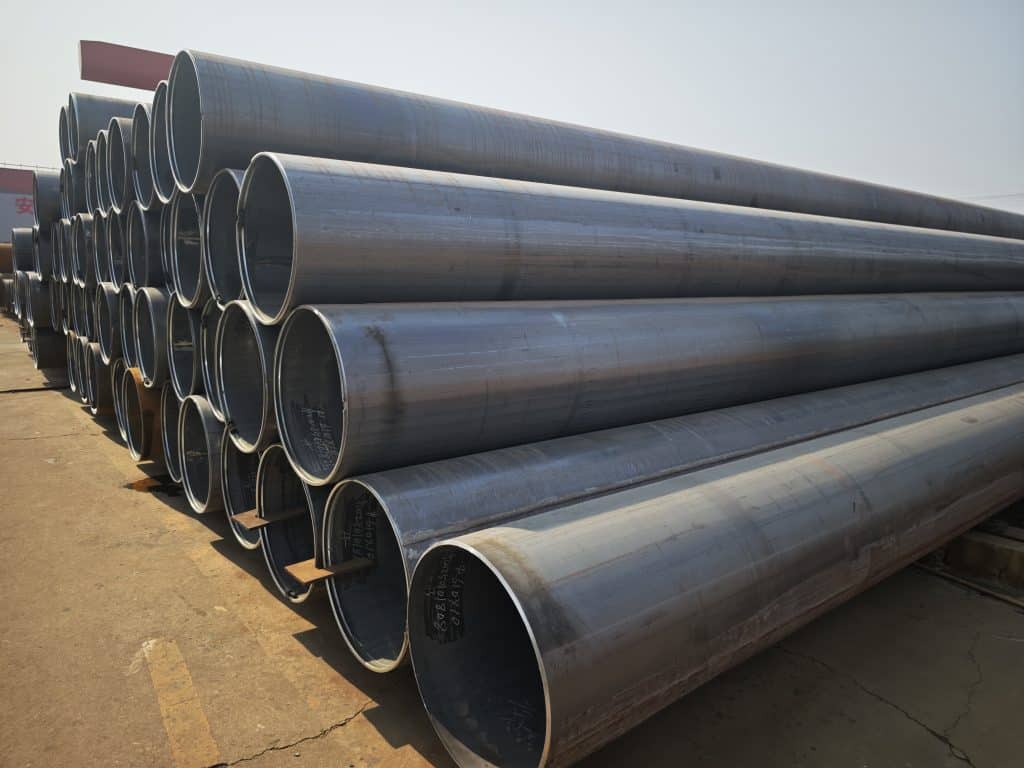
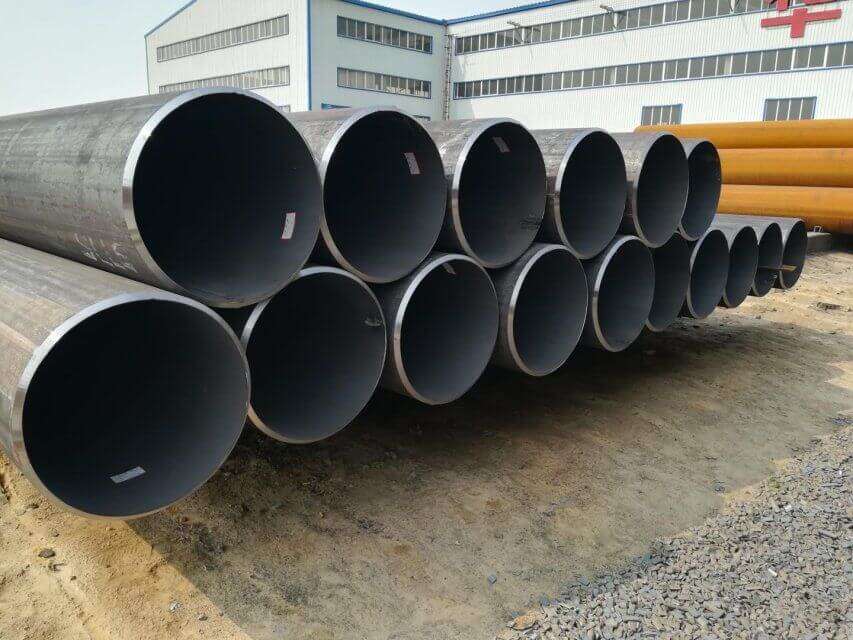
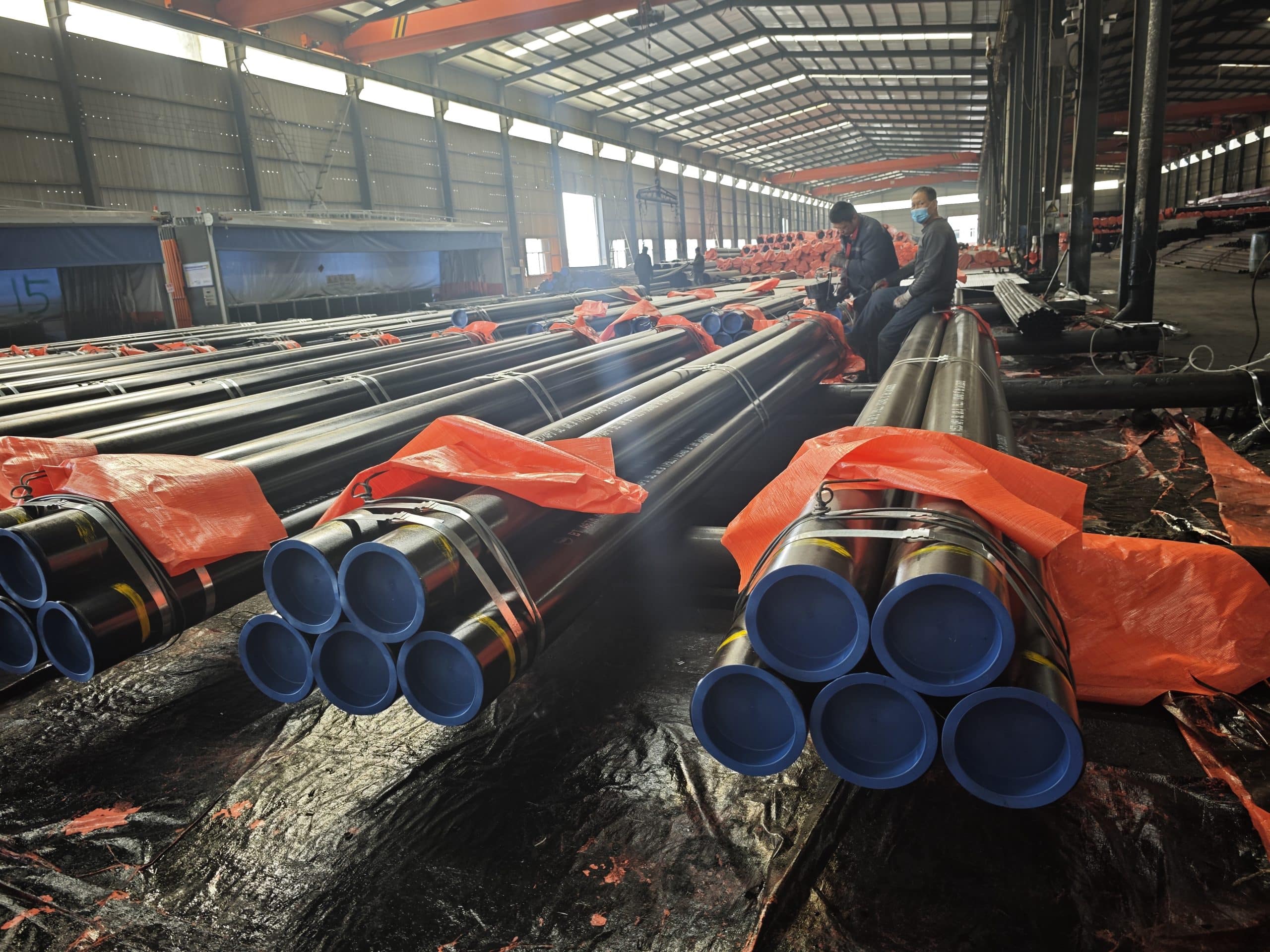
As a professional steel pipe manufacturer with more than 20 years of industry experience, LONGMA specializes in the development and production of API 5L steel pipes, LSAW steel pipes, large-diameter steel pipes, and pipeline steel products. With advanced manufacturing equipment, a strict quality management system, and comprehensive in-house laboratory capabilities, LONGMA continuously provides high-quality pipeline solutions that meet ISO 3183 requirements for global energy projects.
This article explores the ISO 3183 standard from multiple perspectives, including its technical framework, performance requirements, inspection methods, international application trends, and procurement risk management considerations.
What Is the ISO 3183 Standard?
ISO 3183 is an international standard published by the International Organization for Standardization (ISO). Its full title is:
ISO 3183: Petroleum and Natural Gas Industries — Steel Pipe for Pipeline Transportation Systems
The standard is primarily applicable to:
- Crude oil transmission pipelines
- Natural gas transmission pipelines
- Offshore pipeline projects
- LNG infrastructure projects
- Hydrogen transportation systems
- Long-distance energy pipeline networks
Because ISO 3183 closely corresponds to the requirements of API 5L, it is widely recognized and adopted across global pipeline projects.
Relationship Between ISO 3183 and API 5L
A common question among procurement professionals is:
Are ISO 3183 and API 5L the same?
In practice, the technical frameworks of the two standards are highly aligned.
Comparison of ISO 3183 and API 5L
| Item | ISO 3183 | API 5L |
| Publishing Organization | ISO | API |
| Primary Market | Global | North America & International |
| Technical Requirements | Largely Equivalent | Largely Equivalent |
| Grade Designation | L245–L555 | Grade B–X80 |
| Typical Applications | International Energy Projects | Oil & Gas Transportation |
Today, many international pipeline projects require compliance with both ISO 3183 and API 5L specifications.
Understanding ISO 3183 Product Specification Levels
ISO 3183 classifies steel pipes into two product specification levels:
PSL1 (Product Specification Level 1)
Typical applications include:
- Conventional oil and gas transportation
- General industrial services
Characteristics:
- Basic technical requirements
- Lower production cost
- Fewer inspection requirements
PSL2 (Product Specification Level 2)
Designed for:
- Offshore pipelines
- High-pressure transmission systems
- Sour service environments
- High-reliability applications
Characteristics:
- Stricter chemical composition controls
- Mandatory impact testing
- Enhanced non-destructive testing requirements
PSL1 vs. PSL2
| Requirement | PSL1 | PSL2 |
| Chemical Composition Control | Standard | More Stringent |
| Impact Testing | Usually Not Required | Mandatory |
| NDT Requirements | Basic | Enhanced |
| Traceability | General | Full Traceability |
| Typical Applications | Standard Pipelines | Critical Pipeline Systems |
Most major international energy projects now prefer PSL2 products due to their higher reliability and stricter quality controls.
Core Performance Requirements of ISO 3183 Pipeline Steel
Chemical Composition Control
ISO 3183 Clause 7 specifies detailed chemical composition requirements.
Key controlled elements include:
- Carbon (C)
- Manganese (Mn)
- Phosphorus (P)
- Sulfur (S)
- Niobium (Nb)
- Vanadium (V)
The purpose of these controls is to:
- Improve weldability
- Enhance toughness
- Reduce crack sensitivity
Mechanical Property Requirements
ISO 3183 Clause 8 requires verification of:
- Yield Strength
- Tensile Strength
- Yield Ratio
- Elongation
Typical Steel Grades and Minimum Yield Strength
| Grade | Minimum Yield Strength (MPa) |
| L245 | 245 |
| L290 | 290 |
| L360 | 360 |
| L415 | 415 |
| L485 | 485 |
| L555 | 555 |
Higher-strength grades can reduce pipeline construction costs while improving transportation efficiency.
Key Inspection Methods Required by ISO 3183
Inspection capability directly determines product reliability and compliance.
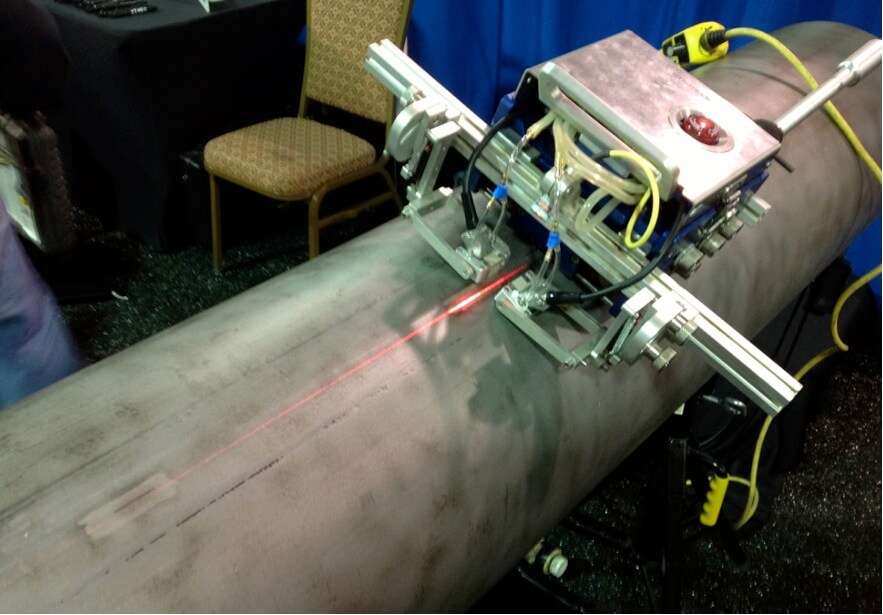
- Ultrasonic Testing (UT)
Purpose
To detect:
- Laminations
- Cracks
- Lack of fusion
- Internal inclusions
Inspection Procedure
- Automatic pipe scanning
- Reception of ultrasonic echoes
- Defect identification and analysis
- Data recording and storage
Applicable Standards
- ISO 3183 Annex E
- ISO 10893-10
UT inspection is one of the most critical quality control methods for pipeline steel products
- Radiographic Testing (RT)
Purpose
To verify the internal quality of welded seams.
Defects Detected
- Porosity
- Incomplete penetration
- Slag inclusions
- Cracks
Applicable Standards
- ISO 10893-7
- ISO 3183 PSL2 Requirements
RT inspection significantly enhances weld integrity and reliability.
- Hydrostatic Testing
Purpose
To verify the pressure-bearing capability of steel pipes.
Testing Procedure
- Seal both ends of the pipe
- Fill with pressurized medium
- Maintain specified pressure for the required duration
- Check for leakage
Applicable Standard
- ISO 3183 Clause 11
Each pipe must successfully pass hydrostatic testing before shipment.
- Charpy Impact Testing
Purpose
To evaluate low-temperature toughness.
Applicable Standards
- ISO 148-1
- ISO 3183 PSL2 Requirements
This test is particularly important for cold-climate regions and offshore engineering applications.
Global Application Trends of ISO 3183 Pipeline Steel
As the global energy landscape evolves, the application scope of ISO 3183 continues to expand.
1.Growing Demand for Long-Distance Natural Gas Pipelines
According to international energy forecasts, natural gas will remain a major energy source for decades.
This trend continues to drive demand for:
- API 5L steel pipes
- ISO 3183 pipeline steel
- LSAW steel pipes
2.Expansion of Offshore Pipeline Projects
Recent growth in:
- Deepwater oil and gas development
- Offshore wind power projects
- LNG infrastructure
has increased demand for:
- PSL2 pipeline steel
- High-strength pipeline grades
- Large-diameter steel pipes
3.Emerging Hydrogen Transportation Market
Hydrogen has become a key component of the global energy transition.
High-grade ISO 3183 pipeline steel is increasingly being studied and applied for:
- Pure hydrogen transportation
- Hydrogen-natural gas blending networks
- Hydrogen infrastructure systems
This sector represents a significant future growth opportunity.
How LONGMA’s In-House Laboratory Ensures ISO 3183 Compliance
One of the biggest concerns for buyers is whether a supplier truly possesses the capability to manufacture products that comply with ISO 3183 requirements.
LONGMA addresses this concern through its comprehensive in-house laboratory system.
Major Laboratory Equipment
- Optical Emission Spectrometers
- Tensile Testing Machines
- Impact Testing Machines
- Metallographic Microscopes
- Ultrasonic Testing Equipment
- X-ray Inspection Systems
Key Laboratory Verification Programs
| Inspection Item | Purpose | Applicable Standard |
| Chemical Composition Analysis | Material Verification | ISO 3183 Clause 7 |
| Tensile Testing | Mechanical Property Verification | ISO 3183 Clause 8 |
| Impact Testing | Low-Temperature Toughness Verification | ISO 148-1 |
| Metallographic Analysis | Microstructure Evaluation | ASTM E112 |
| UT Re-inspection | Internal Quality Verification | ISO 10893-10 |
| Dimensional Inspection | Geometric Accuracy Verification | ISO 3183 Clause 10 |
All inspection data is digitally managed and fully traceable throughout the production process.
Why Global Customers Choose LONGMA
As a professional pipeline steel pipe manufacturer, LONGMA offers:
✔ More than 20 years of steel pipe manufacturing experience
✔ Specialized API 5L steel pipe production expertise
✔ Extensive ISO 3183 compliance experience
✔ Advanced LSAW steel pipe production lines
✔ Automated UT and RT inspection systems
✔ Comprehensive in-house laboratory facilities
✔ Full-process quality traceability
✔ Rich experience supplying international energy projects
By strictly adhering to ISO 3183 requirements, LONGMA continues to provide high-quality, reliable pipeline steel products to customers worldwide.
Conclusion
ISO 3183 has become one of the most important technical foundations for global oil and gas transportation and energy infrastructure development. As natural gas networks expand, offshore pipeline projects increase, and hydrogen energy applications emerge, demand for high-grade pipeline steel will continue to grow.
For procurement professionals, selecting a supplier with advanced manufacturing capabilities, comprehensive inspection systems, and extensive project experience is essential to ensuring project success. Supported by more than two decades of industry expertise, mature API 5L and LSAW steel pipe manufacturing technologies, and a rigorous quality management system, LONGMA continues to provide trusted ISO 3183 pipeline steel solutions for energy customers around the world.