- 1. What Is ASTM A691/A691M?
- 2. Common ASTM A691 Grades and Applications
- 3. Material Property Requirements
- 4. Heat Treatment Requirements
- 5. Inspection Requirements Under ASTM A691
- 6. LONGMA’s In-House Laboratory: The Foundation of Reliable Quality
- 7. How to Choose a Reliable ASTM A691 Steel Pipe Supplier
- 8. Why Choose LONGMA?
- 9. Conclusion
As the global petrochemical, power generation, natural gas transmission, and high-temperature industrial sectors continue to expand, ASTM A691/A691M has become one of the most important manufacturing standards for high-pressure welded steel pipes. Compared with conventional carbon steel welded pipes, ASTM A691/A691M high-pressure steel pipes require stricter control over material properties, heat treatment, welding procedures, non-destructive examination (NDE), and product traceability. For buyers, evaluating price alone is no longer sufficient. Understanding the standard and the manufacturer’s production capabilities is essential to minimizing procurement risks.
With more than 20 years of manufacturing experience, LONGMA specializes in the production of ERW, LSAW, and large-diameter EFW steel pipes. Supported by a comprehensive in-house laboratory and an advanced quality management system, LONGMA delivers ASTM A691/A691M-compliant steel pipe solutions for customers in the oil & gas, power generation, petrochemical, and energy industries worldwide.
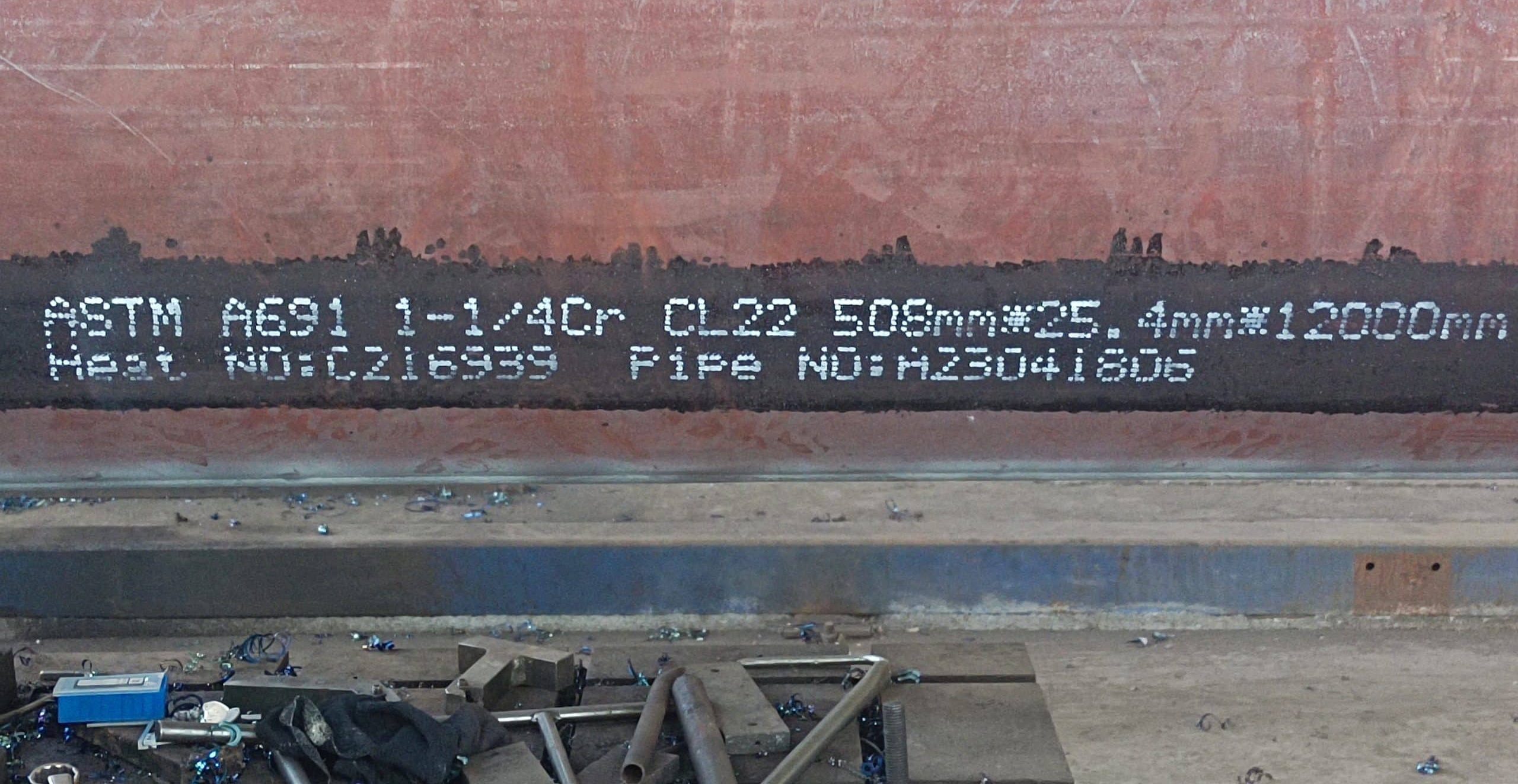
What Is ASTM A691/A691M?
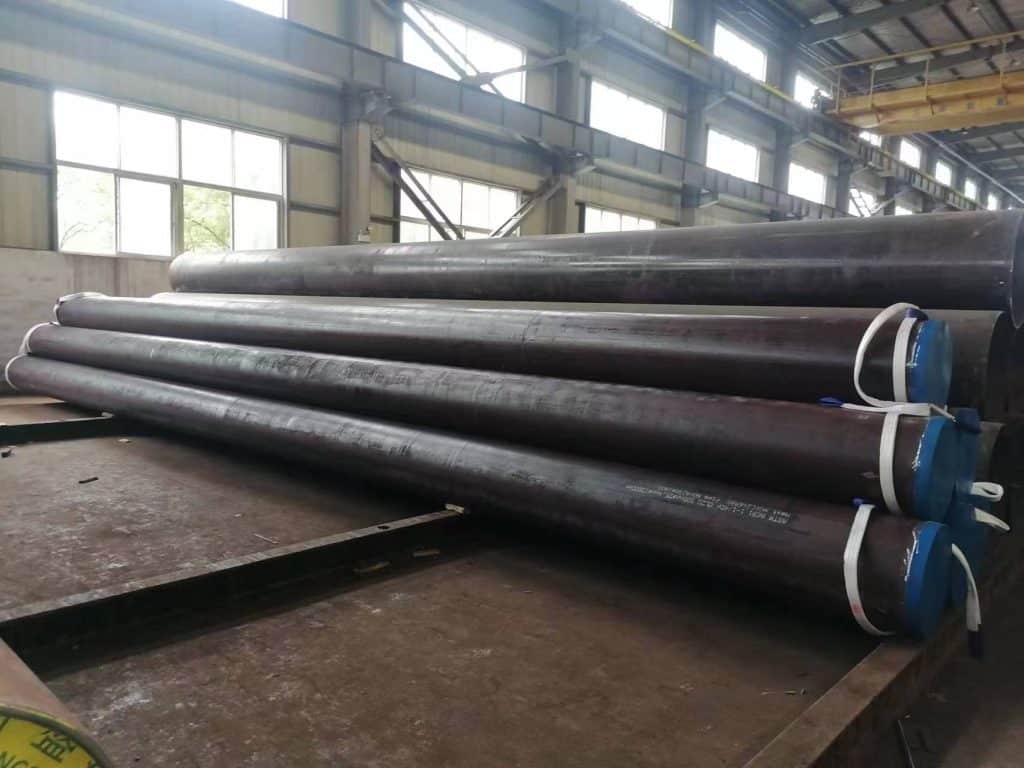
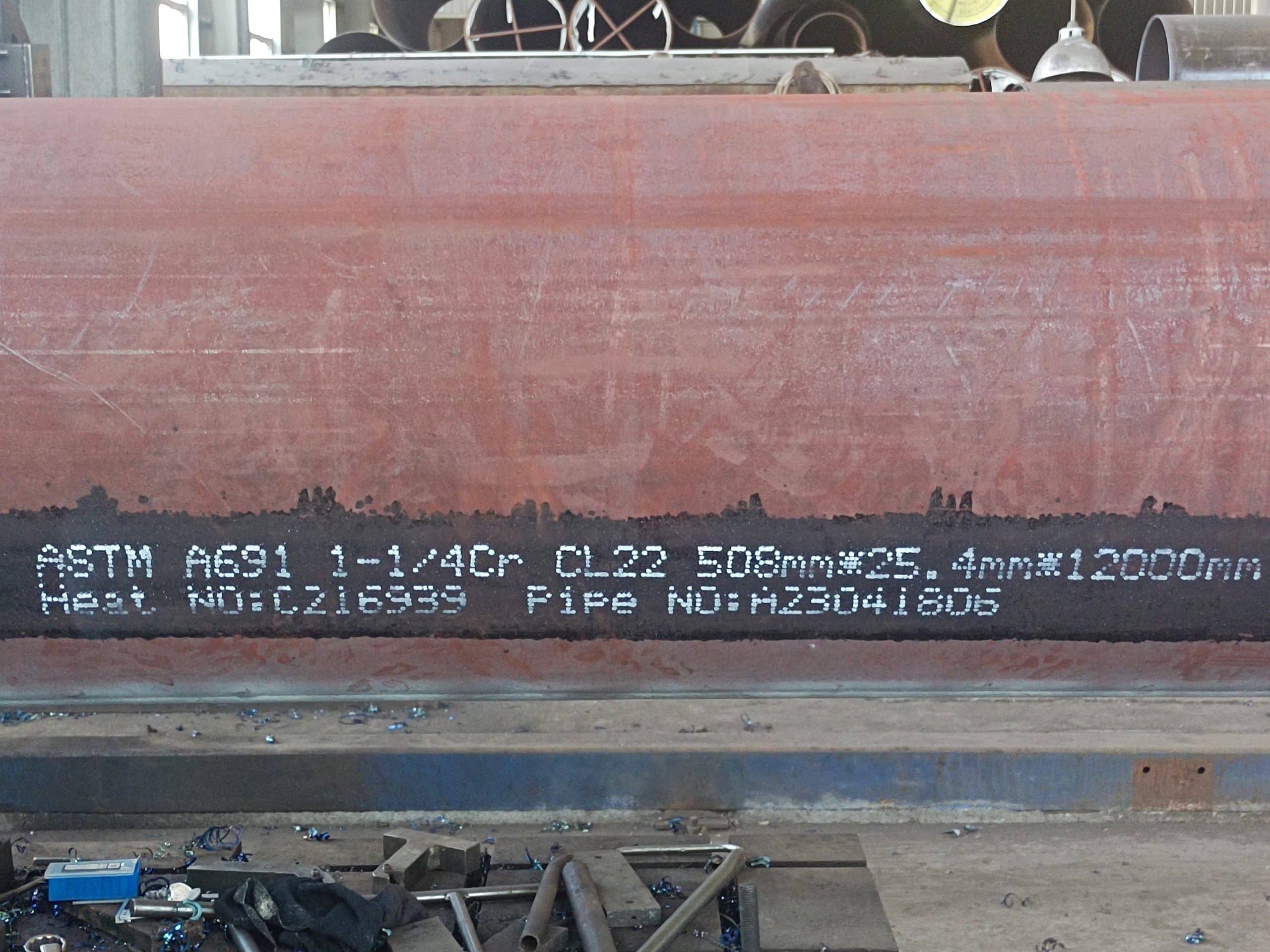
ASTM A691/A691M, titled “High-Pressure Service Carbon and Alloy Steel Electric-Fusion-Welded Pipe,” covers electric-fusion-welded (EFW) steel pipes manufactured from pressure vessel quality carbon steel or alloy steel plates and subjected to post-weld heat treatment.
The standard is widely used in:
- Oil refining facilities
- Fossil fuel and nuclear power boilers
- High-temperature steam pipelines
- Chemical process piping
- LNG and natural gas processing plants
Compared with ASTM A671, which is primarily intended for atmospheric and lower-temperature service, ASTM A691 steel pipe is specifically designed for high-temperature and high-pressure applications, particularly piping systems operating above 400°C (752°F). Consequently, it imposes more stringent requirements on material performance and post-weld heat treatment.
Common ASTM A691 Grades and Applications
ASTM A691 includes several grades based on the base material, with P1, P5, P9, P11, and P22 being the most widely used.
| Grade | Base Material | Maximum Service Temperature | Typical Applications |
| P1 | Carbon Steel | ≤425°C | Refineries, conventional boilers |
| P5 | Cr-Mo Alloy Steel | ≤600°C | High-temperature steam systems |
| P9 | 9Cr-1Mo Alloy Steel | ≤650°C | Ultra-high-temperature piping |
| P11 | 1.25Cr-0.5Mo Alloy Steel | ≤550°C | Power plant boilers |
| P22 | 2.25Cr-1Mo Alloy Steel | ≤600°C | Petrochemical cracking furnaces, high-pressure boilers |
For equipment operating continuously under elevated temperatures, P11 and P22 are typically recommended due to their excellent creep resistance and extended service life.
Material Property Requirements
ASTM A691 steel pipes must satisfy not only conventional strength requirements but also long-term performance under high-temperature service conditions.
| Property | Requirement |
| Yield Strength | Must comply with the corresponding base material specification |
| Tensile Strength | Shall meet the specified Grade requirements |
| Elongation | Sufficient ductility for welded structures |
| High-Temperature Strength | Stable long-term performance under elevated temperatures |
| Impact Toughness | Required when specified by project or purchase order |
Chromium (Cr) and Molybdenum (Mo) alloying elements significantly improve:
- High-temperature strength
- Oxidation resistance
- Creep resistance
- Weld stability
These characteristics make ASTM A691 high-pressure steel pipe an ideal solution for prolonged high-temperature service.
Heat Treatment Requirements
Heat treatment is one of the most critical manufacturing processes specified by ASTM A691.
Depending on the material grade, different post-weld heat treatment methods are required.
| Heat Treatment | Primary Purpose | Applicable Grades |
| Normalizing | Grain refinement and improved toughness | P1 |
| Stress Relieving | Eliminate welding residual stresses | P1, P5 |
| Normalizing & Tempering | Improve comprehensive mechanical properties | P11, P22 |
| Quenching & Tempering | Achieve maximum strength and high-temperature performance | Special applications |
The objectives of heat treatment include:
- Relieving welding residual stress
- Refining weld microstructure
- Improving toughness of the heat-affected zone (HAZ)
- Enhancing long-term high-temperature performance
- Improving dimensional stability
LONGMA utilizes fully automated heat treatment furnaces with precise temperature control. For every production batch, the following records are maintained:
- Heat treatment temperature curves
- Holding time
- Furnace identification
- Cooling method
- Product traceability number
This ensures complete manufacturing traceability throughout the production process.
Inspection Requirements Under ASTM A691
In addition to material requirements, ASTM A691 specifies rigorous inspection procedures. Certain inspection requirements are implemented together with ASTM A530/A530M, the general specification for specialized carbon and alloy steel pipe.
- Tensile Test
Purpose
To verify that the steel pipe meets the specified mechanical strength.
Procedure
- Machine standard tensile specimens
- Perform testing using a universal testing machine
- Measure yield strength, tensile strength, and elongation
Applicable Requirement
ASTM A691 Mechanical Testing Requirements.
- Guided Bend Test
Purpose
To evaluate weld ductility and fusion quality.
Inspection Focus
- Cracks
- Lack of fusion
- Weld embrittlement
This test is essential for assessing welded joint integrity.
- Radiographic Testing (RT)
Depending on the specified Grade and Class, ASTM A691 requires radiographic examination of weld seams.
Typical detectable defects include:
- Porosity
- Incomplete penetration
- Slag inclusions
- Cracks
Radiographic testing verifies the internal soundness of the weld.
- Ultrasonic Testing (UT)
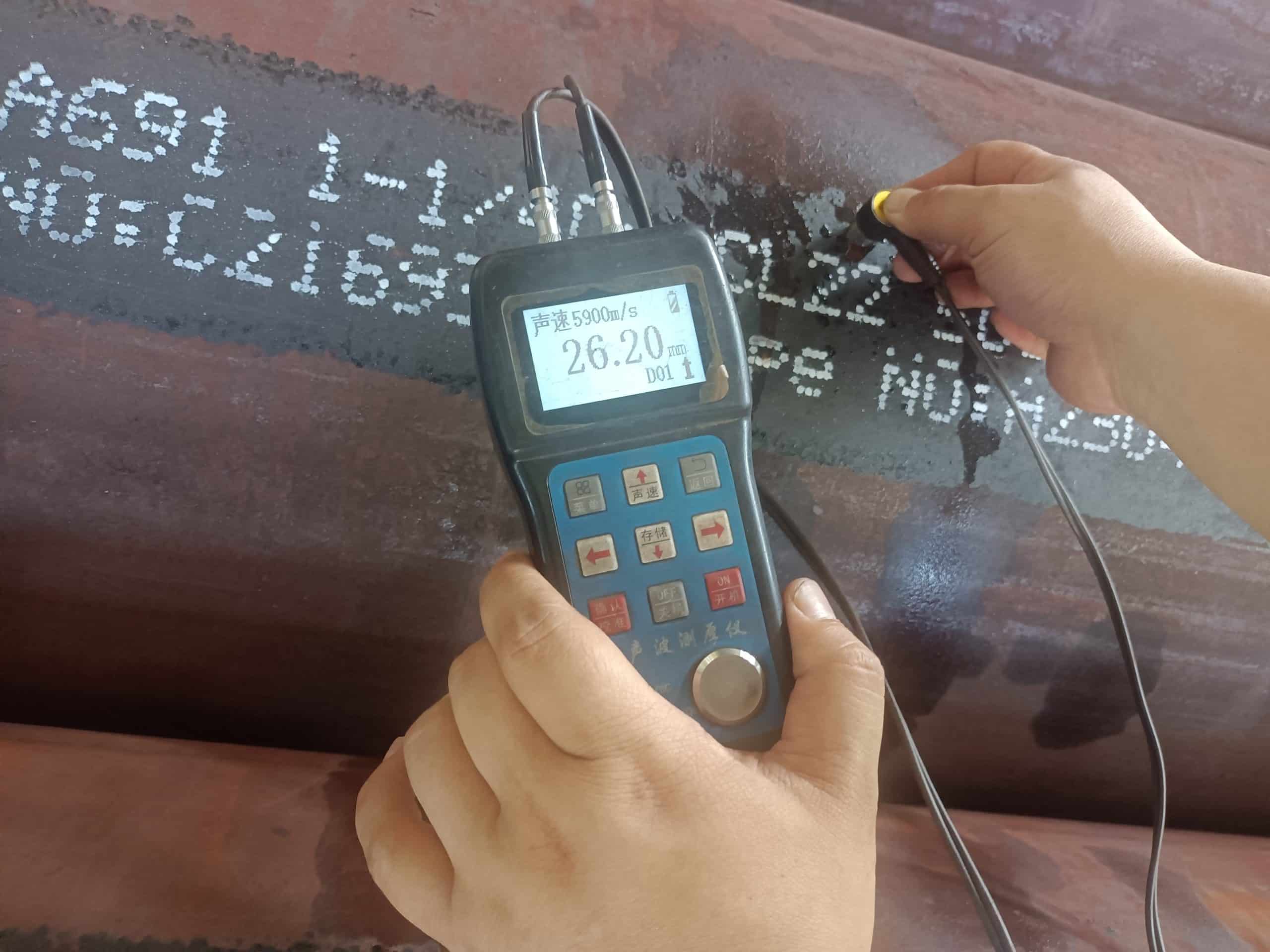
UT employs high-frequency ultrasonic waves to inspect the entire weld seam.
It is capable of detecting:
- Laminations
- Lack of fusion
- Internal cracks
UT is particularly suitable for large-diameter, high-pressure steel pipes.
- Magnetic Particle Testing (MT)
MT is used to identify:
- Surface cracks
- Heat-affected zone cracking
- Undercut defects
It is commonly performed as a supplementary inspection following RT.
- Hydrostatic Test
Hydrostatic testing is conducted in accordance with ASTM A530/A530M.
Typical procedure:
- Fill the pipe with water.
- Increase pressure to the specified test value.
- Maintain pressure for the required holding time.
- Inspect for leakage or pressure loss.
This test confirms the pressure integrity of every finished pipe.
LONGMA’s In-House Laboratory: The Foundation of Reliable Quality
The true advantage of a manufacturer lies in its comprehensive quality control capabilities rather than simple trading activities.
LONGMA’s in-house laboratory is equipped with:
- Optical Emission Spectrometer
- Universal Tensile Testing Machine
- Charpy Impact Testing Machine
- Metallographic Analysis Equipment
- Digital Radiographic Testing System (RT)
- Automated Ultrasonic Testing System (UT)
- Magnetic Particle Testing Equipment (MT)
- Hydrostatic Pressure Testing Equipment
- Dimensional Inspection Instruments
Each ASTM A691 pipe is supplied with complete quality documentation, including:
| Document | Contents |
| Mill Test Certificate (EN 10204 3.1) | Chemical composition and mechanical properties |
| Heat Treatment Report | Complete heat treatment records |
| NDT Report | RT, UT, and MT inspection results |
| Hydrostatic Test Report | Pressure testing records |
| Dimensional Inspection Report | OD, wall thickness, length, and ovality |
| Third-Party Inspection Report | SGS, BV, TÜV, or other independent inspection certificates |
These documents not only satisfy international EPC project requirements but also facilitate efficient project acceptance.
How to Choose a Reliable ASTM A691 Steel Pipe Supplier
When sourcing ASTM A691 high-pressure steel pipe, buyers should focus on the following factors:
| Evaluation Item | Importance |
| In-house heat treatment capability | Determines long-term high-temperature performance |
| Comprehensive testing laboratory | Ensures inspection accuracy |
| Complete Mill Test Certificate | Improves project acceptance efficiency |
| Third-party inspection support | Reduces procurement risks |
| International export experience | Ensures successful global project delivery |
Many low-cost suppliers reduce manufacturing expenses by omitting heat treatment or minimizing inspection procedures. Although the initial purchase price may appear attractive, these shortcuts can result in weld failures, unplanned shutdowns, costly repairs, and project delays.
Why Choose LONGMA?
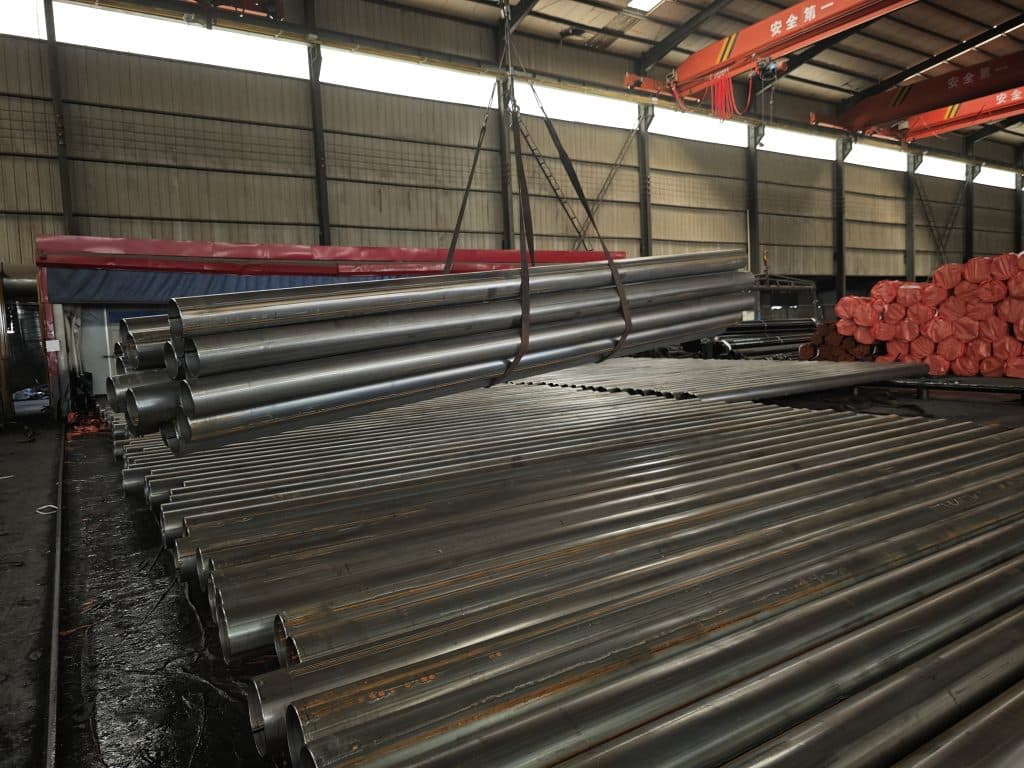
With over 20 years of manufacturing expertise, LONGMA implements strict quality control throughout the entire production process—from raw material selection and welding to heat treatment and final inspection—in full compliance with ASTM A691/A691M.
Our strengths include:
- Professional manufacturing of ERW, LSAW, and EFW round steel pipes
- Automated heat treatment production lines
- Comprehensive NDT capabilities, including RT, UT, and MT
- Advanced in-house laboratory with full traceability
- EN 10204 3.1 certification and third-party inspection support
- Extensive export experience serving global oil & gas, petrochemical, and power generation projects
If you are looking for a reliable ASTM A691 high-pressure steel pipe manufacturer, LONGMA can provide professional material selection guidance, technical support, and competitive quotations tailored to your project requirements, helping you reduce procurement risks while improving long-term operational reliability.
Conclusion
ASTM A691/A691M is far more than a manufacturing specification for high-pressure steel pipes—it is a comprehensive quality system covering material selection, welding procedures, heat treatment, mechanical performance, non-destructive testing, and full product traceability.
For high-temperature and high-pressure applications, selecting a supplier with advanced manufacturing capabilities and a robust quality management system is essential. Backed by more than 20 years of industry experience, state-of-the-art production facilities, and a fully equipped in-house laboratory, LONGMA continues to deliver safe, reliable, and internationally compliant high-pressure steel pipe solutions to customers around the world, making us your trusted long-term manufacturing partner.