- 1. What is ASTM A672 Steel Pipe?
- 2. ASTM A672 Standard Key Features
- 3. How to Select ASTM A672 Material Grades?
- 4. Why is ASTM A672 Suitable for Natural Gas Transmission?
- 5. Why Does the “Class” Affect Natural Gas Pipeline Safety?
- 6. What Quality Tests Must ASTM A672 Steel Pipes Undergo?
- 7. How Does LONGMA’s In-house Lab Safeguard Pipeline Quality?
- 8. What to Look Out For When Procuring ASTM A672 Natural Gas Steel Pipes?
- 9. Why Do More International Clients Choose LONGMA?
- 10. Conclusion
As global demand for natural gas continues to grow, the need for highly reliable welded steel pipes in long-distance natural gas transmission pipeline networks, LNG terminals, city gas projects, and petrochemical plants is steadily increasing. For high-pressure transmission systems, steel pipes must not only possess sufficient strength but also balance weldability, low-temperature toughness, pressure-bearing capacity, and long-term operational safety. Developed specifically for moderate-temperature, high-pressure service, ASTM A672 steel pipe is an important electric-fusion-welded steel pipe standard widely used in natural gas transmission.
ASTM A672/A672M, titled “Standard Specification for Electric-Fusion-Welded Steel Pipe for High-Pressure Service at Moderate Temperatures,” applies to steel pipe fabricated from pressure-vessel-quality plate and electric-fusion-welded with filler metal added, primarily used in high-pressure systems at moderate temperatures. The standard classifies pipes by Grade (material grade) and Class (manufacturing class), where the Class is closely related to heat treatment, radiographic examination, and pressure test requirements.
As an ERW and LSAW round steel pipe manufacturer with over 20 years of experience, LONGMA is committed to providing global natural gas projects with steel pipe solutions that comply with international standards such as ASTM, API, and ISO. This article comprehensively analyzes the application of ASTM A672 steel pipe in natural gas transmission across material specifications, production requirements, testing methods, and procurement strategies.
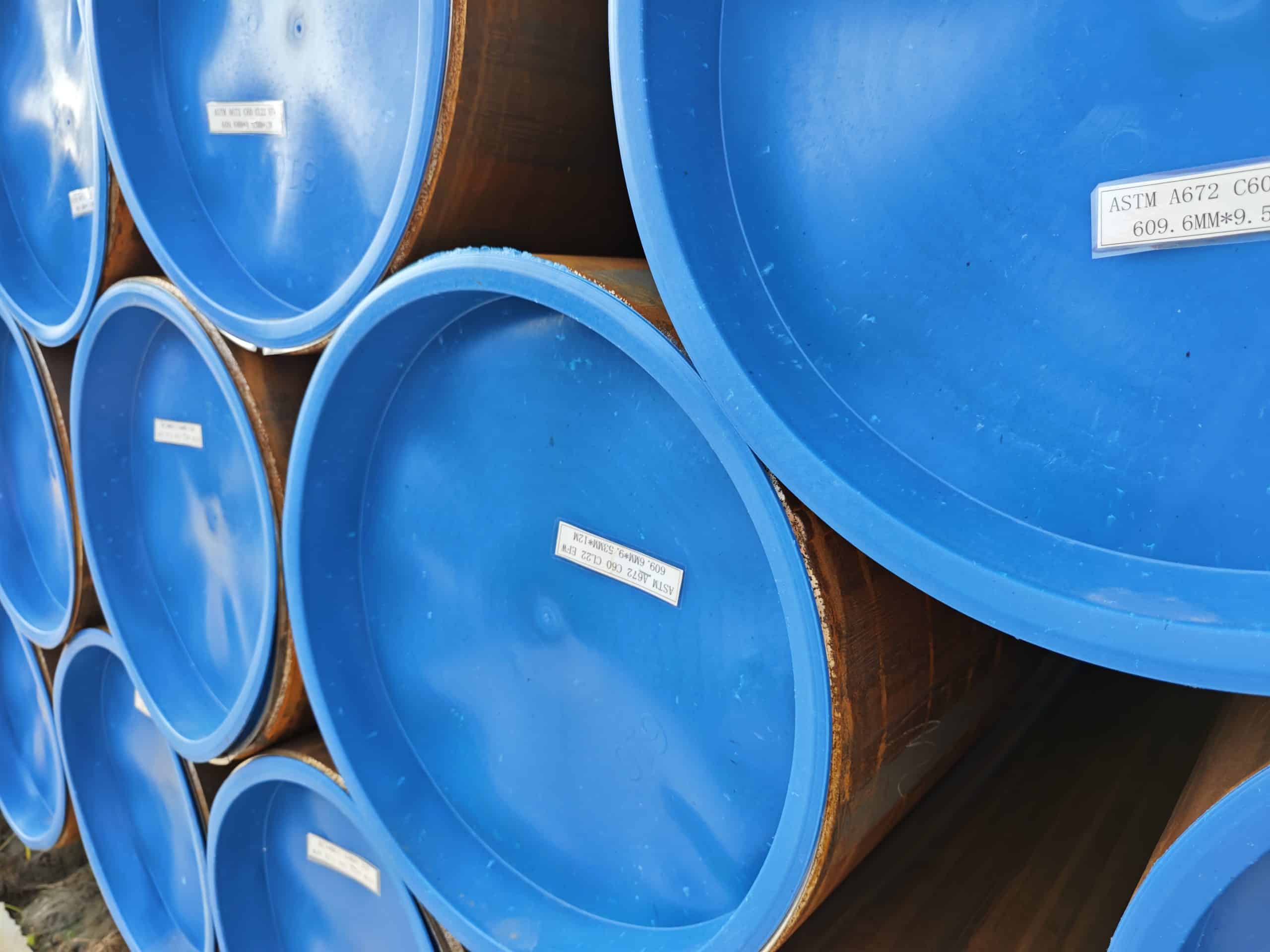
What is ASTM A672 Steel Pipe?
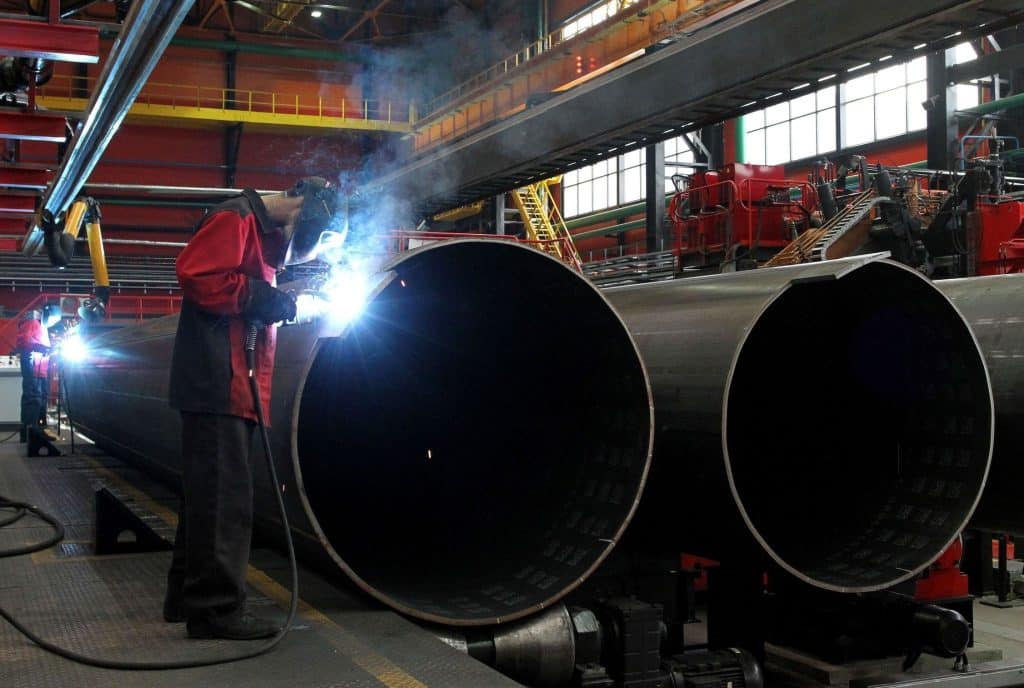
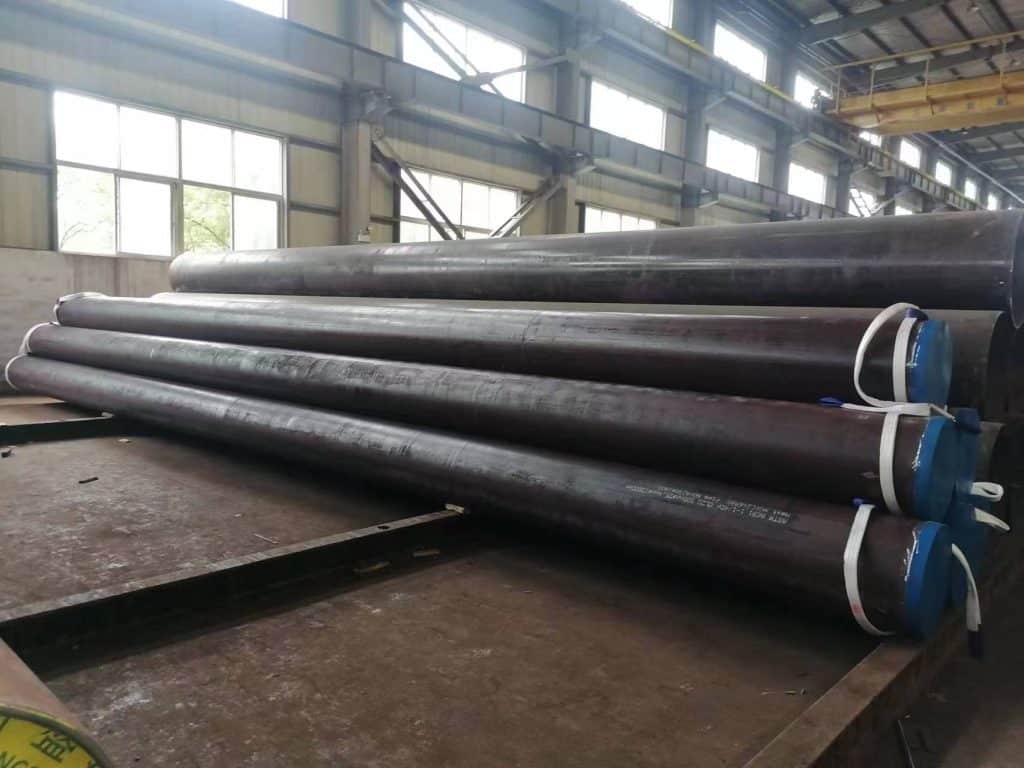
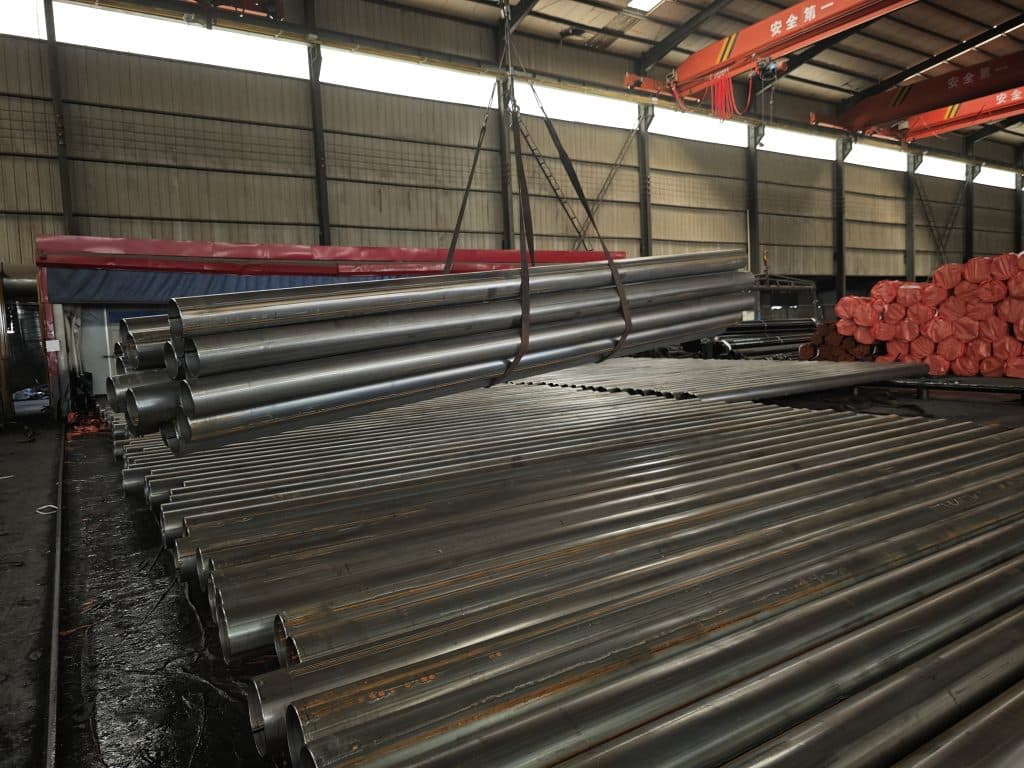
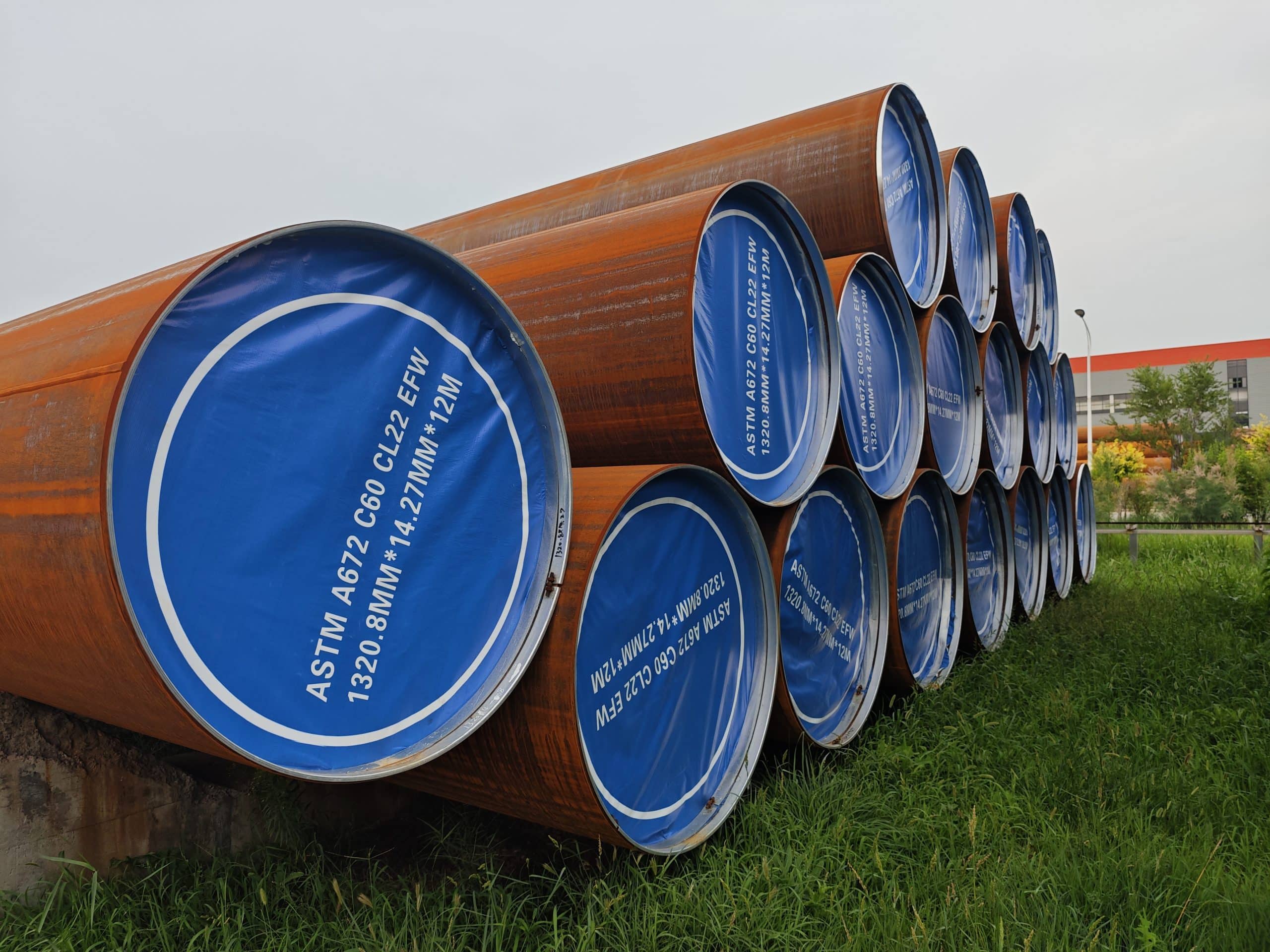
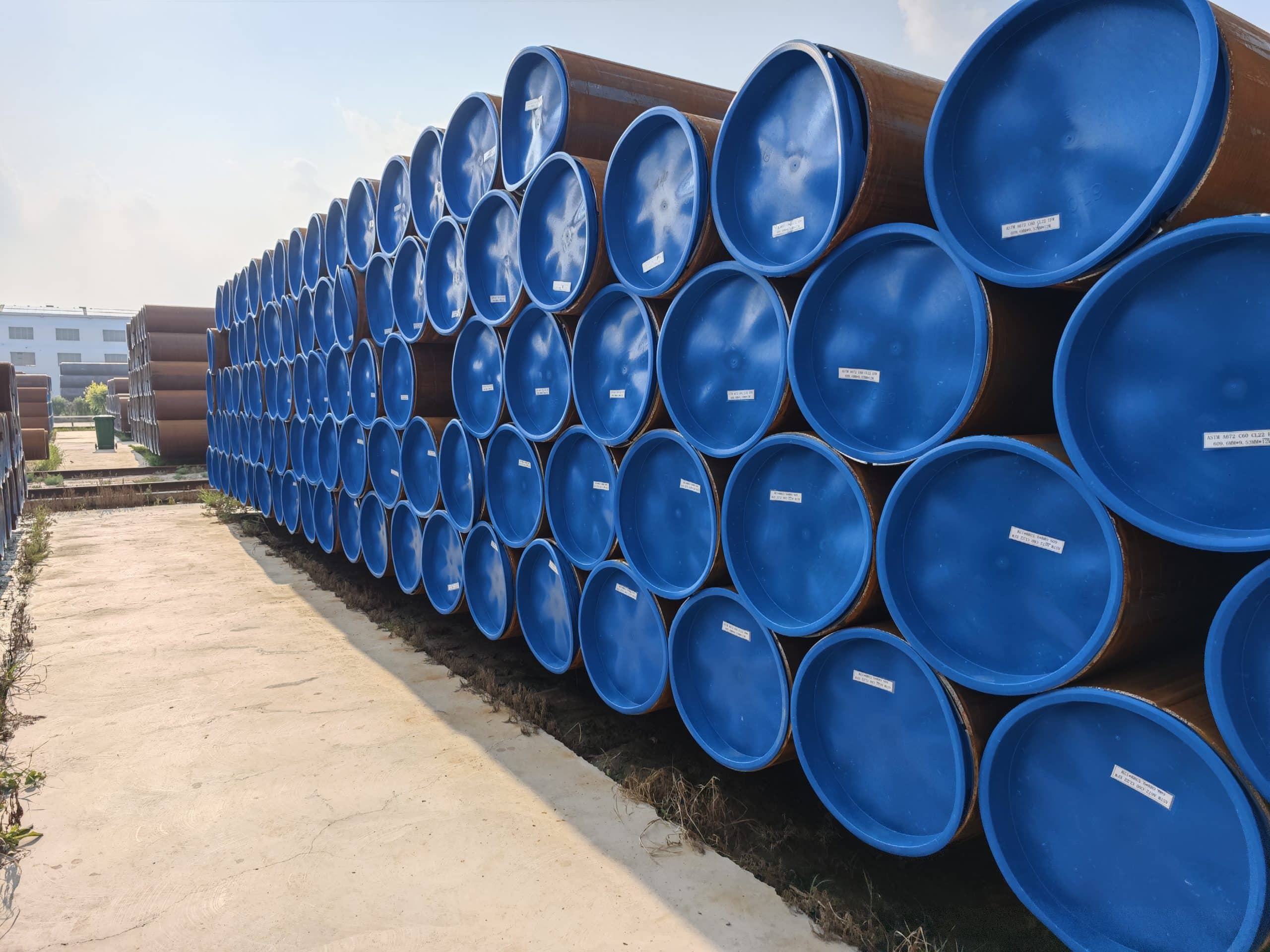
ASTM A672 is a standard for high-pressure electric-fusion-welded (EFW) steel pipe. Its base metal is typically pressure-vessel steel plate, such as ASTM A516. It is manufactured using processes like double-sided submerged arc welding (DSAW/LSAW), followed by post-weld heat treatment (PWHT) and non-destructive testing (NDT) based on specific project requirements.
Compared to ordinary structural steel pipes, ASTM A672 pipe places greater emphasis on:
- High pressure-bearing capacity
- Weld joint integrity
- Long-term operational stability
- Microstructural uniformity after heat treatment
- Full-process quality traceability
Consequently, this standard is widely used in natural gas transmission, petrochemical pipe racks, power plant pressure systems, and large-scale industrial facilities.
ASTM A672 Standard Key Features
| Item | ASTM A672/A672M |
| Product Type | Electric-Fusion-Welded Steel Pipe (EFW) |
| Base Metal | Pressure-Vessel-Quality Steel Plate |
| Manufacturing Process | DSAW / LSAW |
| Operating Conditions | Moderate temperature, high-pressure transmission |
| Typical Industries | Natural gas, petrochemical, power, oil refining |
How to Select ASTM A672 Material Grades?
In the ASTM A672 standard, the Grade designates the strength class of the steel plate used, while the Class determines the manufacturing and testing requirements after welding.
The most common grades for natural gas transmission projects include:
| Grade | Base Metal Source | Recommended Application |
| C60 | ASTM A516 Gr.60 | Medium-pressure natural gas pipelines |
| C65 | ASTM A516 Gr.65 | Long-distance natural gas pipelines |
| C70 | ASTM A516 Gr.70 | High-pressure natural gas transmission systems |
Among these, ASTM A672 C70 is widely used in large-scale natural gas transmission projects due to its higher strength and superior comprehensive performance.
For natural gas projects, a higher grade is not always better. Selection should comprehensively consider:
- Design pressure
- Transport medium
- Operating temperature
- Wall thickness design
- Welding procedure
- Cost budget
LONGMA’s technical team can recommend the most cost-effective material solution based on your specific project operating conditions.
Why is ASTM A672 Suitable for Natural Gas Transmission?
Natural gas is a flammable medium, which demands extremely high weld quality and pressure-bearing capability.
Compared to ordinary welded steel pipes, ASTM A672 steel pipe offers the following advantages:
- Manufactured from pressure-vessel-quality steel plate.
- Supports PWHT (Post-Weld Heat Treatment).
- Supports Radiographic Testing (RT).
- Supports Ultrasonic Testing (UT).
- Excellent low-temperature toughness.
- High weld joint reliability.
- Meets the requirements for long-term, high-pressure operation.
These characteristics make ASTM A672 one of the critical materials for natural gas transmission systems.
Why Does the “Class” Affect Natural Gas Pipeline Safety?
Many buyers focus solely on the Grade while overlooking the Class.
In fact, the Class dictates whether the following processes are performed during manufacturing:
- Post-Weld Heat Treatment (PWHT)
- Full-weld Radiographic Testing (RT)
- Hydrostatic testing
- Manufacturing process requirements
Even when using the exact same base metal, steel pipes of different Classes differ significantly in manufacturing quality and applicable working conditions.
Therefore, when purchasing ASTM A672, you should explicitly specify:
ASTM A672 Grade + Class + NDT + Hydro Test
instead of just writing “ASTM A672.”
What Quality Tests Must ASTM A672 Steel Pipes Undergo?
Natural gas transmission projects require much higher quality standards than ordinary structural engineering. LONGMA has established a comprehensive in-house laboratory to conduct full-process testing on every batch of steel pipes.
| Testing Item | Testing Purpose | Relevant Standards |
| Chemical Composition Analysis | Verify base metal composition | ASTM A370, ASTM A672 |
| Tensile Test | Verify yield and tensile strength | ASTM A370 |
| Charpy Impact Test | Verify low-temperature toughness | Project Specs / API Requirements |
| Ultrasonic Testing (UT) | Detect internal defects | ASTM A578 / ISO 10893 |
| Radiographic Testing (RT) | Inspect weld quality | ASME Section V |
| Hydrostatic Test | Verify pressure-bearing capacity | ASTM A530 |
| Dimensional Inspection | Inspect OD, Wall Thickness, and length | ASTM A530 |
Of these tests:
- UT is primarily used to detect internal defects in the base metal and weld seam.
- RT is used to check the weld seam for internal issues such as porosity, slag inclusion, and lack of fusion.
- Hydrostatic Testing directly verifies the pressure-bearing and sealing performance of the pipe.
Together, these tests form a critical quality control loop for natural gas transmission steel pipes.
How Does LONGMA’s In-house Lab Safeguard Pipeline Quality?
For international EPC projects, clients care not only about the product but also about whether the supplier possesses genuine, verifiable testing capabilities.
LONGMA’s in-house laboratory can perform:
- Spectrometric chemical analysis
- Tensile testing
- Impact testing
- Metallographic analysis
- Weld macro-examination
- UT testing
- RT testing
- MT (Magnetic Particle) testing
- Hydrostatic testing
- Automatic dimensional inspection
All data is backed by a complete traceability system, including:
- Heat Number
- Welding Records
- NDT Reports
- PWHT Records
- Hydro Test Reports
- EN 10204 3.1 Material Test Certificate (MTC)
Additionally, we can provide international third-party inspection services from agencies such as SGS, BV, TÜV, and DNV to further ensure smooth project acceptance.
What to Look Out For When Procuring ASTM A672 Natural Gas Steel Pipes?
Many procurement risks stem not from the product itself, but from inadequate alignment on technical requirements. We recommend confirming the following details before purchasing:
| Item to Confirm | Recommended Details |
| Standard | ASTM A672/A672M |
| Grade | C60 / C65 / C70 |
| Class | Specify the exact manufacturing class |
| Manufacturing Process | DSAW / LSAW |
| Heat Treatment | Specify if PWHT is required |
| Testing | RT, UT, Hydrostatic Test |
| Anti-Corrosion Coating | FBE, 3LPE, 3PP |
| Documentation | MTC, NDT reports, Third-party inspection reports |
Complete and precise technical confirmation effectively prevents rework, claims, and project delays.
Why Do More International Clients Choose LONGMA?
As a large-diameter steel pipe manufacturer with over 20 years of experience, LONGMA continuously provides stable and reliable steel pipe products for global natural gas transmission projects.
Our advantages include:
- Dedicated focus on ERW and LSAW round steel pipe manufacturing.
- Extensive experience in natural gas transmission projects.
- Strong capability to execute API, ASTM, and ISO standards.
- Full-process quality traceability system.
- Modernized in-house testing laboratory.
- Support for third-party inspections.
- One-stop service from material selection to export delivery.
Whether for city gas projects or cross-border natural gas transmission pipelines, LONGMA can deliver customized manufacturing solutions tailored to your technical specifications.
Conclusion
With its outstanding pressure-bearing performance, welding reliability, and rigorous quality control system, ASTM A672 steel pipe has become a cornerstone material for natural gas transmission projects. Correctly selecting the Grade, Class, heat treatment, and testing requirements not only enhances the operational safety of the piping system but also effectively lowers lifetime maintenance costs.
For international buyers, a truly trustworthy supplier does more than just produce pipes to the ASTM A672 standard—they must also feature a robust quality management system, advanced testing capabilities, and a proven track record in international projects.
If you are looking for a reliable manufacturer of ASTM A672 steel pipe, A672 C70 pipe, or large-diameter LSAW natural gas transmission steel pipes, please feel free to contact LONGMA. Our technical team is ready to provide professional material selection advice, complete test reports, and competitive project quotes to ensure your natural gas transmission project runs safely, efficiently, and reliably for the long term.