- 1. How Galvanizing Protects Steel Pipe
- 2. Hot-Dip Galvanized Pipe and the Applicable Standard
- 3. Why Galvanized Steel Pipe Rusts
- 4. Comparative Durability: Zinc Coating vs. Alternative Materials
- 5. Real-World Performance and Failure Modes
- 6. How to Select and Specify Galvanized Steel Pipe
- 7. Inspection and Maintenance
- 8. Material Comparison Framework
- 9. Conclusion
- 10. FAQ
- 11. Partner with LONGMA for Dependable Anti-Corrosion Piping Solutions
Yes. Galvanized steel pipe can eventually rust, but its zinc coating normally delays corrosion of the underlying steel. The coating works as both a barrier and a sacrificial metal. Rust becomes more likely after the zinc is consumed, chemically attacked, or damaged deeply enough to expose steel beyond the protection available from adjacent zinc.
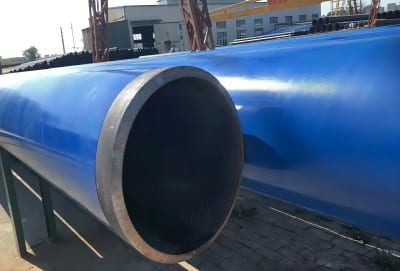
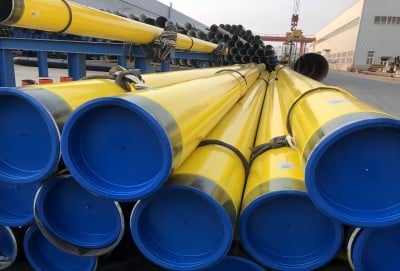
How Galvanizing Protects Steel Pipe
Barrier Protection
A continuous zinc coating separates the steel from oxygen, moisture, and other corrosive agents. During hot-dip galvanizing, iron-zinc alloy layers form at the steel surface and are covered by an outer zinc-rich layer. The exact coating structure and appearance vary with steel chemistry, surface preparation, bath conditions, and withdrawal practice.
Sacrificial Protection
Zinc is more electrochemically active than steel. Where zinc and exposed steel are electrically connected in the presence of an electrolyte, zinc corrodes preferentially and can protect small adjacent exposed areas. This protection is localized; it should not be interpreted as a guarantee that large damaged or bare areas will remain corrosion-free.
Protective Surface Products
During atmospheric exposure, zinc develops corrosion products that can slow further attack. Their protective effect depends on wetting and drying, contaminants, ventilation, and the surrounding chemical environment.
Hot-Dip Galvanized Pipe and the Applicable Standard
The correct standard depends on the product and galvanizing route. ASTM A53/A53M covers black and hot-dipped zinc-coated welded and seamless steel pipe and specifies requirements for zinc coating mass. For tube and pipe hot-dip galvanized in automatic plants, EN 10240 is a relevant product-specific coating standard where it is invoked by the order.
ISO 1461:2022 covers hot-dip galvanized coatings on fabricated iron and steel articles, but its scope explicitly excludes tube and pipe hot-dip galvanized in automatic plants. It should therefore not be cited automatically as the coating standard for every galvanized pipe order.
| Standard | Relevant scope | Procurement caution |
| ASTM A53/A53M-24 | Black and hot-dipped zinc-coated welded and seamless steel pipe | Confirm grade, type, dimensions, zinc-coating requirements, and ordered tests |
| EN 10240 | Internal and/or external protective coatings for steel tubes; includes hot-dip galvanized coating requirements | Specify the required coating quality and application category in the order |
| ISO 1461:2022 | Fabricated iron and steel articles galvanized after fabrication | Not applicable to tube and pipe galvanized in automatic plants |
| ASTM A123/A123M-24 | Hot-dip zinc coatings on iron and steel products after fabrication | Use only when the product and process fall within its scope |
Why Galvanized Steel Pipe Rusts
- Coating damage: impacts, dragging, aggressive threading, cutting, welding, or poor handling can expose the steel substrate.
- Coating consumption: zinc is gradually consumed during service; the rate varies greatly with the environment.
- Trapped moisture and deposits: crevices, poor drainage, wet insulation, and deposits can create persistently corrosive local conditions.
- Acidic or strongly alkaline exposure: zinc can dissolve rapidly outside environments compatible with galvanized coatings.
- Chlorides and marine exposure: salt deposits and frequent wetting can accelerate zinc corrosion and promote localized attack at defects.
- Dissimilar-metal contact: galvanic coupling can accelerate attack depending on the metals, area ratio, electrical continuity, and electrolyte.
- Internal-water chemistry: pH, alkalinity, hardness, dissolved gases, temperature, flow, and stagnation affect internal corrosion behavior.
White corrosion products on zinc are not the same as red rust on steel. White staining indicates zinc corrosion; red-brown rust usually indicates that steel is exposed or that iron-containing contamination is present.
Comparative Durability: Zinc Coating vs. Alternative Materials
When we explore material possibilities, we look at lifespan economics, not just the initial cost. Stainless steel (316L grade) is more chemically resistant yet 300-400% more expensive than zinc coated carbon steel. For projects with a budget constraint and a life of 15 to 25 years, Galvanized steel pipe offers acceptable protection at a cheaper capital cost. Black steel with epoxy coatings is initially less costly, but demands skillful application and environmental control during installation, where flaws in field coating often compromise theoretical performance. Copper and PVC are niche products. Copper is great for potable water but is prone to theft. PVC has temperature sensitivities and pressure ratings that are not good for high pressure oil and gas transport.
Real-World Performance and Failure Modes
Field data on common failure patterns in water utility infrastructure A municipal water authority in the southwestern United States found 18-22 year service life for buried zinc-coated pipe (3.2 mm coating) in highly corrosive clay soils . In contrast, perforation in acidic wetland conditions occurred within 9-12 years for installations with coating thickness less than 2.5 mm. In the Middle East, oil and gas transmission installations have shown increased corrosion around flanged connections where dissimilar metals form galvanic couples. From our examination of 150+ pipeline projects, we found that 70% of premature failures are caused by damage during installation, rather than lack of coating, which makes good handling practices imperative.
How to Select and Specify Galvanized Steel Pipe
- Define the service: structural use, mechanical service, water, fire protection, or another duty. Do not assume one pipe standard covers every application.
- Characterize the environment: atmospheric category, soil conditions, immersion, internal fluid chemistry, temperature, wet/dry cycling, and expected contaminants.
- Specify the base pipe standard and grade separately from the coating standard and coating requirement.
- State whether internal, external, or both-surface galvanizing is required, together with coating mass or thickness acceptance criteria and test method.
- Define repair requirements for cut ends, threads, weld areas, and handling damage. Field repair materials are not identical to the original hot-dip coating.
- For potable-water use, require the applicable health-effects approval for the complete product and local jurisdiction; galvanizing alone does not establish suitability for drinking water.
- Review compatibility with joining methods, gaskets, valves, and adjacent metals.
Inspection and Maintenance
| Stage | Recommended check |
| Before shipment | Verify product standard, grade, coating requirement, traceability, surface condition, and coating test records required by the purchase order |
| On receipt | Inspect for bare spots, impact damage, wet-storage staining, damaged threads, and deformation; document transport damage before installation |
| During fabrication | Control cutting, threading, and welding; remove fumes safely and repair affected coating using the specified procedure |
| During installation | Avoid dragging and metal-to-metal impact; protect coating at supports, clamps, buried transitions, and dissimilar-metal interfaces |
| In service | Set inspection intervals according to actual exposure and consequence of failure; investigate red rust, leakage, coating loss, and persistent wet areas |
Magnetic coating-thickness methods such as ASTM B499 may be appropriate for nonmagnetic coatings on magnetic substrates when required by the applicable specification. ASTM D3359 is a tape test for adhesion of film coatings and should not be presented as the general adhesion test for a metallurgically bonded hot-dip galvanized coating.
Material Comparison Framework
Zinc Coated Carbon Steel Moderate corrosion resistance, high cost efficiency, broad availability, appropriate for temperatures to 200°C, cathodic protection in harsh soils, average 15-30 year lifetime.
Stainless Steel (304/316L) – Best chemical resistance, longest life (50+ years), most expensive (3-4x premium), needs specific welding processes (ASME Section IX), best for food processing and pharmaceutical applications.
FBE/3LPE Coated Steel: Excellent corrosion protection, customisable to DIN 30670 and ISO 21809, the steel preferred for underground oil and gas pipelines, ability to repair coating damage in the field during installation, design life of 30-50 years.
PVC/HDPE: Resistant to electrochemical corrosion but limited by pressure and temperature (often <180 psi at 60°C). Unsuitable for hydrocarbon service. Best for low pressure water distribution and drainage.
Conclusion
Galvanized steel pipe can rust after the zinc coating is damaged or consumed, and zinc itself begins corroding from the start of exposure. Good performance depends on choosing the correct base-pipe and coating standards, matching the product to the environment, protecting the coating during transport and installation, and inspecting it during service. For aggressive buried or pipeline environments, a purpose-designed external coating system and cathodic-protection strategy may be more appropriate than galvanizing alone.
FAQ
1. Does red rust mean the galvanized coating has failed?
Red rust normally indicates exposed steel or iron contamination. Inspect the affected area to determine whether the zinc coating is locally damaged or substantially depleted.
2. Is white rust the same as steel rust?
No. White corrosion products form on zinc, often under wet-storage or poorly ventilated conditions. They still require attention because severe attack can consume coating.
3. Can cut ends and scratches be protected by nearby zinc?
Zinc can provide localized sacrificial protection to small exposed areas, but the effective distance is limited and depends on the environment. Larger damaged areas should be repaired as specified.
4. Is every galvanized pipe suitable for drinking water?
No. Potable-water suitability depends on the complete product, water chemistry, applicable regulations, and required health-effects certification or approval.
5. Can galvanized pipe be welded?
Yes, with an approved procedure, suitable ventilation and fume controls, and repair of coating damaged by heat. Welding requirements depend on the base material, joint, service, and governing code.
Partner with LONGMA for Dependable Anti-Corrosion Piping Solutions
Our two decades working with major oil and gas companies such as SINOPEC, CNPC, and PEMEX prove our constant record of delivering specification-compliant pipe systems. LONGMA produces classic hot-dip galvanized pipe and sophisticated multi-layer coatings (FBE, 3LPE, 3LPP) according to DIN 30670, ISO 21809 and AWWA requirements at our 230,000 m² integrated plant. • Quality assurance procurement specialists need full traceability by way of heat numbers and batch data and EN 10204 3.1 certification. Our technical staff provides tailored solutions for coating providers of galvanized steel pipes, from municipal water projects to sophisticated petrochemical plants. Standard configurations are delivered within 30 to 45 days. Contact us at info@ilongma.com to know your project specifics and get thorough prices with full material certificates.