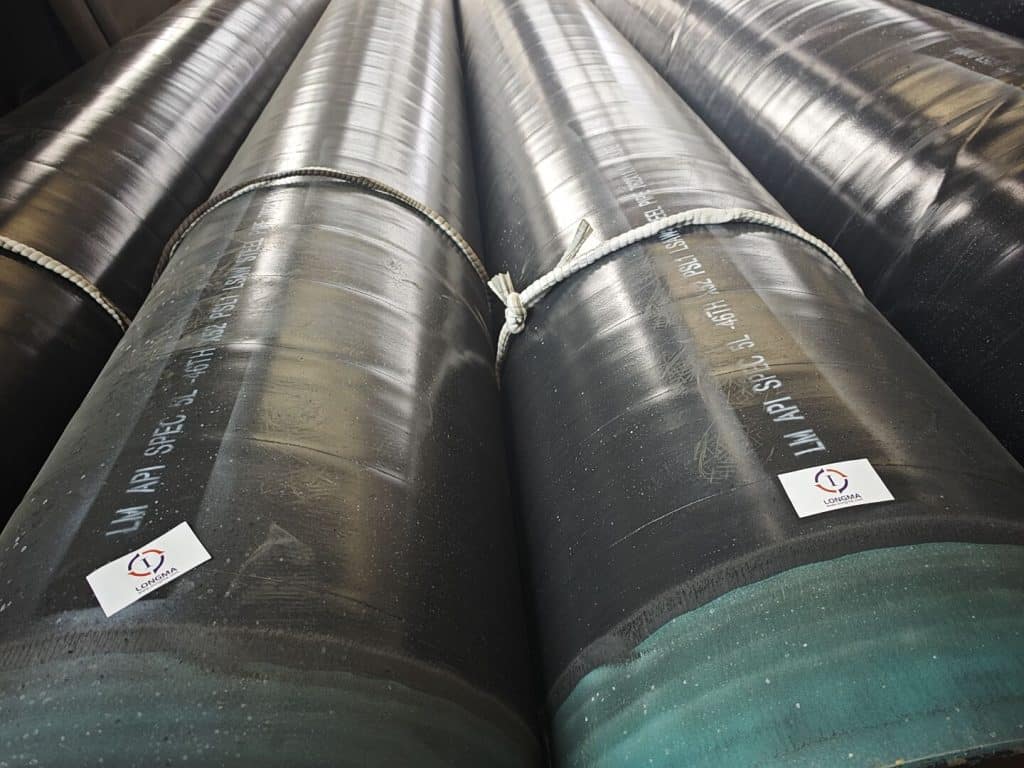
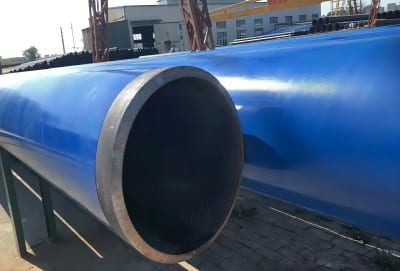
Fusion-bonded epoxy (FBE) is a thermosetting powder coating used to protect steel pipe from corrosion. The powder is applied to a prepared and heated steel surface, where it melts, flows, and cures into a continuous coating. Reliable performance depends on the complete application process—not on powder selection alone.
This guide explains the typical factory FBE pipe coating process, the controls buyers should review, and the information needed when requesting a quotation. Final requirements must always follow the applicable coating standard, the coating manufacturer’s technical data, and the project specification.
Why Is FBE Used on Steel Pipe?
FBE separates the steel substrate from moisture, salts, soil, and other service environments that can support corrosion. It is valued for adhesion to properly prepared steel, electrical resistance, and compatibility with cathodic protection when the selected system is qualified for that use.
FBE performance varies with formulation, film thickness, temperature, handling, installation method, and exposure conditions. For demanding construction methods or severe mechanical loading, a dual-layer FBE system or an additional mechanical protection layer may be specified.
FBE Pipe Coating Process: Step by Step
1. Incoming Inspection and Pre-Cleaning
Before blasting, the pipe is checked for oil, grease, moisture, loose contamination, sharp surface defects, and any condition that may interfere with coating. Weld areas and repaired surfaces also require attention. Contaminants should be removed using methods permitted by the approved coating procedure.
2. Abrasive Blast Cleaning
Abrasive blasting removes rust and mill scale and creates the surface profile needed for coating adhesion. ISO 8501-1 defines visual preparation grades such as Sa 2½; it does not make Sa 2½ a universal requirement for every FBE project. The required cleanliness and profile must come from the applicable coating or project specification.
Where required, inspection also covers dust, soluble salts, surface profile, steel temperature, relative humidity, and dew-point margin. A high-grade powder cannot compensate for inadequate surface preparation.
3. Pipe Heating
The prepared pipe is heated to the application range specified by the powder manufacturer and the qualified coating procedure. Required temperature depends on the FBE formulation, pipe wall thickness, heating system, and line speed. Temperature should be measured and recorded at defined locations rather than treated as one fixed value for all products.
4. Electrostatic Powder Application
FBE powder is normally charged through electrostatic spray equipment and attracted to the grounded, heated pipe. Spray-gun arrangement, powder condition, pipe rotation, temperature, and line speed are controlled to achieve continuous and reasonably uniform coverage.
5. Fusion and Cure
On contact with the heated steel, the powder melts and flows. The epoxy then cures into a cross-linked film. Both insufficient and excessive thermal exposure can affect coating properties, so the specified cure window should be verified under the approved procedure.
6. Controlled Cooling and Handling
After cure, the pipe is cooled under controlled conditions. Supports, lifting devices, storage separators, and transport restraints should be suitable for coated pipe so that impact, abrasion, and point loading do not damage the coating.
Inspection and Quality Control
| Control point | Typical verification | Purpose |
| Surface preparation | Cleanliness, profile, dust and contaminants | Support coating adhesion |
| Environment | Steel temperature, humidity and dew point when specified | Reduce moisture-related defects |
| Application temperature | Recorded against the approved procedure | Support fusion and cure |
| Coating thickness | Measurements at the specified frequency | Confirm specified film build |
| Holiday detection | Electrical discontinuity testing at the specified voltage | Locate exposed or defective areas |
| Performance tests | Adhesion, impact or cathodic disbondment when required | Verify project-specific performance |
| Traceability | Pipe ID, powder batch and inspection records | Maintain product and coating history |
Acceptance criteria are not universal. Test methods, frequency, conditioning, voltage, temperature, and pass/fail limits must be taken from the governing standard and project inspection and test plan.
Single-Layer FBE vs. Dual-Layer FBE
| Consideration | Single-layer FBE | Dual-layer FBE |
| Configuration | One qualified FBE layer | Primer/base FBE plus a compatible functional top layer |
| Typical use | Corrosion protection where the single-layer system meets project needs | Projects requiring added abrasion or installation-damage resistance |
| Selection basis | Service environment, thickness, installation and specification | Qualified system design and compatibility between layers |
| Commercial impact | Simpler application sequence | Additional material and process control |
How to Specify FBE-Coated Pipe for Procurement
- Pipe manufacturing standard and steel grade
- Outside diameter, wall thickness, length, quantity, and end preparation
- External or internal coating location and intended service
- Required coating standard, system, thickness, and operating temperature range
- Installation method, including burial, submersion, or trenchless installation
- Inspection, testing, repair, marking, documentation, and third-party inspection requirements
- Delivery destination, packing, handling, and schedule requirements
Standards and Scope
- ISO 21809-2:2026: factory-applied single-layer external FBE for bare steel pipe used in oil and gas pipeline transportation systems.
- AWWA C213: FBE coating for the interior and exterior of ductile-iron and steel water pipe and fittings, subject to the specified edition and project requirements.
- CSA Z245.20: external plant-applied FBE coating for steel pipe.
- ISO 8501-1: visual assessment of steel surface cleanliness before coating.
- ASTM D4541 and ASTM G14: test methods that may be specified for pull-off adhesion and impact resistance; they do not by themselves define a complete pipe-coating system.
Working with LONGMA
LONGMA supplies round ERW and LSAW steel pipe and can review project coating requirements as part of a quotation. Available coating configuration, application route, testing, documentation, and third-party inspection should be confirmed for each order. Buyers are encouraged to submit the project specification or coating data sheet before commercial confirmation.
FAQ
What is FBE coating on steel pipe?
FBE is a dry thermosetting epoxy powder applied to prepared, heated steel. It melts, flows, and cures into a continuous protective coating.
What temperature is used for FBE application?
There is no single universal temperature. The range is established by the powder manufacturer’s data and the qualified application procedure.
How is FBE coating inspected?
Common controls include visual inspection, thickness measurement and holiday detection. Adhesion, impact, cathodic disbondment, cure, or other tests may be required by the applicable specification.
Request a Quotation
Send the pipe dimensions, steel grade, coating system, service conditions, applicable standards, testing requirements, quantity, and destination to info@ilongma.com. LONGMA will review the requested configuration before confirming supply scope and quotation details.