- 1. Why Is API 5L Grade B Used in Oil and Gas Transportation?
- 2. Gathering Systems and Wellfield Networks
- 3. Onshore Transmission and Regional Distribution
- 4. Station, Terminal and Facility Piping
- 5. Offshore and Sour-Service Applications
- 6. What Should Buyers Include in an RFQ?
- 7. LONGMA API 5L Grade B Pipe Supply
- 8. FAQ
API 5L Grade B pipe, also designated L245, is widely considered for oil and gas transportation systems where its specified strength, dimensions and service requirements fit the design. With a specified minimum yield strength of 245 MPa and minimum tensile strength of 415 MPa, Grade B can provide a practical balance between material performance, weldability and project cost. It does not, however, have a universal pressure rating or automatic suitability for sour, offshore or low-temperature service.
API published the 47th Edition of API Specification 5L in June 2026. The edition introduces updates in more than 15 areas, including HFW quality, impact toughness, sour-service requirements, lamination control, nondestructive evaluation and CO2 transportation. Buyers should state the applicable API 5L edition in the material requisition.
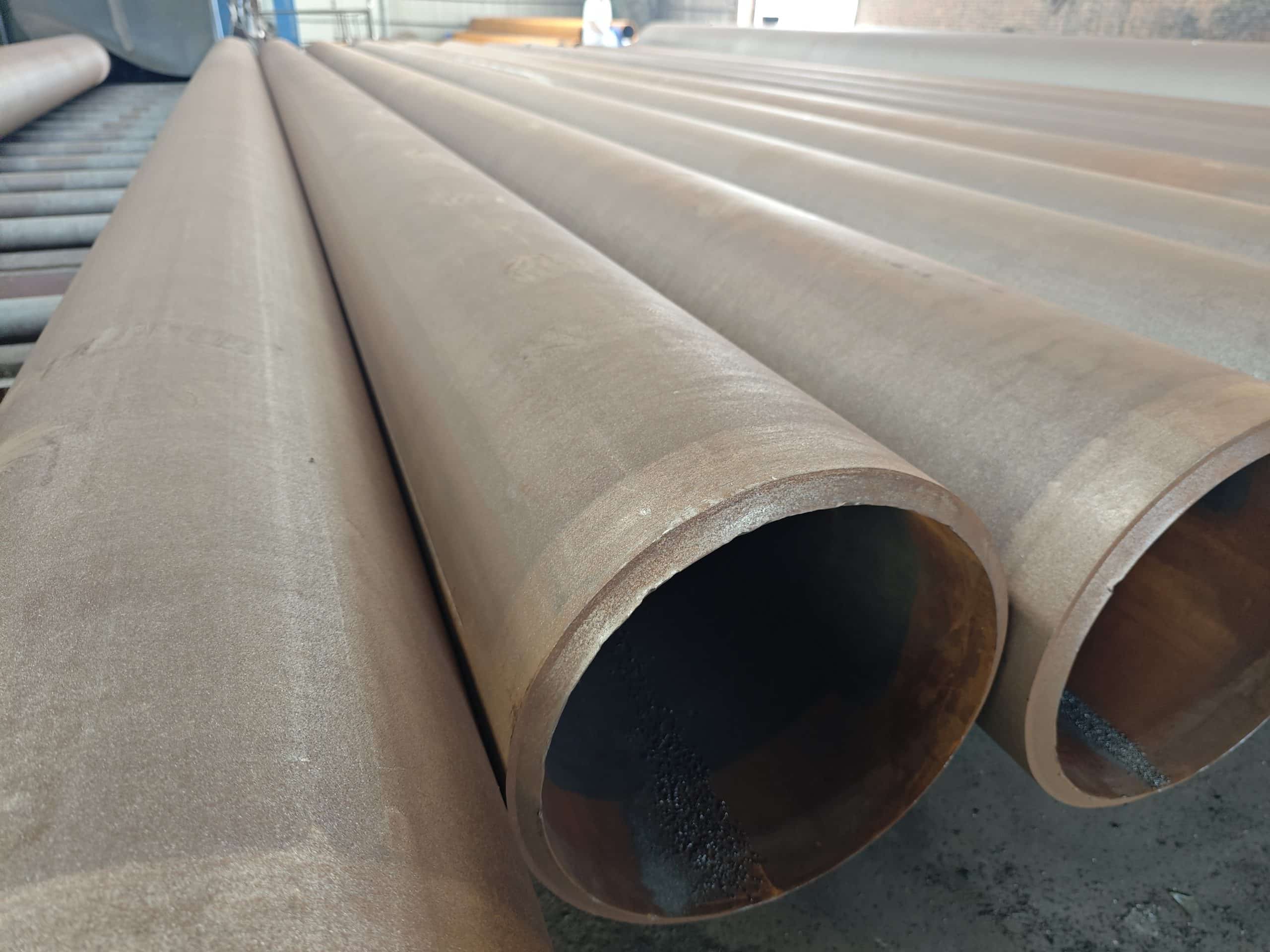
Why Is API 5L Grade B Used in Oil and Gas Transportation?
Grade B is a baseline line-pipe grade for many projects because higher specified yield strength is not always necessary. In gathering systems, station connections, regional branches and selected transmission duties, the required wall thickness may already be governed by corrosion allowance, external loads, handling, construction or minimum fabrication thickness. In those cases, moving to a higher-strength grade may not create a meaningful reduction in total installed cost.
The decision should therefore be based on design calculations rather than the assumption that a higher grade is always better. Pressure capacity depends on the governing code, pipe outside diameter, wall thickness, specified strength, design factor, temperature and other project-specific factors.
Gathering Systems and Wellfield Networks
Gathering systems move produced fluids from wellheads to separators, treatment facilities or central processing stations. Grade B may be suitable where the design requires moderate strength and the selected diameter and wall thickness are commercially practical.
Gathering service can still be demanding. Multiphase fluids may contain crude oil, wet gas, produced water, sand, carbon dioxide or hydrogen sulfide. These conditions can introduce erosion, internal corrosion and hydrogen-related cracking risks. Grade selection therefore has to be combined with fluid analysis, corrosion allowance, inhibition, dehydration, internal coating or lining, and sour-service controls where required.
Choosing ERW or LSAW for Gathering Service
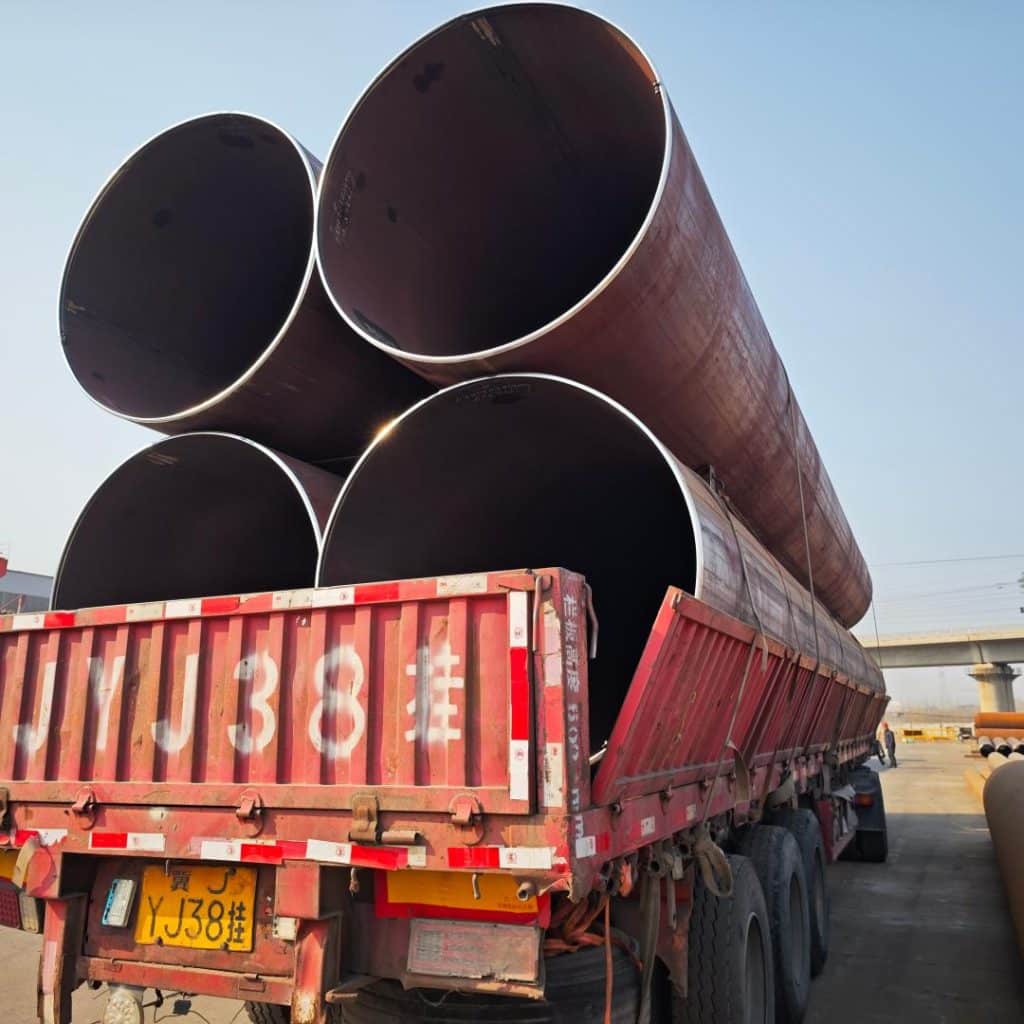
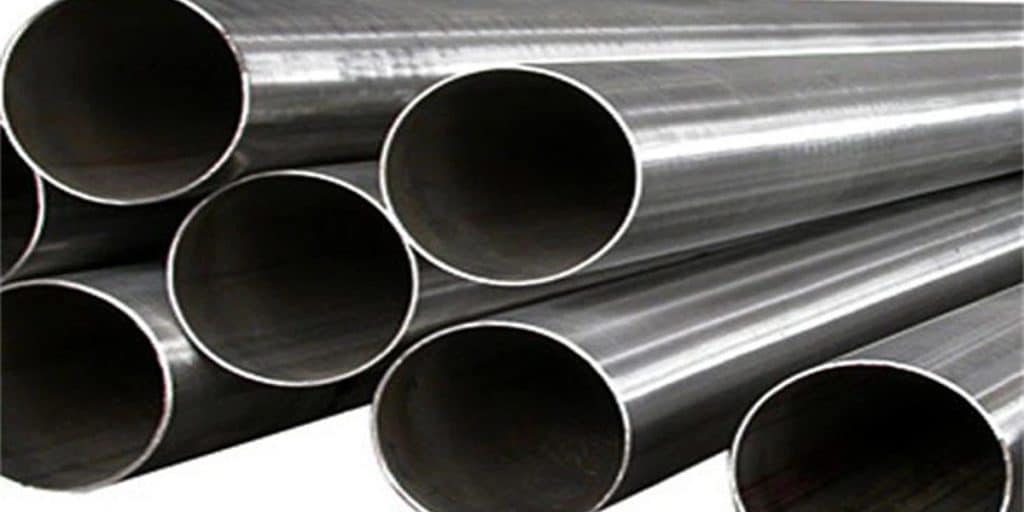
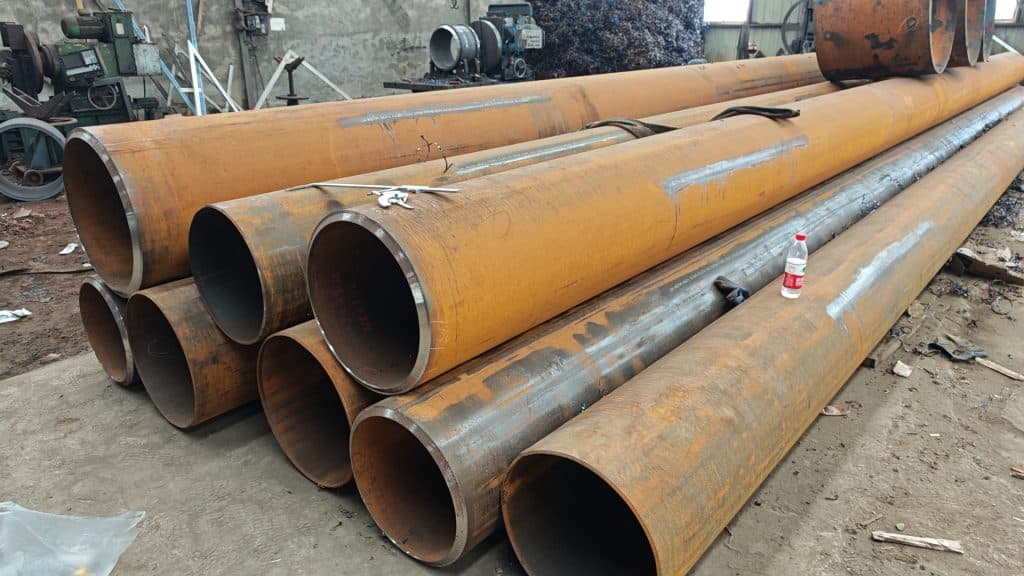
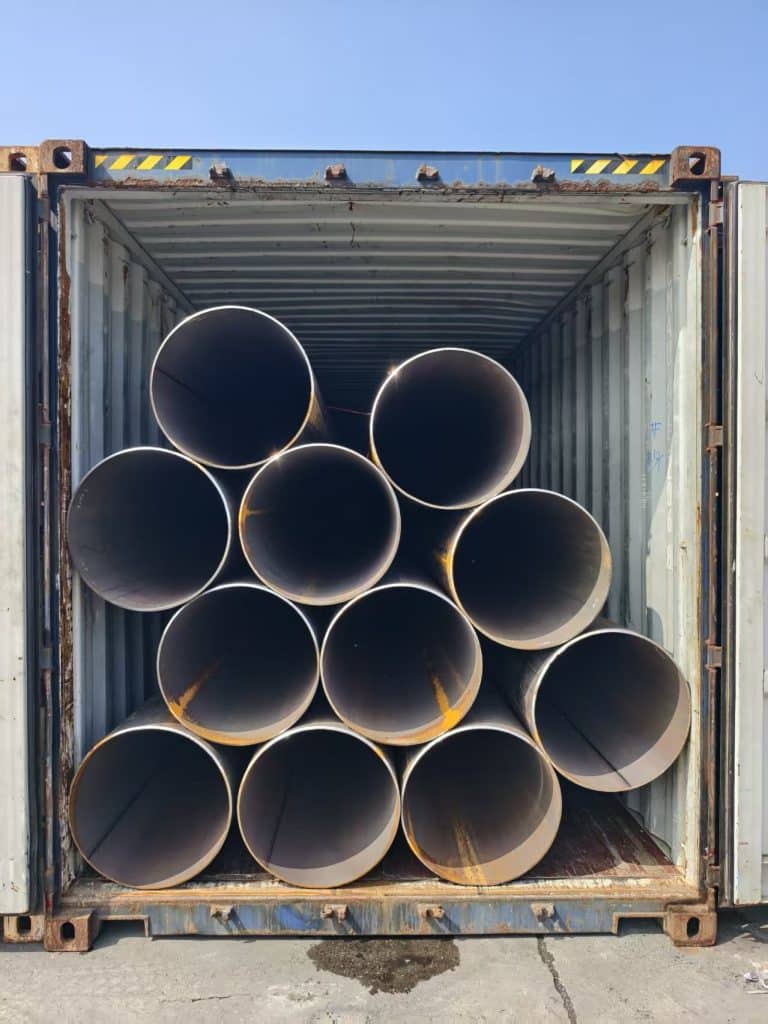
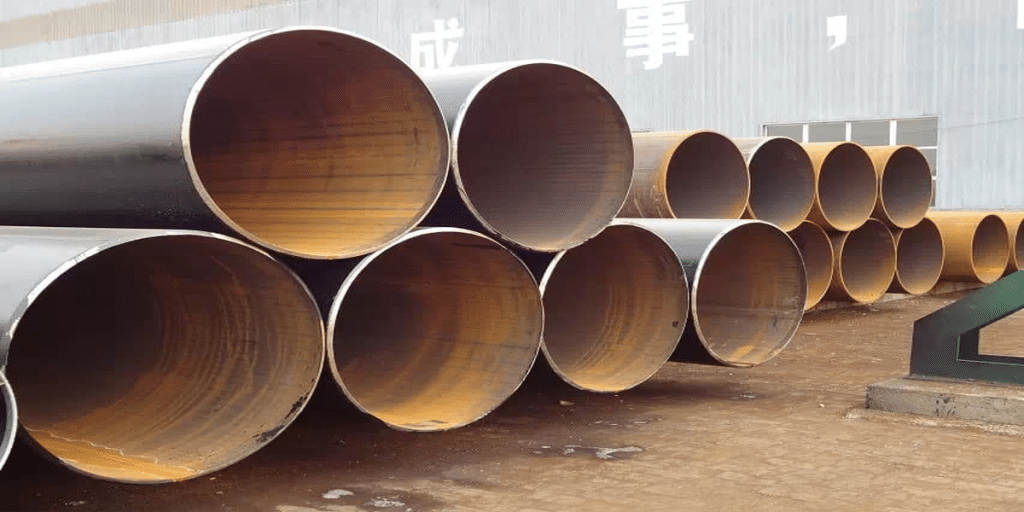
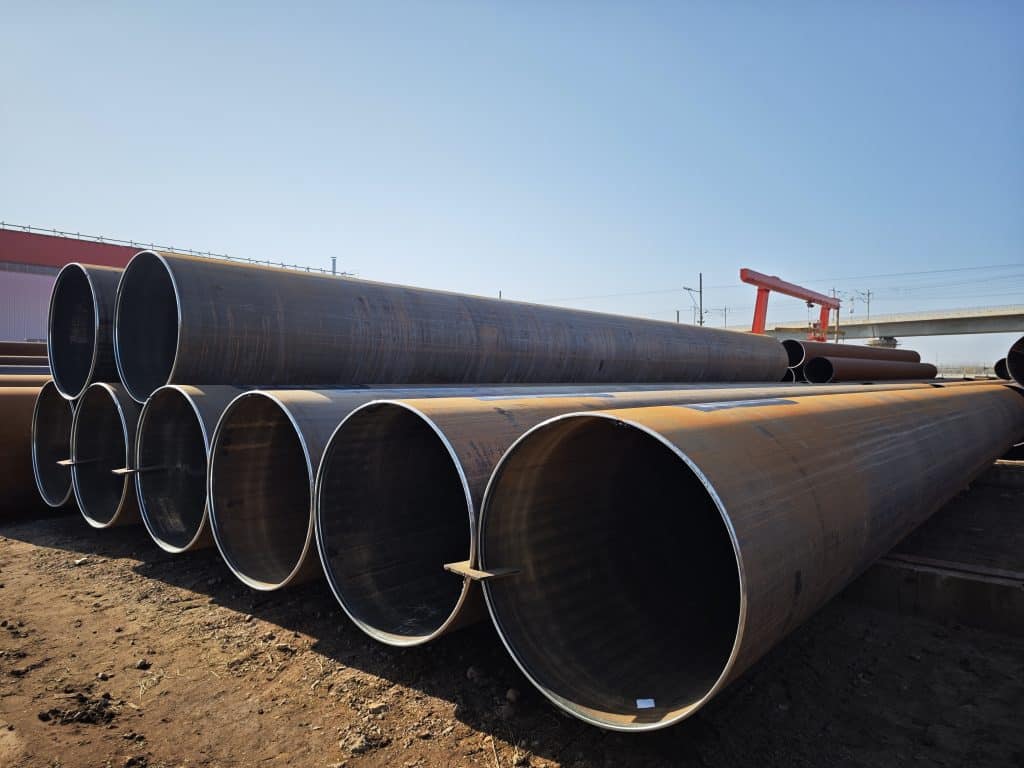
ERW/HFW pipe can be efficient for repeated sizes and production quantities where continuous forming suits the required dimensions. LSAW is commonly selected when larger diameters, heavier walls or plate-based production are preferred. The correct route depends on dimensions, service, specification, inspection requirements and total delivered cost.
LONGMA manufactures round ERW and LSAW steel pipe. Seamless pipe is mentioned only as an industry comparison and is not presented as part of LONGMA’s manufacturing scope.
Onshore Transmission and Regional Distribution
Grade B can be used in selected onshore transmission and regional distribution applications when the pressure design and project requirements support it. Its practical limit is not a single diameter or pressure. As pressure and diameter increase, the wall thickness required with Grade B may become heavier than an alternative using X42, X52 or another higher-strength grade.
| Grade | Specified Minimum Yield Strength | Specified Minimum Tensile Strength | Procurement Position |
| Grade B / L245 | 245 MPa | 415 MPa | Baseline option where design strength is sufficient |
| X42 / L290 | 290 MPa | 415 MPa | Higher yield strength for projects where wall reduction has value |
| X52 / L360 | 360 MPa | 460 MPa | Common comparison for higher pressure, diameter or tonnage |
The useful comparison is total installed cost rather than price per ton. A higher grade may reduce steel weight in a pressure-controlled design, but it can also change material availability, welding qualification, toughness requirements, inspection scope and field-repair controls. The final choice belongs to the pipeline design basis.
Station, Terminal and Facility Piping
API 5L Grade B may also be used inside compressor stations, metering stations, terminals, tank farms and processing facilities when the governing piping class permits API 5L material. Possible duties include interconnecting hydrocarbon lines, utility gas, firewater, service water and connections to packaged equipment.
API 5L compliance alone does not establish the pressure-temperature rating of an entire piping system. Fittings, flanges, valves, branch connections, gaskets, bolting, welding, heat treatment and examination must comply with the applicable piping code and project material class.
Can API 5L Grade B Replace ASTM A106 Grade B?
Not automatically. API 5L Grade B is a line-pipe grade available through seamless and permitted welded manufacturing routes, while ASTM A106 Grade B is covered by a specification for seamless carbon steel pipe intended for high-temperature service. Similar mechanical properties do not make the products interchangeable. Any substitution should be approved by the purchaser and design authority after reviewing the governing code, dimensions, manufacturing route, testing and certification.
Offshore and Sour-Service Applications
Grade B can be considered for selected offshore or nearshore applications only when the complete pipeline design confirms its suitability. Offshore design also has to address external pressure, collapse, fatigue, installation bending, free spans, on-bottom stability, fracture control and corrosion protection. Grade alone cannot answer those questions.
Likewise, Grade B or a PSL2 marking does not automatically establish sour-service compliance. ISO 15156-2:2020 provides requirements and recommendations for selecting and qualifying carbon and low-alloy steels in H2S-containing oil and gas production environments. It addresses cracking mechanisms such as SSC and HIC but does not replace the governing design code or a separate assessment of general and localized corrosion.
Depending on the service, a material requisition may specify hardness limits, HIC or SSC testing, controlled chemistry, weld qualification, supplementary NDT and repair restrictions. Corrosion allowance, inhibition, dehydration, internal coating or monitoring may still be required.
What Should Buyers Include in an RFQ?
| Category | Information to Define | Why It Matters |
| Service | Gathering, transmission, station, injection, offshore or H2S-containing service | Establishes the design and inspection context |
| Material | API 5L edition, Grade B/L245 and PSL | Prevents ambiguity in material requirements |
| Dimensions | OD, wall thickness, length, quantity and tolerances | Controls weight, fit-up and manufacturing |
| Manufacturing | ERW/HFW or LSAW for LONGMA supply | Aligns production route with the requisition |
| Design conditions | Pressure, temperature, fluid composition and corrosion basis | Supports grade and thickness verification |
| Testing | Hydrotest, NDT and supplementary impact/hardness/HIC/SSC tests where required | Defines acceptance before production |
| Protection | Bare pipe, FBE, 3LPE or other specified system | Connects pipe supply with corrosion management |
| Documentation | MTC, ITP, NDT and dimensional/coating reports | Supports receiving inspection and traceability |
| Inspection | Hold points, witness points and third-party inspection | Avoids late inspection changes |
LONGMA API 5L Grade B Pipe Supply
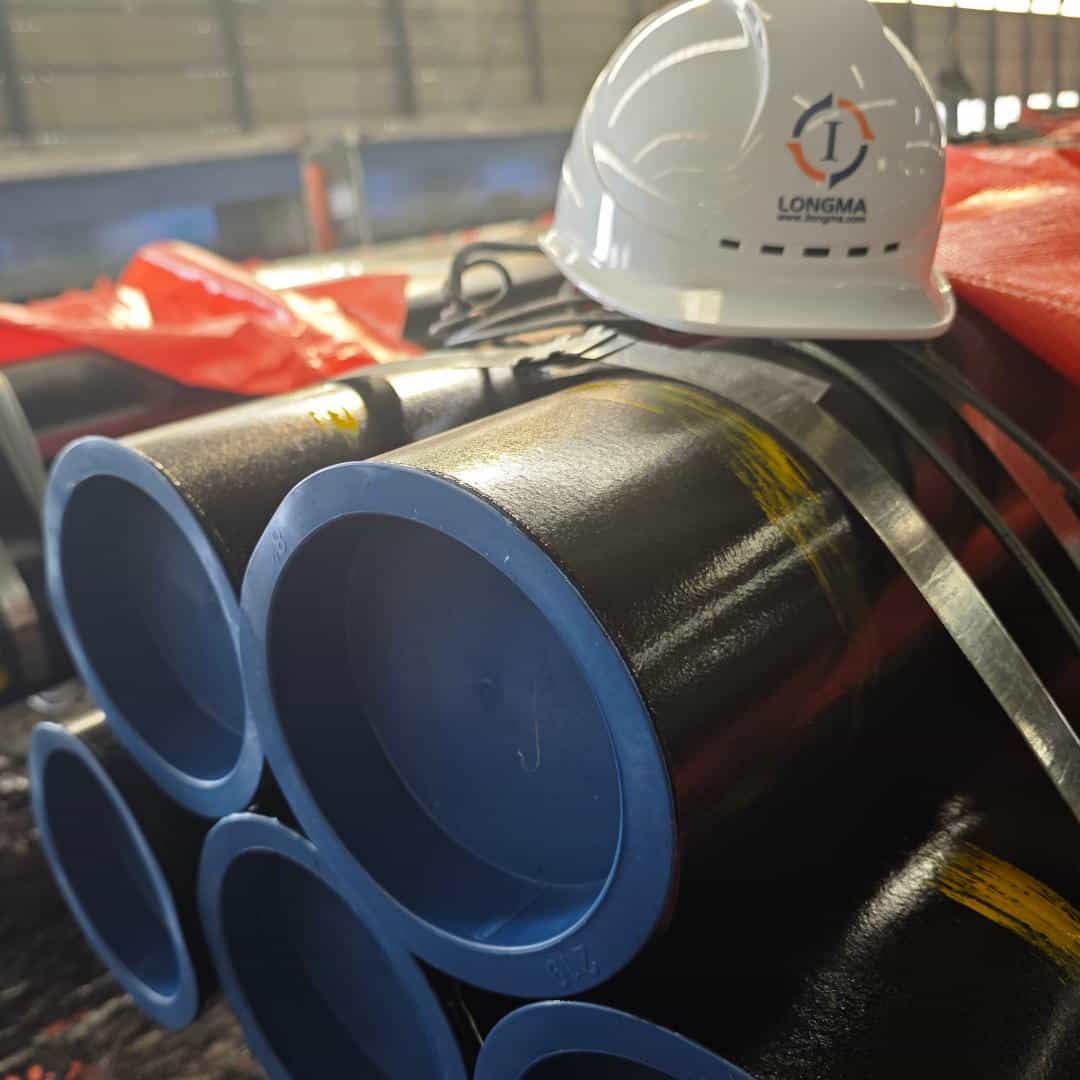
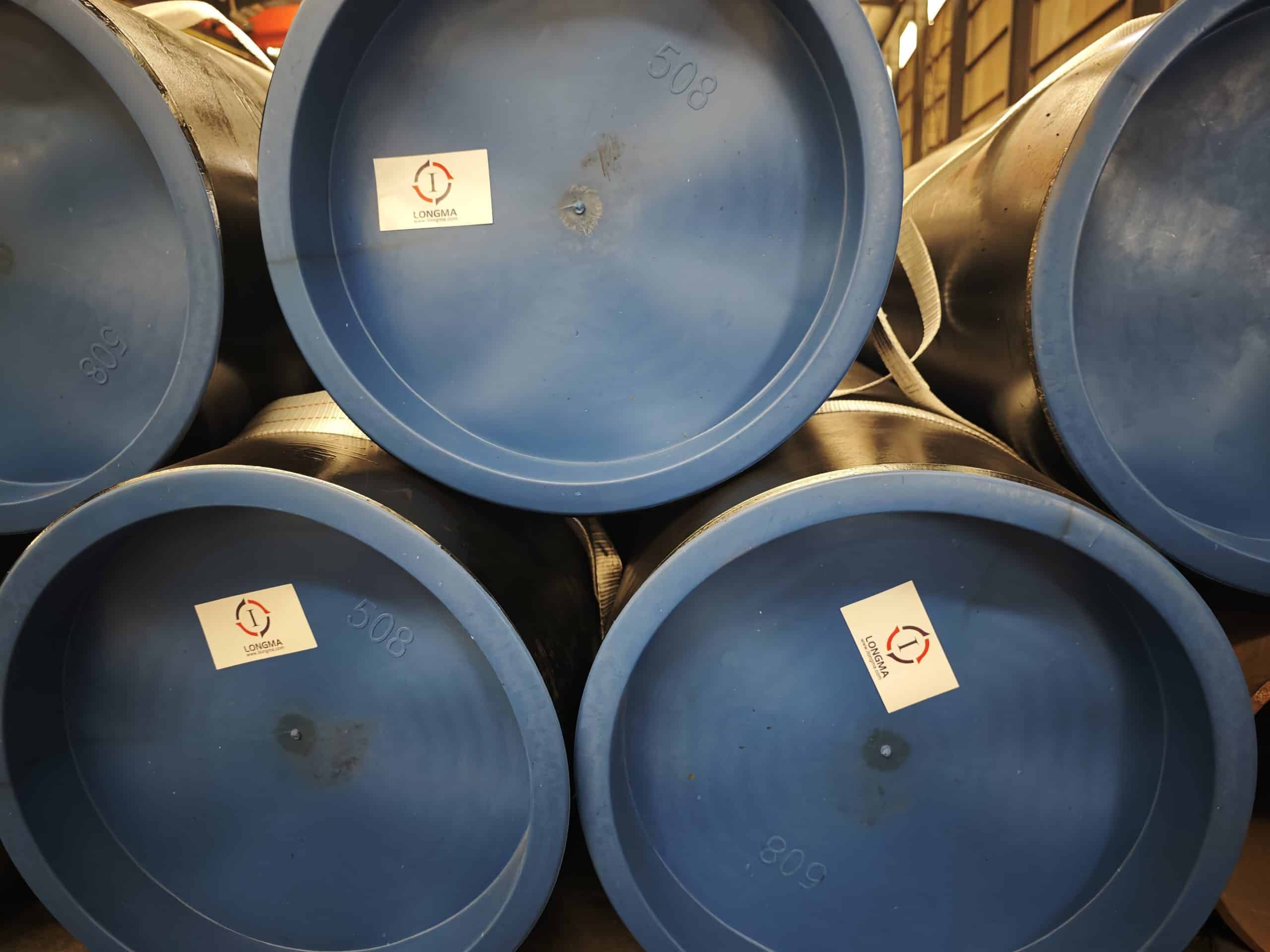
LONGMA has manufactured round ERW and LSAW steel pipes since 2003. The production site covers approximately 230,000 square meters, and annual output exceeds 500,000 tons. The company’s published product range includes API 5L PSL1 and PSL2 grades from Grade B through higher X-grades.
For API 5L Grade B projects, buyers can define material traceability, hydrostatic testing, NDT, dimensional inspection, coating documentation, MTC requirements and third-party inspection in the inquiry. LONGMA can review the technical package before quotation so that commercial comparisons are based on the same supply scope.
Send your material requisition to info@longma-group.com with the API 5L edition, Grade B/L245, PSL, OD, wall thickness, length, quantity, ERW or LSAW process, coating, service conditions, NDT scope and documentation requirements.
FAQ
- Is API 5L Grade B suitable for natural gas pipelines?
Yes, when the governing design code, pressure calculation, wall thickness, temperature, toughness, fluid composition and other project requirements confirm its suitability. Grade B does not have one universal pressure rating.
- Is PSL2 always required for oil and gas transportation?
No. The required PSL is determined by the project specification and service conditions. PSL2 is often selected when tighter chemistry, toughness, traceability or inspection controls are required.
- Can Grade B be used in H2S-containing service?
Potentially, but the material must satisfy the applicable sour-service requirements and project qualification. A Grade B or PSL2 marking alone is not proof of sour-service suitability.
- Can API 5L Grade B receive FBE or 3LPE coating?
Yes. The coating system should be specified separately and selected for the operating temperature, environment, handling, cathodic protection and field-joint requirements.
- Does LONGMA supply seamless Grade B pipe?
LONGMA focuses on round ERW and LSAW steel pipe. The required welded manufacturing route should be stated in the inquiry.