How strength toughness member behaviour fabrication and compliance influence grade selection
Selecting C250, C350 or C450 circular hollow section is not a matter of choosing the highest yield strength. A suitable grade must be assessed together with section geometry, member slenderness, connection design, service temperature, fabrication procedure, corrosion protection and project documentation. This guide provides a practical comparison for procurement and engineering discussions without replacing project-specific structural design.
Understanding the three grade families
AS/NZS 1163:2016 with Amendment 1:2017 specifies cold-formed electric resistance welded structural hollow sections in three principal strength levels. C250, C350 and C450 identify specified minimum yield strengths of 250, 350 and 450 MPa. The L0 versions retain the same nominal strength level and add specified Charpy V-notch impact requirements at 0 degrees C.
| Grade | Minimum yield strength | Minimum tensile strength | Typical selection question |
| C250 | 250 MPa | 320 MPa | Does the required section satisfy strength, stability and serviceability efficiently? |
| C350 | 350 MPa | 430 MPa | Will higher strength improve the governing member or connection design? |
| C450 | 450 MPa | 500 MPa | Can the design and fabrication use the higher strength without another limit state governing? |
The mechanical values are product acceptance requirements. They do not state the load capacity of a finished column, truss or connection. Capacity must be calculated using the actual section properties, effective length, restraint, loading and applicable design standard.
When C250 may be suitable
C250 can be appropriate where the required member capacity is readily achieved and higher material strength would not reduce the selected section. This may occur in secondary framing, lightly loaded members or designs governed by serviceability, minimum dimensions or connection detailing. Its use should be justified by calculations and the project specification rather than a generic application list.
C250 should not be described as inherently easier to weld or more ductile solely from a single quoted elongation percentage. Welding procedure requirements depend on the supplied chemical analysis, material thickness, joint configuration, hydrogen control, heat input and restraint.
When C350 or C450 may be considered
C350 is a widely specified higher-strength option for structural CHS. Where member resistance is controlled by material strength, it may allow a more efficient section than C250. That benefit is not automatic: compression members may be governed by local or global buckling, while beams and trusses may be governed by deflection, fatigue, vibration or connection resistance.
C450 provides a higher yield-strength level and may be useful where weight reduction is technically achievable. Engineers must confirm the available section, width-to-thickness or diameter-to-thickness limits, member stability, connection design and fabrication controls. A higher grade should not be promoted as a guaranteed reduction in tonnage, installation cost or project duration.
Deciding whether an L0 grade is required
An L0 grade provides specified impact testing at 0 degrees C. It is relevant when the engineering assessment identifies a need for verified notch toughness, but it is not a general guarantee against impact damage or brittle fracture. The decision should consider minimum design temperature, material thickness, stress concentration, welded details, dynamic loading and the governing project rules.
Descriptions such as “C350L0 is mandatory in a particular city or region” should be avoided unless a project specification or applicable authority explicitly requires it. The responsible engineer should document the material selection basis.
Project compliance and procurement checklist
The purchase order should connect the selected grade to the evidence required for acceptance. Requirements vary by project, so the following list should be treated as a specification checklist rather than a universal statutory package.
- State AS/NZS 1163:2016, Amendment 1:2017, the grade, dimensions, length, quantity and end condition.
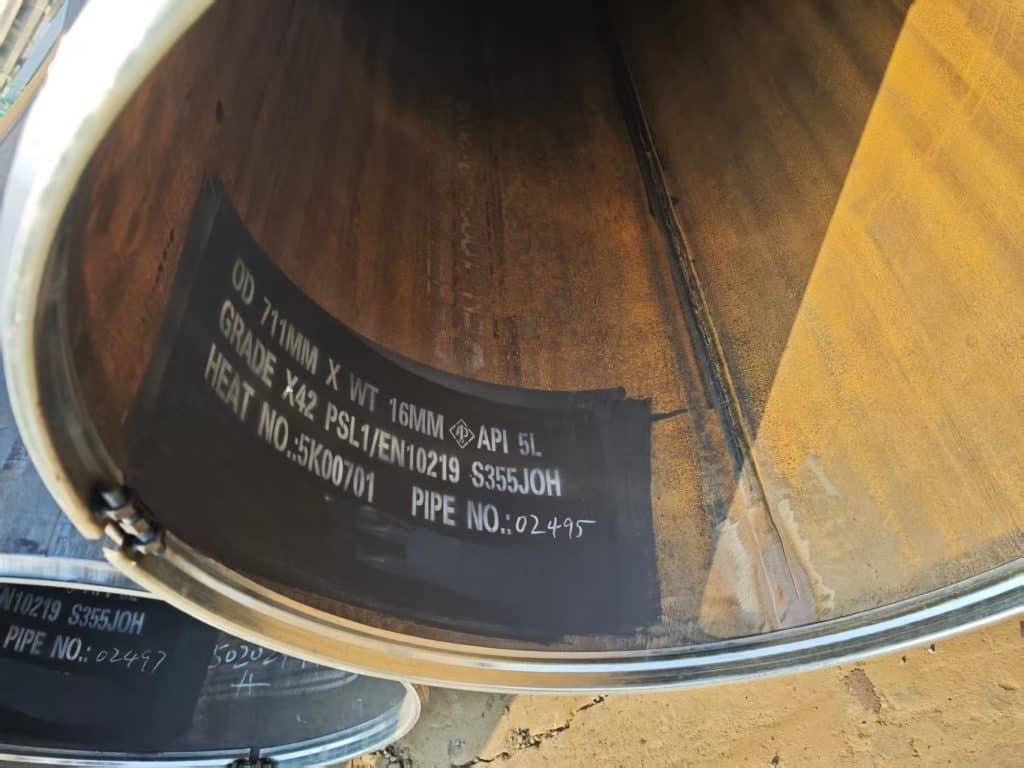
- Request chemical, tensile and applicable Charpy results with product and heat traceability.
- Define the required inspection document, such as EN 10204 type 3.1, when contractually required.
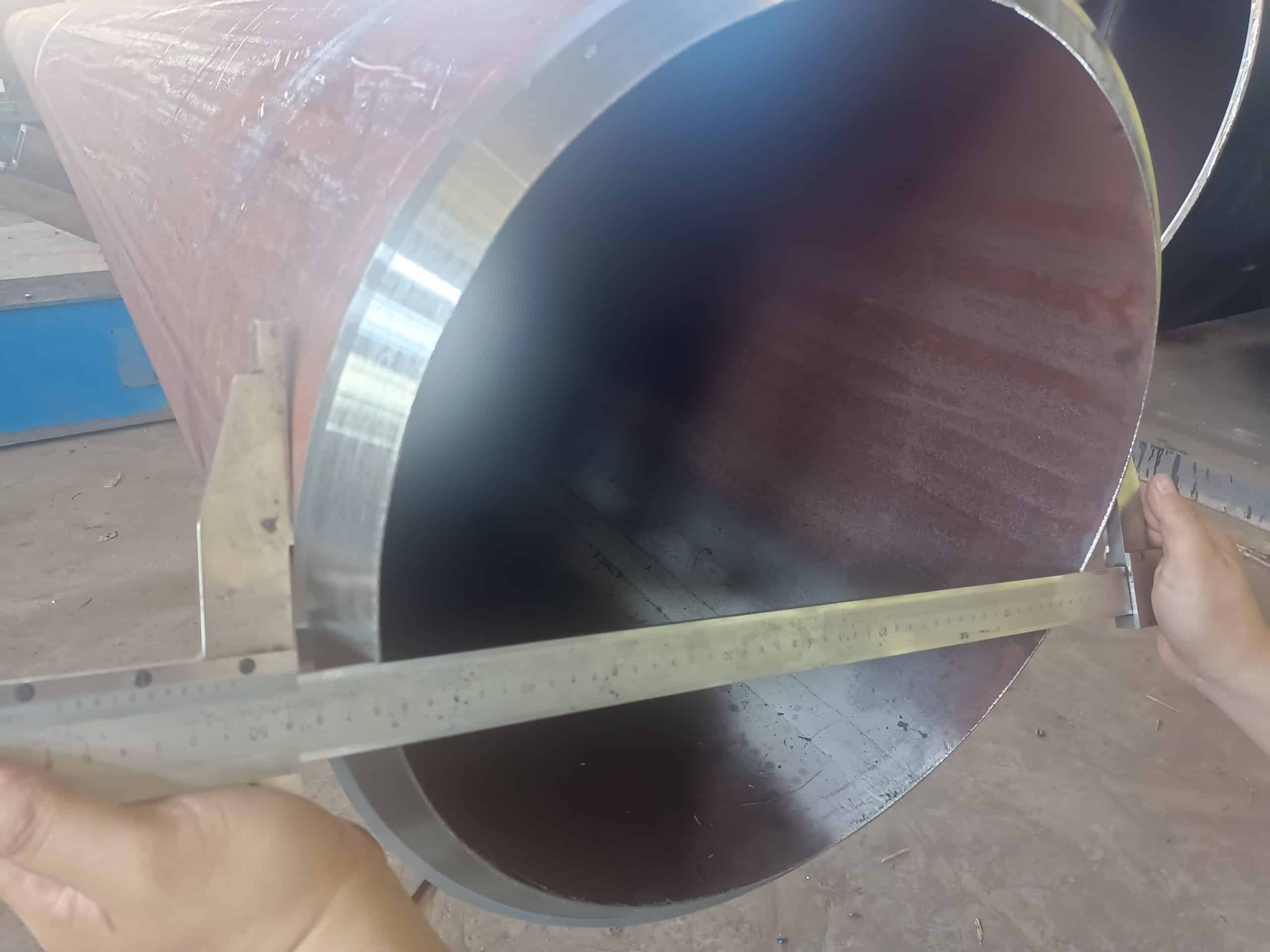
- Specify additional weld examination, dimensional records or third-party witnessing where the risk assessment requires it.
- For hot-dip galvanizing, reference the current AS/NZS 4680:2025 and coordinate venting, drainage and fabrication details.
- Do not approve a grade, size, manufacturing route or standard substitution without engineering review.
ISO 9001 certification demonstrates that a supplier operates a quality management system; it does not independently certify that a particular pipe complies with AS/NZS 1163. Likewise, an MTC supports product verification but does not replace inspection of marking, dimensions and the delivered condition.
Sourcing C250 C350 and C450 CHS from LONGMA
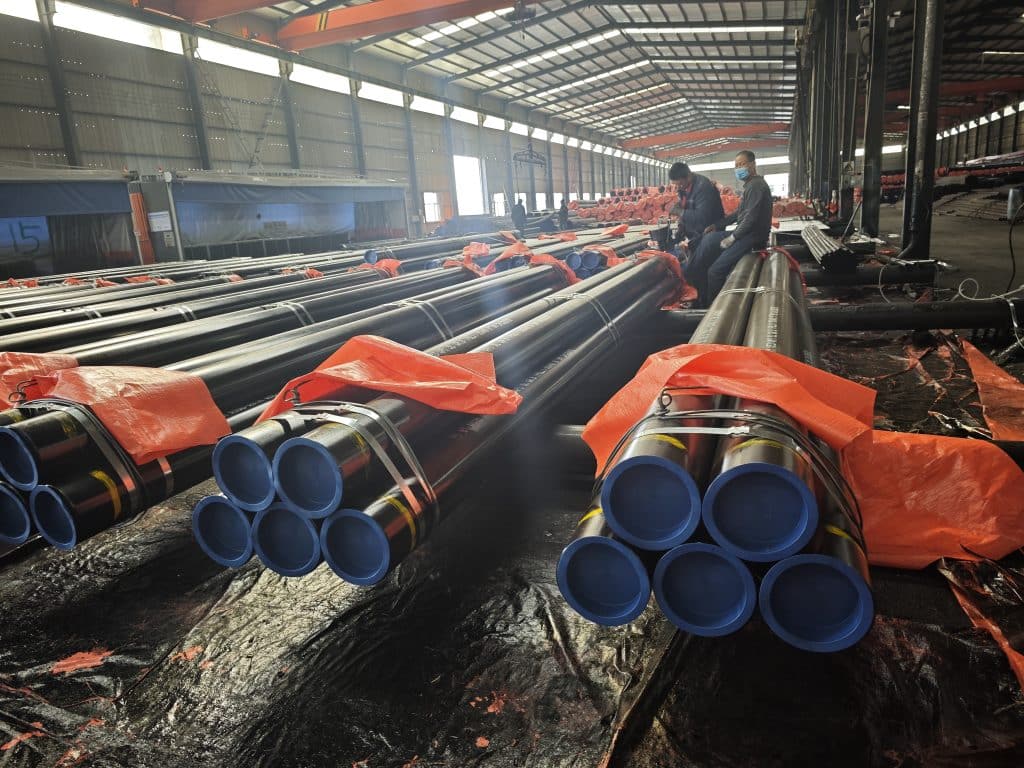
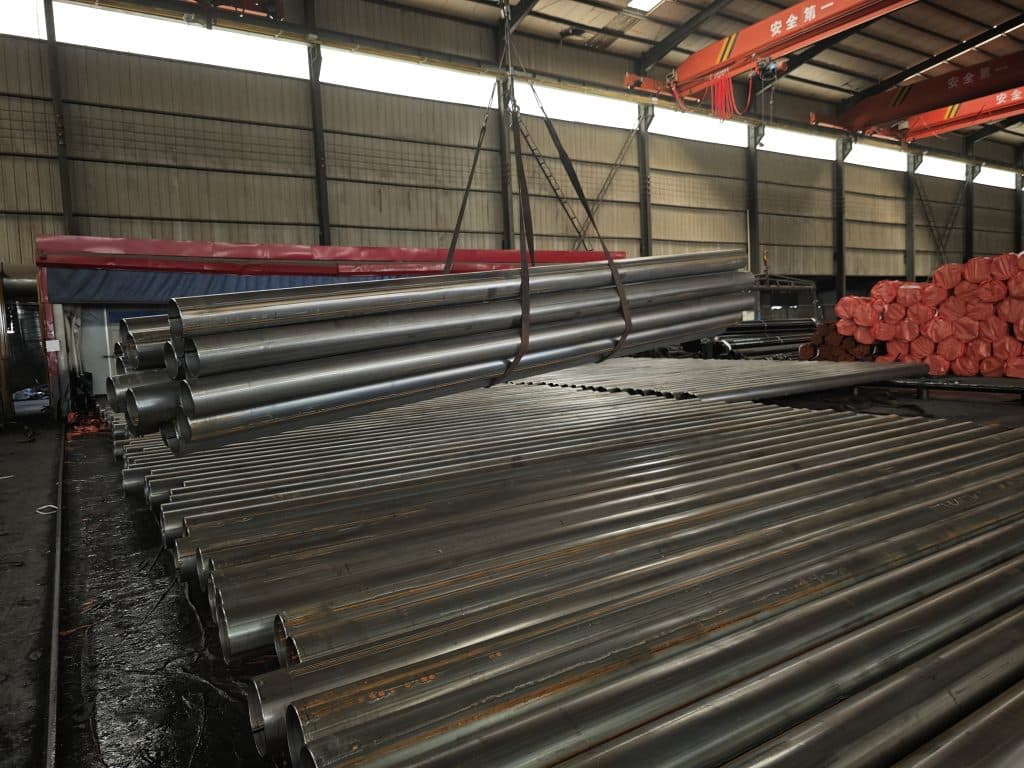
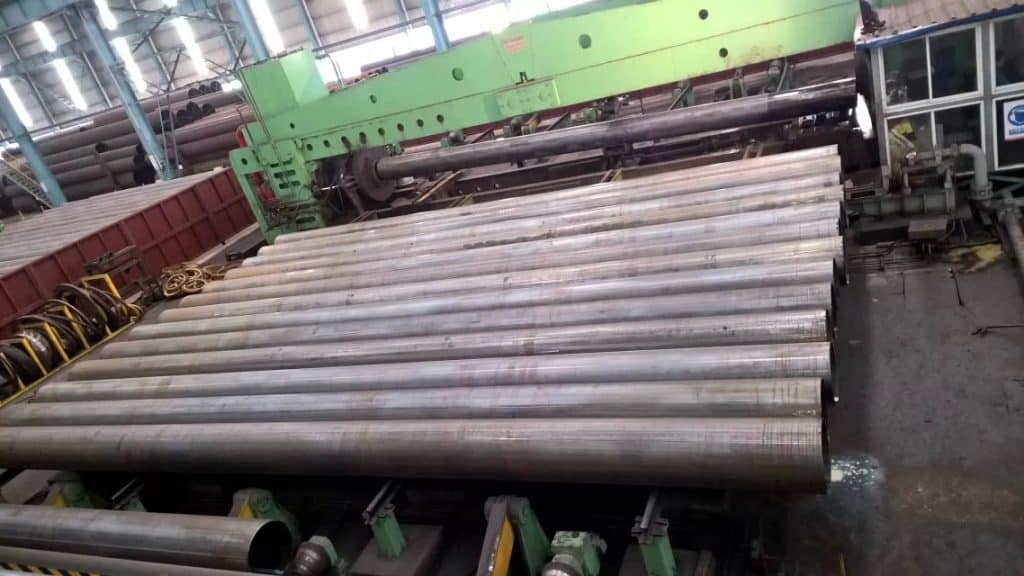
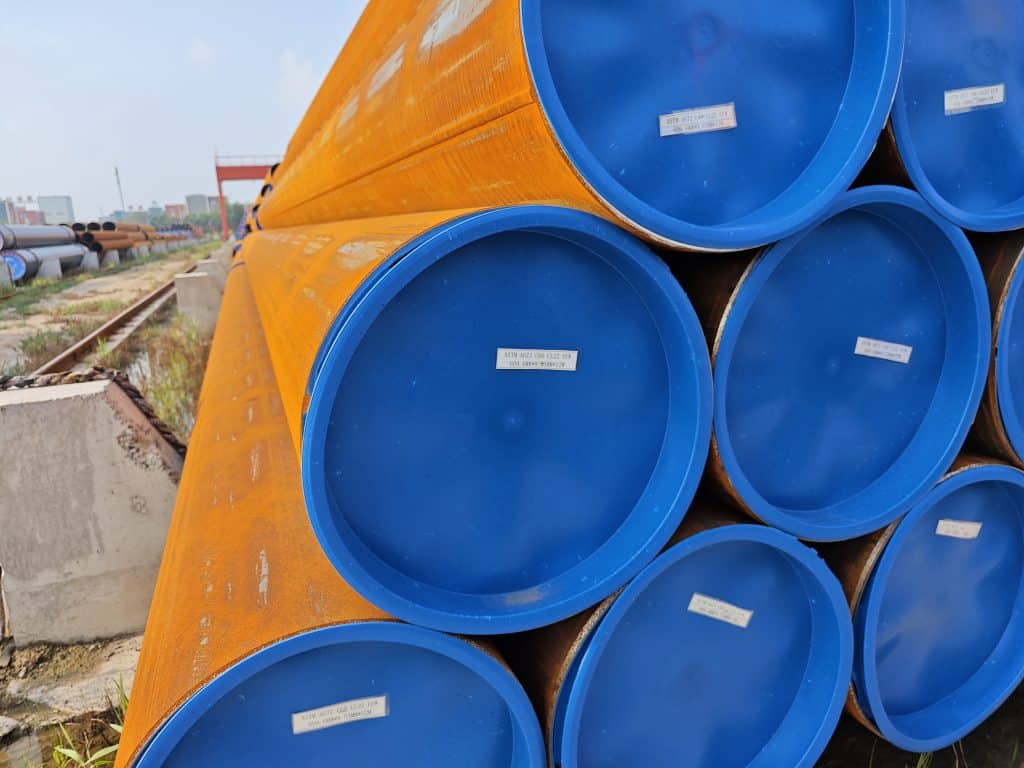
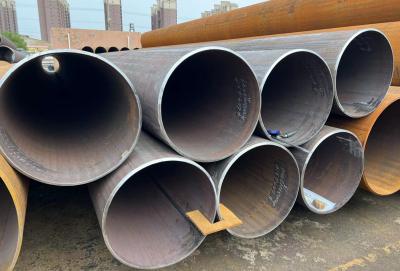
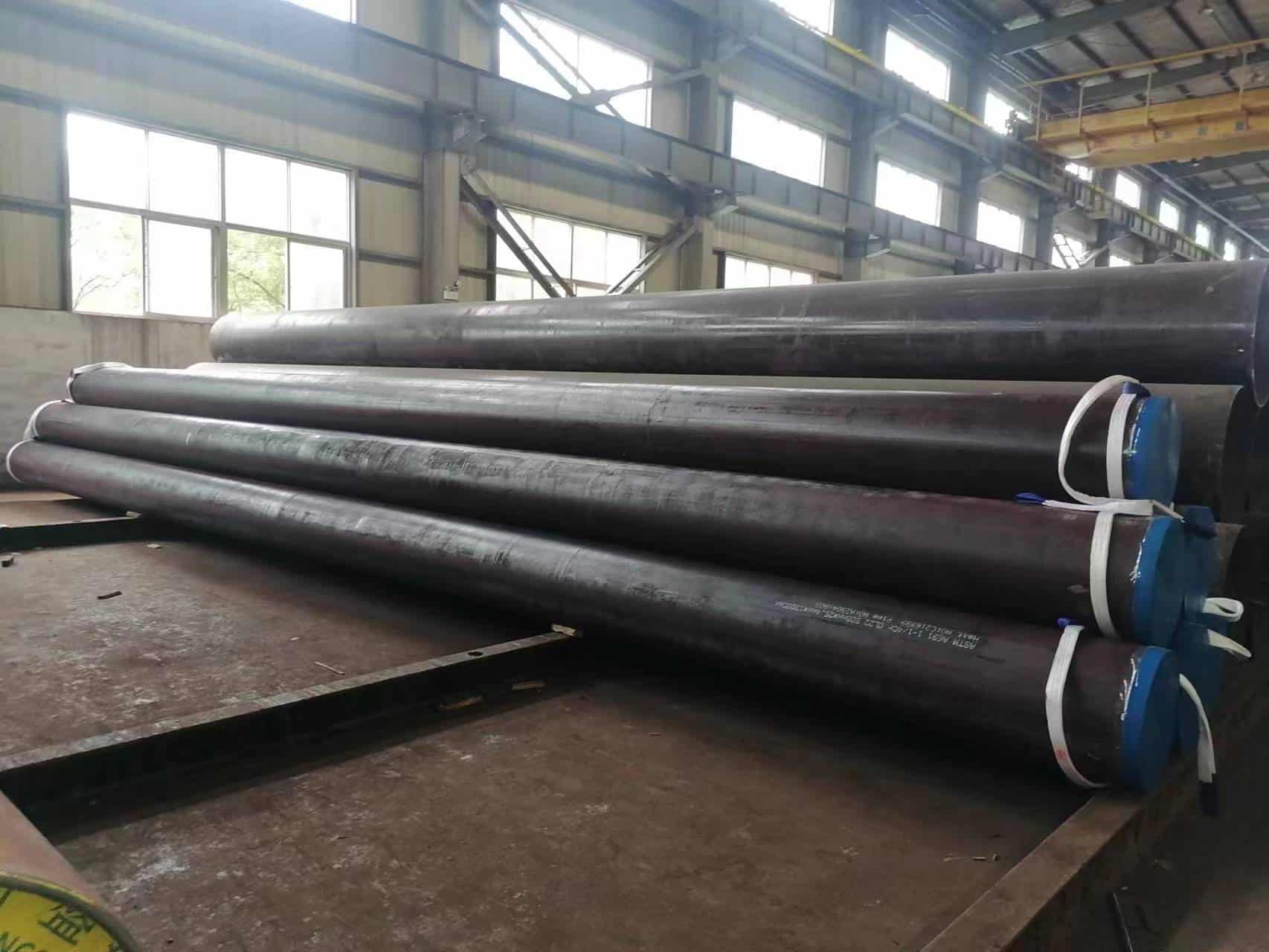
LONGMA manufactures round steel pipe and does not present square or rectangular hollow sections as part of this offering. The published AS/NZS range includes C250, C350 and C450 grade families in round sections, subject to confirmation of size, wall thickness, manufacturing route and order requirements. Product availability should be confirmed before design or procurement commitments are made.
Procurement teams should also separate technical compliance from commercial comparison. Quotations may use different assumptions for theoretical mass, length tolerance, testing, coating preparation, inspection hold points, packing and delivery terms. A lower unit price is not directly comparable if one offer excludes required testing or uses a different dimensional basis. A bid tabulation should therefore record both the technical deviations and the commercial basis, with unresolved exceptions referred to the engineer before award. This prevents a late substitution from changing the structural design or documentation package after production has started.
LONGMA reports a 230,000 square metre production base, annual output exceeding 500,000 tonnes and more than 60 senior technical staff. For a quotation, send the required standard and edition, grade, outside diameter, wall thickness, length, quantity, coating and inspection requirements to info@ilongma.com.
Frequently Asked Questions
Is C450 always better than C350
No. C450 has a higher specified minimum yield strength, but the preferred grade is the one that produces a compliant and practical member. If global buckling, local slenderness, deflection, fatigue, connection resistance or an available-size limitation governs the design, additional yield strength may provide little benefit. Fabrication capability, availability and whole-project cost must also be considered rather than comparing material strength alone.
Does C350L0 have a higher yield strength than C350
No. C350 and C350L0 share the same nominal minimum yield-strength level. The L0 suffix introduces specified Charpy V-notch impact requirements at 0 degrees C. It is therefore a toughness designation rather than a higher-strength designation. The supplied impact test record should be checked against the standard’s specimen and acceptance provisions.
Can the grade be selected from the application name alone
No. Labels such as warehouse, bridge, mine or coastal structure do not define the governing limit state. Two structures in the same industry may have different loads, member lengths, temperatures, fatigue demands, connection details and corrosion systems. Grade selection should follow the engineering design and project specification, with procurement confirming that the ordered product matches that decision.
What information should be included in a quotation request
Provide the standard and edition, grade including any L0 requirement, outside diameter, wall thickness, length, quantity, coating, end condition, inspection certificate and additional testing. State whether third-party inspection or witness points apply and identify the destination and required delivery basis. Clear technical inputs allow the supplier to confirm manufacturing feasibility before issuing a binding commercial offer.