- 1. Charpy Testing in API 5L Line Pipes
- 2. Key Factors Influencing Charpy Testing Requirements
- 3. Comparing API 5L Charpy Testing Requirements
- 4. Procurement Insights Buying API 5L Line Pipes with Charpy Certification
- 5. How to Decide If Charpy-Tested API 5L Pipe Is Right for Your Project
- 6. Conclusion
- 7. FAQ
- 8. Source Your Next API 5L Line Pipe Order from LONGMA
Not all API 5L line pipe requires Charpy impact testing. PSL 1 does not generally require Charpy V-notch (CVN) testing as a basic requirement, although a purchaser may specify it. PSL 2 includes CVN requirements subject to the applicable pipe dimensions and specimen provisions. Buyers must therefore confirm the product specification level, dimensions, test temperature and project requirements rather than relying on the grade name alone.
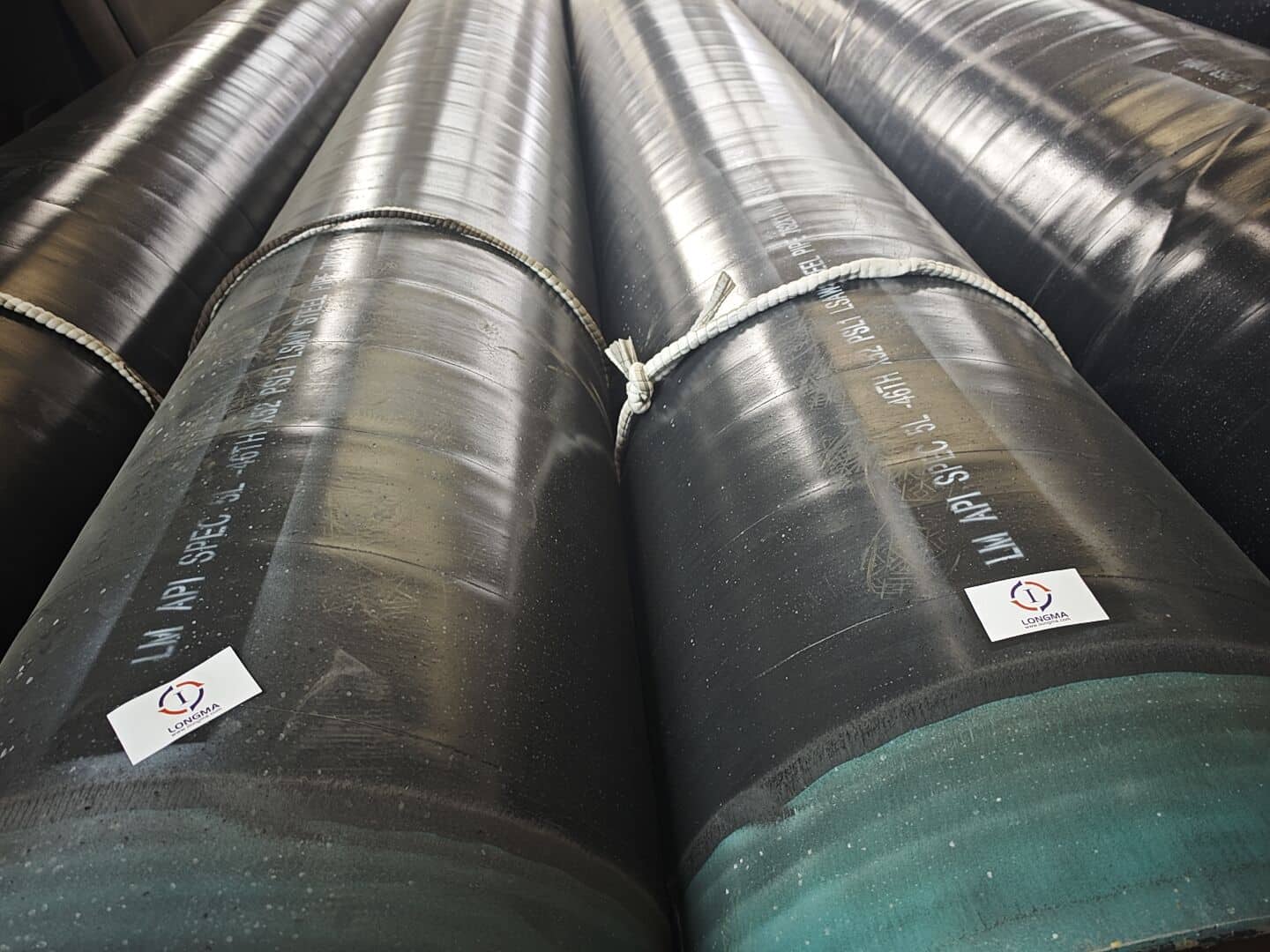
Charpy Testing in API 5L Line Pipes
The Charpy V-notch impact test measures the energy absorbed when a notched specimen fractures under a pendulum impact at a specified temperature. It helps assess resistance to brittle fracture. Results depend on test temperature, specimen size, orientation and sampling location, so an absorbed-energy value is meaningful only when these conditions are stated.
Why Charpy Testing Matters for Pipeline Steel
Impact toughness is an important part of pipeline material selection, particularly where low temperatures or demanding operating conditions increase fracture risk. CVN acceptance criteria must be taken from the specified API 5L edition and any project supplements. A value quoted for one grade, diameter or specimen size cannot automatically be applied to another. CVN results support material qualification but do not, by themselves, establish resistance to running fractures or replace a pipeline fracture-control assessment.
PSL1 vs PSL2 Where Charpy Testing Diverges
PSL 1 provides basic manufacturing, chemical, mechanical and inspection requirements without a general mandatory CVN requirement. PSL 2 includes additional controls, including impact testing where the standard requires it and suitable specimens can be obtained. Small dimensions can affect test applicability and specimen selection. API published the 47th edition in June 2026; purchase orders should identify the applicable edition and any amendments rather than referring only to API 5L.
Key Factors Influencing Charpy Testing Requirements
Manufacturing Method ERW vs LSAW
Manufacturing method affects where specimens are taken. HFW pipe, commonly described commercially as high-frequency ERW pipe, and LSAW pipe have different weld configurations. Where required, CVN sampling includes the pipe body and the relevant welded regions. Weld metal and heat-affected-zone requirements must be checked separately for the applicable process. The inspection and test plan should identify every required sampling location instead of assuming that all welded pipe uses an identical two-location test arrangement.
Environmental and Project-Specific Triggers
Project specifications may require testing at a temperature below the standard baseline for cold service. The specified temperature and acceptance criteria should follow the governing design requirements and fracture-control assessment. In H2S-containing service, material selection must also address environmental cracking where applicable. Hydrogen-induced cracking (HIC) and sulfide stress cracking (SSC) assessments concern different failure mechanisms from Charpy impact testing; their qualification and testing requirements depend on the applicable sour-service specification and purchase agreement.
Comparing API 5L Charpy Testing Requirements
The following comparison separates the basic product specification levels from additional purchase requirements. CVN applicability, sampling and acceptance criteria must be checked against the specified edition and pipe dimensions.
| Product category | Basic CVN position | Purchase requirement |
| PSL 1 permitted grades | Not generally required | Specify additional CVN explicitly |
| PSL 2 permitted grades | Required where applicable | Confirm dimensions and specimen provisions |
| Additional service requirements | As specified by the project | Agree temperature, energy and sampling |
A higher strength grade does not, by itself, prove better low-temperature toughness. Steelmaking, rolling and heat treatment influence the final properties, and the manufacturer must demonstrate compliance through the required tests. Buyers should assess the specified strength and impact requirements together rather than infer CVN performance from the grade designation or a particular alloy addition.
Procurement Insights Buying API 5L Line Pipes with Charpy Certification
The Mill Test Certificate (MTC) is the first place to check documented CVN compliance. For an order requiring impact tests, review the traceable test results, temperature, specimen dimensions, orientation and sampling location. Individual and average absorbed-energy results should be assessed against the applicable acceptance criteria. If a test is not applicable because of the pipe dimensions, the documentation should make the basis clear rather than leave an unexplained blank.
When looking for approved impact-tested API 5L line pipes, these are the main things you should look for:
- Confirm the PSL level and standard edition in the purchase order. For PSL 1, explicitly state any additional CVN requirements. For PSL 2, confirm the applicable dimensional and sampling provisions.
- Specify the CVN test temperature and acceptance criteria in the project specification, based on the governing design requirements and service conditions.
- Request results for all required sampling locations. For welded pipe, distinguish the pipe body, weld metal and heat-affected zone where applicable to the manufacturing process.
- Agree any third-party witnessing before production. SGS, Bureau Veritas or Intertek inspection can be included in the inspection and test plan when required by the purchaser.
- Specify the inspection document type. EN 10204 Type 3.1 is validated by the manufacturer’s authorized inspection representative independent of manufacturing. Type 3.2 also involves the purchaser’s authorized representative or an inspector designated by official regulations. A third-party visit alone does not automatically make a document Type 3.2.
All of these steps lower the chance of getting non-conforming material that looks good but doesn’t meet toughness standards in real-world circumstances.
How to Decide If Charpy-Tested API 5L Pipe Is Right for Your Project
Select impact-tested pipe using the governing pipeline design code, minimum design temperature, dimensions, fluid characteristics and project fracture-control requirements. Pressure or temperature alone does not create a universal rule that every pipeline must use PSL 2. For H2S-containing service, assess the relevant environmental conditions and applicable material requirements separately; Charpy results do not demonstrate HIC or SSC resistance.
A useful pre-purchase list for QA/QC teams and buying managers:
- Confirm the minimum design temperature from the project basis of design and establish the required impact test conditions.
- Identify the H2S partial pressure, presence of an aqueous phase and other relevant environmental conditions from the process data.
- Check applicable national requirements and the operator’s material specifications. Operator specifications are contractual requirements, not automatically national legislation.
- State the grade, PSL, dimensions, standard edition and required CVN test conditions in the material requisition before issuing the RFQ.
- Specify the required inspection certificate and any witnessing arrangements separately. Request Type 3.2 when that document type is contractually required.
If procurement teams include these factors in their RFQ papers from the start, they can avoid costly re-inspection cycles later on and keep project schedule milestones safe.
Conclusion
Charpy testing is not required for every API 5L line pipe order. PSL 1 generally needs an explicit additional purchase requirement for CVN testing, while PSL 2 contains impact requirements subject to dimensional and specimen provisions. Clear purchase specifications and traceable test records allow buyers to verify that the supplied pipe meets the required toughness conditions.
FAQ
Does Grade B API 5L pipe require Charpy testing
Grade B PSL 1 does not generally require CVN testing as a basic requirement. Grade B PSL 2 is subject to the applicable impact-testing provisions, including dimensional limitations. A project may impose additional requirements on either product specification level.
How do I verify that a pipe supplier actually performed Charpy testing
Request traceable CVN test records showing the test temperature, specimen dimensions and orientation, sampling locations, individual values and average results. Check that they correspond to the supplied material and specified acceptance criteria. If independent verification is needed, agree witnessing and the inspection document type before manufacture.
Does sour service require testing beyond Charpy
Sour service requires a separate assessment of environmental cracking resistance under the applicable material specification. HIC and SSC testing may be required by the qualification route or purchase specification. They are not impact-toughness tests, and passing CVN does not establish sour-service suitability. Where API 5L sour-service provisions are ordered, specify the relevant supplementary requirements and grade designation in full.
Can ERW pipe meet PSL2 Charpy requirements
Yes. Properly manufactured HFW pipe can meet the applicable PSL 2 impact requirements. Confirm the pipe dimensions, delivery condition, sampling locations, test temperature and acceptance criteria in the inspection and test plan. Compliance must be demonstrated by the required results, rather than inferred from the feedstock description.
Source Your Next API 5L Line Pipe Order from LONGMA
Since 2003, LONGMA has manufactured steel line pipe. Our facility covers 230,000 square metres, annual output exceeds 500,000 tonnes, and registered capital is RMB 176 million. We supply round ERW and LSAW pipes, with grade and PSL combinations confirmed against the applicable standard and order requirements. Inspection documentation under EN 10204 Type 3.1 or 3.2 and third-party inspection can be arranged as specified. Sour-service requirements must be agreed during technical review. Send your grade, dimensions, quantity and testing requirements to info@ilongma.com for a quotation.