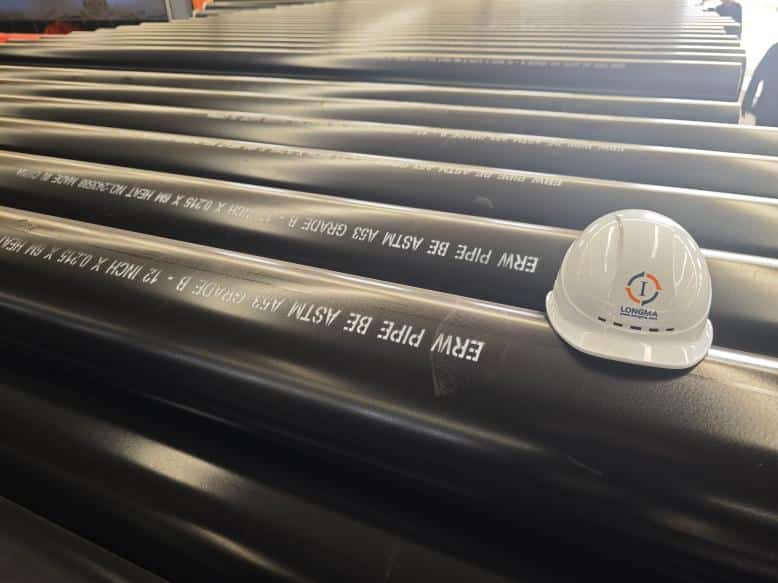
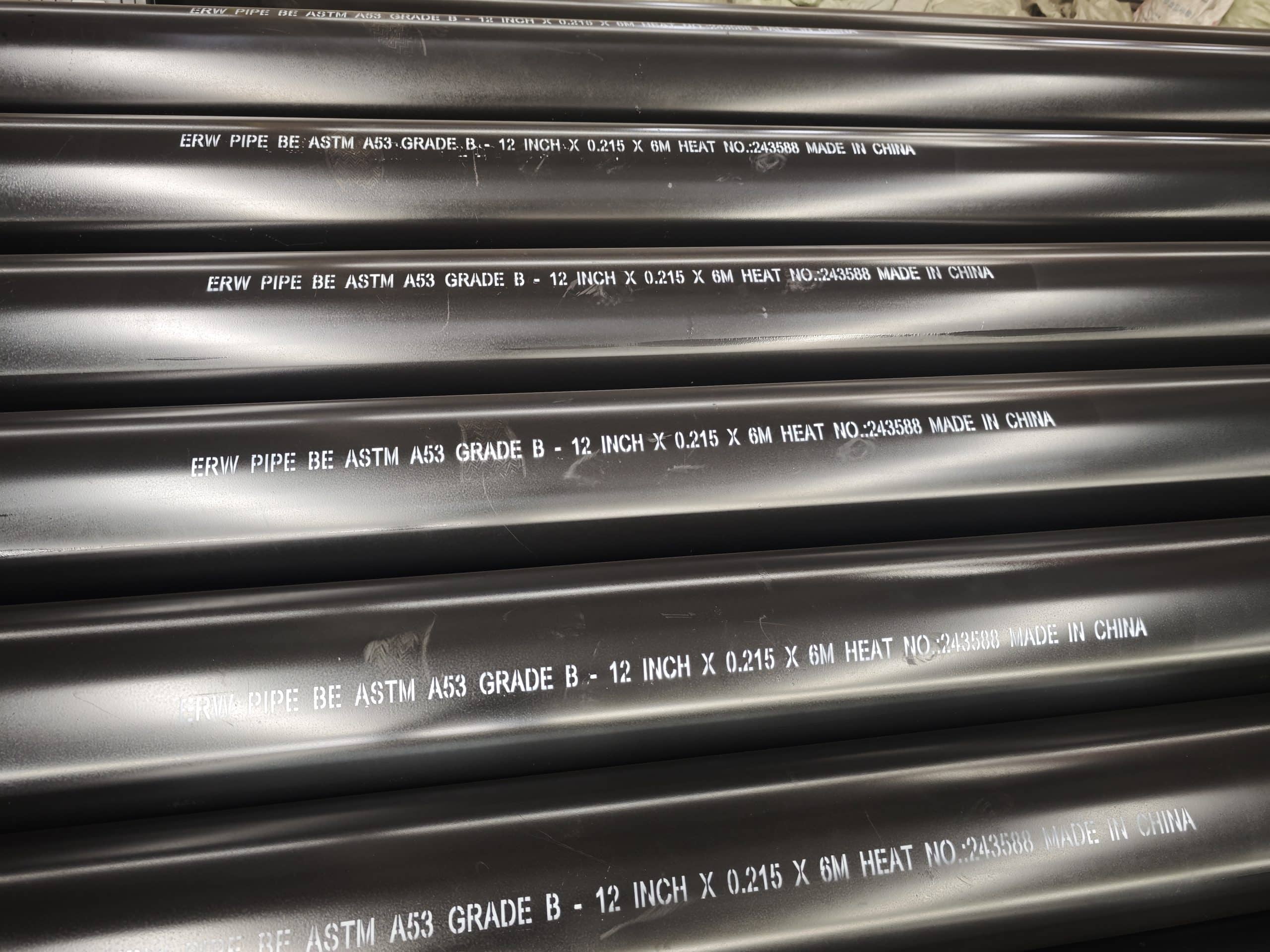
ASTM A53 Grade B and ASTM A106 Grade B are carbon-steel pipe specifications with similar minimum strength requirements but different scopes and manufacturing provisions. A53 covers black and hot-dip galvanized pipe for mechanical and pressure applications and ordinary uses in steam, water, gas and air lines. A106 covers seamless carbon-steel pipe for high-temperature service. Procurement teams should compare the product requirements against the design specification before accepting either material or a proposed substitution.
Understanding the Two Specifications
Why Similar Strength Does Not Mean Interchangeability
Both Grade B products have specified minimum tensile strength of 60,000 psi and minimum yield strength of 35,000 psi. Their corresponding SI requirements are stated in the applicable standards and should be used consistently rather than generated by approximate conversion. Similar strength values do not establish equivalence in manufacturing, chemistry, testing or suitability under a particular piping code.
Dual-certified seamless pipe can satisfy both standards when all applicable requirements are met. The mill test certificate must identify both specifications and the actual manufacturing and test results. A53 ERW pipe cannot become A106 pipe through additional paperwork because A106 requires seamless manufacture. Any substitution should be approved through the project’s material-control procedure.
Applications Affected by the Choice
The distinction matters in process plants, steam systems, building services, water networks and fire protection. A product standard describes the pipe supplied; the governing design code establishes how it may be used. Design temperature, pressure, corrosion allowance, dimensions and joining method therefore belong in the purchasing decision alongside the ASTM grade.
Chemical Mechanical and Manufacturing Differences
Chemistry and Material Properties
A106 Grade B includes a minimum silicon requirement of 0.10%. A53 Grade B does not specify the same silicon minimum. This difference forms part of the material specification, but silicon content alone does not establish an allowable operating temperature. Buyers should review the complete heat analysis and the relevant standard’s permitted adjustments rather than use one element to justify substitution.
Manganese requirements also differ. A53 Grade B requirements should be read for the applicable manufacturing type, while A106 includes its own specified range and provisions. Values associated with different grades must not be combined into a single apparent range. Where chemistry is reproduced in a purchase specification, include the applicable edition and relevant qualifications.
Tensile strength, yield strength and elongation are verified through the required tests. Elongation depends on the specified specimen and dimensional conditions; a single percentage should not be treated as universal for every pipe size and test configuration. Similar room-temperature strength does not by itself demonstrate equal performance at elevated temperature or under cyclic loading.
Manufacturing Routes
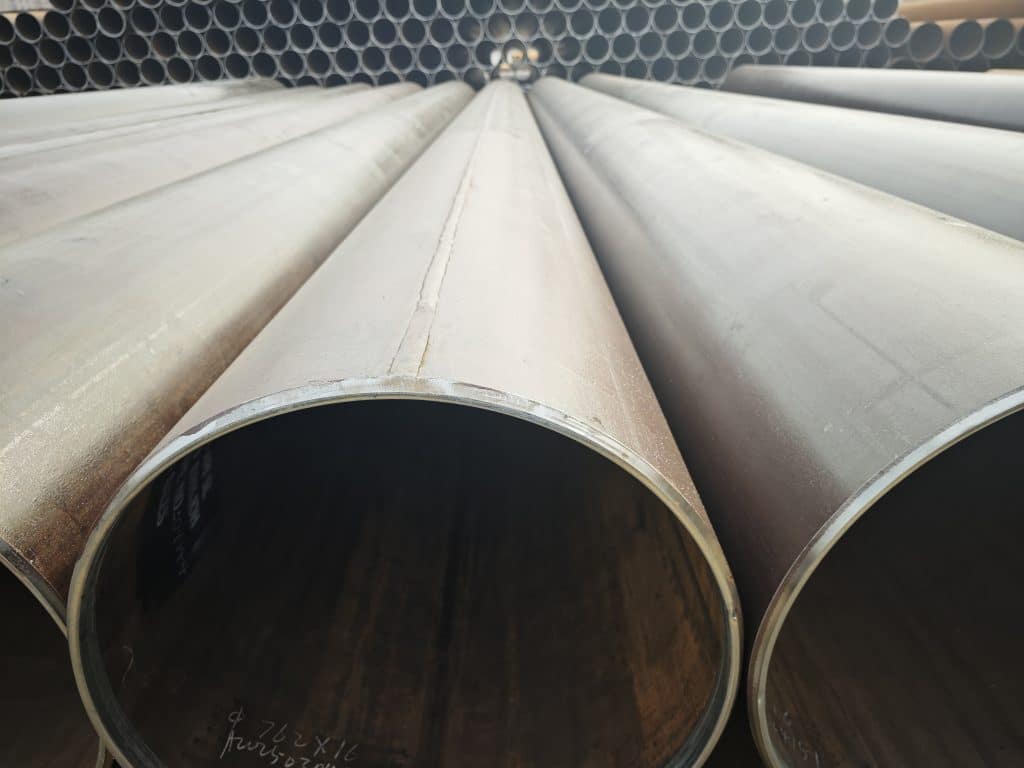
A53 identifies Type E electric-resistance-welded, Type S seamless and Type F furnace-butt-welded products, with the grade and type availability checked against the ordered edition. A53/A53M-22 includes Type F Grades A and B. The manufacturing type should be stated explicitly where it affects the design or project approval.
A106 is seamless only. Its manufacturing and processing requirements support the specified product scope, but seamless construction alone is not a guarantee against defects or a substitute for inspection. Product tolerances must be checked against the relevant material specification and applicable general requirements. ASME B36.10M provides dimensional series; it does not replace the product acceptance criteria.
| Attribute | ASTM A53 Grade B | ASTM A106 Grade B |
| Main scope | Mechanical and pressure applications and ordinary steam water gas and air uses | Seamless pipe for high-temperature service |
| Manufacturing | Type E S or F as permitted by the ordered edition | Seamless only |
| Minimum silicon | No equivalent specified minimum | 0.10% |
| Minimum tensile strength | 60,000 psi | 60,000 psi |
| Minimum yield strength | 35,000 psi | 35,000 psi |
| Galvanized supply | Covered by A53 requirements | Additional treatment to be separately agreed and assessed |
Temperature Corrosion and Application Selection
Temperature and Pressure
A106 is commonly selected for steam and elevated-temperature process piping because its stated scope addresses high-temperature service. A53 also covers pressure applications, including steam service. There is no universal 400°F boundary that automatically makes every A53 installation unacceptable or every A106 installation suitable. Engineers must apply the relevant code’s allowable stresses and limitations at the design temperature.
The temperature and pressure act together with wall thickness, diameter, allowances and joint details. A material suitable for one steam line may not be suitable for another with different conditions. Purchasing by a temperature label alone can therefore result in an incomplete specification, even when the ASTM designation is correct.
Corrosion and Galvanizing
Both products are carbon steel and require corrosion assessment for the actual environment. A53 directly includes hot-dip galvanized supply, with zinc-coating requirements governed by the ordered A53 specification and any project additions. Other galvanizing standards should not be substituted automatically for those requirements.
A106 is not inherently restricted to indoor use, nor does seamless manufacture make zinc coating physically impossible. Any additional treatment must be agreed with the supplier and assessed for service temperature, fluid compatibility, dimensional effects and connection requirements. For either material, galvanizing is one protection option and does not guarantee suitability for every corrosive fluid or environment.
Fire Sprinkler Applications
ASTM A53 is among the pipe specifications addressed by NFPA 13. Acceptance depends on the adopted edition, dimensions, wall thickness, joining method and other applicable requirements, including listing where required. A53 Grade B can therefore be specified for suitable sprinkler installations when all relevant product and system requirements are satisfied.
Procurement Documentation and Added Services
Compare quotations for the same manufacturing type, dimensions, finish, test scope and delivery terms. A53 ERW commonly offers an economical route for suitable general-service applications. A106 availability and cost depend on seamless production, size and wall thickness. LONGMA’s quoted delivery may be as short as seven days for confirmed stock, while production orders require a schedule agreed for the specific scope.
Specify the required inspection certificate, such as EN 10204 type 3.1, and any third-party witness or review points. The certificate should identify the standard and edition, grade, manufacturing type, heat number, chemistry and required test results. For A106, review the applicable ASTM A530/A530M general requirements together with the product specification and any contract additions.
Plain, threaded or beveled ends should be ordered with the applicable dimensions and connection requirements. An ASME B16.25 bevel can support field weld preparation, but fit-up, cleaning and the approved welding procedure still apply. Threaded sprinkler connections and welded process piping should each follow their own design and installation requirements.
Making the Final Material Decision
Begin with the governing code and material specification, then confirm design pressure and temperature. Identify whether the project permits a weld seam or specifically requires seamless pipe. Check fluid compatibility, corrosion protection, wall thickness and the joining method before evaluating price or delivery.
Schedule 40 is a wall-thickness designation that must be combined with nominal pipe size. It does not identify steel grade or establish a pressure rating by itself. A53 Grade B Schedule 40 and A106 Grade B Schedule 40 can share nominal dimensions while remaining different products with different manufacturing and specification requirements.
For dual-certified orders, verify the actual product against both specifications, including manufacture, chemistry, tests and markings. Approval should rely on traceable product records and the design requirements. A generic claim of mill approval is insufficient to establish dual compliance or authorize a substitution.
Frequently Asked Questions
What Is the Main Difference Between A53 B and A106 B
A53 covers several manufacturing routes and includes black and galvanized pipe. A106 requires seamless manufacture and addresses high-temperature service. Their Grade B minimum strengths are similar, but the complete product and design requirements must be compared before substitution.
Can A53 Grade B Be Used for Steam
It may be used where the applicable code and project specification permit the material for the actual design conditions. Temperature, pressure, wall thickness and other limitations must be checked together.
Source A53 Grade B Pipe From LONGMA
Since 2003, LONGMA has manufactured round ERW and LSAW steel pipes. The company has registered capital of RMB 176 million, a factory covering 230,000 m² and annual output exceeding 500,000 tonnes. For A53 Grade B enquiries, specify dimensions, manufacturing type, finish, ends and inspection requirements. Contact info@ilongma.com or visit www.ilongma.com for a quotation.