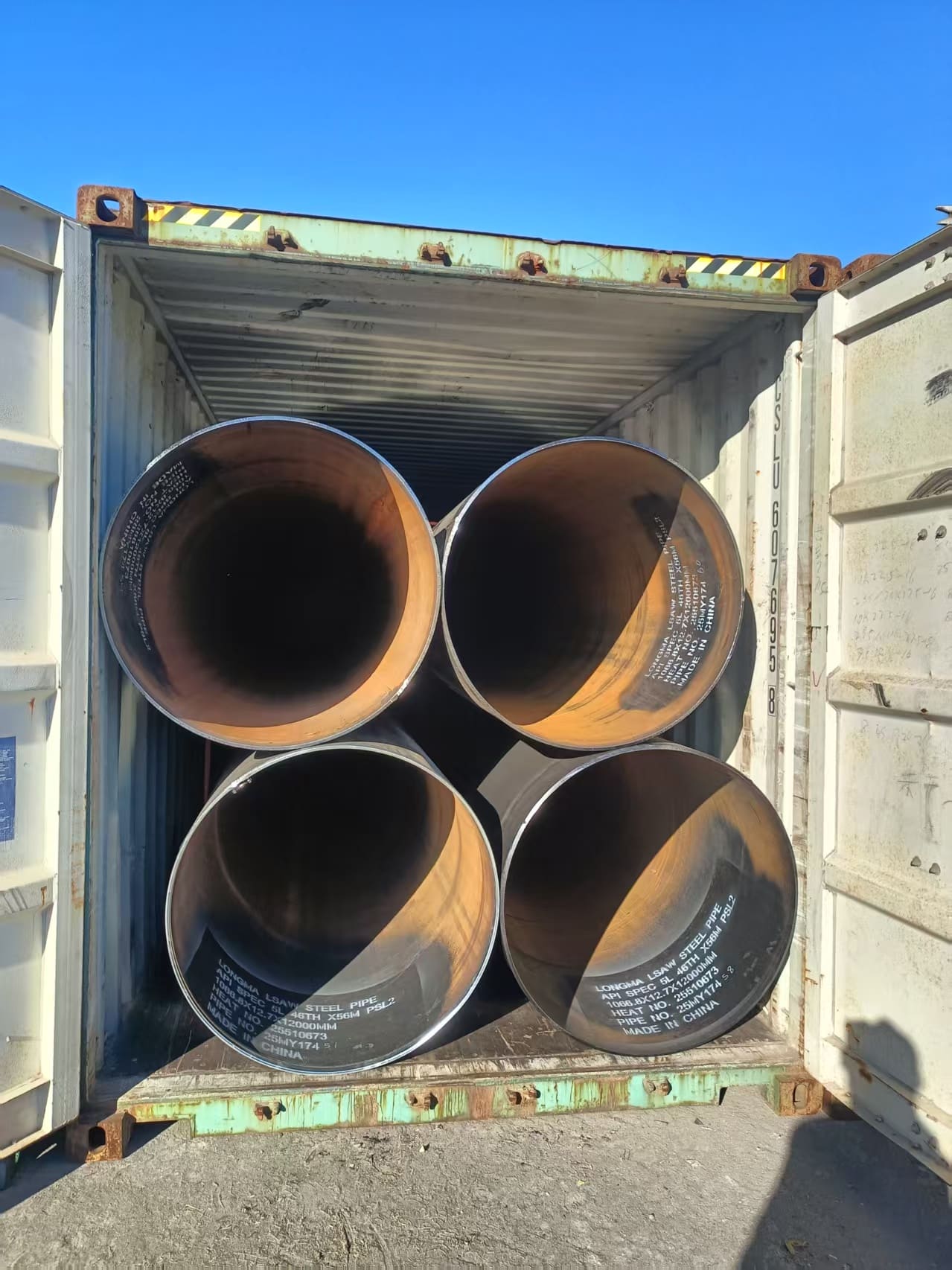
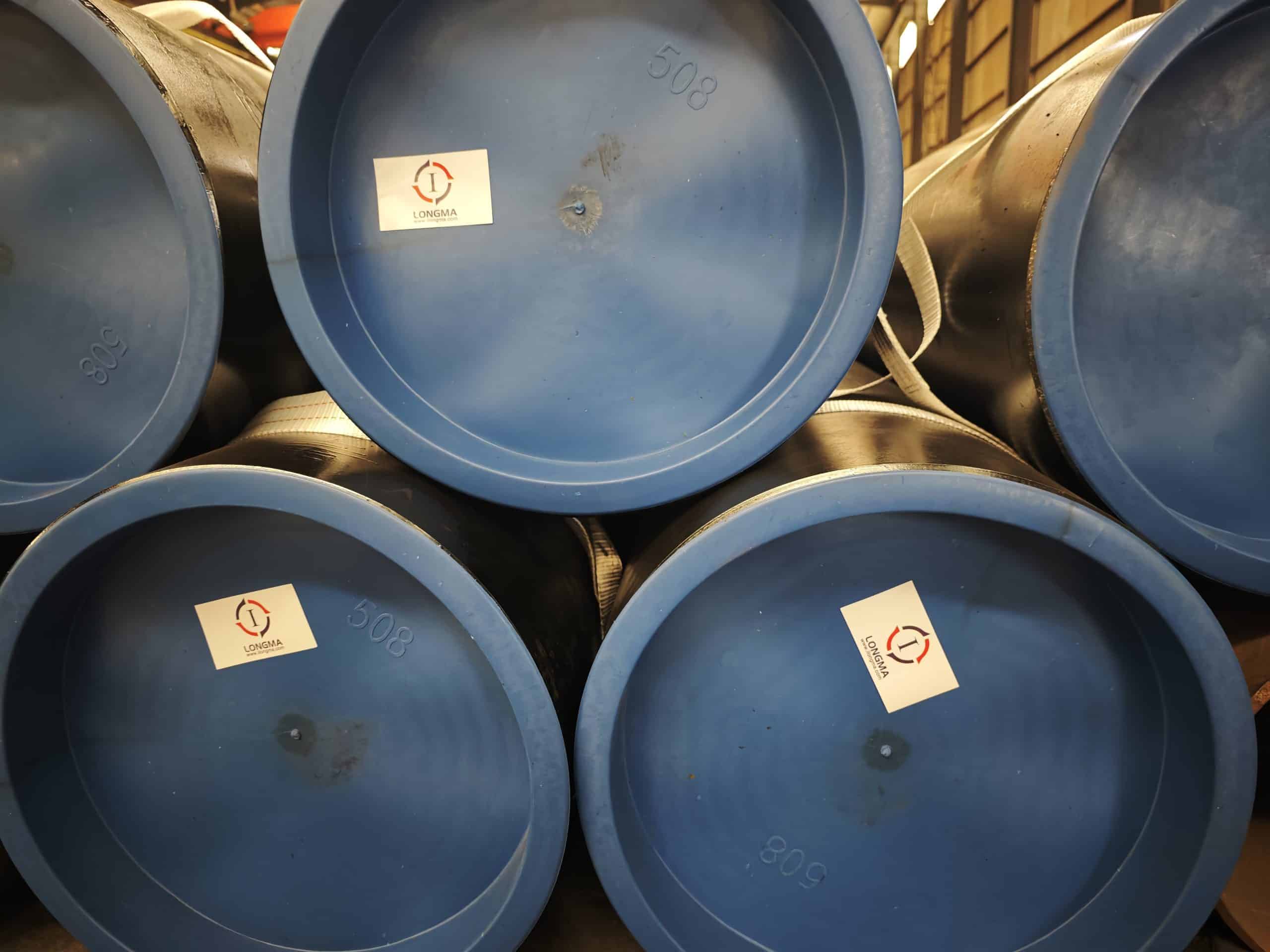
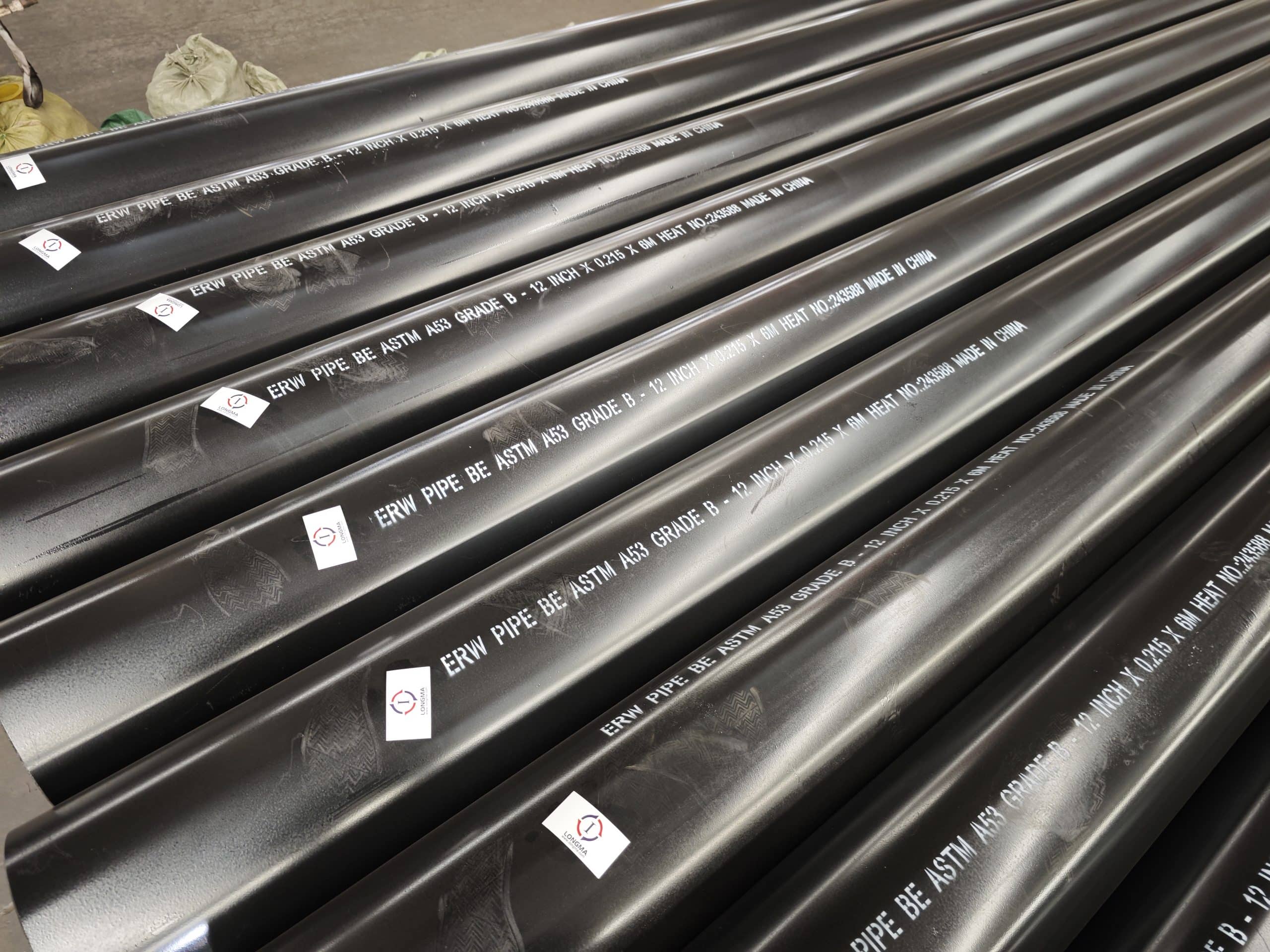
Coatings for API 5L X52 (L360) ERW steel pipes protect the steel surface against the conditions encountered during storage, installation and operation. FBE and three-layer polyethylene are established options for suitable buried or submerged pipelines, while black varnish generally provides temporary protection during transport and storage. Selecting a coating involves operating temperature, soil or water exposure, installation loads and the corrosion-control design. The steel grade and manufacturing process remain separate parts of the pipe specification.
Understanding Coating Systems for X52 ERW Pipe
What an ERW Pipe Coating Specification Covers
ERW describes how the pipe is welded. A coating specification identifies the protective system applied to the finished pipe, including surface preparation, materials, thickness, application and acceptance tests. Similar coating systems can be used on ERW and LSAW products when qualified for the application. The ordered steel specification governs material properties and weld quality; the coating specification governs surface protection.
Surface preparation is essential to adhesion. Abrasive blasting is commonly specified to Sa 2½ under ISO 8501-1, together with a suitable surface profile. Dust, soluble salts and other contamination need to be controlled to the selected specification. Surface cleanliness must be maintained between preparation and coating, with steel temperature and ambient conditions monitored during application.
FBE and Three Layer Polyethylene
Fusion-bonded epoxy is a thermosetting powder applied to heated steel and cured to form a protective film. Application temperature, cure requirements, film thickness and service-temperature limits depend on the qualified product and project specification. Relevant requirements may reference CSA Z245.20 or ISO 21809-2 for single-layer FBE. The coating should be selected with its resistance to handling damage, moisture and cathodic disbondment in mind.
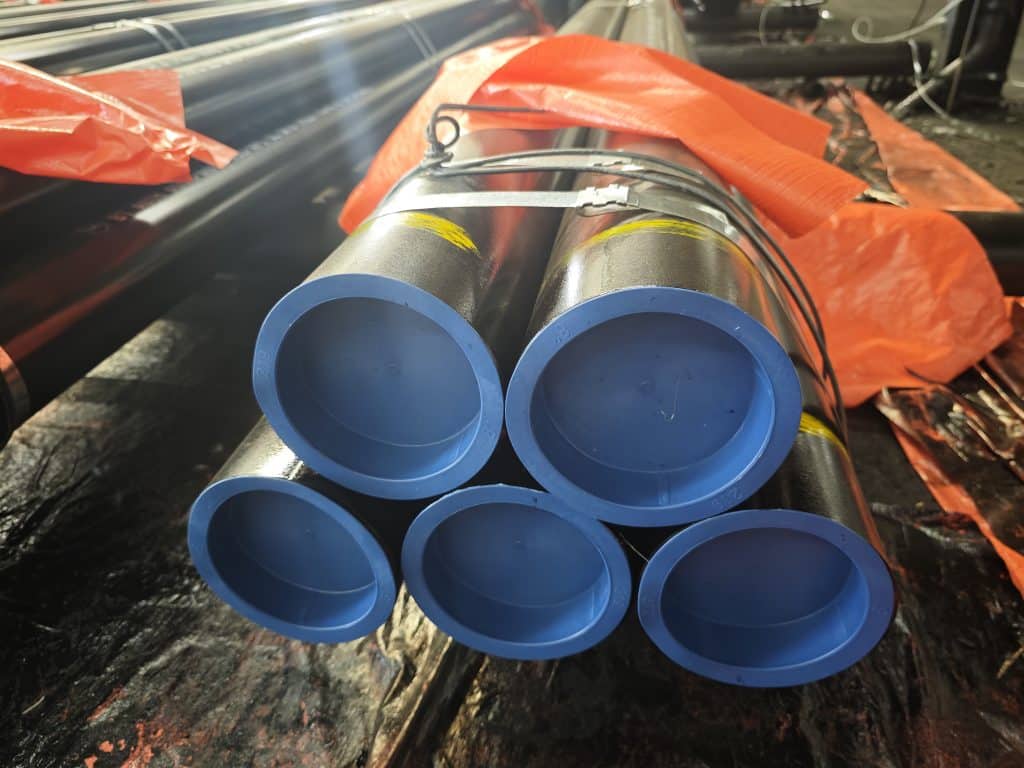
Three-layer polyethylene, or 3LPE, combines an FBE primer, an adhesive layer and a polyethylene outer layer. The primer provides adhesion to the steel, while the outer jacket provides mechanical protection. Specify the applicable polyethylene coating standard and edition, such as the relevant DIN 30670 provisions, and identify the required thickness class. Diameter alone is insufficient to define every coating requirement.
Black varnish or ordinary anti-rust paint protects pipe during handling and storage. Permanent aboveground paint systems require their own preparation and exposure requirements. For higher operating temperatures, qualified 3LPP or other systems may be appropriate; selection should use the actual product limits rather than a universal temperature dividing line.
Coating Performance in Pipeline Service
Corrosion Protection and Service Life
For buried or submerged carbon-steel pipelines, coating and cathodic protection are normally considered together. A sound coating reduces exposure of steel to the environment, while cathodic protection addresses accessible exposed areas such as holidays. Performance depends on application quality, handling, field joints, backfill and continued monitoring. Design life is established for the pipeline system and cannot be guaranteed solely by choosing 3LPE or meeting an application standard.
External protection does not address every internal corrosion mechanism. Water, CO₂, H₂S and fluid chemistry require a separate assessment. In relevant sour-service applications, material selection and qualification should follow the specified requirements, including API 5L Annex H where invoked and the applicable ISO 15156 provisions. Inhibitors, internal coatings or other controls are selected from the corrosion study.
Temperature Cycling and Pipe Movement
Coatings must remain suitable for operating temperatures and the strains associated with installation and service. Qualification may include adhesion, flexibility, impact and cathodic-disbondment testing. Field bends, transitions and joints deserve particular attention because the coating can experience different strains or application conditions there. Acceptance should be based on the selected system’s test requirements.
Comparing Coatings and Pipe Grades
ERW is an efficient production route within the mill’s qualified diameter and wall-thickness range. LSAW provides another route for suitable large-diameter and heavy-wall requirements. Either product needs a compatible coating and an agreed inspection plan. LONGMA manufactures round ERW and LSAW pipes, with the process-specific size range confirmed in the quotation.
X52 and X60 identify strength levels. Using the API 5L 46th-edition metric framework, their specified minimum yield strengths are 360 MPa and 415 MPa respectively. A higher grade can permit a thinner calculated steel wall where the design allows it. For the same outside diameter, length and coating thickness, this does not reduce the external area to be coated.
PSL1 and PSL2 define product requirements. The design basis determines the required PSL and any additional sour-service or offshore provisions. Coating selection then addresses the environment and installation requirements. The purchase order should identify standard editions: API published its 47th edition in June 2026, while ISO 3183:2019 supplements API 5L, 46th edition, with stated exceptions and additions.
Procurement and Delivery Requirements
The RFQ should identify outside diameter, wall thickness, length, grade, PSL and delivery condition, followed by coating system, thickness class, operating temperature and inspection requirements. Specify any internal lining separately. For coated pipe, the inspection package may include material batch records, surface-preparation results, thickness measurements, holiday-test records and required qualification or production tests.
Agree EN 10204 type 3.1 or 3.2 documentation and third-party participation before manufacture. Where an API Monogram is required, verify the manufacturer’s authorization and scope in API’s public directory. Distributors should identify the manufacturing source and preserve traceability. A Monogram license does not replace the coating inspection records.
Coating contributes to unit price and delivery time. FBE can add around 8–15% and 3LPE around 15–30% to bare-pipe pricing, depending on the order. LONGMA can ship confirmed stock in as little as seven days, with standard production and custom orders commonly requiring around 30 and 45 days respectively. Confirm coating capacity, inspection hold points and final release when agreeing the schedule.
Handling Inspection and Maintenance
Use padded supports and suitable lifting equipment to prevent gouging and point loading. Establish stack height from pipe dimensions, support arrangement and the coating manufacturer’s instructions. Outdoor storage limits depend on the coating’s UV resistance and environmental exposure. Protect bare cutbacks and bevels using temporary materials compatible with subsequent field-joint preparation.
Before installation and backfilling, inspect for coating damage and perform holiday testing under the approved procedure. Select equipment and voltage using the coating system, measured thickness, applicable standard and manufacturer’s requirements. A universal voltage-per-millimetre rule should not replace that assessment. Repair defects using a qualified, compatible system and retest repaired areas before release.
During operation, monitor cathodic protection using the applicable criteria and measurement methods, including consideration of voltage drops. Excessive polarization can also damage some systems. Potential surveys, coating surveys and suitable internal inspection provide different information and should be coordinated. Repairs or recoating depend on findings rather than a blanket assumption that coated pipe needs no future maintenance.
Frequently Asked Questions
Which Coating Suits Aggressive Soil
Qualified 3LPE is one established option where mechanical protection and corrosion resistance are needed. FBE, 3LPP or other systems may also be appropriate. Compare temperature limits, installation conditions, cathodic protection and the project specification before selecting a system.
Can FBE Coated X52 Pipe Be Used in Sour Service
It can be supplied for a qualified sour-service order, but the external coating does not establish steel suitability for the internal environment. Specify the required material grade, supplementary tests and corrosion controls separately.
Request a Quote From LONGMA
Since 2003, LONGMA has manufactured steel line pipe at a factory covering 230,000 m², with annual output exceeding 500,000 tonnes. We supply round ERW and LSAW products with agreed coatings, traceability and third-party inspection. Send your pipe and coating requirements to info@ilongma.com or visit www.ilongma.com for a quotation.