- 1. Understanding the X80 Grade Designation
- 2. Mechanical Properties and Chemical Composition
- 3. Manufacturing Methods, Dimensions and Pressure Design
- 4. Comparing X80 with X70 and X65
- 5. Welding, Sour Service and Corrosion Protection
- 6. Procurement, Inspection and Handling
- 7. Frequently Asked Questions and LONGMA Supply
- 8. What should accompany an X80 delivery?
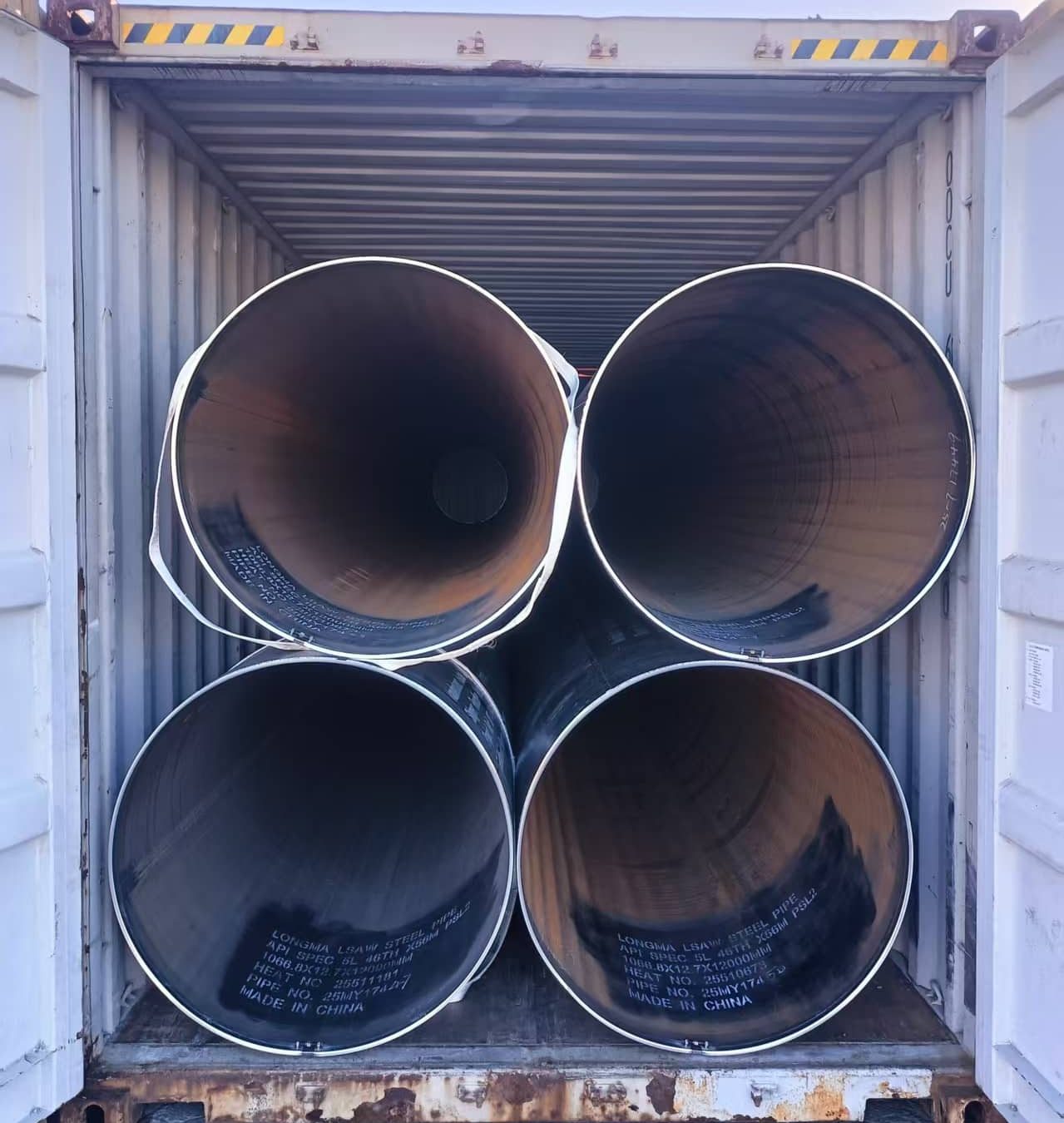
In API 5L, X80 identifies a high-strength line pipe grade associated with an 80 ksi yield-strength designation. For product acceptance, use the actual values in the specified edition rather than converting the grade name directly. API 5L 46th edition lists X80 PSL2 with a minimum yield strength of 555 MPa and minimum tensile strength of 625 MPa in its SI table. The corresponding listed values are 80,500 psi and 90,600 psi.
X80 is used in suitable high-pressure and long-distance pipeline projects where its strength can benefit the design. It is not a pressure class, a coating designation or a guarantee of sour-service suitability. Grade selection must account for dimensions, temperature, fracture control, welding and installation, together with the governing design code and owner specification.
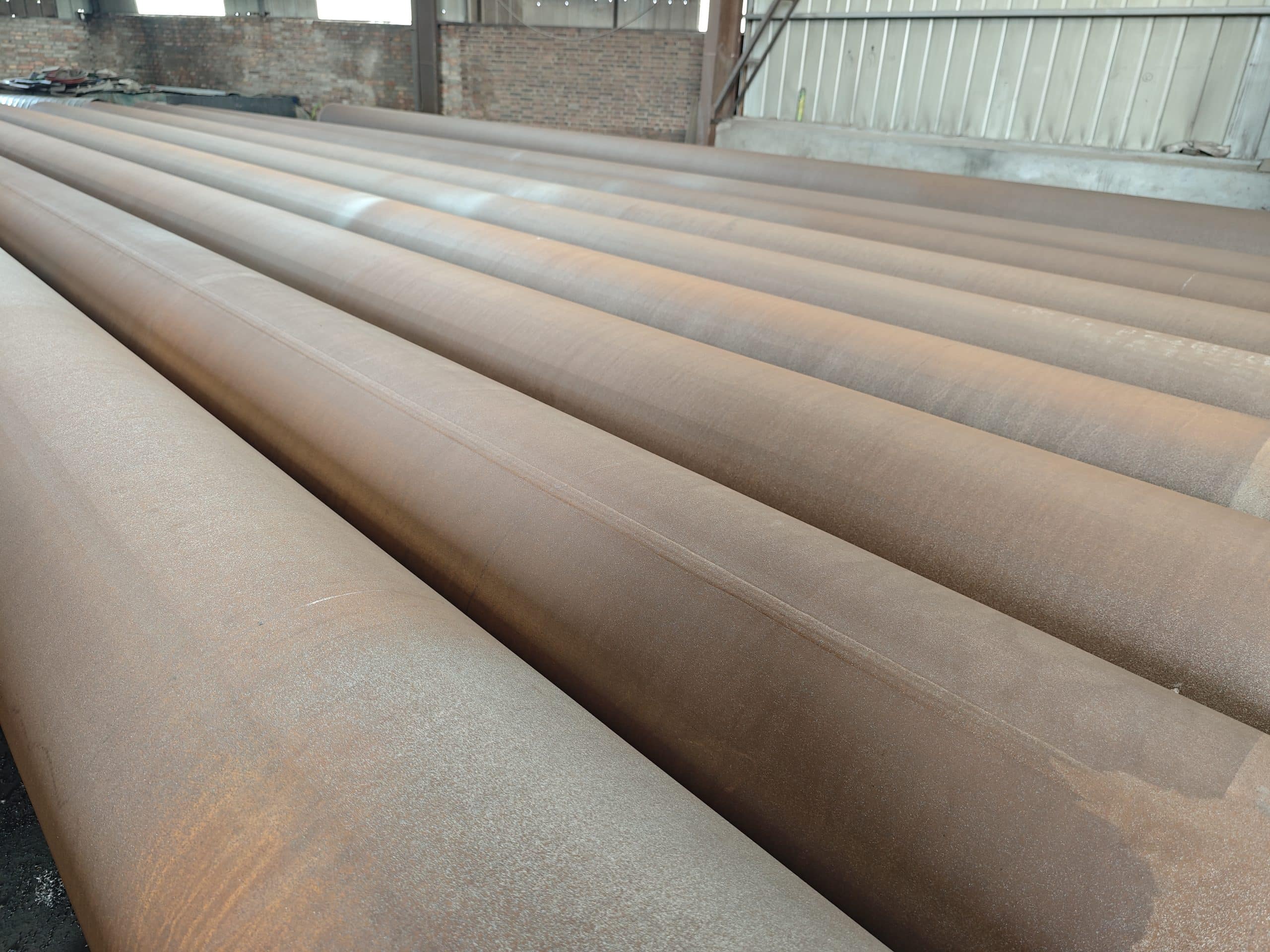
Understanding the X80 Grade Designation
API Specification 5L covers seamless and welded steel line pipe for pipeline transportation systems. Its X-grade numbers relate to specified minimum yield-strength classifications. The exact specification limits, including maximum strength and other acceptance requirements, come from the applicable table and notes in the ordered edition.
Under the 46th edition, X80 belongs to PSL2. The listed PSL1 grade range extends to X70, so X80 should not be advertised as a standard PSL1 option under that edition. X80 is also not the highest grade in the specification: higher grades are included for permitted manufacturing routes.
The complete PSL2 grade designation includes the delivery condition. X80M and X80Q refer to different processing conditions and are not interchangeable descriptions of how the steel was produced. The order should identify the complete grade, manufacturing route, dimensions and required supplementary provisions. API published the 47th edition in 2026; specify the edition governing the order and verify its requirements before production.
Mechanical Properties and Chemical Composition
The following pipe-body values are from Table 7 of API 5L, 46th edition. Apply them with the relevant table notes, dimensions and test requirements.
| Property | Minimum | Maximum |
| Yield strength | 555 MPa | 705 MPa |
| Tensile strength | 625 MPa | 825 MPa |
| Yield-to-tensile ratio | Not specified as a minimum | 0.93 where applicable |
Elongation follows the applicable formula and specimen requirements rather than a single universal percentage. Impact-test requirements depend on the ordered product and specification provisions. Neither a tensile result nor a yield-to-tensile ratio alone establishes resistance to brittle fracture; toughness, defects, stress and temperature must also be considered.
X80 obtains its properties through controlled steel chemistry and processing. Composition limits differ with delivery condition and wall thickness. Carbon equivalent is also not the same as carbon content. The applicable CEIIW or CEPcm calculation must be selected under the standard’s chemistry provisions, and the corresponding acceptance limit must match the grade and condition. A value for one X80 product should not be applied automatically to all welded and seamless X80 pipe.
For procurement, request traceable heat and product analyses and verify the specified chemistry against the complete designation. Low carbon equivalent can help weldability, but it does not remove the need to assess preheat, heat input, hydrogen control and joint restraint.
Manufacturing Methods, Dimensions and Pressure Design
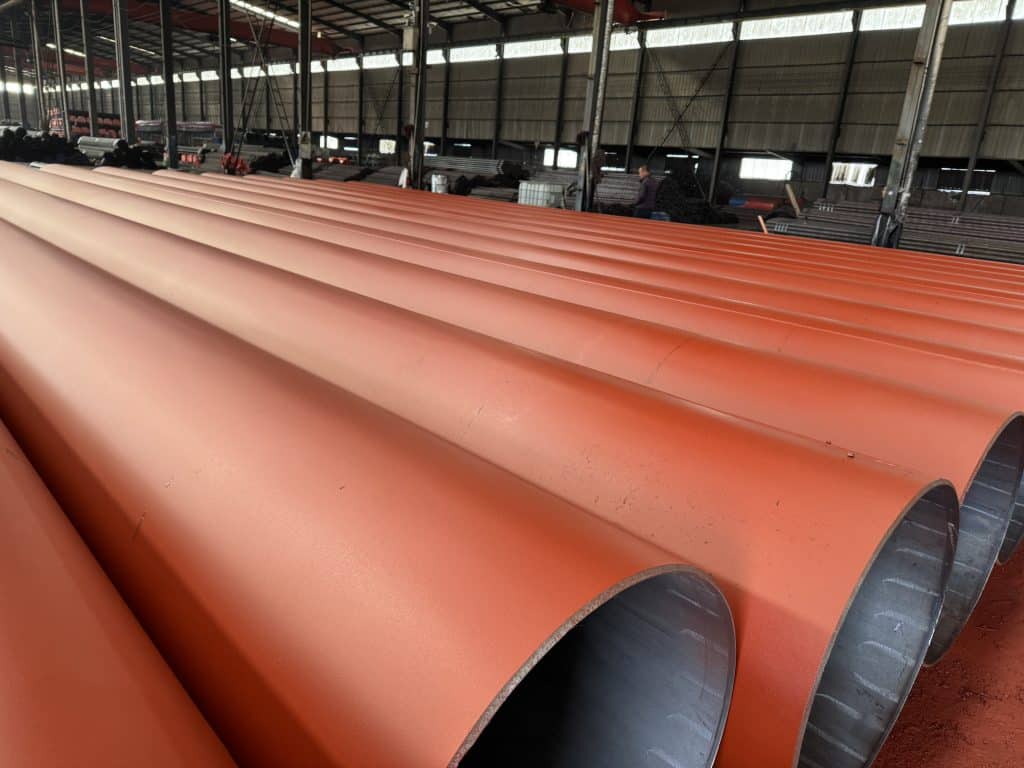
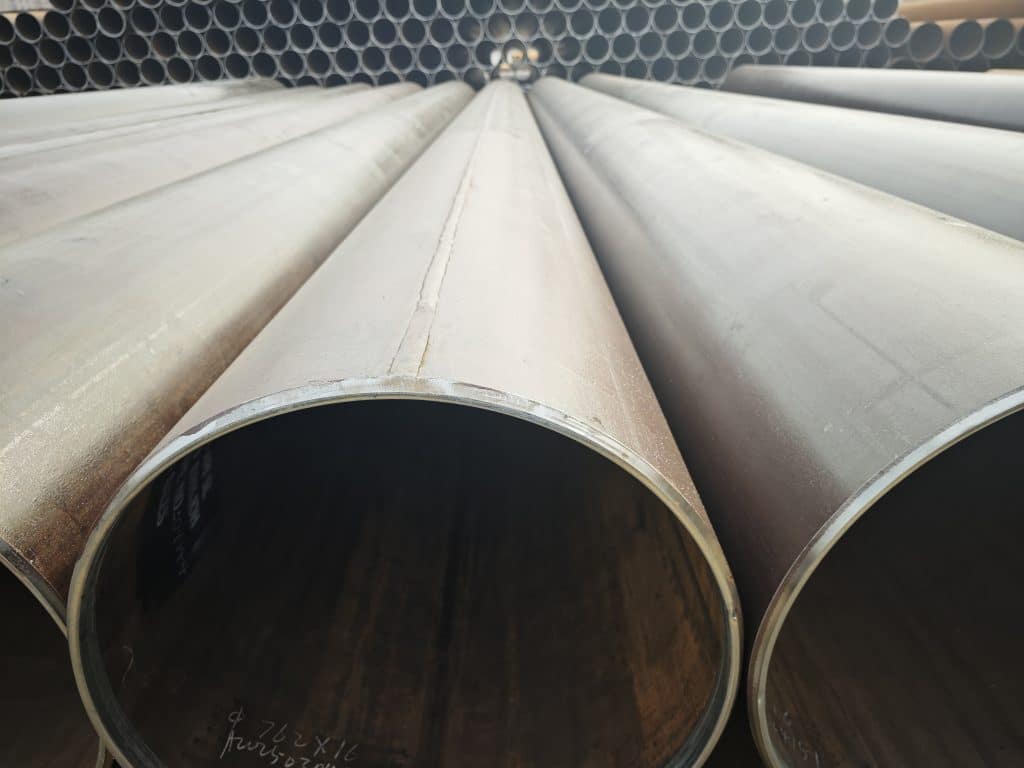
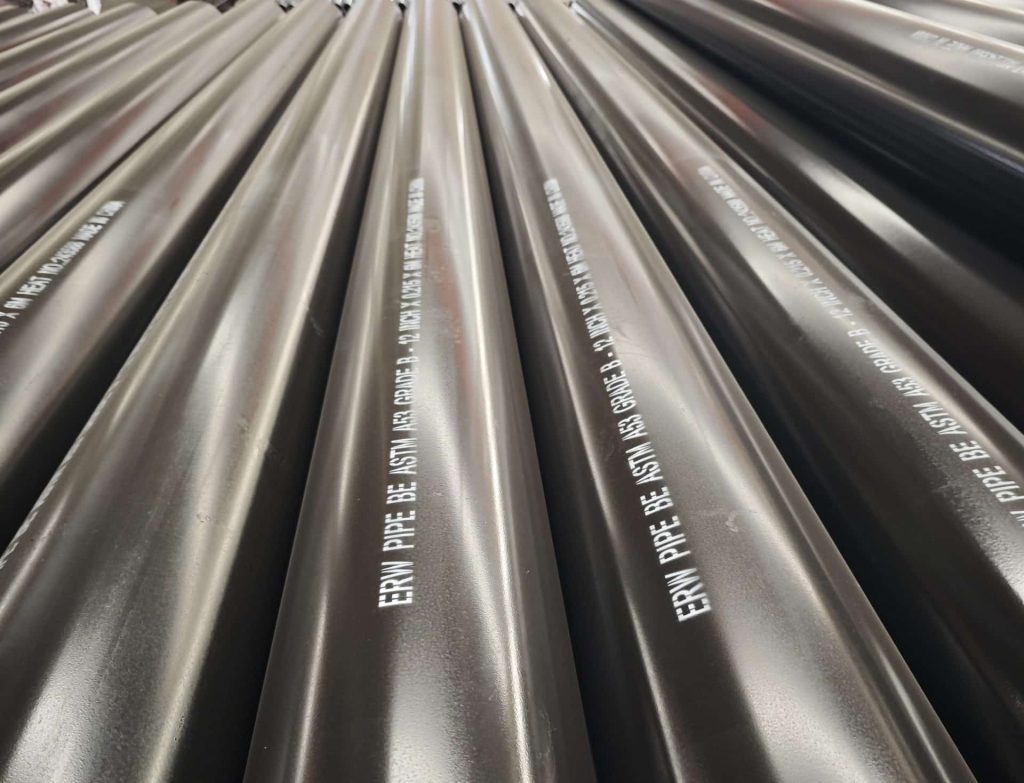
LONGMA manufactures round ERW and LSAW pipe. ERW forms steel strip or coil into a round section and joins the longitudinal edges using electrical resistance heating and pressure, normally without filler metal. LSAW forms steel plate into a shell and joins its longitudinal seam by submerged arc welding, commonly following JCOE or UOE forming.
For an X80 order, confirm that the required manufacturing route, diameter, thickness and delivery condition are available together. A company’s overall size range does not mean every grade can be manufactured at every listed dimension. The material supply, equipment, procedure qualifications and finished-pipe tests must support the actual order.
Higher yield strength can reduce the wall required by a pressure calculation under comparable design conditions. However, external pressure, buckling, corrosion allowance, installation loads, fracture control and minimum wall requirements may govern instead. A simplified relationship such as P = 2St/D illustrates the influence of stress, thickness and diameter; it is not a complete allowable-pressure calculation when S is taken directly as the specified minimum yield strength.
Comparing X80 with X70 and X65
The comparison below uses SI minimum pipe-body strengths from API 5L, 46th edition. These values describe material requirements, not operating pressure or a universal application ranking.
| Grade | Minimum yield strength | Minimum tensile strength |
| X65 | 450 MPa | 535 MPa |
| X70 | 485 MPa | 570 MPa |
| X80 | 555 MPa | 625 MPa |
X80 may offer weight benefits where the complete design permits a thinner wall. Compare those benefits with material availability, welding, inspection and installation costs. A higher grade does not automatically provide better performance under ground movement, seismic loading or cyclic service. Such projects require assessment of actual stress-strain properties, toughness, weld behavior and anticipated strain.
Corrosion resistance is a separate selection issue. Coated carbon steel X80 can be suitable for many transmission duties, while stainless steels or other corrosion-resistant materials may be justified by the fluid and environment. Higher yield strength alone does not make carbon steel more resistant to H₂S, CO₂ or chlorides.
Welding, Sour Service and Corrosion Protection
X80 field welding requires a qualified procedure under the applicable construction code. Preheat, interpass temperature, heat input and consumables must be established for the actual material, wall thickness, hydrogen level and restraint. Generic heat-input or preheat ranges should not replace the approved WPS. TMCP steel also requires attention to the effects of welding and other thermal cycles on its properties.
Consumable classification matters. E9010-G is a cellulosic electrode; hydrogen-control requirements must be assessed for the complete welding procedure. Whether such a consumable is appropriate for a particular pass depends on the qualified procedure and project requirements. Selecting a nominally matching strength class alone does not establish weld suitability.
For sour service, assess the actual H₂S environment and applicable material requirements, including ISO 15156 where relevant. Do not assume that adding an S suffix makes any X80 product compliant. Verify the grade provisions in the ordered API edition and agree any additional qualification, hardness, HIC and SSC requirements. Chemical limits alone cannot guarantee resistance to hydrogen-related damage.
External FBE, 3LPE or 3LPP may be specified for suitable service. Match the coating standard to the system: DIN 30670-1 covers applicable polyethylene coatings, DIN 30678-1 polypropylene coatings, and ISO 21809-2 applicable single-layer FBE. Internal linings and cathodic protection are separate design decisions. Select them for the actual corrosion environment and installation conditions.
Procurement, Inspection and Handling
An RFQ should state the standard edition, X80 delivery condition, PSL2, dimensions, length, quantity, ends, coating and destination. Include required design temperatures, supplementary tests, documentation and independent inspection. Confirm the supplier’s applicable licence scope where API Monogram supply is required.
Agree the inspection plan before manufacture. Mechanical tests, hydrostatic testing and nondestructive examination must follow the ordered specification. UT and RT coverage varies by manufacturing route and examination location; a blanket statement that every product requires identical full-body AUT and radiography is insufficient. Link material certificates, dimensional reports and supporting test records through traceable identifiers.
For transport and storage, use approved lifting equipment and supports that protect the pipe and coating. Field bending requires a qualified procedure and acceptance checks for ovality, wall condition, wrinkles and coating damage. The permitted bending radius depends on the pipe, procedure and project requirements. Confirm the actual bending and holiday-testing requirements for the product and coating system.
Frequently Asked Questions and LONGMA Supply
Is X80 a pressure rating?
No. It is a material grade designation. Determine allowable pressure using the actual dimensions, temperature, allowances and governing design code.
Is X80 available in PSL1?
API 5L 46th edition lists X80 as PSL2. Confirm the full designation and governing edition in the order.
What should accompany an X80 delivery?
Request the specified inspection document, traceable material and mechanical results, hydrostatic and NDE records, dimensions and any required coating or supplementary test reports.
Since 2003, LONGMA has manufactured round ERW and LSAW steel pipes. Its factory covers 230,000 m², with annual output exceeding 500,000 tonnes and more than 60 senior technical personnel. Email info@ilongma.com or visit www.ilongma.com to discuss your X80 dimensions, inspection requirements and delivery schedule.