- 1. What API Spec 5L Covers
- 2. What ASTM A53 A53M Covers
- 3. A Fair Technical Comparison
- 4. Pressure Rating Requires Design Calculations
- 5. Can ASTM A53 Be Used for Gas Service
- 6. Sour Service and Corrosion Protection
- 7. Procurement Decision Guide
- 8. Project Examples
- 9. High-Pressure Onshore Gas Transmission
- 10. Structural and Low-Pressure Utility Application
- 11. FAQ
- 12. Can ASTM A53 substitute for API 5L in a gas transmission pipeline?
- 13. Is API 5L always stronger than ASTM A53?
- 14. What does PSL2 add to API 5L?
- 15. Is an EN 10204 Type 3.1 certificate sufficient?
- 16. Can one pipe be marked to both API 5L and ASTM A53?
- 17. Source Welded Steel Pipe from LONGMA
API Spec 5L and ASTM A53/A53M both cover carbon steel pipe, but they were developed for different product scopes. Neither standard is universally “better.” API 5L is specifically written for steel line pipe used in pipeline transportation systems. ASTM A53/A53M covers black and hot-dip zinc-coated welded and seamless pipe for mechanical and pressure applications and also permits ordinary uses in steam, water, gas, and air lines.
The correct choice depends on the governing design code, owner specification, service conditions, required manufacturing route, dimensions, grade, testing, and documentation. A purchase order that specifies API 5L cannot be changed to ASTM A53 merely because the nominal size appears similar.
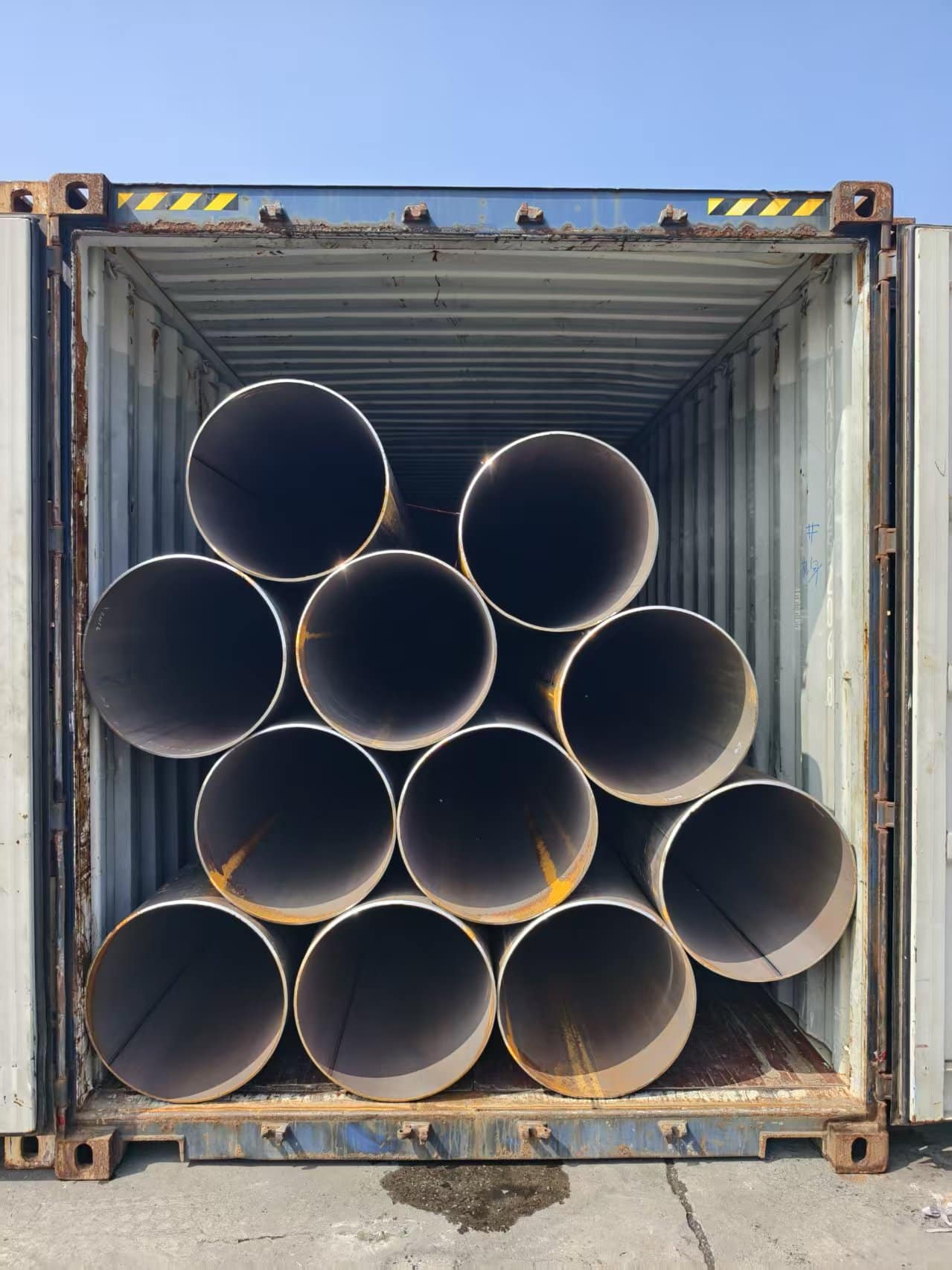
What API Spec 5L Covers
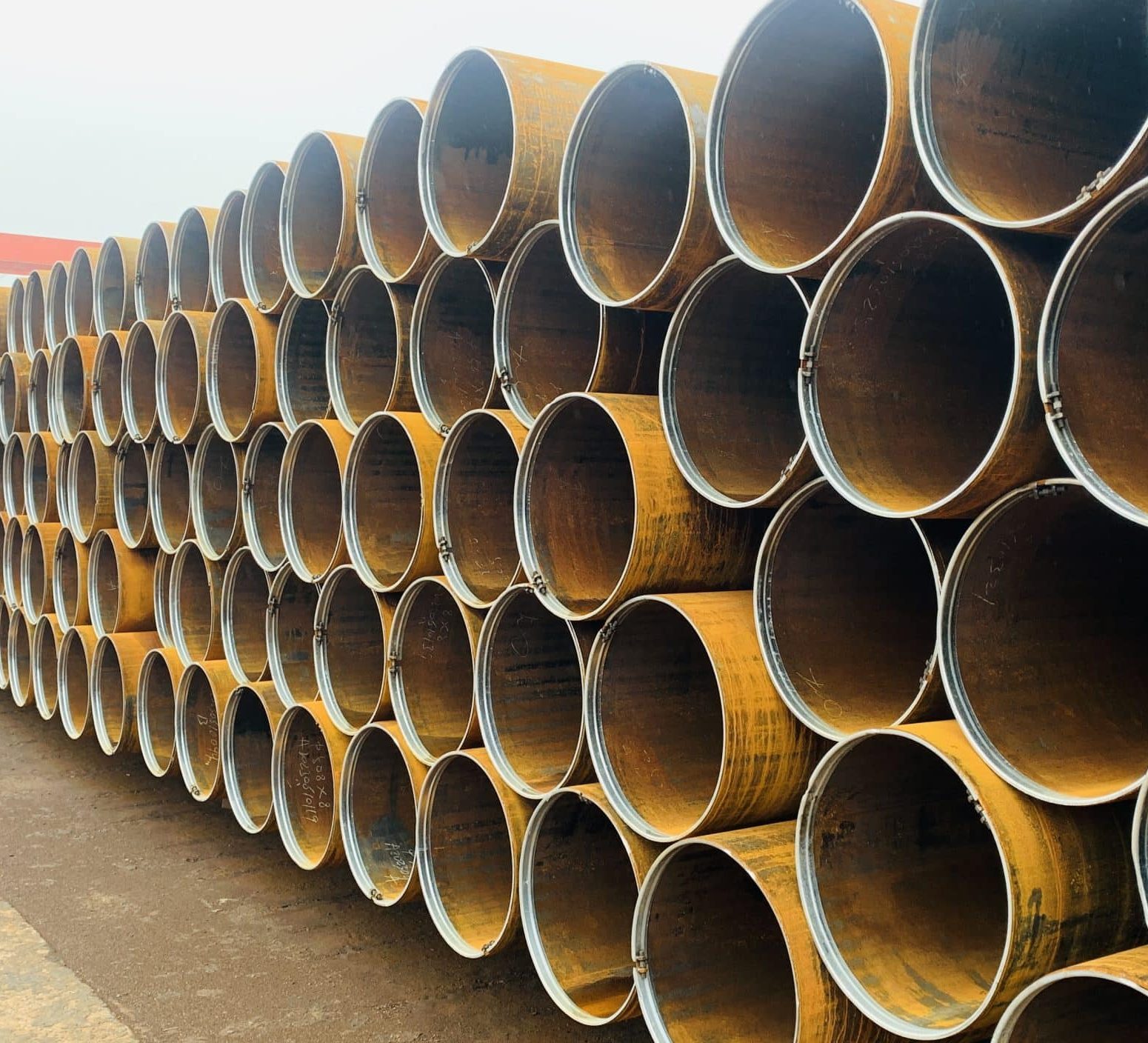
API Spec 5L specifies seamless and welded steel line pipe in PSL1 and PSL2. Its grade system includes Grade A and Grade B as well as X grades whose designation relates to specified minimum yield strength. Depending on grade, size, PSL, manufacturing route, and annexes, the specification addresses chemistry, tensile properties, toughness, dimensional controls, traceability, hydrostatic testing, and nondestructive inspection.
API published information concerning a 47th Edition update in 2026. Every article, quotation, and manufacturing document should therefore identify the edition applicable to the purchase order and the relevant API Monogram transition date. ISO 3183:2019 supplements API Spec 5L, 46th Edition, with specified exceptions; edition compatibility should be checked when both documents are invoked.
What ASTM A53 A53M Covers
ASTM A53/A53M covers seamless and welded black and hot-dip zinc-coated carbon steel pipe. The principal types are:
- Type S: seamless, Grades A and B;
- Type E: electric-resistance welded, Grades A and B;
- Type F: furnace-butt welded, Grade A only.
ASTM A53/A53M is widely used in mechanical, pressure, utility, and general piping applications. It does not provide the same PSL structure, X-grade range, line-pipe annexes, or project-specific pipeline options found in API 5L.
A Fair Technical Comparison
Comparing API 5L X65 PSL2 directly with ASTM A53 Grade B can be useful only if the reader understands that both the standard and the strength grade are changing. For a fair baseline comparison, API 5L Grade B should first be compared with ASTM A53 Grade B; higher API 5L X grades can then be presented as additional line-pipe options.
| Comparison point | API 5L Grade B or X grade | ASTM A53 Grade B |
| Primary product scope | Line pipe for pipeline transportation systems | Black or galvanized pipe for mechanical, pressure, steam, water, gas, air, and ordinary uses |
| Product levels | PSL1 and PSL2 | No PSL1/PSL2 system |
| Manufacturing routes | Seamless and specified welded routes | Type S seamless or Type E ERW for Grade B |
| Strength range | Grade B plus multiple X grades | Grade A and Grade B, subject to type |
| Toughness framework | Additional PSL2 and project-specific toughness provisions | No equivalent PSL system; additional requirements must be separately specified where applicable |
| NDT framework | Depends on PSL, route, size, annexes, and purchase order | Depends on type and specification requirements; not equivalent to API 5L PSL2 |
| Coating supplied by product standard | External pipeline coatings are normally separately specified | Black or hot-dip zinc-coated finish is within the product scope |
| Substitution | Requires design, code, owner, regulatory, and purchase-order approval | Cannot automatically replace API 5L named in a contract |
Mechanical and chemical values should be taken from the exact current editions and the applicable product type. A single maximum-carbon number should not be used to summarize weldability because limits can depend on grade, PSL, seamless or welded manufacture, and product analysis rules. Carbon equivalent, alloying elements, thickness, welding procedure, hydrogen control, and heat input may all matter.
Pressure Rating Requires Design Calculations
Neither API 5L nor ASTM A53 assigns one universal operating pressure to a grade. Allowable pressure is calculated under the governing piping or pipeline code using actual diameter, wall thickness, material strength, design factor, temperature factor, longitudinal-joint factor where applicable, corrosion allowance, tolerances, and other loads.
It is therefore inaccurate to state that API 5L X65 is automatically suitable above 100 bar or that ASTM A53 Grade B is limited to low pressure. The standards define product requirements; the design code and project conditions determine allowable service.
Can ASTM A53 Be Used for Gas Service
ASTM A53 should not be described as universally prohibited from gas service. Its own scope includes certain gas-line uses, and ASTM A53 materials appear in piping-code material references. However, this does not mean ASTM A53 may replace API 5L in a gas transmission project without approval.
The correct distinction is contractual and engineering-based:
- if the design basis or purchase order specifies API 5L, an ASTM A53 product is not an automatic substitute;
- the engineer must verify that the material is permitted by the governing code;
- the owner and regulator may impose API 5L PSL2, toughness, fracture-control, traceability, NDT, dimensional, or manufacturing-route requirements that an ordinary A53 order does not satisfy;
- dual-certified pipe must meet all requirements of both marked specifications, not merely similar yield strength.
Sour Service and Corrosion Protection
API 5L can be ordered with supplementary sour-service requirements, including Annex H where applicable. ASTM A53/A53M does not contain an equivalent line-pipe sour-service framework. This means that an ordinary A53 certificate alone is not evidence of suitability for a defined H2S environment.
It is still too absolute to say that ASTM A53 can never be used in any H2S-containing service. Material selection must follow the applicable design code, ISO 15156 scope, environmental definition, material qualification, owner requirements, and regulatory approval.
Neither bare API 5L carbon steel nor bare ASTM A53 carbon steel is inherently corrosion-proof. External protection may include FBE, three-layer PE or PP, liquid coating, galvanizing where appropriate, wrapping, and cathodic protection. Internal corrosion control may require dehydration, inhibition, lining, corrosion allowance, monitoring, or material upgrading. The coating system is normally specified separately for API 5L pipe.
For factory-applied extruded polyethylene coatings, buyers should check DIN 30670-1:2024 or the specified edition of ISO 21809-1 rather than citing DIN 30670:2012 by default. No coating standard alone guarantees a fixed service life.
Procurement Decision Guide
Choose API 5L when the project is a pipeline transportation application and the design basis, owner specification, or regulation requires line pipe; when X grades, PSL2, fracture toughness, enhanced traceability, or pipeline-specific supplementary requirements are necessary; or when the purchase order expressly names API 5L.
Consider ASTM A53 when it is permitted by the applicable code and project specification for mechanical, utility, plant, pressure, steam, water, air, or suitable gas-line service, particularly where standard NPS products, black finish, or hot-dip galvanizing are required.
Before approving either option, procurement teams should confirm:
- governing code and material specification edition;
- type or manufacturing route, grade, PSL and delivery condition;
- OD, wall thickness, schedule, length, end finish and tolerance;
- design pressure, temperature, medium and corrosion allowance;
- toughness, H2S, HIC, SSC, hardness and fracture-control requirements;
- NDT, hydrostatic testing, inspection-document type and third-party hold points;
- coating or galvanizing standard;
- whether dual certification is required and technically achievable.
Project Examples
High-Pressure Onshore Gas Transmission
A Central Asian natural-gas project specified API 5L X65 PSL2 LSAW pipe with a 48-inch outside diameter and a three-layer polyethylene coating. The owner required HIC testing, weld-seam inspection by automated UT, hydrostatic testing of each pipe, EN 10204 Type 3.2 documentation, and third-party inspection. The example demonstrates how API 5L PSL2 can support a demanding transmission specification; it does not establish a universal operating-pressure limit for X65.
Structural and Low-Pressure Utility Application
A Southeast Asian contractor used NPS 6 ASTM A53 Grade B ERW galvanized pipe for a city water system. The recorded operating pressure was below 15 bar and the planned above-ground service life was 25 years. The lower unit cost supported the project budget. This is a project-specific selection and service-life target, not a guarantee for all galvanized A53 pipe. Environment, coating quality, installation, maintenance, and applicable water-service requirements must still be evaluated.
FAQ
Can ASTM A53 substitute for API 5L in a gas transmission pipeline?
Not automatically. If API 5L is specified, substitution requires a formal engineering, owner, code, and regulatory review. Similar dimensions or minimum yield strength alone are insufficient.
Is API 5L always stronger than ASTM A53?
No. API 5L includes Grade A, Grade B, and higher X grades. A meaningful comparison must identify the exact grade, PSL, manufacturing route, size, and property requirement.
What does PSL2 add to API 5L?
PSL2 introduces additional chemistry, mechanical-property, traceability, toughness, and inspection controls. The exact requirements depend on the applicable edition, grade, size, route, annexes, and purchase order.
Is an EN 10204 Type 3.1 certificate sufficient?
It depends on the contract. Some projects accept Type 3.1, while others require Type 3.2 validation, additional inspection reports, or owner-specific documentation. The requirement should be agreed before production.
Can one pipe be marked to both API 5L and ASTM A53?
Yes, but only when the product independently satisfies every applicable requirement of both specifications and the marking and certification are authorized. Dual certification is not established by dimensional similarity alone.
Source Welded Steel Pipe from LONGMA
LONGMA has manufactured round ERW and LSAW steel pipe since 2003. Its manufacturing facilities cover approximately 230,000 square meters, and annual output exceeded 1,000,000 tons by the end of 2023. LONGMA holds API 5L Monogram and ISO 9001 certifications and can provide EN 10204 Type 3.1 or 3.2 documentation when contractually required. Stock products may ship in as little as seven days, subject to the confirmed quotation. The company can review API 5L and ASTM A53 welded-pipe inquiries against the required manufacturing route, dimensions, grade, testing, coating, and documentation.
Commercial data and project cases remain specific to their original orders. Send the current pipe schedule, design basis, technical specification, delivery destination, and inspection requirements to info@longma-group.com for a project-specific quotation.