Understanding Electric Fusion Welded Steel Pipe
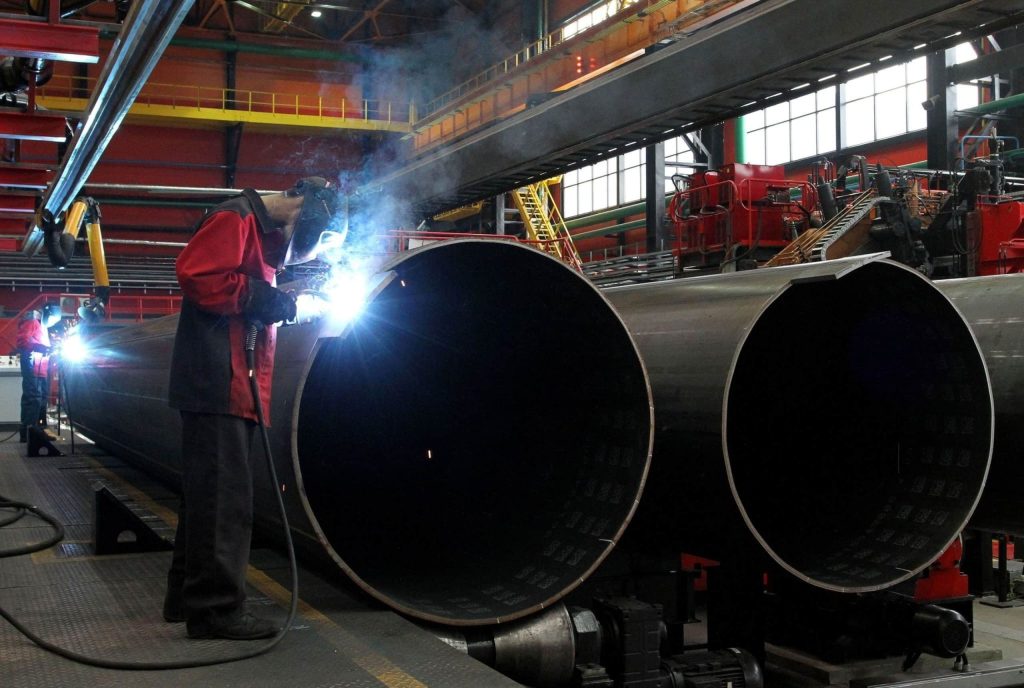
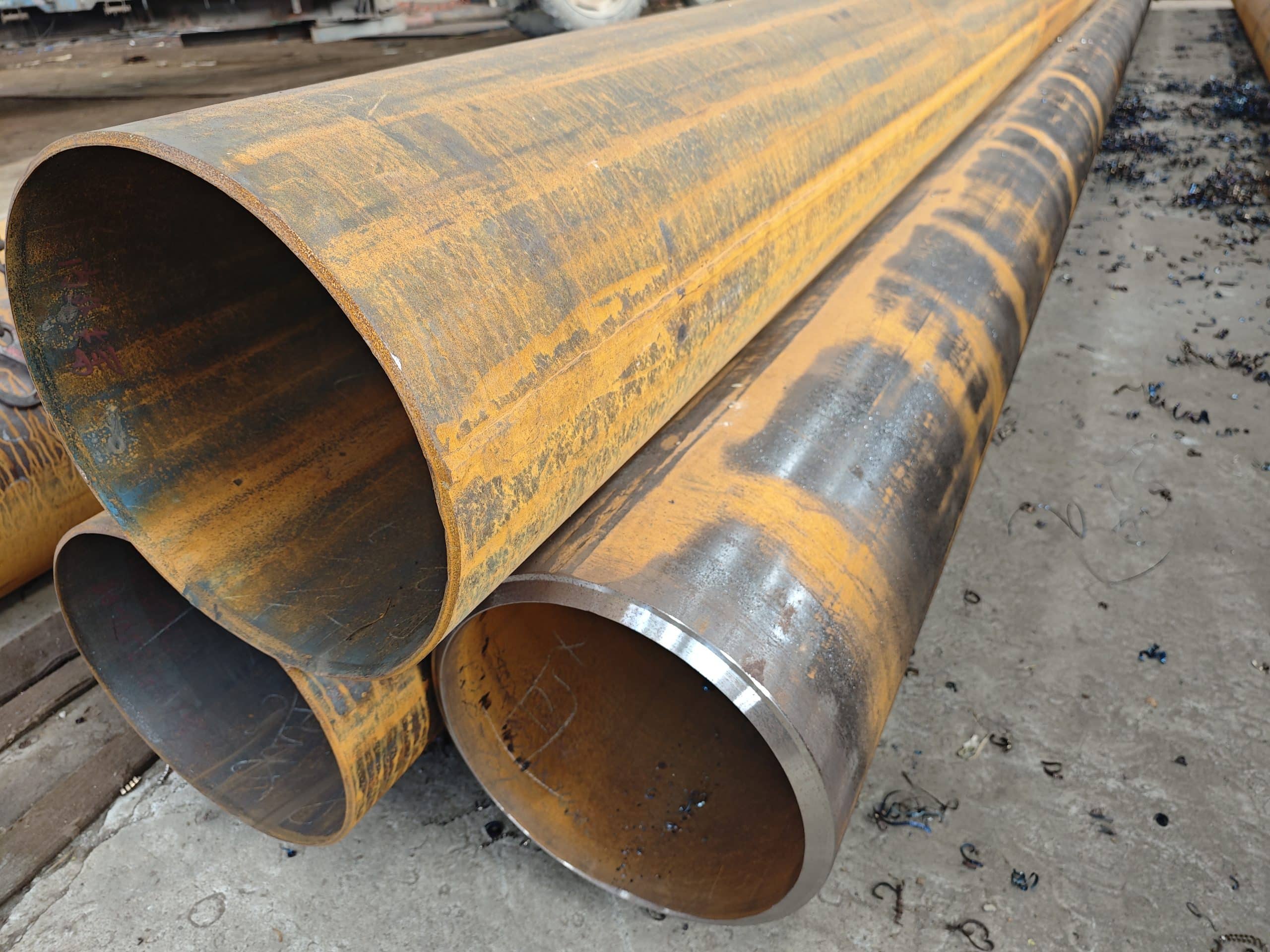
Electric fusion welded (EFW) steel pipe is manufactured by forming steel plate into a cylindrical shell and joining its edges by a fusion-welding process that uses electrical energy to produce the heat required for welding. Depending on the applicable product specification and approved procedure, filler metal may be deposited in the longitudinal weld. EFW is a manufacturing description, not a single material grade or a guarantee of suitability for every pressure system. It should not be confused with electric resistance welded (ERW) pipe, in which the edges are joined by resistance heating and pressure without added filler metal.
For pressure applications, buyers should identify the product standard, steel grade, class, dimensions, heat treatment and inspection requirements together. The designation on a purchase order determines the material and manufacturing acceptance criteria; the operating pressure and temperature must be established separately by the piping design engineer.
The most frequently specified ASTM EFW pipe standards are ASTM A671, A672 and A691. They address different service conditions, but their scopes are not interchangeable. A complete technical review should start with the specified service temperature and material, then consider welding, inspection and project-specific requirements.
ASTM A671, A672 and A691: Main Differences
ASTM A671 covers electric-fusion-welded steel pipe made from pressure-vessel-quality plate for atmospheric and lower-temperature service. ASTM A672 covers electric-fusion-welded carbon steel pipe made from pressure-vessel-quality plate for moderate-temperature, high-pressure service. ASTM A691 addresses electric-fusion-welded carbon and alloy steel pipe made from pressure-vessel-quality plate for high-pressure service at high temperatures. The exact applicability of any product depends on its ordered grade and class.
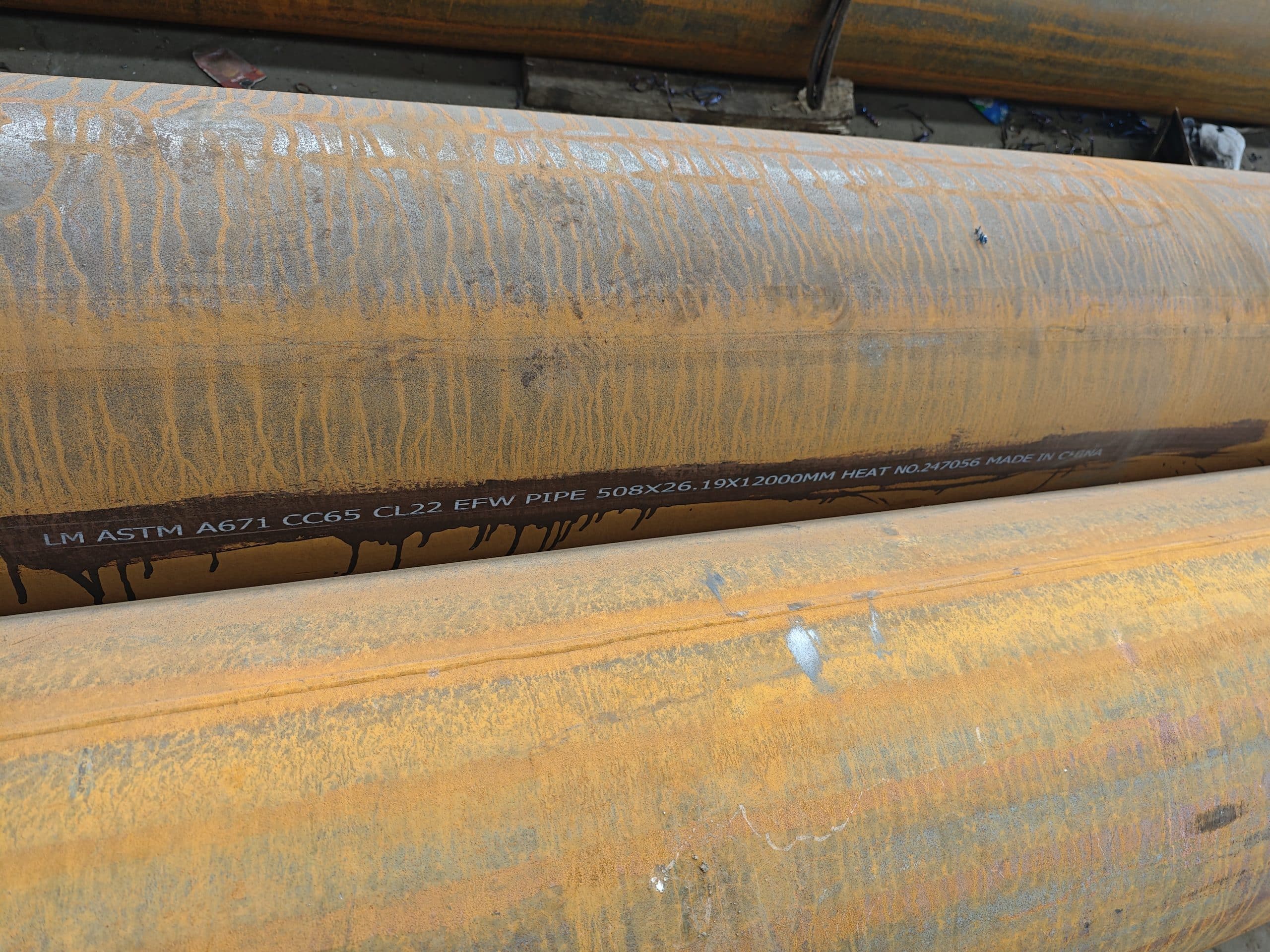
An important distinction is that a designation such as A671 CC60 identifies a grade associated with a specified plate material; the pipe class is a separate designation relating to manufacturing, heat treatment and examination requirements. Describing CC60, CC65 and CC70 as pipe classes is incorrect. The full grade-and-class combination is necessary when comparing quotations or checking material certificates.
Neither a higher tensile-strength grade nor a more extensive radiographic examination automatically establishes a higher allowable operating pressure. Pressure capability depends on the governing design code, material allowable stress at temperature, nominal and minimum wall thickness, weld quality factors where applicable, corrosion allowance and other design conditions.
| Standard | Typical service focus | Main verification |
| ASTM A671 | Atmospheric and lower-temperature service | Plate grade, pipe class, toughness requirements |
| ASTM A672 | Moderate-temperature, high-pressure service | Plate grade, class, examination and design code |
| ASTM A691 | High-pressure service at high temperature | Carbon/alloy grade, class and allowable stress |
How ASTM, ASME, EN and ISO Requirements Work Together
ASTM A671, A672 and A691 are product specifications: they govern the material and specified manufacturing and testing requirements. ASME B31.1 applies to power piping, ASME B31.3 to process piping, and the appropriate pipeline codes may govern transmission systems. ASME BPVC Section IX concerns qualification of welding procedures and welding personnel; it does not independently establish a pipe’s allowable service pressure.
For European pressure projects, the relevant part of the EN 10217 series may be specified for welded steel tubes for pressure purposes. EN 13480 addresses metallic industrial piping design and construction. EN 10204 defines inspection-document types, including 3.1 and 3.2; it is not a pipe material or manufacturing standard. ISO 9001 concerns a quality management system, while ISO 3834 addresses quality requirements for fusion welding of metallic materials.
The EU Pressure Equipment Directive may apply to an assembled item of pressure equipment or assembly within its scope. A length of pipe sold as a material does not automatically require an individual CE mark merely because it will be installed in an EU project. Applicable conformity assessment obligations should be determined for the actual equipment and supply arrangement.
Inspection, Testing and Mill Test Certificates
A mill test certificate should be checked against the purchase order, not simply accepted because it displays a standard number. Verify the exact edition specified by the contract, full grade and class, plate heat number, pipe identification, dimensions, chemical composition and mechanical test results. Check impact-test temperature and results when required by the material, class or project specification.
Weld examination, heat treatment and hydrostatic testing must be reviewed against the ordered class and any supplementary project requirements. Radiographic testing (RT), ultrasonic testing (UT) and other nondestructive examination methods are not interchangeable without an applicable acceptance basis. A request for 100% examination must identify the relevant area, technique and acceptance criteria. Third-party witnessing and EN 10204 type 3.2 documentation should be expressly specified when needed.
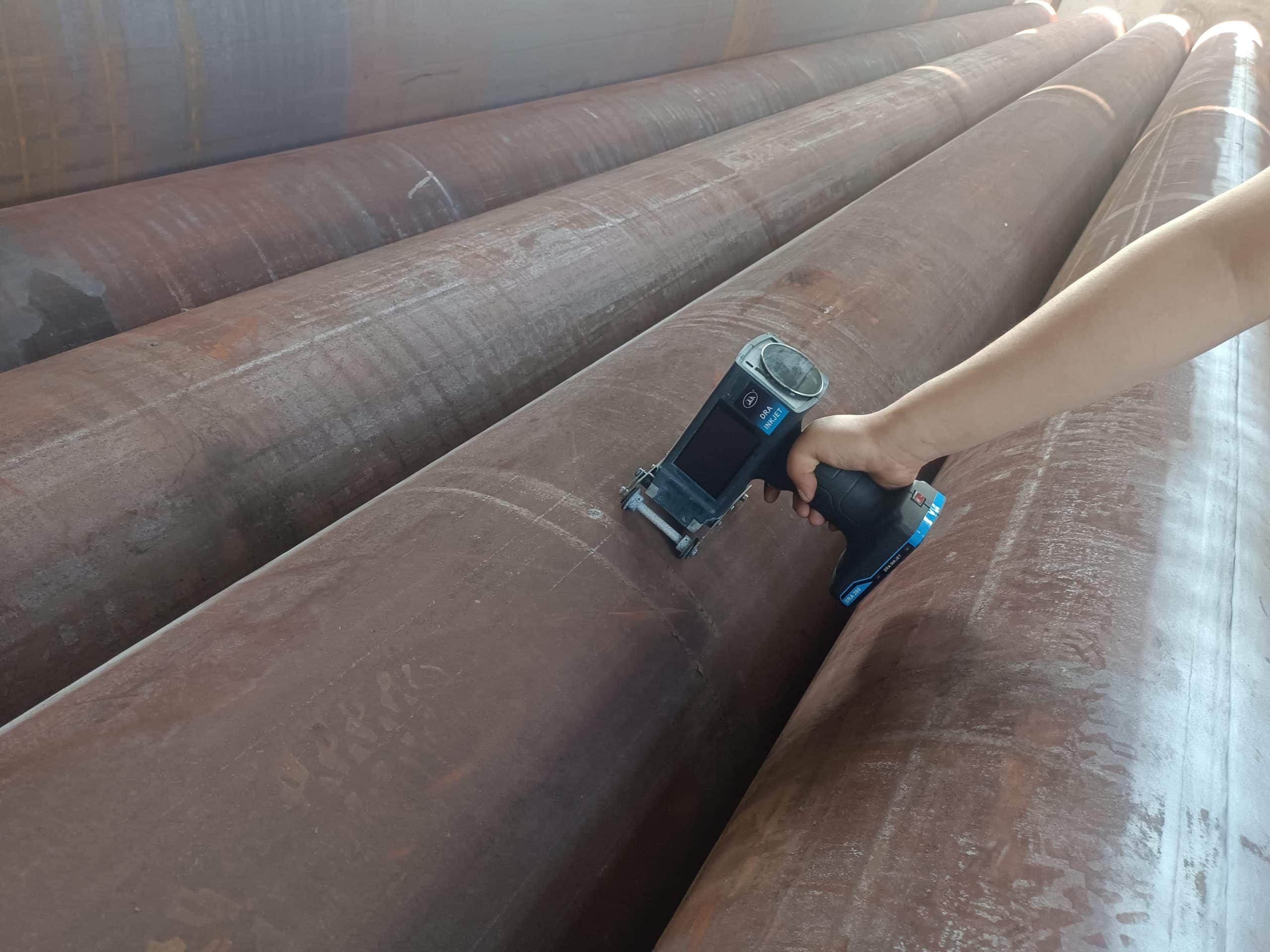
Traceability is particularly important for plate-based welded pipe. The plate certificate, heat number, forming and welding records, heat-treatment records, test reports and final pipe markings should form a consistent record. If weld repair has occurred, buyers should verify the approved repair procedure and the subsequent examination records.
Selecting EFW Pipe for a Project
Begin with the service fluid, design pressure, design temperature and lowest anticipated metal temperature. Determine the applicable design code and confirm that the selected material is permitted for the service. Then specify outside diameter, wall thickness, grade, class, end preparation, coating and any additional testing. For low-temperature duties, fracture toughness and impact-test conditions require particular attention. For high-temperature service, allowable stress and relevant material behavior at temperature are central considerations.
For sour service, additional material qualification and controls may be necessary under the applicable project requirements and ISO 15156/NACE MR0175 where relevant. Compliance with an ASTM EFW pipe standard alone does not establish suitability for every H2S-containing environment. Likewise, coating selection, external corrosion protection and installation requirements must be addressed separately.
A clear request for quotation should state the complete product designation, standard edition, quantity, dimensions, test requirements, inspection-document type and delivery conditions. If the design engineer requires specific welding or examination provisions, include them before manufacturing begins rather than relying on a generic statement that the pipe is ‘tested’.
Frequently Asked Questions and LONGMA Support
What is the main difference between A671 and A672? A671 is commonly selected for atmospheric and lower-temperature applications, while A672 addresses moderate-temperature, high-pressure service. The specified plate material, grade, class and design conditions determine the final choice.
Is ASTM A691 only for chromium-molybdenum steel? No. Its scope includes specified carbon and alloy steel materials. The complete grade and class must be reviewed.
Does an ASTM EFW specification set the maximum pipeline operating pressure? No. The governing piping or pipeline design code and the complete design conditions determine the allowable pressure.
What is the difference between EN 10204 3.1 and 3.2? Both are inspection-document types; type 3.2 includes validation by the manufacturer’s authorized inspection representative and an authorized purchaser’s representative or an inspector designated by official regulations, as applicable. The order should specify the required type.
LONGMA manufactures round carbon steel ERW and LSAW pipe and supports technical review, material traceability, nondestructive examination and project inspection arrangements. Its production facility covers 230,000 m², with annual output exceeding 500,000 tonnes. For project-specific product availability and documentation, contact info@ilongma.com or visit www.ilongma.com.