- 1. What Is the Steel Pipe Straightening Process?
- 2. Why Is Pipe Diameter Accuracy So Important?
- 3. How Does the Straightening Process Affect Diameter Accuracy?
- 4. How Does LONGMA Verify Pipe Diameter Accuracy?
- 5. How Does LONGMA’s Internal Laboratory Validate Straightening Quality?
- 6. The Impact of Straightening Quality on Purchasing Decisions
- 7. Why Choose LONGMA?
- 8. Conclusion
In industries such as oil and gas transportation, municipal pipeline construction, offshore engineering, and energy infrastructure, pipe diameter accuracy is one of the most critical indicators of steel pipe quality. For API 5L pipes, LSAW steel pipes, and large-diameter steel pipes, excessive diameter deviation can lead to welding difficulties, joint misalignment, sealing failures, and even costly project rework.
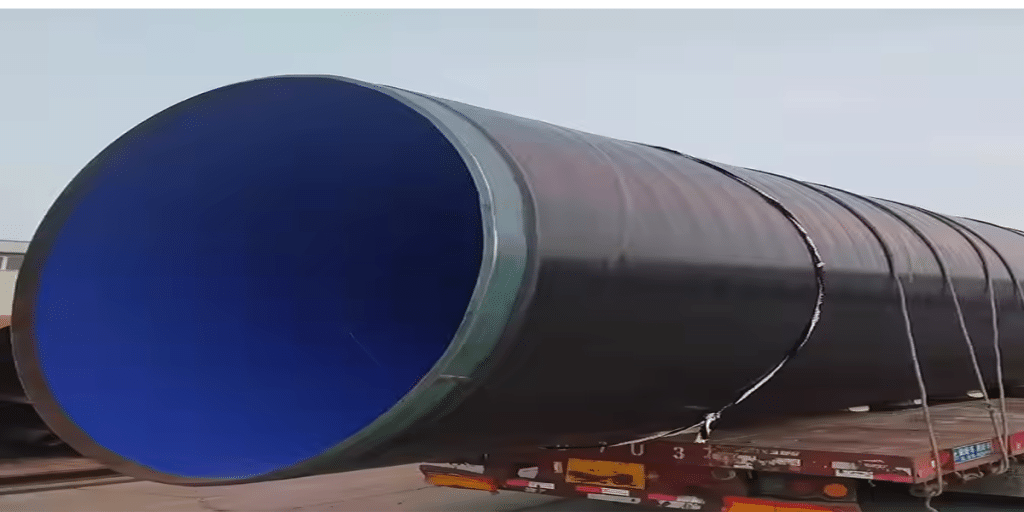
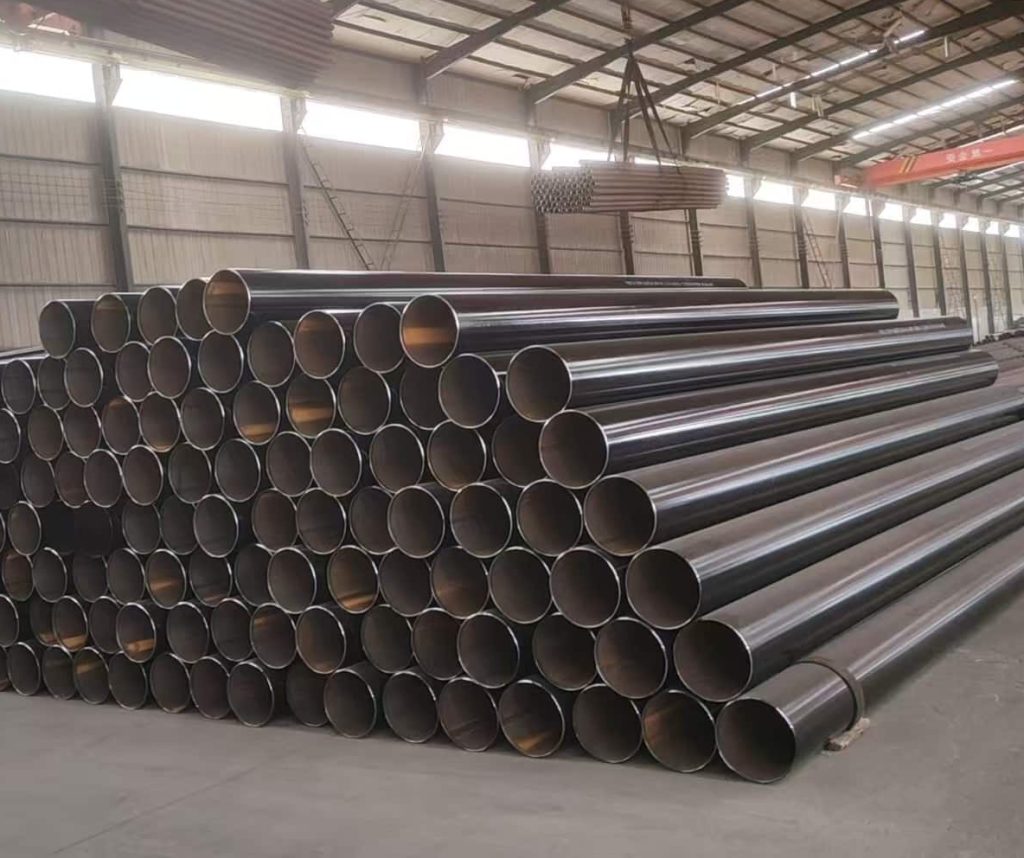
In modern steel pipe manufacturing, the straightening process is a key step that determines final dimensional accuracy. As a professional steel pipe manufacturer with more than 20 years of industry experience, LONGMA achieves stable dimensional control through advanced straightening equipment, online inspection systems, and a comprehensive laboratory verification framework. This article explores how the pipe straightening process affects diameter accuracy and outlines effective control strategies.
What Is the Steel Pipe Straightening Process?
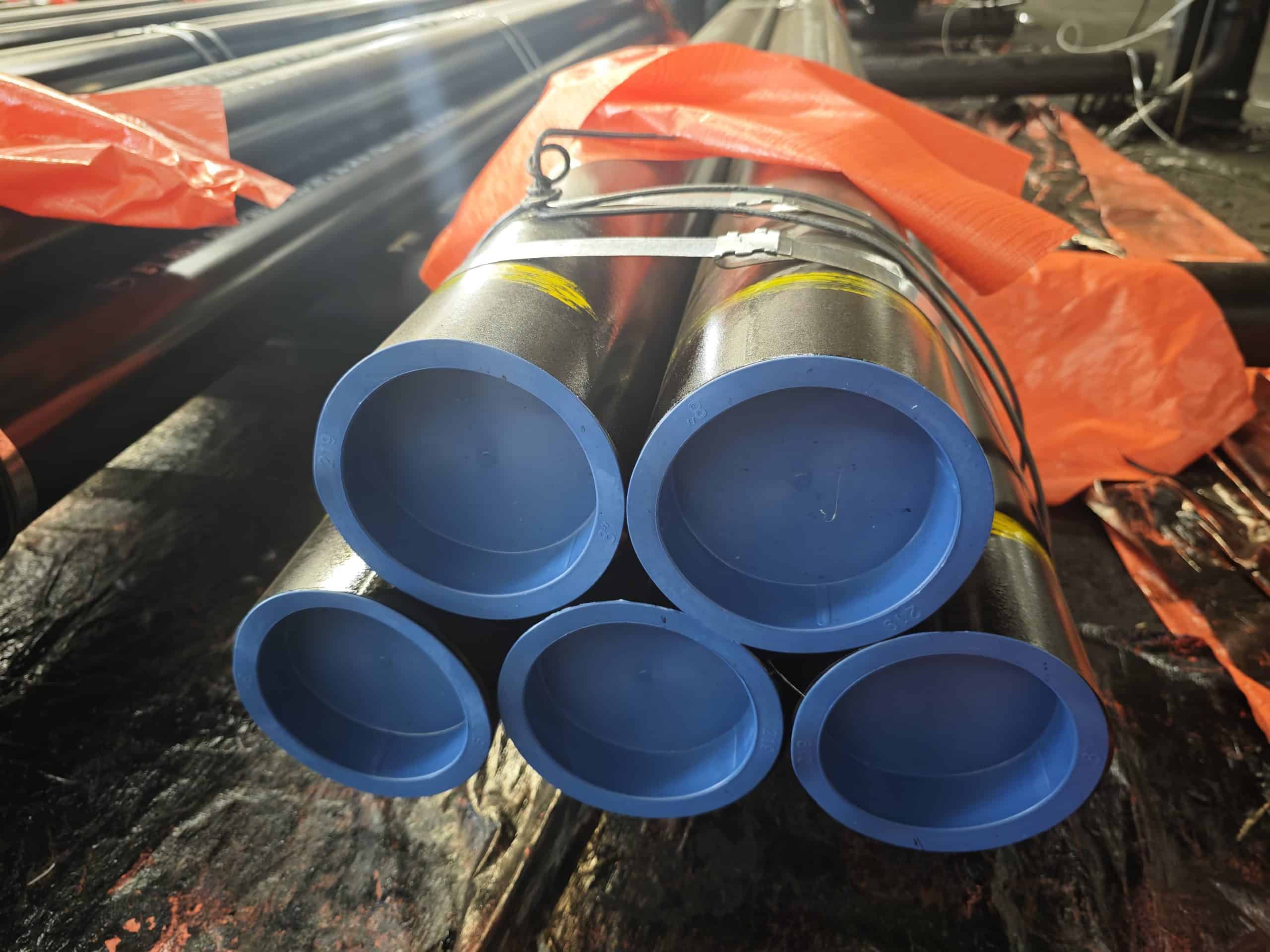
During forming, welding, heat treatment, and cooling, steel pipes often develop bending, excessive ovality, and localized deformation due to uneven residual stress distribution.
Pipe straightening is a mechanical process that applies controlled plastic deformation to eliminate bending and residual stresses, ensuring that the pipe meets specified geometric requirements.
The primary objectives of pipe straightening include:
- Improving pipe diameter accuracy
- Reducing ovality
- Enhancing straightness
- Relieving residual stress
- Meeting international standards
For high-grade pipeline steels such as API 5L X70 and X80, straightening is a crucial step that significantly influences long-term service performance.
Why Is Pipe Diameter Accuracy So Important?
According to API 5L and ISO 3183 requirements, the outside diameter of steel pipes must remain within strict tolerance limits.
Risks Associated with Diameter Deviations
| Issue | Engineering Impact |
| Oversized OD | Incompatibility with fittings |
| Undersized OD | Abnormal welding gaps |
| Excessive Ovality | Increased weld misalignment |
| Inconsistent Dimensions | Reduced installation efficiency |
| Localized Deformation | Higher risk of stress concentration |
For buyers and project owners, dimensional consistency directly affects:
- Project schedules
- Welding costs
- Operational safety
- Long-term maintenance expenses
As a result, international buyers increasingly evaluate a steel pipe manufacturer’s straightening capabilities and quality control systems before placing orders.
How Does the Straightening Process Affect Diameter Accuracy?
- Straightening Pressure Control
Straightening machines apply force through multiple rollers.
If the pressure is too low:
- Bending cannot be fully corrected
- Ovality improvement remains limited
If the pressure is too high:
- Additional plastic deformation occurs
- Pipe diameter changes
- Surface indentations may increase
LONGMA utilizes an automatic hydraulic control system that adjusts straightening force according to wall thickness and steel grade, ensuring optimal deformation control.
- Roller Configuration Design
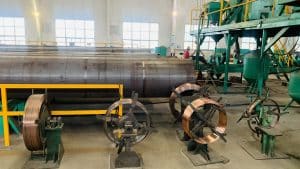
Modern large-diameter steel pipes are commonly processed using seven-roll or nine-roll straightening machines.
Different roller configurations provide different levels of dimensional control.
| Straightening Method | Diameter Stability | Application |
| Five-Roll Straightening | Moderate | Small-diameter pipes |
| Seven-Roll Straightening | Good | Medium-diameter pipes |
| Nine-Roll Straightening | Excellent | LSAW steel pipes |
| CNC Straightening | Outstanding | High-end pipeline projects |
LONGMA’s production lines employ advanced CNC multi-roll straightening technology to effectively minimize diameter fluctuations.
- Residual Stress Relief
Welded steel pipes contain complex residual stresses after manufacturing.
If these stresses are not adequately relieved:
- Springback may occur during transportation
- Diameter variations can develop
- Roundness may deteriorate
Proper straightening redistributes the internal stress field, significantly improving dimensional stability.
This is one of the main reasons why straightening parameters must be carefully controlled for high-grade API 5L steel pipes.
How Does LONGMA Verify Pipe Diameter Accuracy?
Advanced equipment alone is not sufficient. A comprehensive inspection system is equally important.
- Outside Diameter Measurement
Purpose
To verify that the pipe outside diameter complies with specified standards.
Inspection Procedure
- Scan the pipe using a laser diameter gauge.
- Collect measurement data from multiple angles.
- Automatically generate dimensional reports.
Reference Standards
- API 5L Section 10
- ISO 3183 Section 9
Inspection Frequency
- 100% online inspection
- Finished-product sampling and verification
- Ovality Inspection
Purpose
To evaluate the roundness quality of the steel pipe.
Calculation Formula
Ovality = Maximum OD − Minimum OD
Standard Requirement
Typically controlled within 1% of the outside diameter.
LONGMA employs a 3D laser scanning system for full-circumference dimensional analysis.
- Straightness Inspection
Purpose
To verify the effectiveness of the straightening process.
Inspection Methods
- String-line method
- Laser straightness measurement
- Automated visual inspection systems
Reference Standards
- API 5L Annex E
- ISO 3183 Annex G
How Does LONGMA’s Internal Laboratory Validate Straightening Quality?
Many suppliers perform only basic dimensional measurements. LONGMA has established a complete quality verification system.
Laboratory Equipment
The laboratory is equipped with:
- Optical emission spectrometers
- Metallurgical microscopes
- Ultrasonic testing equipment
- Coordinate measuring systems
- Laser diameter gauges
- Residual stress analysis equipment
Verification Process
| Inspection Item | Purpose |
| OD Measurement | Verify diameter accuracy |
| Roundness Inspection | Verify ovality |
| UT Inspection | Detect internal defects |
| Metallographic Analysis | Verify microstructural stability |
| Mechanical Testing | Ensure compliance with performance requirements |
This closed-loop quality control system—from production to laboratory verification—significantly reduces procurement risks for customers.
The Impact of Straightening Quality on Purchasing Decisions
For international EPC contractors and project owners, steel pipe procurement is not solely about price; it is also about lifecycle cost.
Reduced Construction Costs
Better diameter consistency leads to:
- Higher welding efficiency
- Easier pipe fit-up
- Lower labor costs
Improved Project Reliability
Stable dimensions result in:
- Reduced leakage risk
- Fewer repairs and rework
- Longer service life
Faster Project Delivery
High-precision steel pipes enable:
- Faster on-site installation
- Shorter construction schedules
- Reduced downtime risks
Therefore, more buyers now consider steel pipe quality control capabilities a key criterion when evaluating suppliers.
Why Choose LONGMA?
As a professional steel pipe manufacturer with over 20 years of experience, LONGMA considers dimensional accuracy one of its core competitive strengths.
Our Advantages
✔ Fully automated CNC straightening equipment
✔ Online laser diameter measurement systems
✔ Production compliant with API 5L and ISO 3183 standards
✔ Comprehensive in-house laboratory verification system
✔ 100% traceable dimensional inspection records
✔ Extensive experience exporting LSAW steel pipes worldwide
By continuously optimizing steel pipe manufacturing processes and quality management systems, LONGMA provides global customers with high-precision, high-reliability API 5L steel pipes and large-diameter steel pipe solutions.
Conclusion
In modern steel pipe manufacturing, the straightening process affects far more than appearance. It directly determines pipe diameter accuracy, roundness, and installation compatibility. Advanced straightening equipment, scientifically controlled process parameters, and comprehensive laboratory verification are essential to ensuring dimensional stability.
For buyers, selecting a supplier with mature straightening technology and a rigorous quality control system can significantly reduce project risks and improve overall project performance. With more than two decades of industry expertise and strict quality management standards, LONGMA continues to deliver reliable, high-quality steel pipe solutions for energy, infrastructure, and industrial projects worldwide.