How LSAW Pipe Is Manufactured
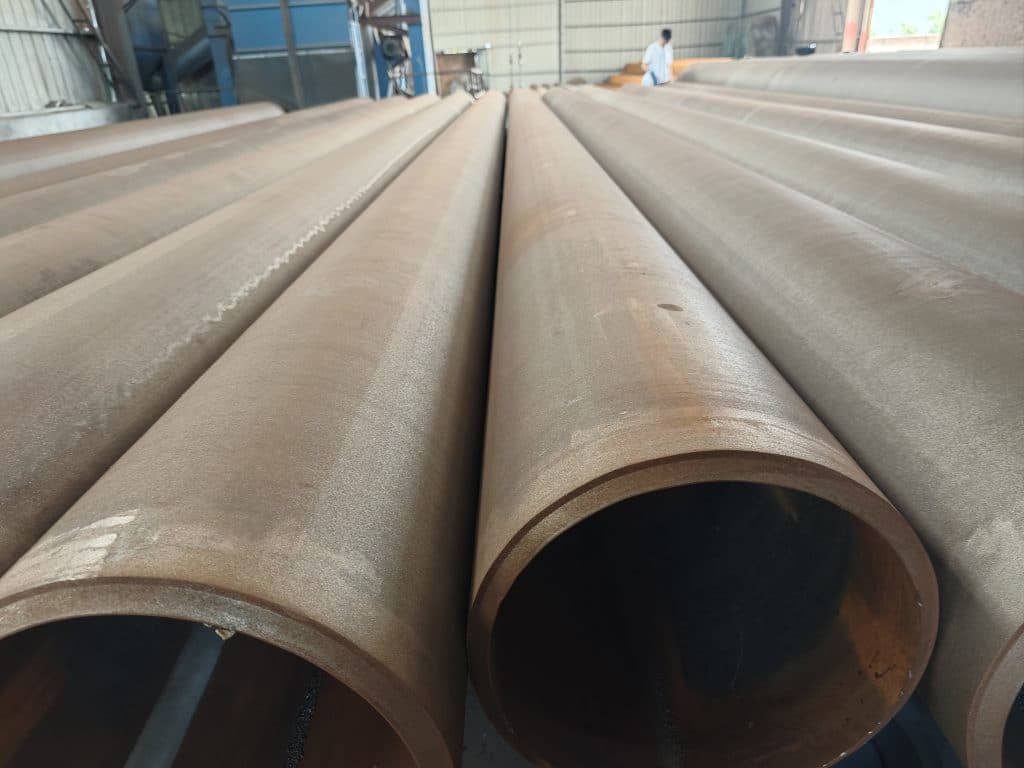
Longitudinal submerged arc welded (LSAW) pipe is formed from steel plate and joined along a longitudinal seam using submerged arc welding. Common plate-forming routes include JCO and UO methods, sometimes followed by controlled mechanical expansion. The selected forming and welding procedures are qualified to meet the applicable product and project specifications.
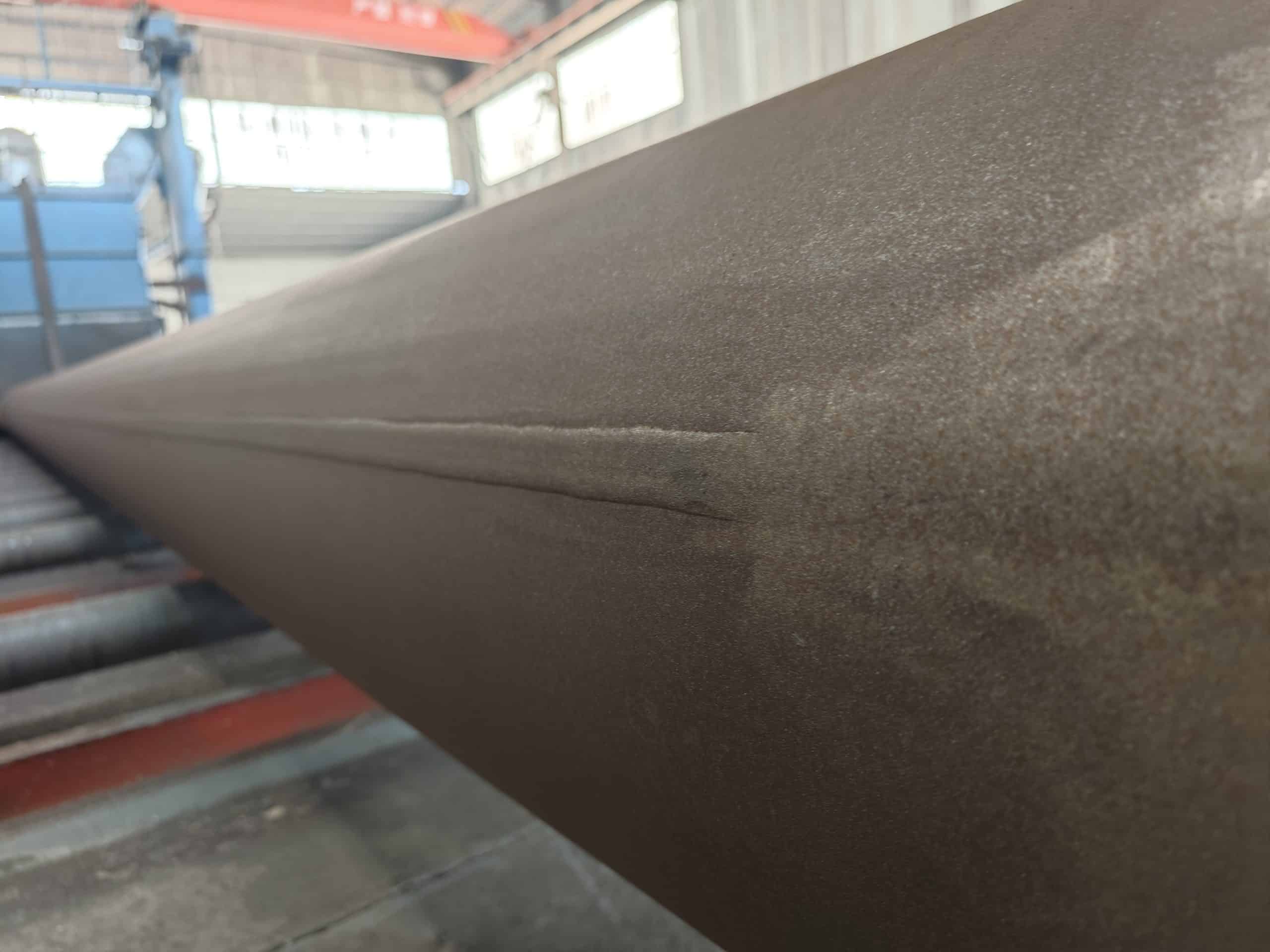
Submerged arc welding uses an electric arc beneath a granular flux layer and normally deposits filler metal. Welding may be performed from the inside and outside to achieve the required joint configuration and penetration. The quality of the seam depends on plate preparation, welding parameters, consumables, procedure qualification and examination; the process name alone does not guarantee freedom from defects.
Expansion, where used, can improve dimensional consistency and influence the residual-stress distribution. It should not be described as removing all forming stresses. Manufacturers must also control outside diameter, wall thickness, ovality, straightness and pipe-end geometry. The available dimensions are determined by the qualified mill capability and ordered specification, not by one universal LSAW diameter or thickness range.
Why LSAW Can Meet High-Pressure Requirements
A pressurized pipe carries hoop and longitudinal stresses. The longitudinal weld is subjected to loading across the seam under internal pressure, making weld strength, toughness and integrity especially important. A straight seam is not inherently stronger simply because it runs parallel to the pipe axis. Its suitability depends on demonstrated weld performance and the complete pipe design.
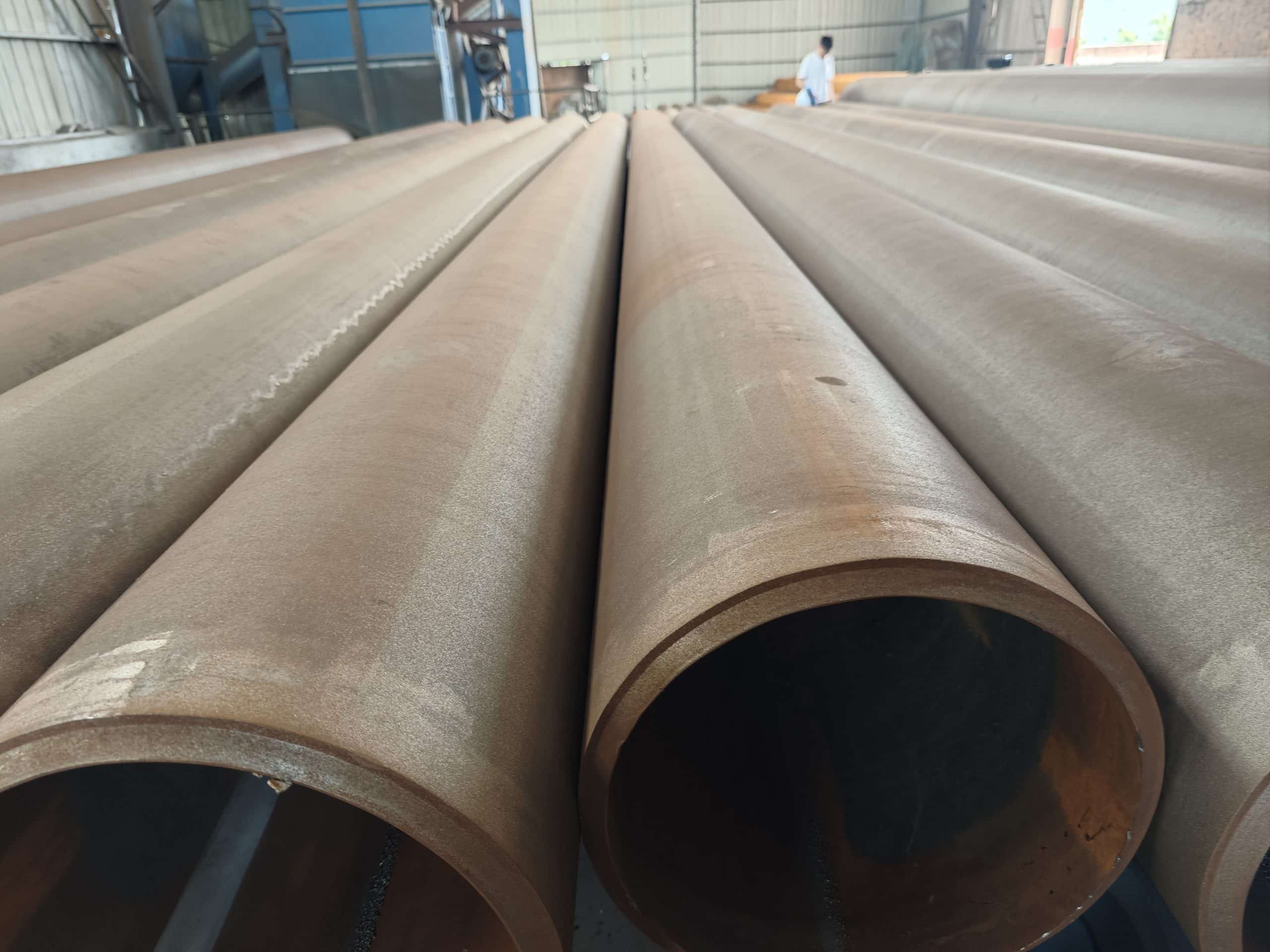
LSAW manufacturing can accommodate large diameters and relatively thick plate, making it useful for transmission lines where high pressure, large flow capacity and specific wall-thickness requirements coincide. Plate-based production also offers flexibility in material grade and dimensions within the manufacturer’s qualified range.
Actual pressure capacity must be calculated under the governing pipeline code, taking account of outside diameter, minimum wall thickness, material strength, design factor, temperature, corrosion allowance and other relevant limits. The simplified relationship P = 2St/D illustrates how stress, wall thickness and diameter interact; it is not a complete project pressure-rating calculation. A numerical pressure claim should not be presented without its assumptions and code basis.
| Pipe type | Manufacturing approach | Typical selection consideration |
| LSAW | Plate formed; longitudinal submerged arc weld | Large diameter and relatively heavy wall |
| ERW | Coil/strip formed; resistance weld | Qualified sizes, efficient production |
| SSAW | Helical submerged arc weld | Large-diameter options; project acceptance |
| Seamless | No longitudinal weld seam | Selected sizes and service requirements |
Material Grades, Toughness and Weld Quality
API 5L provides requirements for line-pipe grades and product specification levels. For LSAW pipe, the ordered grade and PSL must be checked against the applicable standard edition and manufacturing route. Not every grade is available under every PSL or every manufacturing condition. PSL2 generally imposes tighter material controls and toughness provisions than PSL1, but additional project requirements may still apply.
For high-pressure service, engineers consider yield and tensile strength together with fracture toughness, weld-metal properties, heat-affected-zone performance and the service temperature. A high-strength base metal does not compensate for an inadequately qualified weld. Weld consumables and procedures must be selected to achieve the required mechanical properties and resistance to cracking.
Nondestructive examination may include ultrasonic and radiographic methods, together with hydrostatic testing and dimensional inspection as specified. The required scope varies with the product standard, pipe type and project specification. It is therefore safer to describe inspection in terms of the applicable acceptance requirements rather than claim that one fixed combination of 100% body UT, seam UT and end RT is mandatory for every LSAW pipe.
LSAW vs ERW, SSAW and Seamless Pipe
LSAW, ERW, spiral submerged arc welded (SSAW) and seamless pipe can all serve demanding applications when properly specified and qualified. Their suitability depends on available dimensions, required mechanical properties, weld quality, inspection, design pressure, cost and delivery. A process label by itself is not a reliable pressure ranking.
ERW pipe is formed from strip or coil and joined by resistance welding without added filler metal. It can be used in high-pressure transmission systems where the product and project requirements are met. There is no universal 7 MPa or 10 MPa threshold above which ERW must be replaced with LSAW.
SSAW pipe uses a helical weld seam and can be economical for certain large-diameter projects. A longer seam may affect the examination scope and manufacturing considerations, but it does not establish a higher defect rate without evidence. Seamless pipe has no longitudinal weld and may be preferred for particular services and sizes; it is not automatically superior for every large-diameter pipeline.
LSAW is often selected when a project requires large diameter, comparatively heavy wall and plate-based production. Final selection should follow the design code, owner specification and supplier’s qualified production capabilities.
Applications and Procurement Checks
High-pressure natural gas and oil transmission are important applications for LSAW pipe. The process may also be used for selected offshore pipelines, industrial facilities and large-diameter water transmission systems. Material grade, toughness, external-pressure resistance, corrosion protection and installation loads must be matched to the particular service rather than assumed from the manufacturing route.
For offshore use, API 5L PSL2 may be specified along with additional requirements under the governing submarine pipeline standard. Sour service must be evaluated separately when H2S exposure is relevant. Neither an ‘S’ suffix nor a generic statement about hardness should be substituted for a complete material and test specification.
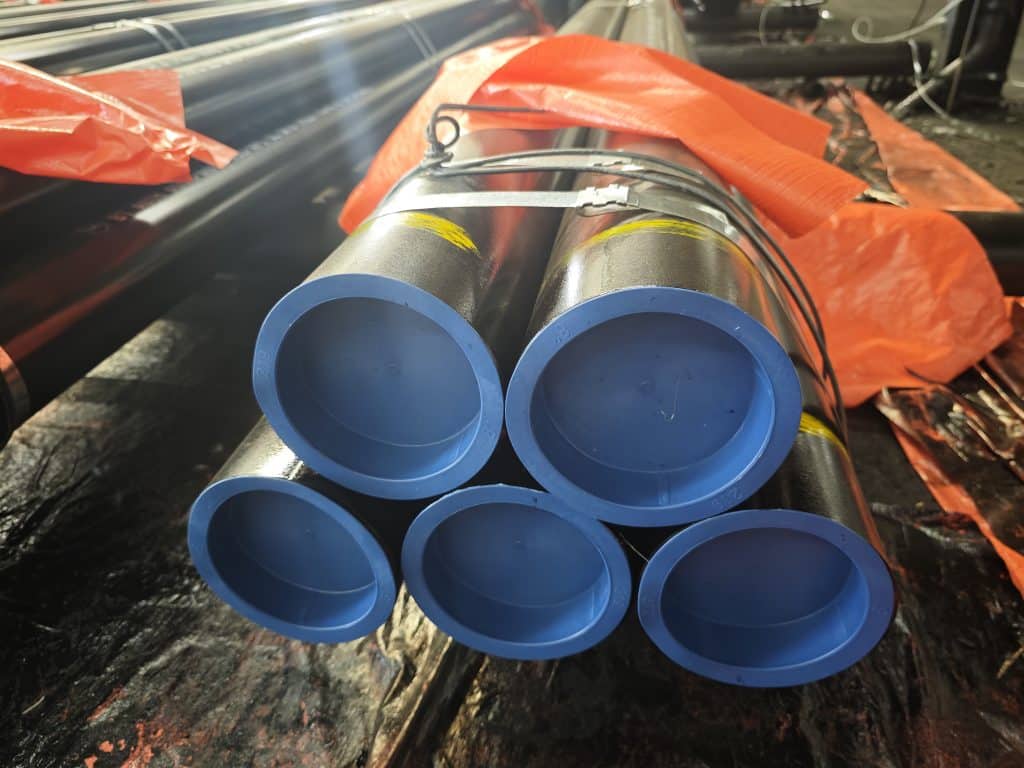
A purchase order should identify the API 5L edition, grade, PSL, diameter, wall thickness, length, end finish, coating and applicable supplementary requirements. Buyers should confirm welding procedure qualification, plate-to-pipe traceability, mechanical test results, hydrostatic test records, NDT coverage and inspection-document type. If third-party witnessing is required, inspection hold points should be agreed before production.
The supplier’s documented dimensional capability is more useful than a generic comparison table claiming a fixed maximum diameter or wall thickness for every process.
Frequently Asked Questions and LONGMA Support
Why is LSAW suitable for high-pressure lines? Its plate-forming and submerged arc welding route can provide large-diameter, relatively thick-wall pipe with qualified weld properties and documented inspection. Suitability still depends on the complete design and material specification.
Is LSAW always stronger than ERW? No. Both processes can produce pipe suitable for demanding service when properly qualified. The appropriate choice depends on dimensions, design conditions and applicable standards.
Is LSAW automatically suitable for sour service? No. Additional material and testing requirements must be specified for the actual H2S exposure conditions.
Does every LSAW pipe receive the same NDT? No. Inspection methods, coverage and acceptance criteria depend on the product specification and project requirements.
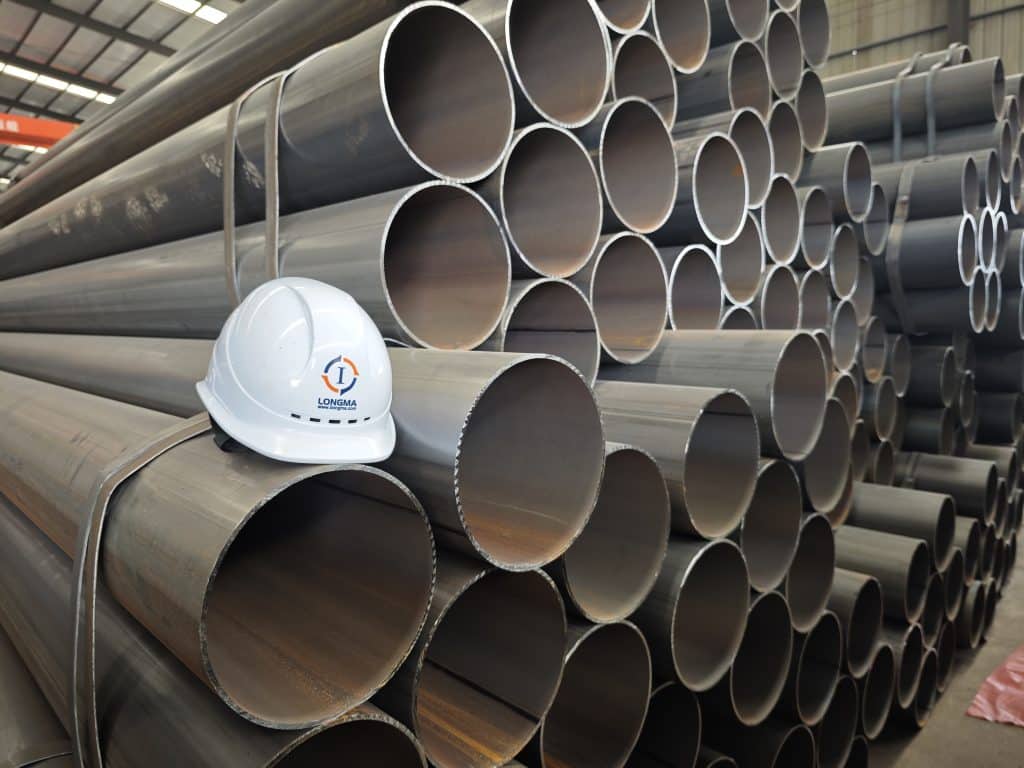
LONGMA manufactures round carbon steel LSAW and ERW pipe and supports project-specific material selection, testing, traceability and third-party inspection. Its production facility covers 230,000 m², with annual output exceeding 500,000 tonnes. For technical inquiries and quotations, contact info@ilongma.com or visit www.ilongma.com.